• Skip to main content
  • Skip to secondary menu
  • Skip to primary sidebar
  • Skip to footer
  • Home
  • About Us
  • Say hello
Rethink Real Estate. For Good.

Rethink Real Estate. For Good.

  • Podcast
  • Posts
  • In the news
  • Speaking and media
    • About Eve
    • Speaking requests
    • Speaking engagements
    • Press kit
  • Investment opportunities

Design

Re-designing design.

June 15, 2020

Once upon a time design and architecture were quite discrete disciplines. But over the years as educational priorities have been re-defined, they have become more complex and collaborative. We’ve adopted an inter-disciplinary approach to skills and knowledge that requires creativity, innovation and the ability to solve problems. Teaching is steadily moving towards a more collaborative approach as well, with a learning process called STEAM (Science, Technology, Engineering, Arts and Mathematics) which integrates across all of these disciplines in order to develop critical thinking skills.

John Folan recognizes and embraces this approach. As head of the architecture department in the Fay Jones School of Architecture and Design at the University of Arkansas he is working to teach a new generation of architects who apply their knowledge to the world around us in a thoughtful and collaborative way.

While at Carnegie Mellon University in Pittsburgh, his previous job, John founded the Urban Design Build Studio (UDBS), “a collaborative of students, professors, and allied professionals who work with community residents on implementation of appropriate, affordable, replicable design solutions.” UDBS has followed John to Arkansas where it continues to focus on public interest design issues. UDBS tests the hypothesis that a collaboration of ideas, intelligence and expertise from a broad range of individuals and entities will benefit the outcome of the work. There architects, tradesmen, community participants and students together are working towards tangible outcomes and tangible impact, with projects quite often growing organically from conversations with community stakeholders and community leaders.

John also founded PROJECT RE_, as a way to expand the efforts of UDBS even further. Its mission is to reuse materials, rebuild communities and restore Lives.  Based in Allegheny County in Pennsylvania, PROJECT RE_ is a 10,000 square foot facility which holds a community meeting space, gallery, design studio and state-of the art industrial fabrication shop with CNC technology, a wood shop and welding training. Building materials are supplied to PROJECT RE_ from deconstruction of buildings in blighted areas around Pittsburgh and then used for job skill training and in the creation of projects. The facility is used by UDBS for its projects, by the Trade Institute of Pittsburgh for training, by Construction Junction for product construction and for workshops for community members.

Collaborative problem-solving, the panacea for our post-pandemic future. Listen to my interview with John Folan.

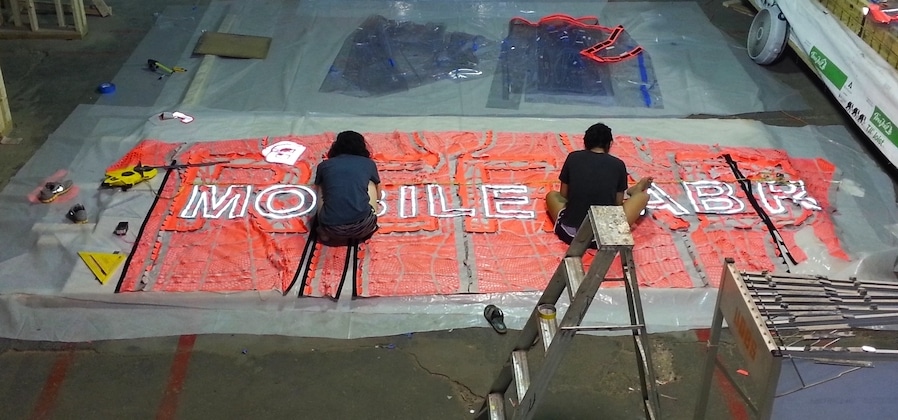
Image of RE_FAB courtesy of John Folan.
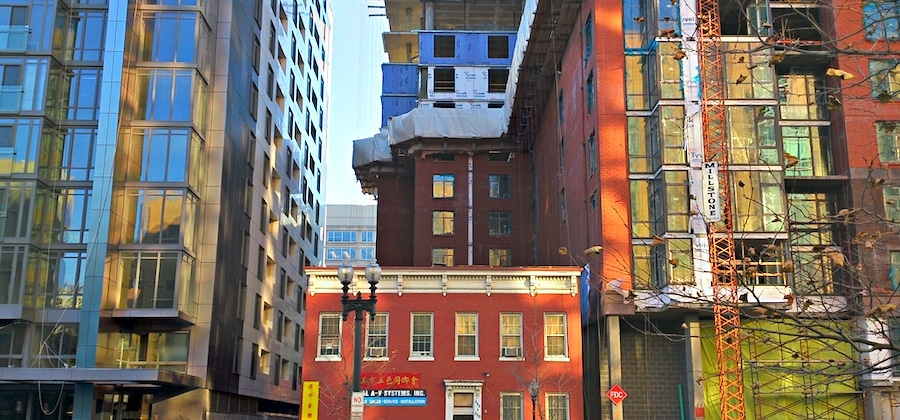
Small versus big.

May 11, 2020

There’s a history to small-scale development. It’s what we did for centuries until industrial modernism brought large-scale development to our cities.

Large-scale development

The scale and cost of large developments falls into the realm of large-scale developers, and not always good ones. They have been the protagonists in the rapid transformation of our urban environment. Large-scale developments have often had disastrous impacts on local communities and small businesses and have led to the decline of diversity and vitality in many neighborhoods.

Some solutions

There have been many studies into how to tackle the problems that large-scale developments have caused. One important step is to involve the locals. Engaging the community plays a fundamental role in identifying negative impacts and understanding how a development will impact its surroundings.

Most important is the relationship between social activities and the urban space. Solutions might include a mix of old and new buildings to keep some of a neighborhood’s character, small blocks where neighbors might get to know each other, a mix of residential and small business to bring people out into the streets and public space to create a local focus and help promote vitality.

Back to small-scale

Large-scale developers have many resources to tackle zoning codes, financial institutions and all the other complications of development. But small-scale development, buildings with less than 20 units, has become a lost art. How do you build a small building in the place you love? Jim Kumon co-founded the Incremental Development Alliance with the goal of “resurrecting the small developer.” The Alliance provides training and technical assistance to anyone interested in tackling those small-scale projects that make your neighborhood great.

To learn more listen to my full interview with Jim Kumon

Image by Peyton Chung / CC BY-2.0

Equity is the thread.

April 22, 2020

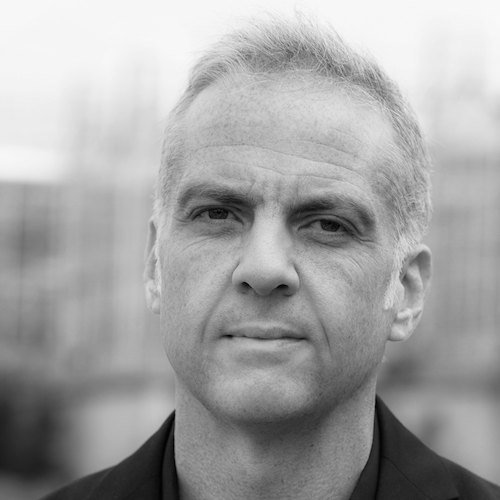
John Folan is an architect and teacher like no other I know. He frames his work around issues of the environment, social justice and equity. Not only is his own body of work significant, but he is dedicated to teaching students to be the next generation of thoughtful architects, makers and citizens.

John is probably best known for his work in Pittsburgh, as founder of the Urban Design Build Studio. He has used design processes to work with under-represented communities on the development and implementation of a variety of interesting projects for most of his professional career. In 2011, he co-founded PROJECT RE_ also in Pittsburgh, geared towards creating entrepreneurial opportunities for local communities with a three-part mission: “Reuse materials. Rebuild communities and Restore lives by teaching trade skills to help people secure a living wage.”

In 2019 John was appointed architecture department head in the Fay Jones School of Architecture and Design at the University of Arkansas. Previously he was the T. David Fitz-Gibbon Professor of Architecture at Carnegie Mellon University’s School of Design. His work has been recognized by the American Institute of Architects (AIA), the Association of Collegiate Schools of Architecture (ASCA), and Design Corps SEED Awards. Before joining Carnegie Mellon University, John was a tenured faculty member at the University of Arizona, and the co-founder of Drachman Design Build Coalition (DDBC), a university-affiliated, non-profit corporation dedicated to the design and construction of environmentally specific, energy-efficient, affordable housing prototypes. He has been registered as an architect since 1995 and a LEED Accredited Professional since 2008.

Insights and Inspirations

  • Successful design projects can emerge organically out of conversations with communities and stakeholders long before any building or idea is imagined.
  • Design training has increasingly become important to fields outside of architecture, because of the ability to think critically and across disciplines.
  • Design education should help students to understand opportunities, while learning an agility that allows them to adapt and grow and change.
  • Cities have actually been improving, making strides towards being much more inclusive in terms of both social and economic platforms, although we have to move the meter much further.

Information and Links

  • John founded and leads the The Urban Design Build Studio (UDBS), a collaborative of students, professors, and allied professionals who work with community residents on implementation of appropriate, affordable, replicable design solutions.
  • John also founded PROJECT RE_, with a mission to reuse materials and facilitate landfill diversion; rebuild communities by strengthening capacity of local residents; and restore lives by teaching people trade skills to secure a living wage. The 10,000 SF Project RE_ space includes a community room, design studio, gallery and workshops for wood, metal, masonry, and digital fabrication.
  • And here’s an example. Re_Fab is a mobile fabrication lab that brings digital tools and educational activities to your front door.
Read the podcast transcript here

Eve Picker: [00:00:17] Hi there. Thanks so much for joining me today for the latest episode of Impact Real Estate Investing.

Eve: [00:00:23] My guest today is John Folan, head of the Department of Architecture and Design at the University of Arkansas. John is probably best known for his recent work in Pittsburgh. As founder of the Urban Design Build Studio, he has used design processes to work with underrepresented communities on the development and implementation of a variety of interesting projects. And in 2011, he co-founded PROJECT RE_, also in Pittsburgh, which was geared towards creating entrepreneurial opportunities for local communities with a three part mission: re-use materials, rebuild communities and restore lives by teaching trade skills to help people secure a living wage.

Eve: [00:01:16] Be sure to go to EvePicker.com to find out more about John on the show notes page for this episode, and be sure to sign up for my newsletter so you can access information about impact real estate investing and get the latest news about the exciting projects on my crowdfunding platform, Small Change.

Eve: [00:01:40] Hello, John. It’s just lovely to be able to chat with you today.

John Folan: [00:01:45] It’s great to speak with you, too.

Eve: [00:01:46] Yeah, it’s been way too long.

John: [00:01:48] Yeah.

Eve: [00:01:49] So, you are now the head of the School of Architecture at the University of Arkansas. But I’ve known you, I knew you through your tenure at Carnegie Mellon University and saw you launch the Urban Design Build Studio there. It’s pretty rare to meet an architect and teacher who is so squarely focused on public interest and equity. And I wanted you to tell me a little bit about the Urban Design Build Studio and the goals you have there.

John: [00:02:19] Well, the Urban Design Build Studio is still alive and well, actually, I’ve carried it with me to the University of Arkansas and it’s now at the Fay Jones School of Architecture. We’re on the initial phases of the first project down here, with promises of many more to come, even in the context of the changes that we’re experiencing with the pandemic. The focus of the Urban Design Build Studio is really to focus on public interest design issues. The clear objective is to use collective intelligence so that the work benefits from the perspectives of multiple entities, multiple individuals, people of multiple expertise. And what we’re trying to do is develop work … tangible outcomes, tangible impact that is replicable and appropriate for the circumstances being addressed. So, it’s quite often that Urban Design Build Studio projects start without having an idea of what the project is, but they emerge more organically out of conversations with community stakeholders and community leaders.

Eve: [00:03:41] So, tell us a little bit about the first project that you’re doing there. Or, maybe a past project that you did in Pittsburgh, but one that you think is really a good example of what you’re trying to do.

John: [00:03:51] I think probably the best example of the one in Pittsburgh, and then I can talk about what we’re starting to do here. The projects in Pittsburgh have ranged in scope from a fabrication facility to a cafe to housing proposals and all sorts of projects in between. Mobile advocacy projects, as well. Probably the one that demonstrates the underpinnings of the Urban Design Build Studio best would be Cafe 524, which is now the Everyday Cafe in Homewood. That project was initiated with …

Eve: [00:04:34] Everyday Cafe?

John: [00:04:36] Yeah, Everyday Cafe, which is right there on North Homewood Avenue, in Homewood, and that project emerged out of a chance introduction to Dr. John Wallace at the University of Pittsburgh and is a native of the Homewood neighborhood, and working with students. By virtue of the suggestion of the Urban Redevelopment Authority, we started working in Homewood and and started with some community engagement, met Dr. Wallace and really focused on this notion of a “third place.” And he had put together a group of people who were interested in establishing a third place and a business opportunity for local residents, and put together a team with Operation Better Block and obtained a license agreement for the property, and then ultimately stuck with that project. And Dr. Wallace has now run that facility for about three years. So, that’s the type of project that probably best exemplifies an organic path to coming up with something that’s meaningful and sustainable for a community.

Eve: [00:05:53] A little bit of background for our listeners. So, Homewood is one of the neighborhoods that kind of suffered most, I think, when Pittsburgh lost half its population, and really hasn’t come back. I don’t know about, I don’t know the demographic numbers there, maybe you do, but it’s very poor …

John: [00:06:12] Yeah, it’s one of the most economically challenged neighborhoods in the city, if not the most, depending on the sector of the neighborhood that you look at. It is, it demonstrates the most challenged characteristics in terms of median income levels. So, there are a number of factors that the significance of that project and the significance of having stakeholders who are really invested in the community, and want to sustain something. So, you know, the work of the Urban Design Build Studio, we’re bringing design services to a group of individuals who may not have had access to those services otherwise. And to achieve something that they might not achieve otherwise. By virtue of affiliations with a research university, there’s an opportunity to spend longer periods of time and working on the projects with those stakeholders than might be possible in a traditional market rate scenario.

Eve: [00:07:13] So, your projects are then in pretty underserved neighborhoods where people are in serious need economically, or affordable homes, or any variety of those options, right?

John: [00:07:27] Yes.

Eve: [00:07:29] Okay. And so you also launched PROJECT RE _ in Pittsburgh. And I don’t know if you took that with you as well. But what was that about?

John: [00:07:37] PROJECT RE_ was a way to expand the efforts of the Urban Design Build Studio. I’m still the executive director of PROJECT RE_. PROJECT RE_ was focused to address regional issues in Allegheny County and Pittsburgh, focusing on restoring community, rebuilding lives and re-use of materials. So, it was a transactional entity and a physical space that has been put together to bring design expertise … You submit materials that are extracted from building deconstruction associated with blight that exists, in Pittsburgh, and then involve efforts of job skill training in the creation of the projects. So, it’s a, the space is about 20,000 square feet in size. There’s a large community meeting center. There’s a gallery in there. There’s a small studio. There’s an industrial fabrication shop that has CNC technology as well as a wood shop. And then there’s an assembly area, and welding training centers.

Eve: [00:08:49] Wow.

John: [00:08:50] Since 2012 that’s been the main working space for the Urban Design Build Studio in Pittsburgh. And we plan to use that space, now that I’m in Arkansas as the head of the Fay Jones School, the intention is to use that space in the summers for design build projects with a number of universities around the country and potentially around the globe, to work on projects that are more targeted in nature, and bring people to Pittsburgh. And then during the year, we’re planning on moving forward to have a series of fabricators and artists and residents who work on projects and initiatives that they’re interested in.

Eve: [00:09:41] That’s pretty extensive. So, how do you hope these initiatives will impact architecture, and architects as citizens, in general? This is not what most architecture schools do, right?

John: [00:09:54] No, it’s not, but I think that there’s been a growing awareness of it. I would say it’s become much more common now. There’s a much greater awareness of the benefit that people can have. I think that, you know, when we talk statistically, if you reference the Cooper-Hewitt Museum exhibition from a number of years ago, you know, they always talk about the other 98 percent, that two percent of the population can afford to use the services of an architect. That statistic is not really correct. The language, more precisely, should be to two percent of population elect to use the services of an architect. And so if we take a look at that, that 98 percent sector is enormous. There is a large portion of that sector that simply don’t value design. And so there needs to be greater awareness.

Eve: [00:10:53] I used to always say that people would spend more time picking the sneakers they buy then choosing an architect, right?

John: [00:11:00] True. Yeah, they will. And so there’s a culture that has to be cultivated around that and and an appreciation for that. So, the intent here is not that every student emerges wanting to be a contractor, or wanting to build their own work, or that they pursue public interest design as a full-time endeavor. But it’s more that we’re elevating their awareness, more that we are helping them to become better citizens, helping them to understand opportunities and how to navigate the context of projects to help them be innovative in ways that are appropriate and have impact to broader communities.

Eve: [00:11:41] You know, I’ve always thought that architectural training is really unique because it teaches these kids to take nothing and turn it into something in a very creative way. And it’s a training and problem solving that I don’t think, I don’t think you can really match in another profession, but maybe in engineering, but perhaps not so creatively there.

John: [00:12:04] No, I agree entirely. I think that it’s an enormous skill set. And most of the students who are successful in migrating the whole way through a curriculum possess a great deal of passion, and a great deal of persistence, as well. And I think those sensibilities and those attributes become so important. And I think that we undervalue ourselves …

Eve: [00:12:30] Yeah, I agree.

John: [00:12:31]  … quite clearly. And, you know, and it’s interesting, too, this trend towards project-based learning that has been adopted across academic circles. You know, it’s really interesting, that’s been embedded in architectural education since its inception. We never seemed to value it. But now other academic units find enormous value in it. And it’s something that’s always been inherent, what we do.

Eve: [00:12:57] So, you know, I’m an architect by training and I’ve morphed over the years into now … I’m a fintech expert! And who knew? But I would say that, you know, early on when I was young, I had a very hard time thinking about leaving architecture because it felt like a waste of training. But I’ve realized over the years that’s absolutely not true, and that training has helped me in innumerable ways. So, I wonder whether architecture schools are getting better at showing young architecture students the possibilities of what they can do with this training. They don’t need to just go work for a, you know, a starchitect somewhere, but there’s sort of endless possibilities for what they can do.

John: [00:13:45] No, I think that students emerging today are so much more aware. I do think that schools are being far more successful in terms of providing opportunities  to students that suggest the full spectrum of things, that they might branch out and might explore professionally after they leave the academic setting. It’s really interesting. I’ve always been amazed at what you’ve accomplished. And I think in a way you’re sort of the poster child for …

Eve: [00:14:19] The wayward architect, right?

John: [00:14:20] Well, yeah. I mean, but not really. You’ve always come back and you’ve been an advocate for design. And I think that, I think where there’s now greater awareness of what architectural education can do is evidenced by programs that are not necessarily professional programs. Like four year programs that are really elevating the awareness of young individuals about the potency of design, what design has to offer. And what happens is those people who graduate, say, with a bachelor of science that will not position them for professional licensure, they’re merging and entering other disciplines, allied disciplines and allied fields. Allied fields are as important, as you know, to the implementation of innovative work as design. I mean, so, yes, I think that the schools are much better now at getting students away from navel-gazing. You know, where you just sit in isolation and try to develop things in isolation. I think that there’s much more emphasis placed on collaboration, team building. I think you see that across the board.

Eve: [00:15:37] Yeah, that’s pretty fabulous. So, as head of the architecture school there, what do you think is the most vital now for the next generation of architecture students, then?

John: [00:15:49] Well, I think it’s probably the same thing that it’s always been, is agility. And I think that’s probably a lot of what we’ve been discussing today, is the the ability of somebody to adapt to a situation, to understand a situation, to bring different levels of expertise and to orchestrate that expertise in a positive way. It’s also knowing when to be a soldier and when to be a leader. And I think that those are important things, important sensibilities. And of course, with climate change being such a significant factor, I mean, that has been part of the conversation. We’re starting to see much greater awareness in the area of social justice and equity. That will need to continue as well. So, I think, again, this training is a problem solver. It’s really just the critical thinking skills and being agile that you really want to have somebody emerge with. They don’t feel that they’re indoctrinated, in a way that they’re equipped with a series of tools that will allow them to adapt and grow and change …

Eve: [00:17:01] Yeah.

John: [00:17:01] … as they move through their career.

Eve: [00:17:03] I’m jealous that they’re learning that so young. Because it really wasn’t a possibility when I went through school.

John: [00:17:08] Yeah, no. Same for me. There was one way to do it. And you kind of had to find your way after you got out.

Eve: [00:17:16] We had to butt our heads against it, right?

John: [00:17:18] Yeah.

Eve: [00:17:19] So, what’s your background and what … You’ve spent a life kind of fascinated with equity in architecture and in the physical environment. And I’m just wondering how you got there.

John: [00:17:29] Well, I’m always proud to tell people that I’m from Chicago, if they’re willing to ask and if they can’t discern from my accent. So, I had, you know, I’m also old enough that when I was young, there were a number of significant buildings that were being constructed at the time. And I was fortunate enough to have the opportunity to see those buildings being built and was just fascinated by construction and the physical environment. And so I really can’t remember a time where I did not want to be involved in architecture, professionally. It was always a an interest of mine and something that I thought would be a great privilege to be involved with. I think as I got older I started to develop an interest in affordable housing and equity, just by virtue of circumstance that I had growing up. Then my career took me about as far away from that and as you can get and I went to work for a couple of starchitects and worked on large projects, significant projects. And then I was principal for a large, well-known firm. And when … I hit a point in my career where I was not addressing things necessarily related to equity and not related to issues in neighborhoods that I felt needed help and made it a sea change in my career and focused on nonprofit work … an extension of that. So that’s kind of the path I took.

Eve: [00:19:07] Yes. We know that you care about socially responsible real estate, but are there any current trends in real estate development that interest you the most? And perhaps the second question is, given what’s going on with the coronavirus right now, how might an architecture change to address things like pandemics and keeping people safe?

[00:19:33] Those are really interesting questions. And, you know, it’s interesting that you’re asking it because the answer, probably .. well, it might have been same a few weeks ago, but it’s … you know, given the perspective that we all have at this time. Of course, it’s changed all of our perspectives. Things that are interesting in terms of real estate; I think that there’s much greater awareness of how market rate development can be leveraged to advantage mixed-income development and provide an opportunity for communities where fixed income residents can be part of a successful neighborhood. I think that there’s an enormous amount of advocacy that is still needed with regard to that. Issues around gentrification. I think people are very keenly aware of some of those issues, but a lot of what’s perceived as gentrification, it is byproduct, in fact, of misinformation many times. That there’s a perception that somebody will be pushed out rather than understanding that there’s a mechanism for long-term residents to stay in an area. So, I think advocacy there becomes really important. The things that Small Change is doing by allowing people to invest through crowdsourced funding is incredibly important. I know the range of projects that you have that are demonstrated through the website really illustrate the potency of groups of people coming together to impact change in areas where it would probably be risk averse in terms of taking on opportunities. So, those are probably the areas in development. In terms of response to the pandemic, I really am at a loss on that.

Eve: [00:21:28] I am a little bit, too. But I’ve been thinking a lot about Small Change. And first and foremost, I have this tool that lets everyday people invest. And yet, you know how many people filed for unemployment in one week, this …

John: [00:21:43] Yeah.

Eve: [00:21:43] … last week? You know, and I can’t really kind of reconcile the two at the moment. I think we’re going to have to wait and see.

John: [00:21:53] Yeah. Yeah, no, I, You know when I think, with the pandemic, I think I probably, I haven’t been thinking about it in terms of the investment side. But the point that you raise is really important. My mind tends to shift more towards the practicalities of one’s physical health. And then, of course, I   of the work of MASS, things that they’ve done with Dr. Farmer, and just simple things.

Eve: [00:22:21] We’re going to see a sea of technological changes as to how you open doors for example.

John: [00:22:28] Oh yeah. No, that’s right. Yes, it will it will transform those things that we take for granted. So, fundamentally. Yes.

Eve: [00:22:35] Yeah, it’s a bit crazy. And of course it’s having an impact on your school because the teamwork that is clearly really part of what you’re doing is sort of being shut down at the moment, right? With the students and how they work together. Or has it? Or are you finding other ways to do that?

John: [00:22:53] Well, we’re still in the first weeks. I think unfortunately … what struck me … You know, it’s interesting if I just relay a story. When we made, when they first made the announcement they were going to distance learning, and anybody who knows architects knows how, understands the intensity of the educational process and studio culture. The younger students in the school happened to be outside my office and I heard this eruption of laughter. And, you know, they’re quite happy that they might gain relief from the demands of the curriculum. And then, when I went up to visit my studio, because I work with students who are further along in the program the kids were in tears. And it was at that time that I really realized the impact that it’s having on those who are emerging into the profession. They understood the gravity of the situation at that time by virtue of the fact that they understood that was probably gonna be the last time they were going to see their classmates as a large group. That was, you know, the celebrations of graduation were clearly going to be suspended, at least for a while. And then, immediate concerns over what it meant for viability of their professional future … the immediate viability. So, I think your perspective, depending on your age …

Eve: [00:24:30] Yes. Definitely.

John: [00:24:30] … changes and your understanding of the impact.

Eve: [00:24:39] Yeah, and then, I asked the current terms question in other interviews and a month ago, you know, people are talking about co-working. And this month, I have to wonder if co-working is dead. You know, it’s very, very difficult …

John: [00:24:57] Yeah.

Eve: [00:24:57] … It’s difficult to imagine. Anyway, now we’re down this depressing path, so.

John: [00:25:01] Yeah. Well, I think to think about it optimistically, you know, going back to what we said. This is a wicked problem. And it’s not a wicked problem. It is illuminating thousands of wicked problems. And I think that the opportunities will emerge out of what we understand. And I think right now it’s so early in the process, as we start to come out of this, as the virus is controlled and contained, and we start to plan for the future. I think that will open up all sorts of avenues. But what those are I don’t know, and I really haven’t had time to speculate.

Eve: [00:25:47] But, you know, I think architects might be at the center of some solutions, I’m sure. So.

John: [00:25:52] Yes. Yeah.

Eve: [00:25:53] So, it’s actually a very interesting thought. How do you think we need to think about our cities and neighborhoods to build better places for everyone?

John: [00:26:04] Well, I think we’ve been on a rather positive trajectory. When I was a, you know, again, going back to when I was a child, when I was a child cities were horrible places. You didn’t want to be in cities, you know, unless you were really serious about urbanism. We avoided cities. And I think that the perceptions of cities really didn’t start shifting until the early 90s. And it really hasn’t been until, I would say, the last decade that we’ve seen the benefits of positive urban thinking, and consideration of new models of development. Yeah, I think that the cities are making strides towards being much more inclusive in terms of both social and economic platforms. And so, we still have to move the meter a lot further in terms of that. You still have, you know, there’s still issues of segregation. There’s still issues of economic disparity and concentrated poverty. So, I think that where urban environments need to start moving is towards deep concentration of those negative attributes. I think that it has gotten significantly better in recent history and I think we are on a path forward. And again, I think crowdfunding in support of developments is a significant component to that continued success in the future. I do think it’s interesting, we always talk about density being … and then, of course, in cities like Pittsburgh, where there been a population loss, you know, the term that was developed was “right sizing.” I don’t know if the pandemic is is going to lead us to start thinking about what appropriate levels of density are or how that ties into the general health and well-being that’s to be determined in the future.

Eve: [00:28:16] Well, I really enjoyed this conversation, and I’m excited to see how you and your students put some thought to the post-pandemic problems and the future that we’re all looking at. It’s going to be really interesting to see.

John: [00:28:31] Well, thank you. I really enjoyed the conversation. This has been a great conversation.

Eve: [00:28:37] Ok, bye John. Bye.

John: [00:28:37] All right. Bye Eve. Thanks.

Eve: [00:28:44] That was John Folan, head of the Department of Architecture and Design at the University of Arkansas. John is an architect and teacher like no other I know. He frames his work around issues of the environment, social justice and equity. Not only is his own body of work significant, but he is dedicated to teaching students to be the next generation of thoughtful architects, makers and citizens.

Eve: [00:29:21] You can find out more about impact real estate investing and access, the show notes for today’s episode at my website, EvePicker.com. While you’re there, sign up for my newsletter to find out more about how to make money in real estate while building better cities.

Eve: [00:29:38] Thank you so much for spending your time with me today. And thank you, John, for sharing your thoughts. We’ll talk again soon. But for now, this is Eve Picker, signing off to go make some change.

Image courtesy of John Folan.

The power of modular building.

April 20, 2020

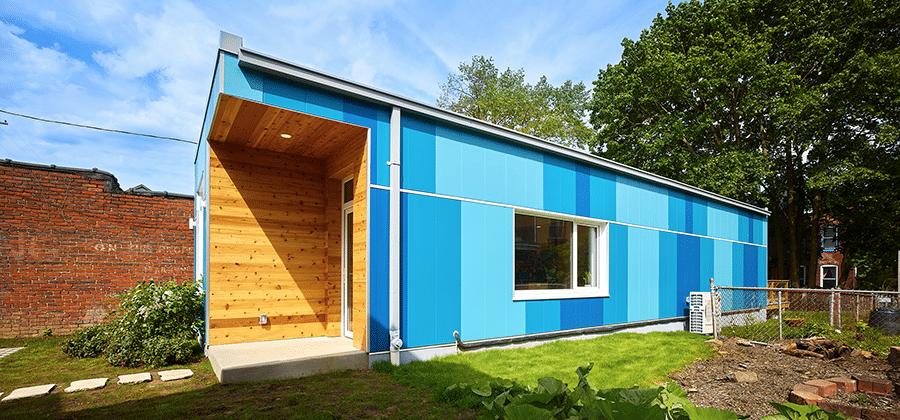
As builders, architects, urban planners all look for innovative ways to create both affordable and sustainable housing, some new homeowners have been looking to the efficiencies of modular construction as one potential solution. While pre-fab (for pre-fabrication) is a general term for building components that are created in a factory to be assembled on site, modular construction refers to pre-finished volumes, about 70 percent complete. In other words, entire rooms or floors – modules that can be set down on a property virtually ready to go except for hookups and exterior finish work.

One such example is Module, based in Pittsburgh. Module was co-founded by a trio of young entrepreneurs who were inspired by the idea that everyone should have access to good design. But as opposed to the typical design-build company that gives clients the options of picking from only a few template plans, Module’s team offers turnkey design-build-develop services. They do not build the homes but work with a third-party manufacturer and a third-party contractor, managing the whole process for clients from start to finish, from design to permitting to construction.

Why build this way?

Basic modular, or even pre-fab, construction offers a variety of benefits for the homebuyer. On the one hand, as opposed to designing a home from scratch, which is time-consuming and adds additional cost, a developer or builder can offer a new homebuyer templates based on their needs and budget.

There is also the benefit of a large reduction in construction time, and when done at large scale, construction costs. Modular projects also offer high-quality, factory-based construction, often using eco-friendly materials and energy-efficient, customized designs, all with rapid on-site assembly. Already familiar in countries like Japan, this way of building housing is starting to become popular in the U.S., and most exciting, offers innovative methods for providing affordable and sustainable housing on a large scale. 

One reason for the trend towards pre-fab and modular construction is a shortage of skilled labor in many housing markets. Another is a supply shortage in boom markets, where existing developers cannot build things fast enough. In both cases, components of a building can be constructed anywhere and shipped to the site. This has long been the case, for example, with pre-fabricated roof trusses one often sees being trucked along on the highways.

Module

Brian Gaudio, the CEO of Module, created his company differently. He describes the vision of Module as more of a tech startup company than a design firm, offering their product first and foremost as a service, or process that you can literally order online. “We’re trying to redesign the customer experience,” he says, “and redesign homeownership from the ground up.”

First, Module works to understand the clients’ current needs, learning what they want in a home – everything from space and light, to aesthetics and utility. Second, for clients who already own land, Module evaluates the site location and determines what’s possible based on topography and local zoning rules. If a client needs to purchase a lot, Module offers a curated selection of available lots they know will work with their designs.

Third, the team works to design the client’s home and create a budget. Fourth, Module handles all of the permitting and manages every aspect of the building process. Because they partner with manufacturers and contractors, he says, “we don’t own those parts of the supply chain. But what we do own is the customer experience.”

Finally, and perhaps most importantly, Module plans to grow with their clients, offering the flexibility to add more space as needed with additions that are made to grow a home to order.

The future

Modular construction offers exciting solutions for both affordable and sustainable housing. There are a number of innovative options available now, and while some companies offer services nationwide, it’s also worth exploring local companies to learn about options in your area.

Listen to our interview with Module founder, Brian Gaudio, to learn more about how Module is bringing their unique modular process to the Pittsburgh area. 

Image courtesy of Module Housing

Mobility is pretty pedestrian.

April 8, 2020

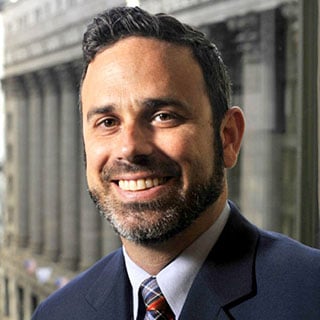
Gabe Klein has invested his life and career in all facets of urban mobility, both as an entrepreneur and within the halls of city government. Now a consultant and advocate for positive urban change, Gabe co-created Cityfi, in 2016, to help cities adapt to new technologies, sustainability issues and growth using public-private partnerships and market-based ideas.

Growing up in the 1970s during the energy crisis, Gabe remembers the rationing of fuel and how it inspired his father to get into the bicycle business. He worked for his family’s company until he went to college and saw first-hand the opportunity to rethink the way people get around in urban areas. Hired by ZipCar in 2002, just as it was getting started, Gabe helped to grow that early mobility company dramatically during its formative years. He served as the director of the District of Columbia Department of Transportation (2008-10), and as commissioner of the Chicago Department of Transportation (2011-13), where he helped create two of the first bike share programs in the U.S., and worked on issues such as bus rapid transit, infrastructure projects and cycling and pedestrian plans, to name a few. He even started an electric-powered, organic food truck chain called On The Fly.

Gabe is also the co-author, with David Vega Barachowitz, of Start-Up City: Inspiring Private and Public Entrepreneurship, Getting Projects Done, and Having Fun (2015).

A huge fan of challenging the status quo, Gabe says one of his mottos is “if somebody is not calling you crazy, then you’re not working hard enough.”

Insights and Inspirations

  • Our biggest problems can be solved through an exchange of ideas between the public and private sectors.
  • Reallocation of urban space away from cars is critical for urban mobility. The majority of urban trips are less than one to three miles, and there’s a big market there.
  • We need more rebels, people pushing the envelope, even when we don’t agree with them.

Information and Links

  • You can buy Gabe’s book at Island Press or on Amazon.
  • Watch Gabe’s TEDx talk: Cars Almost Killed Our Cities, But Here’s How We Can Bring Them Back.
Read the podcast transcript here

Eve Picker: [00:00:14] Hi there. Thanks so much for joining me today for the latest episode of Impact Real Estate Investing.

[00:00:21] Today’s guest is Gabe Klein. Gabe has invested his life and career in all facets of urban mobility, both as an entrepreneur and within halls of city government. That’s made for a very interesting point of view, from Zipcar to bike sharing to transportation commissioner to book and now to Cityfi, Gabe has left a mark on mobility in this country.

[00:00:50] So, listen in and be sure to go to EvePicker.com to find out more about Gabe on the show notes page for this episode. And be sure to sign up for my newsletter so you can access information about impact real estate investing and get the latest news about the exciting projects on my crowdfunding platform, Small Change.

Eve: [00:01:18] Hello, Gabe. Thanks so much for joining me today.

Gabe Klein: [00:01:20] Thanks for having me, Eve.

Eve: [00:01:22] So, you’ve done so much, I really don’t know where to begin. Zipcar. Bike sharing. Transportation commissioner. A book called ‘Startup City.’ And my personal favorite, On The Fly, your own electric-powered, organic, food truck chain.

Gabe: [00:01:37] That’s correct.

Eve: [00:01:39] And, of course, now you wrap that all up in your company called Cityfi. I’m wondering how you got there and why transportation issues matter so much to you.

Gabe: [00:01:50] Yeah. Well, you know, I grew up in the 1970s, actually, as a kid, and 80s, but I grew up during the energy crisis, and I remember the rationing of fuel and it inspired my dad to get into the bicycle business. And so from the age of, like, five years old, six years old, I was always around bicycles. We had skateboards and we had mopeds in the stores. And we used these things at home, too. And my dad actually commuted by bike, many days. And so I grew up looking at these quote unquote alternative modes of transportation, actually as normal ways of getting around. And, by the way, we lived in a rural area. So, we would commute all the way from our rural home into the local town on these busy roads. And so, as I got older and I was, so, you know, in the bicycle business, even post-college, I realized that in urban areas there was this huge opportunity to rethink the way people got around. And I had moved to Washington, D.C., in the mid 90s, and, you know, our major arterials were speedways. People were doing 65, 70 miles an hour …

Eve: [00:03:04] Oh, yeah.

Gabe: [00:03:04] … completely out of control. And yet, we had all these people moving back to our cities. So, I met Robin Chase, and that was around 2002, and she hired me as an executive at Zipcar, and I helped build that business, and it was really instrumental in me understanding the relationship between public and private sector, and how important the public sector was in empowering small businesses like ours, and tying them in to the existing infrastructure in the city, in the space, in, you know, in terms of giving us parking spaces, in terms of tying us into the transit system. And it was really the key to our success, I think. And so, ever since then, I’ve been really focused on, you know, how do we do good, make money and enhance the lives of people in our urban areas.

Eve: [00:03:59] From those early beginnings, because things have changed a lot since Zipcar, right? Zipcar has waned a little bit because other things have popped up instead. What is the mobility landscape look like to you in the U.S. today by comparison?

Gabe: [00:04:13] Yeah, well, look, I think businesses always need to evolve, right? I mean, look at Amazon. It started out as a bookstore out of a garage, right? So, I think that there’s been a lot of evolution related to the technology that we have in our hands. The GPS technology that allows us to geolocate where things are. Solar and electrification. Obviously, the backbone of it all, the enhanced cell phone networks. And that’s what’s really powered the transformation in mobility. At the same time, what we find is we have all these new modes, and they’re really exciting, and it’s actually gotten a lot of people on bikes, which I love.

Eve: [00:04:50] Yes.

Gabe: [00:04:50] Right? But on the other hand, things are pretty pedestrian. And what I mean by that is, like, there’s a basic way that we’ve been getting around for a couple 100,000 years. You know, we’ve been walking, we’ve been riding the horse. Then we start riding bikes, taking streetcars. And fundamentally, you have a sort of geometry problem, and you have, sort of, movement of people and the geometry of how you move them, and it’s really about volumetrics. And so, in a dense urban area, you can only move so many people so quickly. And so it becomes about bigger things. It’s about, like, what creates a healthy city, what creates a safe city, creates an equitable city, or town, by the way, it doesn’t have to be a big city. And so, you know, my time in government was really instrumental in seeing that the levers that we had that could really change the quality of life for people. And now we’re talking about things like universal basic mobility. We’re having conversations in the public square about, you know, because mobility and transportation are so closely tied to land use and real estate, and because so much of people’s income goes to those two things, that if you can create a system where people don’t have to use a very complex transport system, and you don’t have to make a capital investment in the transportation, they can afford to live in a place …

Eve: [00:06:16] Yeh.

Gabe: [00:06:16] … that they want to live and they can do it in a way that they have a higher quality of life, and more access to jobs. And so, that’s …

Eve: [00:06:22] Solving the mobility issue actually makes housing more affordable.

Gabe: [00:06:29] Well, look, if you shed one car like, let’s say you’re a two-car family, you shed a car, that’s 150,000 dollars more real estate you can afford.

Eve: [00:06:36] Yes.

Gabe: [00:06:37] Right?

Eve: [00:06:37] If you’re a worker who needs to get to a job every day and there is, you can walk to pick up your groceries, and there’s a train or bus near you that gets to work, you can shed both the cars.

Gabe: [00:06:50] Right. Right. I mean, look, people say like D.C., San Francisco, Boston, these are the most expensive places to live. However, you know, in D.C., car payments are less than 10 percent of people’s income, right? And you look at a lot of other, like Sunbelt cities, it’s 20, 25, 30 percent. In a low-income neighborhood, over 50 percent. My household? We’ve gotten to, because we have an apartment downstairs, one, two, three, four, five, six, seven people. And there’s one car, …

Eve: [00:07:17] Yeh.

Gabe: [00:07:17]  … you know. And so, actually, our cost of living is relatively low.

Eve: [00:07:23] Yes. Yeah. So, you know, interestingly, I mean, I think about this. So, while technology has been advancing some mobility solutions, we’re really kind of still stuck in how to model the physical landscape, right?

Gabe: [00:07:38] Oh, absolutely. And that’s what I was getting at when I was saying, like some of the problems are very pedestrian. I was trying to be funny, but it’s like, it’s really about the reallocation of space, right? It’s like, you can only move so many people if you allocate all the lanes to cars that carry one or two people, what we call single-occupancy vehicles. And so, there’s a big movement, like, if this technology and these new modes are going to be successful, like scooters, for instance, and shared bicycles, you’ve got to give space to them or people won’t feel safe. And if they don’t feel safe, even for a small portion of the trip, let’s say they’re driving, or riding, excuse me, from home to work, and it’s a five mile trip and there’s two blocks that feel terribly unsafe. That mom may not make that trip, the entire five mile trip, because of those two blocks. And so, it’s really about creating a safe system for people.

Eve: [00:08:28] I know that the public sector is thinking about this. Is the private sector thinking about this? Who’s more advanced in their thinking? Are they talking to each other?

Gabe: [00:08:40] Well, that’s actually why I wrote ‘Startup City.’ When I went into the public sector, I had never worked, I mean, and I came in running the agency, I had never worked in government in my life. And so I had a very different perspective. And I’m really fixated and focused on this exchange of ideas between public and private. Because, to be honest, to solve the climate crisis, our affordability crisis, all the major problems of our time, we’re not going to do it without the two sides working together. Now, government has a very strong arm in terms of regulation and setting the tone, which I think they are going to need to flex. But the more we can work with the private sector, understand the private sector’s, you know, business models, their motivations, their, the outcomes that they’re looking for, and we can inform the regulatory environment and policy, then we can come together and make change a lot more quickly. And to be honest, in the situation we find ourselves in, particularly with climate, we need to move a lot faster.

Eve: [00:09:38] So, do you think that the public sector can somehow be infused with the urgency and energy of a startup?

Gabe: [00:09:47] Well, that’s what I did. I’d like to think I did. I mean, I ran these two agencies as if they were well-funded startups. And, you know, there were some people that thought I was crazy.

Eve: [00:09:59] Ha.

Gabe: [00:09:59] And, you know, one of my mottos is, like, if you’re, if somebody is not calling you crazy, then you’re not working hard enough. You know, like, if somebody doesn’t think that your ideas are a little crazy, then you’re not challenging the status quo enough. And I think the government can work on behalf of taxpayers, move a lot faster, and also, to be honest, be fiscally responsible, and in some cases, share in profits, or losses, with the private sector, which is what we did with some of our bike share programs. I think the private sector needs to be much more open to working for the greater good, taking a long term view versus the short term view. And looking at the long-term sustainability of their business, and sustainability of the planet, and the urban environment that they’re operating in. And if we can get the two thinking alike, and I work with a lot of companies and governments, it is just amazing what they can do and the speed that they can do it in. A lot of it comes down to … tried and true old school relationships, and understanding and trust. And that’s what we try to build.

Eve: [00:11:02] Yes. Yeah. Yeah. So, Then how should equity play into transportation solutions?

Gabe: [00:11:11] Yeah. I mean, there’s so much to talk about here.

Eve: [00:11:14] Yes.

Gabe: [00:11:14] But it’s actually, at the end of the day, and I hate to say something like this as an entrepreneur, but transportation doesn’t make any money. I mean, like how many transportation systems, you know, that consistently make money. Like Pepsi does, right? Almost none. Uber lost almost eight billion dollars last year. There are a couple of transit systems that are profitable because so many people use them, like Hong Kong and Singapore. There are some private sector companies that make money some times, like some of the airlines. But fundamentally, it is not a big moneymaking business. And so, we need to think about the outcomes that we want for our people, We need to think about creating equitable outcomes around all the elements that make up quality of life, or the happiness index, for instance, and then figure out how do we fund transportation to make that work. So, Uber today might be funded by venture capitalists, and long term it may be partially funded by the government …

Eve: [00:12:08] Yes.

Gabe: [00:12:09] … for certain types of trips. For low-income people, late at night, hourly workers, when the bus isn’t running, to make it home, you know? So, I think the business models are going to change and shift. We saw this around the turn of the last century where there were so many streetcar systems built by developers, funded by developers, so that people could reach their new streetcar suburbs. And then over time, as the automobile came up and you had such a fractured marketplace, you had the consolidation of them, and then you eventually had the collapse of them, and then they became public sector entities, and then they were killed by the car companies. I mean, it’s a little bit of an oversimplification, but that’s sort of how it went down.

Eve: [00:12:47] Yeh. Pretty correct.

Gabe: [00:12:48] Right? And so, I mean, you know, everything’s cyclical. We’re going to see a lot of interesting high-flying startups. We’re going to see a lot of consolidation. We’re gonna see mobility service systems, where you see, like, Spin scooters and Argo autonomous vehicles, and the bus. And you’re gonna see a lot of public-private partnerships where good actors, that want to share in risk and reward with the government, will be given concessions to operate various types of services. And that’s, I think, how it’s going to shake out in the long term.

Eve: [00:13:21] Yeh, also last week, and I’m trying to remember where this was, I read an article about a town, city, that had done the analysis on what it will cost them to upgrade their fare structure. And they decided it was cheaper just to make it free for people who ride the bus. Where was that?

Gabe: [00:13:39] You’re probably thinking of Kansas City?

Eve: [00:13:40] Yeah.

Gabe: [00:13:41] I have, actually, I was out there a few years ago. One of my partners was the chief innovation officer there. And I went out and met with the city manager, years ago, and he wanted to do this and they finally got it done. And the argument was, look, you know, we’re spending five million dollars a year to recover eight to 10 million dollars of farebox, right?

Eve: [00:14:07] Right.

Gabe: [00:14:07] So, you have a net positive of three or four million. You know, what if we just made it free, how many more people would ride? What kind of friction would we reduce? How many cars we take off the road? How much more equity would we create with low-income people that need to take the bus and maybe a dollar or two every trip is a lot. I think that’s really interesting.

Eve: [00:14:29] I think it’s fascinating, but I’m wondering why it took them so long to come to it, to, you know, to decide to do it. It seems obvious.

Gabe: [00:14:36] This is why we need more rebels, right? In government and in the private sector. Like people are very critical of Elon Musk, particularly in my sort of urban, you know, transportation world. And I get it. And I’m critical of him, too. But at the same time, we need people pushing the envelope, even when we don’t agree with that. Even when we think that some of their ideas are crazy. Because sometimes the application of things – like the Boring Company, for instance, you know, tunneling – the ultimate application may not be what they’re selling today, and it could be very, very useful. And let’s face it, the Second Avenue subway that took 100 years to build in New York. We can do better. So, we need to take disparate ideas, different types of people, put them in the mix, be patient, have some tolerance, and try some things.

Eve: [00:15:24] Yes. So, failure could be a good thing, right?

Gabe: [00:15:27] Absolutely. We …

Eve: [00:15:28] People don’t like failure in the United States. We gotta try, right?

Gabe: [00:15:33] Well, we’re either obsessed with failure and think it’s a good thing, it’s a horrible thing. It comes down to, you know, government risk aversion vs. private sector risk acceptance, right? And we have two very different cultures. And so, when you try to bring the two together to work on things, this is actually one of the big issues that keeps them from understanding each other. One is trying to keep their name out of the paper. One is trying to not get noticed. One is trying to do good for the citizens, look out for the greater good, but not make a big splash, typically. And you have the opposite on the private side. And these are generalizations. Sometimes it’s the opposite. But if you get the two to understand how they can benefit each other, and the value that they each bring, and the leverage they can get out of each other, it’s amazing what could happen.

Eve: [00:16:18] Yeah, so, the interesting thing is what you’re talking about, you know, is that’s really the way I developed my real estate portfolio, in partnership with the city of Pittsburgh, and the Urban Redevelopment Authority. And we both fully understood what we were bringing to the table and how we could help each other. That was in real estate. And I thought that was an amazing opportunity for both of us. And the city understood that, and I understood that. So, it’s kind of puzzling why … why this doesn’t extend to other things, I think.

Gabe: [00:16:49] I agree 100 percent. That’s why people like you, me, and many others are important in pushing that envelope. Pittsburgh is a really interesting city, and we’re doing a lot of work in Pittsburgh right now, trying to create a first-of-its-kind, mobility-as-a-service offering, basically, for the city. So, unlike Lyft and Uber, which are creating their own, like, walled gardens, and I don’t fault them for that, but they’re creating their own sort of systems within their app. We’re saying, how about if you bring best in class providers together?

Eve: [00:17:23] Yes.

Gabe: [00:17:24] From all different walks of life. And then let, aggregate the services in one app, transit app …

Eve: [00:17:29] Right.

Gabe: [00:17:29] … and let people use them, and create a physical installation, right? Near real estate. So, create a physical mobility hub, and there’ll be like 50 of them. So, you get some of that enhancement around real estate like you get from a TOD metro stop, but then also have to be virtual, too. And give the city some level of access to data and some level of control …

Eve: [00:17:55] Right.

Gabe: [00:17:55] … versus being 100 percent private.

Eve: [00:17:58] I actually interviewed Karina Ricks on these little mobility stations. It’s a very exciting program. And, you know, you just led me right into my next question, which was how do you think data can help to formulate better solutions?

Gabe: [00:18:17] Oh yeah. Data is really important. And it’s really evolving and changing. And there’s all kinds of arguments, you know, within our little nerdy world about privacy and, you know, very important topics, but at the end of the day, this idea that data that’s generated by citizens belongs to somebody, is sort of misguided, right? I mean, at the end of the day, it really belongs to the citizen that’s generating that data. And you could argue in some sense that it belongs to nobody. But the data is now being shared a little more widely with cities. So, that cities can plan more effectively for the future. So, that they have a sense of what’s happening on their street. And we’re really moving from an analog system of operational control of how the city signal system works, for instance. We started moving to GPS about 10 years ago, where we started to gather a lot of data from GPS trackers on our buses and our taxis, like in places like Chicago. We could start to estimate for our constituency what congestion was looking like in real time. But now it’s becoming more about operating, than just planning for the future. So, it’s like, how you operate day to day, a very complex system where Waze might have better data than the city does? And so, it’s really interesting how it’s playing out. And the Open Mobility Foundation, which we worked with LA DOT and other consultants on helping to set up, is a really interesting place for a lot of these ideas to germinate, and a lot of the cities to work together and figure out with the private sector, by the way, how to share data, effectively, how to be very respectful and careful about privacy, and how to look at both planning, as well as day to day operating, utilizing these very rich data sets.

Eve: [00:20:12] Can you give me an example of a solution that was crafted from data that you think is fabulous?

Gabe: [00:20:18] Sure, sure. Well, look, scooters have been very controversial, right? Some people love them. some people just despise them. And that goes for politicians as well. So, you know, you go to a place like D.C. or L.A. and you have, you know, very smart, bold leadership. And they see the potential with an electric scooter to displace fossil fuel-powered car trips. So, they want to go big. But they know that you have elderly people that need access to the sidewalks, and disabled people, and children. So, if you don’t have some level of control, then what happens is it doesn’t work. And it ends up, you know, flaming out.

Eve: [00:21:00] We’re rubbing up against the physical landscape again, right?

Gabe: [00:21:03] Exactly.

Eve: [00:21:04] Yeah.

Gabe: [00:21:05] But often people who have not worked in government don’t understand it. They understand it theoretically, they understand the data side, but they don’t actually understand how this plays out politically in a city. And so in a place like L.A., we have council members saying, hey, I don’t want any of these in Brentwood. Right? The ability to geofence, and to then know if, like, not just to say we’re gonna geofence scooters out of this council member’s ward, but we’re actually going to be able to know and validate if the scooter company was able to get people to adhere to that. That’s very important. You know, that’s how L.A. went to 30,000 plus scooters, because the council members …

Eve: [00:21:49] Wow.

Gabe: [00:21:49] … and the people felt comfortable that LA DOT actually had the tools to manage a program that large. In Dallas, where it was a total free for all, they had no data, and they told people to just do whatever they wanted, it was a disaster.

Eve: [00:22:05] Oh, interesting.

Gabe: [00:22:05] And so I think it what … yeah. So, what we’ve learned is that, and the private sector has learned right along with the public sector, is like, oh, we need a common data standard. We need to share data. We need to be more transparent. Or the public and the politicians will rise up and boot us out of here. And so, it’s very much, actually, the folks that are running the DOTs that are trying to help a lot of these new companies be successful.

Eve: [00:22:31] Wow. Is there a current trend in transportation that holds the most hope for you?

Gabe: [00:22:38] When you say trend, do you mean a mode per se or do you mean …

Eve: [00:22:41] I mean a mode or, you know … even like, I’ll give you something that I’ve been reading a lot recently. And one thing that I read that I thought was fascinating was a couple of cities and states taking a look at their very wide roads and very heavily trafficked roads and actually deciding to give them a road diet. I think this is an example in New York State of one of the most heavily trafficked roads, and rather than widening it, they decided to narrow it, which I think is really an interesting trend. Because it opens up space in an unexpected way and it controls traffic in a very different and unexpected way, as well. So, I don’t really know what the outcome will be, but I’ve noticed, I suppose, experiments like that, more and more.

Gabe: [00:23:34] Right, uhm, no, I would say the number one thing I’m excited about is the reallocation of space that we’re finally starting to see on our streets. The closing of Market Street in San Francisco. You know, I put a bike lane down the middle of Pennsylvania Avenue, and, you know, there’s a real movement towards serious reallocations of space, as was as the idea of actually implementing congestion pricing in cities. So, I think that’s a very positive movement. And then, obviously, on the private side, the venture capital investment and efforts in active mobility, you know, and bike share and scooter share, I think these are very positive movements. You know, not to say that all the companies will be successful, but the realization that the majority of urban trips are less than one to three miles and that there’s a big market there, and that cities also want to get people out of cars. So, I think, you know, these are the things that that give me quite a bit of hope.

Eve: [00:24:35] Yeah. And then there’s some fallout that I just personally find very interesting. I had a conversation with someone last week who said, you know, in the next five years, we’re going to be figuring out how to repurpose parking garages. And I thought that was like, that’s really fascinating.

Gabe: [00:24:50] Well, yes. And the important thing is to build them in such a way that they can be repurposed. Flat, right? That the ramps are on the exterior. That you run the ductwork for the electrical and HVAC when you build the garage. So, the smarter people are about what the potential is, the more they can build into their developments, and I have a lot of funny stories about conversations I’ve had with folks over the years that were building buildings and, you know, feeling like I should have been paid for my 15 minute conversation that saved them millions of dollars. Because, I mean, I’m sort of kidding. But, you know, shared parking facilities, not building parking facilities and convincing cities to move more towards parking maximum, shared parking zoning and ordinances, creating mobility wallets to give people access to mobility instead of incenting people to use parking. There’s so many interesting things that we can do and a lot of it comes down to carrots and sticks, both for developers, for cities and for individuals.

Eve: [00:25:53] Right. I’d love to know a little bit more about the sort of you tackled through Cityfi.

Gabe: [00:25:57] Yeah.

Eve: [00:25:57] It’s a great name.

Gabe: [00:26:00] Thank you. So, we do a lot of different types of work. I’ll say that about half our work is public sector, mostly cities. And then about half is private sector. And we do some foundation work as well. We’ve been working with the Knight Foundation on autonomous vehicle piloting and outreach, which has been fascinating work. But we do a lot of public-private partnership work. We do a lot of urban planning, around everything from strategic plans for cities, shared mobility plans, curbside management, which is becoming a huge issue with the change in how people move around. And a big opportunity as well. And then, you know, we do a lot with the private sector on go-to-market strategy, and positioning them to be triple bottom line companies that the government will want to do business with. Which means sometimes like a wholesale revamp, not just of how they market themselves, but how they conduct their business, and making sure that sustainability and health and equity and positive outcomes for society are not just talking points in their marketing, but key pillars, north stars of their strategy. And when we’re successful there, I mean, it’s very rewarding. Very … it feels really good to have that kind of impact.

Eve: [00:27:14] So, I think right now, socially responsible real estate is still a minority fraction of what is going on in this country. I’m wondering what you think it will take to kind of move it to the only way to do real estate development, or think about building in cities.

Gabe: [00:27:30] It’ll be a combination of the regulatory environment changing. You know, we’re gonna get away from single-use anything. We’re going to get away from fossil fuel-powered anything. And so, you know, as these are put into a regulatory form, these policies, that will change the way people build. We need more affordable housing. We need more workforce housing. I do think that government leads. I know we have challenges with the finance folks who will say, yeah, I’m not going to finance that if you don’t build two spaces per unit. And this is where government is so important, because obviously if a local government says, look, we’re going to parking maximums for minimums, it’s not like finance companies will say, oh, we’re not going to build in New York City, we’re not going to build in Nashville. They will. And that’s why government’s got to lead. I think, also, the other side of this coin is that once people see what they want, they will buy it. And then once you hit a tipping point …

Eve: [00:28:32] Right.

Gabe: [00:28:34] …. the market sort of takes over and …

Eve: [00:28:36] Kind of like iPhone, right?

Gabe: [00:28:39] Yeh. I mean, look, government used to lead. Government incented Tesla to build electric cars and loaned them a billion dollars, and all of that, right?

Eve: [00:28:47] Right.

Gabe: [00:28:48] But now the reason people are buying Teslas is they’re saving money and they’re really high quality cars. And so people are self-selecting into micro-units or developments without parking that are cheaper, but also maybe closer to the things that they want to experience. And the market is begging for this. We are so … like I was talking to Chris Leinberger the other day and he said we have 40 years of pent up demand for urban, livable, walkable. And so at some point, the next generation of developers are going to come out and say, well, why the hell are we building that?

Eve: [00:29:23] Right. You know, I think that zoning is a really important piece in this. And I was involved in the zoning code rewrite, and it is huge. You know, and every municipality has a different zoning code. When I think about this, it’s overwhelming how you kind of move towards countrywide acceptance and regulatory changes to really make this happen for everyone. It’s a big, big job.

Gabe: [00:29:51] That’s interesting. Yeah, it’ll be interesting to see when when we get a new president, hopefully in November, you know, the tack that they take towards transportation, and, you know, hopefully getting away from the sort of modal silos that we have DOT and thinking much more across HUD and DOT and DOE, which, you know, was attempted last time, but it was never funded. And I would love to see that really happen. I mean, you could almost see collapsing these agencies into one, and … with different divisions internally based around land use type, you know, urban,  suburban, exurban, rural, versus the bimodal stuff and then addressing the energy, you know, around housing and transportation and production.

Eve: [00:30:42] Yeah, yeah, yeah. Well, this has been fascinating, but I want to know what’s next for you.

Gabe: [00:30:48] Yeah. Well, you know, I’m really enjoying my work. I mean, we’ll see if the entire economy just grinds to a halt.

Eve: [00:30:56] For at least a month, right?

Gabe: [00:30:57] Yeah. Maybe we’ll all be living in communes soon and just dancing and eating tofu. But in the in the meantime, I going to continue working with cities, working with companies. I also work with Fontinalis Partners out of Detroit, wonderful firm, and we invest in scalable platforms, you know, often software based, but sometimes hardware based also. So, I really enjoy working with startups. And we do that at Cityfi. But also, obviously, at Fontinalis, there’s a lot of work to not just invest in these companies, but then to help make them successful. And in my personal life, I’m revamping a beach house.

Eve: [00:31:37] Oh, lovely.

Gabe: [00:31:38] Trying to get that done by summer.

Eve: [00:31:41] I’m revamping a tiny little rural cottage. It’s fun. Well, thank you very much, Gabe, it’s been really delightful talking to you. And I can’t wait to see what you do next.

Gabe: [00:31:54] Well, thank you and thanks for thinking of me and I’ll be following your work as well.

Eve: [00:31:58] OK.

Eve: [00:32:02] That was Gabe Klein of Cityfi. Gabe believes a few things adamantly. First, that there is enormous power in collaboration between the private and public sector. Second, that data rules. And third, that over the next few years we’ll see a reallocation towards pedestrians first and automobiles second.

Eve: [00:32:32] You can find out more about impact real estate investing and access, the show notes for today’s episode at my website, EvePicker.com. While you’re there, sign up for my newsletter to find out more about how to make money in real estate while building better cities.

[00:32:50] Thank you so much for spending your time with me today. And thank you, Gabe, for sharing your thoughts with me. We’ll talk again soon. But for now, this is Eve Picker signing off to go make some change.

Image courtesy of Gabe Klein, Cityfi

« Previous Page
Next Page »

Primary Sidebar

sign up here

APPLY TO BE A PODCAST GUEST

More to See

(no title)

February 22, 2025

Bellevue Montgomery

February 11, 2025

West Lombard

January 28, 2025

FOLLOW

  • LinkedIn
  • RSS

Tag Cloud

Affordable housing Climate Community Creative economy Crowdfunding Design Development Environment Equity Finance FinTech Gentrification Impact Investing Mobility Offering Opportunity zones PropTech Technology Visionary Zoning

Footer

©rethinkrealestateforgood.co. The information contained on this website is for general information purposes only. Nothing on this website is intended as investment, legal, tax or accounting strategy or advice, or constitutes an offer to sell, solicit or buy securities.
 
Any projections discussed or made may not be accurate and do not guarantee a specific outcome. All projections or investments are subject to risk due to uncertainty and change, including the risk of loss, and past performance is not indicative of future results. You should make independent decisions and seek independent advice regarding investments or strategies mentioned on this website.

Recent

  • The Mulberry
  • Mount Vernon Plaza
  • The Seven
  • Real estate and women.
  • Oculis Domes.

Search

Categories

Climate Community Crowdfunding Development Equity Fintech Investing Mobility Proptech Visionary


Copyright © 2026 · Magazine Pro on Genesis Framework · WordPress · Log in