• Skip to main content
  • Skip to secondary menu
  • Skip to primary sidebar
  • Skip to footer
  • Home
  • About Us
  • Say hello
Rethink Real Estate. For Good.

Rethink Real Estate. For Good.

  • Podcast
  • Posts
  • In the news
  • Speaking and media
    • About Eve
    • Speaking requests
    • Speaking engagements
    • Press kit
  • Investment opportunities

Crowdfunding

Truly unique.

September 6, 2021

“This truly unique project aims to provide an iconic response to the generic status quo of speculative office real estate in Portland today, with below-market rents aimed at smaller start-ups and companies that would not otherwise be able to afford space in a new construction mid-rise building.” Guerrilla Development

If you live in Portland, you’ve probably seen Tree Farm. Designed by Kevin Cavanaugh of Guerrilla Development, this six-storey mixed-use office building has a bright blue mural façade dotted with 56 strawberry trees. It’s located in Central EastSide, a gritty warehouse district, just a short streetcar ride across the Willamette River from downtown. The district boasts small-batch distilleries, coffee roasters, restaurants, designer stores, artist ateliers, an independent publisher and plenty of street art.

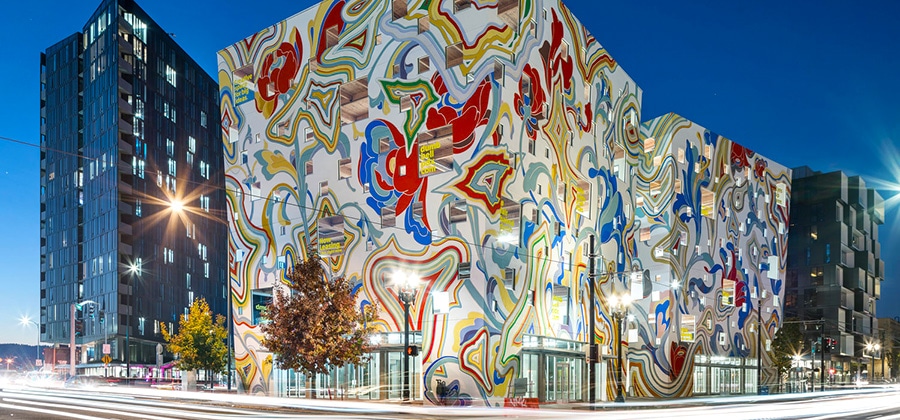
Another of Kevin Cavanaugh’s unique developments, The Fair-Haired Dumbbell, Is also in Portland’s Eastside. It consists of two separate six-story buildings structurally supported by mass timber sourced in the Pacific Northwest. The buildings are connected on each level by skybridges, and the entire façade is wrapped in a wild and colorful mural by Los Angeles artist James Jean. As if that wasn’t enough of a challenge, this was one of the first projects to raise funds using Regulation A crowdfunding.

Guerrilla Development’s many projects include Dr. Jim’s Still Really Nice, The Ocean, Burnside Rocket, Rig-a-Hut, Two-Thirds, and The Zipper. And two of those projects –Jolene’s First Cousin and Atomic Orchard Experiment – have reduced-rate units reserved for homeless people and social workers. And of course, these were crowdfunded too.

As a developer, Kevin wants his buildings to attract attention and to encourage people to live in that city. And he wants his buildings to make people happy. He is one of the most creative developers we know.

Have some fun and listen to my conversation with Kevin here.

Image courtesy of Guerrilla Development
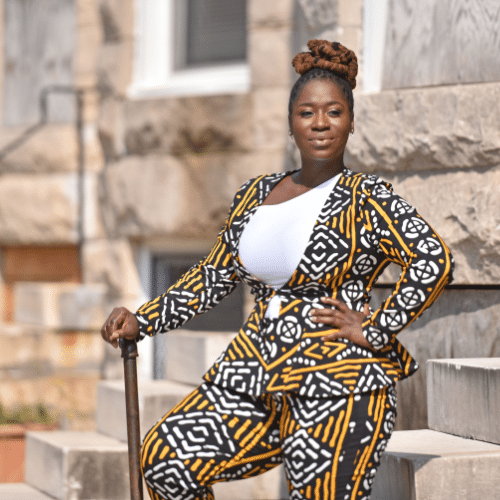
She’s breaking barriers.

September 1, 2021

Joanna Bartholomew, owner of O’Hara Developments, is a woman who’s breaking all barriers. 

While Joanna’s background is in social work, community health and financial education, real estate is in her blood. Her father was a developer, and as a young girl she spent time with him, both in the office and on job sites. So it’s no surprise that she launched her own real estate company.

But being a Black woman in the real estate industry is not quite enough of a challenge. On one hand, Joanna is focusing on broad community development by tackling decaying properties in East Baltimore (one block at a time) and breathing new life into them. But on the other, she is committed to providing outreach to the people who will occupy them. To make sure that what she is building will serve the community effectively, Joanna’s organization offers up financial literacy courses and down payment programs, to both educate and support new potential home-owners. All of it to make sure everyone can have a chance at home ownership.

Insights and Inspirations

  • Joanna is one of a few. A black woman with her own real estate company.
  • She’s focussing on community development one block at a time, tackling decaying properties and breathing new life into them.
  • Her past career in social work creeps into her real estate work. She offers up financial literacy and down payment  programs so that everyone can have a chance at home ownership.
Read the podcast transcript here

Eve Picker: [00:00:17] Hi there, thanks for joining me on Rethink Real Estate. I’m Eve Picker and I’m on a mission to make real estate work for everyone. I love real estate. Real estate makes places good or bad, rich or poor, beautiful or not. In this show, I’m interviewing the disruptors, those creative thinkers and doers that are shrugging off the status quo, in order to build better for everyone. When I’m not hosting the show, I’m running my real estate crowdfunding platform, SmallChange.co, where you’ll find impact real estate investment opportunities open to everyone, or you can learn more about me and catch up on some podcasts at my website EvePicker.com.

Eve: [00:01:14] Today, I’m talking with Joanna Bartholomew, owner of O’Hara Developments and a woman who’s breaking all barriers. While Joanna’s background is in social work, community health and financial education, real estate is in her blood. Her father had a real estate company. And as a young girl, she spent time with him in the office and on job sites. So it’s no surprise that she launched her own real estate company. But being a black woman in the real estate industry is not quite enough of a challenge for Joanna. She’s focusing on community development one block at a time, tackling decaying properties and breathing new life into them. You’ll want to hear more.

Eve: [00:02:04] If you’d like to join me in my quest to rethink real estate, there are two simple things you can do. Share this podcast or go to Patreon.com/rethinkrealestate to support this podcast for the price of a cup of coffee.

Eve: [00:02:25] Good morning, Joanna. Thanks so much for joining me.

Joanna Bartholomew: [00:02:28] Hi, Eve. Good morning. Thanks for having me. Yeah.

Eve: [00:02:32] So you’re a pretty rare breed, a black woman developer. And I was wondering how you got there from your initial career choice of social work. That’s quite a journey.

Joanna: [00:02:46] It quite is. So I actually was raised in real estate. My father was a developer. So, growing up, I knew him to just be the person that always would have me in these rooms of either going to a settlement or going to the old Hechinger, which was the former Home Depot, picking up the lumber and looking at like design sketches and things like that. I still remember having to take a construction class in an elementary school. And I have to be honest, I probably picked the classes I knew I could pass. My house, that I had to build it looked better than all the other kids in the class because of my dad. But fast forward, you know, being in the field of social work for some years and working with families that were facing various challenges, one of the most common things that we saw was their access to equity, their access to wealth. And in the population that I worked with were people that looked like me and other brown families that had limited access. And it wasn’t because of anything other than the knowledge and knowing where to get information. So what I wanted to do, expanding on, I said, you know, it’s time for me to fire my boss, get into the roots of what I know, and bring both worlds together so we could be able to provide access to equity. And one of the first places you could do that with is in real estate.

Eve: [00:04:11] So isn’t that interesting? Because my parents sort of grew up always investing that I grew up with my parents, always investing in real estate. They actually were refugees, so they had very little, but that’s when they had money and that’s what they invested in. So I was also very comfortable with real estate. And it really is about a comfort level, isn’t it, with something you don’t understand.

Joanna: [00:04:33] Right. Right.

Eve: [00:04:35] It’s really interesting.

Joanna: [00:04:37] And it does take a level of comfort to know what you know in your brain and have to manifest that into reality. And it requires some guts. And if you have the privilege of seeing that in your younger years, when you get older, it does feel a little bit more comfortable vs. a family that doesn’t know anything about these type of financial terms and systems. And now you’re adding on a big house responsibility onto it. So we want to be able to be that line of support.

Eve: [00:05:06] So what sort of projects do you focus on?

Joanna: [00:05:10] So our projects primarily are residential. The majority of them are three level homes, three story homes where they’re row homes there in the urban community. And we are either transitioning them into single family homes where they can use the whole space for their family or we are actually converting them into duplexes, most of them being bi level units, two bedrooms, two baths, where people can also be able to rent from them for a period of time. Now, with our renters, we do something a little different because, again, we’re encouraging homeownership. We take a portion of their rent and we put it into escrow. So when they’re ready to be able to transition to being a homeowner, they could actually use those funds, especially if they’re purchasing one of our properties towards either down-payment or any moving costs.

Eve: [00:06:02] Oh, wow. So how long does it take for someone to save enough that way to purchase a house?

Joanna: [00:06:11] Well, it really just depends. I mean, everybody’s situation is different. How much they need for down payment, is different and they may not even use it. They may use it towards their moving costs. They can use it however they choose. But I would say if I had to put a number on it, most people could be able to use those funds at least in about a year and a half. Right. So.

Eve: [00:06:35] Right. So this is the social worker in you emerging in real estate.

Joanna: [00:06:42] Yes. Most developers could care less about where you’re moving to next.

Eve: [00:06:46] This is really, this is really cool. So you’re really working on the whole thing. The real estate project and the people who live in the projects.

Joanna: [00:06:57] Yes.

Eve: [00:06:59] So where do you focus on your projects?

Joanna: [00:07:02] So as of right now, we have I would consider it to be our staple development site, which is in Baltimore City. We’re actually restoring a nice portion of the neighborhood. Some people say that we bought the neighborhood, but I don’t feel that way. It’s about two continuous blocks, I would say, in that area that we’re focusing on. And majority of them are actually not all of them are three story buildings. And we’re planning for about 15 single family homes and eight buildings that will actually be duplexes.

Eve: [00:07:35] So I’ve seen the blocks and the architecture is really stunning. And these buildings have been vacant for a while, haven’t they?

Joanna: [00:07:45] Yes, they have, unfortunately in a lot of urban neighborhoods, what we hear and what we see is the aftermath and some of it we’re still fighting that’s affiliated to redlining. And redlining is something that has caused a lot of funds to not be placed in certain neighborhoods over the years, which would have allowed people to become homeowners, which then also brings in other things as far as, you know, very poor behaviors in terms of drugs and things of those nature. So these are neighborhoods that have that are being revamped. But we have to be intentional in how we do it in these spaces, because these are people that have lived here in some shape or form for a long time. But in this particular area of Baltimore, Baltimore had a great flight at one point where a lot of these homes became became vacant. So we’re working with various city programs and some individuals in terms of the acquisition of the properties. And we also make sure that we work with some of the neighborhood associations as well, making sure that they are aware of some of the programs that we have. One of the beauties about adding in the social work piece is that because of our program and through our non-profit, we’re also able to provide up to 43,000 dollars in down-payment assistance as well.

Eve: [00:09:00] Wow. So you have to tell me more about the non-profit. You’re throwing things at me really fast. So what condition are the buildings in?

Joanna: [00:09:11] It varies. Some of them. I mean, you have to, I tell people all the time what we see in like the Home Depot and Lowe’s now as lumber is nothing in comparison to some of the true lumber that was there way, way back in the day. So these houses have stood the test of times. I mean, they have great solid bones. Some of them are still pretty intact and maybe they just need heavy cosmetic work. But there’s also some of them where the roof has already caved in and now we’re doing a lot more extensive work. There’s a good portion of them that are also considered to be historic. So when we restore those, we have to follow certain architectural guidelines. So we have to put back like wood windows. If the staircase was still intact, we have to restore the staircase to its original state as much as possible. We have to take certain pictures, submit it to the historic alliance there to be able to make sure that we’re following things to code. So it’s a little bit a mixture of both that we experience.

Eve: [00:10:18] Cool. So when it’s done, how many units will there be? What will this project look like?

Joanna: [00:10:24] So in this phase of the project, which I consider to be Phase A, there will be a total of 31 units. Between the single families, the units from the duplexes and one of the duplexes has a commercial space at the bottom. So it’ll be 31 units and the the duplexes will bi-level two bedroom, two bath, kind of give you that New York feel a little bit. So it will have that, that feel of a home because you can be able to go upstairs and downstairs. One of the things that we did during the time of when the pandemic first hit and really, really heavy, we readjusted the layout for the single-family homes because we know some people are not going back into the office for work for some time and some children are still going to do hybrid learning or they’ll be learning 100 percent from home. So those homes have a loft area that could be converted back to a bedroom later on, if they chose to. And it also has a private office for whomever wants to use that as well. So we wanted to meet the families where they are in the times that we’re living in because we don’t know how long we’re going to be living this way. So it’s a very convertible house. I would say that can truly grow with you.

Eve: [00:11:40] And what is Phase Two?

Joanna: [00:11:43] Well, Eve, maybe I could say a little bit about that. So,t Phase Two is at very, very early stages. We have some land there that we are considering to do some development on. We can’t talk too much about it, but it could be some brand new construction with some condos. So we’ll see.

Eve: [00:12:04] Ok, and I know you’ve talked to me in the past about open space as well and how that knits into your overall strategy. And can you talk about that?

Joanna: [00:12:15] Yes. So through our non-profit, we manage about 27, 25 lots, give or take, in the East Baltimore section of the city. Our biggest thing is, is reducing vacant lots. So right now, a lot of the lots, we’re just keeping them clean as much as possible. Some of them are side lots next to homes. Some of them are just completely wide open spaces where they used to be homes, but they had to be demolished for whatever reason, more than likely because it was a safety hazard to the neighborhood and they’re just completely open. So what we’ve been doing with one of the particular areas, which is about a little over a quarter acre of land, that space, we’re actually transitioning that to a community park. So on our in our neighborhood, right behind some of the houses that we’re planning to build to restore there, you would now have a community park right in your backyard where you could really be in your kitchen and look out and see your kids playing or any of those things there. It’s going to be really nice. We’re using a concept that we like to call It Takes a Village. So we are blurring the lines of Baltimore City and really allowing people from different cities and states to donate and be a part of reducing vacant lots in urban neighborhoods, period. And that has been going pretty well. So we’re excited to see what it looks like when it comes together.

Eve: [00:13:39] So I want to come back to the non-profit. You said you have a non-profit as well, which is kind of unusual for a developer. Why? And what do you accomplish with that?

Joanna: [00:13:48] So through our non-profit, we only manage space, the green spaces, because they are not providing us any rent. So through our reinvestment model, we donate a portion of our profit from our developments into our non-profit. That helps us to be able to provide financial wellness workshops for the neighborhood. We’ve recently partnered with JPMorgan Chase Bank, which we’re really, really excited about, to be able to offer workshops to the neighborhood. We also have a summer financial literacy program that we’re actually in our fifth year. I couldn’t believe it, the other day when I saw the number. We’re in our fifth summer providing financial literacy specifically for young women. And then we also have our housing and financial counseling program. So for us with a non-profit, it’s not necessarily totally focused on real estate, but it does manage the last that we adopt and or that we own under that umbrella.

Eve: [00:14:46] It’s a really interesting strategy because often in neighborhoods like the one you’re working in you would only be able to have a non-profit developer to accomplish all of this. This is not yet. I’m sure it’s still a soft market. Is that what you’re experiencing? I mean, the market values are going to be different in a in a more established neighborhood in Baltimore, certainly. Right.

Joanna: [00:15:12] Right. So I would say that right now we are still in the early transition part of this neighborhood. We do have some brand new development that has already happened. They they did modular homes right in our backyard where we are. And those were eight. Yeah, I think we’re eight of modular homes and they look beautiful. And we have some other homes that have already been restored and they vary. In terms of price point, you do have some non-profits that have actually built those homes and they were able to take advantage of different funding and they were able to offer them under three 300,000. And then you have some of your traditional developers who have come in and done restoration projects and they’re selling for over 300,000. So we’re still very much in the early phase in this particular area. And it just it does vary.

Eve: [00:16:03] Right. So not absolutely ground zero.

Joanna: [00:16:05] Right.

Eve: [00:16:06] So tell me about some of the challenges you’re being confronted with, both as a developer and with this project.

Joanna: [00:16:15] Right, so as a female developer, one of the challenges is that I’m often taken as the secretary when I walk into most places then the owner. And it’s nothing wrong with being a secretary or an administrative assistant. But it’s the assumption of the fact that she could actually be the owner, that sometimes can be a bit frustrating. And so that can kind of get underneath my skin a little bit. I try my best for it not to get to me, but it can be a bit uncomfortable. I feel like when I get into spaces and I get in and I get a chance to connect with other female developers, I almost feel like it’s a sorority. Like you haven’t seen your sorority sister since college. You’re like, oh my God, just another person like me. And we’re able to connect. Thank God. I had somebody call me yesterday and they were all the way in Boston and they said, Joanna, do you have like two minutes just to say hi to someone? They saw you online. She also female developer. Can you just say hi? And we were like, oh, my gosh, this is great. We have to connect. And, you know, I say that to say Eve, we need more females in this space. We need to have more women investing for sure. But we need to also have more women in the real estate industry. And this has been a very much a male dominated space for a very long time. I still come across in business meetings, in business meetings where men will say, sweetie, honey and I have to correct them.

Eve: [00:17:41] Yeah, oh yeah.

Joanna: [00:17:43] I’m not sweetie, would you say this if I was a man and we were talking about the deal? No, let’s you know, so I have to, often, correct that as well. So that’s some of the challenges that I face on the female side of being a developer. But building in Covid-19, I mean, who would have thought that this would be the time that we would really be doing this would be right in the middle of Covid-19. And it’s like, oh, my goodness. I think the beauty for me, though, because I’m often the person that’s thinking outside of the box, Covid has made every industry have to think outside of the box. So now when I’m going into spaces and I’m talking about for profit and non-profit and down payment assistance and thinking about the actual individual and how it affects their family, people are actually more open-minded now than they were three years ago when we first started.

Eve: [00:18:39] I think that’s very true. Yeah. Yeah, yeah. So so what about financing? I mean, you know, most of the honeys I’ve received have been at banks. I sometimes want to come back with sugar, but that won’t work.

Joanna: [00:18:58] Well, in regards to financing, we’ve been able to be in a good position. I mean, Baltimore’s is one of the places that we that we have our our staple project. We’re also doing some work in the Philadelphia area. And this is this is not the beginning. This is not a very this is the beginning of this level of how we’re going about things. But I’ve been able to do some projects in the past where I was strategic with those funds and really allowed that to be the spark of what we’re working on now. We’ve also done…

Eve: [00:19:28] I think I think it was asking more like how did banks treat you when you walk in the door? You know…

Joanna: [00:19:35] Banks are a little bit a little bit different. I think I’ve come across more of the honeys and the sweeties in the private the private conversations. That could be a little frustrating, but I think the bank so far has been pretty good. And we haven’t had to really work with too many of them. Most of our financing when we’ve done construction and things of that nature has been more of your alternative options. Some people call them hard money and things like that. But I haven’t had a bad experience at the bank, knock on wood that they won’t.

Eve: [00:20:10] Well, that’s an improvement. OK, so no other serious challenges. It looks like you’re roaring along. What about perception, like in the neighborhood?

Joanna: [00:20:23] Well, I would tie that in. And that’s part of where I was going with that. Perception in the neighborhood especially, and I’ll focus on Baltimore because Philadelphia is home for me. When you’re going into a city where you’re not from there, it does require another layer of work. You have to understand how their systems work. But right down to how can you get your utilities turned on is a whole new system, even with some of the things that we’re coming from a different city. Not necessarily using Philadelphia systems and trying to put them into Baltimore, but you’re looking at different systems from various cities. In addition to things that you have learned from a different industry and you’re bringing them into a city that you’re now in a room with other creatives, but now you’re bringing a different process to them because they may have only understood how things go in Baltimore, but now you’re bringing in new information and you want to do this in a strategic way where you’re not trying to flex a muscle and so to speak to them. But you want them to start thinking outside of the box of how they can be able to address some of the challenges. So I would say in a nutshell, it’s been positive overall, but at the same time, we’ve had situations where you do have people wondering, well, who is this woman? Where does she come from? How does she know this and how does….but now I could say that we’ve gotten past that part. And I want to say 95 percent is very much welcome in opening. We can pick up the phone, ask questions, get the support that we need with no problem. And Baltimore has become almost like a second home for me.

Eve: [00:22:08] That’s nice. But what about the neighborhood itself, the people who live there?

Joanna: [00:22:12] Right. So the people that live there? One of the things that I did from the very beginning, and this is before we did any construction on any property, I went I knocked on the door of the local church and I sat with one of the associate pastors asking them questions about what, how the neighborhood operates, what’s the vibe in the neighborhood, and I did not I did that not only with the church but even when we were out, some of my meetings are not just your formal neighborhood association meetings or your land use committee meetings. Some of these meetings, Eve, is right on a stoop. Sitting with someone that lives in the neighborhood. Asking questions and engaging with them before your you know, they just see you doing demo. And that has been very helpful. So, I mean, I think I might have one of the best security systems in the area, and that’s called neighbors now because of the fact that we have this relationship. So we will welcomed very early on with positivity. I didn’t have any issues with neighbors because I went to them. I didn’t wait for them to come to me.

Eve: [00:23:16] That’s great. So they trust you and they’re looking forward to what you’re building, right?

Joanna: [00:23:20] Oh, yes, absolutely.

Eve: [00:23:22] That’s wonderful. So you just made it a little harder for yourself. You added crowd funding to the mix. Your project of Aruka Midway in Baltimore is listed on my platform, Small Change. And that’s just another layer of complexity. Why did you do that? What do you hope to, what do you hope the outcome is?

Joanna: [00:23:50] What I hope for the outcome to be is for in urban neighborhoods, for wealth to be more normalized by the people that live there. And this is what I mean by this. Growing up I grew up in North Philly. That’s considered, quote unquote, the hood for some people. And when we will see development happening, even if you went off to college or came back, you’re like, oh, my goodness, what happened here? Ms. so-and-so used to live here. This school building used to be here. One of the common threads in the neighborhood and not just in North Philadelphia is, well, I didn’t even know what happened. Nobody ever talked to us about it. And we often feel boxed out, left out. And then definitely there was no one saying to us, well, how we could be able to at least reap some part of the return for things that are happening right in our neighborhood, that they also want us to patronize it. You want us to come shop at these retail places and things of that nature. So while we’re doing the crowdfunding raise, is to now provide an opportunity for people that live in the neighborhood, people that can relate in urban neighborhoods or those that want to support this type of development structure for them to also have a piece of what we’re also going to be reaping as well. That’s why we’re really creating it. We’re already doing the education in the community. We’re already providing the housing counseling through partnerships. We’re providing down payment assistance. So now the thing is, where can we do this in a way that, yes, we are able to raise the funds to do the development, but we also strategically do it in a way where those that can connect with this area in some shape or form can also be able to see what it looks like when you get that dividend check every year or see what it looks like when you can say, I own a piece of that restaurant that I go to every Sunday for family, a family breakfast. Those things start to matter. So that’s why I decided to create Aruka Midway. It’s a part of restoration for the neighborhood. And Aruka actually means restore in Hebrew.

Eve: [00:25:55] Oh, I didn’t know that. Thank you.

Joanna: [00:25:57] Yeah.

Eve: [00:26:00] Yeah. So, yeah, there’s something very palpable about people wanting to be involved in and engaged. And crowdfunding seems to just go that extra step. They can actually say I own a piece of that. I made it happen. Right?

Joanna: [00:26:13] Yes, absolutely. It’s the story that’s able to be told.

Eve: [00:26:17] Right. So what’s next for you? What’s ultimately your big, hairy, audacious goal, Joanna?

Joanna: [00:26:26] Believe it or not, and some people are often like, what, you don’t want to do this in 20 other cities? I absolutely do not. I want to live. I want to be able to enjoy the fruits of my labor and be able to enjoy time with my family. So doing this in more than three cities is not the goal. Three cities will be our max. We’re still identifying what that third will be. And ultimately, what we want to be able to do is for companies that see this to be a structure of purpose in their real estate development, is to be able to sow a seed and be their partner in helping them get started. Be a part of that funding for them where they could be able to come to O’Hara Developments and say, hey, I found a block, I found a neighborhood, or maybe it’s just one house. I know it fits into your model. Is there a way that you could support me? So if we could do that in a way of being some form of an equity partner in the beginning, giving them the consultation that they need, the support that they need. As long as they are looking to mirror a socially conscious and impactful model, the way that we have it, we want to be able to be that source for other developers in urban development.

Eve: [00:27:41] That’s a great goal. So thank you. Thank you very much for talking with me today. I hope that listeners will go check out your offering on SmallChange.co. We can’t talk too much about it here, but there’s lots about it there. So here’s to your success, Joanna.

Joanna: [00:28:00] Thank you, Eve. Thank you and thank you for having me today.

Eve: [00:28:09] That was Joanna Bartholomew. Joanna Bartholomew changed her career path from social work to real estate, and yet she didn’t. It’s not just about the vacant and decrepit row houses that she’s rehabbing one block at a time. For Joanna, it’s also about the people who will occupy them. She immerses herself in the community to make sure that what she is building will serve it well. And she offers up financial literacy and down-payment programs so that everyone can have a chance at home ownership.

Eve: [00:28:51] You can find out more about this episode or others you might have missed on the show notes page at EvePicker.com, or you can support us at Patreon.com/rethink real estate for the price of a cup of coffee. A special thanks to David Allardice for his excellent editing of this podcast and original music. And thanks to you for spending your time with me today. We’ll talk again soon. But for now, this is Eve Picker signing off to go make some change.

Image courtesy of Joanna Bartholomew, O’Hara Developments

One year. 41 more conversations.

July 28, 2021

41 amazing people. 41 inspiring conversations.

Cynthia Muller. Richard Rothstein. Andre Perry. Charmaine Curtis. Lyneir Richardson. Darryl Scipio. Libby Seifel. Beth Silverman. Patrick Quinton. Daniel Parolek. Charles Durrett. Heather Hood. Diana Lind. Scott Flynn. Atticus LeBlanc. Sam Ruben. Andrew Luong. Stephanie Gripne. Shannon Mudd. Ken Weinstein. Garry Gilliam. Andy Williams. Daniel Dus. Patrice Frey. Bruce Katz. Christopher Leinberger. David Peter Alan. Annie Donovan. Michael Shuman. Dan Miller. Scott Ehlert. Katie Faulkner. A-P Hurd. Max Levine. Brian Dally. Jonny Price. Michael Lee. Kevin Cavenaugh.

These are the rockstars of my show.

Season Three starts soon …

Read the podcast transcript here

Eve Picker: [00:00:14] Hi there. Thanks so much for joining me today for the final episode of Rethink Real Estate. For Good, season 2.

My name is Eve Picker and I’m on a mission to make real estate work for everyone. Real estate can help to solve climate change, can house people affordably, can create beautiful streetscapes, unify neighborhoods and enliven cities. 

You can learn more about me at my website, rethinkrealestateforgood.co, or visit my real estate crowdfunding platform, SmallChange.co. Our projects offer impact, solve housing problems, invest in neighborhoods and give everyone the opportunity to invest and build wealth for as little as $500.

[00:01:12] Today marks the second anniversary of this podcast. Two years ago, I didn’t know that our audience would grow as it has. In fact, two years ago I wasn’t sure we would have an audience at all. Now 10,000 people download episodes every month. That’s 10,000 people who care about thoughtful and impactful real estate solutions.  Wow!  I am humbled that all of you want to listen in.

This second year has been an opportunity to learn from yet another class of extraordinary leaders and innovators in real estate. My guests are working on housing solutions, policy issues, manufacturing, in fintech, on preservation, on developing new technologies and on providing real estate metrics, on mobility issues, as architects, on sustainable development, on community capital, on equity for women and equity for minorities and in many other niches, pushing the boundaries of the built environment to be better for everyone. 

The range of work that is being accomplished is quite awe-inspiring.

[00:02:25] Perhaps the most important theme this year was equity.

Cynthia Muller, director of Mission Driven Investments at the Kellogg Foundation. has been described as a “thought leader of the impact investing ecosystem and a trailblazer in the field.” In No guilt. Just Action. she reminds us that every time there has been an opportunity for black and brown people to build an asset, to build wealth, it’s been taken away from them. Let’s change that. 

Richard Rothstein and Andre Perry have written about these inequities.In The Color of Law Richard argues for a national civil rights movement to ensure that we all get to reap the economic benefits of living in this rich and diverse country. And In Know your price, Andre share findings that homes are underpriced by 23 percent, or $48,000 per home, in majority black neighborhoods. That’s $156 billion in lost equity.

[00:03:31] Charmain Curtis, Lyneir Richardson and Darryl Scipio are a new breed of black developers. Charmain has built a successful career as a developer despite being a black woman. She didn’t realize what she was up against until she was in her 30s. In Spread the Wealth she ponders how wealth could be distributed equitably to everyone.

In Building Generational Wealth, Lyneir describes his plan to buy 100 community shopping centers with 100 community members, all focused in majority black neighborhoods. He provided the first opportunity to 140 investors on Small Change early this year.

[00:04:17] Justice runs deep with Darryl.  In Turning renters into homeowners he describes his latest passion project, Savers Village.  He aims to help every tenant save enough for a down payment on a home.

And Libby Seifel is focused on women.  In Women building collective muscle, she describes the network of women leaders in real estate she has built. After more than 30 years in the industry, she is no longer the only woman in the room, and that some of the biggest new projects in the Bay Area are being driven by women.

[00:04:56] Housing solutions are importantly getting a lot of attention.

Perhaps the boldest of these is Beth Silverman’s Lotus Project. In Radical in its Simplicity she tells us how ,for just $800, her organization can successfully house a homeless family and change the trajectory of their lives forever.

We learn about accessory dwelling units as an affordable housing solution in Yes! In My Backyard! Patrick Quinton has developed a manufactured solution that drops a 32×14 foot ADU into a typical 50-by-100-foot lot in Portland, Oregon without hitting the setbacks and without requiring city design review. And he’s raising money for this project on Smallchange.co

[00:05:48] On the west coast, Daniel Parolek, architect, coined the phrase, The Missing Middle just as the critical absence of affordable housing was becoming a major planning issue for cities nationwide. He explains what the missing middle is, why it is important and how we can build more of it. 

Charles Durrett brought co-housing from Copenhagen to the US many years ago and wrote a book about it. He explains why he’s spent a career in co-housing and how it can make people’s lives better in It takes a Village.

[00:06:27] In Northern California, Heather Hood oversees efforts for the Enterprise Community Partners that ensure low- and moderate-income residents have access to affordable, quality housing. We talk about the enormous size of this problem in The elephant in the region.

And Diana Lind wraps it up for us in Lets be Brave. She’s written a book called Brave New Home in which she argues that the single-family home is at least partly to blame for our current housing woes.

[00:07:01] Technology is rapidly transforming the real estate industry in many different ways as well.

Some of my guests, like Patrick Quinton and Scott Flynn in Manufacturing change, are focused on manufacturing affordable homes in factories. Scott’s company, IndieDwell, manufactures smaller, sustainable and affordable homes at the pace of 10 homes per week and growing.

But others are pursuing new ideas.  Atticus LeBlanc tells us about PadSplit in One Room at a time.. He wants to dramatically change how we address affordable housing by using space that is now under-used in everyday homes.

[00:07:46] Or Sam Ruben in 3D-printing, robotics and automation, oh my! His company is printing buildings and hopes to create affordable and sustainable homes with their new technology.

And finally, Andrew Luoung who has deconstructed the often lengthy and confusing process of small scale real estate investment, making it accessible to everyone.  In Andrew loves real estate he describes the online turnkey service that he has developed into Doorvest.

[00:08:20] Some guests are focused on fertilizing tranches of future impact investors and leaders.

None is more passionate than Dr. Stephanie Gripne. In The impact accelerator, she tells us about founding the Impact Finance Center with a mission to identify, train and activate philanthropists and investors to become impact investors. Her big, hairy audacious goal is to move a trillion dollars into impact investing.

Dr. Shannon Mudd is right behind her, teaching students how to invest $50,000 of real money for maximum social impact. His Young Angels are carrying this knowledge into their professional careers.

[00:09:09] Others want to pay it forward.

Like Ken Weinstein, a highly successful Philly developer whose career was inspired by his landlady in Germantown. He’s created a boot-camp for aspiring developers called Jumpstart Germantown and describes the program in Jumpstarting a community.

[00:09:32] Garry Gilliam may be best known for playing in the NFL. Today he has a second career as an impact real estate developer. He tells about his first project in The Bridge. It came about as a joint effort with Garry’s friends from the Hershey School, a philanthropic school for low-income children. That school gave them all a leg up and now they want to give back to their community. 

Or Andy Williams, a former Marine who was determined to secure his future through real estate. He’s built a substantial portfolio of homes, a real estate development business focused on larger projects, and now, a program that seeks to turn veterans into entrepreneurs just like himself.  

[00:10:23] Some guests, like Daniel Dus and Patrice Frey, are focused on building on what’s already there. Learn how Daniel is planning to redevelop the dramatically underutilized historic luxury estates of the Berkshires for the shared economy in Everything old is new again.  And in Saving Places, Patrice explains the role of the National Main Street Center in servicing the revitalization of commercial main streets in big cities and small towns alike.

Bruce Katz moves the focus back to metro areas in Cities are networks. As a foremost policy expert, Bruce argues that cities must knit together solutions. It’s an imperative. And he calls this the new localism.

Christopher Leinberger is thinking along the same lines in Back to the Future. As a renowned urban strategist, teacher, developer, researcher and author Chris thinks “Back to the Future” got it right.

[00:11:30] While David Peter Alan enchanted me in I’ve been working on the railroad with his singular passion for the country’s railway system. He has ridden the entire Amtrak system and about 300 transit providers in the U.S. and in Canada.

Annie Donovan and Michael Shuman are focused on alternative finance. Michael thinks we have it Totally backwards. Local owned businesses make up 60 to 80 percent of the private marketplace in the average U.S. community. But economic developers and subsidies almost always overlook them. And Annie believes that disruptive capital is critical for solving thorny problems. She describes her pursuit of fairness in economics and finance in The world beyond banks.

[00:12:27] A handful of guests are diversely focussed on sustainability in the built environment.  Perhaps the most interesting is Dan Miller, who has launched a platform that connects everyday investors with farmers who need loans. He’s Stewarding the Future of Farming with investments as low as $100.

Scott Ehlert and Katie Faulkner are mass timber experts.  Katie as an architect with an eye on sustainability in From here to there.  In Mass timber for the masses, Scott tells us about the installation and cost benefits of a proprietary hollow core mass timber system he is designing that uses 50% less wood fiber. And, as if that is not enough, Scott is also designing a robotic fabrication facility to anchor a new wood product innovation campus, in California.

While A-P Hurd remains focused on building Livable and delightful communities.

[00:13:28] This class of guests would not be complete without my colleagues in the crowdfunding industry.

Some like Max Levine and Brian Dally are focused on real estate.

In Hello, Neighbor we learn about Max’s Neighborhood Investment Company, which has a mission “to localize wealth creation and broaden access to neighborhood equity.”  While in Get in on the ground floor,  Brian describes the platform that he has built into the go-to funding platform if you want to fix’n flip property.

Jonny Price, previously with Kiva and now with Wefunder, is focused on Filling the “crazy” gap. There’s a common theme for Johnny – financially excluded and socially impactful businesses.And Michael Lee is Building Virtual Communities using blockchain. Instead of using blockchain for crypto, he’s using it as an organizing tool to democratize the power of data.

[00:14:31] Finally, what better way to end than with Kevin Cavenaugh a developer in a class of his own. In I do a bunch of weird stuff, you can tap into this unique developer. Left brain, right brain, head and heart all come to bear on his wildly creative buildings. “I’m tired of mocha-colored, vinyl-windowed boring. I can’t change the fact that the streets are gray, and the sky is gray. But the buildings?” says Kevin.

Phew. That’s a lot of podcasts.  I’ve enjoyed every interview with every person.  I’m in awe of them all.   But it’s time to take some time off to recharge and get ready for Season Three. We’ll be back refreshed in September with many more amazing people for you to listen to and for me to learn from.

Thank you so much for joining me.  Now go forth, invest a little in your community and make some change!

Filling the “crazy gap”.

June 30, 2021

Jonny Price has spent most of his working life in the world of microfinance, first at the nonprofit, Kiva, and now with the crowdfunding platform, Wefunder.

He started his journey from management consultant to crowdfunding guru in 2009, as a volunteer with Kiva, on an externship from his consulting job. He made the full leap over in 2011, to lead the Kiva Zip pilot project, which later became Kiva U.S. And a couple of years ago, he transitioned to Wefunder, a crowdfunding platform where everyone over the age of 18 can invest as little as $100. 

Kiva and Wefunder have a common theme for Jonny – they are aimed at  “financially excluded and socially impactful businesses.” He talks about the “crazy gap” between bank loans for established businesses, and venture capital for a select few.

Jonny is squarely in the small business corner.  He’s spending his life building alternative financing systems for businesses seeking to launch or grow – businesses that simply don’t meet the rigid criteria of our traditional financial institutions. Some of these are tiny, and some are big. But they have one thing in common – while they hold little interest for banks or venture capitalists, they certainly can add a lot of value to our economy by innovating and creating jobs.


Read the podcast transcript here

Eve Picker: [00:00:03] Hi there, thanks for joining me on Rethink Real Estate. I’m on a mission to make real estate work for everyone. Real estate can help to solve climate change, can house people affordably, can create beautiful streetscapes, unify neighborhoods and enliven cities. So I’m on a journey to find the most creative thinkers and doers out there. I’m not the only one who wants to rethink real estate. You can learn more about me at EvePicker.com or you can find me at SmallChange.co, a real estate crowdfunding platform with impact real estate investment opportunities open for investment right now. And if you want to support this podcast, please join me at Patreon.com/rethinkrealestate, where there are special opportunities for my friends and followers.

Eve: [00:01:07] Today, I’m talking with Jonny Price, V.P. of Fundraising for Wefunder. Jonny Price, who spent most of his working life in the world of microfinance, first at the nonprofit Kiva and now with the crowdfunding platform, Wefunder. He started his journey from management consultant to crowdfunding guru in 2009 as a volunteer with Kiva. He made the full leap over to Kiva in 2011 to lead the Kiva Zip pilot project. This later became Kiva U.S. and a couple of years ago he transitioned to Wefunder, a crowdfunding platform where everyone over the age of 18 can invest as little as 100 dollars. Kiva and Wefunder have a common theme for Jonny. They are aimed at financially excluded and socially impactful businesses. Jonny talks about the crazy gap between bank loans for established businesses and venture capital for a select few. Venture capitalists almost exclusively focused on potential unicorns. A lot of businesses in the middle fall in between the cracks, and Jonny thinks that crowdfunding might serve them well. If you’d like to join me in my quest to rethink real estate, there are two simple things you can do. Share this podcast or go to Patreon.com/rethinkrealestate to learn about special opportunities for my friends and followers and subscribe if you can.

Eve: [00:02:49] Hi, Jonny. I’m delighted to talk to you today.

Jonny Price: [00:02:52] Thank you, Eve. I’m delighted to talk with you, too.

Eve: [00:02:55] I think I’m especially delighted because you have an accent closer to the mine.

Jonny: [00:02:59] My accent actually sounds pretty Australian these days after 10 years in America. It’s becoming more and more diluted, polluted by the day.

Eve: [00:03:10] I think I’m stuck somewhere between the two, yeah. OK, so I wanted to start by asking you how someone with a degree from Cambridge in history, economics and Italian ended up at Wefunder?

Jonny: [00:03:25] Yes.

Eve: [00:03:26] Take me on the journey.

Jonny: [00:03:27] The meandering journey. Yeah. So, when I graduated from university, which was, I think 2005, I didn’t really know what I wanted to do with my history degree. And the economics and Italian, are kind of embellishments for the LinkedIn profile to impress people like you. But really, it was a history degree. So even less useful, I think you know, than having the economics. And so I didn’t really know what I wanted to do and was just kind of looking for jobs. And the management consulting guys gave out really good wine and kind of looked at their recruiting event and sold a good story of, you know, fly around the world and advise, you know, senior executives of big companies on their strategy. And so I kind of fell into that a little bit and worked for a firm called Oliver Wyman in their London office, which kind of looking back on that, I kind of maybe think I would have enjoyed my 20s if I started my career in startups and entrepreneurship. But at the time I actually really enjoyed it. A lot of people don’t like it and leave after a couple of years, but I actually kind of liked it and I decent with some good skills that it taught me. And then four years into working for Oliver Wyman, I took a what’s called a non-profit fellowship. They had this awesome scheme where you could go and volunteer for a non-profit for a few months and they actually paid you part of your salary while you were there. And so I flew to San Francisco and worked for a non-profit called Kiva.org in their San Francisco office for five months. And you probably, do you know Kiva?

Eve: [00:05:15] Oh, yeah.

Jonny: [00:05:16] So as someone in the crowdfunding, a maven of crowdfunding, you probably would. So they are, as you know, crowd funded microloans for entrepreneurs all around the world. And they kind of really burst onto the scene in 2005. When they were founded, they were on Oprah’s favorite things. Muhammad Yunus won the Nobel Peace Prize for microfinance. Crowdfunding was a new thing. And so, in 2009, I went to volunteer there for a few months, kind of fell in love with the mission, the team and also a girl called Ali, who is now my wife. So she’s a big part of the story because after that five months was up, I went back to London, back to Oliver Wyman. We were dating long distance. Then I got Oliver Wyman to transfer me to their San Francisco office so we could be in the same city. Then we got married and then she was like, actually, you know, you flying to Toronto on Sunday nights and flying back on Thursday nights with this management consulting thing isn’t really working for me. So how about you leave consulting? And so that was 2011. And so then I was looking for what was next. After Oliver Wyman and the guys at Kiva were looking at launching this new pilot program at the time called Kiva Zip. And they knew me from when I was volunteering there. And so it was kind of perfect timing. And I got into that in 2011. Ran that team for seven years. We can get into my exit story from Kiva if you want. And since early 2018 I have been leading the business development team at Wefunder. Sorry, that was really long-winded.

Eve: [00:06:47] No, it’s great. So, you know, I remember when Kiva came to Pittsburgh when you launched in the U.S., it was a really big deal.

Jonny: [00:06:58] Yeah. So the Kiva Zip pilot that I kind of founded back in 2011 at the time we were in both the U.S. and Kenya. After a few years, we ended up kind of winding down the Kenyan side, which is a whole other question that we can get into. Basically, it was resource constraints of trying to with very, very limited bandwidth, trying to build for small business owners in Nairobi and Pittsburgh is quite hot.

Eve: [00:07:30] Oh, yes, very, very much so.

Jonny: [00:07:32] Peter tells of bison zero to one rate while he talks about kind of starting with a very targeted customer base. We didn’t really do that on Kiva Zip. So that’s why we kind of ended up winding down the Kenyan side and then we focused on the U.S. So over time, Kiva Zip came to be known as Kiva U.S., and we brought this international microfinance model that Kiva had pioneered and crowdfunded microfinance and then brought it to entrepreneurs in the U.S. And I think we launched in Pittsburgh I want to say maybe early 2015. And I think since then we funded well over 100 small business owners and probably coming up in 200 now in Pittsburgh.

Eve: [00:08:09] Just in Pittsburgh alone. And what about in the U.S.?

Jonny: [00:08:13] When I left, we had funded 5,000 entrepreneurs. That was in the first seven years, and we did 1,500 the last year I was there and it was growing at about 30 or 40 percent a year. I think it has slowed down in the last couple of years, unfortunately. But yeah, at the time I left we had done 5,000.

Eve: [00:08:35] So what does it mean to be funded by Kiva for people who don’t know about Kiva?

Jonny: [00:08:41] So in the U.S. model, Kiva does zero percent interest crowdfunded microloans, and when I left, they were up to 25 K, although the average was just 5 K. So, if you have a barbershop or a small farm, then you know, and you need 10,000 dollars for a specific purpose rather than getting that money from a bank. I mean, banks are just not lending to small businesses these days or a conventional community development financial institution or a credit card or on deck or whatever the other options are. You could go to your customers or the Wefunder lender base. What was interesting about Kiva, unlike most crowdfunding platforms, is 80 percent of the capital is coming from Kiva’s lender base and they’re not getting an interest rate on the loans. It’s all zero interest, no fees. So they’re just lending to help entrepreneurs maybe like invest in this business, in their community or, you know, they like the story and then they just want to help. And they have money in their account, and it’s being paid to them back. And then they just relend it and it keeps cycling over and over again. So, so that was the model. So for entrepreneurs and we were we were lending to people that no one else would lend to start-up businesses, low credit scores, you know, low income entrepreneurs, two thirds actually more of the loans we made were to women entrepreneurs, 70 percent were to entrepreneurs of color. The median household income was 42,000 dollars. So we were really extending loans to small businesses that no one else was touching. And instead of them paying exorbitant punitive interest rates, they were paying zero percent. It was very kind of fun to just buck that open economic paradigm in that way.

Eve: [00:10:25] I’ll bet. Yes, yes. And then, and then Wefunder seduced you away.

Jonny: [00:10:32] Kind of. Yeah. So I, there was a new CEO who came in at Kiva in late 2017. And he basically wanted to take their program in a different direction. He didn’t think the growth rate was fast enough was what he told me. And so he asked me to step down from running it in early 2018, which was quite a shock to me. I thought things had been going very, very well. And I think he maybe and some people in the Kiva board were kind of used to kind of venture capital backed growth rates and were looking for the hockey stick, which we suddenly weren’t delivering a hockey stick. Our growth rate, as I mentioned, was like 30 or 40 percent. So, yeah, he asked me to step down, which caused me to to move away from Kiva. And thankfully, I found Wefunder. And when I left Kiva, I kind of seen a couple of big challenges with the Kiva model. Firstly, Kiva wasn’t really earning any money from making these loans. We weren’t charging an interest rate or a fee to borrowers and say the model wasn’t very economically sustainable. Kiva, as a non-profit, was reliant on grant funding, which was challenging then for us to scale. And we weren’t able to attract venture capital funding, for example, to grow very quickly. And so the growth was a little more linear. So the economic sustainability of the Kiva side was one challenge. And then the other challenge was that the lenders, because they weren’t offered a potential rates of return, the capital that they were willing to deploy was also very limited. So I think we made 25,000,000 dollars of loans when I was there. 5,000 loans and 5,000 dollars average loan. But, you know, it wasn’t like two and a half billion.

Eve: [00:12:25] And I mean, in that period of time, how much venture capital was deployed to businesses?

Jonny: [00:12:29] Exactly.

Eve: [00:12:29] Like seriously, how much? What was the number? Compared to… billions and billions.

Jonny: [00:12:35] Right. So then at Wefunder we’re charging founders a fee to raise on the platform like Kickstarter does or any crowdfunding platform apart from Kiva. And then we are offering investors, is the hope of return. And obviously investing in start-ups is super risky. A lot of them will go to zero, but some of them might hit it really big. We do loans as well on the platform where you’re getting an interest rate back on the loan and so the Wefunder model, solved the two biggest challenges I’d seen with the Kiva model and so and got to know the team and was just very, very impressed and inspired with both the mission and the caliber of the people. And it’s really been a match made in heaven and it’s been a very, very exciting and fun three and a half years.

Eve: [00:13:22] Wow. So what’s your role at Wefunder?

Jonny: [00:13:25] So my title is VP of Fundraising, and I’m basically responsible for leading a team that is focused on getting founders fundraising on the Wefunder platform. So, you know, we are investing in tech start-ups and breweries and coffee shops and movies, and we really have a pretty eclectic portfolio. But, you know, finding those founders, developing relationships with accelerators or incubators or small business development centers and then, you know, talking to those founders, explaining to them the pros and cons of regulation crowdfunding, which is what we do, and then hopefully working with them and say as they launch on the platform.

Eve: [00:14:12] So, as you know, I’m also in the regulation crowdfunding industry.

Jonny: [00:14:18] Yeah.

Eve: [00:14:19] What excites you most about crowdfunding and regulation crowdfunding in particular. What’s the potential that you think it holds?

Jonny: [00:14:30] Yeah, many things. I’ll maybe highlight three. Firstly, getting more capital flowing to found this. So, I think both in aggregate and then kind of disaggregated. So, what I mean by that is I believe that, you know, one of the reasons why entrepreneurial activity has been on the decline for decades in America is that this kind of you know, it’s harder to raise capital for early stage businesses. VCs have been going later. You know, banks are just not lending to small businesses or start-up businesses. So it’s harder and harder to raise capital. So if you read Wefunder’s, Public Benefit Corporation Charter, one of the things we’re trying to do is, you know, use democracy and use the crowd to get more capital in aggregate flowing to start-up founders and early stage entrepreneurs in America, period. And I think that’s really cool. I think there’s a lot of positive social externalities that come from people starting businesses and funding businesses. So, I’m excited about that in aggregate. And then to disaggregate right now, one percent of VC goes to black founders and three percent goes to female only founding teams versus 80 percent to male only founding teams. And 77 percent of venture capital goes to three states, California, New York and Massachusetts. I live in Nashville, Tennessee now. I moved here about a year ago from San Francisco. And it’s pretty striking to me how hard it is for families to access capital here in the heartland. I was chatting to one founder. He said, you can’t get in front of angels here until you have a million dollars in ARR, which is just insane.

Eve: [00:16:15] Yes.

Jonny: [00:16:15] And so not just more capital flowing to founders in aggregate. If the investors, you know, kind of look like the women of color in Baltimore or Nashville rather than just a lot of kind of conventional investors being kind of white men on the coasts, then hopefully we can get more equitable allocations of capital happening as well. So that’s on the founder side. And then on the investor side, basically, it’s simple, right? Why should only rich people get to participate in investing in start-ups? There’s a lot of wealth that’s being created by start-ups like imagine if the people that benefited from Uber’s IPO, the people that made like five thousand X on Uber’s IPO from that investment in the seed round instead of being a bunch of millionaires. If that had been middle class people, I just think that can be a powerful vehicle for wealth creation, kind of socio-economic mobility. And then the third point is like, and we’ve really experienced this on our own rates recently, we’ve only just raised five million dollars on for using regulation crowdfunding ourselves in partnership with a platform called Honeycomb, who you know who based in Pittsburgh.

Eve: [00:17:25] Yes, also Pittsburgh. Yes.

Jonny: [00:17:26] So Wefunder raised five million on Honeycomb from the crowd. And you see some of the messages that investors write about how they’ve been involved with Wefunder this since 2012 when we were founded, and they’re so inspired by our mission, and they’re really excited about what we’re doing. And it’s you read those comments and it’s just truly inspiring. And the point, that this third point is that trying to forge connections and, you know, tissue between founders and investors, I think can do really good things for start-ups. So obviously, consumer facing businesses, it’s probably the easiest to see if a consumer facing business raises a million dollars from a thousand people. That’s a thousand super loyal customers, brand ambassadors, champions that can help them grow the business and are now, you know, involved, and have a front row seat, you know, for the for the growth of that company. So those are the things I’m most excited about with this kind of democratic approach to raising capital.

Eve: [00:18:30] So have you seen an increase in minority or women business owners over the last year or two?

Jonny: [00:18:39] I don’t know if we’ve seen one over the last year or two. I think kind of from the outset Wefunder is always over indexed. You know whether you look at the three lenses I mentioned earlier, gender, ethnicity, geography, I think we’ve kind of over indexed versus conventional venture capital, angel investing. But on both sides of the marketplace. Right. Like working capital, flowing to underrepresented founders, but also 85 percent of angel investors in a stat I found online, I don’t know if it’s accurate, but this stat said 85 percent of angels are men, 15 percent are women.

Eve: [00:19:11] That’s, I think, that’s actually surprisingly.

Jonny: [00:19:14] Probably generous.

Eve: [00:19:14] The number’s so high for women actually.

Jonny: [00:19:17] On Wefunder it’s 70-30. Right. So we’ve still got work to do.

Eve: [00:19:20] It’s pretty good.

Jonny: [00:19:20] It’s not 50-50, but it’s, and the same on the founder side. We’re not at a level playing field yet, I would say, but suddenly we’re doing much, much better than conventional.

Eve: [00:19:31] I think real estate’s even harder. Very difficult to find female developers. And we’ve seen a rise of minority developers over the last year, which is really amazingly encouraging. But the number of women that invest in real estate is just startlingly low. I can’t believe it. I just like I. Yeah, there’s a lot of education that has to happen.

Jonny: [00:19:57] Mm hmm.

Eve: [00:19:58] It’s interesting.

Jonny: [00:20:01] Yeah, well, it’s good to be good to be working in the same space space as you as trying to, trying to move things in the right direction.

Eve: [00:20:10] Ok, let’s talk about the regulation, because, as you know, I love regulation crowdfunding, too. But it’s not a panacea. It doesn’t fix all things. What you know, what do you think are its warts and how could it be better?

Jonny: [00:20:24] Yeah, I mean, honestly, the recent changes that the SEC made, I think are very good. So, as you know, March 15th of this year, 2021, the SEC brought up some changes, some of the highlights. The headline was that, you know, the maximum amount a founder could raise increased from 1.07 million to 5 million. And that has meant that the quality of companies that are interested in raising from the crowd has increased. Which is kind of our paradigm on how we’ve got to make this industry work long term. I think one of the biggest criticisms probably valid over the last five years since the rollout of Reg CF in May 2016 has been that there is an adverse selection effect. And, you know, the best companies are going to go the conventional route of VCs. And, you know, so regulation crowdfunding is for companies that can’t raise money from real investors. And so what we are really trying hard to do as a company at Wefunder is to make that not true. And I am optimistic, but in large part because of our team, Nick Tommarello, our CEO, Greg Belote our CTO, just very, very brilliant, inspiring people that are thinking about this very, very strategically. But we are desperately trying to get to that world. And since the five million cap increase, we’ve had 30 Y Combinator companies launched on Wefunder. We had Rome Research raise a million dollars in a day. I think they oversubscribed to nine million dollars and had to turn eight million dollars of investors away.

Eve: [00:22:15] Wow.

Jonny: [00:22:15] We’ve raised five million dollars ourselves. Gumroad raised on Republik. So, you know, there really is, I think, an increase in that kind of caliber of companies that are looking at and happy to raise through regulation crowdfunding. And SPVs was another aspect of the March 15th rule changes, so enabling founders to raise through one on the table using a special purpose vehicle, which is how, you know, normal companies raise using Reg V funding. So there’s a, there’s more to do. And I think over time, like, you know, as there are more success stories. And the key for me is going back to the third thing I mentioned, I’m excited about. If the value that an early-stage founder gets from raising money on Wefunder through regulation crowdfunding, if the value that they get from this army of champions and customers and ambassadors is so strong that, like. And obviously, it doesn’t need to be an either/or thing you can raise from VCs and also from the crowd, and if the value that you’re getting from that crowd to really compliment the value that you’re getting from institutional investors, I think that will be the moment. And when it’s like, well, why the hell would you not do this as an early stage, you know, start-up? And you’re kind of putting yourself at a competitive disadvantage if you’re not recruiting this army of champions in the early, fragile days of your business. So that’s the world we’re shooting for. And probably not there yet. But we try.

Eve: [00:23:51] No, I don’t think we are there yet.  I think we, I think we’re very much the underdog, like in real estate. When I see the things that developers have to deal with because they want to do crowdfunding and because their large institutional investors don’t want to be next to small investors. It makes me want to cry. Like does small mean fraudulent? I don’t understand it, but yeah, you shouldn’t…

Jonny: [00:24:18] Do you see it moving in the right direction in real estate? Because, especially with this March 15th thing, but also the pandemic, I think accelerated this as well for us, because especially in the early days of the pandemic, I spoke to a lot of families who, you know, we’re talking to angels and basically had their rounds fall apart. And, you know, so then they were like, OK, we need a different option. And then they came. And so it’s been growing. And the kind of the caliber of founders I think has been increasing for a year or so. But that’s really accelerated in the last couple of months. So I see it moving in the right direction in the kind of start-up side. What about in the real estate side?

Eve: [00:24:55] Yeah, I’ve been doing a number of things that have sort of changed direction slightly towards higher quality developers. So we’re absolutely seeing it. And I think the most gratifying thing that I’ve seen over the last year during the pandemic is the number of minority developers who have emerged and are raising funds on this site. And I really, I’m just so excited to be able to provide that opportunity, because if you talk to any of them and ask them what help do you need, they say access to capital.

Jonny: [00:25:32] Yeah. And hopefully that will also translate to returns. So I had this stat the other day. I can’t remember the exact number, but it was something along the lines of where an investor invests in someone that went to their school. The returns are worse because of the school connection. That kind of buddy buddy, you know, kind of…

Eve: [00:25:54] Empathy I’ll put up with anything.

Jonny: [00:25:56] They’ll kind of, you know, make slightly worse investment decisions because there’s some subjectivity that creeps in. Right. And I don’t know how robust the kind of statistical analysis that went into this was. But I mean, it’s intuitive to me that it would be true. I’d never heard something like that before in that black and white terms. But when you hear that, it’s like, well, then obviously, you know, if you have kind of a bunch of, you know, investors that look the same, investing in founders that look the same as them, then, you know, if you can…

Eve: [00:26:32] Yes.

Jonny: [00:26:32] Kind of get more diversity of investments happening by recruiting more diverse army of investors, then that should all other things being equal, kind of improved returns, which is kind of encouraging for us.

Eve: [00:26:45] Little bit different with real estate, because, you know, we’re really all about supporting projects that wouldn’t normally happen or have difficulty raising funds because they are you know, it’s the same thing as a small business. They’re innovative. They’re creative. They’re new. They’re in underserved neighborhoods that do not have a strong market yet. And so banks don’t want to lend to them. Or if they do, they have an equity requirement that’s very difficult for these developers to fill. Right. So they’re looking at needing to find 40 percent equity for a real estate project that’s maybe 10 million dollars because the bank won’t lend them more than 60 percent. And so because banks lend based on tried and true.

Jonny: [00:27:31] Right.

Eve: [00:27:31] And understand, you know, that’s what an appraisal is all about. Three like things that have happened before that can almost assure them that they’re going to get their return. But if you have a neighborhood or a developer who’s never done that before, that’s difficult for a bank to finance. And but you know them often. These projects are in poor neighborhoods where the neighbors who care and want it the most may not have the finances to support even a small amount of the crowd fund raised. So it becomes a little more difficult.

Jonny: [00:28:08] Well, when you said not a panacea before that, that’s usually one of the things that I think about. The downsides of crowdfunding democratic investment, you know, with respect to leveling the playing field. Yeah, exactly as you say, right. If if black household. Last time I saw the stat black median household wealth was I think it was 10,000 dollars.

Eve: [00:28:32] And it’s less than that, I think is the last time I saw the stat.

Jonny: [00:28:36] White median household wealth was 170 or something like that.

Eve: [00:28:40] Yes.

Jonny: [00:28:41] And so where does that discrepancy. Right. If a black founder launches on Wefunder and is going to that community, it’s going to be harder for them to…

Eve: [00:28:49] Much harder. Yeah.

Jonny: [00:28:50] So it’s definitely not a panacea. On the regulation side, I mean, going back to your question, which I kind of didn’t really answer. What could be improved on the legislation? The one thing the reason I started talking about the big game for us as a company is like trying to get the best companies to choose to go with the crowd as well as or even instead of the conventional VC. So that’s a big aim for us. One of the ways that I think the legislation could change to move us in that direction would be carried interest. So, we have this principle of lead investors and Wefunder, where there’s like, let’s say, a well-respected angel investor who, you know, has experience in that sector where the start-up is operating and that lead investor will kind of, you know, validate the terms of the deal. OK, this the valuation cap on this convertible note of five million makes sense. I’m putting in 50 K of my money in this deal, and that’s a great kind of signal to the crowd. And they actually vote for the shares of the individual investors who have protection and representation in the SPV. But the lead investor is fighting for the shares. So it’s kind of good, good for investors. But the lead investor we’ve been told recently by the SEC, pretty explicitly, cannot earn any carried interest on the Wefunder the round as they can in an AngelList syndicate in the regulation D world. So if a syndicate lead on AngelList raises a million dollars to invest in a company, that syndicate lead can earn, I think it’s 10 percent, maybe 20 percent carried interest.

Eve: [00:30:27] It’s usually 20, 20 percent.

Jonny: [00:30:27] On the profits from the million dollars. And that can’t happen in regulation crowdfunding. And so, then those syndicate leads will be more likely to put that high quality deal flow on AngelList versus Wefunder, which again, will be a force for kind of, you know, making it harder for the best quality deal flow to go on Wefunder. So it’s kind of a little in the weeds, but that’s certainly one area where we, I think, would want the legislation to go in the future, potentially. I mean, there’s reasons why the S.E.C., you know, didn’t want to move it in that direction. Good reasons, but that’s something we were we were advocating for that didn’t happen with the March 15th rule changes.

Eve: [00:31:09] And while we’re in the weeds…

Jonny: [00:31:13] Yeah, sorry. Have you listened to that podcast In the Weeds. Or The Weeds, I think it’s called by Vox, but yeah. So sorry.

Eve: [00:31:21] No, no. Don’t apologize. I like it.

Jonny: [00:31:23] We’re diving deep. We’re rummaging around in the undergrowth, Eve.

Eve: [00:31:26] The beautiful thing with a podcast is that the listeners can turn it off if they’re bored. But, you know, the thing I really, I find difficult and dislike is that we, the crowdfunding portals are not permitted to invest in these deals. And this is after we’ve spent zillions of hours with them making sure their disclosure packets are good and ready to go. And we have a really good sense of the project. You know, my employees, my spouse might like to invest and we’re not permitted to. And I, I really kind of don’t get that, do you?

Jonny: [00:32:04] Yeah. I mean, you can charge a part of your fee.

Eve: [00:32:07] You can charge a part of your, a part of your fee, but you, but that doesn’t really help. Like, I’ve been told by my attorney that my husband may as well be me, in terms of this rule. He can’t invest.

Jonny: [00:32:20] Yeah, it has been, it has been frustrating to especially our founders down the years. You know, they’ve seen some very, very awesome companies come and go on Wefunder and not being able to invest in them has been personally frustrating for them.

Eve: [00:32:37] Yeah.

Jonny: [00:32:37] Yeah, I agree.

Eve: [00:32:38] It’s a weird one.

Jonny: [00:32:38] I think that’s where we would seem to align incentives.

Eve: [00:32:42] Ok, so what keeps you up at night?

Jonny: [00:32:46] Yeah, that’s a good question. I think probably investor returns. So I think the reason why unaccredited investors being able to invest in early stage private companies was illegal from the 1930s until 2016 was, you know, kind of, are retail investors able to make sophisticated investment decisions, firstly. And then secondly, do they have enough kind of, you know, money to kind of sustain the losses that they might incur? Because investing in start-ups is super risky. Right.

Eve: [00:33:30] Right.

Jonny: [00:33:31] And so I welcome, the SEC has put limits around how much people can invest so everyone can invest 2,200 dollars per year. And then there’s a formula for how much people can invest. And if you’re accredited, you can invest an unlimited amount, which actually another thing that changed with these March 15th rules.

Eve: [00:33:49] Yes, that’s a nice thing.

Jonny: [00:33:50] Harmonized with Reg D. But, you know, the point is like, yeah, like investor returns is the thing that keeps me up at night. So if in aggregate in 10 years’ time, you know, Wefunder  investors have, you know, lost a bunch of money by investing in start-ups and Wefunder then I will be sad. And so, again, this is going that I mean, in venture capital investing. Right. Like there’s a power lure effect where if you get into Airbnb. If you get into Uber, it returns a whole fund and say there’s a risk with which kind of start-up investing from the crowd that if the hottest companies in the 2021 batch of companies, you know, don’t raise on Wefunder, that they raise through conventional venture capital, then, you know, in aggregate the portfolio of Wefunder investors is kind of negative returns. And so, trying to ensure that we are, you know, returning money to investors is probably the biggest concern that I have. And again, it’s if we can get the best quality founders, the best deal flow up on Wefunder for us, that is like the North Star in terms of how we prevent that that concern from coming true.

Eve: [00:35:13] Yeah, I think I’m with you. I’m with you on that. It breaks my heart if investors lose money. And breaks my heart more for those ones who’ve invested 500 dollars. And I know, I know it was a meaningful 500 dollars for them.

Jonny: [00:35:28] Yeah. And look, democracy is complicated, right.

Eve: [00:35:32] Yes. And not always fair.

Jonny: [00:35:33] Not always fair. Everyone has different motivations when they are investing.

Eve: [00:35:34] Yes.

Jonny: [00:35:36] So I invested 125 dollars in Chattanooga Football Club, which is a soccer club that raised close to a million dollars on Wefunder a couple of years ago and now my name is on their jersey, you know, and I didn’t look at the financials. I didn’t I didn’t care about making a return on that $125. I just thought it was really cool to be a part owner of a soccer club, you know, in Tennessee. And so the point is that, you know, some investors on Wefunder, it’s a mother investing in her son. Right. Or it’s someone investing in this company up there now that’s curing cancer in dogs. And you see some of the comments and the investors who had a dog that died of cancer and they love to be a part of maybe coming up with a cure for that, you know, so. And then there’s people that are like really diving deep into the financials and thinking about, you know, that kind of IRR. Right. But we’re trying to we’re trying to capture kind of all investors and their motivations. And so that makes this question of kind of investor returns, I think, even more complicated.

Eve: [00:36:50] Yeah, I totally agree with you and even, you know, and then there’s also I think the education that they’ve probably been exposed to is, quite frankly, one of, I think, immense greed. You know, investors in real estate who don’t want to look at anything unless it offers 25 percent internal rate of return. Well, you can’t do that when you’re building an affordable housing project. And what you know at what point is that okay?

Jonny: [00:37:20] Absolutely.

Eve: [00:37:20] You know, like 10 percent seems pretty good to me, you know, but yeah, it’s a weird world.

Jonny: [00:37:27] Yeah. One of the things we try to do on Wefunder is to reject that greed-based education or communication. So we talk a lot about investing start-ups is risky. You look in the money up, don’t invest more than you can afford to lose. Our CEO had a phrase, a socially good lottery ticket.

Eve: [00:37:49] Yes.

Jonny: [00:37:50] Which I say we talk about that in our FAQs. I really, I really like that. But we really do try to flag that this is risks. And a tagline is: invest in start-ups you love. So that’s the brand that we’re going for. Invest in start-ups because you love what they’re doing. You believe in the founder. You know, you think it’s really cool. You want to be a part of it as opposed to invest in start-ups to earn a 25 percent IRR.

Eve: [00:38:19] Yes. Yeah. So then I have to ask a big question. What does impact investing mean to you then?

Jonny: [00:38:28] Mm hmm. Yeah, that’s, that’s a good question. And same thing on the other side, I would say, what is what a social enterprise mean? I thought about this a lot, both at Kiva, which was a non-profit, and then Wefunder, which is a public benefit corporation and a B corp. So I guess kind of technically a social enterprise and quite and this is kind of go back to the democracy part, right? Like, I think a lot of investors on Wefunder, individual investors on Wefunder that would call themselves or most people would say are impact investors, right? When I made $125 investment in Chattanooga F.C., that was, I don’t know if it’s impact…

Eve: [00:39:06] It impacts, yeah.

Jonny: [00:39:06] Community or kind of feel good. Right. As opposed to kind of financially based. But then there’s a bunch of other investors that you would say are not impact investors. And tell us in our email inbox right. I didn’t care about the impact. I just like, where’s my money? So, again, democracy kind of has to accommodate all different motivations. And sometimes people have hybrid motivations. But I don’t know both the Kiva and Wefunder. I see it as a spectrum, honestly. And, you know, it kind of having some line for like what is an impact investment and what is not an impact investment, I think gets pretty messy.

Eve: [00:39:49] It is messy. I totally agree.

Jonny: [00:39:51] And so, you know, I, I tend not to use those words, actually. And, you know, kind of I like it when people are thinking about, you know, holistic impacts and, you know, societal community like impacts on people as well as like what is my financial IRR. But I think there’s like a bunch of ways that you can do that. And so, I don’t really like to kind of get tied down to definitions. I would say, like when we’re at Kiva, you know, the kind of outcomes assessment was always quite bizarre to me. So we were like a tiny team, super resource strapped, trying desperately to grow this program that was making zero percent interest loans to low income small business owners. Right. And so and by the way, the last month I was there, the net promoter score from our borrowers was a hundred. Everyone that filled in the survey gave us a 9 or 10.

Eve: [00:40:50] Oh, wow.

Jonny: [00:40:50] In terms of what they recommend to a friend. Everyone. And so, did I believe that this was having a positive impact in the world? 100 percent like, you know. Was I able to kind of, you know, figure out through some survey or some other methodology that a randomized control trial meant that, you know, the Kiva loans led to a 12 percent increase in borrower household income or jobs created or business profits? No, but, you know, it’s kind of it’s tough to kind of pin it down, but I was just very confident we were kind of moving in that direction and had trust in our team. So I guess kind of same thing with like outcomes assessment and and analysis at Kiva. And that kind of definition of impact investing. I’m a little bit kind of more vague in hand, wavy versus kind of civic definition.

Eve: [00:41:45] Well, you know, we created our own index because we had our own ideas about it. And I looked at a lot of different ways to score impact. And I just felt like they were first of all, they weren’t easy for the everyday person to understand. And if you’re going to get everyday investors, you you’ve got to make it easy for those everyday investors. And secondly, I didn’t understand most of them.

Jonny: [00:42:08] Well it’s also it’s also very hard to collect the data. And then like at Kiva, if we were doing surveys to small business owners on jobs created, it kind of imposed an additional burden on them after the fact. So, yeah, it’s complicated.

Eve: [00:42:23] It’s complicated. OK, just a couple more questions. I want to know what your big, hairy, audacious goal is?

Jonny: [00:42:32] Yeah. I honestly, I don’t think we really have a kind of…

Eve: [00:42:38] Well, let me ask a different question.

Jonny: [00:42:40] Yeah.

Eve: [00:42:42] You know what are the sort of projects that would exemplify how you’d like to leave your mark on the world?

Jonny: [00:42:50] Yeah, so I think a few things. You know, firstly, again, getting much more capital flowing to underrepresented founders to level the playing field a little. I think I’ve always been pretty passionate about the kind of economic justice, why I went to work for Kiva in the first place. Why I went to Zambia for eight months on a gap year before going to the university. And so, yeah, trying to level the playing field as in terms of solid founders raising capital as one tool to try to address this worsening economic inequality in America that we’ve seen now for many, many decades. Right where the top one percent control more and more of the wealth. And so that’s kind of at base a big part of it for me, you know, enabling kind of investors throughout the country and throughout the economic spectrum to benefit from the wealth that start-ups are creating rather than just rich people getting to play. So obviously, there you, kind of, you need some returns. Right. And some companies like going big. And then probably another thing which we haven’t really touched on as much as kind of you’re getting this a little with the impact investing question. But, you know, I love it when I see things like the curing cancer in dogs company LEAH Labs, raising on Wefunder or companies that are tackling climate change. And that’s another thing, another lens where I hope a more democratic approach that funding companies can lead to better outcomes for society. I don’t have any data on this one. But if you look at sectors that are being funded by VCs, for example, I think you probably over index to, you know, consumer tech start-ups like Uber or Doordash.

Eve: [00:44:54] Um hmm.

Jonny: [00:44:54] Right. Versus I mean, you know, health care or climate change or education. Like inflation of, you know, consumer products. Look at Amazon. Right. It’s a massive deflation. Right. Everything’s kind of cheaper for consumers. Right. But health care and education are the inflation there is just massively higher. Right. And probably a part of the reason for that is our allocation of capital to those industries, to start-ups. Disrupting and improving those industries has been too low as a society. And so, again, with democracy, maybe we can kind of get more capital flow into those sectors. And again, to the point earlier that we were talking about, like probably the returns where there’s like a kind of a bias against doing something because, you know, all the investors went to Harvard and so they invest in the Harvard founders. And this that’s like a slightly worse economic decision, like hopefully also kind of investing in sectors that have been under invested in might also be good for financial returns as well as like benefits of society. And that’s like a really, really important one for me, is like if we can get, you know, more and more of Wefunder capital flowing to businesses that are very obviously good for society. I’ve actually been thinking about that this year. Is like with my time, like, how can I spend more of my time trying to find what you would conventionally term, you know, social entrepreneurs or entrepreneurs tackling the biggest challenges that would improve our society and to get a higher and higher share of founders on Wefunder kind of in that sector.

Eve: [00:46:47] Well, on that fantastic note, I think you and I agree, and it’s just been delightful talking to you, and I hope we can continue the conversation.

Jonny: [00:46:56] Likewise, Eve. This was a really fun conversation, it’s great to chat about these issues with someone that really knows this stuff inside out. And I think thinks along very similar lines to how I do. So, yeah, great talking as always and we’ll speak soon.

Eve: [00:47:15] That was Jonny Price. Jonny is squarely in the small business corner. First at Kiva and now with Wefunder. He’s spending his life building alternative finance systems for businesses seeking to launch or grow. Businesses that simply don’t meet the rigid criteria of our traditional financial institutions. Some of these businesses are tiny and some are big. But they have one thing in common, they hold little interest for banks or venture capitalists, but they certainly can add a lot of value to our economy by innovating and creating jobs. You can find out more about this episode on the show notes page at EvePicker.com, or you can find other episodes you might have missed or you can show your support at Patreon.com/rethinkrealestate, where you can learn about special opportunities for my friends and followers. A special thanks to David Allardice for his excellent editing of this podcast and original music. And thanks to you for spending your time with me today. We’ll talk again soon. But for now, this is Eve Picker signing off to go make some change.

Image courtesy of Jonny Price, Wefunder.

Stewarding the future of farming.

June 9, 2021

After a decade of building a career in real estate finance, from a pre-college stint as an analyst for an established D.C. development firm all the way to co-founding (with his brother, Ben) the first real estate crowdfunding platform, Fundrise, Dan Miller changed lanes.

Sort of.

In 2016, he founded Steward, a private commercial lender which enables people to help fund the growth of sustainable farms. In a way, it wasn’t such a shift from Fundrise, which used an online funding platform to connect developers and investors. Think farmers instead of real estate developers.

When Dan’s real estate work led him to cross paths with a local D.C. chef, and as he learned of the financial difficulties facing independent farmers that supplied his restaurant, Dan connected the dots. “This generation of regenerative farmers has more opportunities than they’ve ever had. The demand is exploding. They really have a chance to grow sales and revenue but they can’t get funding.” So he set out to solve that problem.

Steward is a B Corp, which allows individual lenders to pick specific farm-based agricultural projects to back. The loans vary in interest, often 5 – 8%, a reasonable rate for business owners who cannot find financing anywhere else. “I always saw finance as a way to open up access to new groups of people,” says Dan, and true to his word, one can join in for as little as $100.

Read the podcast transcript here

Eve Picker: [00:00:08] Hi there, thanks for joining me on Rethink Real Estate. I’m on a mission to make real estate work for everyone. Real estate can help to solve climate change, can house people affordably, can create beautiful streetscapes, unify neighborhoods and enliven cities. So I’m on a journey to find the most creative thinkers and doers out there. I’m not the only one who wants to rethink real estate. You can learn more about me at rethinkrealestateforgood.co or you can find me at smallchange.co, a real estate crowdfunding platform with impact real estate investment opportunities open for investment right now. And if you want to support this podcast, please join me at Patreon.com/rethinkrealestate where there are special opportunities for my friends and followers.

Eve: [00:01:08] Today, I’m talking with Dan Miller, who co-founded Fundrise, the first real estate crowdfunding platform to emerge in the U.S. and which has now raised over 500 million dollars. Those early years Fundrise were a slog, but that hasn’t stopped Dan from starting over. He’s changed lanes. Sort of. In 2016, he founded Steward, an online platform which raises loan funds for sustainable farms from the crowd. In a way, it wasn’t such a shift from Fundrise, which used an online funding platform to connect developers to investors. Think farmers instead of real estate developers and loans instead of equity. How did this happen? When Dan’s real estate work led him to cross paths with a local Washington, D.C. chef, and as he learned of the financial difficulties facing independent farmers that supplied his restaurant, Dan connected the dots. This generation of regenerative farmers has more opportunities than they’ve ever had, says Dan. The demand is exploding. They really have a chance to grow sales and revenue, but they can’t get funding. So he set out to solve that problem. You’ll want to listen in to learn more.

Eve: [00:02:33] If you’d like to join me in my quest to rethink real estate, there are two simple things you can do. Share this podcast or go to Patreon.com/rethinkrealestate to learn about special opportunities for my friends and followers and subscribe if you can.

Eve: [00:02:56] Hello, Dan, I’m so happy to talk to you today.

Dan Miller: [00:02:58] Happy to be here, thanks Eve

Eve: [00:03:01] So I have followed you since the early Fundrise days and now you have GoSteward, a very different type of enterprise. So I wanted to start by just understanding what is GoSteward?

Dan: [00:03:16] Steward is a funding platform for regenerative agriculture, and I began meeting regenerative farmers in my real estate days in the past through chefs I knew, and these types of farmers, diversified, direct sale, smaller scale, generally have very little access to capital. So it’s meant to be a platform that lets farmers raise money and lets individuals provide capital to them that they can’t fund otherwise.

Eve: [00:03:43] So, but why did you start it?

Dan: [00:03:45] I started in 2016. There was a well-known chef in the D.C. area that I had been working with from real estate projects there. And through him, I started to meet all these farmers growing amazing products with great stories, selling them at well-known restaurants and farmer’s markets. And then in those conversations, it was clear that that none of them had access to capital, which was surprising because they’re selling products that everyone wants, you think they’d be able to get access to funds. And this was in the early days of when I was working on Fundrise, so 2010. When Fundrise was launched was when I started to meet some of these farmers. So I shoved the idea for a bunch of years and then it kind of kept coming back to me and then I eventually read the Wendell Berry ‘The Unsettling of America’, one of the kind of iconic foundational texts around agriculture and the challenges and issues of modern agriculture. And that just put me on, I would say, the path and obsession of this type of agriculture and then the positive impacts that it has through land use and ecology and health and wellness. And you, kind of, once you get into it, I find that people, they tend to not be able to stop.

Eve: [00:04:54] So how does it actually work? How does the platform work?

Dan: [00:04:58] So farmers come to our platform through insurance, through referrals, through direct relationships. They apply for funding through the traditional application process, telling their background and their experience, what products they’re growing, so we can learn more about their farm. We do due diligence, we vet them. We have a farmer on our team who does the agricultural diligence, understanding their operation, their bottlenecks or challenges, their farming practices too to make sure they align with the principles of regenerative agriculture. Then we do the credit underwriting the classic financial stuff that’s not as sexy, but it is critical for any viability of any platform. And then the loans are put on the platform so that people are buying loan participations, and they’re buying slice of the loans that were making, and then they earn the interest and return on that loan. So it’s essentially a way to connect farmers who need capital, they need credit with individuals, whether high worth family offices or small retail funders, and give them the chance to lend money to these farmers.

Eve: [00:06:04] There’s always an issue with finding loans for anything that is really standard, right? And I feel like that’s partly why we’re in the predicament we’re in. Like, banks are really focused on lending to, sort of, tried and true things that they know will guarantee a return for them.

Dan: [00:06:25] And that’s, I think, the broader theme of the work I’ve done through Fundrise or now Steward, that most funding is looking for safe and traditional and corporate and reliable. And so, when you see that, what businesses are able to access capital, it’s the larger ones that have a lot of assets and are more predictable. But money needs to go to small businesses and entrepreneurs across the spectrum, whether that’s in agriculture or real estate or small business. And the way that the funding system is set up is, it’s just not built for that. So, creating these decentralized models where smaller dollar contributors can participate and entrepreneurs can tell their story and raise funding, I think is fundamental to really unlocking more capital, which gives more opportunity to people. So I see parallels in the, kind of, the different sectors, but in the need to bring different types of funding to the end result.

Eve: [00:07:20] Well, you know, I wholeheartedly agree so, you know, in real estate, it’s exactly the same problem as in business. So it’s always the same old, same old that gets funded and that’s, that doesn’t really encourage innovation and moving forward, does it? It just staying where you are?

Dan: [00:07:40] Not at all. And I think I found a lot of similarities in agriculture to real estate. The focus on credit tenants, the focus on the users of the space being well-capitalized corporate users, forces a certain type of development with chain stores and large corporations. And similarly, in agriculture, they’re focusing on large commodity producers, huge operators with just tried and true grain, corn, soy, whereas anyone that’s doing anything a little different is just not worth the effort. They’re just left out, completely left out. Part by design, I think, but part just because it takes more time, which is basically harder to assess.

Eve: [00:08:20] It takes more time. Yeah, but damn, it’s so much more exciting!

Dan: [00:08:26] I can’t, I can’t do it because I just have no motivation. So there’s no option for me.

Eve: [00:08:33] No, I’m not wired that way either. Like, you know, I’m just not. So where did you start your operations? What were the first farms?

Dan: [00:08:41] Yeah, I began in 2016-17 working on Steward. The first farms that we funded were two urban farms in Detroit. You know, I had left Fundrise, I had started speaking to farmers through many different connections and actually found a lot of real estate people I had met around the country. I asked them if they knew agriculture and was connected to a lot of local farmers. So, there were two urban farms in Detroit. One is called Fisheye Farms, one is called Acre Detroit. They were farming on small lots, a tenth of an acre lot and they were hoping to buy land from the city. The city owns ten thousand acres of vacant land but was hesitant to sell them to farmers because, I don’t know what they’re waiting for. So we stepped in, provided funding for these farmers to buy two acres of land each. The original loans I personally provided as I was building the platform and figuring out the regulatory infrastructure. And just as an example of the kind of growth and opportunity of these overlooked farms, Fisheye farms went from ten thousand of revenue to one-hundred-twenty-thousand revenue in the three years since they were able to buy that land, so…

Eve: [00:09:49] So how much was the loan? Like, how much was it?

Dan: [00:09:54] That was a hundred-thousand-dollar loan, so, I mean, relatively small,

Eve: [00:09:56] Relatively small.

Dan: [00:09:59] And it shows the demand for those products. You know, people really want to buy wholesome food and they want to connect with where their food’s coming from. And so, in a city like Detroit, they’re in a food desert, they have fresh food that they can sell locally, and people are thrilled to do so. So, I think there’s a lot of misnomers around the viability of these types of farms. The reality is they are viable, but they’ve been under-capitalized. It’s hard to get to viability when they can’t access funding but when they are able to access funding, we see the same story of really rapid revenue growth. So, we started with urban farms in Detroit. I thought we would be a niche business. I thought most regenerative farms were funded well and maybe urban farms and other niche farms struggled. And I soon realized that it’s a global problem. Any non-traditional farm struggles with capital and so that kind of broadened from urban farms to really all types of farms now.

Eve: [00:10:54] How many farms if you help to date with loans?

Dan: [00:10:58] Over 70 now. That’s about one or two new farms a week so it’s really picked up. Just some recent farms as an example, we’ve a livestock branch in Western Oregon, right near Astoria, Oregon. We have a urban farm in Detroit with a Black farmer who’s about to raise funding. And we had an Amish dairy farmer in Pennsylvania raise funding to do value added processing for fluid milk. We had a fisheries project with just line-caught tuna and line-caught local fisheries that are then processed and sold direct. So, I think the narrative that’s similar is farmers are people that are obsessed with the quality of the product. They’re obsessed with the traceability of it. They’re obsessed with taking care of the natural resource, whether that’s land or the watershed. And they have customers that are along for the journey that want to support them. And they need money for equipment, infrastructure, land, you know, operating capital. So it’s a fairly simple business plan. They have demand and they need more production to meet the demand. But because they’re non-traditional, they’re just ignored.

Eve: [00:12:05] So you say they have customers who want to support them. Do those customers also invest?

Dan: [00:12:09] Yes, those customers do fund the loans. We actually have the first 20 percent of every loan gets funded through the network of that farmer. So, they share it at the farm stand they share it through social media. And that gives a chance for their community to be engaged and connected to the farm. And it also provides social validation of, if those people are engaged in supporting the farm, then I think it provides us confidence, too, that there’s really a community to support them. If you have customers that love your product, you’re in good shape as a farm and those are the types of farms we support. They’ve established their markets, have established their products. They know what they can produce. They know where they can sell it, and now they need to grow. And whether they’re a small farm or a larger farm, they have that same kind of demand, they’re unfulfilled.

Eve: [00:12:55] So, I think you’ve said this is not a crowdfunding platform, but this sure sounds like crowdfunding. So what’s the regulatory structure that you’re using?

Dan: [00:13:04] Yes. So, you know, crowdfunding and the general term of raising money online from many people, but ever since regulation crowdfunding came out, then that’s kind of narrowly defined crowdfunding.

Eve: [00:13:15] Really? I don’t think of it that way.

Dan: [00:13:16] In terms of fundraising, introspective. So, yeah. So, I think in broad brushstrokes it meets the premise of crowdfunding, of raising it online in smaller, larger amounts and people telling their story. We’re providing loans so we work under a framework of syndicated or participated loans. So, Steward is a private commercial lender. We provide the loan for the lender record and then we sell the participations to qualified basically members of our platform. There was a recent legal ruling over the summer, last summer, in 2020 around commercial syndicated loans not being considered securities. So there’s always been a discussion around the determination of when is a loan a security or not a security?

Eve: [00:14:02] Oh interesting.

Dan: [00:14:03] And so under that premise, we’ve kind of designed our business. So basically, we’re just providing credit, providing loans and giving the people the chance to participate in those loans.

Eve: [00:14:13] That’s really fascinating. What’s the typical loan size and what’s the rate?

Dan: [00:14:19] So most of the loans, I would say, as small as ten thousand. Average loan, probably fifty to one hundred thousand. The largest we’ve done is seven hundred thousand. Larger loans tend to be for mortgage, for property purchase. The midsize tends to be for equipment and isome nfrastructure. And then smaller ones are often quick bursts of operating capital.

Eve: [00:14:41] I mean, it’s really sad that a farm can’t get a ten-thousand-dollar loan from a bank, like…

Dan: [00:14:46] Well, the sad thing is it’s easier to get a ten-million-dollar loan as a big soy farm than a fifty- or ten-thousand-dollar loan from a bank. So, it’s kind of this strange circumstance you probably see in real estate that the bigger, formulaic deals can raise money and smaller deals that can’t get it.

Eve: [00:15:01] Exactly what we see on Small Change, and yet, I mean, I really think that if you’re really going to support that change in real estate and growing experience with people who’ve never had the opportunity before, that’s exactly what has to happen. Smaller loan sizes, smaller equity needs. Like, smaller.

Dan: [00:15:18] Yeah, you need a pathway to viability. Right now, the system’s set up that only if you’re inheriting large amounts of farmland can you get credit because you need big assets and big dollars. But a lot of the farmers we support didn’t grow up farming. I mean, it’s, I think the real sea change that’s happening in this type of regenerative agriculture. People of non-farm background, often college educated, going into farming, which certainly never happened in the past, at least not consistently. How are they going to get on the ladder? How are they going to be vetted and able to support? So a ten, twenty-five fifty K loan helps them get started. And then eventually they buy land and grow as a business. In terms of rates, most of the loans are between five to eight percent. So, I think very fair rates.

Eve: [00:15:59] That’s really reasonable.

Dan: [00:16:01] Very reasonable rates. We found that the funders are comfortable with those. Five is secured mortgage, solid cash flow. Eight is equipment with an earlier stage business. The highest we’ve done is 10, which is kind of a scrappy year one, year two farm where they’re early in their days and they just need funding to help grow. And so that’s what we’re really trying to do, create a capital market for regenerative agriculture. At what rates are people willing to lend the money? At what rates can farmers afford to borrow the money? And connect the two. Which is surprisingly uncommon in agriculture because the entirety market, most of the market is government funding. And so, there’s very little private capital market in agriculture, pretty much all USDA and government loans. And so what we’re trying to do is create an alternative of private capital that’s a different option for these farms.

Eve: [00:16:55] What about vertical farms? Have you helped any vertical farms ’cause that’s all the rage, right?

Dan: [00:16:59] It’s all the rage. I’m sceptical of vertical farms. We’ve helped urban farms, we’ve done greenhouses, hoop houses. The thing I struggle with, with vertical farms as the concept is, they are only needed in certain places. Generally, land is not that expensive in most places that you would need to produce vertically. And I struggle with the capital costs. A million dollars into some infrastructure to grow greens, you know, when you can go not too far outside the city and buy a piece of land for ten thousand dollars and grow greens there. And so, the economics of overhead of a million, or overhead of twenty-five-thousand,

Eve: [00:17:35] It doesn’t make sense to you. That’s really interesting.

Dan: [00:17:36] I just, I struggle with that as a credit provider. That you basically have, you know, the thing I’ve learned in agriculture is you want to keep your overhead low. You want it to have as little debt to service as possible. And so loading huge infrastructure costs for the vertical ag just kind of breaks that mold. Farmers, I think, do find it frustrating that a startup in Silicon Valley that’s doing vertical farming can raise one-hundred-million dollars, but they’re doing livestock in Missouri, and they can’t raise 50 K. And it’s just like, why do we keep throwing money into the non-sensical billion-dollar thing when there’s just good people out there who are doing farming the right way and just need a little bit of money to get to take the next step.

Eve: [00:18:19] Dan, you really like to support the underdog,

Dan: [00:18:22] Always, always. I don’t know how that…

Eve: [00:18:26] You’re a man after my own heart.

Dan: [00:18:29] And with these farmers, I mean, they’re persevering. They’re sacrificing, they’re doing whatever they can, most of them have off-farm jobs. One of the farms we funded in Detroit was washing dishes at the restaurant he was selling to, I mean, whatever it takes. And so, the ability to get them more resources and help them grow, it does, it is meaningful. I find it more meaningful than my work in real estate. But not all real estate developers, I would say, have the best ethic. But these farmers are really values-oriented people.

Eve: [00:19:01] Interesting. So, but you have to keep the doors open. How to Go Steward make money?

Dan: [00:19:06] Yes, you do have to. And that’s part of our proposition, that it’s a commercial platform. You’re paying rates of return that are reasonable but fair to lenders. We charge a loan origination fee. So, we charge roughly between two to three percent of the loan amount. And that’s a success paid at closing of the loan. So, when they go through the lending process that fee is added to the loan balance. And we’re also working on some other revenue streams. We’re providing services, support to some farmers, such as bookkeeping or helping with branding a website. So, I think over time a lot of the kind of business functions of these farms we could help and streamline. And then we’re also providing our technology infrastructure. And one of the farms now is using our software to raise a round of equity capital for their business in a private syndication. So they’re using our software to do that, and we have other firms. So, I think over time, this kind of value of this system we’re building, the kind of decentralized financial platform and then its application is to agriculture. And I think over time there’s ways to monetize both of those. But we’re in our early days and I mean we’re, we obviously have a long way to go. There’s a lot of growth and demand and interest from both sides of the market. So I definitely see the viability. I’ve seen it before from before with Fundraise from the beginning. How will this business ever work? But if the right market forces and trends are behind you, you can surprisingly get to scale. And I see the same thing here where just the interest in regenerative agriculture is exploding. The kind of viability and demand for these products is exploding and the need for alternative capital credit is becoming more aware. So, those kind of all weave together, that there’s more farmers that need funding, more people that want to fund them, and that the winds of ESG and climate and kind of the policy support is going is going in the right direction.

Eve: [00:20:59] Right, right.. Interesting. So how do you hope to scale?

Dan: [00:21:05] For us, it’s just more farms, I mean, we started making loans originally smaller, 50 K, 100 K. Recently we funded a project that was seven-hundred-thousand. So we’re now starting to work with more mid-sized farms that our hundreds of thousands revenue, really solid operations starting to grow. So, by being able to provide more capital, we can support operations that have more capacity to grow. So, I think, just expanding both sides of the market. The more farms we have, the more capital, the stronger the platform. The more capital on a platform, the more interest there is from farms. So we’re seeing that symbiotic kind of viral effect of each side of the market strengthening the overall platform, which is what you always hear about, but it’s nice to see it in action, that, kind of, the more the business grows, the more it can offer.

Eve: [00:21:56] Yeah. Yeah. So, you know, you said you started in Detroit. Where are you lending now?

Dan: [00:22:02] We’re lending all around the country. Right now, we’re US focused. We’ve had a lot of interest from non-US farms, that’s definitely on the horizon. But in terms of the US, Oregon has been our biggest market. Our HQ is in Portland, though our team’s remote. So just amazing farmers and farmland in Oregon, really knowledgable and thoughtful consumers, a lot of them hoping to also put their money to work in local food systems. And we just made a loan to a farmer in Hudson Valley. We funded a bunch of farms in Louisiana. So, I think we’re now at probably around 30 of the 50 states in the US. So it’s by no means limited to big coastal cities. We’ve got farmers in all parts of the country. And the business model depends, you know, you’re closer to a city you often have produce, if you have livestock that tend to be farther from a city because you need more space. And it all varies. But we’ll support any type of farmer anywhere in the country and hopefully soon the world, as long as they’re following the right practices and can have the knowledge and experience they need.

Eve: [00:23:06] So do you have investors who invest across all farms?

Dan: [00:23:11] That’s what we found. That’s one of the most promising aspects. We have over half of the people that have funded a farm fund, fund another farm, and I think we found that there we’re building a category of, well, I’ve funded this one farm and now here is another farm. It’s a similar story and a similar profile, maybe in a different location and a different product. But I, I see their challenges. I believe in them, and their kind of values focus. So, I think we’re finding that people who want to support regenerative farms have very few options. And if they’ve come to support one farm, maybe they’re a CSA member of a farm and they heard about the opportunity to help fund it and they have. Now they see another farm, and they fund it. We have people who funded 10 or 15 farms, even. Some are putting ten, twenty-five thousand dollars into every farm. So, I think that kind of stickiness of the customer on the funding side has been very positive because that’s not always the case with platforms. Sometimes people come in and do one deal and that’s the end of it and if you can cultivate a community, it goes a long way.

Eve: [00:24:09] Yeah, we’re actually finding the same thing. We definitely have a community of investors who come back again and again and again for particular themes. I think those people are truly impact investors. They really, they really care about an issue like a farm. It’s great. It’s really great to see. So just shifting gears a little bit, the common theme in your life has been crowdfunding, at least for the last 10 years, right? You launched Fundrise, which looks more like a mutual fund now than a crowdfunding platform. And now back to sort of a very organic crowdfunding platform, helping farms. What else do you think crowdfunding might be applied to that could be really successful besides real estate and farms?

Dan: [00:24:55] Yeah, I’ve always felt there’s so many broader applications and I think people haven’t been creative enough, you know by developing Fundrise, I just again saw so many people go into real estate and it like, there are other verticals to be done.

Eve: [00:25:08] There are other things, right?

Dan: [00:25:09] And so I, I felt it was a lot of like, kind of, me too. Well, what’s the narrative? Why does it matter? And I think in reality, that type of passion shows the purpose behind the platform, not just sector, but the purpose behind it. So I think real estate still presents opportunities. I think a lot of, you know, you talk about green building and other aspects, I think there’s still a ways to go to push the envelope in real estate in terms of how the built environment is done. You know, agriculture obviously, now is my big focus. Parallel to agriculture where I think there’s an opportunity is also in forestry. And I think that’s a great way to build as a good asset, but also as a natural resource to be preserved. I’m seeing more interest in alternative energy. It’s something that we’ve even worked with farms who are planning to do solar on their farm. So I think ultimately more decentralized local funding for alternative energy can go a long way. In small business, I feel like there’s still a lot of gaps for small businesses that are looking for funding. I look at so many funding platforms and it feels like there’s a lot that are real estate, there’s a lot that are tech startups, you know, and that’s pretty much it. And the reality is there’s so many other enterprises that need the support.

Dan: [00:26:26] But where I tend to think the interest and ,demand is, is if you can back it with some sort of fixed asset, I think it always helps the viability of the business and the ability to take capital where you can be more confident that people can earn a return. And I think having a forward-facing business where they’re engaged with their customers goes a long way. So, I think if you have an audience of people that want to support you, I think it’s good to bring them in. So, yeah, I’ve always been interested in crowdfunding from the perspective of a different type of capital that thinks differently and is more aligned with the end project that Fundrise was originally developed around. Me and my brother doing real estate development projects that were non-traditional and finding that traditional funding didn’t fit it. So, I’ve been on the entrepreneur side. I began on the entrepreneur side of, the frustrations of trying to find funding that meets, that is really aligned with you and so all these platforms have been, had that as the theme of how do you have more of an alignment among the entrepreneur and the capital?

Eve: [00:27:30] Yeah. So, what is your background before Fundrise?

Dan: [00:27:35] So, I started a real estate development business with my brother right out of university and my father was in real estate development in Washington, DC, so that’s where I learned real estate. Just being around it. I have tons of experience in it, but actually for years not  necessarily, just you just grow up and then see around it. So commercial real estate, I would say, applies across everything. It applies to Fundrise, with the ability to build that. It applies with Steward because at the end of the day we’re funding a lot of commercial real estate and use of land that is commercial real estate. For some reason, agriculture is not thought of as commercial real estate, but it certainly is, I would say, commercial real estate. And then my kind of interest and experience in raising money through alternative channels was built around that, of being a real estate entrepreneur, trying to figure out different types of funding and then just creating a platform to do it. Just, well, if there’s nothing out there that can serve what I need, let me help build the platform that does it. So I’ve, my whole career has almost been in being an entrepreneur and finding alternative funding and building it up. And a lot of my work with these farmers is just helping them think through funding options. Not always just saying, you know, use our funding or just, well, what’s out there that we can weave together? We now even help some of the farmers apply for grants. We help them figure out what’s out there, and what can we weave together. And I think, I think that’s what a lot of entrepreneurs struggle with. An advocate for them, helping them think about what’s there from a kind of agnostic perspective. And then obviously finding that I think I can help them through our platform but understanding that there are options out there that they just may not be familiar with.

Eve: [00:29:25] Interesting. So, I mean it’s a nascent industry, crowdfunding, if you think about crowdfunding – all of it, not just regulation crowdfunding. How could it be made easier and more acceptable? It’s definitely not mainstream.

Dan: [00:29:41] It’s, yeah, it’s still early. And that’s why I think people have a short-term perspective. I mean, most of the regulations that define the world of securities and investment were written in 1933, 1934, and that quieted down requirements for fundraising and for basically eighty years provided very few options. So, we’re really only in the first decade of loosening of those types of rules, broadening opportunities and access to capital. And a lot of the rules and regulations are still challenging and problematic to utilize and maybe probably generally over the garden some. So, I think as these rules are streamlined and improved, it will become easier for platforms and entrepreneurs to use them, which will then expand the size of the market. I also find, I think the way to really drive growth in crowdfunding and drive adoption is through narrative storytelling. And so, I find a lot of crowdfunding is pitching return and that’s fine. But I think if you’re just pitching return, there’s a lot of places that are pitching return and it doesn’t stand out. And so, I find if you’re bringing people in on an emotional narrative level, you know, that takes someone who’s not classifying themselves as someone who funds things to now funding a project. And I think to bring people mainstream, it has to go beyond the investment world. And I find that few platforms to speak people beyond return.

Eve: [00:31:06] Interesting. So, what’s the biggest challenge you’ve had in building this Go Steward?

Dan: [00:31:12] I mean, the biggest challenge was really developing the market. I mean, I started in 2016 / 17. The idea of regenerative agriculture was very kind of unknown. I didn’t grow up farming. My mother’s family has been farming since the late 1800s so I was one generation away from that, but it wasn’t my personal background. And so, understanding who are these farmer customers? Where are they? How do I find them? What can they afford to pay? How can I structure a deal? Are they viable enterprises? And just validating that there is a customer who actually is a real business that can afford and raise capital, that took a few years. And then was just very pleasantly surprised at not only by the viability of these businesses, but the growth in this sector of just all types of people entering this world and wanting to become farmers and really focused on ecology and taking care of the land. And then the second challenge was, well, who are the people who want to fund these farms? I mean, I personally funded the first portfolio because you don’t want to try to build two sides of the market at once. It’s easier just to focus on one side. And then we took these farms to market over the past year as we launched the platform publicly. And I’ve been amazed by the breadth of people who are interested in funding these types of funds.

[00:32:26] I mean, most people have never funded a farm. I mean, I’ve almost never spoken to anyone who’s funded a farm that wasn’t their own family’s farm. And so you’re having to educate them about farm, farming as an asset class, regenerative agriculture as a subset of that of a different type of agriculture, and then, you know, the stories of these farms. And so, I think people, when I was saying the kind of narrative emotional level, they connect with these people. They’ve all bought food, they’ve all have that experience of being at a farmers-market of hearing a farmer and understanding their passion and their interest. So, if you can connect with who that person is and their challenges and their struggles and the importance of the funding, the other aspects of collateral security sector, I think, they can get comfort on the fact that that’s what we’re focused on and that’s our goal to make that simple and easy. So now we have both sides of the market working. Farms raising funding, funding happening very quickly. And now it’s growing the business. That part’s easier to me. It’s still a challenge but you at least know that there’s viability on both sides, whereas the first few years was kind of a lot of questions around who even is the market going to be?

Eve: [00:33:38] And are these real collateralized loans? I mean, what happens if someone defaults?

Dan: [00:33:43] Yes, so they’re all secured loans. Some are secured by real properties, some by mortgages or deed of trust, some real estate and some are secured by personal property which basically means equipment, infrastructure. So, they’re all secured. Some farms have better collateral than others. So that the interest rate depends on that. The five percent loans are the more secure lower risk loans, the higher rates are businesses with less assets or collateral. But that’s our sole business of vetting farms, helping farmers figure out what type of funding is needed and what amounts, helping them drive growth their business through other means. And then we service all the loans ourselves. So if there is a challenge, we’ll work with the farmer. Most of time if there’s a challenge, it’s a timing challenge. That there is an issue with the market or a customer or a job. So it’s not a fundamental problem. It’s OK, I just need a little more time or this customer drops so I’m now launching this, or I’m waiting on an inspection for my grade A milk, which happened when Covid hit and now it’s six months later, you know, just the reality. So rescheduling the payments is the most important. But if a farmer really can’t do it anymore, they just need to give up and move on, then we would step in. And our first scenario would be to bring in another farmer because we have a huge network of farmers who would love nothing more than to take over a operation that exists and is properly capitalized. And it’s ready to go.

Eve: [00:35:06] Interesting.

Dan: [00:35:07] So that’s our view. It’s not a type of business where you can just passively just auction off the assets and expect to get recovery. You have to be engaged in it. All we do is fund small-and mid-sized generative farmers all day, every day. And so that expertise gives us confidence that if situations do arise where there are challenges, that we can step in and resolve them. And I mention that team member who’s a farmer himself. I mean, he can literally show up at the farm if he has to and help them figure out the bottlenecks and the challenges that they’re facing.

Eve: [00:35:37] Oh wow! So then, what’s your big, hairy, audacious goal?

Dan: [00:35:41] I’ve, you know, I came into this with the view that there is a need for a fundamental transformation in our agricultural system. The reason why I support regenerative agriculture is because of the importance of taking care of the land and people and helping them all. All of those positive benefits are needed in part of our agricultural system. Instead, the system we have now has huge negative externalities with run-off, with low wages, with low quality food, with difficult access to food. So I think what we’re trying to prove is there’s a viable alternative of how you can do agriculture that is in alignment with ecosystems that provides health and wellness and opportunity for people. And I think if that can be shown to be viable and it doesn’t need to be subsidized and it can operate on its own, you can show that there is a different way and a different path forward. So many, I think, of the current modern challenges we face around societal economic, health challenges, find a root in agriculture, at least are impacted by agriculture in terms of climate or obesity or exploitation, labor exploitation. And so, it is one of those sectors that touches upon everything and each story, each farm has their own impact, which is direct and tangible, which then becomes part of a broader movement. So I think we’re in a historical kind of sea change of doing one hundred years of industrial agriculture with really negative results, misguided maybe by design or not, but the end result is not serving the interests of most people. And so, our goal is to really lead the transition to an agricultural system that is for the benefit of many and does provide opportunity for people.

Eve: [00:37:29] Well, Dan, it’s really interesting and I’m so glad you could talk to me and I wish you all the best success. It sounds like you’re well on the way.

Dan: [00:37:38] Well, thank you. Really nice to chat. And I appreciate all the work that you’ve done, also in building impact and focusing on storytelling and engaging people around funding things that are different. And I think more of that is always needed.

Eve: [00:37:52] Thank you. That was Dan Miller, founder of Steward, an online investment platform raising funds for sustainable farmers. Everything about Steward and Dan checks a box for me. With Steward Dan is serving an under-represented group of people, farmers who can’t get loans elsewhere. He’s non-discriminating in accepting investors. You can invest for as little as one hundred dollars. And he’s keenly focused on making a difference in everything that he does. I’m looking forward to seeing how Steward grows.

Eve: [00:38:45] You can find out more about this episode on the show notes page at rethinkrealestateforgood.co or you can find other episodes you might have missed. Or you can show your support at patreon.com/rethinkrealestate where you can learn about special opportunities for my friends and followers. A special thanks to David Allardice for his excellent editing of this podcast and original music. And thanks to you for spending your time with me today. We’ll talk again soon. But for now, this is Eve Picker signing off to go make some change.

Images courtesy of Dan Miller, Steward

« Previous Page
Next Page »

Primary Sidebar

sign up here

APPLY TO BE A PODCAST GUEST

More to See

(no title)

February 22, 2025

Bellevue Montgomery

February 11, 2025

West Lombard

January 28, 2025

FOLLOW

  • LinkedIn
  • RSS

Tag Cloud

Affordable housing Climate Community Creative economy Crowdfunding Design Development Environment Equity Finance FinTech Gentrification Impact Investing Mobility Offering Opportunity zones PropTech Technology Visionary Zoning

Footer

©rethinkrealestateforgood.co. The information contained on this website is for general information purposes only. Nothing on this website is intended as investment, legal, tax or accounting strategy or advice, or constitutes an offer to sell, solicit or buy securities.
 
Any projections discussed or made may not be accurate and do not guarantee a specific outcome. All projections or investments are subject to risk due to uncertainty and change, including the risk of loss, and past performance is not indicative of future results. You should make independent decisions and seek independent advice regarding investments or strategies mentioned on this website.

Recent

  • The Mulberry
  • Mount Vernon Plaza
  • The Seven
  • Real estate and women.
  • Oculis Domes.

Search

Categories

Climate Community Crowdfunding Development Equity Fintech Investing Mobility Proptech Visionary


Copyright © 2026 · Magazine Pro on Genesis Framework · WordPress · Log in