• Skip to main content
  • Skip to secondary menu
  • Skip to primary sidebar
  • Skip to footer
  • Home
  • About Us
  • Say hello
Rethink Real Estate. For Good.

Rethink Real Estate. For Good.

  • Podcast
  • Posts
  • In the news
  • Speaking and media
    • About Eve
    • Speaking requests
    • Speaking engagements
    • Press kit
  • Investment opportunities

Community

Oasis in a food desert.

July 30, 2024

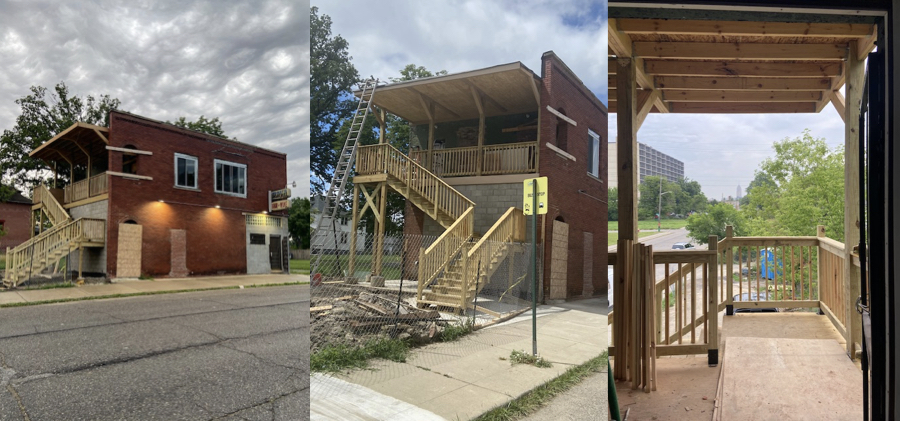
An oasis is emerging in the food desert.

Residents of the underserved Northwest Goldberg neighborhood in Detroit will finally be able to buy groceries and household goods locally, thanks to the establishment of Kornr Store, a retail concept developed by Brinda Devine of Purpose8 Real Estate. 

Only 18 months after raising $43,000 through a crowdfunding campaign on Small Change Brinda is preparing to open Kornr Store at 6224 16th Street later this summer.

That’s not the only good news: Brinda is already scouting locations for a second Kornr Store. We’d love to see this concept take root in other food deserts, which would significantly improve the health of area residents.

For now, we congratulate Brinda on the opening and look forward to celebrating this community-minded developer’s future successes.


Images courtesy of Brinda Divine

Community Capital.

June 19, 2024

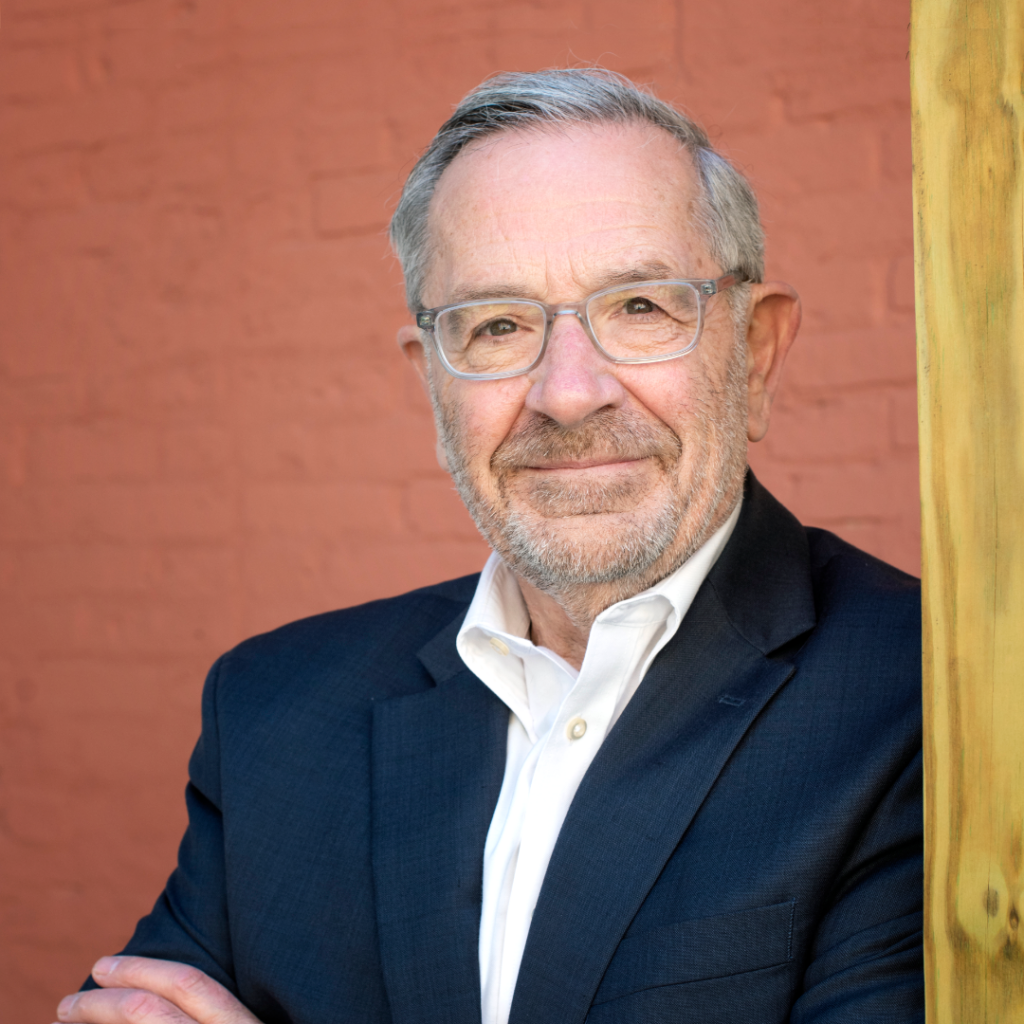
Chris Miller is chair and one of the founding board members of the National Coalition for Community Capital, a 501c3.  Among NC3’s goals are to empower ordinary citizens and strengthen local economies through community investment and ownership, with particular attention to wealth-building by non-accredited investors and to underserved populations and communities.

Chris has been working on community, economic, and entrepreneur development in Michigan for nearly 20 years in a variety of roles, including as an appointed and elected city official, as a board member and frequent chair of a variety of community and economic development organizations, as a partner with student teams from the University of Michigan and Michigan State University,  as an Innovation Fellow at the Michigan State University EDA Center for Regional and Economic Innovation, and as the City of Adrian’s economic developer. During that time, in addition to securing millions of grant dollars and matching private investments, he also developed a local investor group, led a community business plan competition, and worked with local schools to implement entrepreneurship education. While working his day job in Adrian, he also introduced and championed Michigan’s MILE – an investment crowdfunding exemption that served as a national model, and he currently has introduced legislation that would create a first in the nation investment incentive available to any state resident regardless of wealth.

During 2023, Chris worked extensively on a new program the International Economic Development Council developed called the Economic Recovery Corps.  Funded with Cares Act dollars from the Economic Development Administration, 65 ERC Fellows were awarded to 65 hosts from across the county.  The Fellows will work full time with their hosts for 2.5 years addressing underserved communities in a variety of economic and community development projects.  NC3 was awarded a Fellow to work in Michigan in the start-up and incubator space, adding community investors to capital required by new or expanding businesses.

Over the past decade Chris has spoken across the country on the promise and future of community capital, while also working on the ground on donation and investment crowdfunding campaigns with communities and entrepreneurs. Chris is the developer and lead for NC3’s Community Capital Accelerator which is now piloting NC3’s Diversified Community Investment Fund in large projects in Detroit, Michigan and  Cincinnati, Ohio, and the organization is working on smaller projects in nearly a dozen states. 

Today, Chris and his wife Joyce own and live in a 170-year-old downtown Adrian building where they renovated the commercial floor for The Buzz Café and Marketplace.  Joyce and her business partners opened The Buzz during COVID, after an investment crowdfunding campaign which received investment from 45 investors in 7 different states.  When not working on their building renovation, Chris led the team that brought PlaneWave Instruments from California to Michigan, and now serves as their Special Projects Consultant.  In that role Chris serves as the primary community and education outreach lead, manages campus arts partners, and works with economic development organizations to secure resources for PlaneWave.  From their headquarters in Michigan, PlaneWave leads the world in the design and manufacture of high-tech observatory class research telescopes.

Read the podcast transcript here

Eve Picker: [00:00:08] Hi there. Thanks for joining me on Rethink Real Estate. For Good. I’m Eve Picker and I’m on a mission to make real estate work for everyone. I love real estate. Real estate makes places good or bad, rich, or poor, beautiful, or not. In this show, I’m interviewing the disruptors, those creative thinkers and doers that are shrugging off the status quo in order to build better for everyone.

Eve: [00:00:47] For Chris Miller, it’s all about community capital. Chris is chair and one of the founding board members of the National Coalition for Community Capital, or NC3. They are leading the charge to strengthen local communities by empowering ordinary citizens through community investment and ownership. Chris has been working on community, economic and entrepreneur development in Michigan for nearly 20 years in roles as varied as city official, board chair and Innovation Fellow. As the city of Adrian’s Economic Developer, he secured millions of grant dollars and matching private investments. But he also developed a local investor group and championed Michigan’s Mile, an investment crowdfunding exemption that served as a national model. It’s all about community capital for Chris. Listen in.

Eve: [00:01:53] Welcome, Chris. Thank you very much for joining my show.

Chris Miller: [00:01:56] It is such a pleasure, Eve, and I feel honored to be among the luminaries you’re talking to. But it’s good to set the bar low for everybody else, so.

Eve: [00:02:04] Oh, come on now. That’s not the way it’s going to be. Okay, so I’ve come to know you as the chair and a founding member of NC3, which stands for the National Coalition for Community Capital. So, tell me, what is community capital?

Chris: [00:02:23] Yeah, great. And, you know, part of what we’ve had to do is, as we’ve worked through this process, is sort of identify that we had some ideas when we first got together but essentially the definition that we’ve come to is that capital is, community capital is capital that comes from investment, that comes from a broad cross-section of the community. And obviously we pay special attention to non-accredited investors, at about 90% of the population, that before investment crowdfunding didn’t have a really good mechanism to make investments in their own communities and businesses and in real estate and projects there. So, for us, again, it’s that broad cross-section ensuring that we’re reaching those folks that have traditionally not done investment as part of their world.

Eve: [00:03:14] So are there any principles in particular that define community capital?

Chris: [00:03:20] So, there are principles that we have identified that for us are part of community capital. I think that community capital being defined as a broad cross-section of the community is pretty illustrative of what we think. But for us, there are also some values there that are attached to it that are kind of core to the work we do. And those are values like it is not extractive capital, that all of the stakeholders should be foremost in the process, that there should be wealth building for everyone, that it should be fair and equitable. And in fact, we don’t work with either individual projects or communities absent alignment with those values. But I typically say if you have a head and a heart, you will be aligned with those values.

Eve: [00:04:06] Then traditional capital you find is not aligned with those values? Or often not aligned?

Chris: [00:04:12] Sometimes it is, and sometimes it is not. One of the things that we’ve often talked about at NC3 is that we have a big tent on this perspective. So, there are people sort of on the far left that really don’t like capitalism at all and there are people on the far right who don’t think there’s any other way except capitalism, and we’re really kind of middle ground. I actually had an interesting conversation with a professor at the Ross Business School at the University of Michigan a while ago who has become an advocate for our work and was running into someone and who was postulating that, well, that community capital can’t solve the problems that they have. And I agree with that. We can’t do that, especially when we look at historically underserved communities. There’s very little capital available in those communities. And those communities have typically really big problems that are expensive to solve. So, the reality is, is that while community capital is critical for us, it isn’t the answer to all the questions. So, there are certainly going to be situations where we have to find ways to blend traditional capital together and philanthropic capital together to make projects work.

Eve: [00:05:22] And maybe train traditional capital to behave a little differently from time to time?

Chris: [00:05:28] I think so. I think there’s some of that training going on. But, you know, what’s really interesting is ultimately, this kind of work is really aligned with almost anybody who thinks capitalism is a good way to do things. And, you know, we don’t mind a little selfish capital or a little guilt capital coming into projects. And I do think, though, that it’s a longer term, you know, I think that one of the fundamental problems in the American economy with the way corporate America has evolved is we’re super concerned about the next quarter or the next 2 or 3 quarters, and we’re not thinking very much at all about a decade or two decades or five decades down the road. And that certainly is a piece of the challenge, recognizing that sometimes those returns take a little bit longer.

Eve: [00:06:13] So patient capital, which I’ve always said real estate is all about patient capital. And many people don’t understand that they. It takes a long time.

Chris: [00:06:23] Yeah. I think actually all smart capital is really patient capital, right? So…

Eve: [00:06:27] Yeah, probably. That’s true. But I think that building a building takes a long time. So, you’ve got to build it and get the entitlements and then get it occupied. And it’s a long, long haul.

Chris: [00:06:43] It does which is why I’m glad you’re there doing that, so.

Eve: [00:06:45] Okay. So, what is NC3’s Mission then?

Chris: [00:06:51] So, our mission really fundamentally is to advance the movement. And so, when we initially got together, you know, uh, really about a decade ago when we first started running into each other, we were all having the exact same conversations all over the country, encountering the exact same objections and concerns, and we were all making the same mistake. So, we said, well, let’s join together and stop making those mistakes individually and maybe hopefully collectively as well. So, we just want to see more of that community investment in community projects. Our goal ultimately is for every single community to have a local fund that everyone in the community can invest in, and build wealth in, and that fund would then in turn invest exclusively in the community. But we think that should be for every business and every project in every community, and that everybody should have a chance to be a part of that.

Eve: [00:07:47] So you said you were all doing different things all over the country. Who were those initial founders and what were they doing?

Chris: [00:07:55] Yeah, it was a very eclectic group. So, we had two authors. So, Michael Shuman was one of the founders, and Amy Cortese was one of the founders who was at that point. Michael’s written a lot of books, so I think in a lot of your audience had probably read some of Michael’s. Amy wrote one book that was called Locavesting. She was writing, though a lot for The New York Times at that point in time. So those were two founding board members. We had folks from the West Coast and what was Cutting Edge Capital and is now Pathlight Law. So, Brian Beckon was one of the founders of the movement. A woman who was doing entrepreneurial work, working with entrepreneurs and helping them find funding and start businesses, Amy Pearl, who was on the West Coast up in Portland, Oregon, was part of the movement. Janice Shade who is a Yale grad who worked in big business and finance and because she lives in Vermont, figured out that wasn’t a really great way to live. And so, she turned to the startup community and other projects and actually is now teaching with Michael over on the East Coast. So, she was one of the members. I had a colleague in Michigan who was an investment advisor, and she was in one of the big investment houses, and her clients were all saying, we want to make local impact. How do we do that? So, she founded an independent investment advisor firm. Angela Barbash is her name.

Eve: [00:09:25] I know most of these people.

Chris: [00:09:27] Exactly. Sure. Right. And then me, I was the on the ground economic developer and was kind of working firsthand on the ground in communities. And so that was really the group that came together initially, so.

Eve: [00:09:40] How long ago was this? Was this pre–Jobs Act 2012 or post Jobs Act 2012?

Chris: [00:09:48] It was post-Jobs Act. And I think we first started bumping into each other in conferences in 2014. So, 2014 and 2015 and 2016. Amy Pearl, I referenced who was in Portland, she had a really good funder helping her with the startup world. And so, she was able to put a conference together and all of us, I think, who founded the organization, were at that conference. And then the following year was when we did our own conference, really in 2017. And that was in Monterey, California. And it was there we officially became an entity, but we had actually decided in 2016 at what was Comcap16. We decided then at that meeting that we needed to form together and so we did a little bit of work and in 2017, at the end of the conference, we sat together and elected officers and started becoming official.

Eve: [00:10:50] So tell me about the work that NC3 does today.

Chris: [00:10:55] Yeah, we’re an education 501c3. So, what we started to do initially was really around education. And that ranged from producing materials. We produced an e-book on community investment funds and did a deep dive, we got a grant and did a deep dive into the Community Investment Fund Act of 1940, which I know you love. Yeah, right. And, uh, don’t we?

Eve: [00:11:20] Don’t we all, right?

Chris: [00:11:21] Yeah, don’t we all? That’s right. Yeah. And we produced some materials that were available. We also did conferences and workshops, and we would go and do roundtables in different places. So, we were basically putting the word out, speaking at our own conferences that we were attending about this. In 2013, Amy Cortese came to visit Adrian and inspired me to create a state-based investment crowdfunding exemption, which we got done in 2013. So, we were one of the very first states to do that. And it was a particularly good law. But I spent the next year speaking all over the state and then ultimately elsewhere about investment crowdfunding and why communities should be doing this and how great it was going to be for real estate. No one figured that out until you came along, no thank you, and did that. That was one of the major surprises. So, yeah.

Eve: [00:12:14] You mean that no one was doing it in real estate?

Chris: [00:12:16] Yeah, yeah, all of us that were talking together at that point in time, we figured real estate was going to be like the first thing that was going to be up.

Eve: [00:12:22] Yeah. Interesting.

[00:12:23] Yeah, it was a surprise. I remember having, I’ve had a lot of conversations about that saying I’m just really surprised that we haven’t seen that done in the space very much. Now, there were a couple of exceptions, but even they didn’t really stick with it in the way that you have done, so.

Eve: [00:12:41] It’s because my middle name is tenacious.

Chris: [00:12:44] That’s great.

Eve: [00:12:45] Or stupid? One of the two.

Chris: [00:12:47] No. Tenacious. No question. What you’re doing is like the other end of the spectrum from stupid. So, it may be hard, right? And it is hard, there’s no question, you know. And it’s complex. And doing real estate is always challenging and when you add in what you do, it’s more challenging. But I’m super glad you’re doing it.

Eve: [00:13:07] All of this is really hard because we’re trying to disrupt the status quo. And the status quo is a huge money machine, really enormous. I mean, how long have we been at this? And we’re just kind of nibbling at the edges, right?

Chris: [00:13:21] Yeah, we are, and I think, on the other hand, we’ve also made significant progress when you look at, you know, the investment crowdfunding world nationally. What, we’re $2.5 billion and yeah, that that’s not chump change but you’re right, in the grand scheme of things, it is a small amount. I remember having lots of conversation with Angela Barbash, my colleague from Michigan, the investment advisor, and she was always giving me grief appropriately because I was having lots of one-on-one conversations and I referred to it as seed planting. And she said, you know, we have to find ways to scale up. And I said, yeah, I think that we do too, but we have to have advocates around doing that. And we have those, and we have stories to tell, you know, just like you at the front end, everything was a theoretical conversation. You know, we think this is going to happen. We think this is how this is going to look. And now we have concrete examples. And every time you do another project, or some entrepreneur raises money and does another project, we have another story to tell. You know, I talk a lot with local units of government, and they all love the idea. And then the first question they ask when we’re done with the with the conversation or with the presentation is who else has done this? You know. So, they want to know that. And fortunately, we’re getting those game-changers, those innovators and leaders who are willing to do it and some are embracing it. We’re working with the local unit of government in Pennsylvania right now. They want to be the first local unit in the country to have a diversified community investment fund housed within the local unit of government, and we want that to happen everywhere. So, we’re thrilled because then we can say when they ask us that question, well, look at this community in Pennsylvania.

Eve: [00:15:00] Pennsylvania is also one of the most conservative places [inaudible].

Chris: [00:15:04] Exactly.

Eve: [00:15:04] Except maybe Philadelphia. We’ve seen a lot of activity in Philly. So, yeah, it’s interesting. So, you mentioned the Diversified Community Investment Fund, which I know is something you’ve worked on for a while. What is that?

Chris: [00:15:19] Thanks for the question. When we did the deep dive into the Investment Company Act, and wrote our eBook about it, which, by the way, a small plug is on C3’s website and you can get it for free. So essentially what we’re looking at was ways that people had done a work-around or stretched what had been established in 1940, in a way that maybe the original writers of that didn’t anticipate. You know, Boston Impact Initiative is my favorite example of that. Deborah Frieze up there hired a couple of attorneys, and they spent a year looking at that charitable loan fund and figured out a way to do many positive things with it, which had never been envisioned before. As we move forward in this space, and we were hearing from lots of folks a real desire to have a fund, we took basically another deep dive and looked at it because there are, as you know, some exceptions or exemptions in the rule and some ways to essentially keep out from underneath the heavy regulatory burden that is introduced whenever we had non-accredited investors in the mix.

Chris: [00:16:28] And so really, the DCIF or Diversified Community Investment Fund is a series of strategies that keep us out from underneath that and allows a fund, which is a real estate fund, and this is, of course, the golden part of this. It has to be real estate, because the SEC doesn’t think of real estate as securities in the same way they think of all that other stuff as securities. And so, by investing the majority of the fund in real estate, we can also facilitate investment by that fund into community businesses. Really anything else where there’s an opportunity to do debt service and get something accomplished for the community. And that is what, as you know, a lot of folks have kind of suddenly figured out they need housing. And so, it’s not difficult to spend money on housing or commercial real estate or whatever, and then still have some dollars available to invest in small businesses. And that ratio right now is pretty good because real estate is awfully expensive. We have two funds that are close to being launched right now, and then a couple more that are going to come later on in the year, including a couple of really big projects, one in Detroit and one in Cincinnati, that are looking at a lot of real estate in their projects, so.

Eve: [00:17:43] Okay, just to be clear, I always find the word fund to be confusing. I believe that this fund still can’t be a passive investment company. The investments made have to be managed by the manager of the fund, right?

Chris: [00:18:00] That’s correct. Yeah.

Eve: [00:18:01] Okay. So that’s a really, I think, an important distinction. You can’t just create a fund and then go and say, oh, I like that project over there we’re going to invest $30,000. You’ve got to actually own and manage the buildings in the fund, which is actually great for communities.

Chris: [00:18:16] Yes.

Eve: [00:18:17] So it’s an interesting concept, but how do you raise money into a diversified community investment fund?

Chris: [00:18:24] So a part of the beauty of the design of the fund is that you can raise money the same way you can raise anything else. So obviously for us, the most fundamental part of that is that you can do an investment crowdfunding campaign that non-accredited investors can invest in. So again, our goal is to get as many people invested. And also, wealth building, you know. We feel like if people are investing something and there’s not even an opportunity for wealth building, then that’s not really going to support the community in important ways. And we recognize right now in real estate wealth building is very challenging and it’s also long term. So, that’s a piece of it as well. So, you can do direct public offerings into the fund, you can do private offerings into the fund, you can do any investment crowdfunding. So basically, any way you can create a co-op, you can do a lot of different things.

Eve: [00:19:16] So the regulatory burden comes when you want to actually do an offering into the fund. Right? Then you’ve got to follow the SEC rules however you’re raising money.

Chris: [00:19:25] Yeah, exactly right.

Eve: [00:19:26] Okay. Well, I can’t wait for us to raise money into our first DCIF. So, I’m looking forward to that. Is there a minimum size for a fund like this that makes sense?

Chris: [00:19:40] We’re not 100% certain that there is a minimum size. We know that definitively there isn’t in terms of regulation or that kind of thing. So, it’s a matter of how the business plan works. But we like to say this will scale up or scale down because, you know, the reality is, if you take the Investment Company Act, any of the structures within there, sort of at face value, apart from a charitable loan fund, you need a community of about 50,000 people to sustain a fund at the kind of giving we could expect to get or investing we could expect to get. So that eliminates 80% of the communities in the country, probably a higher number than that. So…

Eve: [00:20:20] That’s actually interesting, yeah.

Chris: [00:20:21] Yeah. And what we’re talking to in places where we’re looking, you know, much smaller communities, we’re looking at, we’re talking about leveraging the administrative costs and the regulatory costs and the attorneys cost among entities within the community. So, if we can get a traditional bank or a credit union involved or a traditional law firm involved, if we can get some philanthropy involved, we can offset some of those administrative costs for it. And there are several funds right now that are essentially structured the same way as what we’re putting up as DCIFs, that have volunteer committees of people that have expertise, that are doing the fund management part of it. So, if you can imagine a small community, they’re going to do a project every year. One year, they’re going to do a real estate project the next year they’re going to do a small business in their main street downtown. You know, there’s not a tremendous amount of due diligence there or management there involved. And also, you know, what certainly happened in investment crowdfunding with platforms is software and kind of the back-office stuff became automated and manageable. So, the idea of having 100 investors is not this daunting by hand work that you have to do any longer. And there’s a lot of really interesting innovations still going on in that space. So, we think as there’s more demand, we’re going to see more innovation on that management side of it that’s going to help that piece, so.

Eve: [00:21:46] How are you working to implement this idea?

Chris: [00:21:50] Thank you for the question. So, we really learned some lessons through some mistakes that I made, which is a really great way to learn lessons. A couple of years ago I received a fellowship from Michigan State University, and the goal was to advance the community capital movement in the state. And so, I talked to over 100 communities during that time.

Eve: [00:22:09] Wow.

Chris: [00:22:09] All of whom had done donation crowdfunding campaigns. So, in Michigan we have a really wonderful program that our state EDO does that matches community donations, dollar for dollar for creating new public spaces. And it’s a terrific program. It was actually the first of its kind in the country and so I talked to all those folks, many of whom were entertaining doing something but using investments from the community as opposed to donations from the community. And what I learned was that after we talked to those folks and encouraged them to go forward and kind of gave them a road map, when we came back and visited later, they had done nothing and/or very little. And typically, that was because they’d reached out to a local attorney or a CPA or an investment advisor or a banker and told them about this great idea. They were going to do this really cool project, and they were going to raise all this money from just the regular folks in the community, and they were all told, well, that’s a terrible idea, or it’s illegal or those kinds of things, so.

Eve: [00:23:13] We run into that a lot, too.

Chris: [00:23:15] Yeah, exactly.

Eve: [00:23:17] These new ideas aren’t really, haven’t been absorbed yet.

Chris: [00:23:21] No question. And in terms of sort of the infrastructure around them, they are also so, you know, we have folks like you that are pushing forward, but the legal side that you need or technical assistance or training help, very little of that. So, we ended up again stealing really an idea from the human service community doing a wraparound bringing legal help with us and technical assistance and training help with us when we work in communities. So, we introduced this as a community capital accelerator a couple of years ago. And pretty shortly after that, we were recognizing we need to come up with a fund structure of some kind of a workaround that we could do. And that’s when we introduced the DCIFs. And now it’s, there’s a lot of word of mouth certainly happening. As you know, this field is still relatively small. We as you noted when I talked about our initial founding board members, oh I know all those people, right? So, we you know, we do. We know we know each other pretty well. And we’re speaking at conferences and presentations. Brian Beckon, who is on the board and from, again, what was Cutting Edge Capital and now Pathlight Law, and I did a presentation at the neighborhood economics conference down in San Antonio last month to several hundred people from all over the country that are working on the neighborhood level in their communities. And, of course, we talked about the DCIF, had a couple of reps who are working on implementing a DCIF in Detroit and Cincinnati there as well, so.

Eve: [00:24:48] You’re very busy.

Chris: [00:24:49] Yeah, yeah. Well, but it’s all good. I, you know, I don’t regret a day or a conversation that I’m having right now because we’re really making important headway in getting, I think, important things done. And we’re developing some additional educational materials. We were very fortunate to take part in the EDA funded IEDC Economic Recovery Core program, which was just I don’t know if you’ve heard about that, but it’s a fellowship program, sort of like Peace Corps or AmeriCorps, but about economic recovery. So, Cares Act funding, $30 million was given to the EDA, and the EDA has passed that on to the IEDC, the International Economic Development Council, and they’ve partnered up with six national organizations and created 65 fellowships that are going to go into communities for two and a half years to work full-time on their problems. And we proposed, because they were all place-based projects. We proposed that we would do a fellow in the state of Michigan, and we were awarded one of the 65 fellows. So, she is working full-time now on advancing the community capital movement in Michigan. And because of her life experience and expertise, really focusing on the entrepreneurial ecosystem. So, those organizations that help start entrepreneurs down the business path.

Eve: [00:26:12] So you’re picking up steam, it sounds like.

Chris: [00:26:14] We are, no question. Yeah. People are more familiar with us. We’re getting more visibility. And that’s a good thing because as you know, when you start from zero, it takes a long time to get up to enough speed where you can actually start moving forward.

Eve: [00:26:30] Yeah, a long time. So, you’ve had some various and interesting day jobs throughout your career. Walk us through most, you know, some of the most memorable ones and how they’ve shaped this intense relationship you have with community capital.

Chris: [00:26:44] That actually begins before my first job. It was my first volunteer job. My mom, when I was a kid, and we did Halloween, instead of going around and collecting candy, although I did collect some candy as well, I also had a little milk carton, that had UNICEF on the side of it and I collected pennies for UNICEF that then went to kids all over the world in depressed communities. And so that the ethic that I grew up in my house was that we work to help others. And so that really invaded all of my life and my work choices. So, I worked in education for about a third of my life, all in private schools. Ended up internationally working in Korea at an international school there. I worked in the business community for about a third of my life, and a nonprofit community for about a third of my life. My wife and I moved into this small community we live in in southern Michigan, Adrian, Michigan, in 1999. And neither of us were from the area, and we both had two kids and families that lived a long way from each other. And so, we picked a community kind of halfway between where she lived in the middle of Ohio and where I lived up in the Port Huron area to southern end of Lake Michigan or Lake Huron. And we didn’t want to be in a big urban area. We wanted a more rural feel and smaller community. And we also were interested in a vibrant college kind of community.

Chris: [00:28:16] And so we moved to Adrian, which had three post-secondary institutions in a community of 22,000 and an opera house that operates full time as a theater that was the fourth oldest one in the country, and a symphony orchestra. And when we got here, they had this beautiful downtown, historic buildings that we didn’t really notice initially, but that turned out to be largely vacant. And it turned out that none of the college kids left the campus, at least not to go somewhere else in the city, they left it and went home or to big cities on the weekends. And so instead of a college town, it was a very quiet downtown. And I walked into the local economic development office, like the first month. And I said, I don’t know if I can help you, but this downtown should be thriving. You got, you know, 3000 college students a half mile away and none of them come down here. So that guy never called me, but I ended up volunteering and ultimately got appointed to the Downtown Development Authority and then appointed and elected to become a City Commissioner. And it became really clear that if I wanted to have an impact in the community, I needed to be on the ground doing economic development. And so, I resigned as a City Commissioner and instead went to work for the guy who was working for me as an elected official and became the city’s economic developer. That was in 2009. You may remember, that was a really lovely time when the.

Eve: [00:29:43] Oh yes, a really great time to take that job. Yeah.

Chris: [00:29:46] Recession was murderous, yeah. So, I became an economic developer with no economic development training, no business training and no finance training. So, the perfect recipe for disaster. But so, I started reading immediately ways that communities found atypical ways. And that’s where I read Michael Shuman and Amy Cortese. And we invited Amy to come to Adrian. This New York City young woman and she did, very surprisingly and spoke at an economic development conference that we had. And, you know, I mentioned she set me aflame with this idea of, so the jobs Act, she came in 2013, Jobs Act had passed the previous year. I was made aware of that and was really excited about it. And then it was really clear that the SEC was in no hurry at all to write the rules around it. And in fact, there were a lot of rumors going around that it’s not even going to happen. They’re going to find a way to completely defang this because we’ve taken their reason for living and they’re going to going to let all these people unwashed masses, you know, make investments, you know, that’s crazy.

Eve: [00:30:54] From experience, they found plenty of reasons in there. So…

Chris: [00:30:59] Oh yeah. Oh yeah, they did. And so, then I really had a parallel path. So, I started working on the political side to get legislation done, written, first of all, and then passed, and then I started talking about it. At the same time, doing a lot of projects in the city. So, during the 11 years I was the city’s economic developer, we leveraged millions of dollars of public money and private money to do projects. And we even did some crowdfunded projects, even before we got Michigan’s law done in 2013. But one of the things that happened when Amy came and spoke to us was that a group of potential investors who’d been talking about buying a building in downtown Adrian and fixing it up, many of which were being foreclosed and so they were really good bargains coming on the market. They said, let’s stop talking about it, and let’s do it. So, she was inspirational, even though she’s five foot two and 110lbs. And she just, quiet voice stood in front. Everybody was completely silent for 45 minutes while she told her stories. So, that group ultimately pulled together a couple dozen local investors and they bought a building and fixed it up. Started cash flowing right away because they got it for a ridiculously low price from the bank and the business that was going to be booted out, who was operating successfully in the main floor, instead became one of the investors in the building.

Eve: [00:32:22] That’s community capital, right?

Chris: [00:32:24] Community capital. And that group ended up doing that with three separate buildings. And we got them grants to add more rental apartments in them and fix up the facade and all that kind of thing. So that happened. And then I took off on the legislative side and got the bill done. And it was a particularly good, so, as the state-based exemptions goes, it was really generous. So, in Michigan, non-accredited investors can invest up to $10,000 in a project. And so don’t have the same burden of a, of a small number. So, we did a number of projects. I actually worked with the very first one that was, not surprisingly, a microbrewery and they raised $175,000 from a couple of dozen members of the community, including a group of us really regular folks that invested in that. And so, then it was doing both the economic development work here in the community and also moving forward and talking about this investment crowdfunding. And again, I started by meeting with local units of government all over the state because we have a state-based organization, the Michigan Municipal League, that basically contracted with me to speak at all their events in 2014. And we did that. So, so that’s big picture.

Eve: [00:33:41] Cool, so, I have one final question. And that is, what do you think it will take to move the needle to a country full of community capital?

Chris: [00:33:50] Actually, Deborah Frieze did a really interesting Ted talk on this of Boston Impact Initiatives. She talked about bottom-up change and that’s certainly what I see this as doing. And so, I think more of the kinds of work that you’re doing and the kinds of work we’re doing is going to happen. At the same time, there are some things that we can do on the policy and legislative side that would make this easier. You know, some of the things which just passed on the House side, I think, on a federal level are going to help. We need to remove impediments, and we need to make it a lot easier. You know, if you’re wealthy, you walk into an investment advisor’s office, you sign a couple of forms and you’re all done, and all your money is invested. And we need to create mechanisms that make that more possible on a local level. So, one of the things that we’ve done on that front is proposed to the SEC, what we call the 21st Century Community Investment Fund that would do all the things we all want funds to do. So, you know, be able to be housed anyplace, be able to build wealth for non-accredited investors, not a heavy regulatory burden, invest in whatever the community may want or need to invest in, and not be a workaround and a compromise, therefore.

Chris: [00:35:00] So we have no confidence that the SEC is going to move that forward, largely because the investment management division has gotten a lot more conservative instead of visionary. There was a very visionary woman leading the investment management division at that point in time, and we were excited about how she might receive it. Then she got poached, or left, and so the leadership is not really looking to expand what they do. So, we’ve also proposed that to the Senate Banking Committee, where they’re writing the Jobs Act 4.0. But that’s been two years in the making. We don’t see much happening there. So, we’re actually rallying partners from across the country right now because we want to take a clean bill and really do it legislatively. Because one of the things that we’ve seen, we now have 35 states that have state-based exemptions that all happened between 2012 and 2016. And those were all overwhelmingly bipartisan. There’s not a state where there was a significant partisan divide. So, we know the people on the right like this and people on the left like this, maybe for different reasons, but they like the idea. So, we think there’s enough political energy around this, and I think enough stress. You know, when we look at the political division, the social division we have right now, there is a longing for compromise and wisdom. And so, we think that we can find that and we’re having a lot of conversations with folks about putting that together and taking something up and getting that created.

Eve: [00:36:32] So I’m going to plant one more idea with you. I’ve always thought that when big money gets it and invests alongside small investors, instead of saying, oh no, I don’t know who they are, I’m not going to invest there, that will be a sea change.

Chris: [00:36:48] I agree completely, and that is definitely a part of what we do. We’re always talking about, especially in the larger projects we’re doing, leveraging other assets and bringing in traditional lenders. And the good news there, is a lot of those folks are looking for this way out, because a lot of people, if you talk to investment advisors, a lot of the folks they talk to, they want to have an impact on their own communities. They’re recognizing that we need to have an impact. People have sort of figured out having 3% of the population control, 70% of the economy is not a good long-term strategy, right?

Eve: [00:37:22] No, it’s not.

Chris: [00:37:24] So there’s growing acceptance of that. I expect that to happen kind of alongside this. But you’re right, we’re always looking for those opportunities and finding more and more of them as we go forward, so. And I think there’s also a growth of community banks. We’re seeing more conversation around that. And land trust. There’s a lot of things that are sort of in the movement that folks are identifying and recognizing as important, but I think what you identified is definitely a big piece of the puzzle, and certainly we’ve got.

Eve: [00:37:51] So, Chris, this has been delightful and full of tech speak, which I really like. It’s a pretty heavy lift and I really admire what you are doing, and I hope it just keeps picking up.

Chris: [00:38:06] Well, it will Eve, as long as you keep doing your work and all the other people who are aligned with us keep doing theirs, and I expect that to happen. One of the fun things has been watching as the movement has evolved, the kind of technical support around it, you know, growing. I’m looking at what Crowdfund Professional Advisors is doing now, and you know, how more visible and more active they’re getting. So, we are getting an ecosystem around this, and certainly on the sort of human service and community side, this message resonates powerfully with them. And so, we’re going to see a lot of people keep pushing forward. So, I’m super excited. I think we’re over the tipping point, and it’s a matter of just being smart and strategic as we go forward. Telling our story. We’ve got to be great storytellers. You’re a great storyteller, and the people you’ve had on are great storytellers, and every one of your projects is a great story. And that cumulative effect is, again, go back to Deborah for a second, she talked about suddenly that all crystallizes and we’ve got, bam, a network. And we are close to that place, I think. So, I’m looking forward to it.

Eve: [00:39:16] I agree, I’m looking forward to it too. Thank you so much.

Chris: [00:39:19] Thank you, Eve, keep doing your great work.

Eve: [00:39:30] I hope you enjoyed today’s guest and our deep dive. You can find out more about this episode or others you might have missed on the show notes page at RethinkRealEstateforGood.co. There’s lots to listen to there. Please support this podcast and all the great work my guests do by sharing it with others, posting about it on social media, or leaving a rating and a review. To catch all the latest from me, you can follow me on LinkedIn. Even better, if you’re ready to dabble in some impact investing, head on over to smallchange.co where I spend most of my time. A special thanks to David Allardice for his excellent editing of this podcast and original music. And a big thanks to you for spending your time with me today. We’ll talk again soon. But for now, this is Eve Picker signing off to go make some change.

Image courtesy of Chris Miller

Intentional Community.

June 5, 2024

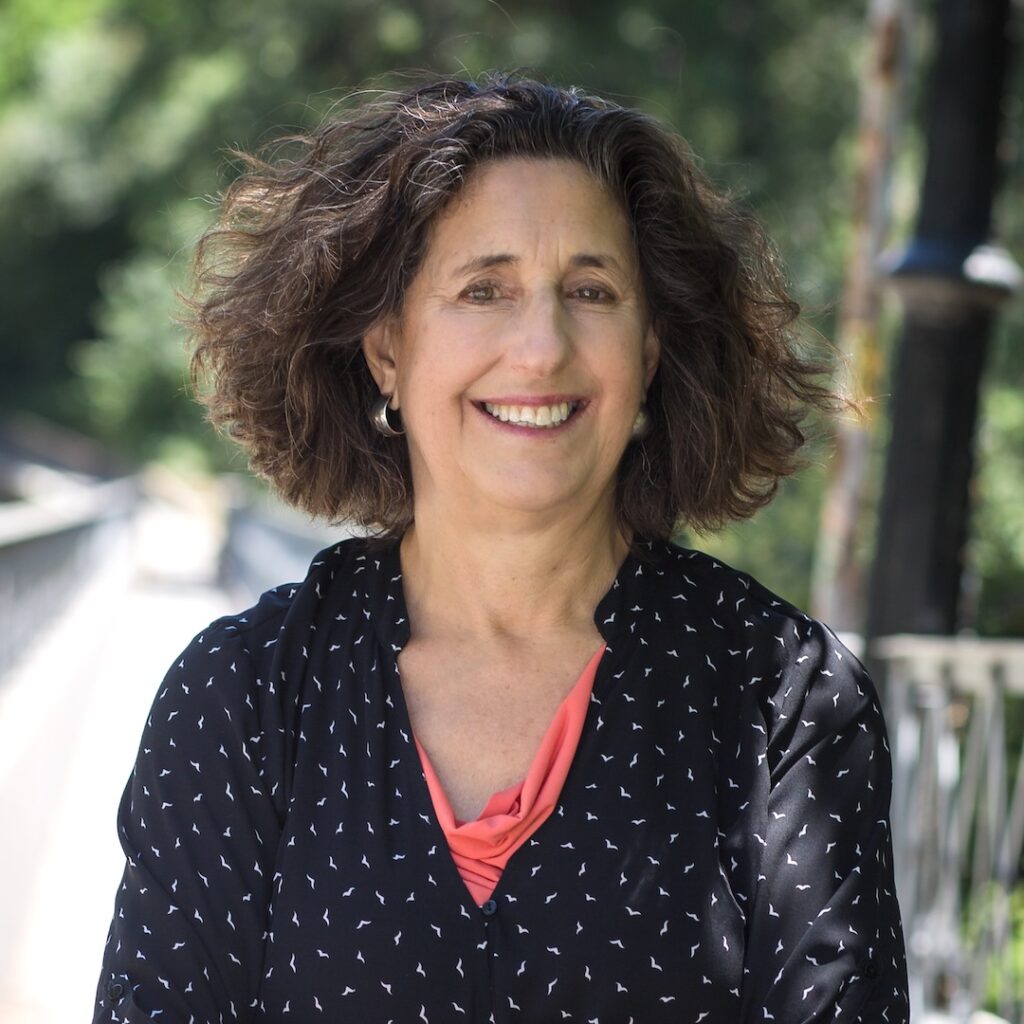
Kathryn (Katie) McCamant brings the depth and diversity of her 35 years of experience as a developer, architect, and cohousing resident to benefit her clients.

Coauthor of Cohousing: A Contemporary Approach to Housing Ourselves, the book that introduced cohousing to North America and the English-speaking world, and more recently, Creating Cohousing: Building Sustainable Communities, Katie co-founded McCamant & Durrett Architects/The CoHousing Company with Charles Durrett. More recently, she started CoHousing Solutions as a development consulting firm to share best practices and systems for successful collaborative development.

She works with urban, suburban and rural communities all across North America, helping them define and implement their development strategy and build the professional team they need. She also founded the 500 Communities Program to train other professionals to work in this realm. She lived for 12 years at Doyle Street Cohousing in the San Francisco Bay Area, and now lives at Nevada City Cohousing in the Sierra Foothills.

Read the podcast transcript here

Eve Picker: [00:00:07] Hi there. Thanks for joining me on Rethink Real Estate. For Good. I’m Eve Picker and I’m on a mission to make real estate work for everyone. I love real estate. Real estate makes places good or bad, rich, or poor, beautiful, or not. In this show, I’m interviewing the disruptors, those creative thinkers and doers that are shrugging off the status quo in order to build better for everyone.

Eve: [00:00:42] Early in her career, very early, Katie McCamant visited Copenhagen. She was an architecture student studying abroad. In Copenhagen she learned of a new housing model called cohousing, a small, intentional community of private homes clustered around a shared space. Common space usually includes a large kitchen, dining area, and other common facilities, but will vary depending on each community’s wants and needs. This was a brand new concept with just eight projects built in Copenhagen and nowhere else in the world. Katie was wowed. She was interested in housing in architecture and this model made so much sense to her. So, she wrote a couple of books and built a career on helping people build their own cohousing community, advising them from soup to nuts. Listen in to learn more.

Eve: [00:01:50] Hi Katie, I’m really happy to have you on my show today.

Katie McCamant: [00:01:54] Thanks, Eve. It’s a great pleasure to be here.

Eve: [00:01:57] So you’ve immersed your life in a very particular kind of housing called cohousing. What is cohousing?

Katie: [00:02:05] Now cohousing is an intentional, collaborative neighborhood where people come together to create a neighborhood where you actually know your neighbors with the intent of working together in a more collaborative way. And in order to do that the cohousing model of community has individual private homes. They could be a small studio or four-bedroom house and extensive common facilities so that, you know, we have what’s called a common house, where we have a great room, a kitchen, often guest rooms, crafts rooms, a kid’s room, whatever that community decides. So, it’s that balance of privacy and community within a neighborhood. But just as importantly, is the social intent that we actually want to get to know our neighbors and work together in a collaborative way.

Eve: [00:02:59] So where did you learn about cohousing?

Katie: [00:03:02] Well, a long time ago I was a study abroad student in Denmark, in Copenhagen. And, you know, if you study architecture in Copenhagen, I was an architecture student there, you study the history of housing there. And this was in the early 80s when I think cohousing community number 12 was just being built. So they were, it was just really starting to get noticed there. And outside of Denmark, nobody had heard about it. But for me, as a young architect, I looked at it and said, oh, well, this makes perfect sense. I’m sure everybody back in the States knows all about this. And much to my surprise, I got to UC Berkeley, and nobody had ever heard about it. So that kind of became the path after that.

Eve: [00:03:49] So why did you want to import the idea to the US in particular?

Katie: [00:03:54] Well, I think it was both very personal and professional. You know, in the architecture world, there’s this small cadre of people who get quite fascinated by neighborhoods and housing. And I was one of those. And professionally, you know, I was in architecture school, I wanted to have a family and kids. I didn’t live near my extended family, even though I have a great extended family. We’re extended pretty much across the country.

Eve: [00:04:24] Very extended!

Katie: [00:04:25] And I was just like, how do you do this? You know, where are my models? How do I have a family and, you know, work as a professional architect? So, for me, it really hit a spot of like, oh, that’s what I can do. The other thing is it was one of the few innovative housing models from Europe that was not started with government programs or subsidies. So, I saw a model that we could actually adapt here in that it was just people getting together to create these neighborhoods, middle class households looking for something that the market didn’t provide. And Denmark is a country where 65% of the population at that time lived in single-family homes. So, it was like, it also gave me a model of how, of something that I felt was very adaptable to United States.

Eve: [00:05:16] How did you start your first cohousing community?

Katie: [00:05:21] Well, it was interesting, you know. So, I wrote the book that introduced cohousing to the English-speaking world with my ex-husband, Charles Durrett. And we started by talking to the nonprofit housing developers in the San Francisco Bay area, where we lived. I had worked for Mission Housing, so I had pretty good connections in that world and just found that, you know, this is Reagan housing cuts, and there was just no way they could fund anything innovative. So then, again learning from the Danes, we went to the market. So, we realized pretty quickly that we needed to be able to show that we had real people who really wanted something different and could afford that as a market rate model. So that really became my mission. And I think that was a really important decision, was saying, you know, there are other people out there who don’t qualify for subsidies but are looking for some the development world is not providing. And so, from that point on we were really working with buyers groups. People who wanted to live in cohousing, didn’t know how to, anything about real estate but were also looking for something other than that. So, our first project was Doyle Street Cohousing. Actually, two projects happen about the same time Muir Commons and Davis was part of a larger master plan community.

Katie: [00:06:51] And we, you know, we self-published the book, so we had 3000 books in our basement. We were desperately trying to get out just to pay the rent. And so, we would talk anywhere. So, we did a presentation in Davis, and out of that came a co-housing group that was really interested. At the other, there were two other critical attendees at that presentation. And it wasn’t that big a group. So, there was a city council woman and then one of the partners involved in a big master plan development in West Davis. So, after the presentation, the city councilwoman got up, walked over to the master-plan developer, and said, why don’t you include one of these? And there in the room were a bunch of people who were really interested in living in a community like that. So that’s how Muir Commons happened. And then, in Emeryville, in the heart of the San Francisco Bay area, a developer was kind of looking at what to do with this building and whether it should be artists, live/work or what about this cohousing thing? So, we jumped on that and said, yeah, we can bring a group of buyers and went out and brought that in.

Eve: [00:08:04] How do you start? Like, if you’re starting from scratch, what are the steps to starting a cohousing community?

Katie: [00:08:13] Yeah and that’s actually the hard part because, you know, developers are still not initiating projects. There were three of us developers. So, I’ve worked as an architect. I’ve worked as a project manager. I then started a development company that really initiated these projects, these new communities. And now I work as a development consultant working all across North America. But it hasn’t caught on in the development world. So, it would be much easier if developers were initiating the projects and then sort of testing the market to see if there were people interested in it. And that’s what I did. And I think we have a model that actually works for that. But in most cases, there’s no developers initiating cohousing projects. So that means that, you know, if you wanted to start a community where you are, you would start talking to other people who wanted to live in a cohousing community. So, it’s usually a burning soul that’s like, I don’t want to move in order to buy into another community.

Eve: [00:09:13] I know one of those in Pittsburgh. She probably worked 20 years on it to get the right group of people together, yeah.

Katie: [00:09:19] Right. And so, then you’re pulling that group together and eventually a lot of them end up hiring me as a development consultant because I kind of understand both worlds and have the patience to work with them in that early stage. And I think that the key thing is getting a group to a point where they really can deliver buyers, right? If they can deliver a buyers group. So, it’s actually more about the marketing than the development, right? Because if they can deliver a buyers group all other problems are solvable. You can find a developer; you can get financing. But you’ve got to be able to show that you really have the buyers. So, I work with groups, you know, from that earliest stages before they have land to help get them up and real and focus in a way that they could then find a developer. A lot of my work is actually looking for developers to partner with cohousing groups.

Eve: [00:10:12] I would have thought that would be easy. Once you have the buyers, like, I would have thought developers would be falling over themselves because, you know, if you build a building and it’s vacant, you’ve got to fill it. That’s a problem for developers, so…

Katie: [00:10:24] I think once I get a group up and they can be a good partner, I can always find a developer. But you know, developments, it’s really about control and not knowing how to work with a group.

Eve: [00:10:40] It’s an extra layer of work for a developer, isn’t it? Yeah.

Katie: [00:10:43] Right. And so, I think understanding that the buyers are really mitigating the risk for you. Because you got to tie down prices, that’s the thing, right? You can’t raise. So, it’s a cost-plus fee model. And that doesn’t ride the ups and downs of the real estate market in the way a truly market rate model will. But it actually works really well. So, what I use is an open book budget. The buyers all know it, the developer knows it. We know what’s in the budget, what’s not in the budget. And really looking for a developer to take the risk of construction and manage construction, as well as finding the construction, financing, and guaranteeing that loan.

Eve: [00:11:26] And so, like, what about common area amenities? Like, how are they decided?

Katie: [00:11:32] Yeah. So that’s part of the early schematic design process. Over the, you know, 35 years of developing co-housing in the US now, we’ve really developed a series of, how do you work with a group of buyers. And so, all the key design decisions are decided very early on in that schematic design phase. And so, part of that is working with the group in a weekend workshop to determine their priority common facilities. And so, there’s the core facilities pretty much every community has, which is, you know, a great room with a good kitchen. You’re trying to avoid a commercial kitchen, but just a kind of kitchen that inspires you to cook. A lounge area if it’s an intergenerational community it would have a kid’s room. Guest rooms are very popular, 1 or 2 guest rooms. But then it’s really up to the community, you know? So, do you want a pool or is a crafts room or a workshop? You know, what are their priority things? So that’s, you know, decided as part of the schematic design.

Eve: [00:12:32] If buyers drop in, drop out and add in, that must be awfully difficult to manage, Katie. Expectations change, right?

Katie: [00:12:42] Yeah. I think most of the world doesn’t realize that pretty much any housing development takes 4 or 5 years to get built. From the time you tie up land to go through the planning approval process and building permits, line up financing and get built. So, you know, I think the public just doesn’t realize how long it takes. And so that’s the first thing is, you know, life happens during that time. People do move on or decide it’s not going to work for them. And so, you know, one of the things I emphasize is it’s really the buyers putting in that front end cash to pay development costs. And that has real pluses and minuses. I would say that the pluses are that you get a really committed group of buyers, and they have skin in the game, and it keeps them focused in a way that nothing else would. The downside is that you have to have that cash, right? So, it makes it hard for middle-income and low-middle-income or lower-income people to start communities. I think, you know, there’s risk in real estate. Everybody needs to acknowledge that. But like any deal, the deal is and I, you know, part of my role now is passing on the systems we’ve developed, including the investment systems, is once your money is in the deal, it stays in the deal until the deal is done.

Eve: [00:14:03] So that’s the risk, right? Yeah.

Katie: [00:14:05] You may move on, but you got, your money’s now in this deal and we’ve got to get it finished to pay you back.

Eve: [00:14:11] Interesting. Is there an ideal size for a cohousing community?

Katie: [00:14:16] Yes. I mean, first I would say try to create community wherever you are with whatever you’ve got. So, whether it’s three households or an existing condo complex, you know, I think there’s opportunities to build stronger communities. But if you’re building new, you know, really what we have found over and over again, going back to the Danish communities in the North American communities as well, is something in that sort of 20 to 40 units. It’s large enough to accommodate diversity of ages and people and you don’t have to be best friends, and small enough that you can really know everybody. So, you have a high level of accountability. You know, I live in Nevada City Cohousing. It’s 34 homes. I know everybody by name. I know most of the dogs, I do not know the cats. But I could actually tell you their story. I could kind of walk down the homes and say tell you everybody’s story.

Eve: [00:15:16] So it’s interesting. I’ve heard the same thing. I know an architect in Australia who’s building rather large housing communities, maybe 200 units, but they break it up into 30 units per elevator with separate access from the street, so it feels like a discrete community. And he said the same thing. The research they found was that was the right size to really create a community. Too big and it’s hard, too small and it’s hard. So, it’s really interesting. Yeah. So, what about zoning regulations? Can they be an issue for cohousing?

Katie: [00:15:49] Well, you know, we’re out there with everybody else trying to build housing. So, I think, you know, there’s a lot of things that just make housing hard to build. We, you know, I would say a large number of my communities that I’ve worked on, we’re submitting as a planned unit development or planned residential development. And I find planning departments, a lot of them studied cohousing now. A lot of them are looking for alternatives. And so, as long as you have a PUD process of one sort or another and you’re not trying to increase the density. Because that’s one of the issues, right? So, one of the things I really see a contrast in is with more suburban zoning, you’re still limited to a number of units per acre. And if you’re building smaller units, you’re at a great disadvantage over what most developers are building, which is kind of bloated houses, to max out the square footage. Whereas when you’re in a more urban zoning, which is more of a form based, and they care less about the number of units and more about the setbacks, we actually do better because we’re generally building a smaller units overall as an average.

Eve: [00:17:02] Yeah, I would imagine, and I mean, is it single family homes? Have you ever been involved in a co-housing project that’s an apartment building? Like, are they, what do they look like physically?

Katie: [00:17:14] Yeah. So, I think that’s one of the things that I really love about cohousing is it can be applied at all different densities. So, right now projects that I’m working on, is I’m working on a agri-village north of Seattle called Rooted Northwest. They bought 240 acres, and they’ve always had support from the county, but the county didn’t actually know how to process it and have an ordinance to process it. So, they had to write a demonstration project ordinance, which we’re now in the process. But the plan is to save 230 acres as agricultural and forest and build two villages clustered tightly so they’re not spreading out across the land on five and ten acre lots. And finishing completion of a community in Sacramento that is a four-story building over podium parking on half an acre. Totally walkable neighborhood. You can walk to Amtrak; you can walk to the state capitol.

Eve: [00:18:17] Oh, that’s quite different, yeah. Yeah, yeah. Really fascinating. So, has cohousing evolved at all to suit the US market since you introduced it?

Katie: [00:18:29] To me, what’s actually more interesting is how much you see similar things coming up. So, my community, Nevada City Cohousing, we moved in in 2006 and, originally, we had 11 acres, the brownfield, it was a gold mining site, and we could have spread out across all the acreage. And I was like, oh, we’re going to a rural area, I don’t know what people will want. But actually, people really wanted, and they kept saying in the site planning design workshop, no, we want that village feel. Pull them closer together. So, I find that it isn’t so different. I mean, I think, you know, the American financing mechanisms are uniquely difficult. The amount of cash you have to raise to get a construction loan continues to get worse and worse. You talk to, particularly northern Europeans. About the struggles of building middle-class housing here, and they just don’t know what to do with it because they have so much more financial support than we have. But in terms of what people actually want and how they live together, I would say there’s many more similarities than differences.

Eve: [00:19:41] Do you have any idea of how many cohousing projects exist today in the US?

Katie: [00:19:47] Yeah, there’s about 180 existing communities, probably another 100 in the forming stage.

Eve: [00:19:52] So it’s increasing rapidly. Yeah.

Katie: [00:19:55] Yeah, there’s a national nonprofit, the Cohousing Association, and they put on conferences and virtual programs, and they keep the best directory. So, if you want to know where there are cohousing communities, you go to cohousing.org look for the directory.

Eve: [00:20:10] So it’s come a way since you started working on this right?

Katie: [00:20:14] It’s come a long ways. You know, I find myself split between, on one hand, it’s come a long ways and we really have established communities, communities that are thriving, you know, new generations. I have younger families moving into my community. So, I’m really seeing, you know, it last way beyond the founders. And at the same time, it’s so hard and there’s so, you know, so few. Right? I go back and forth depending on my mood of the day.

Eve: [00:20:45] I think if you look back, that’s pretty significant. It takes a really long time to build anything new for it to take hold. So, I think that’s pretty good.

Katie: [00:20:55] Yeah. And traditionally, you know, housing is a very conservative choice for most of us.

Eve: [00:21:00] Yes.

Katie: [00:21:02] It’s not an easy sell. You know, for most of us it’s our single largest investment. So, people, like, can I get my money out if somebody, is there going to be a buyer when I need it, you know. But I would say overwhelmingly it’s been really successful. It’s a great way to raise kids. It’s a great way to grow old. It just fills that community by proximity. You know, we all have a community. But these days in America, you drive to your community. And so having neighbors next door…

Eve: [00:21:37] So who will finance this? Like, how do you find financing for cohousing projects?

Katie: [00:21:43] Well it’s your, you know, your regional banks that tend to do a lot of the smaller construction loans. And so, I mean, the mortgages are easy. Once we get to mortgages, I can, you know, there’s no reason a mortgage for cohousing can’t match any Fannie Mae, Freddie Mac, FHA rules. So, that’s not a problem at all. It’s the getting it built. And, you know, what I do is I take a group of buyers with skin in the game. So, my goal is to when I’m going for construction financing, is to be 75% pre-sold. Their money’s not in escrow. It’s, they’re investing in a real estate deal that they hope to buy into themselves. And if I can partner that and find a strong local housing developer, then we have a pretty strong package.

Eve: [00:22:32] Okay, so, what about you? Where do you live?

Katie: [00:22:39] Yeah. So, I live in Nevada City Cohousing, which is in the northern Sierra foothills of California. It’s the heart of the old gold mining country. It was all raped and pillaged in the 1850s. And now is a quaint little town. So, Nevada City Cohousing is 34 homes, town homes, all of them attached. I can walk to town, so it’s fabulous. We moved in in 2006. I got the land under contract and initiated the project and acted as the developer. But now I’m just one of the neighbors.

Eve: [00:23:15] And the neighbors don’t keep coming back to you with all the problems that the developer caused? I’m just joking.

Katie: [00:23:21] Well, the first year or two, I also fired the contractor at the end. So, there was a couple of years of sorting out the end of development. But…

Eve: [00:23:28] Right. Yes, I’ve been in that situation.

Katie: [00:23:33] But yeah, now I’m way beyond that.

Eve: [00:23:35] How do you think co housing might scale? You said there’s 180 but 100 more in development. What’s this going to look like in 5 or 10 years? How does it help affordability?

Katie: [00:23:46] Well those are two really different questions. I think before it will scale, we need more developers coming into this space because trying to get a group of people, I mean, you know, who cohousing attracts is smart people who generally know nothing about real estate development. So, you know how to find a site, how to do feasibility, how to, you know, how do you do real estate development is, you know, not the strength of a buyers group. And so, there is a realm of professionals to support those groups now. But, you know, if there was any way I could get more developers looking at cohousing as one of their products and with the appropriate site, partnering with someone who can help them work with the buyers group, that’s the only way we’re really going to scale this. So, I always say, I’ll talk to any banker, I’ll talk to any developer any time. Because I do think we have a model. I did it, right, about how do you balance the risk and reward between the buyers group and the professional developers needs? And so, I think we actually have a really good model how to do that.

Eve: [00:24:57] And how do resale values work? I mean, is it really just like any other home in a city, or is it better because of the amenities? Like, what does that look like?

Katie: [00:25:07] The basic arithmetic is that the, you know, a typical common house is 3000-4000ft², so you’re adding more cost in. And for most of us, the way we think about that is, I’m going to buy a little bit smaller home and have the common amenities to support me. Right? And so that’s how I think most people think about the arithmetic. That means the cost per square foot is pretty much always going to be higher, right? Because we’re building with a different set of values and really see the common amenities as part of your daily life. So, I have my own kitchen. I do not eat every meal in the common house by any stretch, but I’m going through the common house, you know, pretty much every day. Check my mail, see who’s there. Sometimes to have a meal. So, we’re never going to win the cost per square foot goal. Which, I think it haunts American housing, frankly. But the market is most cohousing communities have a database. A lot of it is word of mouth or through the cohousing association. And I would say the large number of resales actually happen through somebody who contacted the community. So, we often will work with realtors, but it is, even when working with realtors, the buyers often knew about cohousing before, had been looking for it. There’s a national market of people looking for cohousing across America.

Eve: [00:26:39] That’s great. So, are there any other current trends or innovations in real estate development that you think are important for our future, besides cohousing?

Katie: [00:26:49] Yes, well, I was actually listening to a podcast interview of you last night on Regenerative Real Estate.

Eve: [00:26:56] How embarrassing.

Katie: [00:26:58] Oh, it was great. It was really great! And I loved your story about, you know, what you did there in Pittsburgh. And I actually think that that’s one of the things I follow, in my next life, my next developer life, is the small infill housing. How to, you know, do appropriately small development in a neighborhood that really serves a neighborhood, but also brings new and fresh blood into a neighborhood? I think that’s also gotten harder, not easier. But I think that’s so important.

Eve: [00:27:33] Much harder. It’s a battleground. Like, I own a little cottage in an amazing little fishing, ex-fishing community. And these are tiny little 600, 650-square foot cottages with some land. And at some point, in the 70s, probably, or the 80s, the borough overlaid a very suburban zoning regulation. So now, if you want to build a single-family house, it’s got to be a 3500 square foot lot. So, these little fishing cottages weren’t built to stay. But if you tear one down, you have to get a second lot and rebuild a McMansion. And so, the whole personality of this place is going to be wiped out. It’s kind of heartbreaking. And I want to say through ignorance. You know, they really didn’t understand quite the effect of what they were doing and probably still don’t. Right? So, that’s the biggest battleground for me. Like, how do you get to build something in a place where they have these zoning rules that don’t permit it. And small towns can’t afford to redo their zoning regulations. That’s a really tall order, right? So, then it’s up to little developers. And who has the energy for that? Yeah. It’s a problem.

Katie: [00:28:54] Yeah, no, it’s so much easier to fit within the rules as they’re written.

Eve: [00:29:00] Which is why cities are a bit easier, as you said. You know, cities make it a little bit easier because they’re really ready for that?

Katie: [00:29:08] Right. Yeah, I am hopeful that with the breakdown of single-family house zoning in many cities, first, just in the last couple of years that I’ve really seen cities change their parking requirements in a way that I’ve been fighting for parking variances my whole life. So, it’s like, wow, I’m kind of shocked. But I think one of the things, particularly in the West, is my sense of it is much more of a West Coast. All through the West is very few people are building small infill condo developments. Which should be the new missing middle, should be the new middle-class. And, you know, in Europe, you know, you or I, we would all be living in a small new condo development that.

Eve: [00:29:52] I live in one. It’s three units and a store front.

Katie: [00:29:56] And that, the reason they’re not being built in the West and it’s seems to be working its way across the country so it’s just a matter of time, is because of liability issues and lawsuits against condo developers. And it’s, I think, one of the largest land use issues out there that nobody knows about. So, those sorts of things. Because really, I do think, I think there is not a city or town in America that couldn’t use small infill condos, you know, as a for sale.

Eve: [00:30:31] Yeah. No, I think you’re right. I think you’re right. And there’s a lot of leftover land that’s not being used sensibly, which is a waste because there’s infrastructure there and, you know all of that. So, final question what’s next for you? It sounds like you have another company in mind.

Katie: [00:30:50] My goal is to pass on everything I’ve learned to the next generation. I do a year-long training called the 500 Communities Program. I’m looking for people both on the development side and also the marketing side. So that’s really a professional program for professionals who want to work in this space. I will share everything I’ve learned and be really curious how people take it forward. So, I think, you know, my goal is actually not to be the cutting edge, most innovative thing, but to normalize this. I want co-housing to just be one of your housing choices that when you’re thinking, oh dear, I think we should really move here. I wonder if there’s a co-housing community there. You know, that is just one of the housing choices out there and again, you know, I’m shocked that young parents today are still facing the thing young parents always faced is, it’s incredibly isolating to have children in America.

Eve: [00:31:50] It is. You’re right.

Katie: [00:31:51] And it’s the way we build neighborhoods that make it like that.

Eve: [00:31:54] Well, this has been absolutely fascinating. Thank you very much, Katie. I’ve really enjoyed the conversation.

Katie: [00:32:00] Well, great. Well, thank you, Eve, and II really enjoyed getting to know your work. And will be, continue to follow what you’re doing as well.

Eve: [00:32:22] I hope you enjoyed today’s guest and our deep dive. You can find out more about this episode or others you might have missed on the show notes page at RethinkRealEstateforGood.co. There’s lots to listen to there. Please support this podcast and all the great work my guests do by sharing it with others, posting about it on social media, or leaving a rating and a review. To catch all the latest from me, you can follow me on LinkedIn. Even better, if you’re ready to dabble in some impact investing, head on over to smallchange.co where I spend most of my time. A special thanks to David Allardice for his excellent editing of this podcast and original music. And a big thanks to you for spending your time with me today. We’ll talk again soon. But for now, this is Eve Picker signing off to go make some change.

Image courtesy of Katie McCamant

For the love of cities.

May 8, 2024

Enrique Penalosa is an internationally respected urban thinker, who, as Mayor of Bogota in two non-consecutive terms, profoundly transformed his city from one with neither bearings, nor self-esteem into an international model in several areas. As adviser and lecturer, he has influenced policies in many cities throughout the world. 

Among his achievements is the creation of TransMilenio, the world’s best BRT (Bus based mass transit), which today moves 2.4 million passengers daily, inspired by the Curitiba model but much improved in capacity and speed, which has served as a model to hundreds of cities. Currently its lines are being extended by 61%. He contracted the first Metro line in Bogota which is under construction. He also created an extensive bicycle network when only a few northern European cities had one, greenways, hundreds of parks, formidable sports and cultural centers and large libraries, 67 schools, 35 of which managed by a successful private-public scheme and high quality urban development projects for more than 500,000 residents and a radical redevelopment of 33 hectares of the center of Bogota, previously controlled by drug dealers and crime which required demolishing more than 1200 buildings occupying 32 hectares, a few blocks from the heart of Colombia´s institutional heart, including the Presidential house.   

His advisory work concentrates on urban mobility, quality of life, competitiveness, equity and the leadership required to turn visions into realities.

Penalosa has lectured in hundreds of cities and in many of the world´s most important universities. He has advised local and national governments in Asia, Africa, Australia, Latin America and the United States.

He is a member of the Advisory Board of AMALI (African Mayoral Leadership Initiative), Fellow of the Institute for Urban Research of the University of Pennsylvania. For over a decade he was President of the Board of New York´s ITDP (Institute for Transportation and Development Policy) of New York; member of the London School of Economics´ Cities Program Advisory Board. He was a member of the Commission for the Reinvention of Transport of the New York Metropolitan Transit Authority created by the New York Governor Cuomo.

His book Equality and the City was recently published by The University of Pennsylvania; in Spanish it was published Villegas Editores and in Portuguese by the IPP (Instituto Pereira Passos) of Rio de Janeiro. 

Penalosa has been included in Planetizen´s list of The Most Influential Urbanists, Past and Present, the most recent time in July 2023. He was also one of ¨15 Thought Leaders in Sustainable City Development¨ selected by Identity Review July 2023. He has been awarded important international recognitions such as the Stockholm Challenge; the Gothenburg Sustainability Prize; the 2018 Edmund N. Bacon Award, the highest tribute of The Center for Design and Architecture of Philadelphia, given to him because of ¨the world-wide influence his pioneering initiatives have had on public transportation, infrastructure investment, and public space, including in cities such as Philadelphia and New York City¨. For Penalosa´s work Bogota was awarded the Golden Lion of the Venice Biennale.

Penalosa has a BA in Economics and History from Duke University, a Degree in Government from the IIAP (now fused with ENA) in France and a DESS in Public Administration from the University of Paris 2 Pantheon-Assas. He was Dean of Management at Externado University in Bogota and a Visiting Scholar at New York University.

Penalosa´s TED Talk has nearly one million views, his X account in Spanish has more than 2 million followers.

Read the podcast transcript here

Eve Picker: [00:00:13] Hi there. Thanks for joining me on Rethink Real Estate. For Good. I’m Eve Picker and I’m on a mission to make real estate work for everyone. I love real estate. Real estate makes places good or bad, rich, or poor, beautiful, or not. In this show, I’m interviewing the disruptors, those creative thinkers and doers that are shrugging off the status quo in order to build better for everyone.

Eve: [00:00:49] This is a long one, but I couldn’t help myself. Enrique Penalosa is an exuberant lover of cities, equitable cities. He served as mayor of Bogota, Colombia, not once but twice, profoundly transforming his city from one with no self-esteem into an international model. As mayor, Enrique launched TransMilenio, a bus mass transit system which today moves 2.4 million passengers daily. He also built an extensive bicycle network at a time when only a few northern European cities had one, along with greenways, hundreds of parks, sports and cultural centers, large libraries, 67 schools, and a radical 33-hectare redevelopment in the heart of Bogota previously controlled by drug dealers. This required demolishing more than 1200 buildings. Recently he published a new book called Equality and the City. Look for it on Amazon. Of course, the accolades are too numerous to mention here. Enrique’s work is considered significant and influential by many, and the list of awards is long. There’s a lot to learn here. More than an hour’s worth of podcasting can hold.

Eve: [00:02:21] Good morning. I’m really delighted to have you on my show, Enrique. I’ve been a huge fan of yours for a very long time.

Enrique Penalosa: [00:02:28] Thank you very much, Eve. Thank you. You’re really generous, and it’s a great pleasure to be with you.

Eve: [00:02:33] I know there have been many, many accolades. You’re one of the most influential urbanists, and you have a brand new book called Equality in the City. But I wanted to start with a question: why and how did cities come to take center stage in your professional life?

Enrique: [00:02:50] Oh, that’s an interesting question. I somehow talk about this in my book. I am from Colombia, and this, of course, conditions everything. My father was into public service, and he was the head of the Rural Land Reform Institute and the, and so I was as most middle, upper middle-class children in a developing country, in a private school. And I used to get beat up because they were this, institute was doing land reform, taking, forcefully buying land to distribute to small farmers. And so, since very early, I was obsessed with equality with, I was convinced that socialism was the solution, as many in my generation. It was that time around late 60s, 70s and I went to Duke University and there I really was very interested in studying all about this. And I realized socialism was a failure. It was both a failure for economic development, which for me was extremely important and sadly, also for constructing equality, because it was extremely hierarchical system with all kinds of privileges for the bureaucracy and all that. But at that time, when I was in college, my father became secretary general of the United Nations Conference on Human Settlements – Habitat in Vancouver. And he had always already been involved in in Bogota, he had been in city council, and at that time I began to be more and more interested in cities and less and less interested in the socialism, which I as I said, I realized it was a failure. And at that time my city was growing like 4% per year. Bogota. And I realized that maybe it was much more important to define the way cities would be built and even economic development, because economic development would come sooner or later, maybe 50 years later, 50 years earlier. But if cities were not done right, it was very difficult to correct them. If we were able to save land for a park as the city was growing or exploding, almost, this hectare or ten hectares or 100 hectares would make people happier for hundreds of years. Thousands.

Eve: [00:05:21] New York City is a really great example of that, with the fabulous park in the middle. That was very visionary. Yeah.

Enrique: [00:05:27] New York City, I mentioned this, and I work a lot with Africa recently, New York City created Central Park in 1860, when New York City had less than 1 million inhabitants and had an income per capita, very similar to some developing countries today. So, if we are able to save land for a park, it will make life happier for millions for hundreds of years. If we are not able to save land for that park and cities built over, it’s almost impossible to demolish, for example, the 300 hectares that Central Park has later. Demolish 300 hectares of city to create a park of that size. So I became more and more interested in cities. Obsessed. Later I did graduate school in Paris and, of course I was always very poor. When I was at Duke, I was on a soccer scholarship. And in Paris I worked a lot. I was a very low. I mean, I realized I was poor many years later because I was extremely happy. The city gave me everything I needed. And I realized how a great city can make life happy, even if you don’t have wealth or anything. I mean, it’s a, so I became obsessed with cities since then. When I majored in university, I studied economics and history and public administration and all that, but I never actually studied anything urban per se. But all my life that’s what I have worked on.

Eve: [00:07:02] Interesting. So, I have to ask you, what city do you think does that best today, makes people happy?

Enrique: [00:07:10] Oh.

Eve: [00:07:11] I wasn’t going to ask that question, but I have some of my own answers.

Enrique: [00:07:15] That’s an interesting city because I love all cities, you know, all of them have some charm and some great things. Clearly, today for everybody what is a great city is one that is good to be on foot for pedestrians. That’s the way. So, with that criteria, which city? What makes it a great city for pedestrians and for, also, I would add, a great city for the most vulnerable citizens, for the elderly, for the poor, for the children. And so the first thing has to have is great pedestrian qualities. And pedestrian quality means great sidewalks, of course, but also destinations, places to go to and people that you see in the sidewalks. We need to see people, to see people. I mean, we are pedestrians. We are walking animals. We need to walk to be happy. Just as birds need to fly or deer need to run, or fish need to swim. We need to walk not just to survive, but to be happy. We could survive inside an apartment all our life, but cities that are great for walking sometimes because they are very great sidewalks places such as I love New York, despite the fact that I think it’s a little too dirty recently.

Enrique: [00:08:35] And I think the occupations of public pedestrian space by by informal vendors really is getting out of hand. And this crazy, how is it that they put in the buildings the, andamios. Scaffolding all over the place that lasts for years. I mean, but despite that, I love New York because he’s so full of life and he’s so it’s so free and it has beautiful places like the riverfront and anyway I love, I mean I love all cities. And it seems very spontaneous, you know, spontaneous. So, it’s not like, and they are, everybody’s like doing their own thing and doing things. There are cities where you, I think you can be there and just simply lead a contemplative life. But others, if somehow brought you to do things, to do things, to be active, to create, to do, to do. Other cities, you can just, you know, go to the cafe, relax and that’s fine. But I like this energy New York has.

Eve: [00:09:45] You like active cities. Active cities, yeah.

Enrique: [00:09:47] Somehow brought you to be active and to create and to do things. But I mean, all cities are wonderful. I mean, all for different reasons. Mexico City, my city I like, of course. I mean, I love all cities.

Eve: [00:10:03] Yes. So, let’s move on. You had two terms as mayor of your city, Bogota, Colombia, and they’re often cited as transformative for the city. So, what led you to become mayor? I mean, I hear the love of cities, but becoming mayor is really another big step, right?

Enrique: [00:10:20] Yes. I was obsessed with the public service somehow. Always. This is why, even though it’s an interesting thing, I was born in the United States, because, but I was there for only one month, as my accent shows. When I was a kid, my family went back to when I was 15, to my father was working at the Inter-American development Bank and even though then, I was at Duke University, a very good university in the US, and I had a US nationality because I’ve been born there in one of these rare trips to Colombia, I renounced my US citizenship because, since then I was interested in politics. In politics and my father had been a public servant, but not elected. And he was attacked and all this and had many, and I remember always an uncle of mine who said, look, uh, your father was attacked so dirtily because he had neither money nor votes. So, I said I would not have money, but I will get votes. What gives you power when you are, and what makes you be able to do change when in government is to have votes. The difference between the one who is elected and the one who is appointed is like the difference between the owner of the company and the manager.

Enrique: [00:11:46] If you do, if you are appointed and you do anything that creates a conflict, you are fired. So, I always thought I wanted to be elected, and that’s why I said maybe to have a US nationality may become a handicap in the future. And I was obsessed with doing things for cities. More and more, the more I studied since I was in the middle of college, I was obsessed with studying and reading, and I lived in Paris, and I always dreamt of doing things that were very obvious. And I dreamt, for example, of bikeways much before, I mean, they were always bikeways in the Netherlands and Denmark, but there were no bikeways in Paris when I lived there, not one single bikeway. And in Bogota there were no sidewalks, very few almost. There was not one decent sidewalk in the city, in Colombia. And I always also dreamt that the rail systems were too expensive for our possibilities, that we needed to organize some kind of efficient bus-based mass transit. And, I mean, I was obsessed since then, and so I wanted to become mayor. I think I was a good mayor, relatively good. But I was not a good politician.

Eve: [00:12:58] We had a mayor like that in Pittsburgh. He was a fabulous mayor, but he was not a good politician.

Enrique: [00:13:03] Yes, yes, yes. I mean, I have lost like 7 elections in my life. And that sounds very quickly. When I said you, I lost seven elections. But in life, actually, it is almost one year of work every time, so like,

Eve: [00:13:14] Oh yeah.

Enrique: [00:13:14] You could say it’s lost seven, seven years of life for elections that were not successful. But to make the story short, in my life, I was, after a big effort, I was elected, but I wanted to be mayor because I wanted to do things. I had a whole vision in my mind of what I wanted to do. I did not want to be mayor, but to do as mayor.

Eve: [00:13:43] Yes, I get it. I mean, I’ve read that even the way you became elected, you didn’t really rely on a party machine. You relied on meeting with people one at a time, right? It was all about connecting with the people.

Enrique: [00:13:55] That’s right. Eve. When I started, Colombian politics was only machinery, very powerful machineries, organizations and a lot of money distributed to local leaders. And I did something that was completely new at that time. It’s very obvious. And I had nothing creative now in the world. It’s very easy to start to distribute little leaflets in the street, which nobody had done at that time. Even I did some interesting things that were different. For example, the first politician had a smiling picture. At that time, all of the pictures were more like, great…

Eve: [00:14:34] Powerful. Yes.

Enrique: [00:14:35] And I also put a resume and anyway, so I was able and going to homes one by one. Anyway, I was elected. I was able to be elected first to Congress, like this. And a few years later to mayor with no party, as an independent really.

Eve: [00:14:57] Independent. Interesting. So, describe Bogota as a city when you took office and some of the challenges you faced.

Enrique: [00:15:06] That’s interesting because Bogota, as most developing cities, well, Bogota, our cities have lacked a lot of planning. And even when they did plans, they weren’t very nice plans. Architects draw and they don’t, are not implemented. So a few things were a few roads, a few main big roads. But for example, more than 40% of Bogota when I was first elected in ’97, had informal origin, had been of informal origin. And since I had worked in the past in things with the city, for example, I was Vice President of this Bogota water company. I had really worked closely, and I knew very well, and I was very obsessed with this informal organization, how lower income people were not able to get legal land, well-located legal land. So were they forced to the steep hills around the city, steep mountains, or flooding zones near the river and so with the water company we used to we’re able to work a lot in the legalization of this to bring water and sewage. And so, this is one thing Bogota had. Another thing Bogota did not have sidewalks, practically not one. I would say they were not one. They had been a few decades before a few sidewalks built or some sidewalks, but the cars simply were parking on top of them whenever they had been built. And and many places they had not even been built at all. So, it was horrible for pedestrians and of course Colombia has always been a very much of a bicycling country. It’s the only developing country, the country in the developing world that has successful cyclists at the world level. Some Colombians have won.

Eve: [00:17:00] That’s interesting. Yeah.

Enrique: [00:17:02] There is no other developing country in the world. I mean, you would think this is not an expensive sport. It’s not like yachting, but nevertheless, for some reason, Colombia is the only developing country that is successful. For example, Colombian won the tour de France and Colombians have won the tour of Spain and of Italy.

Eve: [00:17:22] Oh wow! I didn’t know that. Yeah.

Enrique: [00:17:25] But there were no bicycling for work. For zero for transportation. It was like a sports thing. And of course, only 10% of the people have cars, but they were the richest and most powerful people in the city, and they think they could park in the sidewalks or two. And they thought the bicyclists were a nuisance if there were any. They were nobody used to go to work by bicycle. There were almost no parks, and the few parks were completely abandoned and not in a good shape. So, this is the environment I found, more or less. And of course, the traffic jams were worse and worse, and there was not a decent public transportation system. Of course, there was not a metro and there was not a, the bus system was completely chaotic. There were thousands and thousands of buses that were almost individually owned, racing against each other, people hanging from the doors. And sometimes since they were fighting for passengers, they would block the another ones and the other bus the driver would get out with a cudgel and break the windows of the other bus. Even if the other bus was full of passengers, it was like the Wild West. And that’s the city.

Eve: [00:18:45] It was. It was like the wild… Just just backing up a little bit, how many people live in Bogota?

Enrique: [00:18:51] Now we have like 8 million inhabitants in Bogota.

Eve: [00:18:55] It’s a big city. OK.

Enrique: [00:18:56] And also in the surrounding municipalities, like a little bit about a million, 200 more or something like that.

Eve: [00:19:02] Okay, okay. And then it was also a lot of poverty and drug activity and altogether not a very healthy city by the sounds of it.

Enrique: [00:19:12] There was a lot of poverty because we were a developing city that was very poor. And we are still I mean, so far, for example, Colombians income per capita today is around $6,000. And the United States income per capita is like $80,000 or something like that. So it would take us if we do very well with very high economic growth rates, it would take us maybe, even if we have very high economic growth rates, like, for example, if we if we grow at 3 or 4% per capita annually, it would take us more than 150 years to reach today’s income per capita of the United States, not to catch up to the United States, but to reach where the United States is today.

Eve: [00:19:53] Wow!

Enrique: [00:19:54] We have advanced a lot. Colombia has progressed a lot and we have reduced poverty very much. We have made huge advances in education and all that, but we are still at poverty. But of course, we had much more poverty 25 years ago when I first became mayor.

Eve: [00:20:10] So what did you tackle first?

Enrique: [00:20:13] One thing before I go into that, I’d like to say that this experience in urbanization, urbanization is fascinating because it’s gigantic. I mean, when I became mayor, Bogota’s population would double every 16 years or so, and the size of the city grows much more than proportional to population, because as a society gets richer, there are more buildings that are different from housing. For example, when a society is very poor, barely there are housing buildings. As societies get richer, there are shops, there are factories, there are offices, there are universities. And one thing that is very interesting, this is not just history. What we are talking about is not history because this is the challenge in Africa. I think the most important challenge in the world today is African urbanization. Today in Africa, there are more than, in sub-Saharan Africa, there are more than 250 million people who live in slums. Horrible poverty, slums with no electricity, no water, no sewage. Different degrees of poverty, but all of them horrible. And if these things continue the way as they are, they would have more than 500 million more people living in slums in 20 years. African urban population, it grows by the amount of the US population, about 320 million or something, every 15 years or so. So every 15 years, Africa has to build the amount of housing that the whole US has today every 15 or 16 years, you know. And they are extremely poor, not only housing the sewage, the water…

Speaker4: [00:22:03] The infrastructure.

Enrique: [00:22:04] The schools, the roads, they’re going to have giant cities, cities that maybe like Lagos, cities that maybe 60 million inhabitants or more. So, it is extremely important not only for Africa but for the world to do good cities in Africa. Even if at first they do not have all the water or sewage, but to leave enough space for roads, for parks, for public transport, because otherwise this is going to be horrible for the environment and horrible suffering for people. And this is even a problem for the security of the world, because this is going to be a completely inhuman situation that can have unexpected consequences. So, what I’m saying is that my experience in Latin America is some, a few decades ahead of Africa in economic development and urbanization but this is still a big challenge for the world. This is not just history.

Eve: [00:23:10] I suppose I’m wondering how you convince people. Because Bogota Ciclovia is a really amazing, iconic symbol of the city. I understand that now every Sunday, 75 miles of roads are shut down and given over to people to enjoy, almost like a Millennial Park, right?

Enrique: [00:23:30] Exactly. This is a beautiful thing that we have in Colombia.

Eve: [00:23:35] So I actually was so inspired by this, I co-founded an open street in Pittsburgh, Pennsylvania, and I can’t tell you how hard it was to get one mile of it because everyone complained about, you know, the street in front of their shop that someone couldn’t park there and shop there that day. It was exhausting because people don’t understand the potential that that has. And I don’t know how you get to 75 miles, like, this is huge! You know, how do you convince people that they have to be fabulous cities in Africa or we’re all going to suffer? It’s, most people don’t want to think about it.

Enrique: [00:24:20] Yes. There are several aspects of this. This is a fascinating thing. It all has to do with equality, which is the theme of my book in a certain way, how cities can construct equity so that a good city is one place where nobody should feel inferior or excluded. A good city is also one where, if all citizens are equal, then public good prevails over private interest, you know? So, in developing countries, in Africa or even in Colombia and most, almost there is not one single developing country where more than 50% of the people have cars. Always developing country, almost by definition, I would say, is that it’s a developing city is one where less than 50% of the people have cars. And the one thing we should remember is that if we are all equal, as all democracies say, all constitutions state that all citizens are equal, then a citizen on a $100 bicycle is equally important to one on $100,000 car. And they have, or a citizen that is walking or is on a bicycle has a right to the same amount of road space that a citizen that has goes in a luxury car. The same amount. There is, the person in the car usually think they have a right to more space than the people in the bicycle or so, and they honk at the people in the bicycle.

Eve: [00:25:53] Oh yeah.

Enrique: [00:25:56] So, so this is very beautiful, what we have achieved in in Bogota because,I mean, it was created before, but it has been expanding, actually, when my brother was the head of the Sports and Parks and Recreation with another mayor, he expanded a lot and I expanded it a lot. So, we get, on a sunny day, we may get, a million and a half people out in the street. And one thing that is important is that Bogota is a very compact city, very dense. We have more than 220 inhabitants per hectare. So, it’s a beautiful ritual of human beings reconquering this city for themselves. One thing that I did that is interesting too, is that I held a referendum for people to vote, and one day a year a work weekday, we have a car free day. So, this whole 8 million inhabitant city has no cars, no cars at all, during the whole day. Everybody has to use public transport or bicycles. We have taxis but no private cars. And so, it’s an interesting exercise, not only in terms of the environment or even mobility, but of social integration. One of the most crucial things that we need, especially in unequal, in more unequal societies like ours, is that all citizens should meet as equals. For example, someone who owns an apartment in Fifth Avenue in front of Central Park in New York.

Enrique: [00:27:38] He may meet the doorman of the building, but they meet separated by hierarchies. One is the owner of the apartment, and the other one is the employee, low paid employee. But if they meet in the sidewalk or if they meet in the park, they meet in a completely different way. They meet as equals or if they meet in public transport. So, in a great city, people meet as equals. This is not enough for, but this is one of the kinds of equality that a good city can construct. And so in these kind of exercises, if we get people to meet together, for example, if two people meet in bicycles in a traffic light, maybe one bicycle is a $10,000 and the other one is $100, but it doesn’t matter. They both meet as fragile humans, vulnerable. They see each other. They have the same right to the street. They have the same right to the space. It’s very different than if somebody is in a crowded public transport, and the other one is in a luxury car or something. In this there is a proximity, there is a vulnerability. And so, these exercises that we do in Bogota, I think they are interesting. And they are good for the environment, they are good for mobility, and they are good for social integration or construction of some kind of unconscious equity.

Eve: [00:29:11] So you as mayor, you focused on mobility, not just bicycles, right? I read about the TransMilenio, the first metro line, a huge bicycle network, greenways. Do you want to tell us a little about all of that?

Enrique: [00:29:26] Thank you very much, Eve. Yes. For example, the TransMilenio, the BRT. I have even written about how we should organize a bus system that was different than the one I described earlier, with exclusive lanes for buses and a system that, where people would have prepaid cards so they would not take time to board the bus. And then I found the Curitiba system. Mayor Jaime Lerner in Curitiba had done a wonderful, in Brazil, Curitiba had done a wonderful system. But Curitiba was a small city. The system had been created like in 1973 or 4. And they only had 500,000 inhabitants, at that time. It did not have much impact. But then to me, I marvelled because I said, this is the solution. This is perfect because rail systems are too expensive. I mean, subways are wonderful. But they cost a huge amount of money. It’s extremely expensive to build an extremely expensive to operate. And so, we created a BRT system and actually we were innovative even in that we gave a name to it. You know, one of the things that I, I knew from, since you tell me you are in Pittsburgh, one of the first places in the world where they did some exclusive lanes for buses was Pittsburgh.

Eve: [00:30:50] Oh yeah. I use it. I used it a couple of times a week. I live downtown, and I have an office in East Liberty, a building in East Liberty, and it takes me seven minutes on the busway. And if I drive, it’s 30 minutes.

Enrique: [00:31:03] Exactly. You know, so…

Eve: [00:31:05] It’s Fantastic. Fantastic.

Enrique: [00:31:07] Well, I’m very happy that you say that, because I like to tell you and to tell the Pittsburgh people that one of the things that influenced me to create TransMilenio was the Pittsburgh project, because that’s before TransMilenio. I found about it. And these things motivated me and inspired me.

Eve: [00:31:23] It’s very limited. I wish they would expand it. They’re doing a line now from downtown to Oakland, which is the University Center, but they’ve been talking about it for 30 years, you know, takes a very long time to do things.

Enrique: [00:31:38] This brings us to the fact that solutions to mobility, more than an issue of money, are an issue of equity and political decision. This is very obvious. Some things, sometimes for us, they are before our noses, and we don’t see them. You know, for example, only about 100 years ago or a little bit more, women could not vote, you know, and it was not fascist who thought women should not vote. I mean, normal people, good people thought that this was good. That was normal, you know? And today we see this is completely mad. Or how about only about 70 years ago or so that, even in the United States that the African Americans had to give their seat to the whites or things like this, that today we think is is mad. But at that time, I’m sure many people who were good people thought this was normal. And so, in the same time, sometimes inequalities before our noses, for example, I believe it’s completely crazy that we have a bus with 50 people and then you have the give the same space that you give to a car with one, you know. This is not democratic. Besides, it’s not technically intelligent because actually a BRT is the most efficient way to use scarce road space. Since we are going to have buses, a BRT is the way that you use the least energy, the way that you use the least amount of buses, the way that you use the least amount of road space. Anyway, we created TransMilenio, which became a model to hundreds of cities around the world. It’s a system that has an amazing capacity. It moves more people per kilometer hour anyway you want to measure it than almost all subways in the world.

Eve: [00:33:28] Wow.

Enrique: [00:33:28] We move more people, passengers, our direction and also within Europe. There is only one line in New York subway that moves more than us and that’s the Green Line. But that’s only because it’s two lines actually: the express line and the local one.

Eve: [00:33:43] Right.

Enrique: [00:33:44] But our system moves more passengers per kilometer than practically even all the New York subway lines. And of course, it costs 15 times less. And this is, I think, you need more of this in many cities in the US, it’s the only way to be able to give this kind of service, even to suburbs, because this can have more flexibility. Anyway, we created this, this system. It has 114km today. And it moves a 2.4 million passengers per day.

Eve: [00:34:14] Wow.

Enrique: [00:34:15] And it’s being expanded by 60%. Now, at this time. So, we should reach easily more than 3.2 million passengers per day or something like this. And now, of course, most buses are bi-articulated buses with gas fuel. But soon all of them will be electric, of course, as well. So, and I’m sure very soon in ten years or so, they will also be driverless. So actually, what makes a mass transit system is not the fact that it has metal wheels or rubber wheels, but the fact that it has exclusive right-of-way. That’s what creates the the mass transit, the capacity, the speed. We don’t have time to go into these boring technical details. But what is interesting also is the democratic symbol it represents, because I have seen everybody in the world wants subways.

Eve: [00:35:14] Yes.

Enrique: [00:35:14] Upper income people all over the world, subways, preferably underground. So, they don’t even have to see the low income people that go in them. You know, in developing countries, I mean, this is not the case in London or in Paris or in New York, but in developing countries, all upper income people want subways, but they have not the slightest intention of using them. It has not crossed their mind. You know, I am sure that if you have Mexican friends, that are most likely upper middle-class citizens, 99% of the cases, not only they don’t use this, I mean, the Mexico City subway is one of the most extensive networks in any developing city in the world. I think only Delhi and maybe another one has longer one. But the upper middle class or upper class even less, it’s not that they don’t use it, it’s that they have never even been to it once in their lifetime. Never.

Eve: [00:36:14] So, you know that’s not only true of them. I have a Pittsburgh born and bred friend who’s in his 50s who has never ridden a bus. Ever. I was completely shocked when he told me that.

Enrique: [00:36:27] There is something very interesting. Transport has a lot to do with status for some interesting reason. You know, this is why some people pay $500,000 for a car, which basically that’s something very similar to a $50,000 car, you know, but then it’s very cool. The fancy car. And for example, in 1940, there were trams in every city in the world with more than 100,000 inhabitants. But at that time, trams were identified with the poor, with the lower income people. They were jammed and so, buses appeared. For some interesting reason buses appear much later than cars, because at first, they were not the technologies for pneumatic tires, and the only until 1920, or even more, most streets in the world were cobblestones. So, a solid rubber tire, big vehicle on cobblestones, of course, would fall apart in a few blocks.

Eve: [00:37:27] Yes.

Enrique: [00:37:28] Jumping.

Eve: [00:37:29] Yeah.

Enrique: [00:37:30] And so buses appeared, and in 1940 buses were sexy. They were the sexy, the modern thing. And trams were identified with something for the poor. Now it’s the opposite. Now, in the US, buses are identified with the poor, with the Latin Americans, with the African Americans. And the cool thing is trams. So, everybody wants to put trams, trams. All cities think trams will revitalize the city centers and all that. And, of course, trams are nice, but basically, they do the same or less than buses and they cost a lot more. But they are sexy, you know, and so we have to make bus-based systems sexy to finish this story. We may have $100,000 car stuck in a traffic jam, and there are many traffic jams in Bogota, and the bus zooms by next to it. And even a little boy can’t make faces to the guy in the car, you know, and say, hey, they can go, you know?

Eve: [00:38:31] Yes.

Enrique: [00:38:32] So it’s a symbol of democracy in action, a BRT when the expensive cars. So, because, even if an underground subway is wonderful, it’s not as powerful symbolically as the bus that zooms next to the car, because it shows that public good prevails over private interest. Democracy is not just the fact that people vote. Democracy it also requires that if all citizens are equal, public good prevails over private interest. And this is the essence of the busway. And also, this is the essence of bikeways. When first we started to do bikeways in Bogota, when I first became mayor, we did like 250km of protected bikeway, the first time I was mayor. When there were no protected bikeways anywhere in the world except the Netherlands and Denmark and a few in Germany. There was not a meter in Paris or in New York, or in London. Maybe there were a few kilometers somewhere in California or something. But we created this network and again, it’s the equity principle is what is behind it. What we are saying is a citizen on a $100 bicycle is equally important to one on a $200,000 car. And the protected bikeway not only protects the cyclist, but it raises the social status of the cyclist. And this is very interesting. Bogota today has the highest amount of cyclists in any city in America. Amsterdam has a much higher percentage, of course, but since we are much bigger, we have more cyclists than Amsterdam.

Eve: [00:40:12] Interesting.

Enrique: [00:40:13] We have like a like a million people every day using bicycles.

Eve: [00:40:17] Your optimism about this is infectious, but I can’t wonder what sort of pushback you had because wealth is powerful, right? So even if 10% of the population don’t get it, that must have been an enormous lift.

Enrique: [00:40:32] I had a lot of enemies in politics. Yes. I mentioned I was not a good politician. Amazingly enough, I was re-elected in Bogota. There is no immediate re-election. If I had immediate re-election, I would have loved to have 2 or 3 periods. I really would have transformed Bogota. But I had to wait several years afterwards. And it was very difficult, even, for example, when I was just having the war to get cars off the sidewalks and to put bollards, for example, they made this huge calumny. Half of Colombians thinks that I made a business making bollards, you know? And there was never an investigation. There was never even a press article. Nothing. But there was so much calumny that I would say, if we make a poll, a half of, not Bogota people, Colombian people, think I made some kind of business from making bollards, or that my mother had a bollard factory or my brothers or something. Because we had to put bollards because we built a lot of sidewalks. But we did not have enough money to build the sidewalks everywhere. So we had to put bollards where we did not have money to build sidewalks. It’s always difficult. I try to do many things. I mean, again, we have to do what will improve the life of all and this implies conflicts. For example, now I talk very quickly about how we create the TransMilenio. But these people who used to have individually owned buses before TransMilenio, they were extremely powerful, extremely well-organized, and they would bring the city to a halt on a strike, and they would put the president on his knees. When I was doing TransMilenio, the President would call me once they had a strike, and he would call me all the time at home and everything to tell me to stop and to negotiate, that this was not tolerable.

Enrique: [00:42:30] Happily, in the Colombian constitution, the mayor has a lot of autonomy, and I did not have to obey the President. But I don’t say this is the kind of difficulties that you find when you are seeking the public good. And not only that, for example, many of these traditional bus operators became the contractors of the TransMilenio system, and actually it was very good business for them. But it was not easy. And, for example, there was the most exclusive club. This is the cover of my book, by the way, the cover of my book. The most exclusive country club in Colombia where the elite of the elite, maybe, I don’t know, 1500 members, the all the former President, the richest people in Colombia, I mean the most powerful people. I use eminent domain to turn the riding stables and the polo fields into a public park. And I also said that the whole golf course should become a public park as well. And this was, of course, very difficult. And, of course, all of these are battles. Battles, battles. Sometimes I have to battle the drug traffickers who control the whole area downtown. The police would not enter this area unless they were on a big operative with a hundred police, but five police would not go there because it was completely controlled by crime. And this was two blocks from the Presidential palace, from the main square in the country, in the city, from Congress, from the Supreme Court of Justice. And it was extremely difficult. And there we demolished more than 1200 buildings in my two terms and were able to create parks and housing.

Eve: [00:44:16] Wow!

Enrique: [00:44:17] But everything that you do is difficult. It’s difficult and painful.

Eve: [00:44:21] And yet you went back for a second time.

Enrique: [00:44:23] I went back, this, yeah, this thing that I just.

Eve: [00:44:25] Is there a the third one that we need to know about?

Enrique: [00:44:28] Well, I was feeling that I was already in a certain age. But then, once I see Mr. Biden and Mr. Trump as candidates, so I feel very young again.

Eve: [00:44:41] Very good. It’s only a number, right?

Enrique: [00:44:43] So I will go for another time or something.

Eve: [00:44:48] This is an amazing story. So, I want to ask you what’s the accomplishment you are most proud of?

Enrique: [00:44:54] Well, there are many things that made me extremely happy. For example, I was able to get more land for parks than all the mayors in the city in the whole history. The TransMilenio is very exciting to me because I think, again, as mobility, as symbol of democracy. There are some other things that we did that are very beautiful. For example, one of the most difficult things is to give good education to the poorest people, quality education. And we began to build some beautiful libraries, like four large, beautiful libraries, some in low-income areas. So, they are symbols that construct, like temples, that construct values, that knowledge and education are important. But also, we created beautiful schools. Beautiful, like the best private schools of the upper income people in the lowest income neighborhoods and former slums. And these beautiful, but more important than the building is that we created a system that has cost me blood politically, because I confronted the extremely powerful teacher’s union in which we said, we are going to get the best private schools and the best private university to manage these public schools in the poorest areas.

Speaker4: [00:46:09] And we have now 35 of these schools that we built, and we are able to contract with this, the best university. And the results have been amazing. Amazing. It’s really amazing that these children with the poorest people, because these schools are all in the poor, they are not in middle class areas, they are in the poorest neighborhoods. These children have academic results that are comparable to the upper income children in private schools. And of course, this has been extremely exciting. I mean, I will tell you that 99% of these children who study, they’re already graduates, or they have no idea that I, that I did this. But the teacher’s union has it very clear and it has caused me blood because they have been specialists in calumny me and to say all kinds of lies. And of course, the fact is not that all public schools are going to be managed in this way, but this creates a competition with…

Eve: [00:47:09] Equality, yeah.

Enrique: [00:47:10] Exactly, a model. So, we have to understand why these children in these schools, why these schools work so much better, so much, amazingly much better than the other public school that is managed by the traditional public union style only a few blocks away. And it’s not only in academic results that are amazing in the S.A.T. kind of things, but also, for example, much lower drug consumption, much lower desertion. I mean, when desertion rates that these children leave schools. Much lower gangs, even the whole neighborhoods crime goes down.

Eve: [00:47:50] Interesting.

Enrique: [00:47:51] It’s really fascinating. And of course, like many things that, so this, if you say, what are you most proud of? I think that these schools are teaching some things which have not yet been adopted by the rest of the educational system, but it’s very clear what it is that makes them much better.

Eve: [00:48:08] Interesting. We could talk all day, but I’m going to have to wrap up. So one more question. What’s next for you?

Enrique: [00:48:17] Well, we have in Colombia this time what I consider a terrible national government. We’re doing many crazy things, and I continue participating in politics. I mean, I have, like more than 2 million followers in Twitter, and so I try to give opinions or things. I may run for office somehow, even if it’s just to help somebody in the end, somebody else. I’m not obsessed with power, but I will try to contribute, and I’m also working very much internationally. I am very, I have been given the opportunity by some programs in Africa that are being, built by AMALI, an organization called AMALI and by Bloomberg. So, I am extremely interested in being able to participate more in African organization. I think this is a huge challenge, not just because we could avoid horrible problems, but because we could do cities that are better than anything that has been done before in the world. For example, in Africa, one of the things that we did here that I’m most happy about, we did more than 100km of greenways crisscrossing or bicycle highways crisscrossing an extremely dense city, because this is easy in a suburb, maybe, but this is extremely difficult.

Enrique: [00:49:33] And so, African cities could very easily have thousands of kilometers of greenways crisscrossing them in all directions. Imagine, not just one central park, but some parks all over the place. I mean, African cities can profit from the experience of all cities in the past, and in many cases, it makes it easier. In many cases, land is owned not by private owners, land that runs it by tribes or by national governments. So this is something that I hope that I’m able to participate more, because I think African people are wonderful, and I think there is a fantastic possibility to profit from us. I tell them, look, it’s not that I want to teach you the wonderful things we did. I want to tell you all the wrong things that we did, that you can avoid. Because our process of urbanization is so recent. I say, oh my God, if we had done this, that, that, that, that we would have we could have avoided so many mistakes.

Eve: [00:50:35] Yeah. Well, this has been just an incredibly delightful hour. I could go on forever. And of course, now Bogota is on my bucket list. I have to go there. Especially on a Sunday. I can get to ride those 75 miles. It would be amazing. So, thank you very, very much for joining me. And I hope every city gets your touch.

Enrique: [00:51:02] Thank you very, very much for the invitation. Thank you very much.

Eve: [00:51:19] I hope you enjoyed today’s guest and our deep dive. You can find out more about this episode or others you might have missed on the show notes page at RethinkRealEstateforGood.co. There’s lots to listen to there. Please support this podcast and all the great work my guests do by sharing it with others, posting about it on social media, or leaving a rating and a review. To catch all the latest from me, you can follow me on LinkedIn. Even better, if you’re ready to dabble in some impact investing, head on over to smallchange.co where I spend most of my time. A special thanks to David Allardice for his excellent editing of this podcast and original music. And a big thanks to you for spending your time with me today. We’ll talk again soon. But for now, this is Eve Picker signing off to go make some change.

Image courtesy of Enrique Penalosa

Roseland Center.

May 7, 2024

✅ Strategic. Purchase profitable urban community shopping centers in partnership with Black entrepreneurs and community investors.

✅ Building Black wealth. Providing a path for increased ownership opportunities of real estate assets.

✅ Supporting Black talent. Providing opportunities to Black-owned businesses and opportunities for local community employment.

✅ Scalable. Planning to provide investment opportunities in up to 16 service-oriented community shopping centers.

✅ Black-owned. Project led and owned by a Black team.

✅ Return. Up to 49% pro-rata share of cash flow and profit to investors.

Chicago TREND, led by Lyneir Richardson,  has launched a crowdfunding campaign to allow Black entrepreneurs, community residents and other interested socially-minded impact investors – with just a small investment – to co-own the Roseland Medical and Retail Center in Chicago, IL.

“Wealth is created by owning assets that generate revenue and appreciate over time,” says developer Lyneir. He wants you to own this shopping center right alongside him!

He’s  looking for investors, small and big alike, just like you, on Smallchange.co.


This is not a solicitation of an offer to buy or sell any securities. All investing is risky and involves the risk of total loss as well as liquidity risk. Past returns do not guarantee future returns. If you are interested in investing, please visit Small Change to obtain the relevant offering documents.


Image courtesy of Roseland Center

« Previous Page
Next Page »

Primary Sidebar

sign up here

APPLY TO BE A PODCAST GUEST

More to See

Bellevue Montgomery

February 11, 2025

West Lombard

January 28, 2025

Swank Atlanta.

December 23, 2024

FOLLOW

  • LinkedIn
  • RSS

Tag Cloud

Affordable housing Climate Community Creative economy Crowdfunding Design Development Environment Equity Finance FinTech Gentrification Impact Investing Mobility Offering Opportunity zones PropTech Technology Visionary Zoning

Footer

©rethinkrealestateforgood.co. The information contained on this website is for general information purposes only. Nothing on this website is intended as investment, legal, tax or accounting strategy or advice, or constitutes an offer to sell, solicit or buy securities.
 
Any projections discussed or made may not be accurate and do not guarantee a specific outcome. All projections or investments are subject to risk due to uncertainty and change, including the risk of loss, and past performance is not indicative of future results. You should make independent decisions and seek independent advice regarding investments or strategies mentioned on this website.

Recent

  • Mount Vernon Plaza
  • The Seven
  • Real estate and women.
  • Oculis Domes.
  • (no title)

Search

Categories

Climate Community Crowdfunding Development Equity Fintech Investing Mobility Proptech Visionary


Copyright © 2025 · Magazine Pro on Genesis Framework · WordPress · Log in