• Skip to main content
  • Skip to secondary menu
  • Skip to primary sidebar
  • Skip to footer
  • Home
  • About Us
  • Say hello
Rethink Real Estate. For Good.

Rethink Real Estate. For Good.

  • Podcast
  • Posts
  • In the news
  • Speaking and media
    • About Eve
    • Speaking requests
    • Speaking engagements
    • Press kit
  • Investment opportunities

Affordable housing

Reimagining the role of real estate development.

September 28, 2020

The affordable housing crisis in the United States is affecting more people than you might think.

For many Americans, across many income spectrums, a modest apartment is a cost burden and out of reach. There are multiple factors that have contributed to this affordability crisis. Wages have not kept up with rents, fiscal policy has favored homeowners, cars and transport are expensive and take up valuable real estate space and then there’s the rising cost of building affordable housing.

Experiments are being conducted to grapple with this problem in cities around the globe. Berlin is freezing rents, Minneapolis is working towards more affordable housing through updated zoning regulations, New York wants to produce quality affordable housing through careful design, California has passed a law permitting the construction of ADUs (Accessory Dwelling Units ) and many cities, including San Francisco, Boston and Milwaukee, are recapturing highways to provide more land for housing close in. All of this is leading to affordable housing innovation.

Entrepreneurs are working hard to make a difference too. Thibault Manekin founded Seawall Development, a real estate development company, focused on a particular housing niche – affordable housing for teachers. Seawall’s first project, the $20 million Center for Educational Excellence, is an adaptive reuse of a 100,000 square foot vacant factory building. In its reimagined form, the building houses 40 apartments for teachers along with 30,000 square feet of collaborative office space for a variety of non-profits that underpin the success of the school system. Seawall approached the development process collaboratively. They saw this as an opportunity to listen to educators and provide them with affordable, well located housing, shared with like-minded people. And bringing them together with education focused non-profits allowed for further collaboration and sharing of resources. The teachers provided design input for their apartments, chose the amenities for the shared resource center and even chose their own rents based on salaries.

“Everything that we’ve ever done has been built inside out” says Thibault “And what we mean by that is that we start with the end users, the people that are going to be living and working in our buildings. It’s important for us that they have a sense of pride, of authorship and ownership in what’s being created.”

Listen to my interview with Thibault to hear more about Seawall Development’s unusual and wholistic approach to real estate development.

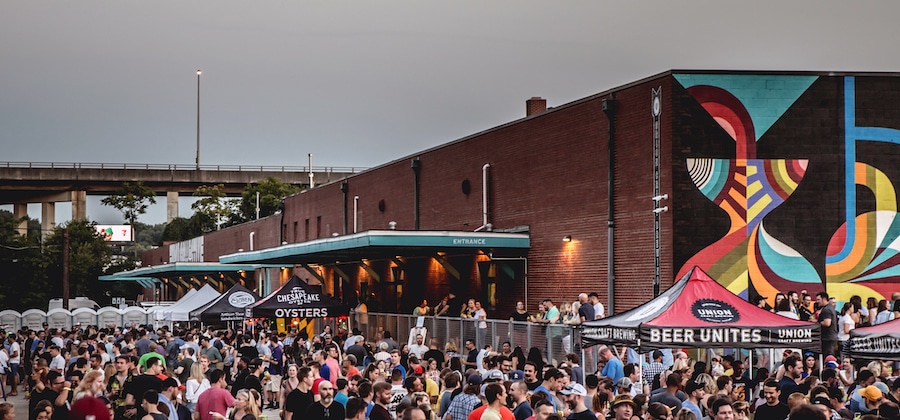
Union Craft Brewing, Baltimore, courtesy of Seawall Development.
Equity and parking requirements.

September 21, 2020

Zoning, which dictates minimum off-street parking requirements for new and old buildings alike, has led to over 30% of our cities being given over to parking lots. While these parking requirements make for better parking, they make everything else worse.

There is no science to parking requirements. Every city adopts its own zoning rules and parking requirements. If you ask a planner how a parking requirement was set in any particular city, they would have no idea where the number came from.

What we do know is that parking requirements do a lot of damage. By favouring the car, cities have sprawled out of shape to make room for cars. And that spread has discriminated against those with lower incomes as housing close in becomes more and more expensive because of the lack of land. It’s made it harder and harder for those who really need to live close to where they work, to be able to afford to live close. If someone needs to buy a car to get to work because they can’t afford the housing that is close to their job, they also have to be able to afford all the associated costs of owning a car. It’s a vicious circle.

A 2016 study found that the median net wealth of Black families hovered at around $17,000, or 10 percent of the net worth of a typical white family. But some cities require two parking spaces per residence for apartments for low income families, and these are often Black families. How can they afford two cars? Since each space could easily cost more than $17,000 to build, wouldn’t it make more sense to put that cost towards higher-quality housing closer to their work? 

Dr Donald Shoup, a research professor at the Department of Urban Planning at UCLA, has spent his career deeply immersed in parking and land economics. His book, Parking in the City, shows that parking reforms can improve urban metro areas both economically and environmentally. It’s difficult to reform zoning for parking piecemeal says Donald.

“I recommend that cities should just remove off-street parking requirements.”

Many cities are following his recommendations and looking closely at parking requirement reforms and how this will make that valuable land available for much-development housing development instead. Houston recently increased its no parking requirements to cover a larger portion of the city and San Francisco, Buffalo, Hartford, London and Mexico City have already removed their off-street parking requirements completely. Expect to see more cities follow suit very soon.

Donald and I talk parking in this podcast. Listen in.

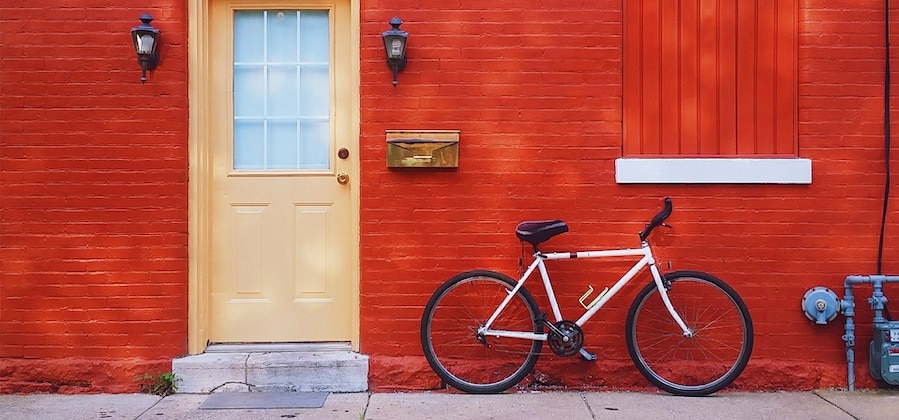
Image from pxhere

Rent to buy.

July 27, 2020

How do we address the affordable housing crisis? There are lessons to be learned from all over the world. 

Kris Daff, in Melbourne, Australia, is developing an important solution. Australia’s housing market is very expensive and lack of tenure in the rental market results in significant levels of housing anxiety. At the same time, Kris, a real estate developer, was disenfranchised with the for-sale housing market in Australia. Usually there are display models and a sales suite, a real estate agent is appointed, and there’s a lot of expensive marketing deployed. The goal is to have investors or residents pay ten percent up front for the right to buy an apartment when a building is finished. Kris finds this to be an impersonal relationship between developer and homeowner, especially as more often than not investors are buying units with managing agents acting on their behalf. At the same time a superannuation investment industry which is the fourth largest pension fund in the world has emerged in Australia, and institutionally owned housing is likely to be on the rise threatening home ownership for those who really need it even further.

Kris wanted to find a way to get affordable homes into the hands of people who need them the most. To that end he embarked on his own international research project on how housing is delivered in other countries, large-scale housing owned by one entity and offered for long term secure rental for residents for whom ownership may be difficult. He took what he learned from US commercial housing models and Europe’s approach to the development of long-term rental housing and melded the two into a unique housing model. 

His company, Assemble Communities, builds uniquely affordable housing products that offer a stable, permanent housing solution for low to moderate income earners. They provide tenants with a five-year lease and an option to purchase their property at the end of that lease. They’re not obliged to buy but Assemble provides a program of financial coaching and cost-of-living savings initiatives to help them get there. To date, over 10,000 people have registered their interest with Assemble.

There are no pools or saunas here but Assemble has created an important solution to an enormous problem.

Listen to my interview with Kris Daff.

Image courtesy of Assemble Communities

Building a strong community.

July 20, 2020

A strong community is not built with one particular idea or project. There are many actors, ideas, visions and amenities that must come together to build a strong community.

The Mayor

A strong mayor can be instrumental to making change in a community. She must have a clear and strategic vision and she must have legislative power. Because she is responsible for hiring and firing staff and may also have veto power in implementing legislation, she inevitably will make a mark on how her city’s communities will grow.

The Chamber of Commerce

Chambers of commerce are generally made up of local businesspeople who promote and protect local business interests. They have existed in the United States since 1768. They choose their own leadership and debate which policies to promote and they can be effective in influencing regulators through lobbying. As a result they too can have an impact on the communities they serve.

Community Development Corporations (CDCs)

These non-profit, community organizations are an important piece of the puzzle. Their focus is on the revitalization of their communities, which are often low-income and underserved neighborhoods. Their initiatives are based around community health and can include the development of affordable housing, streetscaping projects and even social services and educational projects for residents. CDCs typically have local community residents on their board, and their work to enhance community conditions can also empower the residents. They play a critical role as well in building community wealth by keeping capital in the community.

Local assets

Maintaining local assets is another important step to building a strong community whether it’s a beautiful building that has fallen into disrepair, a local outdoor space which could be better utilized, sidewalks that are more attractive, bike lanes for commuters, better access to groceries or a local connection to transport. All of these things can improve life for residents and can give them pride in their neighbourhood and help make a community connected.

Private investment

All of these things drive private investment. Whether someone is looking for a new home to buy, or a potential real estate development site, they are more likely to invest in a community that is cared for.

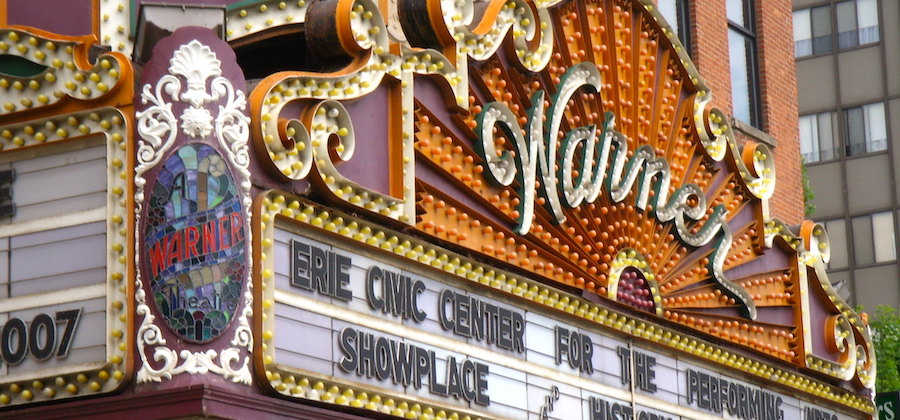
One place where it’s all coming together is Erie, Pennsylvania. A typical rust-belt community, Erie lost jobs and people, and as a result saw many decades of decline in its infrastructure. Now the city has a mayor with a strong vision to make Erie a community of choice. And a private company, Erie Insurance, is playing an unusually large role in Erie’s comeback. Christina Marsh, chief community and economic development officer at Erie Insurance, has helped to create an equity fund that is now at 27 million dollars.  She has also been involved in the strategic planning of the redevelopment of four central blocks in Erie’s Downtown. The city, Erie Insurance, the Erie Community Development Corporation and the Chamber of Commerce are working together to reinvest in infrastructure while embracing the city’s diverse cultures. With many rich assets, they want to build upon a healthy and vibrant downtown and ensure that the city continues to grow. And they want to make sure they match the needs of employers with those of the community by creating a pipeline for jobs with access to education or hands-on training.

Listen to my interview with Christina to learn more.

Warner Theater Erie Marquee by Pnoble805 at en.wikipedia / CC BY SA 3.0

The role of architects in building communities.

July 13, 2020

America is such a diverse country. It encompasses geographic locations as diverse as the Mississippi delta, Bethel in Alaska, New York City, San Antonio in Texas, Hawaii and the Great Lakes. And it encompasses even more diversity in its community types — from rural to tribal to suburban and urban.

But despite this diversity there are many common themes that unite us. One of those themes is the current housing crisis and the question of how we will solve it.

It’s important to understand that diversity is a result of the people and an expression of their environment and community values. This is what creates something that is unique and individual to a place. In the same way, buildings and communities also have an opportunity to be designed in concert with the values, ambitions, aesthetics and goals of the people that occupy them, both those responsible for creating them and those who will live and grow in those communities.

So, what role should an architect play in building local communities? In recent years the architect’s role has grown and changed and it is still evolving. An architect’s role should not only be to build distinct projects and beautiful buildings, but it should also help knit together the blocks of housing, libraries and parks into a community where residents feel supported and are able to live well and grow their families. For community-based development groups, a dedicated architect can be an important resource to help with the ins and outs of affordable housing development, community engagement and regulatory processes.

Katie Swenson is such a community architect. Over the many years she has spent working on affordable housing, she has always been a powerful advocate for equitable cities and communities. Her work with the Enterprise Rose Fellowship Program taught her a lot about the role of architects in local communities — architects who approach their work with a desire to help communities achieve their goals and who bring the best resources from the architectural and design communities to bear in this local work.

In 2020 Katie became a senior principal at MASS Design, a design practice that embraces issues of economic and social equity. Katie believes that the importance of home, especially as revealed by the Covid19 Pandemic, has never been so important. “Buildings shape us, they shape our experience. They shape our health outcomes.” says Katie. “We need to ask more of our buildings and participate in a greater spatial awareness and spatial literacy to understand the profound effects that the built environment in general, and the buildings that we occupy in specific, have on our health outcomes and our quality of life and productivity outcomes and that we gain a sort of awareness and capabilities around our ambitions for the built environment.”

Listen to my interview with Katie Swenson.

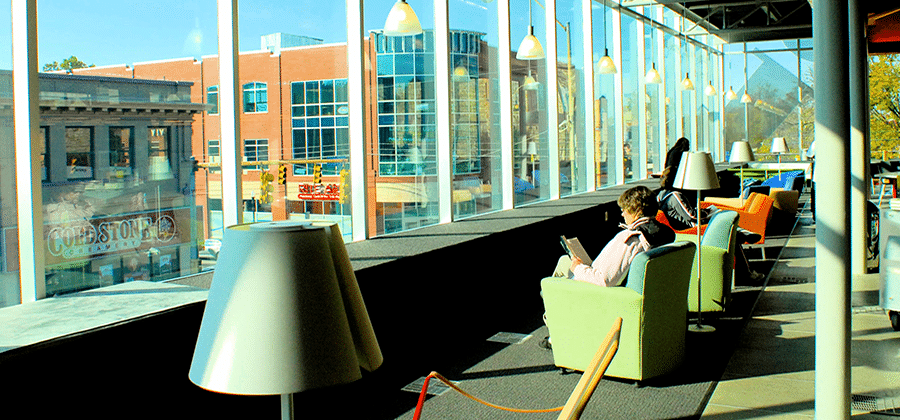
Image by Jonathan Greene

« Previous Page
Next Page »

Primary Sidebar

sign up here

APPLY TO BE A PODCAST GUEST

More to See

(no title)

February 22, 2025

Bellevue Montgomery

February 11, 2025

West Lombard

January 28, 2025

FOLLOW

  • LinkedIn
  • RSS

Tag Cloud

Affordable housing Climate Community Creative economy Crowdfunding Design Development Environment Equity Finance FinTech Gentrification Impact Investing Mobility Offering Opportunity zones PropTech Technology Visionary Zoning

Footer

©rethinkrealestateforgood.co. The information contained on this website is for general information purposes only. Nothing on this website is intended as investment, legal, tax or accounting strategy or advice, or constitutes an offer to sell, solicit or buy securities.
 
Any projections discussed or made may not be accurate and do not guarantee a specific outcome. All projections or investments are subject to risk due to uncertainty and change, including the risk of loss, and past performance is not indicative of future results. You should make independent decisions and seek independent advice regarding investments or strategies mentioned on this website.

Recent

  • The Mulberry
  • Mount Vernon Plaza
  • The Seven
  • Real estate and women.
  • Oculis Domes.

Search

Categories

Climate Community Crowdfunding Development Equity Fintech Investing Mobility Proptech Visionary


Copyright © 2026 · Magazine Pro on Genesis Framework · WordPress · Log in