• Skip to main content
  • Skip to secondary menu
  • Skip to primary sidebar
  • Skip to footer
  • Home
  • About Us
  • Say hello
Rethink Real Estate. For Good.

Rethink Real Estate. For Good.

  • Podcast
  • Posts
  • In the news
  • Speaking and media
    • About Eve
    • Speaking requests
    • Speaking engagements
    • Press kit
  • Investment opportunities

Visionary

Design justice.

May 25, 2022

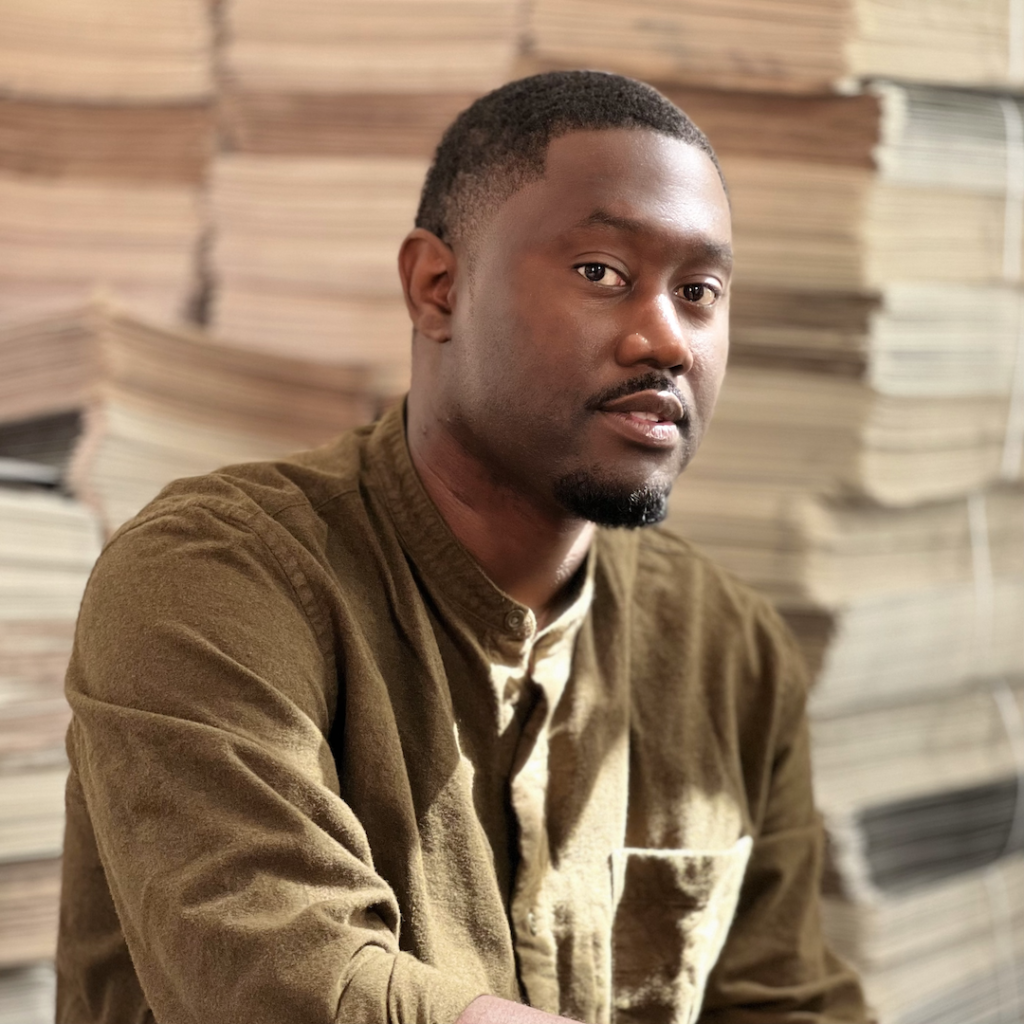
Bryan Lee, Jr. may have studied architecture, but he is by no means just an architect. Bryan’s philosophy and ideas are big, challenging and adamant. To address these ideas, in 2017, Bryan created Colloqate Design in New Orleans, a firm that uses design thinking to create a conversation or dialogue (thus, the  name of their firm) within the community to speak both to “collective values and ideals or reveal persisting inequity and injustice.” Everything is on the table. Sustainability, community history, immigration, transportation, food security, housing values. Bryan says, “Design justice is a foundational principle; it is not a design process, yet. It is an underlying framework for how to think about getting to the architecture.”

Interested in architecture at a very young age of ten or eleven, Bryan recalls, as a child, noticing the dramatic difference between the spaces and places of Sicily (he was an Air Force brat) and the streets of Trenton, NJ. Out of school he did a stint in an architecture firm, as well as two years as Place and Civic Design Director for the New Orleans Arts Council. But with Colloqate established, alongside the last few years of intensely heightened awareness of issues of racism and climate change in the U.S., his firm’s impact is growing.

Bryan is a founding organizer of the Design Justice Platform, and he co-organized the Design As Protest National Day of Action (hosting more than 30 workshops). Most notably, he was named 2021 National Design Award winner in the emerging designer category by the Cooper Hewitt, Smithsonian Design Museum. He was also a 2018 Fast Company Most Creative People in Business and a 2019 Architectural League Emerging Voice.

Read the podcast transcript here

Eve Picker: [00:00:06] Hi there. Thanks for joining me on Rethink Real Estate. For Good. I’m Eve Picker and I’m on a mission to make real estate work for everyone. I love real estate. Real estate makes places good or bad, rich or poor, beautiful or not. In this show, I’m interviewing the disruptors, those creative thinkers and doers that are shrugging off the status quo, in order to build better for everyone. If you haven’t already, check out all of my podcasts at our website RethinkRealEstateForGood.co, or you can find them at your favorite podcast station. You’ll find lots worth listening to, I’m sure.

Eve: [00:01:01] Bryan Lee may have studied architecture, but he’s more than an architect. He launched Colloqate Design in New Orleans to explore big, challenging and adamant ideas about equity in the built environment. At Colloqate Design, a community conversation puts everything on the table. Sustainability, community history, immigration, transportation, food security and housing values. The end goal is an equitable, physical landscape. It’s a fascinating conversation. Listen in to learn more. If you’d like to join me in my quest to rethink real estate, there are two simple things you can do. Share this podcast and go to rethinkrealestateforgood.co where you can subscribe to be the first to hear about my podcasts, blog posts and other goodies.

Eve: [00:02:06] Hi, Bryan. I’m just delighted to have this opportunity to talk to you today.

Bryan Lee: [00:02:10] Yeah, wonderful. Thank you for inviting me.

Eve: [00:02:13] You have a really big, bold idea to design spaces of racial, social and cultural justice. What does this statement mean to you and why is it so important?

Bryan: [00:02:26] Yeah. I mean, the way that I kind of define culture is that it is the consequence of persistent circumstance and immediate condition, meaning there’s a long history that drives how culture is formed and it is directly impacted by how we’re currently living, which means that every space that has a connection to our racial, social, cultural worlds is significant in the shaping of our lives. And so, for me, when we think about justice in any of those spaces, it requires us to have a cultural framing. It requires us to understand a history of racial violence, racial oppression and racialized joys. There are there are joys that come as a by-product of the communities that are formed through moments of oppression. And so, I think recognizing those, not ignoring them and elevating them to a valuable asset within a design process, within an architecture, within an urban plan or urban design, allows us to have more just spaces that serve more people.

Eve: [00:03:45] I love that you talk about joy in there as well.

Bryan: [00:03:48] Yeah, it’s necessary.

Eve: [00:03:50] My parents were actually refugees and what always surprised me about them was they went through six really long, hard years in labor camps, but they always spoke about these joyful moments that, you know, were part of that community. Exactly. Exactly what you said.

Bryan: [00:04:06] Yeah. Even to that, I grew up and my father used to tell me he didn’t know he was poor until he went to college and people told him he was poor. And part of that is that, like, community is so necessary and specifically for marginalized or disinherited communities. We often form social capital and cultural capital together that allows us the currency to move through the world, and that is usually shaped by the moments that are created through joy, through those experiences that build connection with one another. And so, I find it utterly necessary for us to conceive of an architecture that responds to those joys or responds to those disparities, and acknowledges the fact that people who have had to create cultures out of violence or oppression or harm or trauma have spatial solutions to a world that is actively seeking to harm them oftentimes. So anyway, yeah.

Eve: [00:05:07] Yeah, my parents actually met in those labor camps. So that was a very, you know, and they were a long love story. So, it was it was a strange mix, as you said. So, your platform is called Colloqate. What exactly is Colloqate?

Bryan: [00:05:26] Yeah, thanks for asking. Most people don’t, so it’s nice. So Colloqate is a combination of two words and one formal word. So, if we think about kind of colloquial, the kind of informal or sophisticatedly informal use of formal language, whether that be written language, whether that be cultural language or spatial language is a necessary understanding. So, understanding that informality and how people use that informality to shape their space is significant. And then location. So, what is the informal language of a place? Right. And so Colloqate is really trying to understand those relationships. And then the term I found, the word collocate with a C, to be even more enlightening when it comes to the type of work we’re looking to do, because it talks about the sequence of words and phrases habitually juxtaposed at a greater frequency than chance. And for us, that is exactly what we’re looking at. We’re looking at the sequence of people in place habitually juxtaposed at a greater frequency than chance, where there are people and places and spaces. How often are those people there? Why are they there? What are the relationships that people have between those spaces? Acknowledging that they are unique to particular cultural, racial, social communities means that we can understand that frequency as an affirmation of the type of space that might want to be built in the future. So that’s what Colloqate means.

Eve: [00:07:08] That is what Colloqate. So, what services do you provide and why do you think they’re important?

Bryan: [00:07:15] We are a non-profit design justice practice, so our focus is a, it is a social mission to deal with projects that are around advocacy, around organizing and around design. And so, we provide services that fit within those three brackets. From an advocacy standpoint, we do trainings on all of our projects as well as we do trainings on a project-by-project basis or just for the general public. So, the intention then is to kind of create a wealth of knowledge for folks to move and move their practice in the direction of design justice. And so that’s part of the advocacy. We also advocate for housing rights, tenant rights. We advocate for community voice in projects. We are a firm that does research and works on projects that are focused on anti-Carceral spaces. So how do we kind of think about the abolition of space, not just as a way to eliminate a certain type of space, but as an opportunity to create new types of spaces that hold people with care and value. And so those are the types of things we do. And again, practically, we still kind of hold the standard scope of services. We do planning work. We do engagement work pretty heavily and a lot of organizing work.

Eve: [00:08:54] But I mean, it’s an unusual practice. First of all, the fact that you’re a non-profit is pretty unusual in the architecture world and the range of services is pretty unusual as well. What led you to use your training in this way?

Bryan: [00:09:08] I worked in the field in the kind of, quote unquote, traditional architectural practice for, I don’t know, 14, 15 years before leaving, going and working for the city and then expanding and starting my own practice. I think the thing that led me here, well, there’s obviously multiple moments along the timeline that shape and shift how you get to at any given point. But I think leave grad school, I graduated in 2000, end of 2008 right before the market crashed. So maybe a month or two before the market crashed. Yeah, there were no jobs for a significant amount of time. And so, I had to re-evaluate how I wanted to exist within the profession, whether or not I was even going to be in the profession. I didn’t know that there was going to be a profession for me to go back to. And so, or at least in the way that I wanted to. And so, part of it was taking a moment during that recession and reflecting on how I wanted to exist if I were going to exist in the architectural world, how might I do that? And so, I wrote down the things that that were important to me and thinking about some of the other organizing work that I had done in the past, whether that was kind of community organizing or kind of in the political space, I found that to be extremely vital to who I was as a human. And I found the architecture world to be very kind of necessary for me to kind of grow as well.

Bryan: [00:10:45] And so, I couldn’t, but I couldn’t figure out how to connect those two things. And so, what really led me to this is that I started a program or expanded a program called Project Pipeline here in New Orleans, Louisiana, in 2012 with a bunch of people, all of the names which I can’t name immediately, just because it’s a lot of people. But we started this program, expanded it to this idea around social justice, through design education. And so, we taught students across the city for six years, and the program still goes, I turned it over. But we taught them, thousands and thousands of students to think about their spaces through that lens. And the more and more we did that, the more and more kind of connected we felt in our communities through that work.

Bryan: [00:11:39] It made me realize that a) it was possible that it was easier to understand than most architects are kind of adults may lead you to believe. And then I had the opportunity to leave the kind of traditional practice and go work for the Arts Council of New Orleans to essentially work on place and civic design work. So, ground level work that was still architectural in nature or sculptural in nature. It was public art and community design. And from there I really found that to be hyper intriguing, in large part because the people who are engaging in those art pieces and those spaces were wildly different than the folks that you often see engaging in the architectures that I was building and that felt wrong. It felt wrong that that the communities I serve, the communities that I’m a part of were not, did not have access to the type of space that we wanted to create in other realms. So that was the driver. And once I left the Arts Council, I said, I can go back and work for another firm or I can give this a shot. And so that’s what we did. We started a practice and really wanted to kind of lean into that as a tool, lean into design justice as the tool to drive how we conceive of the architecture we’re putting into the world.

Eve: [00:13:10] You know, I find this especially interesting because I don’t know if you realize this, I’m an architect by training. And I’ve always thought that architecture training is perhaps the best training that anyone could get. We were trained to be makers. We make something out of absolutely nothing. Right. So, there’s this really incredible problem-solving path that you take from nothing to, you know, sometimes enormous projects. And it’s always been bewildering to me that more architects don’t take a different path because architecture, dare I say it, is a little precious.

Bryan: [00:13:45] It is.

Eve: [00:13:47] And it’s just such a wonderful tool. So, yeah, I totally get, I totally get why you went in this direction. So, when you do this work, how do you bring stakeholders on board to see the issues that you know to be true.

Bryan: [00:14:03] The way that we engage is first with the acknowledgement that there are three different types of outreach that happen. One is just a general outreach, which is, which is a communication tool that is often from a developer or an architect or a client to a community, oftentimes doesn’t have a lot of feedback, but it is an acknowledgement that something is happening. We try to avoid that pretty much at all costs. Moving into engagement, you often have some sort of dialogue, right? So, it is, there’s a feedback loop that happens with engagement. But if you’ve worked in a design firm, you often, you’ll recognize that it is often extractive because we don’t stay in those communities. We’re often in grab it, form relationships, and then we’re gone, right? And so that is also harmful. If you also on the other end of that, if you’ve ever talk to your community members after that process, you’ll hear from them that they feel jilted and don’t like that process over and over and over again. And so we tend to move ourselves more towards the organizing space, which is a means and opportunity for us to build power in communities through a design process. And we really bring this to a head when we kind of bring to bear that there is no better way to build community than through organizing one’s community around building a space. It takes an awful lot of time. There’s an awful lot of money, there’s an awful lot of money involved and there’s a ton of decisions. And so all of those things communities want some self-determination around. And if we create a process within the design of a building that or space that reflects the voice of those people, then not only will there be more investment into those spaces, but the spaces will reflect and be more present for the communities we serve.

Bryan: [00:16:06] And so the way that we do that just in general is a couple of ways we hire what we call community design advocates as a part of the team, so they become a part of the design team. They are they are not a focus group. They can serve in a focus manner, but their primary obligation to the project is to continue doing the organizing work that they were previously doing. So, if they were talking about tenant rights or if they were talking about cultural spaces throughout a particular neighborhood, their job is to, kind of, continue engaging with their community members around those things that they care deeply about. And so, in doing so, they have pre-existing relationships, they have pre-existing knowledge that we will never get, right. We can’t have it through unless we have those previous relationships as well. We just can’t. And so, can we relinquish some of our ego and need to hold power along every single step of the way and allow for community members to thoroughly describe how they experience space, how they think about space, and how they want to see space articulated, and then try to translate that. And our job then becomes translator rather than to present a series of drawings or renderings that may completely miss a mark. So that’s one way.

Eve: [00:17:39] I like the notion of relinquishing ego, which is probably very hard for many architects to do.

Bryan: [00:17:46] Yeah. Yeah, it is. It’s difficult and understandably so. Like, people don’t really fully understand how hard it is to be an architect.

Eve: [00:17:55] Yes. No, I think that’s true. I think that’s true.

Bryan: [00:17:58] So very difficult and the stakes are high. But anyway, the other two things is we create. So along with the CDOs, we create what we call a spatial implications document. And so, every conversation that’s had throughout the course of a project is tracked, and that might mean 30 to 40000 comments. And we tag and theme those comments. Those comments are then broken down into process implications, program implications and spatial implications. And then we talk with the client about process implications, meaning we can make the spatial suggestion, but if you don’t change a process, then the outcome is going to be the exact same. So that’s one thing. Programmatic Solutions. What activities are people kind of reflecting throughout the sets of conversations? So, we talk with community members again to kind of compare and reflect on the activities that people want to have. And then the spatial documentation is really just about the design team and how we reflect some of those other process and programmatic implications into an architecture, into the spaces we’re designing. And then lastly, we infuse what we call a design justice set into our standard architectural set, which just means that for everything that’s produced, whether it’s on safety, whether it’s on recreational space or restrooms, we create the themes, and it will reflect itself into the architectural drawings. And so, we tag and annotate every design decision that was critical through the engagement process and through the project management team’s process. And we tag those on the drawing, so we talk about the things and hold ourselves accountable to the things that the community said. And we attempt to say, these things are happening, these things are not happening, and here’s why they’re not happening. Right? So, it’s a level of accountability that will live on past the submission of the architectural documents.

Eve: [00:20:12] That’s pretty fascinating. So, I have to ask, how different do these spaces end up because of that process? If you sort of reflect and say, okay, if I were to go in and design this without this process, you know, how different would it look?

Bryan: [00:20:28] I don’t think it’s major. What I think is that there are I mean, I think it’s like a tone and intonation in someone’s dictation or speech to someone like you can tell when someone means something sarcastically or when they mean something genuinely. I think it’s that, I think the community voice is very much a tone and inflection in the architecture rather than large gestural moves most of the time. It doesn’t mean that it’s not those. Yeah, but, but so for instance, whether that’s finding the moments across an architecture that are, across a building that allow for participatory designs that might mean facade design, that might mean kind of internal artwork in a building, that might mean the community spaces are culturally reverent versus architecturally simple to create, structurally simple to create. So, it might mean that we have this, and I say we, can you create a space that thinks about prayer circles or freedom circles or kind of native. So, like, again, the types of spaces that are created may shape and reflect the cultural resonance. So that’s another thing. And then I would say the other things are really about marginalized communities that often pops up. So, when we talk about non gendered restrooms, right? So that is a touchy subject in every project that we do. But having those conversations brings to bear a lot of conversations. And so, while a client may want to approach it in that particular way, and we might as a design team, when we hear some of the religious entities who are a part of these spaces say, Well, while we want to make sure that other folks feel comfortable, we also know that our kind of religious background doesn’t allow us to operate in this particular way. And so can you also accommodate us as well? And so, it means that you shape the restrooms a little differently. You don’t have all kind of non-gendered restrooms, but you have spaces that other people can use based on their own principles and values.

Eve: [00:22:51] So there are other stakeholders like the city and funders and. What do they have to say about this process?

Bryan: [00:23:00] The city loves it because the city is, oftentimes is directly accountable to the to those stakeholders, to the neighborhoods. Right. Those are the people who are going to show up at the doorstep if they don’t if they don’t listen to them. So, the city views it as a tool to accommodate the conversations that they would otherwise not be able to have. I don’t often care about what funders have to say about anything. You know, I think mostly those conversations are wrapped around a, it’s choosing the appropriate clients. So, I would say I don’t care what funders say that are in opposition to to considering the voice of community. So, we wouldn’t work for them in the first place. But the developers that we often work with or the clients that we often work with are usually institutions or other non-profits who actively want to understand the impact of their work on a larger community. And so, they are they are pre invested in this type of work in the first place.

Eve: [00:24:10] So what kind of architecture would actively dismantle barriers and make buildings more equitable?

Bryan: [00:24:17] Yeah. So, part of the kind of continuum that we think about in architecture or at least in design justice reflects on what liberation looks like in this work. And so, what that really means for us is that we have to reflect and dismantle past structural systems that have implications on the current policies, procedures and practices within our own, within our own realm. So, we have to kind of think about those structural systems before an architecture can even come to be, because systems are created for a reason. They’re created so that the outputs of those systems are consistent, that they don’t have to worry about the outputs diverging too much from the standard. So, first things first is acknowledging and understanding those systems. The second thing is to make things fair or accountable in the present. So that really just means that we want to make sure that whatever architecture we produce has a mutual, a mutual aid about it. Right. Meaning that there are no private properties, even if there are, everything’s private, even if it’s privately owned, whatever property exists for a developer or a client or institution, it abuts or is adjacent to a partner, to someone else, to a community. And so, we thusly have a responsibility to those partners. The third thing is, can we create spaces that are fundamentally about future setting? And so, when I say future setting, that might mean that we have to rethink or recalibrate the typologies of space that are better informed by cultural, social, racial communities. So, meaning we acknowledge that redlining has had a tremendous effect on black and brown communities across the entire country, and it drives even current gentrification processes.

Bryan: [00:26:19] We also acknowledge that policies that exist in a lot of cities restrict the square footage of housing that can go on any given site, restrict the density within places. All of those things are often and were often developed as a means to negate or to push out black, brown, BIPOC communities more generally. And so, it really is both challenging those policies and procedures, but then taking that as an opportunity with community to redevelop or to develop new ideas about how we can exist in space. What new spaces should exist on the other side of abolition of prisons? Because it’s not as though we’re not still going to have issues and communities. And I don’t think anyone’s ever said that even in the defund world, it is always to say, can we create new spaces that serve our community a little bit better? When we talk about housing and affordable housing and we drive so much of our housing propositions on area median income, that negates the fact that wealth was stripped from so many communities for the last 100 years, 150, 250 years. Right. So depending on what timeline you want to use. And so, it means changing a policy around income so that we can actually develop a housing stock or a housing typology that recognizes that wealth discrepancy.

Eve: [00:27:57] And I mean, you know what the architecture profession is like. It has a very small minority population. Right. So, you know, given that, how do you see the role of racism and race as influencing contemporary architecture?

Bryan: [00:28:18] Yeah. I mean, I think it’s substantial because we are often conduits of power. We are reflecting the will and the needs of our clients and the will and the needs of those clients who have the money that’s available to build architecture at that scale is often conservative, is often coming from a different specific perspective. When I say conservative, not from the political lens, but.

Eve: [00:28:50] No, I, the industry is very monoculture and.

Bryan: [00:28:54] Yeah, precisely.

Eve: [00:28:55] And, in many ways beyond architecture.

Bryan: [00:28:57] Yeah. And so, I think that those, the values there are then reflected. We often say in our work that our values are validated through the spaces and places we design. And so, if a history of racialized spatial violence as it still exists, who’s to say that those principles of practice don’t still permeate through the architecture that we design? Because those are the rules. That’s the system that we’ve created. Even thinking about the kind of growth of modernist design in a way that and even super modernist design that that starts to think and postmodernism starting to think about an architecture that disassociates itself from its cultural implications means that you’re valuing an architecture that does not reflect other types of cultures. Right. Because it’s ornamental or it’s extra. And therein lies so much of what other communities who haven’t had the opportunity to shape their environments find valuable. I mean, we talk often about the reason that so many black and brown communities have a lot of murals and visuals in that particular nature. But we don’t have a significant home ownership ratio. We don’t have, we haven’t been able to control the wider or broader landscape of neighborhoods in order to shape and self-determine those outcomes, which means that we use visuals, we use art, we use muralism we use a lot of those other expressions to put a fingerprint on the spaces we live in. And so, when the architecture doesn’t allow for that, when the architecture doesn’t allow for a cultural resonance to be prominent, then those values are validating one set of groups over the other.

Eve: [00:31:01] So is there a little bit, a little tiny glimmer of hope for you? You see any glimmers of hope, like anything changing over the last few years that have led you to sit up and say, oh, that’s interesting. That’s a shift going on.

Bryan: [00:31:15] Yeah. I mean, first of all, you know, a lot of this work came to be through another program or work that we did called design as protests. And one of the core definitions that we use during those workshops is to say that to protest is to have an unyielding faith in the power and potential of a just society. It is fundamentally about our collective hope, and if design at its best serves that same purpose, we have no choice but to be hopeful in a future that connects and serves the communities we serve. So yes, I am always hopeful. I don’t think we have a choice. But I’d also say that the things that give me hope, the least of which is our organization still being around. I mean, I think we knew that this was going to be a very difficult pitch but turns out it really isn’t. A lot of people have been clamoring for this type of work for a long time, but the architectural world has ignored it. And to that note, you see more and more RFPs that are popping up that call for critical race theory or design justice as a part of their core evaluation metrics. And I think going from three years ago, one project in the northwest that was maybe $32 million, something of that sort. There’s probably $2.8 million or $2.8 billion worth of work over the last four years in the northwest. That is leaning more towards this direction, that is looking at critical race theory and that is looking at design justice as a core component of their work. Interesting. And it’s huge. So, I am hopeful in the sense that I see clients and institutions shifting and demanding more of us. And the more that that happens, the more that we will hopefully do the work to meet them where they need to be or where they are.

Eve: [00:33:27] So I have one more question for you. Actually, a couple, but this one is what do you like best about the work you do?

Bryan: [00:33:37] Yeah, I love that question. I love people. I love the fact that we get to connect and work with communities over and over and over again. It’s the best part of our job is working with, let’s say, people say stakeholders or end users. But what I love about it is that I get to be in community daily and get to grow with people. That is not from a extractive perspective, not from a position of transaction. Right. And to build those relationships is amazing.

Eve: [00:34:12] Yes, I can see that. So, one final question and that is, what is your big, hairy audacious goal?

Bryan: [00:34:20] My audacious goal is to fundamentally shift the way that practice standardizes engagement and organizing into the work. And by that, I mean, can we stratify the profession. A) bringing in new community members who historically would not have an opportunity to be a part of the design profession. So, creating a community design advocate as a general role on all projects across the board, it would be to create and, continue to create and build out the processes for engagement that make it, not just the processes but the tools for engagement that make it infinitely easier for all firms to do it.

Eve: [00:35:13] Because it is hard.

Bryan: [00:35:15] It’s very, very, very hard work.

Eve: [00:35:17] Very hard. Yeah. Maybe harder than designing a building, right?

Bryan: [00:35:22] It’s very, very difficult work. I mean, a lot of it is just so much research, it’s qualitative. And to be able to summarize and think about those spatial implications is a design process unto itself. And so, if we can find and build out the Autodesk architectural suite, that is something comparable to that, that allows us to create the tools for people then generally, will make it more tempting for clients to demand that work in their process. And if we can do that, you entirely shift the field. So that’s the idea. That’s where we’re going. And it’s happening slowly.

Eve: [00:35:59] Well, thank you very much. I can’t wait to see the end result.

Bryan: [00:36:03] Yeah, no problem. Thank you for taking the time. I appreciate it.

Eve: [00:36:20] That was Bryan Lee, founder of Colloqate, and an architect pushing the traditional boundaries that the architect’s role into something far more significant.

Eve: [00:36:41] You can find out more about this episode or others you might have missed on the show notes page at our website RethinkRealEstateForGood.co. There’s lots to listen to there. A special thanks to David Allardice for his excellent editing of this podcast and original music, and thanks to you for spending your time with me today. We’ll talk again soon, but for now, this is Eve Picker signing off to go make some change

Image courtesy of Bryan Lee, Jr.

New markets for main street.

May 11, 2022

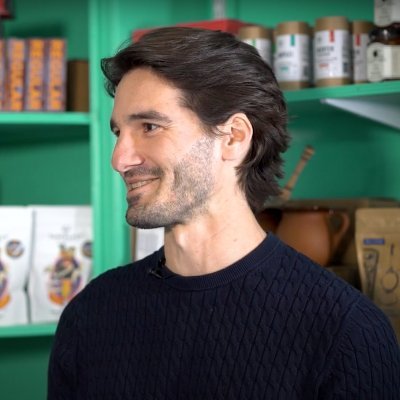
NuMarket was born out of the pandemic. Ross Chanowski founded the social crowdfunding platform in 2020 because he felt there wasn’t a way for communities to purposefully support the survival and growth of their local businesses. In an interview with The Boston Globe, Ross said that he wanted to develop a way for customers to meaningfully support the businesses they love while, yes, getting something in return.

On NuMarket, main street businesses raise funds for a variety of reasons like renovations, expansion, a popup, a new product line or even a second location. But instead of going to a bank to get a loan, they go to their customers, raising funds through contributions made in an online campaign on NuMarket. The payoff for each contributor is  120% of their money back in credits that can be used at that business. Contributors receive a bonus from the businesses they support, and those businesses get much-needed funds from the customers who love them!  To date, NuMarket has helped 23 small businesses raise funds through successful campaigns with more coming. The amounts raised vary, but the largest (and first) raise was completed by Mamalehs, an iconic delicatessen in Cambridge, that raised over $185k to open a second location. Prior to launching NuMarket, Ross was living in the UK, completing his Master’s degree work in social innovation at the LSE. While there he found time to co-found Jungle, a collective of creative thinkers, designers and strategists growing companies with social impact, working to build product ideas with intrinsic impact. Their current project is Jungle Brew – cold brew coffee designed for socially impactful behavior. Past engagements for Ross include Allen & Gerritsen and Draftfcb and an internship with former House representative Barney Frank. Ross is currently an advisor at the Kenarava Group in Kenya, “a progressive company offering climate-smart agribusiness solutions for a healthier, sustainable future.”

Read the podcast transcript here

Eve Picker: [00:00:12] Hi there. Thanks for joining me on Rethink Real Estate. For Good. I’m Eve Picker and I’m on a mission to make real estate work for everyone. I love real estate. Real estate makes places good or bad, rich or poor, beautiful or not. In this show, I’m interviewing the disruptors, those creative thinkers and doers that are shrugging off the status quo, in order to build better for everyone. If you haven’t already, check out all of my podcasts at our website RethinkRealEstateForGood.co, or you can find them at your favorite podcast station. You’ll find lots worth listening to, I’m sure.

Eve: [00:01:04] Ross Chanowski wanted to help when the pandemic hit, so he founded the social crowdfunding platform NuMarket as a way for communities to purposefully support the survival and growth of their local businesses. He wanted to develop a way for customers to meaningfully support the businesses they love while yes, getting something in return. Ross has put his background in marketing and a master’s in social innovation and entrepreneurship from the London School of Economics and Political Science to good use. Numarket helps Main Street businesses raise funds in a compelling way. Make a contribution to a business you love now, and you’ll get goods and services back with a 20% bonus, ten bagels become 12 in your tummy, all the while supporting the bagel shop you love. It’s a lovely story about a lovely business. Please listen in to hear more. If you’d like to join me in my quest to rethink real estate, there are two simple things you can do: share this podcast and go to rethinkrealestateforgood.co where you can subscribe to be the first to hear about my podcasts, blog posts and other goodies.

Eve: [00:02:42] Hi, Ross.

Ross Chanowski: [00:02:44] Eve, it is great to see you and hear you.

Eve: [00:02:48] I’m really happy to talk to you today. And, you know, Numarkets is one of my favorite companies. I’m really excited to talk to you. So let’s talk about Numarket. NuMarket, I think, is a pandemic, baby, right?

Ross: [00:02:59] It is, yeah.

Eve: [00:03:01] When did you found it and why? And how?

Ross: [00:03:05] As we all have found, pandemic time feels like a very odd construct. So thinking about two years of being in it, I’m still not quite sure when it started. Now we got going, we launched into the world in February of 2021, and the impetus and the idea and research behind New Market, I think had been happening for years before that and a lot of interesting in different ways. But when the pandemic hit, there was a clear insight that everyday customers of businesses and people in communities desperately wanted to do something positive for the places that that they love and that they need. And we were all struggling to find ways to do that. We were hashtagging on Instagram. We were tipping our delivery drivers and bartenders on the way out. We were buying gift cards, kind of doing anything we could, but it definitely didn’t feel like we were giving the kind of support that we could. And on the flip side, businesses were finding it incredibly difficult to get financing at the time to survive. But for decades before that, to to thrive and to open. And so there was something of matching those two up, this desire to support and be a critical part of independent businesses and businesses that couldn’t find avenues to financing that worked for them. So that’s where NuMarket came from. And what we do is we create crowdfunding campaigns for those businesses to raise money from their customers and community. But the contributors to those campaigns, they get more back than what they put in, 20% more, actually, as credits to use towards the business over time. So, it’s not a donation. You’re getting a lot more back than what you put in and you get to use it towards the business in the months that follow, in the years that follow. So, it generates this really interesting economic engine around these important and critical independent businesses all around us.

Eve: [00:05:23] Interesting. So, I’m having a thought. Could Small Change run a campaign on NuMarkets and offer people some investment coupon for future use?

Ross: [00:05:37] You know, I know we’re recording and if there are any regulators listening, we have to check that out first.

Eve: [00:05:43] No, this is, well, what’s interesting and this was going to be my next question. So NuMarkets doesn’t fall under any securities law, does it?

Ross: [00:05:52] Right. So, we’re issuing promotional credits. That’s kind of what our model entails. You are not receiving back cash. It is not a security. It is in the promotional credit category where you’re getting that 20% back as essentially a voucher to use towards goods and services, not that different from a gift card. And we’re very clear about that with everyone involved in knowing that there are some risks involved. But you’re getting this great chance to support a business. And unlike some donation-based platforms, where your money is going towards incredible causes, this is going towards businesses, for profit businesses like restaurants, yoga studios, online platforms, things like that.

Eve: [00:06:44] Right. I don’t think it would break any securities law, but we’ll talk about that later.

Ross: [00:06:50] I didn’t realize this was going to be a whiteboarding session.

Eve: [00:06:53] No, I mean, it really just occurred to me. My favorite Korean restaurant right next door, if they came to you and they did a campaign and I, what do you call it, make a donation. It’s not really a donation. Yeah, a contribution. It’s a contribution. So, it’s some way between investment and donation. So, make a contribution. Then thereafter, I could buy their bibimbap for 20% less.

Ross: [00:07:19] Exactly. Yeah. And you could buy their bibimbap, you could buy drinks, you could get anything that’s in there. Goods and services that they’re offering, which is one of the things we found has been a really big value add, where contributors get to use it, how they’d like to. And for businesses, they get to do exactly what they do best, which is just run their business. You don’t need to change your offering. You don’t need to offer any special packages or anything like that.

Eve: [00:07:47] So what do these businesses I mean, what do these businesses generally raise money for?

Ross: [00:07:54] Yeah. It’s we find a really big mix of things, new locations, new product lines, being able to move from, let’s say, a brick-and-mortar model to a nationwide or worldwide delivery service or the opposite. We find a lot of delivery, whether it be home delivery locally or nationally, moving into more of a permanent space. A lot of pop ups that are turning into brick and mortars. So, we’re at this point where some really amazing, vibrant and oftentimes funky businesses get to fund their dreams and get that validation that those dreams are real from their funders who turn into their best customers.

Eve: [00:08:45] That’s pretty cool. So, walk me through how a campaign works.

Ross: [00:08:50] Yeah. Campaigns, they last for 30 days, and you get a unique URL and campaign page designed with content that shows sort of who you are as the business owners, what your business is, and really gets to the soul of why you’re doing what you do. And anyone with access to a credit card can contribute during that 30-day period. You can gift contributions if you’d like to, to others, which we find a lot. You can leave testimonials that really show how much a lot of these great independent businesses are loved. So, it’s really special there. And then after the campaigns end, what we do is we handle all of the credit distribution, and we start doing that one month after the campaign ends. And that one difference for us of how our credits work is that we break them up monthly. So, we’ll start sending you your credits just one month after the campaign ends super quickly. And we do that monthly for six months. The way that math works out is, let’s say you contribute $100 to Eve’s Cafe. You would get back a total of $120 in credits, and you’d get $20 worth of credits every month.

Eve: [00:10:09] Okay. And this is to make sure that the funds are raised to spread out for the business as well.

Ross: [00:10:19] Exactly, yeah. And what we found happens quite often is you’ll have $20 worth of credits in month one and you’ll go in and you’ll spend those 20 credits and spend above them. So, there’s this really great engine around supporting independent businesses in a really, really strong way, not just as funders, but as your most loyal customers.

Eve: [00:10:43] How did you come up with that formula?

Ross: [00:10:46] Just trying to understand, I think, and talking with a lot of business owners and understanding the problems that are that are facing them and just taking a human first approach of, you know, just talk to us. Tell us what’s going on. Tell us why when you look for institutional funding, it’s difficult. Tell us why when you might find that funding, it’s difficult for you. And then, and then iterating. You know, our model wasn’t always exactly like this. We have great feedback loop and we’re super close with our customers and have a willingness to make those changes when we see that they’re needed.

Eve: [00:11:28] Interesting. Okay. So, I have to ask then, what percentage of your customers are not white male?

Ross: [00:11:38] Yeah, we don’t sort of publish exact data, but it’s a vast, vast majority.

Eve: [00:11:45] So often they fit into that minority or woman-owned business category that we all know does very poorly in the fundraising world.

Ross: [00:11:56] Yes. Yeah. The statistics on that are shocking.

Eve: [00:12:01] They’re really shocking. I think something like 2% for women owned businesses it’s ridiculous.

Ross: [00:12:07] Yeah, we’re very excited about the opportunity that we have in front of us to try to change that. And we’re at this point way above a majority of the businesses being led and managed by women and people of color.

Eve: [00:12:23] So what’s their average amount raised for businesses that you’ve helped so far? And how many have listed campaigns with you?

Ross: [00:12:31] Yeah, we’re up over 30 right now in the past year and at a pretty solid growth rate, which is exciting but also daunting, as you know. Yeah. And the average contribution amount, which I think is one piece of of data that is that’s pretty important for us, is around $150 per person. So, and that’s kind of the spot that we like to be in, which is no matter if you’re putting in $10 or 10,000, what you’re getting back is going to be the same. You’re getting that 20% back. And so we’ve found all different types of people from all different income levels who are able to participate and get that 20%.

Eve: [00:13:19] It must also depend on the business what value $150 has. Like it’s going to be different for bake shop than for something that sells more expensive goods, right?

Ross: [00:13:31] Yeah. Yeah, we found some really interesting, I think at this point slightly anecdotal, data on that of how do contributions change based on your average cost of goods. What’s been really interesting for us is the success of recurring purchase models. So, things like subscriptions, we’ve had some everything from farm delivery boxes to dumpling delivery and those have done incredibly well. I think there’s something to the idea that you know, as a customer that you’re going to be either going in or getting delivered something every week, every month. So, it makes a lot of sense to support and get 20% more.

Eve: [00:14:19] Interesting. Okay, let’s talk about geography. Where where do you do this right now?

Ross: [00:14:23] Yeah, we just kind of moved into Nationwide in the US. So, we started off in Boston in New England with a really, really great community of customers. And we, just this month, started launching campaigns that are across the country. What’s been really interesting, given what’s going on in the world right now, is that where you’re based has taken on an entirely new meaning on both sides of the platform. So, for contributors, people are living all over the place. Maybe you’re spending three months out of the year in New York, three months out of the year in Albuquerque, three months out of the year and in Indonesia. And for businesses, it’s a little bit of the same. You might be based in Los Angeles, but most of your customers are in Miami or in Topeka or wherever it may be.

Eve: [00:15:14] Interesting. So, do you find people contributing who are not customers or might be new customers for these businesses? I suppose the question is, is there crossover between campaigns? Are you building your own contributor base? Yeah.

Ross: [00:15:31] There is, yes. And we’re still early on. And I think that number will, we hope, grow. But we have found a really strong amount of repeat contributors, whether that’s our doing or the fact that there are just some really great businesses in similar communities, it doesn’t really matter to us. We’re just excited that people want to see this model grow and they want to see great independent businesses grow. We’re just there as the tool to make that happen.

Eve: [00:16:03] You said you’ve gone national. Where have you had campaigns?

Ross: [00:16:08] We’ve had some in California. We’ve had some in Florida. We’ve had a lot in New England, Connecticut, Boston, up in Maine, expansion into Maine, I should say. And in the next few weeks, we’re going to have a little bit more dotting across the country.

Eve: [00:16:26] Okay. None in Pittsburgh yet, right?

Ross: [00:16:29] Not until you help us out Eve. That’s what we need.

Eve: [00:16:31] I’m going to help you out, I’m going to help you out!

Ross: [00:16:33] You’ve got to spread the word.

Eve: [00:16:35] I think it’s a really great idea. So, do you think this model might become mainstream?

Ross: [00:16:40] We’re pretty confident that it will if we do our job well. I think that’s kind of the feeling that we all have right now, which is if we can continue to spread the word about it and make it known to more independent business owners that this is an option and that there is great support and there’s a way to engage your community of customers, we do think it can go mainstream. I guess it depends on your definition of mainstream. We’re not focused on world domination as a tech platform. I think we’re focused on being an option for every independent business that wants that option. Yeah.

Eve: [00:17:20] What’s your revenue stream? How do you get paid?

Ross: [00:17:23] Yeah, it’s pretty simple. We take a percentage of the funds that are raised in the campaigns. We have no subscription fees, no upfront fees. So, the only time businesses see us in their accounts is when we send them their funds at the end of the campaign.

Eve: [00:17:40] Shifting gears a little, you know, I looked at your background, which is very interesting, and community and social impact are clearly a really big theme in your life. There must have been a story. There’s got to be a journey that led you to NuMarkets, and I’d love to hear it.

Ross: [00:17:57] Yeah. Eve, if you recall to how we met, one of the big themes of that accelerator was Origin story. And unfortunately, there’s no great origin story. It’s, I guess, the seeds of how NuMarket came about in my background, were doing work and research that took me to some places all over the world and getting to see how different financial models work, how different businesses engaged in commerce and getting a lot of exposure to just difference.

Eve: [00:18:38] But to be fair, you’ve got a masters in entrepreneurship and social impact. So, you you’ve had a path towards this, right?

Ross: [00:18:46] Sure. Yeah, absolutely. And I think what that sort of academic piece of my life did was to really frame around the idea of understanding the problem from a very human lens. So instead of taking an idea and overlaying it onto people, it’s let yourself understand the challenges and day to day problems that are facing real communities and try to design ideas and business models and products against that. I can remember being in very specific instances and looking at the way that people have funded independent businesses all over the world, the ways that they’ve been able to create financial inclusion and just being so interested and impressed and engaged by those experiences that in some odd way Eve, leads to you running down the stairs one day and saying, Oh, I think I think now it makes sense. I think now NuMarket is ready. I think we’ve got the model.

Eve: [00:19:56] Right, I get it. But there’s another company that you’re involved in that intrigues me and I’ve just got to hear about, and that’s called Jungle. Tell me about that.

Ross: [00:20:05] Yeah, so Jungle started off sort of consulting and working with other corporates on how to increase their community impact through their revenue models. And in a strange twist and turn of events, it ended up being a coffee company that I started a few years ago, a handful of years ago now, with the idea that coffee is the most ubiquitous and habitual product that probably exists in the world where I’m holding one right now, we all…

Eve: [00:20:40] Here’s mine.

Ross: [00:20:40] I shouldn’t say we all. There’s yours. Exactly. It’s something that many people across the world really understand and purchase, and it affects over 25 million people across the supply chain. So, ended up starting a cold brew coffee company in in London a handful of years ago and a very different, of course, business model to what NuMarket is. But I think a lot of the partners and customers that we had are the same people and same type of people that we’re supporting at NuMarket now, owners of coffee shops, owners of bakeries, restaurants. We just launched a campaign for a coffee producer in Lawrence, Massachusetts, and it’s pretty cool to see, see some of the same challenges that we were facing in the coffee world and be able to support people doing it themselves now through NuMarket.

Eve: [00:21:38] Very cool. You’ve developed a thesis which is really fascinating. What do you think needs to be fixed in the world of small business? I know that’s a really big question, but I’m asking it anyway.

Ross: [00:21:50] Yeah, well, you know, there is, there’s no doubt that there’s power in commerce and who holds the purse strings. And I think the thing that we’re focused on from a systemic change perspective is allowing everyday customers to be the arbiters of the success of these businesses. So, if you’re the ultimate end user, you’re the person who’s buying the product. If we allow those same people to decide who gets the funding to start and grow, I think we’ll see a big, big change towards businesses that are important, that are independent, that are really, really doing great things for their communities, as opposed to businesses that have one very clear single bottom line, which is how fast can we grow? How quickly can we increase our margins as opposed to can we make people’s lives better and also make money at the same time?

Eve: [00:22:46] So if you were going to leave your mark on the world, what would that look like?  How would you like to leave your mark on the world?

Ross: [00:22:54] Eve, that is such a big question.

Eve: [00:22:57] It is! But you’re pretty close, I think, you know.

Ross: [00:23:01] Yeah, not even.

Eve: [00:23:03] Okay, I didn’t ask. What would your gravestone say?

Ross: [00:23:09] Oh, that’s a good one, too. Well. You know, I think it would just be. You know Eve, I don’t know and I’m going to be honest, I think we’re supposed to answer these questions with authority and strong character and all of that in these types of settings. But I think it’s okay to not know and to still be figuring that out. And right now, I think what I want my mark to be today, it’s just to have done worthwhile work.

Eve: [00:23:46] I’m pretty much in the same place. She led a good life. She was a decent person. That’d be pretty good. Yeah.

Ross: [00:23:53] And had a few good cups of coffee. Right, right. And a few bad ones too.

Eve: [00:23:58] Okay. So, I have to ask, ‘cause you sound pretty prolific there, what’s next for you? Like, are you focused solely on growing this business or is there something else you’re cooking up?

Ross: [00:24:10] I think I’m very laser focused on growing NuMarket in a way that is positive on a lot of levels. But I think there are lots of challenges and opportunities to solve those challenges out there. And I hope that whether it’s through NuMarket or through other efforts, that I and our team can start to tackle those and find some great momentum towards this idea of mutual value models. How can everyone involved in the equation of commerce or economies put something in and get more out from doing so? So, we’ll see where that takes us and we’ll see whether that’s tomorrow or ten years from now or ten weeks from now.

Eve: [00:25:01] Well, it’s fascinating. And I have one final question, if I find a business for you in Pittsburgh, will you come?

Ross: [00:25:08] Absolutely. I’ll come tomorrow. Let’s have some Korean food. Let’s have some good coffee.

Eve: [00:25:14] It’s a deal.

Ross: [00:25:16] We should hang up and stop recording now so we can start, we can start creating spots

Eve: [00:25:20] Okay. Thanks very much for joining me.

Ross: [00:25:24] Thank you, Eve. It was a pleasure.

Eve: [00:25:35] Ross Chanowski is passionate about building businesses that are needed and that make a difference. It looks like NuMarket is well on its way to making a mark.

Eve: [00:25:56] You can find out more about this episode or others you might have missed on the show notes page at our website RethinkRealEstateForGood.co. There’s lots to listen to there. A special thanks to David Allardice for his excellent editing of this podcast and original music, and thanks to you for spending your time with me today. We’ll talk again soon, but for now, this is Eve Picker signing off to go make some change.

Image courtesy of Ross Chanowski

I do a bunch of weird stuff.

May 4, 2022

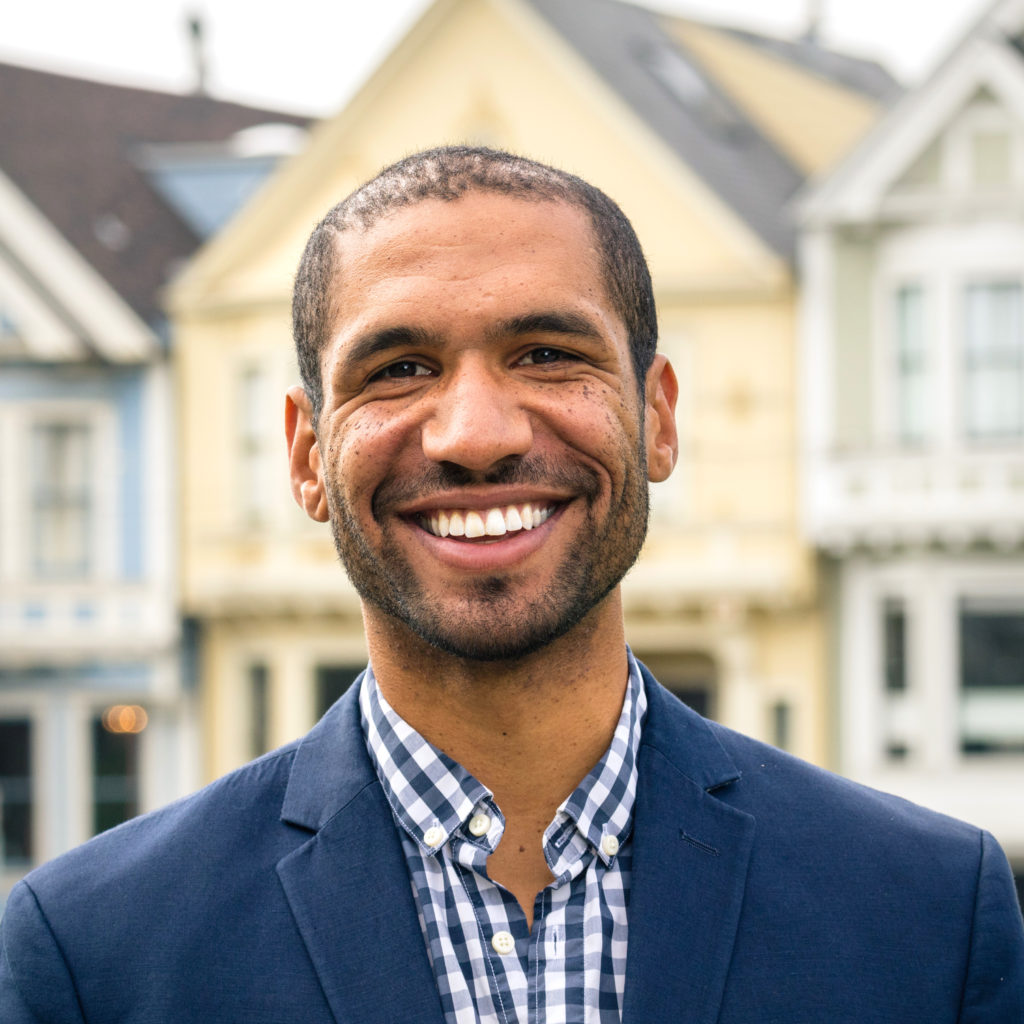
Kevin Cavenaugh is a rare developer.  Left brain, right brain, head and heart all come to bear on his wildly creative buildings. He has carved out a special place for himself in the Portland real estate world. He has said, “I’m tired of mocha-colored, vinyl-windowed boring. I can’t change the fact that the streets are gray and the sky is gray. But the buildings?”

One recent project, Tree Farm, has 50 small trees in planters mounted on the outside of a six-story building, and his projects often have far out names like: Dr. Jim’s Still Really Nice, The Ocean, Burnside Rocket, Rig-a-Hut, Two-Thirds, and The Zipper. Two of his projects, Jolene’s First Cousin and Atomic Orchard Experiment, have units reserved for homeless people and social workers at reduced rates.

Trained as an architect, with a tour in the Peace Corps in Africa, Kevin was also a Loeb Fellow in 2007. After the Peace Corps, Kevin says, “I had my dog I brought back from Africa, and I bought a $300 little Chevy truck,” he says. “I grabbed a duffle bag, my skis, my golf clubs, and my dog—that’s everything I had—and I drove up I-5” to Portland. A newspaper ad got him a room in a shared house and a dishwashing job. Soon, he and his landlord/friend went in together to buy a house on NE Alberta Street for $16,000 financed on a credit card.

Kevin said in one interview that he creates projects that attract attention so the people will say “I want to live in that city.”

Insights and Inspirations

  • “I’m driving the van” says Kevin. He doesn’t like to develop by committee. If you are on board, you’re in a back seat.
  • You can download Kevin’s pro-formas, open-source, from his website. Check out each building!
  • Kevin’s goal as a developer is to make a building that makes you happy to be there.
  • He calls the monotonous buildings we are used to seeing, “pro-formas with windows”. He likes to use his right and left brain together to develop a building – iterations between design and the numbers. Both have to work.
  • He’s been called ‘dangerously optimistic.’
  • These days, more than right and left brain, he’s focusing on ‘head and heart,’ trying to weave “the good” into his projects.
  • Of himself, he says “I’m not the smartest person in the room, but I’m the biggest risk taker.”
  • Kevin loves his buildings. They are like his progeny. He never wants to sell them.
Read the podcast transcript here

Eve Picker: [00:00:15] Hi there. Thanks for joining me on Rethink Real Estate. For Good. I’m Eve Picker and I’m on a mission to make real estate work for everyone. I love real estate. Real estate makes places good or bad, rich or poor, beautiful or not. In this show, I’m interviewing the disruptors, those creative thinkers and doers that are shrugging off the status quo, in order to build better for everyone. If you haven’t already, check out all of my podcasts at our website RethinkRealEstateForGood.co, or you can find them at your favorite podcast station. You’ll find lots worth listening to, I’m sure.

Eve: [00:01:11] It’s busy, and my best intentions to get you a brand new podcast this week evaporated. But this is almost better. Here’s an interview I conducted with Kevin Cavenaugh last year. Kevin Cavenaugh may very well be my favorite developer. He has carved out a special place for himself in the Portland real estate world. His buildings are memorable escapes from the mocha-colored vinyl-covered buildings he so disdains. Forgotten buildings in forgotten neighborhoods, buildings that you and I would not look twice at, are transformed into little creative hubs and bright spots in Kevin’s hands. And now he’s bringing heart into his practice as well, setting himself the challenge of incorporating homeless housing or anti-gentrification into his projects. All with no subsidy and all providing a return to his investors. You’re going to learn a lot from Kevin so listen in.

Eve: [00:02:12] If you’d like to join me in my quest to rethink real estate, please share this podcast or go to RethinkRealEstateForGood.co, and subscribe to be the first to hear what we’re cooking up next.

Eve: [00:02:34] Hello, Kevin, I’m just really thrilled to have you on my show.

Kevin Cavenaugh: [00:02:38] Howdy, Eve. Thanks for having me.

Eve: [00:02:41] You are one bad ass developer. I’m really not sure where to start with this interview. I’ve seen so many tantalizing quotes by you, so I figured I’d start with those. Is that Okay?

Kevin: [00:02:54] Okay. Yeah, of course.

Eve: [00:02:56] The one I probably love the most is, “I do a bunch of weird stuff.” So what is it you do?

Kevin: [00:03:03] Oh. Boy, that’s a big essay question. So I guess for your audience, I’m educated as an architect and I became a developer only because I knew nobody would hire me to do that weird stuff. Well, and when I was working for an architecture firm, I was doing really boring stuff. And I realized early on that I was being hired at phase one as the architect, and the interesting thing is phase zero. Like I wasn’t deciding what the ‘it’ was supposed to be, what the program is. Here’s a piece of land, who gets to decide whether it’s going to be an apartment building or retail or mixed use. I wanted to decide that. That’s why I became a developer. Once that I realized that the developers weren’t necessarily smarter than me. They just control the money. And once I realized that it wasn’t their money, they just grabbed the important seat at the table. They asked around. I took some of the developers to coffee. I’m like, hey, is there any reason I can’t grab that seat myself? And they all said, no, you know, go for it. So that allows me to build my weird stuff. So I design and then develop and own and manage projects that I always wished somebody would hire me to do. If that makes sense.

Eve: [00:04:18] Yeah, it does. So there’s another quote which probably comes right off that. “I’m tired of mocha colored vinyl window boring. I can’t change the fact that the streets are gray and the sky is gray, but the buildings?” So is this your mission statement? How does this play out in your world?

Kevin: [00:04:37] Well, I’ve got like a dozen mission statements. It’s an ever evolving mission statement. But Portland, Oregon, the skies are gray and the city’s gray and it’s that’s great. I can’t change that. But I rail against institutional money. I never, I run away from institutional money. I run away from national franchise tenants. I want to be quirky and local. And actually, I want to prove that being quirky and local and colorful and not doing copy and paste buildings is just as profitable, if not more profitable than the mocha colored vinyl windows buildings. I don’t put vinyl in anything. As a trained architect, the design comes first.

Eve: [00:05:18] Vinyl is pretty offensive.

Kevin: [00:05:20] It’s so bad, it’s so bad. And it’s cheap and it makes sense in a pro forma if I’m going to sell the building. But because I don’t sell anything, I can do deeper dives on what I put in the building. I can paint The Fair-haired Dumbbell. That paint job on that building…

Eve: [00:05:36] Is insane.

Kevin: [00:05:36] Cost a half a million dollars. It’s the most expensive paint in the world. And I’m never going to sell the building, so I can make different decisions and I can add to the city skyline in a way that institutional money would never consider.

Eve: [00:05:51] Yes, and that is impactful, isn’t it?

Kevin: [00:05:54] I think so. I hope so.

Eve: [00:05:55] So there’s a final quote I’m going to read to you.  “I just realized that I don’t have to play by the rules. It’s that simple.” How does that play out?

Kevin: [00:06:06] Real estate development is so easy and straightforward and simple. It’s almost, I’m never the brightest person in the room. The only thing I am is the person with the largest risk appetite, in the room. So once I took Francesca Gambetti to coffee and she was a client of ours when I was in the, at the architecture firm and I said, hey, how do you, what is a pro forma, how do you do what you do. And she laughs. She’s like, you’re already doing it, Kevin. You just bought a house in my neighborhood and I saw that you’re fixing it up and you’re selling. That’s development. That’s real estate development. You just have to shift the decimal point over. And instead of doing your house, do a little mixed use building. Or it could be an adaptive reuse. It could be new construction, but A plus B equals C, um, you know, hard cost plus soft cost plus land cost, you know, that’s that’s your total all in cost. And as long as when you’re done, throw a cap rate on it, it’s worth more than what it costs. You’re a successful real estate developer. So then my first question is like, that’s great, Francesca, what the hell’s a cap rate? So like, I was starting at zero. And after twenty minutes, I knew I knew everything. And then she emailed me her pro forma, which is the pro forma that I still use today, and all of my pro forma are up on my website open source. So people are downloading my pro forma from my products every day because if she gave it to me, I can pay it forward. It’s not complicated. It’s simple. And when people try to make it complicated, they mystify it in a way that keeps the layperson out of real estate development.

Eve: [00:07:40] Absolutely.

Kevin: [00:07:41] Which makes American cities dumber and uglier and more mocha colored.

Eve: [00:07:45] And doesn’t spread the wealth around. That’s what I deal with every day in crowdfunding. The fact that people don’t understand the special language that’s been developed for the developing incrowd, that just doesn’t have to be that complicated.

Kevin: [00:07:56] It’s not necessary.

Eve: [00:07:57] Yeah.

Kevin: [00:07:58] It’s so dumb. It’s just it’s you buying the neighbor house across the street that’s dilapidated and fixing it up and selling it. That’s real estate development. What you and I do, Eve, is no different. It just takes a little longer and it’s C for commercial instead of R for residential. But…

Eve: [00:08:14] That’s right, right.

Kevin: [00:08:15] Everything else is the same.

Eve: [00:08:16] Yeah. I can’t wait to download one of the pro formas. I’ll probably use it.

Kevin: [00:08:21] You’re welcome to it.

Eve: [00:08:22] There’s nothing worse than getting a pro forma that’s like 20 pages, 20 tabs, an Excel spreadsheet and you’ve got to work your way for every number, trying to figure out where it came from.  That’s just too complicated for me.

Kevin: [00:08:32] Not necessarily. Mine’s one page. And the funny thing is, I go to a bank, with that pro forma that that you’re about to download, and it’s one page and I show it to a bank and I can get a 10 million dollar loan. So complex isn’t required. Banks aren’t demanding it. It’s just part of that language that we feel we have to create to keep the outsider out, which is just not helpful.

Eve: [00:08:56] Not at all. So going back to your quote about the mocha colored vinyl window boring, many of your projects have really both striking facades and pretty far out names like Atomic Orchard Experiment, Burnside Rocket, or Dr. Jim’s Still Really Nice, which I admit is my very favorite building.

Kevin: [00:09:18] That’s where I live. That’s that’s what I’m talking to you from, right now.

Eve: [00:09:20] Oh, that’s a beautiful building.

Kevin: [00:09:21] There are stories behind all the names. I don’t know that I want to tell you the stories, though.

Eve: [00:09:24] Oh, well, what are you trying to accomplish with your buildings? Let’s talk about that.

Kevin: [00:09:30] They are all experiments. They’re all just things that I want to do and I’m curious about professionally and sadly probably like you, it all is interesting. It all like when someone brings an opportunity to me, I look at it. I have such a hard time saying, no, I’m an actual addict. Like I, I can see fun in almost any project. And I go to my coworkers, like should we do this and they’re just as bad as me. They’ve never said no, no boss, don’t buy that property, don’t do that building. We are all in all the time. The names are funny. It’s just that if I told you that the names are so deeply personal to me and I found in the past that when I explain to somebody what a name means, they’re almost disappointed because the story that’s in their head or what they’ve kind of thought of is much more compelling than what I just told them.

Eve: [00:10:21] I have no preconceptions about who Dr. Jim is.

Kevin: [00:10:25] Dr. Jim Saunders is an eye doctor.

Eve: [00:10:28] Oh.

Kevin: [00:10:29] And he sold me a warehouse over on Southeast Ankeny Street. And I got really creative financing and I borrowed hard money for hit the down payment. He carried a contract so I bought his building without any money of mine. And as soon as I closed on it, a hard money guy reached out to Dr. Jim Saunders and said, hey, Cavenaugh has no skin in the game. I want to replace him. I want, the buildings worth more than you sold it for. I’ll pay you more.

Eve: [00:10:55] Oh. Eww.

Kevin: [00:10:56] A just as little end around. And I had bounced a check, my first payment to Dr. Jim bounced. So like, I was in a really vulnerable place. And Dr. Jim called me up and he’s like, Hey Kevin, like what are you doing. Like I like you. You’ve been, we’ve been talking for a year. We’re like, you put this together and like I believe in your vision. Don’t like, I don’t want to get calls like this. So he could have made more money. And he said he had other offers for more than than what I was paying him as well. And he kept honoring his handshake to me.

Eve: [00:11:30] He is really nice.

Kevin: [00:11:33] Yeah, he’s really nice. So ,that building, that project was called Dr. Jim’s Really Nice. Now, in the recession, I had to sell that warehouse because the bank put a gun to my head and I lost everything in the recession.

Eve: [00:11:46] Awww.

Kevin: [00:11:46] But lo and behold, eight years later, I bought another warehouse, a hundred year old warehouse, one more neighborhood over. The exact same program, that exact same phase zero that I talked about, I was doing. And when thinking of a name, I just I wanted to still honor Jim Saunders. So I named it Dr. Jim’s Still Really Nice. That’s the LLC of the building and it’s a single asset, LLC. Dr. Jim doesn’t know this building is named after him. I haven’t I haven’t talked to him in a while, probably should mention to him that I’ve given him props.

Eve: [00:12:20] Well, I think that’s a great story behind the name. So what are you trying to like, they’re all experiments, but I know I’ve been to some of these and I love your buildings.

Kevin: [00:12:32] Thank you.

Eve: [00:12:32] And I can see that they are, you know, experiments with a clear purpose. There’s got to be more than just I’m going to experiment with this building.

Kevin: [00:12:41] Yeah. Yeah. So there’s a couple different layers to that. When I first started, it was about left brain, right brain. Even before that, I think most buildings have too many cooks in the kitchen. I think buildings that we’re all drawn to and we all see have one dominant voice, one dominant vision who is in charge. And and it’s not a committee of designers or a community.

Eve: [00:13:07] Not a democracy, right.

Kevin: [00:13:08] It not a democracy. No. And I say that to my investors and I say that to other folks. I don’t collaborate. I don’t have any interest in collaborating. If you want to if you want to hop into my 15 passenger van, that’s great. Just you got to sit in the back. I’m going to I’m driving this van. I’m not sharing the steering wheel with anybody. And you end up getting these hopefully iconic, singular, visionary buildings that I don’t need to explain them to you. You as the observer or participant or tenant. You just get it. And you don’t know how I got there. You don’t care. You’re just really happy to be in the building. That’s the goal.

Eve: [00:13:41] Right.

Kevin: [00:13:41] When I started, the first layer was left brain, right brain. So a product always starts with the design. And then I instantly toggle over and do a pro forma. And if the numbers don’t work, then I crumple up the paper and start with a new design. So it has to be design first and then the numbers. But the numbers can’t be ignored because there’s a lot of architects who become developers and just done one project and it’s an ode to their ego and then they can’t do it again because all of their money is sunk in the building. It’s not really a successful financial deal in the bank. The bank says next time, like, nah, I’m not that interested in giving you the million dollars because that wasn’t very pretty the first time. So the numbers have to work. But the vast majority of our peers, Eve, it’s only the numbers. So I view those mocha colored vinyl windowed buildings. I call them either Greavy buildings or I call them pro formas with windows. And I look at them. I think I know exactly what the numbers look like in that, because it’s just a pro forma that the developer is only tasking the architect to do the bare minimum to reach this ROI, to reach this return, to reach to reach this number.

Eve: [00:14:53] Right.

Kevin: [00:14:54] And the funny thing is. None of our buildings are maxed out. So if a developer says, hey, I know I can put 100 apartments on this site, so they hire the architect and the architect has no option of building designing 90 units. When a 90 unit building might be significantly better to the city skyline, to the  streetscape.

Eve: [00:15:12] Right.

Kevin: [00:15:12] There are no dog units with their 90 units, but if there’s 100, there’s going to be some dog units. But the developer doesn’t care. He or she just wants the 100 units. So toggling back and forth between my left and right brain is all about making sure the design is always front and center and it just has to make enough money. And then I pull the trigger, then I go for it. The tricky thing is that the last layer to that equation, what makes a building compelling or not, is about social repair. So now it’s more about head and heart instead of just staying left brain, right brain all on my head. Now I look around the city and I see homelessness or I’m doing a project that supports social workers. I’m doing a project that supports 18 year olds aging out of foster care, which have a higher proclivity to become homeless. I tried to do a reverse gentrification project, which isn’t actually a thing, but in the office we call it gentlefication. So how do I how do I develop in a neighborhood that’s turning without displacing anyone who’s already there? So these are the more social repair elements that I’m trying to lean into, which is super fun, but hard.

Eve: [00:16:22] Very difficult. Yeah. Oh, that’s really interesting. So these projects I mean, I’ve seen you do some pretty remarkable projects, which includes homeless housing and in neighborhoods that no one else have looked at really before. Are they making you money? Are they making your investors money?

Kevin: [00:16:42] They are. Jolene’s First Cousin is my first attempt to tackle homelessness, and it’s up and running. It opened last summer and we cut Q4 distribution checks last month.

Eve: [00:16:59] That’s amazing.

Kevin: [00:16:59] And it made five percent from the crowdfunded equity. It made, I think seven percent for the long term tranche of investors. I raised three hundred grand of crowdfunding and three hundred grand of accredited investors. And there’s not one dollar of public money in that project. And I’m super proud of that.

Eve: [00:17:18] Amazing. That’s amazing.

Kevin: [00:17:20] It’s fun.

Eve: [00:17:21] Congratulations.

Kevin: [00:17:22] Thanks. And the performance online, go ahead and take it. And I’m I’m breaking ground on Jolene’s Second Cousin and I’m buying the land for Jolene’s Third Cousin. So I’m just going to pepper, these nestle into neighborhoods. I don’t like Pruitt-Igoe or Cabrini-Green. I don’t like when thousands of poor folk are crammed into a building. That’s a great way to not break the cycle of poverty from generation to generation. So each Jolene’s Cousin only has like a roughly a 12 bed SRO plugged into it, like a 12 bedroom apartment, like a flophouse, and the tenants pay rent. It’s just that it’s super, super, super cheap rent. And there’s usually a subsidy for that rent. That’s not my, I’m not involved in that. I just provide the …

Eve: [00:18:11] What’s the what’s the rest of the building. How do you make that pro forma work?

Kevin: [00:18:17] It’s internally subsidized. So, Jolene’s First Cousin has three retail spaces. It has a hair salon, a coffee shop and a bakery. It has two market rate apartments that are very expensive and it has the SRO, the homeless housing unit. So when all six rents are added together, it’s enough to spin off a profit. And the other fun thing is, it’s allowed by a right. So I didn’t have to do any special entitlements to get it. In Portland, you have to go and present to the neighborhood association on any project. Because it’s a law by  right, you don’t have to do what they ask, but you just have to be a good neighbor and be transparent. This is the first neighborhood association I thought I was going to go in front of where I was going to get rotten tomatoes thrown at me. Because here I am, I’m bringing homeless in. I mean, there’s a single family house right next door and I presented it and I kind of stood back and waited and there were no questions and there were no tomatoes. And then I asked a question, how do you guys, what’s your take on this? Like, how do you feel about bringing homeless into your neighborhood? And then a woman in front said, well, once they lived there, they’re not homeless anymore.

Eve: [00:19:23] And they’re probably already in the neighborhood, so giving them a home…

Kevin: [00:19:27] Exactly. And then another neighbor said, with 11 bedrooms, like, we’re going to know their names. It’s going to be like Suzy and Jim and Frank. And if it was 100 units, we probably would be pushing back Kevin. But there’s 11. So they were in total support. And they’re it’s been wonderful.

Eve: [00:19:45] That is wonderful. And, you know, I think it’s vastly different than it might have been five years ago. I think homelessness and affordable housing is now on everyone’s mind. And it’s a real shift. But, you know, what about the two market rate units? How do they feel about the SRO unit right next to them?

Kevin: [00:20:02] That’s a great question, because there was so much speculation in the papers, on blogs, like like Cavenaugh’s an idiot. Like no one’s going to rent those. Nobody’s going to want to, like, be paying 1,800 bucks a month living like next to guys who used to be living in sleeping bags out in front on the sidewalk. And my response was like, well we’ll see, you know, like all of my products are all experiments. It’s a question. There’s only two units. My guess is there are two people who will love being part of this. And lo and behold, they rented out in about 20 minutes.

Eve: [00:20:40] Oh, that’s fantastic, Kevin.

Kevin: [00:20:41] There’s a huge backup. Yeah. Backup for people who want them when they become vacant again.

Eve: [00:20:46] Are you sure you won’t partner with anyone? Because I want to do a project with you.

Kevin: [00:20:52] Just take it…

Eve: [00:20:52] I would like to be in the passenger seat, not the back seat. 

Kevin: [00:20:56] You’re welcome to be in the passenger seat. I do. I do talk about that. I said it’s not a pretty ride. It’s usually scary, but I always arrives safely at the destination.

Eve: [00:21:08] Oh, it really sounds wonderful, sounds wonderful. Okay.

Kevin: [00:21:10] But you know exactly how to do this, Eve. You should just take my plans and my pro forma and build it in Pittsburgh.

Eve: [00:21:18] Yeah, I should. I’ve been thinking about it for a long time, actually. I have one in mind, but it’s a lot of fun what you’re doing and really impactful. So, you did mention crowdfunding. So, you know, I first became aware of your work when I started to build Small Change, my crowdfunding platform. And you had launched a Regulation A offering, which, if I’m remembering properly, may have been the first of its kind for one of your buildings in Portland.

Kevin: [00:21:42] Yes.

Eve: [00:21:42] The Fair-Haired Dumbbell. And what was that about? Why did you do that?

Kevin: [00:21:47] Good question. I don’t, I didn’t realize it was the first until we were done and then my lawyer, I chose this lawyer who was recommended to me because he was an expert in crowdfunding, all the hoops that he had to jump through. And when we were done, it took me a year and a half to to get through the SEC regulatory framework. He, on the phone is like, oh, my God, congratulations. We’re so excited. This is our first one. Wait, what? Like you’re the expert? What do you mean? Like this is your first one. He’s like, no, this is everybody’s first one. So,

Eve: [00:22:20] Wow.

Kevin: [00:22:21] It was a big deal. It was the the first new construction. I think there was one prior to me, construction that the Fundrise brothers put together.

Eve: [00:22:29] Yes. I remember seeing a photograph of the paperwork they had to submit, which was about three feet high.

Kevin: [00:22:38] Yeah. Yeah.

Eve: [00:22:39] And just, um, just for listeners who are not aware, Regulation A is an offering that lets anyone over the age of 18 invest. It requires really writing almost like a mini IPO and submitting it to the SEC and getting their approval before you can launch and raise money. Right?

Kevin: [00:22:54] Exactly right. Yeah. And it’s it’s a lot it’s a it’s a heavy lift.

Eve: [00:22:59] It’s really not worth it for, you know, anything much under five or ten million dollar raise. It’s too much work. Right?

Kevin: [00:23:05] I raised one and a half million dollars.

Eve: [00:23:07] Oh!

Kevin: [00:23:08] I don’t know that I would do it again for that amount, but I want to do it again because the idea of it is so profound to me and I know to you too, Eve. So, I’m legally not allowed to talk to my mailman or my kid’s teacher about a very lucrative development deal that I’m working on. They’re not accredited investors. They’re not already wealthy.

Eve: [00:23:33] Right.

Kevin: [00:23:34] And part of the social repair that I’m working on is the wealth gap in America. It’s broken, it’s distorted. It’s not sustainable in the long term. It’s not sustainable today. So when I decided to dip my toe into the crowd investing pool, it was purely to allow mechanics and school teachers and librarians to own a 17, 18, 20 percent, 10 year IRR building with me. Right. Internal rate of return, a really lucrative investment. Like my wife has a 401k and she puts her money in a mutual fund. And that’s all she, the options to her are different than the options to somebody who’s on the 17th fairway of a country club golf course talking to his buddy about deals.

Eve: [00:24:21] And many people don’t have a 401K at all. They’ve just got the bank with less than zero percent interest.

Kevin: [00:24:29] Exactly. So it was important to me, just ethically and profoundly to do this, even though it was, it would have been so much easier to just tap some rich guy’s shoulder and say, hey, I need 1.5 million, that’s the gap to get this product off the ground. Instead, I took a year and a half and people for as little as 3,000 dollars now own the Dumbbell with me. And they’ve been getting paid from day one, eight percent.

Eve: [00:24:50] That’s fantastic. So, yes, since then, regulation crowdfunding has come into play, which is, would be much easier for you. But I have yet to convince you, yet.

Kevin: [00:25:00] Well, I’ve done two other crowdfunding vehicles on the homeless housing project. I did raise 300,000 dollars that way…

Eve: [00:25:08] Through a state vehicle, right?

Kevin: [00:25:10] Yeah. State only. And that was unaccredited. And then on my Tree Farm Building. I like that one for your listeners…

Eve: [00:25:18] What is a Tree Farm Building?

Kevin: [00:25:21] You got to go my website and see it, but it’s like it’s self-explanatory.

Eve: [00:25:27] Okay.

Kevin: [00:25:29] But I raised two million dollars that way, but they’re more accredited and I don’t want to holler from the rooftops about that. But it is legally, it’s another form of crowdfunding.

Eve: [00:25:39] Well, we just had a breakthrough on our site. We raised almost 900,000 dollars through Reg CF.

Kevin: [00:25:45] Wow.

Eve: [00:25:46] For a project in the Berkshires. And the issuer was the most pleased when the local librarian made an investment.

Kevin: [00:25:53] Yeah.

Eve: [00:25:54] He was just delighted. And I mean, that’s really the point, right? That’s why I do it.

Kevin: [00:25:00] It democratizes real estate investing.

Eve: [00:26:02] Yeah.

Kevin: [00:26:05] I understand why there are fences up that keep the shitty developers from bilking Mrs. McGillicuddy from her retirement. Like there should be there should be rules and laws against that from happening. So so lowering the bar for me to talk to Mrs. McGillicuddy can be scary, but it’s still a pretty damn high bar. I just like that I can jump through some hoops and you can jump through some hoops and Mrs. McGillicuddy can invest in a building.

Eve: [00:26:32] Well, you can actually, under Reg CF talk to her, but you can’t tell her the terms of the offering. That’s got to be on a registered funding platform. But you can say to her, we’re doing a project and it’s around the corner from you and you can invest. If you go to this funding portal, right?

Kevin: [00:26:49] Yeah, yeah, I love it.

Eve: [00:26:51] Yes, I love it, too. Okay, so so you’ve gone from getting your architecture degree, to joining the Peace Corps, to far out real estate developer. And told us a little bit about how you did that. And what’s the biggest challenge you’ve had?

Kevin: [00:27:11] Mmm, well I lost everything in the 2008-10 recession. That was difficult, but, it I mean, on paper, that should be the most challenging. I lost everything. On a Thursday, I had a net worth of four million dollars. And then a month later on this day, on a Thursday, I was a million dollars underwater. And that should be bad. That should be difficult. My buddy claims that I have HSP, which stands for hyper serotonin production, which isn’t a thing, but I didn’t even know at the time that I was getting punched in the face by the economy. Every day I would wake up like, Okay, I guess this is the puzzle and I like puzzles and I know you like puzzles and just everything.

Eve: [00:28:03] Yes.

Kevin: [00:28:03] All of our products are puzzles and it’s just another puzzle. And I got to figure this one out. So I should have probably been more devastated by it, but I was too dumb to know that I was, you know, in a hole.

Eve: [00:28:13] Oh, I don’t know that that’s forward looking, right?

Kevin: [00:28:18] Yeah, I think that my internal wiring is probably such that I, like my wife calls me dangerously optimistic. So there are probably things where I should have been more concerned or realized that I was on the ground, but I just didn’t even realize it.

Eve: [00:28:34] Wow. So, you allowed to talk about your next project. What are you working on now?

Kevin: [00:28:39] Sure. This is a fun one, so I never want to sell anything.

Eve: [00:28:44] Why is that? Is it because you love your buildings too much?

Kevin: [00:28:49] Yeah, it’s like selling my progeny. Like, I spent so many, like I lie in bed for I go to sleep and I’m like building. I close my eyes. I’m building the building in my head and by the time it’s drawn, I’ve already built it 100 times in my head. It’s my baby. Like in the 2008 recession, now a lawyer owns the Burnside Rocket. And I did, it’s LEED Platinum. There’s a geothermal open loop heat pump under the under the building, although all the water is, you know, I have tapped into a 10,000 year old aquifer for all the potable water. It’s it’s a crazy fun experiment. And now some like, you know, kind of a knuckleheaded lawyer who doesn’t care about that, owns that. It’s just an asset. And he views it differently than I view it. So I don’t want to sell. Was it Monday, my most recent project? I’m buying a house on a big lot out in what’s called The Numbers of Portland. It’s a pretty trashy area. It’s no sidewalks, deeper poverty, houses without foundations, double wide trailers. It’s it’s it’s rough, but it’s also where all the young families are moving because they can buy there. Because the house prices have just gone through the roof here. So we all understand that in five, 10, 20 years, it’s going to be a place you want to be. It just not a place, now. You’re on the bleeding edge of gentrification. So, I’m actually going to buy this house for 265,000 dollars. And on Zillow is worth 100,000 more than that. It wasn’t on the market. Someone just called me up and I’m going to split the house off and probably give it to someone else to fix up and keep that. I don’t need the profit from that. Someone else can go get the profit, but all they want is the land and the rest of the land, the, a guy named Eli Spevak is a developer in town. And he does forward thinking policy. And Portland has some wonderful density promoting policy and Eli’s work to change all the zoning for every single family house you can now build fourplex on. You’re allowed by right to build a fourplex on it, in the entire, everywhere in the city. And this lot is such that I could build 12 houses if I wanted to. I don’t want to own rentals out in The Numbers. So what I’m going to do is I’ll fit seven. There will be seven two bedroom cottages, two story, two bedroom. Little front porches, you’ll walk down a path and they’ll spin off to the left and right. And these will cost 200,000 dollars each but be worth 300,000 dollars each. And I will sell them off for two hundred thousand dollars to first time homebuyers who qualify. You have to be poor, whether it’s a perfect partner with Habitat for Humanity or some agency to identify who the buyers are. But held against the deed of the house, if you buy this for 200 and that’s worth 300, that’s great, but has to always be owner occupied. And if and when you sell it, you have to sell it at two thirds of the appraised value. So it has to always be affordable. So if you sell it for, if it’s worth 600,000 grand in a decade…

Eve: [00:31:52] How are you going to track them?

Kevin: [00:31:55] Just put a covenant against the deed on everything.

Eve: [00:31:57] Wow, and are you going to break even on this?

Kevin: [00:32:01] I’ll probably make 10 grand per house, so I’ll make 60 grand and it’s not enough to, you know…  Yeah, I’ll break even. It’s it’s a deep experiment. The other projects, I’ve got 21 other projects and since I keep them ,they all spin off a little bit of money to me. But you know, it’s been a decade since the last recession and now I’ve got those 21 projects, 14 of them are spinning off money and I now make enough passably that I don’t need each project to work.

Eve: [00:32:39] Yeah, yeah.

Kevin: [00:32:39] If it breaking even is is a fine. Not everyone do I want to do that with, but…

Eve: [00:32:43] Interesting.

Kevin: [00:32:43] This feels fun. I’m also this week I’m putting an offer in on Jolene’s Third Cousin, so I’m keeping that going. So there’s, there’s no lack of fun stuff. I’m breaking ground on an apartment building where 20 percent of the lofts are being held aside at 60 percent of median family income for, I mentioned before, 18-year-old aging out of the foster care system in a really great neighborhood. Most see their options for living are way out in The Numbers, not near jobs, not in your transit, not near opportunities. So that’ll be fun.

Eve: [00:33:19] It all sounds fun. And I’m really jealous.

Kevin: [00:33:22] I just I’m just I virtue signal like nobody else, you know, that’s all I’m doing.

Eve: [00:33:28] So I’m going to ask you one wrap up question and that’s what’s your big, hairy, audacious goal?

Eve: [00:33:35] Oh, that’s a that’s a great question, because I just spent the month of January vacationing and usually the big, hairy, audacious goals happen when you’re not in your 9:00 to 5:00. You have to step outside of your life to to have them kind of allow your your brain to accept them. So, my youngest of three is a junior in high school, and in a year and a half, I’ll be an empty nester. And I have been courted by lots of other cities. Cincinnati, Honolulu, Denver. And I’ve always said no because I can’t do what I do it unless I am embedded in that city. I do a lot of micro restaurants. I find that food is a great inroad into a neighborhood. It’s a great, micro restaurants are like a a variation of the food cart. I understand the business model. I need to live in Pittsburgh to know who the sous chefs are, looking for a space that can afford 25 or 30 grand if they call their uncle and their neighbor and they can cobble together some money and open up a restaurant. I’ll never know that person without living in Pittsburgh.

Eve: [00:34:43] Mm hmm.

Kevin: [00:34:44] So in a year and a half, I know that I’m start taking the show on the road. And to kind of continue the the virtue signaling theme. I am a fifty three year old white man. And the vast, you know, this Eve, good God, the vast majority of developers look like me. Maybe 10 years older, maybe 50 pounds fatter, and it’s just it’s a caricature.

Eve: [00:35:10] Mm hmm.

Kevin: [00:35:10] But it’s true. And there’s no license you need to be a developer. There’s no special credentials or, you just need to have knowledge and you need to be invited into the room. You need to have access to the 17th fairway, the country club, and that’s a broken system. So, as I go into cities like Honolulu or Tucson, I’m thinking of Detroit as well. And I create branches of Guerrilla, and I go and I drop myself in for three months at a time. I want everyone that I hire to eventually run the show. To be native Hawaiian or Latino or African-American, and when I leave, I’m gonna drop the keys off to the company, to the next generation, a developer that looks nothing like me because that doesn’t happen to them. When I lost it all, it took me about a minute with my 505 credit score to get a loan for a million dollars for my next project.

Eve: [00:36:09] Mm hmm.

Kevin: [00:36:09] That’s not OK. There are people who are much more deserving and I didn’t question it at the time. I was just so happy that I can merge back into traffic and start developing again. Now, we all realize that there are people at that same bank getting rejections that were much more deserving of the money. They just didn’t look like, I look like I’m good at tennis and golf. I look like, I have the gift of gab. That helped me get that million dollars and my face more than anything else. I had a 505 credit score. That’s offensive. That’s really, really bad. And only now am I realizing that other people need to just be handed opportunities and they need to have hutzpah and they need to have tenacity, the way that I know you have, Eve. I mean, it’s more about personalities than skill. I can teach you skill. I can teach you how to do certain tasks, like just the way that Francesca Gambetti taught me.

Eve: [00:37:04] It’s about sticktoitness, too, isn’t it?

Kevin: [00:37:07] Oh, my God, yes. If you don’t have a risk appetite and when I’m interviewing the next generation in Detroit, I want to know all about you as a person. I don’t care about whether you know Excel. I don’t care about where you went to school. I need to know what happens when you get punched in the face.

Eve: [00:37:21] Yeah.

Kevin: [00:37:23] And I can’t wait ten years from now, to walk away from these branch companies and hand the keys off to the next generation and change the face of what development looks like.

Eve: [00:37:32] That’s an amazing goal. And I really appreciate you taking the time to talk with me. I’m totally in love with what you do, Kevin, thank you so much.

Kevin: [00:37:43] Thank you. It’s fun.

Eve: [00:37:56] You can find out more about this episode or others you might have missed on the show notes page at our website RethinkRealEstateForGood.co. There’s lots to listen to there. A special thanks to David Allardice for his excellent editing of this podcast and original music, and thanks to you for spending your time with me today. We’ll talk again soon, but for now, this is Eve Picker signing off to go make some change.

Image courtesy of Guerrilla Development/Kevin Cavenaugh

Landing a home.

April 27, 2022

Alex Lofton is on a mission to make the home buying process more accessible and attainable for essential professionals, a group that typically cannot save the equity needed to buy a home. He co-founded Landed to help teachers, healthcare workers, government workers, and other members of the public sector (essential workers) become homeowners through a shared equity, shared appreciation down payment program. Essential professionals are crucial to the existence and vitality of the communities in which they work and Landed allows investors to support and uplift these individuals by contributing to their path towards homeownership.

Alex’s mother was a schoolteacher. His family could not afford to own a home until his grandmother died and left them one. This transfer of intergenerational wealth opened a lot of doors for Alex and his family, allowing them to start building their own wealth. But many people can’t go to “the bank of mom and dad” when they want to buy a home, says Alex. And this prohibits a substantial number of people from ever becoming homeowners, a group that continues to grow as housing prices continue to increase. This is the origin of Landed.

With over 1000 homes purchased and with significant backing, Landed expects to expand nationally and scale quickly, providing more families with the opportunity to fulfill their dream and build a future. Home ownership.

Alex worked as a member of Barack Obama’s field team mobilizing citizens and organizing volunteers throughout that campaign and then served as a regional director at Obama for America. He got his start in real estate at Forest City (now Brookfield properties) where he worked as an MBA summer associate.

Read the podcast transcript here

Eve Picker: [00:00:09] Hi there. Thanks for joining me on Rethink Real Estate. For Good. I’m Eve Picker and I’m on a mission to make real estate work for everyone. I love real estate. Real estate makes places good or bad, rich or poor, beautiful or not. In this show, I’m interviewing the disruptors, those creative thinkers and doers that are shrugging off the status quo, in order to build better for everyone. If you haven’t already, check out all of my podcasts at our website RethinkRealEstateForGood.co, or you can find them at your favorite podcast station. You’ll find lots worth listening to, I’m sure.

Eve: [00:01:01] Alex Lofton’s Mum was a schoolteacher. That’s who he was thinking of when he founded Landed. Alex is on a mission to help essential professionals build financial security and buy homes in the communities they serve. By essential professionals Alex means schoolteachers like his mom. Firefighters, police and health care professionals. All of those professionals that a city can’t function without, all of whom we take for granted, and many of whom can’t save enough for a down payment on a home. Landed has developed a shared equity down payment product for this target market. Their product might be as essential as the essential workers they serve. With a Series B raise in their back pocket Landed is growing rapidly to put home ownership in the hands of everyone. Please listen in to hear more. If you’d like to join me in my quest to rethink real estate, there are two simple things you can do, share this podcast and go to rethinkrealestateforgood.co, where you can subscribe to be the first to hear about my podcasts, blog posts and other goodies. Hi, Alex. I’m really excited to have you on the show today.

Alex Lofton: [00:02:33] Thanks for having me. Really appreciate you reaching out and connecting.

Eve: [00:02:38] So I reached out because I really want to know what Landed is. You have a company called Landed and I want to know what you do.

Alex: [00:02:47] Well, I’m happy to talk about Landed ad what we do. Landed is on a mission to help essential professionals, think your teacher, your nurse or firefighter buy homes and build financial security in the communities they serve. Recognizing that these folks uphold us every single day and we should do what we can to uphold them, and what we offer is a down payment program, a shared equity, shared appreciation down payment program that helps them get into a home and build wealth and feel rooted in the communities they serve.

Eve: [00:03:21] That’s a very particular need that you’re fulfilling. Can you take me on the journey? What made you decide this was a need worth pursuing?

Alex: [00:03:30] Totally. All roads lead to Landed there’s a lot of them. Some core things are very true about the world we live in. Number one cities and the communities we live in are becoming more and more expensive. And the options for people to be able to afford a roof over their head, especially be able to access homeownership, the pathways that are becoming fewer and fewer and the ways that most people are able to get to being a home buyer and being a homeowner are through having a bank of mom and dad, someone they can go to and help them give up capital to get in. If you don’t have that, you’re kind of screwed. And for me personally and my co-founder personally, we looked around and said, how are we going to be homebuyers someday? We don’t have that option. And so, part of this is very personal. When you look at your personal situation, then you start wondering, well, if we’re wondering now what about the folks who are working in our schools and for our cities, whatnot? What are they going to do if they don’t have a bank of mom and dad? So, some of that is the trends in the market that are that we’re all experiencing are housing being so tight. Another part for me is personal, my mom was a fourth-grade schoolteacher, my dad was a social worker. And I grew up, won the lottery on love and support, but money was always tight. And it wasn’t until Granny died and passed along her home until that’s when things changed for us financially. And so, we were lucky that was intergenerational wealth being transferred. First time that happened to my family. But most people don’t have that access to that, especially people who are kind of in the middle in roles are crucial to thriving community and thriving society, but, yet may not be able to have the fortune my parents had. So, trying to figure out ways to not have it be so granny has to die for everybody to be able to make the decision that they can build a life that they want for them and their families and their community.

Eve: [00:05:14] I can see a TV series coming like Granny has to die. That would be really awful. Okay. You said something really important here about people who are crucial to our society. Can you like just expand on that a little bit? You talked about schoolteachers, so you have a very particular market, right, or target market.

Alex: [00:05:37] Particularly, so the folks that we work with, our customers, are people who are employed by institutions in education, in health care, or in the public sector more broadly. One thing is we all have essential people in our lives, right? That’s not to say that these are the only essential people, but these roles teaching our kids, helping us when we’re sick, helping us in an emergency, and making sure that we have the transportation that we need, the roads, we have all these things that we don’t have, this basic infrastructure. It’s basic infrastructure. The plumbing that we take for granted every single day, then the outlook doesn’t look very great if you don’t have all those things, right. And at the same time, these are roles that while arguably should be paid more, I will be the first to say teachers should be paid more. They oftentimes have salaries that allow them to, say, afford rent to be able to live somewhere, but they may not have enough to do that and save for a down payment. This group is one that is thinking about something like home ownership. They’re oftentimes not at a point of thinking about do I even have a roof over my head? One of the questions like, okay, I have a roof over my head, but do I kind of have a pathway to owning that roof? And so, if that’s where your head is at, one of the core barriers to being able to move from being a renter to an owner is having a down payment, that’s the number one reason why people aren’t able to buy a home is having capital upfront. And there are many tools out there that have been built to be low down payment options for folks. But there are a lot of reasons why those are blockers. Number one, they can get really expensive on a month-to-month basis. You’re borrowing more money or you’re taking out private mortgage insurance or whatever. The month-to-month cost goes up and then all of a sudden you look at your monthly budget and you say, oh my gosh, I can’t afford, then, my car payment. I can’t afford, you know, the food that I’m trying to buy. So, no, I’m not going to be a homeowner. And so, if you can move people to having a larger down payment, then their month to month cost will go down. And so that’s the mechanics that we’re trying to work on.

Eve: [00:07:45] So this is a real equity down payment that you participate in.

Alex: [00:07:48] This is a truly, yeah, true equity is not debt. The idea is how do you get more equity in the transaction on the front end to help make sure homeownership feels on a month-to-month basis more like renting than owning from a dollars’ point of view. And then when you’re able to, as soon as you’re able to, you exit that partnership, that equity partnership, so you can be the full owner of your home. I’ll stop there. I’m happy to go into details now.

Eve: [00:08:13] That’s really interesting. The other thing that you didn’t say is these essential people, they’ve chosen professional lives and careers that, really, are not going to give them a lot of upward mobility. Being an educator or a health care professional or in the public sector, you kind of know what you’re going to be paid going in and it’s never really going to change very much.

Alex: [00:08:31] Well, you’re right. You’re right that either, you know, working in the public sector or the quasi-public sector, because a lot of America isn’t all public that provide these services. But you’re right, you have a little bit more of a predictability of what you’re going to make over time. There’s a challenge with that when you’re what you’re making over time isn’t rising at the cost of everything else. There’s also just the reality that the way that our home ownership system has been designed. You know, I think the romantic story is that you can save hard. Save a little money. Work hard, save a little money, buy that house. Which used to be the case many, many decades ago. But now the way it is, is you really need to have an infusion of cash to get started. And so that falls along the lines of families who’ve been able to build wealth over time in our country that oftentimes falls along race lines, too. And so, a lot of what we found is that this is a product that anybody can use, any essential professional can use. And the folks who oftentimes find it being the most game changing are those who haven’t come from families with wealth. And the difference between black families and white families in this country is something like 35, 40% swing between those families who are black and have been able to pass along intergenerational wealth and those who are white, and they will pass along intergenerational wealth. And this is a replacement for that. This can be someone who comes, this can be something that can come in and try to replace it. So, there’s a lot of layers here as to why, you know, it helps various individuals. But the main point is without some sort of pathway to having a sustained.

Eve: [00:10:03] Yeah. You know, I interviewed someone you probably should meet in Australia. An architect.

Alex: [00:10:07] Oh, interesting.

Eve: [00:10:08] Who’s building condominiums for exactly the same segment of society, because those essential workers are being pushed further and further out from the major cities. They’re just like in our major cities. And when you have a two-hour commute and you’re on a nightshift at a hospital, as a nurse, it’s just impossible, you know? So, he’s tackling it from a physical end.

Alex: [00:10:30] Well, we had the story of an employee at a school in the South Bay of San Francisco near San Jose that drove two and a half hours each way to work and multiple times just chose to sleep in his car during the week because it was a much better choice than trying to go home and come back, right? And he actually had a home two and a half hours away, but his lived experience was much closer to homelessness than it was being able to come home to the place where you can call your own that we all kind of dream of.

Eve: [00:11:04] Which is important at the end of a long day, right?

Alex: [00:11:06] Right.

Eve: [00:11:07] So who are your customers and where are they?

Alex: [00:11:10] Great question. So, our customers span a wide range. We have people who are first time homebuyers much closer to earlier in their career. We have people who are looking to retire and have never owned a home and wanting to do that or have owned a home and maybe even downsized at one point. But then because of the economic realities of their family, kids are moving back in. They need a bigger house and so be able to afford a bigger house because prices have gotten more expensive, they need support to get in. So, we have a wide range of folks, but typically 68% of our home buyers are first time home buyers. They are purchasing properties that are condos, town homes, single family homes, predominantly single family homes, but a whole variety of types of homes. We started our work in the most expensive metropolitan areas in the US, starting in California. So, a lot of our homebuyers in California, in and around San Francisco, L.A., as well as places like Seattle and Portland and Denver. And then as we have expanded the operation, we’ve gone further and further east, even further and further west, we’ll launch in Hawaii, but also on the East Coast, New York and D.C. and very recently are expanding our work to go much more national. But all of those cities are where primarily, where our homebuyers are purchasing. And they tend to be not only your teacher and your nurse, but also everything from a janitor or someone who works in food services, who is employed by that institution, to administrators. What those folks are purchasing is different because depending on their family situation, you know, oftentimes they’re dual income households, but not always. And some of our less expensive markets comparatively to San Francisco, you have more single folks purchasing homes. In the more expensive markets, they tend to need to be double income to be able to afford anything. But depending on where you are or what your financial situation is, will kind of dictate what level of support you choose to take out.

Eve: [00:13:12] So how many families have you helped so far?

Alex: [00:13:16] With our down payment program we’ve helped over 1000 folks purchase homes, which is very, very exciting. Big milestone and it’s just getting started. We’re right at that sweet spot.

Eve: [00:13:26] That’s even more exciting, right?

Alex: [00:13:28] Yeah, it’s showing that people want it and need it. And it’s been an awesome journey so far. But that’s why now we’re focusing on expanding our operation nationally. A partnership, so, the way that we are able to make this whole thing work and part of the innovation I like is, beyond the actual housing down payment support innovation, is our business model where you can actually think of Landed as two parts. One part is a operating company that is called Landed Inc that is a real estate brokerage. That also has a joint venture mortgage business associated with it. There’s a set of products and value that we’re trying to offer individual consumers, and every time we offer that value in the home it’s purchased, then we receive some revenue.

Eve: [00:14:13] Right. So, you get commissions like any other real estate brokers.

Alex: [00:14:15] Real estate agents or, yeah. So, the more transactions happen, the bigger the business becomes. So that’s the business side. And then on the other piece is our property business, propco, as the industry likes to call it, which is basically an investing business. So, investors who are excited to invest in residential real estate can put their money into this company and we can distribute that money in the form of the down payment support. And then when the home buyer decides to end their contract with Landed, they share back in some of the appreciation of the home back into that fund. And that’s where our investors are able to get their return. So, we are able to balance the interest of the partnership between people who want to invest, and people want to buy homes. And that’s kind of almost a separate entity or operation from us as a business growing. Our interest is just impact, scale. You know, the more folks that use it, the better. So…

Eve: [00:15:11] So who are your investors?

Alex: [00:15:14] Wow, what a great question. I spend a lot of time talking to all sorts of folks.

Eve: [00:15:18] I’m sure you do.

Alex: [00:15:20] We have venture capital investors who invest in the operating company.

Eve: [00:15:23] I heard. And congratulations.

Alex: [00:15:25] Thank you very much. And that helps us grow and scale. But then the investors in our propco is a pretty wide range of folks. It started off focused primarily impact investors, people who are interested in the opportunity to help retain and attract talent to these sectors in our expensive markets. The biggest one that people will know is Chan Zuckerberg Initiative, the philanthropic arm of Facebook founder, and they wanted to see this model take off. Their interest wasn’t to make money off of teachers. Their interest was, hey, is there a sustainable model here that, if proven, could actually take shared equity from being what it has been, which is a very localized tool? Since the seventies, some great programs out there have existed for a long time. Cities have done it like San Francisco. Universities like Stanford have done it for their employees for quite a while, but it’s never been scaled. So how do you actually do that?

Eve: [00:16:24] I was a recipient of a program like that when we moved to Pittsburgh, so.

Alex: [00:16:27] Oh, really?

Eve: [00:16:28] I think the Redevelopment Authority had down payment programs. I mean, there had been tons of them around.

Alex: [00:16:33] Lots of them around.

Eve: [00:16:35] They’re local, right?

Alex: [00:16:36] Yeah, they’re local. As a result, they tend to run out of money because there’s only a limited amount.

Eve: [00:16:41] And they also usually get their money, which, in a very targeted manner. So their money has restrictions on it.

Alex: [00:16:48] Lots more restrictions.

Eve: [00:16:49] Yeah. So that really impacts who can access that.

Alex: [00:16:53] That’s right. And then the reality is, given today’s markets in real estate, if you can’t transact in a quick manner, in a manner that leads the fewest number of hurdles to making the transaction happen, you’re going to your bid isn’t going to be chosen. Your bid is going to be the first one to go out the window. So, part of our goal is to fit into that, but back to the investors. So, there’s a combination of those who are interested on the impact side and then those who want to make money off of real estate for their investors. So, we have organizations that are investing pensioner money that say, hey, my job as a fiduciary is to grow the money, these retirees of other teacher retirees. And we’re going to invest their money into real estate. And this is one of the ways that we’re going to do it is through this shared appreciation program, we have a variety of interests that are investing in the down payment program with the idea that eventually this should sit alongside any proper investment strategy that can help diversify an institution that’s interested in investing in real estate. It could be alongside any other strategy like single family rental strategies that’s existed for a while, where people, institutions buy properties and rent them back out to folks. This is a different way of doing it. Way that I would say is a little more cooperative with the home buyer instead of maybe competing with the home buyer to buy the same property, you’re actually saying, hey, we’re going to help you get into the home, become a home buyer, and then at some point you exit the partnership, you become the full home buyer, and then we’ll share a part of the appreciation between that.

Eve: [00:18:23] So I have to ask a question that’s always on my mind because I’m all about democratizing investment. So, the investors, the propco investors, any everyday folks in that or is that all accredited investors?

Alex: [00:18:36] Yeah, great question. So far, no everyday folks. It’s all accredited investor.

Eve: [00:18:40] You and I have to talk about that.

Alex: [00:18:43] So part of the reason I got really excited, the original, one of the original concepts here is that can we build a market for this type of investment so that if I had an extra five K and I wasn’t an accredited investor, why not share 100 bucks? And I wasn’t an accredited investor, and I wanted to put some money into a fund that was distributing into residential real estate in a way that I felt good about it, helping other people become homebuyers. I’d love to do that. Still, something I hope we can help usher into the world. What I see is we’re just building towards that, building towards something like that. It’s all sequencing. You’ve got to start somewhere, prove it out, build, and it’ll come. And we’re kind of on that path but haven’t quite made it there yet.

Eve: [00:19:25] Because really, you know, then your impact is not just on the people you’re helping with. Yeah.

Alex: [00:19:30] Totally, totally. I mean, I will say to the extent you want to make the argument that because we have partnerships with institutions that are investing retirement money of teachers, you’re helping a similar group.

Eve: [00:19:42] You’re really getting triple bottom line there, I guess.

Alex: [00:19:44] So you’re able to go to both. But I think even being able to put the decision-making power into the consumer to be able to participate in this would be really cool. But again, there’s a lot of economic and regulatory reasons why you have to build towards that thing. You can’t always just jump straight there.

Eve: [00:20:00] I totally get that. Okay. It’s really pretty exciting. So, it’s a complicated model and so I want to know how you landed, no pun intended, on this model.

Alex: [00:20:13] I will say what they really love about our name, is it’s just surprising how many times the word landed comes up in language. Funny story. At the airport, Sea-Tac Airport, you land and it says landed on the board. I’m like, oh, wow. What great advertising right there.

Eve: [00:20:29] Exactly. Exactly.

Alex: [00:20:30] How do we land on this model? Complicated. I mean, that’s part of the thing here. What we’re trying to do is move a what is considered a relatively sophisticated economic model into the hands of more people in the hands of average, everyday people. My story here is I was sitting in intro to finance class at business school, not a place that people usually associate with being inspired. But I can say I was inspired in this class because we were talking about the concept of diversification. And what struck me is that I am an overly educated kid, but I come from a middle-class background, lower middle class background. No one was talking about concepts of diversification, spreading out your money in different places so that you can make sure it grew even if the economy went up and down in different ways. I didn’t have a concept of that. All I knew is that people were trying to get enough put together enough money to try to buy a home if they could even do that. And so the question was like, why? Why is there such a difference in the tools that are available between those who have money and those who don’t? What can we take, some of these tools that people usually are able to use when they have money, make them more accessible to folks so it met them where they were financially. Buying a home, going from a renter to being an owner is an example of where we still have a zero and a one. There’s not much of a gradient between those two things. And so, you go from being solely a consumer to jumping to in the Bay Area, trying to buy over $1,000,000 property. No financial council would ever tell you that’s a good idea to concentrate all your money that fast. So how could we be a part of starting towards building products that move people from a zero to a one in a more gradual manner in a way that stair steps them into ownership and allows them to properly fit their financial situation. But that does mean taking a relatively sophisticated financial tool and moving it into the hands of more folks. That’s also why we’ve cared a lot about doing this right, having a set of values, a company we felt good about that we could stick to finding what’s fair between our homebuyers and our investors, etc., and then doing a lot on making sure that we are taking the best lessons from the past where there were challenges or problems that people face as a result of new financial tools and make sure that those don’t pop up so that people don’t look up one day and be like, Oh, I thought it was a good idea, ended up really screwing me over. And so, a lot of this has been about how do you make sure people know what they’re getting into, educated around it, also encouraged to move on from a program like this when they can financially do it because they don’t want to share appreciation forever. So, all these types of things that we really take a lot of time to make sure this product is truly helpful for consumers because it’s also good for investors. You don’t want a product that blows up in a consumer’s face, it will blow up in the investor’s face. So really making sure that’s done properly has been a focus of ours.

Eve: [00:23:24] I appreciate that. My parents were refugees, so they were in the zero group for a long time and actually real estate was their pathway to the middle-class for sure. But you know, at a time when real estate wasn’t so expensive, I don’t know if that would be true even in Australia nowadays. So, um, so I have to ask is there anyone else working in this space that you know of?

Alex: [00:23:48] There are other people who offer products that are some version of, taking the equity in the home and either breaking it up, sharing it with others, whether it be shared appreciation models, equity takeout models, shared equity, other types of shared equity models. But no one’s really doing it in a way that’s targeted around a specific group of people. Thinking of this as a starting point for a specific group of people to really have a wider set of tools to help them become financially secure. Like I like to think about organizations like USAA and what they did for the military. When I think about the work that we’re doing, you know, they started with an insurance product for a very long time for military families, vets, and then they expanded the set of products that they have to do more, wrap around financial services for that specific group. And that’s more how I like to think about what we’re trying to do. Our down payment program is, is the anchor helping people with the biggest transaction of their life. And if we do that well, we can also introduce other products to them that help them build either before they’re a home buyer or help them build towards being a home buyer or after they’re a home buyer. And that’s different. That’s different that a lot of folks are thinking about it in who are thinking also about shared equity.

Eve: [00:25:00] Yeah, I think it sounds like you’re being successful because you’ve got a very clear niche that actually has a very big return.

Alex: [00:25:08] You know, I think about the down payment program. It’s I mean, I’m a nerd. Help think about this a lot as a product. Of course, I like our product, but I think it’s one thing to be oriented towards I’ve got this product and I have to shove it in everybody’s face. And it’s another one to say this product really enables people to do something in their life. How do we help people do more of that, and be a little less attached to the product and a little bit more attached to the consumer or the outcomes they want to have. And when you focus it in on a particular group of people with a particular role in society, then you can really tailor what you offer to them to the realities of their life. And that’s what we’re trying to do.

Eve: [00:25:47] Are there products you’re thinking about?

Alex: [00:25:49] Oh, yeah, I’m thinking about all sorts of products, everything. I mean, the reality is when you look at what is holding people back from building wealth, even becoming home buyers mean anything that help manage the process of home buying and then being a homeowner in a way that’s more streamlined and more cost efficient. I mean, there’s so many different pathways there. We’re still at a point where we want, we have a really great down payment product and we’re just getting started. We’re only serving a very small percentage of the people who could potentially serve. The opportunity is still huge to continue to focus on what we already do. But the more, you know, the more customers we have, the more we are hearing from them, about what would be most helpful. So, trying to take that information in and design towards more products.

Eve: [00:26:27] That was going to be my next question. What potential does this hold, this product?

Alex: [00:26:32] I think the shared equity or shared appreciation, I get really excited about it because I see it as a cooperative model between investment capital and individual consumers. And if we get it right, which includes having a supply of housing so that there are things to buy, right? I care a lot about that.

Eve: [00:26:54] That’s the really wrong thing at the moment, right?

Alex: [00:26:56] Yeah.

Eve: [00:26:56] Yeah. I don’t know whether we’re going to be able to fix it.

Alex: [00:26:58] Care a lot about that. We don’t build homes, right? We are helping people buy homes. We need homes to be built in the grand ecosystem of housing we’re big proponents of supply growth, but if we get this right, then there is a pathway for the investment part interest in residential real estate to actually be paired with the individual to help them on their path to growing wealth. And that’s just that’s a win-win on both sides. And that kind of helps to spread out risk, spread out reward, which means more balance. Any natural system that you look at tries to spread out as much as it can so it can balance. And that’s what we want our economy to be doing. So, I think that that’s what’s really exciting at the heart of something like shared equity. It just could be really great for our economy and really great for individuals as well as investors. I think this on the ability to focus on the financial health of our essential professionals and people we rely on every single day who are upholding our communities. I think it has an opportunity to have our communities thrive more. When you have more people who are rooted where they live, whether it be the teacher who lives in the community in which they teach and has a special relationship or a deeper relationship with the place and the people that they are working with every single day, or the policemen on the corner who actually lives in that community. There’s a lot of implications there that are very different than when people are traveling two and a half hours or leaving the profession altogether and you don’t have anybody, right? So, I think there’s a ton of potential here, not to mention it’s a huge market, right? So, if you, if we actually as a business fill the need for the 25% of salaried workers that are your essential professional and in these industries, that’s a huge business opportunity to deliver a whole lot of value to folks.

Eve: [00:28:50] I have one more question for you, and that is what keeps you up at night?

Alex: [00:28:56] Oh, man, I have two answers to that one. One is we need to make sure that this country continues to have a exemplar democracy that allows for organizations of all sorts for profit, nonprofit, public sector alike to thrive and to allow us to continue to have the marketplace of ideas and the marketplace, the literal marketplace of stuff to thrive as a society. And there’s a lot of signs with that that’s being that’s being been under attack for a while and more intensely recently. And so, I think we should all be paying attention to that and do what we can to make sure we still have that as our playing field to work on and live in on the Landed side. You know, I’m so excited. This is such an exciting moment at the company because for a long time we’ve been very restricted. Where we can serve folks. Capital has been much more conservative about where it would go when we certain markets now we have capital partners that are much more interested in going wide saying, hey, this is a need in many, many, many places besides our just our most expensive cities. How do we get it out there? Which is such an opportunity. And it also means national scale as whole another level operation. So just building an organization that can sustain all that is fun and is hard and keeps me up at night. But that’s the good stuff. That’s why we that’s why a start-up people get into start-ups. It’s really, really a fun, fun ride.

Eve: [00:30:20] Well, you’re a rock star and thank you very much for taking the time to talk to me.

Alex: [00:30:25] I appreciate you taking the time. Yeah. Thanks so much.

Eve: [00:30:34] Alex Lofton is passionate about helping essential professionals in education, health care and government unlock the financial benefits of home ownership. And he’s built a rapidly growing business, Landed, around his passion. Landed is taking off.

Eve: [00:31:03] You can find out more about this episode or others you might have missed on the show notes page at our website RethinkRealEstateForGood.co. There’s lots to listen to there. A special thanks to David Allardice for his excellent editing of this podcast and original music, and thanks to you for spending your time with me today. We’ll talk again soon, but for now, this is Eve Picker signing off to go make some change.

Image courtesy of Alex Lofton

Skylight studios.

April 13, 2022

Stephanie Blake is the CEO of Skylight Studios and an historian at heart. That’s what she studied at Yale, much to her parents’ dismay. They didn’t understand how she could leverage history into a career. But she has. In a big way. Skylight Studios has built a business on taking short-term leases on large, derelict buildings to transform them into venues, often for fashion shows, art shows and corporate brand events.  

They revel in enormously gorgeous and gritty vacant buildings. The sort of buildings that most people can’t reimagine to have any useful life today. 19th century post offices, millions of square feet of vacant commercial space and empty industrial buildings that all have a story to tell. Skylight Studios finds good use for those spaces, turning them into a branding campaign for their next act. What began as a small business creating temporary popups in unused spaces, has become a big one – with a non-traditional portfolio of venues, where temporary can mean a decade.  For Stephanie there is always a story that will pave the way from old to new. She calls it “intentional short-term real estate opportunities … reimagining the industry in the way coworking companies changed the way we use office space.”

The company was founded by Jennifer Blumin, in 2008 (during the recession, by the way). But when she unexpectedly died in 2017, Stephanie was then the company’s president, and she had to step up in a big way under difficult circumstances.

Today, Skylight has assembled a set of remarkable venue spaces in New York City, San Francisco, Los Angeles, and coming soon, in Chicago and Ontario. From Art Deco to Modern Warehouse to Powerplant Industrial. Today, Skylight works directly with major development firms like Vornado Realty Trust, Brookfield, L&L Holding and Atlas Capital Group, taking their unused or underused real estate and offering it to brands and studios for immersive experiences. It’s not just high-profile events, but also smaller economic development projects such the “Love, Bleecker” project, a retail activation project that Skylight did with Brookfield Properties, which drew shoppers via curated stores and events. Stephanie has also talked about the possibility of adaptive reuse in office space, something that has barely been touched. A fascinating way to approach marketing, Skylight projects not only benefit real estate owners who have vacant buildings, but it can draw attention to neglected architecture, neighborhoods, and local businesses.

Read the podcast transcript here

Eve Picker: [00:00:05] Hi there. Thanks for joining me on Rethink Real Estate. For Good. I’m Eve Picker and I’m on a mission to make real estate work for everyone. I love real estate. Real estate makes places good or bad, rich or poor, beautiful or not. In this show, I’m interviewing the disruptors, those creative thinkers and doers that are shrugging off the status quo, in order to build better for everyone. If you haven’t already, check out all of my podcasts at our website RethinkRealEstateForGood.co, or you can find them at your favorite podcast station. You’ll find lots worth listening to, I’m sure.

Eve: [00:00:59] Stephanie Blake is an historian at heart. That’s what she studied at Yale, much to her parents’ dismay. They didn’t understand how she could leverage history into a career, but she has in a big way. Stephanie leads a company that revels in enormously gorgeous and gritty, vacant buildings, the sort of buildings that most people can’t re-imagine to have any useful life today. 19th century post offices, millions of square feet of vacant commercial space and empty industrial buildings that all have a story to tell. Skylight Studios finds good use for those spaces, turning them into a branding campaign for their next act. What began as a small business creating temporary pop ups in unused spaces has become a very big one, with a non-traditional portfolio of venues where temporary can mean a decade. For Stephanie, there is always a story that will pave the way from old to new. You’ll want to hear more. If you’d like to join me in my quest to rethink real estate, there are two simple things you can do, share this podcast and go to rethinkrealestateforgood.co where you can subscribe to be the first to hear about my podcast, blog posts and other goodies.

Eve: [00:02:34] Hi, Stephanie. Thanks so much for joining me today.

Stephanie Blake: [00:02:37] Thanks so much for having me.

Eve: [00:02:39] So, you run a really fascinating and innovative company known for creating intentional short term real estate opportunities. Do you want to tell us what Skylight Studios is all about?

Stephanie: [00:02:53] Yeah, you know, Skylight Studios, we consider ourselves to be a creative place making and non-traditional venue development and management firm. And I think the two businesses are really linked because about a decade ago we started, really longer now, during the 2008 recession to sort of identify creative use for underutilized buildings. And I think by bringing in really interesting events and experiences with some of the most creative brands at the time, organically, we created a sense of place and identity for these buildings that jump started development investment. And we’ve seen that only continue in terms of the way the built environment just can’t keep up with how human behavior and the sort of cycles of.

Eve: [00:03:45] And viruses, right?

Stephanie: [00:03:47] Viruses, yeah. Exactly. Yes.

Eve: [00:03:52] How does it work? How does the business work?

Stephanie: [00:03:55] We were founded in New York City specifically because in sort of an urban environment. And back in 2008, there were so many incredible buildings that were sort of either historic or purpose built that didn’t have a use in sort of at that time, and so we really focused on adaptive reuse and looking at buildings and seeing why are they vacant, how are they so underutilized, and how do we partner with the owners of those buildings to both generate revenue but also create activity that enhances the community and provides a canvas for potential future tenants. So, I think that’s really mainly it’s a function of partnerships with the owners of buildings, often historic and underutilized buildings and Skylight having a vision around what makes the bones of a creative canvas. And then, throughout the year, as we’ve seen starting back in 2008, with fashion being sort of at its height in New York, seeing some of the creatives like a Ralph Lauren or a Chanel or any of these guys who are setting the tone for interesting experiences, who also appreciated history and architecture and something that others might see as just a dilapidated warehouse and celebrating that and putting investment against these ephemeral experiences, and from that they would set the tone and media and tech would follow and they would want to also create experiences. So, from that, we feel like we’ve created the sort of luxury shared economy where for a building that is interesting and an interesting canvas, you can achieve market rent or greater by putting together the best of industries in an environment that isn’t set up for necessarily even having all the power and the restrooms and the things you would imagine you need in a traditional venue.

Eve: [00:05:53] So how big are the buildings or the spaces that you tackle? Is there any typical?

Stephanie: [00:05:58] Yeah. You know, I think for us we do look at larger spaces, but I think it’s not a typical venue because we’ll do it in part. The High Line was an amazing project for us working on still today with four Freedom Park, the Louis Kahn Design Park on Roosevelt Island. It’s really about, we often talk about the third place. So, yes, it usually is 10,000 square feet or greater just because the types of events and the creativity and the experience of a space for us, be it for filming content or events, does require a bit of scale. We are looking for high ceiling heights, which is the interesting part about when we say adaptive reuse. These purpose-built buildings, whether it’s power plants or warehouses or post offices or printing presses, they’re meant for production, and the ceiling height and the materials used allow for both a sense of strength and of soulfulness, but also just purely from production, if you’re doing something in a temporary way, you want to create an incredible experience and it helps to have scale to do that.

Eve: [00:07:12] Let me back up a bit. So, these are short term events and do you pick spaces and find partners to activate them with or do you find spaces and talk to the landlords about the potential or do people with vacant buildings come to you or all of the above?

Stephanie: [00:07:30] Yeah, that’s all of the above for us. While our events are short term, our engagement is not short term, even if it might be an interim use. Often it might be five years, seven years with a lot of these projects that are stalled and looking to be jumpstarted through creative activation and revenue and to gain interest. So, Moynihan Station is a great example of that. Thinking about the middle of New York City and Midtown, the post office that was the sister building to the original Penn Station was vacant for 30 years and counting. A significant portion, probably 10% of it was still an active post office. There were leaks in the ceiling, there were cobwebs and pigeons all over the building and it’s 2 million square feet that’s just vacant.

Eve: [00:08:19] Wow.

Stephanie: [00:08:20] And you needed $10 million to even begin to make it into something that a standard tenant would take on. The carrying costs were significant and we walked in and we lit up and it was the skylights and the nature of the sort of black resin floor where 80% of the mail would come across from Europe and it was black so that you could see the mail that would fall on the floor and you had these catwalks before there were security systems where people would sit up in these catwalks and this 60 foot ceiling and look and watch people sorting the mail to make sure that no one was stealing anything and it was being done the way that is expected. And to have that and recognize the creatives we work with, we move New York Fashion Week from Lincoln Center there because the designers that want to create these experiences that feel otherworldly, they really appreciate the history and also the nature of what that building was. Buildings aren’t built that way anymore. And so, for us, you know, we came in, we created a short term event venue, but it was over the course of five years and counting. And to this day, they credit Skylight moving New York Fashion Week, bringing through the Anna Wintours, doing things with, you know, Hermes and the Whitney Museum and Edible Schoolyard and all of these things just to bring an audience and exposure. And also, you know, we generated over $17 million and so for Vornado and related to them come in and see the investment and for them to restore the skylights in a way that originally, they thought they were going to just rebuild. It was just a very interesting arc to then also, as Vornado’s doing this $3 billion redevelopment Skylight has come back in, Vornado tapped us to think about how can we continue now that they actually have redeveloped and are launching? We have two venues that will be operating and we’re also the partner to think about interesting programming to help keep that redevelopment vibrant and the future of work and sort of what that can be to Midtown requires more than just the materials and an incredible architect to design spaces. You need that heartbeat of what actually keeps these spaces active and interesting and engaging.

Eve: [00:10:40] It sounds like your role is unexpectedly become historic renovation advocate as well.

Stephanie: [00:10:48] Yeah, I like that term. We often consider what we do to be urban archaeology because I think we’re sort of seeing these buildings, understanding how they were built, how incredible the bones are and the stories of why and how they were built and what they meant to the city and bringing them back into today’s context and through.

Eve: [00:11:12] Fascinating.

Stephanie: [00:11:13] Yeah, I think we have a real a deep appreciation for history.

Eve: [00:11:17] It sounds like it’s so just run through for me. What type of vacant spaces do you tackle? Like, how big is the range?

Stephanie: [00:11:24] Yeah. It ranges from, you know, 10,000 square feet to millions of square feet, I think, at this point we have a 32 acre district that we work with in downtown L.A. Obviously, the post office Moynihan was 2 million square feet and counting. Thinking about some of the parks that were brought into, I think that, you know, we’re working with Ford on the revitalization of Michigan, Central and Detroit. I think that a lot of these projects I think what I was starting to say earlier around the third place, you know, especially coming out of COVID, we’re very aware of the first place being your home, the second place being where you go to work and these third places are not defined for us as a culture, as a society. And I think they can be parks; they could be libraries maybe once upon a time they were the mall. And I think it fuses sort of entertainment with community and art and culture and music and the different things that bring us together. And I think more than ever, a lot of developers, landlords, cities are focused on how do you make sense of this third place? What does that mean for vacant retail, for the future of malls, for even the way people are questioning office and how and why and when we come together? And so, I think a lot of what Skylight looks at and the reason I think our spaces have gotten bigger and even more interesting is because it is what is the third place when you have a district, how do you think about the negative space, the walkways, the common areas, the outdoor environment that might be the quad between your retail. So, I think we like to think of what we do as not just being confined to a specific building or 10,000 square feet, but truly how do we think about the sort of master operations of a district or a neighborhood? And how do we connect the public space to the private space, to the retailers, to the SMB in a way that can be fused through intentional programming and experiences?

Eve: [00:13:28] So you really are urban design strategists. That’s really what it sounds like. How do you interconnect everything in the environment?

Eve: [00:13:35] I think we work with a lot of experts in different fields and whether they are urban planners or economists or the bid or the Economic Development Corporation or architects. And I think a lot of these experts help inform our activation strategy where we see so much value and bringing expertise to the table. But ultimately, I think what we’ve organically evolved into is to your point, that of these urban planning sort of activators, if you will, because I think that as we’ve seen between technology, these viruses, all the things in which has just sort of sped up the world and how we interact and our expectation of space and environment, the built world just can’t keep up. And so a lot of the experts and a lot of the things that are static and built can’t keep up. And so I do think our role is to think about how everything from in real estate, where everything has been about these traditional asset classes and these types of uses. And then when you think about on the flip side, the idea of urban planning and it’s meant to be built in a sustainable way and last for decades, but our behavior is changing quickly. So, I think it’s Skylights role to interpret and take in information and allow for a program that helps adapt and change and that that really is events and experiences in a way that maybe even five years or ten years ago, events were seen as a very superficial thing. But now I think it’s truly a fundamental part of our society and the development of the built environment.

Eve: [00:15:19] So the big question I have is, is does the ultimate post-event goal differ for your clients or you? I mean, do you have different end goals in mind?

Stephanie: [00:15:30] I think we do. But I think ultimately there is this concept of all ships rise with the rising tide and the idea of even there is a disconnect between a landlord’s goals and the retailer who or the tenant who’s filling their space but if you’re choosing to be in a space because of the neighborhood, because of the architecture, because of the design, because of the demographic that’s there, it works. And I think we’ve seen more and more a lot of brands and activations be a way that creates community. The goal for product driven brands is to create loyalty from their customers and I think honestly, a big part of Skylight has been finding that common ground between the city officials, planning, the police department, the fire department, the landlord and the brands. And I think there’s common ground to be found because when you create a great experience, it helps everyone. And I think there’s a pressure on brands more than ever to have a mission to do good in the world, and I think that falls very nicely in line with generating community and thinking about a neighborhood and that the experience is not just slapping up your logo and showing your new shoes, it’s the story. And that’s the stuff that resonates with people and humanity generally. And I think the storytelling through events is something that you can find the right thread and it can be very powerful to identify that common ground in terms of how are you playing a role in revitalizing this neighborhood and establishing community, and where does your brand story fit into that?

Eve: [00:17:07] So do you think your model can help to rescue the central business district, which is facing an existential crisis right now? Like we’re thinking about entire places, not just buildings, right, that are looking pretty vacant and have to really think about how to reinvent themselves.

Stephanie: [00:17:26] Yes, I do think it’s a big challenge and I think it’s very dependent on the buildings and the way a central business district might be set up for us we’ve had interesting experiences in Chicago with the Board of Trade Building, having these trading floors that are 30, 40 foot ceilings, 30,000 square feet, and when you have that, we could do interesting things, not just trying to repurpose ten foot ceiling height.

Eve: [00:17:57] Right.

Stephanie: [00:17:58] Old eighties offices. I think there’s different ways to think about Skylight being a catalyst for what is the future of some of this vacant office space and how do you still draw people to it? And if there isn’t the triple net ten-year lease, how do you think about why companies are bringing people together and can you create spaces that can be shared and still draw people to that space, which then allows for the other businesses that exist, be it the cobbler or the Sweet Greens or whoever needs to be patronized by the office workers. So, I think there’s some ways we’ve thought about that and depending on the physical bones of the buildings in that area, I think we can play a role in that. I think it’s different than the plight of retail and malls, but I think there’s some similarities there where I think just the expectation in the use of physical space is changing. And I think there’s been an understanding for a very long time that it is traditional, it’s one use, it’s a restaurant, it’s an office space, it’s a brick-and-mortar store that just sells what’s coming out of its inventory there. And I think the world is changing and I think entertainment experience work, all of that in combination with content creation and the digital footprint against the physical is an important formula for central business districts, because I think there’s an inherent challenge. I don’t think they can stay static and just be revitalized with the existing mix of types of businesses, particularly for some of the less interesting central business district where they don’t have a historic, beautiful building or they don’t have the bones, they’re very sort of built for what was meant to be there, which is you have your cubicles, you have your office, you have the smaller retail down below, and I think with that, it’s taking a more holistic view. I think that’s also a big thing we’ve seen that can be a factor is how do the landlords come together? Like what’s the role of the bid? Or does a landlord come in and swoop up a significant portion of real estate so that they have a more cohesive approach to the tenant thing, to the community, to what’s happening there? I think we’ve seen that be a pretty big factor in where even where Skylight can make a difference or not.

Eve: [00:20:24] You were involved in the remaking of Bleecker Street, which sounds really interesting because I think there were financial aspects for how that street came back that also play a really big role. So that that was five blocks, right, a five block street that was in pretty bad shape. What happened there to bring it back?

Stephanie: [00:20:45] Yeah, I think that’s a great jumping off point because it was Brookfield coming in and purchasing a number of those storefronts and providing that sort of overarching opportunity to not just have one storefront but multiple across these few blocks. And I think Bleecker Street was always, in terms of the corridor and the West Village and having this sort of sense of being a charming place where you have discovery and surprise and delight, as it became more successful, and landlords saw they could increase rents and they could take the stores that could pay top dollar and Fifth Avenue and put them there. You know, the community and the neighborhood, it was disconnected with its identity.

Eve: [00:21:32] No more surprise and delight, right?

Stephanie: [00:21:35] No more surprise and delight, exactly. And so, I think as vacancy increased and it was recognized that these stores, even the big box, the one the ones that were very well resourced, it didn’t make sense for them to stay open. It made more sense for them to even hang on to their lease, but not to staff it, which is a crazy challenge. And so I think Brookfield really saw an opportunity as place makers and part of that sort of ethos to shift that and take a chance, and so I think by taking five storefronts and working with a firm like us, it was very much to think about not just filling the stores, but also how do we create sort of a sense of community and programming on that street to bring back the legacy of what Bleecker was to the beatnik poets, to the days of Kerouac, to the music, to all of those pieces. And think about also what is the future of retail and how do you take some of these digitally native brands and give them an opportunity? For Skylight I think we were very thoughtful around even thinking about mentorship. So, the stores that had survived and that were there, why did they survive and how can you create a community and a platform between these digitally native brands and those that had been there that were really based in brick and mortar and have connectivity? And it was successful in that, it became self-sustaining. So, once we connected these different brands with one another, and I think that’s where the special sort of connection happened, was just not only to be thoughtful about who you were trying to place there, but also how did they jive with the existing stores there? And how do you create a program for programming and experiences and activation that allow these brands and companies to get a jump start in terms of seeing how programming on the street and doing things together can actually drive traffic and sales. And then once Skylight, once we set that program, they got it and they were able to continue that level of programming to today, and I think that’s been a huge success for them.

Eve: [00:23:49] It sounds like a really interesting model that might be used in other places. You know, as we see a lot of vacancies in in retail strip districts, main streets.

Stephanie: [00:23:59] Yeah, I think it’s definitely the West Village is a really you know, we had a lot to work with. I think when you think about some of the other districts, I do think community and a platform that really creates a shared sense of responsibility and also a shared customer or shared approach because I think that there does need to be some structure, even though everything can and will and should be hyper localized, I do think there’s a formula around how to give tools and resources to these sort of retail districts and help them move into a space where they can meet the consumers the way that the landscape is changing.

Eve: [00:24:42] So what about big tech? Have you worked with Big Tech at all and what are they trying to accomplish?

Stephanie: [00:24:51] Yeah. I think, you know, we have worked with all of the big tech. And I think it’s really interesting to see their emphasis on short term experiences and being able to sort of experiment and build on proof of concept. I think similarly to how we were just speaking about the built environment not keeping up, I think Big Tech is aware of a lot of what they’re doing digitally, and in the cloud, but I think ultimately they recognize that we’re human beings with bodies and need to also come together around what big tech is doing. And I think whether it’s Netflix, right, they are content platform, at the same time, I think the number of experiences that they’ve launched in person shows the value that they see in creating loyalty and experiences around their shows and connecting fans with one another through physical experiences. I think similarly in the work we’ve done with Meta and with Google and Amazon, events foster these moments that are memorable, that I think as humans, nothing can be replaced with what you experience online, with what you might experience in person, and so I think creating a level of engagement and identity, I think Big Tech is really aware of the importance of events and experiences and the in-person value against the platforms that they’ve created in the digital space.

Eve: [00:26:34] Is there any backlash to brand bankrolled community space and how do you engage a community that’s already there?

Stephanie: [00:26:44] Yeah, I think that’s a great question. I think that ultimately, as I’ve seen, you know, even sitting in my small city that I live in now, I sit on the advisory committee to city council on setting the general plan for the next 20 years, and cities and politics is very, very slow and hard to get things done. I think the beauty of some of these bigger brands with the right intention is that they can be these 21st century patrons of community, of the arts, of these spaces. I think there’s a lot of ways that Skylight has structured things to allow for the sort of VIP, the product launch, but then also community programming and educational programs that come from that. And I think there can be the same level of investment that gets amortized over the course of a couple of weeks, where initially there is this big experience that is for their top clientele or for the creators that are part of their network and all of that. And then to think about that same build and that same experience and how to translate it. I think there’s also a lot of ways that we look at a full calendar year or five years of a project where these brands come in and they are the ones paying and subsidizing for the community driven programs. So, if you’re thinking of a lot of our model at Skylight, is this sort of lower frequency, high caliber where you have maybe 25, 30% of the calendar year filled with the stuff that provides that revenue stream and also provides the investment to then work with the community. And I do think that there is this focus on an overused authenticity or honesty around what you’re doing as a brand and as a developer and there’s so much more of a spotlight, even from the community, to have a voice and what that looks like. And so, I do think generally, yes, gentrification is not going to go at any time, you’re redeveloping, you’re doing something. But I do think there’s a way to be really thoughtful around the brands, what they’re doing, how those dollars get reinvested and creating a place for the community and continuing to work with the existing organizations that have been a part of that community, the artists, the various non-profits that have played a role in whether it’s education, the schools, all of that to integrate in a calendar that does feel like it’s addressing all of the different parts of a community.

Eve: [00:29:18] Little authenticity. So, what’s your story? I mean, how did you get from Yale to here?

Stephanie: [00:29:27] Um, you know, I was a history major, and I think I’ve always had an appreciation. What?

Eve: [00:29:34] Yeah, I said, well, that fits the history, Major.

Stephanie: [00:29:40] It does it. And it’s so interesting because I could have never predicted from being a history major at a liberal arts school that this would become sort of my my path. But I did, and my parents actually, they are they grew up in Jamaica. They’re immigrants who sort of really self-made but felt really strongly that history was not a super useful degree. And when I was graduating and I was offered a job at Google, that was a great opportunity, even though I didn’t understand, I mean, Google explained that they don’t hire people that necessarily have a tech background or know what to do in this sort of framework but they just want smart people who can think, but I think my parents were very surprised and excited that that was a transition from history major. And I think being at Google, it was an incredible environment to learn a lot and to understand the tools that are being used and the sort of digital space and sort of the software and the. For me, it felt so intangible. But to understand how this platform was created around something that I couldn’t touch, see, feel or really understand, and I think I struggled with that, even though I was really grateful and excited to be part of something at a time. You know, this is 2005 where it was changing rapidly, and it did feel like it was truly the pioneering thing that was changing the world and being around other people who were so smart and innovative. But I think I always knew that being in a physical space design, how the built environment really affects your mood, it affects how you connect with people. It’s just end of the day, I just I feel so much that we’re physical beings and the built environment is a really important piece of how we see the world and how we connect with one another and so, it was just an interesting opportunity that a good friend of mine who was at Google said, Hey, I met this woman who’s doing this interesting thing in this warehouse and we were going to do something there for YouTube. At the time, a YouTube had just become a part of Google, and I met with them, and one thing led to another and I helped think about how space and the creative nature of a lot of these companies building things in the cloud and how that revenue stream can really help with the revitalization. And I think that at the time it really wasn’t more than thinking about vacant space and creative experiences and having a revenue stream that could help float these spaces in the interim pay for offset the cost of just the carrying costs. And I think it really evolved into understanding the power of these types of experiences, the way that these big companies thought differently about short- and long-term investment in space and the value of that against saturation of the digital space.

Eve: [00:32:37] That’s interesting.

Stephanie: [00:32:38] And I think today it’s interesting to see it in the way that I can see real estate, almost as in my head. It’s very bizarre, but I do see it almost as like the search function of you have your ads on Google and they enable the search platform. I think there’s a lot of controversy of how much can you tell between ads and the actual search results these days but, I do think there’s a lot of value in thinking about, to your question earlier, how these big companies and brands can affect the quality of the built environment and how they can help fund that shift, and I don’t think that the traditional model of just the landlord tenant relationship across all of these spaces where they are purpose built for one tenant and one use is the future. And so I think it’s interesting to apply some of the ways that I think being at Google in those sort of early days of my career and seeing how they were thinking so differently about this sort of space in the cloud could be applied to the built environment.

Eve: [00:33:42] So I’d love to know what services you don’t provide yet that you’re thinking about or how you’d like to grow this company. Because it seems like you must be getting bigger pretty quickly. What are you thinking about? Where else can this go?

Stephanie: [00:33:57] Yeah, I think the primary use of our portfolio these days is twofold. It’s really offering location based, interesting environments for film and content, and that’s often sort of the easiest way to go into. We have this 800-acre active steel manufacturing plant off of Lake Ontario or the power plant sitting on the Pacific Ocean in Redondo Beach. And that’s something that I feel with the amount of dollars and the craze around the white-hot market that is studio, there’s still a significant amount of content and film that’s done outside of the studio. And so, I think identifying these really amazing assets for as film and content locations is something that I think could grow very quickly for us, especially because you can repurpose the workforce. The workforce that was part of the steel manufacturing plant can be the workforce to make this a content environment. And so, I think that’s been really interesting and I think offers up a lot of different environments across the world for Skylight to go into. And I think additionally thinking about this place and Skylight being the operator of the third place, I think there are so many amazing historic buildings and spaces, museums included, who are starting to struggle to come into their identity as the world is changing and technology is changing, and all the immersive experiences are all of the sort of trend. And how can Skylight identify how to increase revenue streams and direct dollars, given that a lot of the biggest brands spending the most money on these creative experiences trust our vision. And so in my ideal world, we would look to identify existing businesses even that we can help amplify and add to not just these sort of underutilized buildings and I think that’s a huge opportunity for expansion for us, is to take some of the trends where we see whether it’s Netflix or Google or these companies creating experiences, how could we layer them into existing business models and existing uses like museums in a way that museums have been so thoughtful and evolving also and doing very creative exhibitions and installations. But I think the dollars I think we could help bring the dollars and connect the dots in a way that hasn’t been done yet.

Eve: [00:36:20] It sounds fabulous. And I thank you very much for joining me. I really enjoyed the conversation.

Stephanie: [00:36:25] Well, thank you so much for having me. It was fun to talk about.

Eve: [00:36:43] Buildings is branding, buildings to tell stories, buildings to make places. Skylight studios take storied and important buildings and reinvents their future quickly while the expensive and permanent redevelopment process churns on in the background.

Eve: [00:37:18] You can find out more about this episode or others you might have missed on the show notes page at our website RethinkRealEstateForGood.co. There’s lots to listen to there. A special thanks to David Allardice for his excellent editing of this podcast and original music, and thanks to you for spending your time with me today. We’ll talk again soon, but for now, this is Eve Picker signing off to go make some change.

Image of Stephanie Blake by Allan Zepeda

« Previous Page
Next Page »

Primary Sidebar

sign up here

APPLY TO BE A PODCAST GUEST

More to See

(no title)

February 22, 2025

Bellevue Montgomery

February 11, 2025

West Lombard

January 28, 2025

FOLLOW

  • LinkedIn
  • RSS

Tag Cloud

Affordable housing Climate Community Creative economy Crowdfunding Design Development Environment Equity Finance FinTech Gentrification Impact Investing Mobility Offering Opportunity zones PropTech Technology Visionary Zoning

Footer

©rethinkrealestateforgood.co. The information contained on this website is for general information purposes only. Nothing on this website is intended as investment, legal, tax or accounting strategy or advice, or constitutes an offer to sell, solicit or buy securities.
 
Any projections discussed or made may not be accurate and do not guarantee a specific outcome. All projections or investments are subject to risk due to uncertainty and change, including the risk of loss, and past performance is not indicative of future results. You should make independent decisions and seek independent advice regarding investments or strategies mentioned on this website.

Recent

  • The Mulberry
  • Mount Vernon Plaza
  • The Seven
  • Real estate and women.
  • Oculis Domes.

Search

Categories

Climate Community Crowdfunding Development Equity Fintech Investing Mobility Proptech Visionary


Copyright © 2026 · Magazine Pro on Genesis Framework · WordPress · Log in