• Skip to main content
  • Skip to secondary menu
  • Skip to primary sidebar
  • Skip to footer
  • Home
  • About Us
  • Say hello
Rethink Real Estate. For Good.

Rethink Real Estate. For Good.

  • Podcast
  • Posts
  • In the news
  • Speaking and media
    • About Eve
    • Speaking requests
    • Speaking engagements
    • Press kit
  • Investment opportunities

Visionary

Hungry for disruption.

July 24, 2019

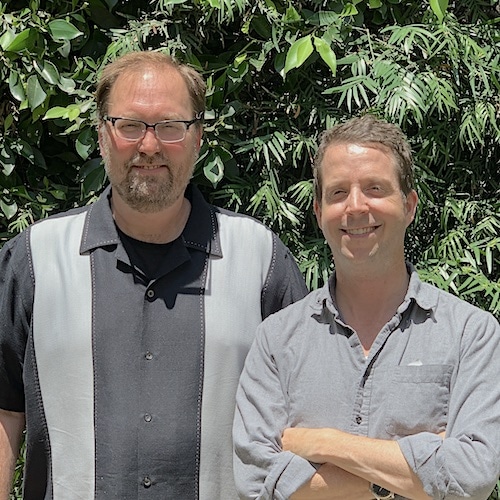
John Perfitt and Jason Neville have come together in Los Angeles to disrupt the homeless housing marketing.  Their award-winning first homeless project, Bungalow Gardens, not only will house homeless tenants for at least the next 15 years in compact and dignified style, but is also crowdfunding equity from every day investors on Small Change.

 John is the Executive Director of Restore Neighborhoods LA (RNLA), an infill development nonprofit organization based in Los Angeles that has facilitated housing investment of more than $140 million into local Los Angeles neighborhoods. John has 25+ years of experience in community development, leading economic development and affordable housing projects for public, private and nonprofit organizations. He’s held roles as Director of Economic Development for the City of Downey; Senior Project Manager of the Community Redevelopment Agency of Los Angeles and lead administrator for the City of Los Angeles’ Neighborhood Stabilization Program which created hundreds of new affordable housing units in high-foreclosure neighborhoods of Los Angeles.

Jason is founder and CEO of Building Blocks, a turnkey accessory dwelling unit design-build firm in Los Angeles which he formed with John. He also consults as a project manger for RNLA and has had a major role in the Bungalow Gardens project. Jason has worked as a redevelopment and planning professional for over 12 years in both the public and private sector, including both Los Angeles and New Orleans Redevelopment Agencies, for Los Angeles Mayor Eric Garcetti and with a residential real estate development company he founded in New Orleans which has developed 14 units of housing valued at $3.3M. Both Jason and John teach at the USC Price School of Policy.

These boys are innovating where it is hardest to innovate, so take the time and listen in.  

Insights and Inspirations

  • By using a housing typology that died 70 years ago, the Bungalow Court, John and Jason are stepping back in time to solve a modern day problem.
  • Working in a city where real estate development entitlements can take two years and a lot of money, developers like John and Jason, who are always working for the community first, can’t afford to have their project shot down late in the process by a vocal few. This is a tricky dilemma.
  • The state implemented Accessory Dwelling Unit (ADU) legislation in California which was contested by single family owners at the time. Last year alone 5,000 ADUs were added to single family homes in Los Angeles and Jason expects that number to continue rising rapidly. ADUs have met a need and may help the affordable housing crisis.

Information and Links

  • John is a fan of the architect Irving Gill who was concerned with the social impact of architecture over a century ago.
  • Jason is a fan of Reyner Banham and follows the most important contemporary voice on urbanism in Los Angeles, Alyssa Walker.
Read the podcast transcript here

Eve Picker: Hey, everyone, this is Eve Picker. If you listen to this podcast series, you’re going to learn how to make some change.

Eve Picker: Hi, there. Thanks so much for joining me today for the latest episode of Impact Real Estate Investing. My guests today were John Perfitt and Jason Neville, who’ve come together in Los Angeles to disrupt the homeless housing market. Their award-winning first homeless project, Bungalow Gardens, not only will house homeless tenants for at least the next 15 years, but also is crowdfunding equity from everyday investors on smallchange.co.

Eve Picker: These boys are innovating where it is hardest to innovate, so take the time and listen in. Be sure to go to EvePicker.com to find out more about John and Jason on the show notes page for this episode and be sure to sign up for my newsletter, so you can access information about impact real estate investing and get the latest news about the exciting projects on my crowdfunding platform, Small Change.

Eve Picker: Hello, Jason and John. Thank you so much for joining me today. I am really thrilled to have you here. I would love you to start by just telling our audience a little bit about your background. I know a lot about you guys, but they don’t know anything at all.

John Perfitt: Great. Thanks, Eve. It’s a pleasure to be part of this. I’m really excited about the prospects of crowdfunding for real estate. My name is John Perfitt, and I work with Restore Neighborhoods LA, primarily – RNLA, as it’s called. We’re a smaller-scale infill developer specializing in affordable housing as well as homeless housing. I’ve got 25 years plus of community development experience in both the public sector, as well as the private sector, as well as with nonprofit organizations. I’ve also worked internationally in the former Soviet Union. I’ve been around all parts of community development, commercial redevelopment, and affordable housing projects, both on the financing side, really all the way through the whole project lifecycle.

Eve Picker: Well, now I have to interrupt and ask what on earth you were doing in the Soviet Union?

John Perfitt: Well, I was a Peace Corps volunteer. It was right after the Soviet Union was- basically the government collapsed over there, and they “transitioned” to capitalism. I was working in a very grassroots capacity, doing small micro lending in a rural agricultural area and mostly immersing myself in local culture, which I like to do. That was in the early ’90s and had an indelible mark on my paradigm, oftentimes, on community development and so forth.

Eve Picker: Cool, and what about you, Jason?

Jason Neville: My name’s Jason Neville. I’m an urban planner by training, originally from New Orleans, Louisiana. My first seven years of my career were spent on the public sector side and the redevelopment agency at City of Los Angeles until it was dissolved in 2012. Then at the New Orleans Redevelopment Agency, in my hometown, for a couple of years afterwards.

Jason Neville: It was about that time that I started getting frustrated with and also aware of the opportunity to make an impact in cities outside of the public sector, sort of call it accidentally, founding a company with two buddies of mine in New Orleans to do some historic renovations and got the taste for doing real estate development and also increasing appreciation for the role that entrepreneurial, private-sector, impact-minded real estate developers can have a positive transformation in cities.

Jason Neville: I spent a couple of years in the mayor’s office here in Los Angeles and worked on some of the policies and research related to accessory dwelling units. Left the mayor’s office and founded a design-permit-build ADU company called Building Blocks with my business partner, John Perfitt. It was through that collaboration that we partnered up a little bit on the Bungalow Courts project, which we’ve been working on for the past year and a half.

Eve Picker: That’s why I had invited both of you onto this podcast show, because you were working on a pretty extraordinary little project called Bungalow Courts, or Bungalow Gardens in L.A., and I wanted you to tell us a little bit about that? I’m sure you’re working on other things, as well, but that’s a pretty interesting project.

John Perfitt: Yeah. We have a variety of smaller scale, and when I say smaller scale, kind of up to 20-unit, kind of micro-unit, homeless housing projects in our pipeline. One of our favorites that we’re working on right now is the Bungalow Gardens, as you mentioned. Jason will probably talk more about this, but Bungalow Gardens represents one of the first bungalow courts projects permitted and built in the city of Los Angeles, especially South Los Angeles, in a long time. It was a very common housing typology for a long time, 50-60 years ago, but it’s really kind of … Modern zoning code has zoned it out, if you will, of being a practical way to build housing.

John Perfitt: This is a really great project. We’re highly influenced in the approach and design by Irving Gill, who I think was just a master of fusing together a very modern sensibility with a great precedent that there is for a Spanish revival in Los Angeles. What all that thinking, and wrangling, and  so forth produced was the Bungalow Gardens project, which is a really four duplexes or eight units on a kind of long and narrow sight, adjacent to a very busy street called Vermont in Los Angeles.

John Perfitt: We think it’s beautiful. It’s going to house, for at least 15 years, individuals experiencing homelessness. We like to refer to it as compact and dignified living. In many ways, it’s a throwback, we think, very complimentary of the neighborhood; very contextual. It’s a project that we just love and turned into a labor of love. To further extend it, we’re attempting to raise some capital, via crowdfunding, to really make the project even that much more of an example of what can be done in the marketplace here in Los Angeles.

Eve Picker: Full disclosure, everyone, they actually have listed the project on smallchange.co to accomplish the crowdfunding. I’m sort of fascinated … I’m sure everyone else is, as well. If you’re going to house homeless, how do you generate revenue to cover the operating expenses for a project like that?

John Perfitt: It’s a great question, and I’ll let Jason jump in here in a second to add to what I’m going to say, because he’s actually been really the engine behind this and actually a lot of the direction that we had in going the bungalow courts direction was his idea and vision.

John Perfitt: Really, the thing that makes this possible in a lot of ways is we, unfortunately, have a housing crisis, as well as a homeless crisis in Los Angeles. Residents of Los Angeles, and of the county- both the city and county have voted to tax themselves to make capital available for building homeless housing. We were able to go in one of the programs that exists in Los Angeles; just able to go in and secure a rental subsidy from a credit tenant – namely, the County of Los Angeles – and get that commitment for up to 15 years. That really provides to the bloodline for the project, from an operations standpoint.

John Perfitt: Then there’s a local, what’s called a Community Development Finance Institution, or CDFI; really a community loan fund in Los Angeles that’s super-aggressive, and smart, and will see these smaller projects, and see that they’ve secured a rental subsidy, and will land on these projects pretty aggressively. The name of that CDFI is Genesis L.A., and they’ve just been a tremendous partner and lender in the marketplace for many of the projects that we’ve worked on. I can’t say enough about those folks at Genesis L.A. seeing this problem and helping to craft a solution, because it’s really the rental subsidy and then the availability of this loan capital that really makes these projects possible. I don’t know if you want to add anything, Jason?

Jason Neville: Yeah, I think that John explained it well, in terms of what makes it possible financially, but there’s a couple other pieces to this, too, about what makes it possible, including policies. One of the new policies in the City of Los Angeles we’re taking advantage of is called the Transit Oriented Communities Affordable Housing Program, which allows for parking waivers and other incentives for affordable housing projects that are built near transit, as our project is.

Jason Neville: As John was mentioning before, some of the background and history of bungalow courts is that it was a predominant form of housing in Los Angeles from the 1900s to about the 1930s, until modern zoning codes in Los Angeles began requiring parking on site, which made this particular housing typology infeasible. Now, because of the housing crisis we’re experiencing and the efforts from our city planning department to address the housing crisis through innovative policies, such as TFC ordinance, we are able to build this bungalow court, which will be the first bungalow court project in Los Angeles in 70 years. So, there’s a policy piece of this, as well.

Eve Picker: Be sure to go to EvePicker.com and sign up for my free educational newsletter about impact real estate investing. You’ll be among the first to hear about new projects you can invest in. That’s EvePicker.com. Thanks so much.

Eve Picker: Essentially, you’re stepping back in time to address a very modern problem.

John Perfitt: Yeah, I always say, when we’ve talked about this, when you want to talk about innovation, and a lot of times, innovation is go back and look at what has worked, and then sort of synthesize that and come out with something that’s unique. Yeah, we’re going back to what worked a long time ago.

Eve Picker: Yes. Interesting. My second thought, first thought, I don’t know, but I think about, like, eight units is not very much for a crisis, right? How do you begin to scale an idea like this, so that it really has a much larger impact?

John Perfitt: It’s a great question and one that we grapple with, because the question of scale comes up all the time. We, admittedly, on this project – which we were trying to accomplish a variety of different things, including innovative financing on this – we probably left some density on the table. We could have built more. That being said, we are building other projects and have them in our pipeline that are three-four stories and 20 units on small infill sites.

John Perfitt: When we talk about scale, it’s not the traditional way that developments looked at scale – large 100- to 150-unit projects, and so forth. We believe those are out there and should be done. What we’re trying to facilitate, and show can be financed, and operated, and can work, and be feasible is the repetition. That would be the scale of a lot of infill sites that are either underdeveloped, or not developed at all, or obsolete uses, and so forth, throughout a county. There are many of these. What type of mechanisms can you use, and incentives can you use to do that, and then repeat it?

John Perfitt: We fully understand, and we experience that age-old sort of paradigm that lenders and developers have that the blood, sweat, and tears on  a 50-unit project is the same as 10, and so forth. We fully believe that a multifaceted approach to creating more units is going to potentially mitigate the crisis that we have going on. We are very active in sharing our information about how we do this, because we think there’s a multitude of opportunities.

John Perfitt: We’d like to see other private nonprofit … Especially the folks that are not necessarily not-for-profit … If there is an incentive, a financial incentive, for folks and developers to build housing that we need, i.e. homeless housing, that’s great, but that hasn’t …  But that hasn’t- that’s novel. That’s different than has been done in the past. Our scale is that we want to be smarter and be able to optimize or maximize on these small sites, but be able to do it repetitively and have other people do it repetitively [cross talk]

Eve Picker: Yeah, so I’m going to put my urban-designer hat on, because the added bonus of creating a product that is an infill product is that it is a great, sustainable way to build in cities to fill small vacant sites, instead of letting them become what is oftentimes the highest and best-used parking lots, is another thing that’s being solved here. Really large projects tend to take away the fabric of our cities, because they will raise a number of buildings and amalgamate lots for that efficiency and scale and, in the process, destroy the charming little neighborhoods and communities that we actually all like.

Jason Neville: Urban design is very, very important to us. We’ve been working with a great young architect, Studio 15, who’s worked with RNLA on a couple of projects and with our ADU company, Building Blocks, on a few projects. We’re really passionate about design and knew that good design would be a really important part of this project’s success.

Jason Neville: When we won the Los Angeles County Housing Innovation Challenge, earlier this year, we were able to present to the county supervisors and some other VIPs, along with a couple of other winners of this grant challenge … Those other folks were doing great work. However, their particular designs were reusing storage containers. There was a lot of sort of architectural innovation that was happening there.

Jason Neville: When we showed the renderings of our project, we got great response from everyone who was gathered there, including a supervisor, because when they saw that style, it really fit with Los Angeles’s architectural trajectory and is also the scale that really fits in a lot of neighborhoods in Los Angeles; notwithstanding John’s good point about leaving a little bit of density on the table in this round-

Eve Picker: Yeah, it’s really lovely. I can’t wait to see your next project in this little product line. I also want to know a little bit about Building Blocks and the ADU project that you’re working on. Tell us a little bit about why L.A. went down the ADU path; what that means for L.A.

Jason Neville: Happy to answer that; Also, in answering this question about ADUs, I think it will also answer, Eve, your question about how you to get to scale. In Los Angeles, there’s about 500,000 single-family-zoned properties. Up until about two years ago, the City of Los Angeles allowed ADUs, but due to restrictive policies, they were only producing about 150 a year.

Jason Neville: Two years ago, the state legislature adopted a statewide development standard for ADUs and compelled cities to either use those standards or create standards of their own. In doing so, that reform happened at the state level and made it easier for homeowners to build ADUs, which are accessory dwelling units; legal second units you can build on otherwise single-family-zoned properties.

Jason Neville: Production went, in just two years, from about 150 a year to about 5,000 a year, and I would not be surprised … That was as of last year. I would not be surprised at all if, in 2019, we hit the 8,000-, or 9,000-, or 10,000-unit mark, because a) there’s lots of single-family-zoned properties in Los Angeles; many of which, by the way, already have unpermitted ADUs, which are in operation. Many of the permits that are coming- part of that 5,000 number that I just mentioned is legalizations of existing ADUs and don’t really constitute net new units.

Jason Neville: What happened- the trigger was the state law that allowed it. There’s been, as you may have been following, in California, a lot of attention to the housing crisis and increasing attention towards solving the policy related issues at the state level, rather than at the local level, where NIMBYism and other issues can get in the way of housing production. Seeing that there was an opportunity, I approached John about starting a small company called Building Blocks, which was a design-permit-build project- excuse me, company. We just wrapped our first project about two weeks ago, and we’ve got two or three more in the pipeline right now.

Jason Neville: The services we provide, or we have been paid to provide … The goal is to be an all-in-one ADU development company on behalf of other homeowners, where we provide all of the design, permitting, and construction services. John’s a licensed contractor. The value-add to homeowners is that we can provide every step of the process, from A to Z, right within Building Blocks.

Eve Picker: That’s pretty great. That’s two really innovative products out of the two of you. Are you thinking about another one that you should tell us about?

John Perfitt: We would, but we can’t. We’re still too early in the determination process.

Eve Picker: Okay. Obviously, you think socially responsible real estate is necessary in today’s development landscape, because that’s what you’re really focusing on. Are there any current trends in real estate development that interest you besides the ones that you’re focused on?

John Perfitt: We’re constantly thinking about a couple things. At least I am, in RNLA. This may seem small … There’s a real deficit of shade in Los Angeles, and there’s a lot of literature out there, recently, about how that’s a real negative thing for quality of life, believe it or not. We’ve figured out, or budgeted for, and are planning for more shade. We need to create shade. It doesn’t have to be trees all the time, but we’ve sort of changed our approach on that.

John Perfitt: We also are constantly thinking about different modes of transportation because that is changing. I guess it would be- one of the trends is that building without parking is … I’ve never done that before, and we’re doing that routinely. That’s sort of the paradigm we go in on these projects. I will say, too, the thing that I’m bullish on, and I’ve always said, if we can, as practitioners, come up with the right models and the right approaches, we can find the capital.

John Perfitt: That’s why we’re so excited about not exploring, but diving in with crowdfunding, because I think this represents an opportunity. I think there’s a pent-up desire, just amongst my network and talking to folks, with people wanting to … Especially with the problems of homelessness here in the City of Los Angeles, and other cities, and all over the country, for that matter, seeing those, I think there’s just- there’s a lot of potential there, and it’s just a matter of connecting the dots. I don’t think anything we do is just absolutely like, “Oh, that’s incredible …” We’re just  figuring things out and connecting the dots.

John Perfitt: As you probably know, there are a lot of people that don’t believe that this will ever amount to anything. That’s the same thing with the trend that we’re embracing of a building small, thinking, small – small ball, as I call it. There’s a lot of people saying that’s just small time. I don’t want to be overly critical, but if you look at the affordable housing real estate delivery mechanism, it’s largely failed, if you look at it on a macro basis, in terms of its ability to deliver units to the marketplace.

John Perfitt: We have huge crises all over in large cities. And I’ve been working at this for 20-25 years. It’s been the same tune. Let’s blow some things up. I’m hungry for, and I think Jason shares this, too,  for disruption. I don’t see it- Construction’s not famous for a lot of disruption. Real estate sometimes is. Affordable housing? I don’t see it that often. To me, there’s some room for disruption out there, and I think that’s kind of one of the trends I’m seeing. I’m seeing the trends on things like crowdfunding, and otherwise, and it gets my blood flowing, because I think it’s ripe for disruption.

Jason Neville: Yeah, I would echo that and just add that the partnership with a Small Change has allowed us to expose the thinking that we’re doing on these projects to a wider audience and to give them some actual skin in the game, both neighbors that might be interested or folks that want to invest. That’s a really exciting part, and answers … It’s part of the answer to your question about scale is prototyping this model and demonstrating that it’s viable, so that it can be taken to scale by us and other developers.

Eve Picker: Yeah, I think what’s happening about that listing is that the pace with which people are investing really early on, clearly a lot of people care about this crisis. The question is how can they pitch in and help? I think people really want to pitch in and help. It’s really interesting. We’ll see what will happen. Are you aware of any other innovation or disruption in affordable housing or homeless housing that you’ve seen that is of interest to you?

John Perfitt: Everybody always migrates towards different fabrication technologies, and so forth. I know there are people out there doing hard work on that. I have built, with RNLA, five or six modular projects. I’m hopeful that there is going to be a- that will be the killer app, if you will – infill environments – and in that context. I haven’t seen it, and I run these things down.

John Perfitt: When people started talking about container, there was a local manufacturer in Los Angeles that I spent a lot of time with. I thought that was hopeful, because I thought the cost basis would be  low, but … There are a lot of folks that are spending a lot of time. It’s definitely, with the amount of, especially, public capital that’s been put out in the marketplace for people to figure out some solutions, which I think …

John Perfitt: Another thing I’ll step back and say is one of the things I think, as a former government employee in community development, and so forth, is if you can come up with programs, especially rental subsidy programs – and that’s the beauty of the one that we’re using in Bungalow Gardens, is that it’s basically said, okay, when you get this thing built, however you get it built, within certain parameters, the money is there.

John Perfitt: It relies on the private market, developers, funders, and so forth to figure it out and then get there. I think that’s where the innovation can take place. I know there are people that are working on a lot of things. What we are concerned about, and I’m going to be real frank, is that, again, building departments, as someone that’s ran a building department in the past, it’s not the dominion of creative thought. It’s oftentimes, and for good reasons, many times, it takes a while for innovative products to be accepted there. There’s a whole process, at least in a large city like Los Angeles.

John Perfitt: We’ve tried to keep the technology, on terms of the building stuff, to be pretty traditional, making improvements and learning lessons about how to do it faster, and cheaper each time. But I know there’s a lot of other folks, and a lot of my colleagues and friends in cities and otherwise are saying, “Why aren’t you going down the modular path?” I would love to sign up … I’ve spent a lot of time at the factories kind of preaching the gospel about this sort of infill market being big.

John Perfitt: I just have not seen enough proof positive to compel me, and us, to go in that direction, but I know there’s a lot of thinking, and a lot of working. I’m sure you could do a whole episode, and I’m sure you will, with people that are modular builders that will refute what I’m saying. I’m speaking from empirical experience, or empirical evidence of my own personal experience in building these – I don’t find them, in a compelling way, to be faster or cheaper.

Eve Picker: No, I actually have found the same thing. I have tried to go modular for a couple of projects and keep thinking about it. In the end, stick-built is cheaper. When you’re really trying to get something built that is going to serve a more moderate audience, then you just really have to think about that. I think we’re seeing a lot of modular products that are looking like luxury products now, because of that, and that’s not really solving a problem [cross talk]

Jason Neville: -ADU example, just to validate what you’re both saying … An ADU market was created overnight throughout California without any innovation in construction technology, or finance, for that matter. It was merely allowing people to do it was the big innovation, because there was so much pent-up demand. Capital is flowing to it.

Jason Neville: There’s a industry of ADU builders in Los Angeles, including some that are going to fabrication route, and there’s some tech companies that are in the game; people experimenting with leasing out a home … Companies that will lease out your garage, or master lease your garage from you, convert it to an ADU, handle the property management on behalf of the homeowner, and give the homeowner a cut of the money. After five years or so, the company walks away.

Jason Neville: There’s lots of innovation happening, but the part of the problem in California, and other high growth areas of the country is housing just isn’t allowed; even the housing that was allowed 10, 20, 30, 40 years ago. For example, in Los Angeles in the 1970s, we down-zoned vast portions of our city from sites that would allow four to eight units down to one unit.

Jason Neville: Ordinances like the one we’re taking advantage of, the TOC ordinance, which provide a buy-right permissionless path for housing, along with the subsidies- the operating subsidies John was mentioning, along with parking reductions, along with financial innovations, like the partnership of Small Change, those are all the dots. We aren’t seeing, as far as I can tell … I think we’re doing a really good job of connecting all those dots, as John said; that big-picture perspective that comes from our background in broader community development rather than narrow finance, or narrow policy-making, is allowing us to do something really innovative here as a demonstration project.

Eve Picker: Yeah, that brings to mind, I was working on projects in the early 2000s in Pittsburgh, and what … These buildings are called flipper buildings. They’re kind of the interstitial buildings in downtown Pittsburgh that are only 20-feet wide, and over 100-feet deep, and only have windows at the front, and really don’t fit into any modern-day zoning or building codes. The City of Pittsburgh, eventually, as we sort of pushed forward with developing these, they did eventually come up with a over-the-counter sort of checklist for developers who wanted to work on these buildings to save them, which was a lot better than what we originally had.

Eve Picker: I think building code departments are capable of innovating; it’s just it always takes someone, some initial leader in a community, pushing the envelope and saying, “We’ve got to do this. We’ve got to be able to figure out how to renovate our warehouses into lofts. We’ve got to build smaller buildings that are on smaller lots that are not necessarily permitted in the code.” It always takes someone kicking that off, right? It’s not going to happen in a vacuum.

John Perfitt: Right. I always thought when this ADU, the changes made, that it might be valuable for … There’s a lot of attention being directed at ADUs by the policymakers and local electeds, and so forth. I thought, why not come up with a pre-approved 20 x 20 garage conversion-esque model that people could … It’d be a fast pathway; the way that, like that kind of a car port at the building department, that if you just follow this, you get it. It’s really fast and easy.

Eve Picker: I think that’s a great idea, yeah.

John Perfitt: I do, too, but the countervailing argument that I’ve experienced, as someone that is in there permitting these things and doing these things, is that just really what we’ve found, as much as we think our neighborhoods are similar, the conditions, when you go to these backyards are … We toured 20 backyards, and the prototype that we use only worked in one or two scenarios-

Eve Picker: Wow.

John Perfitt: -so different because [cross talk] of the time, incrementally and organically, things have changed and created new conditions that wouldn’t allow the prototypes [cross talk]

Eve Picker: Yeah, yeah, yeah-

John Perfitt: -the thinking on the prototypes is very helpful. You can leverage that into a great solution, but being able to plug and play has been a loose …

Eve Picker: We have a listener who was dying to know what you think about community engagement tools and which you have seen that have worked. We know you’re using crowdfunding as a kind of community engagement tool, but as a non-profit, I’m sure you’ve thought about this a lot.

John Perfitt: It’s interesting. I came from meeting with a organization that works with churches that have underutilized buildings, and so forth, and wants to throw in to help with creating homeless housing. It’s a very interesting thing and an interesting question. You’re going to get a schizophrenic answer from me, as someone that’s worked on all sides of these things.

John Perfitt: Generally, when we pursue homeless housing projects, we try to do them as completely, as Jason said, permissionless. Meaning, we’re [hemming] to the zoning code; we’re using the incentives. There’s a very vocal and, probably with a legitimate point – needing information and good information – but a vocal minority in Los Angeles that could be agitated very easily during the course of an approval process on homeless housing, so we try to avoid public hearings, whenever we can, because this has happened. This is someone that has been on the sponsor side with a project and someone that’s been on a neighborhood council.

John Perfitt: We are absolutely willing to talk to anybody and show them probably too much in terms of what the project- under the hood. When we can hem to the code, and not have to do and have public hearings, we won’t do it. I don’t do that to try to be deceptive in any way. We believe in our product; we believe- we’ve all voted on this, not only with the zoning code, but we voted in terms- to tax ourselves to fund this. We’ve already kind of voted, and we’re going to move forward on these projects.

John Perfitt: That being said, we are going to go door to door near the Bungalow Gardens project talking to neighbors about the opportunities that this project represents. We have no problem doing that, but we generally avoid – and this is the dirty little secret … It’s really, really, really painstaking in many large cities, especially in California, to entitle a project, even if it’s a good project that people want. If you want to go through a protracted zone change or an environmental impact report, and so forth, you’re looking at hundreds of thousands of dollars and potential vocal minority killing the project.

John Perfitt: My long-winded sort of schizophrenic answer is were strategic about this, but when we can avoid the retread, if you will – this re-discussing these projects that we’ve all voted on already – we’re going to go forth, because the problem here is production. It’s disappointing for me, as a resident of the city, that works here, and lives here, and has dug in here … When the first few larger-scale homeless housing projects got funding and got- were up for their [inaudible] decisions, and they’ve got shot down because of a vocal minority.

John Perfitt: There’s probably never a good place for a homeless housing project in the eyes of some people, but we like to engage, when we can, when it’s appropriate, and strategic, and otherwise, and provide tons of information that is authentic. We don’t spin. We know lie. We tell it … We’re probably too honest on a lot of these projects, but when we can avoid that vocal [cross talk]

Eve Picker: Yeah, yeah, yeah-

Jason Neville: -agitating, we will.

Eve Picker: I think Deborah will appreciate that answer, and I do, too, because not many people will actually be honest about that. I’ve worked in community development myself, and it’s extremely difficult. Part of the problem, I think, is that when you’re working in an underserved neighborhood, or for an underserved group of people that are often working three jobs to put food on the table, they can’t show up to community meetings. They don’t have the time to show up at the community meetings, nor do they necessarily have access to the internet or anything else that we expect of everyone to stay informed. You end up with a lopsided group of people.

John Perfitt: Let me add one thing, Eve, if I can, too … I’ve talked a lot on this, sorry-

Eve Picker: No, that’s okay.

John Perfitt: -there’s a straight-up economic reason. It costs money to do outreach. You have to pay people to go out there and do it, oftentimes. The large tax credit projects or other projects that developers do, they’ve got a team of professionals that go out there and do it. If you’re trying to build for $175,000 – $200,000 per unit, which is half the cost of traditional affordable housing, you can’t afford it. You don’t have the luxury of hiring a public relations firm.

John Perfitt: You can do meetings, but it’s going to be me or Jason, on a Saturday, going out there telling you the way it is. That’s how we do it. Everybody wants to throw around – my advocate friends and otherwise – that community outreach, community outreach … I’m down with it. I think it’s great, but there’s a cost to it. There’s a cost to that to the project that has to be borne by the project, and that’s another thing that people don’t talk about.

Eve Picker: But I think the difference is that you two have the community in mind with what you’re doing. Other small developers may not. I think that developers are a really dirty word in this country at the moment, because they are the word that’s linked to gentrification.

John Perfitt: Right.

Eve Picker: I think that’s why there’s so much emphasis on community engagement, but it’s so difficult to get it to work, as you shared. Anyway, that’s a really tough subject, so I’m going to move away from that [cross talk]

Jason Neville: Eve, you reminded me of something that Andrés Duany said at the Congress for New Urbanism Conference that I went to in Detroit, where I met you and heard from Small Change for the first time, which is that one of the things he said in his keynote was part of the reason people don’t want to see development is because development has been so bad in the past-

Eve Picker: Yes.

Jason Neville: -and part of changing the story is to do good development. I think I speak for John here, too; the project that we’re delivering is going to be beautiful. It’s going to have rooftop solar. It’s going to have- it’s completely 100-percent accessible for folks with disabilities, so people who have wheelchairs will have full mobility in the units. There will be fire retention gardens in the front to address the city’s stormwater management goals, while providing beautiful landscaping. There’s rooftop solar.

Jason Neville: It’s going to be something that I- this is going to be probably the proudest project I’ve worked on to date, and I can’t wait to show anyone from the community, or elected officials, or anybody else this project. I think that kind of sets- I think that tells people something about the quality of design that we are achieving.

Eve Picker: Yes, that’s really great. I have a wrap-up question, and that is: where do you think the future of real estate impact investing lies?

John Perfitt: It’s a really good question, and I’m bullish on the ability of smaller-scale projects to be able to raise good sums of money. I’m not an expert on where it’s come over the last three or four years, and I know there are a lot of startup things that had to be sorted out, with the cost and otherwise.

John Perfitt: But I’ve always believed in it the same way that I believe in … This is what’s different, and it’s hard to convince people in the marketplace. You go to conferences on affordable housing, and other wise, and, in addition to talking about innovation, people always say, “Oh, there’s gotta be more money. Just throw more money at stuff …” My thing is there’s other sources of money out there other than the traditional shrinking ones that are out there, and this represents one.

John Perfitt: If we can prove this equation works … When I talk about equation, I’ve been saying this for a long time, that there’s got to be a way to reduce costs, streamline the capital stack, and deliver this in a different way. There’s an equation that works, and this represents, to me, a way. It doesn’t have to be traditional affordable housing. It could be people that are building units in lower-income areas, or straight affordable, and naturally occurring affordable. I think there’s a lot of applications. We’ve got one narrow application of it right here, but to me, it’s unbelievable.

John Perfitt: Also, it kind of connects … What’s beautiful about these offerings is that you can just immediately refer someone over, and they can look at it for five minutes and go, “Oh! I get what you’re doing! Oh, by the way, I can get involved! By the way [cross talk] this is great. I know someone that’s interested.”

John Perfitt: That, I’m bullish on. I’ve been wanting to do this for a while, as I mentioned earlier. I’m bullish because I think there are people out there that once they see that someone has proven that this can work, and it can be … This is cliché in my world to say, ‘double bottom line,’ but on our project, if people are making a return and we’re achieving a social objective, social policy [cross talk]

Eve Picker: Yeah, that’s pretty good.

John Perfitt: That’s one of those things, in grad school, they throw around – the double bottom line, and all that stuff – or in annual reports. Well, this … We’re doing it now on a small scale. That begs the question of scale and otherwise that you asked earlier. I’m bullish, Eve; I’m bullish because it’s really- it’s micro, but the reach is … The thing that’s amazing. It goes down to 81st and Vermont, this project, but the reach is endless. My relatives [cross talk] the world, or their friends of friends of friends of friends of friends could invest in this.

Eve Picker: Yeah.

Jason Neville: John and I both had … John and I both worked – although we didn’t know each other at the time – at the Los Angeles Redevelopment Agency until it dissolved in 2012. When it went away, California lost a really big source of affordable housing funding that was funding this mainstream, somewhat sclerotic affordable housing industry that John was describing earlier.

Jason Neville: I, too, am bullish and think that, as those sources of- traditional sources go away, and as public budgets shrink, and as people realize that the cost to deliver affordable housing is way higher than it ought to be … I mean, $400,000 to $700,000 per unit to build an affordable housing unit in California is insane. We’re doing it for-

John Perfitt: A lot less.

Jason Neville: A lot, a lot less. We’re providing value to [cross talk]

Eve Picker: Yes.

Jason Neville: -investing, including the public sector. John, and I, I think part of what makes us good collaborators is … Well, I’ll speak for myself, here. I sort of see myself, first, as a city making intellectual or thinker around these issues. The way that I go about trying to prove some of my thoughts around it is by doing projects. Bungalow Gardens and the ADU projects are definitely me reverse engineering what I think needs to happen in cities and deciding that execution of these projects is how we get there.

Jason Neville: One anecdote to quickly share is that I was talking with the with Chris Redfearn, who runs the USC real estate program or used to. We were talking about how you could create new models in rapidly gentrifying neighborhoods where prices are increasing to give neighbors a stake in the project, a literal stake in the project, so that, a) they are more likely to support new projects in their neighborhood, and b) they can benefit from the economic upside of real estate development in their neighborhood. We talked about that about three years ago, and at the time, it just seemed like two people wondering about how things might work. Small Change is giving us that opportunity to do it.

Eve Picker: Well, you know, the way you’ve verbalized your projects is exactly the way I think about Small Change. I’m reverse engineering a solution around those funds drying up, because my projects, although non-profit when I built them, relied on funds that the Urban Redevelopment Authority had at the time. Those funds gradually dried up, and loan-to-values got lower.

Eve Picker: All of those things kind of made the business of building projects that are impactful and not just financially driven really difficult. My ultimate dream for Small Change is that we can fund projects like yours, or we can help you find- connect you with people who want to help you. That would be a fantastic solution, wouldn’t it?

Jason Neville: Absolutely.

Eve Picker: We’re just starting, so … Well, I have three sign-off questions I ask everyone, because I want to see what everyone … Everyone thinks differently about this. The first is what’s the key factor that makes a real estate project impactful for you?

John Perfitt: To me, if people can view it as … It’s really a positive externality, if it really is viewed as an asset to the neighborhood, irrespective of its use or otherwise. It can have staying power and can have positive externality. I think that’s what’s really, really …

Eve Picker: How about you, Jason?

Jason Neville: I agree with that. There’s a conversation that one of my favorite voices in urbanism, Alissa Walker, here in Los Angeles, was posing a question recently online. What’s a project in Los Angeles that people are excited about after it got built that they were welcomed and thought this really made the neighborhood better? I thought that was a great question to ask. I feel like, to answer your question, a project is impactful, if you can point to it and other people will look at it and say, “I want that in my neighborhood.” [cross talk]

Eve Picker: So, it’s something that makes a place better. Yep. Yeah.

Jason Neville: -real estate … We have a problem in the real estate industry; even saying ‘the real estate industry’ sounds bad to a lot of people. I’m interested in changing the game, because every house that anyone lives in, any office that someone works in, any place you go to was built by developers at some point … I like to think of real estate as you get a little piece of the city to build. It’s our responsibility to build it well and build it enduring as a piece of this broader city.

Jason Neville: Also, one other thing that with our particular project is we are hopefully making a … Although it’s only eight units, we’re helping put a dent in a very, very serious problem/crisis here around homelessness. I’m very interested, and I don’t know what’s going to happen, but I’m looking forward to meeting some of the folks that are living there and finding out how their lives were changed and, if it works, share those stories to other folks in the city – residents and officials – to demonstrate how these smaller-scale projects are making an impact, in the positive impact on the neighborhood and in the lives of the people who are living there.

Eve Picker: That actually segues right into the second question, which is what’s the one thing in real estate development that you would change to improve buildings and physical places in the country?

John Perfitt: I think flexibility, and this has to do with building code, zoning code, and lenders. One of the things that has been liberating of working on the small-scale and otherwise is that we’re able to find a place where there is flexibility, so we can think about different ways of solving problems. The zoning code … When I’ve worked on the city side and we put in place what, here in California, we call specific plans, I was always arguing for how can we set forth code that is smart and will yield what we want to build, but gets flexibility, because we just cannot predict the future, in terms of the way things are going to go and the technologies that are going to emerge. Flexibility is something I think that is really helpful. That gets back to what I said about rental subsidies. People say, “Here’s your rental subsidy. You have the flexibility now to figure out what’s the best way to get from here to there.”

Eve Picker: Yeah, that’s an interesting answer. What about you, Jason?

Jason Neville: Well, my answer to that question has evolved over time, and has tracked my migration from different facets of urban planning and development. Five, or six, or seven, or 10 years ago, I would’ve said what we need is really robust urban design guidelines to ensure that these horrible developers everywhere are contributing to our neighborhood.

Jason Neville: Being on the side of enforcing design guidelines, I found myself in awkward situations, where we had folks who were trying to do- developers and their architects trying to do a really beautiful, interesting projects that weren’t allowed [cross talk] weren’t foreseen by the developers of those design guidelines.

Jason Neville: Today, my answer is we need a level of public-minded, public-spirited developers in the real estate industry who are modeling good behavior for everybody else and that are passionate about it. I would like to think that John and I are two of those people. If we can make it work financially, then that is something that will make it … I think a lot of developers don’t particularly care about the design, per se. They’re looking at other aspects of it, and that’s fine. If we can model a particular typology that makes financial sense, that helps scale it, that helps bring capital to it, and that helps make the city better.

Eve Picker: The final question is that you’re using crowdfunding for this project, and other than raising money, how do you think crowdfunding might benefit you as real estate developers?

John Perfitt: I think actually it’s going to add an element of exposure, which is not just spin. This is a real project. The reach of that, it could help with people seeing a new model, new methodology. It’s also going to inject a certain element of discipline. We want to show this, and it’s very public, if this works, and we want to make sure that all of our objectives for development, as well as profitability and otherwise, are met because we’re pledging this.

John Perfitt: We know crowdfunding is an equity or an investment that people could lose, but we’re not going to allow that to happen. Two things. There’s a there’s a new exposure, a heightened level of a different way of approaching it and doing things. Then there’s a discipline injected into this that I think is really energizing for me [cross talk]

Jason Neville: I agree with everything John said and would just add that one of my lessons learned from the ADU experience over the past couple of years is that one of the big opponents of ADUs, initially, when the city was trying to pass [its own] ordinance was homeowners who had fears, amorphous fears, about density, and parking, and everything else.

Jason Neville: When the law was passed that allowed homeowners to do it, homeowners became- are now some of the strongest advocates for ADUs, because they are, in a sense, the developers. The miracle, in my opinion, about the ADU legislation as it turned one of the biggest opponents of a particular form of housing into some of its strongest advocates. It was transformational in that regard. I think crowdfunding can do something along the same lines.

Jason Neville: I know people that would never have the means to invest in regular traditional real estate development, or they would be scared, but this project- like the ones that we’re doing, they can put in low amounts, and have a little piece of it, and get exposure to it, and be bought into this idea that great architecture and great real estate development can make cities better and be a part of it. I see it as a as kind of marketing, so to speak, for good real estate development [cross talk] upside, yeah.

Eve Picker: Yeah. Well, thank you, guys. I’ve really enjoyed the conversation, and I am really excited about the current project that’s live on Small Change. Also, I’m excited to hear about the next thing that you’re working on. I’m going to be the first to know, right?

John Perfitt: Of course, we’re very bullish. You’re doing great work. Small Change is doing great work, which is badly needed and has the potential to be very disruptive. I think that’s just fantastic [cross talk]

Eve Picker: That was the other thing I wanted to add to your comment. Disruption and change is really hard, and it takes a long time. It takes early adopters or early disruptors like you and perhaps me to kick something off and then be patient, while people get used to the idea. It takes a while. Most people don’t like that sort of change and come to it slowly. I’m married to one of them, so  I appreciate it. Okay, well, thank you very much.

John Perfitt: Thank you, Eve.

Jason Neville: Thank you, Eve.

Eve Picker: Thank you.

John Perfitt: All the best.

Eve Picker: What a great conversation that was with John Perfitt, and Jason Neville. John and Jason are tackling many problems with just one little project. Not only will that project serve homeless persons by providing them with compact and dignified living, but they are stepping back in time to a housing typology that died in the 1950s – the bungalow court – to solve a modern-day problem.

You can find out more about impact real estate investing and access the show notes for today’s episode at my website, EvePicker.com. While you’re there, sign up to my newsletter to find out more about how to make money in real estate while building better cities. Thank you so much for spending your time with me today, and thanks to Jason and John. We’ll talk again soon, but for now, this is Eve Picker signing off to go make some change.

Image courtesy of RN-LA

Striving for justice in Arizona.

July 15, 2019

Kimber Lanning is dedicated to making Arizona a world class destination and is fiercely proud of the culture of the region. Specifically, Kimber hates injustice. She wants to leave Arizona a better and more just place than she found it. To this end, Kimber founded both Local First Arizona and Local First Arizona Foundation, two statewide organizations that work together to strengthen Arizona’s economy. She’s grown Local First Arizona into an organization with five statewide offices with 28 employees who work on a diverse array of programs ranging from healthy local food access, entrepreneurial development in underserved communities, and rural community development, each of which plays a part in building sustainable and resilient local economies. and Local First Arizona Foundation is leading the nation in implementing systems and policies to ensure a level playing field for entrepreneurial endeavors and communities of all sizes.

Lanning has received national numerous awards for her diverse work and extensive leadership and speaks regularly around the country. Her work in promoting adaptive reuse in Phoenix’s urban core was recognized by the American Planning Association, who presented Lanning with the Distinguished Citizen Planner Award in 2013. She has also been named one of the “50 Most Influential Women in Arizona” (Arizona Business Magazine, 2011), was the recipient of the Athena Award by the Greater Phoenix Chamber of Commerce in 2013, and was named Citizen Leader of the Year from the International Economic Development Council.

And if that’s not enough, Kimber opened Stinkweeds, a record store, when she was just 19 years old, and has moved the store 4 times over the past 27 years.

Insights and Inspirations

  • The odds are stacked against small businesses – they are not bankable.
  • Kimber is working to stop displacement that is expected when a new light rail is built in a racially segregated section of South Phoenix. It’s an uphill battle.
  • One passionate person like Kimber can make an enormous difference in many people’s lives.

Information and Links

  • Kimber wonders whether community investment trusts can help slow down gentrification, like this project in Portland.
  • Kimber loves this Local First program called FOR(u)M because it brings together the development community to talk about better designs for healthy communities.
  • She just learned about the Incremental Development Alliance recently and LOVES learning more about their work.
  • The Boston Impact Initiative is a beautiful organization in Boston doing amazing work building equity and ownership.
Read the podcast transcript here

Eve Picker: Hey, everyone, this is Eve Picker, and if you listen to this podcast series, you’re going to learn how to make some change. Thanks so much for joining us on this podcast. I’m Eve Picker, and my life revolves around cities, real estate, crowdfunding, and change. In this podcast series, we’ll be digging deep to discover how we can build better cities by building better buildings.

Eve Picker: Today’s feisty guest is Kimber Lanning. Kimber is dedicated to making Arizona a world-class destination and is fiercely proud of the culture of the region. Specifically, Kimber hates injustice. She wants to leave Arizona a better, and more just place than she found it. To this end, Kimber founded both Local First Arizona, and Local First Arizona Foundation – two statewide organizations that work together to strengthen Arizona’s economy.

Eve Picker: She’s grown Local First Arizona into an organization with five statewide offices and 28 employees, who work on a diverse array of programs, ranging from healthy local food access, entrepreneurial development in under-served communities, and rural community development – each of which plays a part in building sustainable and resilient local economies. If that’s not enough, Kimber open Stinkweeds, a record store, when she was just 19 years old, and has moved the store four times over the past 27 years.

Eve Picker: If you want to know more about Kimber after you’ve listened to this podcast, please visit EvePicker.com, where you’ll find links and other goodies on the show notes page, and where you can subscribe to my newsletter on all things real-estate impact. Hello, Kimber, how are you?

Kimber Lanning: I’m doing very well this morning. How are you?

Eve Picker: Good. Good. I would love you to tell us a little about what you’ve built in Arizona to support your passion.

Kimber Lanning: Absolutely. My background is as a small-business owner. I’ve had a small business for 32 years now, here in Phoenix. It’s a music store, of all things. I started Local First in 2003. Initially my orientation was simply corporate versus local. I wanted to build a better economy by educating and informing people about why the local economy matters and why local businesses matter.

Kimber Lanning: We’ve really been an organization that has evolved over time, so today we look very different than when we started. We do have the business coalition that I originally envisioned, which is now 3,600 businesses strong – small, medium, and large. In addition, we run some very specific programs that are creating a more diverse and inclusive economy.

Kimber Lanning: The first one is we run a business-accelerator program called Fuerza Local, which is Spanish for, essentially, Stronger Together Local First. It’s a business-accelerator program that we teach in Spanish that helps community members not only build successful businesses, but to become bankable, to gain a credit score so they can access capital at fair market rates, and essentially pulling them out of the predatory lenders.

Kimber Lanning: We also run a sustainability department, which is focused on a Green Business Certification program. We run a program called Forum that I think you’d be very interested in that’s focused on helping the developing community wrap their arms around the social determinants of health, and better understand health equity, and how the built environment plays a role in that.

Kimber Lanning: The final two programs are food and farming. We do a lot to build healthier food systems in Arizona, and finally, we are the Rural Development Council for the state. We have five statewide offices, and we work diligently in communities of all sizes to help them create entrepreneurial ecosystems and build opportunities for all. That says it, in a nutshell. There’s a lot going on.

Eve Picker: Wow. You’ve built quite an organization I know you have 17 employees and four different offices now.

Kimber Lanning: We actually even have grown bigger than that. We’re at 28 today. Yeah, it’s been quite a remarkable run. The good news is I’m still as fired up as ever, so who knows what else will happen in the next 10 years.

Eve Picker: Great! That’s really great news. Tell us just a little bit about your favorite project at the moment that you’re working on.

Kimber Lanning: You know what? I’m going to frame it a little bit differently than ‘favorite,’ because it’s the hardest work I’ve ever done, and it’s in an area in Phoenix called South Phoenix. Like many big cities, this is a part of town that was very racially segregated. The very-much ‘white power’ control of the city, here, relegated people of color into this area that is south of the river bottom. This is a story that can probably resonate in many cities across America. The river bottom, we use it as a dump, and there’s all sorts of toxic sludge in there.

Kimber Lanning: Just recently, the city won funding through a federal grant to expand the light rail into South Phoenix, which, on the one hand, is absolutely fantastic. We want these folks that live here to be able to access high-quality public transportation. It will minimize air pollution, and all the other benefits that come with that.

Kimber Lanning: I happen to live in a city that doesn’t have a lot of power in terms of … I should say they do have the power, but they’re refusing to use their power to create zoning regulations that will minimize displacement. While the community is supportive of the light rail, they’re very opposed, and fearful of the gentrification that comes with light rail, when there’s no transit justice involved, and, clearly, rightfully so. Many of them feel like this is the third time ‘you’ve come for my family to move us out of here.’.

Kimber Lanning: I’m very much involved with a business-assistance plan to try to strengthen, and shore up the businesses that are there, and I’m very active in trying to help those businesses figure out how to buy their own buildings, because, as you know, when wealth moves in, ownership matters. We need to make sure that as many families that have lived there for a long time own their properties as [inaudible] possibly can. That’s a big project I’m working on right now. I wouldn’t describe it as my favorite, but it’s the most challenging thing I’ve done in my career.

Eve Picker: That’s very challenging. What sort of success are you having in helping these business owners purchase the buildings?

Kimber Lanning: So far, we’ve only been able to help one, and that’s just very honest. There’s many different facets here. We’ve had more than one that could qualify, but they don’t trust banks enough, so they wouldn’t go for the loan. They want to do a cash deal, and they’re struggling to find ways to make that happen.

Kimber Lanning: There’s a lot of situations where we’ve actually found people that believed they were purchasing a building, but when they were making their payments, the landlord had actually never sold them the building. He was just collecting the payments [cross talk] There’s quite a lot of … Yeah, there’s quite a lot of  unlawful activity in terms of abuse and victimization of people who don’t know the laws. We do have one success story. He actually owned his building and he was able to acquire a parking lot that he was using that he had never owned before.

Kimber Lanning: We have a long way to go. I’m looking at models, community land trusts, and other such things. You and I talked about crowdfunding; trying to figure out a way to make that work in a community that doesn’t have a lot of collaboration, and certainly a lot of historical trauma that causes justified mistrust.

Eve Picker: Be sure to go to EvePicker.com and sign up for my free educational newsletter about impact real-estate investing. You’ll be among the first to hear about new projects you can invest in. That’s EvePicker.com. Thanks so much.

Eve Picker: Yes, that’s a pretty painful story. The person who purchased the land, can that person help reach others who might be mistrustful?

Kimber Lanning: Yes, we’re doing a lot of work to get the word out about that. We actually have submitted ‘thief’ to the attorney general’s office, and we’re seeing what legal recourse there might be, so that’s in progress.

Eve Picker: Wow, that’s really quite a project. Your world does really intersect with real estate quite a lot. Do you think that crowdfunding could help, or do you think that would just be more difficult for these people?

Kimber Lanning: No, I believe it would help. The challenge is there’s language barriers. This is a Spanish-preferred part of town. Then, there’s certainly trust.

Kimber Lanning: One thing that I find quite interesting in our business-accelerator program, which I mentioned, called Fuerza Local, the way we help people earn a credit score is that they participate in what’s called a money pool; in places around the world it’s called a tanda, or a cadena. It’s been used for centuries around the world, and the way I describe it to people – largely those of us in privilege, who have never faced these kinds of situations – it’s a way that families have saved money without paying interest by leveraging friends and family.

Kimber Lanning: Let’s just say my car broke down, and I need $1,200 by tomorrow to get it fixed, or I face losing my job, because it’s the only transportation that I have. I would call 12, well, 11 friends and family together, and I would ask them each to put $100 into a kitty.

Kimber Lanning: Then, if you can imagine, going around, like on a dial, each of us would put $100 into the kitty in the center each month and a different person in my family would get to take the whole kitty each month. I would take first position and take the whole $1,200; my aunt’s getting married next month, she’ll take the next $1,200, and we would all continue to pay, for the year, $100 a month.

Kimber Lanning: We’ve digitized that through a program called eMoneyPool. We put our students, our classes of business owners, into pods of twelve. They’re very familiar with a tanda, so we don’t have to teach them what a tanda is.

Kimber Lanning: We have to teach them to trust the digital aspect of it – that they’ll put their money in, and we’re reporting those payments over six months to Experian, so that when they graduate – Experian, the credit bureau – they have an actual credit history. We have relationships with two credit unions that will accept that six-month payment history in lieu of any either bad-credit, or no-credit history to extend them a line of credit for their business.

Kimber Lanning: With crowdfunding, the challenge is not that I don’t think it would be helpful; the challenge is how do we build trust? When we first started Fuerza Local, the hardest part was recruiting those first 12 businesses.

Eve Picker: I’m sure.

Kimber Lanning: They had to trust us. They had to believe it was going to work; that it mattered; that a credit score mattered – all of those things; even that access to capital mattered. They were so used to just doing business on a cash basis, and not buying what they couldn’t afford, even if it meant inventory that they then couldn’t sell. They were hindered significantly in their business.

Kimber Lanning: With crowdfunding, it’s a matter of how do we get in there, and show them that this works? Now that we’re going, we have about 60 students each semester that we can afford to put through the program, but over 150 apply, now that the word is out that we’re a trustworthy organization, that this works, that credit works, that banks are not going to steal all your money – all of those rampant rumors are not true – and that we can actually be a provided, and trusted resource. I think if we can get over that hurdle, Eve, the crowdfunding for real estate will be huge.

Eve Picker: I also wonder, although it doesn’t sound like you have great neighbors there who are helping, I wonder if there are people across the nation who might contribute to a fund that a trustworthy group like yourself could control.

Kimber Lanning: Right. I’d be interested in having that conversation. I think that this is a classic case of a very deliberately marginalized community that’s not being listened to, and it very much needs support.

Kimber Lanning: I think that if we can get that story out, people would- it would resonate, because whether we’re talking about East Chicago, or are certainly communities like New Orleans, and others, where a recovery has been slow, the investment has been slow, and people have been essentially left on their own, and now, we’re coming to take their land, essentially … This is how the system works, and we need to stop it.

Eve Picker: Wow! It’s quite a story. When you talk about this, I can’t even really think about the buildings. For you, impact is all really all about the people, right?

Kimber Lanning: It’s all about the people. This particular place, the one thing we have going is that the real estate was all developed in the ’30s, ’40s, ’50s, so there’s a lot of very small-footprint buildings that are stacked up very close to one another with unique ownership. Some of them might have five or six buildings in one parcel.

Kimber Lanning: My point is it will be harder for developers to do massive land acquisitions because there’s so many deals that need to be done, and that will perhaps save some of the older buildings, so that we can keep local and independent businesses in them.

Eve Picker: Interesting. Have you thought about recreating new buildings, or a new set of buildings like this, as well? Have you thought about actually finding some land on this corridor, and doing a project? I gather you’re a nonprofit, so that could be helpful.

Kimber Lanning: I love that idea. I don’t know how to make that work, but what’s interesting is the City of Phoenix owns a lot of land in this area, so I’m very curious about getting involved in an RFP process that is putting in, for example, not just commercial space, but affordable housing with local businesses on the ground floor.

Kimber Lanning: I’m really intrigued by this new model that I found in Portland that you may be familiar with, where a nonprofit went in, bought affordable housing; refurbished it, and then had allowed themselves to be bought out of it, as the community members that lived there had bought into it. Residents run businesses on the ground floor, and it’s a very healthy and active development. I’m very interested in that model, as well.

Eve Picker: Yeah, it’d be really interesting to see if it would translate, but it sounds like you need to move pretty fast, if that train is coming, right?

Kimber Lanning: That’s exactly right. We have to move fast, and the pressure is intense.

Eve Picker: Right. Are there any other current trends in real-estate development that you think could be helpful to you in that area? You see, for example, a lot of market-restaurant trends, which allow small businesses to start in a curated- like incubated space … Co-working, which shares office space.

Kimber Lanning: Right, right.

Eve Picker: There are people I’m talking to who are building … I don’t even want to call them co-working spaces, but small-.

Kimber Lanning: Almost like an incubator space, yeah.

Eve Picker: Incubator space, but for hands-on businesses, not tech companies [cross talk]

Kimber Lanning: Right, yeah. That’s a project that we run in a town called Mesa, which is in the East Valley, here, of the greater Phoenix area. We partnered with community development partners. They were real-estate developers who were very interested in place-based development.

Kimber Lanning: This is an affordable-housing complex. Everyone there is qualified, living below the poverty line, so it’s very affordable. It’s a new-market tax-credit deal that’s right on a light-rail line. They’ve partnered with us to run a commercial kitchen on site. We teach our Fuerza Local classes there. They invested in a commercial kitchen, which we never would have been able to afford.

Kimber Lanning: We are programming it in ways that are beneficial to their residents. We teach cooking classes for kids, and adults. We have 29 gardening beds so that families can grow their own food on site. There’s shared, fun playground area with barbecues, so that families can have indoor/outdoor opportunities, and really build community there.

Kimber Lanning: We’re also incubating small businesses. Some of the residents, as well as other people in the neighborhood, are growing catering companies, or foods that they can sell at the farmer’s market, which is just down the road, so there’s a variety of food-related things happening.

Kimber Lanning: We just started a business-accelerator boot camp that is designed specifically for food entrepreneurs. When they get out of the broad business development, they can go through six courses that are on managing food cost, and mitigating food waste, and very specific to restaurants [cross talk]

Eve Picker: -you’re digging in and helping these people build businesses, and learn how to build businesses, and then, the last piece of it is the real estate. When they find something affordable, when gentrification comes, it all kind of falls apart, so ownership becomes really critical, doesn’t it?

Kimber Lanning: It does. It really does, and the other piece of that, Eve, is that what we’re trying to do is demonstrate a model so that we can encourage the City of Phoenix to include in their RFP … When they put out an RFP for a city-owned parcel, they could be requiring a ground-floor commercial kitchen, specifically to incubate food entrepreneurs; they could require on-site gardening beds.

Kimber Lanning: We’re trying to use that as a model, and then apply pressure to the city on certain parcels – not all of them, obviously, but certain parcels – that we think are important for maintaining affordability, and health equity; we would make that requirement. We’ve done tours of this property to show the city officials how this is different, and why it matters.

Eve Picker: Wow. So, in the world of real-estate impact and real-estate impact investing, how do you think it might be improved?

Kimber Lanning: For impact investing, I feel that … I see some impact investing that is focused on systems change, and some that’s focused on projects that perhaps are temporary fixes. As good as they are, absent that particular project, it hasn’t really implemented long-term change.

Kimber Lanning: I think that this is the million-dollar question. We have so much inequity in the US. There are really great people with a lot of money trying to find ways to invest it. Again, we’re going to have to rattle some cages here.

Kimber Lanning: I’m not picking on any particular organization but let’s just say you have a giant- some of these giant nonprofit organizations that might be working with kids in communities of color, as an example … We can, of course, invest in those communities, and we can demonstrate that with the proper education, more of them will be successful.

Kimber Lanning: But, what are we really doing to change the racism that put the system in place that marginalized them in the first place, and limits their ownership? We shouldn’t be focusing on the few success stories. We should be focusing on the equity that enables everyone to have an equal opportunity to succeed. That’s my point.

Kimber Lanning: What we’re doing, essentially, with a lot of philanthropic money in America, is we’re buying more pool tables to placate the time of the children who are suffering through the indignities of a racist system. That is unconscionable.

Eve Picker: How do we start to fix that?

Kimber Lanning: Well, I think we need to have an honest conversation around race. I think that many white people that are doing well in this country are very slow, if not opposed to recognizing the privilege that got them there. We need to get there before we can start coming up with actual solutions, because, in order to create equity, we need to be willing to give some things up.

Eve Picker: Yes. It’s a very, very difficult conversation, and I think very hard for people to hear each other. I think maybe that’s the first step, just getting them to listen to each other.

Kimber Lanning: Agreed. There’s a lot of pain. It’s escalating. If anybody’s not recognizing that it’s escalating right now [cross talk].

Eve Picker: Oh, it is escalating. Yeah, I agree. It’s escalating very quickly. I don’t know if we’re going to solve that here, today, Kimber.

Kimber Lanning: We’re definitely not going to solve it here, today.

Eve Picker: At least we’re talking about it, right?

Kimber Lanning: I think it’s the first step. We have to talk about it, and it really … When you start talking about real estate, and equity, another thing I just would like to touch on is that the financial systems in the United States are very rapidly alienating communities of color, as well.

Kimber Lanning: When you look at the redlining, or specifically, the Big Banks not lending in communities that are primarily people of color, then we have to hold ourselves accountable, as the people who have deposits; that we move our money into places where those deposits will best help support those communities. That may look like community banks, or credit unions, or certainly banks that are owned by people of color.

Kimber Lanning: What I’ve done is I’ve moved all of my money into banks that I can see are demonstrating in the communities that I want to preserve, and support, and uplift. We can’t simply scratch our heads, and say, “Well, look at all this inequity,” if our money is sitting in Bank of America, or Wells Fargo, or JP Morgan Chase.

Kimber Lanning: We need to acknowledge that our money is doing harm. It’s invested in private prisons; it’s invested in perpetuating the inequities that we see in this country. That would just be one thing that I would ask your listeners to consider is to move their money into smaller, locally owned community banks, or credit unions, where they can be accountable for their money.

Eve Picker: I think it’s a great first step; a really great first step. Let’s move on. It’s hard to know where to move on after this conversation. It’s a pretty deep conversation. How do you think we need to think about our cities, and neighborhoods to build better places for everyone?

Kimber Lanning: I think that we need to always be willing to … The phase that I call peeling back the layers of the onion. A typical analysis might go in, and say this neighborhood is underemployed. There’s a high percentage of unemployed, as well as people that are working part-time, or not maximizing their education – whatever that might look like, but sometimes there’s an indicator that we completely overlook, like lack of affordable childcare.

Kimber Lanning: When I talk about building great communities, we need to look at all aspects, because when you don’t have affordable, quality childcare, you are taking a parent out of the workforce, or putting them in a part-time position, or whatever that might be just to try to be the supportive parent that they need to be.

Kimber Lanning: Especially when we work in rural areas, every worker counts in some of these smaller towns. When we go in, and do an assessment, sometimes they’re surprised to hear that the problem is not workforce training; it’s not, “Well, these people just don’t want to work,” which I’ve heard.

Kimber Lanning: It’s that you need to invest in quality childcare, in order to maximize the workers that are there. Believe me, they would love the opportunity, but they don’t currently have it. Peeling back the layers of the onion is really important as we begin to think about how to build better places.

Eve Picker: Yeah, I agree. I was somewhere yesterday, where the city’s working on a rather large project, and they were talking about a prisoner-release center nearby, and people drifting over to a McDonald’s, and hanging out there, and causing all sorts of problems.

Eve Picker: The discussion we had … They’re basically using McDonald’s as a safe place to hang out. There isn’t anywhere else for them to go. They don’t have money; they don’t have a job. Perhaps looking at what the work-release center provides is the first step. Not tearing down the McDonald’s, right?

Kimber Lanning: Exactly right. That’s exactly it. It’s a perfect example for when I say peeling back the layers of the onion to look at what are the original causes; what are we dealing with, before we react?

Eve Picker: That’s right. I totally agree with that. You’ve worked a lot in community work, and I’m wondering what community engagement tools you’ve seen that have worked best, because clearly that’s a big struggle [cross talk] to the table?

Kimber Lanning: I’m going to answer that in a few different ways. In rural communities, it’s about convening people, talking to them, and really listening to what their needs are, so that you can accurately assess what the challenges are.

Kimber Lanning: I think that in the Latino community, where we’re working, you don’t need to convene them all in a room. You need to find a few champions, and let those champions tell the story, and it will reverberate. I guess the first step is knowing your audience; knowing the community where you’re working, before you implement any sort of strategy.

Kimber Lanning: In rural communities here in Arizona, the opioid crisis has spread out into the rural areas, so much so that we have private-sector employers who will put out an entry level position at, say, $35,000 a year, which, in rural Arizona, is a good wage for a living, and for an entry level position.

Kimber Lanning: They’ll say if they get 10 applicants, that five of them won’t pass a drug test, and of the remaining five, three of them, on average, will no-show the interview. Of the two that actually show up, if they just hire them because they showed up, essentially, the average length of time they can keep them is six months.

Kimber Lanning: This is a massive workforce crisis, and I don’t think that our rural communities are an exception. There’s a major problem just under the surface in the US that’s workforce-related. You’re starting to see more, and more people starting to say, “Wait, we need more people in the trades.”

Kimber Lanning: Well, for 20 years, young people were told if you don’t go get a four-year degree, you basically should move into the alley, and become a heroin addict, right? Everybody ran and got a four-year degree, and now we don’t have people hanging drywall. It’s important that we recognize we need people in the trades. Not everyone is going to have a four-year degree.

Eve Picker: Oh, I so agree with you. I so agree with you. Are you going to start a trade school next?

Kimber Lanning: Don’t get me started [cross talk]

Eve Picker: -both my children went to trade school, and they were not ready … They were not ready for college. They both love learning, and they both said it was the best educational experience they had. They loved it.

Kimber Lanning: I have a dear friend whose son knew, in high school, he wanted to be a welder, so he went to a trade school for the last year of high school; got out of that, and landed a job at $45,000 a year, as a welder, that he absolutely loves, and he’s doing better than any of his friends who are struggling through community college, and everything else. I think that-

Eve Picker: The interesting things was that when my kids were finishing high school, there wasn’t one counselor who would talk to us about trade schools.

Kimber Lanning: Right. Yeah, no, it is a huge bias, and it’s going to cost our country mightily.

Eve Picker: You know, I totally agree with you. Not everyone is cut out for college, and not everyone learns very much in college. I think the next step of the problem is the debt they’re burdened with. I’ve hired people with liberal-arts degrees, who can’t write a letter, and I really wonder how they ever going to pay back their college debt.

Kimber Lanning: Right.

Eve Picker: It’s a crisis.

Kimber Lanning: It’s a crisis. That doesn’t even touch on the fact that there’s not enough of those jobs to go around. Meanwhile, the jobs that actually require hands-on knowledge are available. I can’t find a roofer in this city to save my life, right now. They are spread too thin, because there’s not enough of them.

Eve Picker: Wow.

Kimber Lanning: One thing I do want to mention that I think that people would be curious to hear about is we have one small town here that’s 1,300 people. They suddenly realized that everyone in their town that knew how to be a plumber, an air-conditioning repairman, or a heavy equipment operator was over 65. and just moments away from retirement.

Kimber Lanning: They started a journeyman program, where they took six high-school juniors, and seniors, and, for a year- I think it was actually 18 months, they shadowed, in the field, these professionals, so that by the time the older gentlemen were ready to retire, the younger gentlemen were ready to step into those roles. It was very successful.

Eve Picker: It’s like an apprentice program, right?

Kimber Lanning: It is, yeah.

Eve Picker: That’s fabulous. Well, we’re straying from real-estate impact, but it’s very interesting.

Kimber Lanning: Well, yes, and no. We can’t develop what we need to develop without the trades. So, to me-.

Eve Picker: It’s true; it’s true. I’m going to challenge you to start that trade school. It sounds like an opportunity in the making. You’d probably [inaudible] from that. Okay, well then, I have one wrap-up question. Actually, one wrap-up, and then three others that I’d like to ask you, so four questions. Where do you think the future of real-estate impact investing lies, knowing what we know today, and the gaps that exist?

Kimber Lanning: I think it has to lie in a community land trust. I think that we can’t retain ownership, as impact investors, in communities that need that ownership. The Portland model that I mentioned … I think the original acquisition, whether that’s done by a group of individuals, or nonprofits, I think they need to allow themselves to be bought out of it by the people who live there so that it becomes a self-reliant entity.

Eve Picker: That sounds like what you’re going to be working on next, right?

Kimber Lanning: That’s right. That’s right.

Eve Picker: Very good. I have three sign-off questions for you. What’s the key factor, or what are the key factors that make a real-estate project impactful to you?

Kimber Lanning: I think it has to be acculturated, meaning in the community where you are building, it has to be responsive to that community. El Rancho is 90-percent Latino, and it’s responsive to that in that the programming is done in Spanish. The foods that are encouraged, and the equipment, even, that we installed was for people that are going to be making foods like tamales, and other foods that that community enjoys. I also think that-

Eve Picker: And the rest of us enjoy.

Kimber Lanning: Well, the rest of us enjoy, but Grandma that lives there knows how to make the best ones known to mankind, so, it’s important that the younger kids be able to learn those heritage foods, and traditions. Providing a space for them to convene, and share is important. I also think the shared space for the kids to play after school, and the barbecues outdoors are very acculturated, as well.

Kimber Lanning: Another thing I will say, in real estate, Latino families tend to be larger, so this is an affordable-housing complex that has two-, three-, and four-bedroom, which you rarely see in affordability. It’s usually one-, and two-bedrooms only, because they always say it can’t be done. But it can be done, and it must be done. I think place-based would be my first one, and culturally appropriate for the communities that are living there.

Kimber Lanning: Then, the third, that’d be comprehensive and holistic. We need to think about health very broadly. Are there opportunities for the residents to learn new skills, or advance themselves economically on-site? Are there after-school programs for the kids to continue their learning after school? Those questions need to be answered.

Eve Picker: Very good. Other than by raising money, in what ways can involving investors through crowdfunding benefit the impact real-estate developer?

Kimber Lanning: Outside of raising money? I think influence; just influence. I think there are a lot of impact investors that are influencing others’ behavior, and perhaps they’re not even aware. I think to shine a light, to share, to show what an impact investment they’ve made has done … To share those stories, I think, is important.

Eve Picker: Okay. This is my really big one that I have to ask everyone. How do you think real-estate development in the US can be improved?

Kimber Lanning: Oh, my goodness! That-.

Eve Picker: That’s a whole podcast, right?

Kimber Lanning: Yeah, it is! I’m in Phoenix, Arizona, where the developers have ruled the earth like the dinosaurs for my entire lifetime. They control the policies; they control our state legislature. If they don’t want to build sustainably, they don’t have to, because they’ll just go and fight the laws, and they always win. They’re a powerful bunch.

Kimber Lanning: For me, I think that what I would ask is that they actually are accountable for the outcomes of what they develop. That means that they are accountable for the displacement; that they are accountable for the environmental degradation; that they are accountable for the unaffordability, or their role in crisis.

Kimber Lanning: I think, too often, developers have been trained to build what they want, and they drop new developments in like spaceships from outer space, without even looking around at what was actually needed. Too often, they just replicate what they’ve done that’s been profitable for themselves, rather than considering the rest of us who have to live with the crap they turn out.

Kimber Lanning: Understand walkability. Dropping in an apartment complex that doesn’t have any ground-floor activation, in a walkable district, is a crime, and they need to be held accountable for that. I could go on … I’ve seen some really [cross talk]

Eve Picker: That’s pretty good. That’s really holding people accountable. Well, I’ve really enjoyed talking to you, and thank you very much for joining us.

Kimber Lanning: Same to you!

Eve Picker: And I’m sure we’ll be talking again soon, because I really want to talk to you about crowdfunding in your community. I think there’s something we could cook up together. I’m sure.

Kimber Lanning: I think so, too. Absolutely. Thanks so much for having me.

Eve Picker: Thank you, Kimber. Bye.

Kimber Lanning: Take care; bye-bye.

Eve Picker: That was Kimber Lanning. I really enjoy talking to her. Kimber gave me three great takeaways. First, the odds are stacked against small businesses. They are not bankable. Second, she’s working to stop displacement that she expects will happen with a new light rail in a racially segregated section of South Phoenix. Third, women should rule the world. What did you learn?

Eve Picker: You can read more about Kimber on the show notes page for this podcast at EvePicker.com. While you’re there, please consider signing up for my newsletter to find out more about how to make money in real estate, while making some change. Thank you so much for spending your time with Kimber and I, today. We’ll talk again soon, but for now, this is Eve Picker signing off to go make some change.

Image courtesy of Kimber Lanning, Local First Arizona

Let’s change our mindset.

July 15, 2019

Sandy Wiggins works at the intersection of three movements – green building, new economies, and thriving resilient communities. His company, Consilience, is a national consultancy with a mission to build environmentally, socially and economically sustainable buildings and communities.

After decades as a traditional and highly successful developer, Sandy reinvented himself as a leader in sustainability in a deep and thoughtful way. He was a pioneer and a central figure in the global green building movement. He’s helped birth sustainable master plans. He’s led the US Green Building Council. His vision and leadership have been responsible for the development of one of the nation’s first Living Building Challenge projects and one of the first Living Community Challenge projects (still in development). And Sandy is responsible for the development of over sixty LEED-rated commercial buildings and the nation’s first LEED gold certified homes, which were also net zero energy consumers. Sandy’s personal  epiphany has and will continue to impact many lives.

Together, on this podcast, Eve and Sandy explore what it means to save the planet, through a developer’s eyes.

Insights and Inspirations

  • Sandy played a huge role in shaping LEED as we know it.
  • Making change takes a long time. It’s been a 25 year journey for Sandy.
  • There are lots of pathways people can follow to build green buildings today including LEED, the Well Being Standard, Net Zero, Passive House and more.
  • We’ve lagged in addressing issues of social equity and that must come next.

Information and Links

  • Sandy is particularly proud of this green building development for the Friends Center and Project Aerzen (wait for the second half).
  • He’s been working on the Antioch College Village co-housing project for a number of years. It’s kicking with a pocket neighborhood pilot project.
  • Other projects that Sandy has had a hand in include the Stroud Water Research Center and the living certified Morris & Gwendolyn Cafritz Foundation Environmental Center.
  • Sandy thinks you should know about the New Story Hub, the International Future Living Institute, The Great Transition, Future Tide Partners and Science & NonDuality.
Read the podcast transcript here

Eve Picker: Hey, everyone this is Eve Picker, and if you listen to this podcast series, you’re going to learn how to make some change. Thanks so much for joining us on this podcast. I’m Eve Picker, and my life revolves around cities, real estate, crowdfunding, and change. In this podcast series, we’ll be digging deep to discover how we can build better cities by building better buildings.

Eve Picker: Sandy Wiggins is my guest today. Sandy had an epiphany 25 years ago that has changed all of our lives. Then, he was a big-wig developer, having built millions of square feet of traditional buildings. Life was good, until one day, a friend showed him a small article on the impact that buildings had on the environment – the environment that Sandy loved so much. That conversation forever changed the direction of his life, and ours.

Eve Picker: 25 years later, Sandy has had a hand in building the US Green Building Council, in developing the LEED rating system, in developing over 60 LEED-rated commercial buildings, and the nation’s first Gold-certified homes. Sandy’s personal epiphany has impacted many lives.

Eve Picker: If you want to know more about Sandy after you’ve listened to this podcast, please visit EvePicker.com, where you’ll find links and other goodies on the show notes page, and where you can subscribe to my newsletter on all things real-estate impact.

Eve Picker: Sandy, just tell us a little bit about your background, and what path led you to where you are today.

Sandy Wiggins: Sure. Initially in my career, I followed a pretty traditional path in development, and construction; worked in both residential and commercial sectors; also did some institutional work, and spent the better part of two decades following that path, and actually worked all over the eastern United States on many different kinds of projects.

Sandy Wiggins: Then reached a point where I was the executive vice president of a firm that I helped build into a fairly large firm, and was feeling that something wasn’t right. I was working on a project in Philadelphia, where I lived at the time, and was out to lunch with the architect, who was a friend.

Sandy Wiggins: During our lunch conversation, he shared a tiny little article in an architectural magazine about the environmental impact of building, and buildings. I was kind of stunned by that. I’d been a passionate outdoors person, an environmentalist, my whole life, but had never connected that passion with what I did for a living.

Sandy Wiggins: It became an itch that I just couldn’t stop scratching. I wanted to understand it. On that project, we tried to do the best we could, but there was very little information available to help us.

Sandy Wiggins: I started to bring people together in the Philadelphia community, who were interested in having a conversation about that. We would meet informally once a month. There were a few architects, and other developers, a person from city government. That little group grew to maybe 15 or 20 people.

Sandy Wiggins: Then, I decided that we should actually launch a more formal effort, and started a non-profit in Philadelphia focused on greening the built environment. At the time, it was called the Delaware Valley Green Building Council. Today, it’s called Green Building United.

Sandy Wiggins: Through that platform, began to connect to other people around the country who were also thinking about these issues, which ultimately led me to the very nascent US Green Building Council. I became very involved in that, and the development of the LEED rating systems, and moving those out into the marketplace, and helping to build USGBC.

Eve Picker: That’s pretty spectacular.

Sandy Wiggins: Yeah, well, it was-

Eve Picker: How long did all of that take, from when you first saw the article to …?

Sandy Wiggins: Oh, so, when I first saw that article, I want to say it was 1993. USGBC began to form in the late ’90s. It was a very small community of people. LEED, the very first pilot version of LEED, was launched in 2000.

Sandy Wiggins: By 2007, we’d hit a tipping point, and LEED was becoming the standard for pretty much any what I would call Class-A building in the United States, and it was it was propagating around the world. It’d been adopted in China, and India and other countries. It moved very rapidly.

Eve Picker: Yeah, that is pretty fast.

Sandy Wiggins: Yeah.

Eve Picker: I tried using LEED on a renovation of an historic building in the early 2000s, and I gave up; at that time, it was not … It was really geared towards greenfield developments, which was kind of weird, when you think about this. It was just too hard for a small- not a huge project; a smaller project in an inner city. I think that’s changed, too, right?

It has changed a lot. There are now many versions of LEED that are designed to suit different kinds of projects. There’s LEED for neighborhood developments, and now there’s LEED for cities, and there’s the WELL Building Standard … There’s many other pathways that people can follow to help them develop green buildings, and green communities.

Eve Picker: Do you think those sorts of ratings are the answers, or building the socially responsible way, I suppose?

Sandy Wiggins: Are they the answers? No, they’re just a tool. First of all, from an environmental perspective … I’ve gone on, and become involved with net-zero energy projects, Living Building Challenge, and Living Community Challenge projects.

Sandy Wiggins: From an environmental perspective, LEED has been catalytic in terms of raising awareness in the industry. It certainly has had an incremental impact, in terms of the environmental impact of buildings, but it’s still just doing less bad. We need to do a whole lot better.

Sandy Wiggins: From a socially responsible perspective, LEED has really lacked in terms of addressing any issues of social equity. They’re starting to take pieces of that on. But Living Building Challenge, for example, has a very distinct focus on social equity, and social justice.

Sandy Wiggins: Still, the rating systems are just a tool. We fundamentally need to change the mindset that we’re operating from, in order to really address both the social, and environmental issues that we’re facing right now.

Eve Picker: Be sure to go to EvePicker.com, and sign up for my free educational newsletter about impact real-estate investing. You’ll be among the first to hear about new projects you can invest in. That’s EvePicker.com. Thanks so much.

Sandy Wiggins: One of the things that worries me is that LEED is a tool that’s just for one segment of society, one industry. Most people don’t know about it at all. I suppose they only get to know about it when they use the building.

Eve Picker: I really think for an understanding of what’s going on to filter into everyone’s minds, you have to speak in plain English, and many of these ratings, and words that we use are not plain English for most people. We’re kind of a long way from most people understanding what needs to happen.

Sandy Wiggins: I agree.

Eve Picker: Yeah, so … Well, that’s pretty amazing; that’s been a long time coming. What else do you think might be improved in the world of real-estate impact, even real-estate impact investing?

Sandy Wiggins: Great question. Talking about real-estate impact investing, the availability of capital creates so many possibilities that we aren’t taking advantage of. Frankly, it comes from the economic mindset that drives all of our behavior, which is fundamentally about eking out the maximum profit – financial profit – from every dollar that we invest. When I talk about a mindset shift, that’s really what I’m talking about.

Sandy Wiggins: We really need to- we need to stop externalizing the environmental, and social impacts of our investment decisions, and start looking at those investments in a much more holistic way to understand what are those environmental, and social impacts? How can we start to actually include them in our decision-making process about the return that we’re getting for the capital that we’re putting to work?

Sandy Wiggins: That fundamentally needs to change, and it is changing. There’s a growing community of impact, or mission investors who are thinking about these issues, and who aren’t willing to invest in anything, including real-estate projects, that are moving the needle in the wrong direction.

Eve Picker: Yeah, I’ve heard statistics now of as high as 85 percent of investors want to invest in some sort of socially responsible way in their portfolio. It’s a very big number now.

Sandy Wiggins: Yeah, it’s another sort of hockey stick.

Eve Picker: It really is, but I have to say, my disappointment with this, and I know that we’ve talked about this before … I have yet to see investors with really deep pockets invest in – let’s say credit investors, not necessarily investors with really deep pockets – but I think people are still quibbling about the return they’re going to get.

Eve Picker: They want a return, and they want social responsibility. They don’t seem yet ready to give up on the return. I think you’re working with, or seeing an elite group of people who are educated enough to understand that they have to give up something. I’m not seeing that yet.

Sandy Wiggins: Yeah … It’s difficult territory, and it’s slow, because the underlying paradigm that we all operate from creates this economic system that … This is very deep, Eve. It’s fundamentally about security, and survival.

Sandy Wiggins: We live in a system driven by these underlying beliefs, or paradigms that see us as separate from each other, separate from the environment, that give rise to – even though these aren’t conscious – the belief that resources are scarce; that I have to look out for myself. One of the fallouts of that is that there’s this hyper-focus on aggregating resources for myself, and maximizing financial return.

Sandy Wiggins: When we talk about investing in socially responsible, or sustainable communities, we need to be thinking about much more than just the built environment; we need to be thinking about the social systems in those communities. The built environment really has a huge impact in framing how those systems operate, so it’s all deeply intertwined.

Sandy Wiggins: Here’s what I see happening in the world, and this is nascent, and it’s going to … Hopefully, more and more people will get to this, but there are many people that are experiencing the perspective that we are deeply interconnected, and inextricably interconnected with each other, and with the natural environment, and that we need to be thinking about how our resources are deployed to support each other, as well as ourselves.

Sandy Wiggins: Things like co-housing is a great example of this. It’s a tiny little part of the development world. Co-housing started in Denmark 60 years ago, and first spread around Europe; now it’s happening in the United States, but it’s still quite …  There’s only maybe 300 co-housing communities in the US. There really it’s a pattern of development that is designed to support community, and connection to each other, and caring for each other. That’s where I think we have to go.

Eve Picker: I think that’s right, but I think that many of us have been let down by communities around us, over racial, and religious issues, and many other issues. It’s difficult to trust, given that, right? I suppose it’s not hard to understand why people feel they need to look after themselves first.

Sandy Wiggins: Yeah, no, it’s not. It’s completely understandable, because it’s just- it is wired into our system, but it’s not an absolute, I guess is what I would say. It’s based on a series of beliefs that have been built up over centuries, and particularly the last two centuries.

Sandy Wiggins: It’s difficult to change, but, honestly, from where I sit, having spent the last 20 years now deeply involved in environmental sustainability, social justice, from the perspective- much of that from the perspective of real-estate development, and impact investing, we have to change, or we’re not going to survive.

Eve Picker: What do you like best about the world of real-estate impact investing? What do you think it can do-  good things it can do?  I mean, I know … My small hope for Small Change is that we can list a project in a neighborhood, and people who live there can invest in it, and benefit not only from seeing that project built where they already own an asset – their own house – but that they can build wealth where they live, as well. That’s kind of my little piece of excitement about real-estate impact investing, but [cross talk]

Sandy Wiggins: -quite frankly, that excites me a lot, and, to me, it’s an important, and beautiful step in the direction that we need to take. When people invest in their own communities, when they …

Sandy Wiggins: In the dominant system that we’re all a part of, people put their money into mutual funds, and public equities. They are completely disconnected from their investment. It’s complex; it’s opaque, and disconnected, and it’s really strictly focused on short-term financial return.

Sandy Wiggins: What is needed is a shift to investment that is direct, transparent, personal, and grounded in a system of relationships. That’s, to me, what Small Change is doing- is creating in the real-estate industry.

Sandy Wiggins: If I put my money into a REIT, and the REIT’s investing in real-estate projects all over the country that I have no connection to, all I care about is the financial return. If I put my money into a building that’s going to house the local grocery store in my community, I drive by that store every day. I care about it.

Sandy Wiggins: It fundamentally changes my relationship to my investment. If that business gets in trouble, yes, I’m worried about my investment, but I also want that business to succeed, because I have a relationship to it. I don’t know if I’m answering your question [cross talk]

Eve Picker: -that’s the way I see to it, too. Are there any other direct-investment opportunities, or investment opportunities emerging that you think can help solve this problem of the relationship of you to the place you’re in, and the people around you?

Sandy Wiggins: Obviously, if you’re an accredited investor, and there are opportunities in your place to directly invest in real-estate projects in a more traditional sense, that’s helpful. That’s impact investing, if you’re working through this lens of local, and sustainable investment, but the system’s kind of wired to prevent us from doing that. Regulation Crowdfunding is like a first giant step into that space; although, as you know, it’s still really hard, and nascent.

Eve Picker: Yeah, it is really hard. I think we need a lot of investor education. I think there’s a lot of mistrust around it. Let’s move on to some other thoughts. I’m just wondering if you think there are any current trends in real-estate development that are important? You mentioned co-housing. We know that co-working has also really taken off as a way for people to share business spaces. I’m wondering what else is out there?

Sandy Wiggins: Co-housing, and co-working are great examples of new trends that I think really should be supported, and that there’s a pent-up demand for. I just find this in many of the different networks that I’m connected to, that there is a demand for product that isn’t being developed, because developers are generally trying to maximize return, or just don’t understand this emergent market.

Sandy Wiggins: Again, I can’t help but come back to the necessity to respond to what are now becoming environmental emergencies that we’re facing. I mean, climate change, or climate crisis – as people are starting to call it now – is Exhibit A. The development community needs to respond to that. Everybody needs to respond to it. Government needs to respond to it. The codes that govern development need to respond to it.

Sandy Wiggins: The development community needs to, and can respond to it … Net-zero energy development; things like the Living Building Challenge, and Living Community Challenge are stakes in the ground that are moving us in the right direction.

Sandy Wiggins: Frankly, I’ve worked on enough net-zero energy projects now to understand that we have all the technology we need to do this.  Not every building can be net-zero energy, independently, particularly in dense urban environments, when you’re dealing with multi-storied structures, but, when you start to look at whole communities, we can build net-zero energy communities. For me, there’s just no excuse for us not to be going there.

Eve Picker: Yeah. That’s actually really interesting. I haven’t been watching what’s been happening in the code world, but I still talk to developers who fuss about how many parking spaces they’re going to have. There are certainly requirements in the city I live in for parking; although they’re reduced in some places.

Eve Picker: I could imagine – build a net-zero-energy building, and provide bike racks for everyone, and is there really a need for parking at all? I think you’d get much better development. It would help the environment. It’ll be friendlier for the city. I just don’t- I don’t see that shift happening in most places yet. It’s a really big shift.

Sandy Wiggins: It is, and you’re right, it’s not happening in most places …  I happen to live in a city that’s really progressive in this regard – Washington DC. The zoning codes are changing; the building codes are changing. There’s a very robust, overarching … They call it the Sustainable DC Plan that’s driving this that is championed both by the Mayor, and City Council.

Sandy Wiggins: It is happening in places, and having been involved in movement building in the past, I see that as a really hopeful sign, because one of the things that needs to happen is that functional exemplars have to emerge, so that other people can say, “Okay, you can actually do this, and we can copy that.”

Eve Picker: Right.

Sandy Wiggins: San Francisco, and DC are two communities where that’s starting to happen-

Eve Picker: Right. Just a really great example: I’m looking at a smallish project in Pittsburgh, which is, we think, going to be 20-, or maybe a 30-unit building. Most of the first floor is going to be taken up with parking, because it’s required in the code.

Eve Picker: It’s an expensive use of the space. The building is very close to downtown. It’s flat. It’s bike-able. I would be thrilled if the city said to me, “Okay, give us a net-zero-energy building,  and we’ll eliminate the parking requirement.”

Sandy Wiggins: Right.

Sandy Wiggins: I don’t actually know the cost, but I’m going to guess that we’d end up maybe in the same place, and that would be- that’s a really good example of what I think ought to happen-

Sandy Wiggins: I agree.

Eve Picker: -but isn’t happening yet.

Sandy Wiggins: Here’s another … Again, for the development community, once you understand the importance of this, it really becomes your responsibility to become an advocate for it.

Sandy Wiggins: I will tell you that having, again, spent many years now working on projects that are kind of pushing the edge of what’s possible, in terms of particularly environmental sustainability, the hardest part is dealing with the regulatory environment.

Sandy Wiggins: I can’t tell you how many hours I’ve spent educating, and advocating with local agencies, state agencies, even the federal government, to enable the kind of development that really should be occurring.

Eve Picker: You don’t have to tell me. First of all, I have a funding portal, so you know what that means, right?

Sandy Wiggins: Yes, right.

Eve Picker: Secondly, I was the first loft developer in downtown Pittsburgh, at a time where, literally, a banker I went to said to me, “Aww, honey, no one’s gonna live there …”

Sandy Wiggins: Right. Yep.

Eve Picker: Yeah, it requires … It’s a lot of work, but it’s also a lot of fun making something change for the better.

Sandy Wiggins: Yeah, absolutely.

Eve Picker: Do you see any particular community engagement tools that could help, or have worked, or work well?

Sandy Wiggins: Another great question. What I’ve come to believe is that the most valuable asset that you have with any capital project is the attention of a large community of stakeholders around that project.

Sandy Wiggins: Whenever there’s development, whether it’s a single home, or a whole neighborhood, or a downtown high-rise building, there are lots of people who are interested in what’s going on. Many of them might be NIMBYs, but that attention is incredibly valuable. Using processes that take advantage of that attention to educate, and enroll, and build consensus about what’s going to happen is critically important.

Sandy Wiggins: Most of the projects that I get involved with, we use something called a dynamic-planning process, where we are really inviting all those stakeholders’ voices into the design, and development, including the people that are the alligators – the ones that want to come up, and kind of bite you in the backside – because their voices are important. You need to hear them, and understand them.

Sandy Wiggins: What I’ve found, consistently, is if they are treated with respect, and invited in, and heard, and you really spend the time to understand what’s driving their concern, or issue, that almost always, you can find a way to turn those alligators into advocates.

Eve Picker: That requires a lot of patience, I think.

Sandy Wiggins: It does, yep.

Eve Picker: What are you working on, today? What’s your project of the moment?

Sandy Wiggins: At the moment, I’ve got a … There’s a cluster of Living Building Challenge projects that I’ve been working on for a number of years, just outside of DC, in Maryland. It’s called the Potomac Watershed Study Center. That’s ongoing. We’re down to the final phase of that project, after almost a decade.

Sandy Wiggins: I am working on a Living Community Challenge project, in Yellow Springs, Ohio, with Antioch College. Again, it’s been many years, but we’ve been through a master-planning process, and if everything goes right, there’ll actually be a pilot phase constructed this year.

Sandy Wiggins: I’m working on some local projects in the DC market that are attempting to be net-zero energy and/or Living Building Challenge projects. Those are the real-estate projects I’m working on. I spend a lot of time working in the mission-investing space, too.

Eve Picker: Yeah, it’s pretty fabulous … I may yet come to you for advice on this little project in Pittsburgh, on how to tackle that idea. I’ve got three sign-off questions for you. What is the key factor that you believe makes a real-estate project impactful, or that makes a real-estate project impactful to you?

Sandy Wiggins: I would say the key factor that makes a real-estate project impactful-

Eve Picker: We’re looking at key factors.

Sandy Wiggins: Yeah, or factors. A number of things come up for me. One, that it really is environmentally responsive, and that is in terms of the kind of environmentally responsive things we talk about with sustainability, energy efficiency, water, things like that – that it’s environmentally responsive to the community that it’s in; that is really additive to the health, and vitality of the community that it’s a part of, and that it has successfully engaged the stakeholders around that project; not just the end users, but everybody is going to be impacted by it in ways that are satisfying, and that are actually building community. Those are the things that rise up for me.

Eve Picker: Okay, that’s a pretty big list, yeah?

Sandy Wiggins: Yes.

Eve Picker: Then, other than by raising money, in what ways can involving investors through crowdfunding benefit the impact real-estate developer?

Sandy Wiggins: Well, again, what comes up for me is this idea of attention. When an investor is investing in a true crowdfunding, in a project that they can see, touch, feel … It’s something that’s in their community, or a community that’s part of their universe, there’s an opportunity to build relationship for deep engagement, for education. That’s what comes up for me there.

Eve Picker: Okay. Then, this is a really big one, but how do you think real-estate development in the US can be improved?

Sandy Wiggins: Oh boy.

Eve Picker: I have ideas.

Sandy Wiggins: Yeah.

Eve Picker: There’s really so much bad real-estate development still going on that … I know that’s a really big question, but …

Sandy Wiggins: Yeah. It’s a huge question. It’s such a big question, I’m not sure how to answer it, other than at a very high level, and say it’s not about the money. It’s about giving people better lives.

Sandy Wiggins: If we approach it from that perspective, that’s the improvement that we need that every development project should be about improving the quality of people’s lives. That includes our relationship with the natural world. That’s how it has to be improved-

Eve Picker: I think that’s a great answer. I think maybe it’s a threatening, and overwhelming thought for a lot of people, but the way I like … When things are really big, I like to think about them in chunks.

Eve Picker: It’s not that a building has to solve everything, but it could tackle one or two things. If you’re just going to focus on making sure that the people who live in the building don’t have huge utility bills, that’s a start, right?

Sandy Wiggins: Right.

Eve Picker: It doesn’t have to solve everything. In any case, I really enjoyed talking to you, and I’m sure we’re going to talk again soon, Sandy.

Sandy Wiggins: All right, Eve, thanks.

Eve Picker: Thank you very much.

Sandy Wiggins: Yep. I’ve enjoyed it, too. Take care.

Eve Picker: Okay, goodbye.

Sandy Wiggins: Bye-bye.

Eve Picker: That was Sandy Wiggins. What a great conversation that was. I feel a little diminished beside Sandy’s extraordinary accomplishments. Sandy gave me three great takeaways.

Eve Picker: First, that the real-estate industry was waiting for guidance on environmental impact, evidenced by the speed with which the LEED rating system was adopted. Second, that there are lots of pathways that you can follow to build sustainably today, including LEED, the well-being standard, net-zero, and Passive House Standard. Third, addressing issues of social equity must come next. What did you learn?

Eve Picker: You can read more about Sandy on the show notes page for this podcast, at EvePicker.com. While you’re there, please consider signing up for my newsletter to find out more about how to make money in real estate, while making some change.

Eve Picker: Thank you so much for spending your time with Sandy, and I, today. We’ll talk again soon, but for now, this is Eve Picker signing off to go make some change.

Image courtesy of Sandy Wiggins

The beginning.

June 27, 2019

I’m Eve Picker and my life is rich with urban (ad)ventures, I’ve developed a dozen buildings in blighted neighborhoods, founded a non-profit called cityLAB and built Pittsburgh’s first tiny house, organized a speaker series, launched a Pittsburgh e-zine called Pop City, and established downtown Pittsburgh’s first co-working space. I also co-founded Pittsburgh’s wildly successful Open Streets program. All of these experiences have helped me become one of the foremost thinkers on urban change.

And of course, I’m the founder of Small Change, a real estate equity crowdfunding platform. We raise funds for meaningful real estate projects building better cities everywhere. 

I believe that real estate projects should be carefully crafted to make places better as a priority, or at least as important as their profit motive. This show focusses on just this issue. Here you’ll learn how world experts in Impact Real Estate tackle this challenge in many different ways. We’re going to talk to all sorts of experts, including developers, investors, professors and funders. They’re all going to have a different opinion and I’m sure you will too.

And now, let’s get on with it and make some change.

Insights and Inspirations

  • Buildings should make people’s lives better.
  • Socially responsible real estate is a thing. We call it Impact.
  • Crowdfunding lets everyone invest in the places they live in.

Information and Links

  • Small Change
  • The Small Change Index
  • More about Eve
Read the podcast transcript here

Hey everyone this is Eve picker. And if you listen to this podcast series you’re going to learn how to make some change.

Welcome. Thanks so much for joining me today. I’m Eve Picker. And this is my podcast and it’s all about impact investing in real estate. I am the founder of SmallChange which is a crowdfunding platform that connects investors with real estate developers who are working on socially responsible projects.

There seem to be a lot of definitions for impact, and there are many different metrics out there that people are developing but in its simplest terms for me impact in real estate is real estate projects that make people’s lives better.

And that could mean that it is a project on a vacant site in a neighborhood that hasn’t had development for many years or it could mean a net zero passive building that is environmentally extremely friendly. Or it could mean a building that is located very close to transportation hubs so that someone could live there and bike to work or walk walk to work and not own a vehicle.

I think there are lots of ways to describe impact.

The change index is an index we use on SmallChange to determine whether a project that we’d like to help raise money for actually meets some of these impact criteria. And we developed it because many of the indices that are out there today are quite complicated and not easy for everyday people to understand. You have to be in the industry and understand the lingo to understand them. So for example I think LEED is a good example of a pretty complicated system that is a good one but really architects and engineers might use it and no one else would really understand it. So we tried to develop an index that was pretty obvious to everyone and it includes a lot of impact criteria that range from jobs created to diversity in the business, developing the building to environmental impact to impact on a neighborhood to whether that neighborhood is underserved. So there are many many ways that a project can make an impact. And we try to be neutral in deciding what an impact project is and really rely heavily on these criteria and the scoring that we’ve created to make that decision for us.

My passion is really that I believe you can spend the same money and energy on a building whether it’s good or bad for a community. So I really believe that building should be carefully crafted to make places better. I think it is a waste of a project not to do that. And I’d like to show people how people tackle this problem how they treat the physical buildings architecture and projects.

How they use them to make better places for everyone.

In this podcast series I’m going to be talking to experts in the impact world. And I’m going to be asking them how they define impact in the physical environment. That’s really what we’re going to be looking to discover because my definition is only one of very many. You know I have an extremely opinionated view about impact. And I’ve I’m an architect by training. I’m an urban designer. I’m a real estate developer and so my view of the world is really through the built environment. And that’s that’s the view I’ve interpreted into SmallChange. But there are many other ways to look at impact and socially responsible real estate and making better places. And I’m going to be interviewing a lot of experts in this area and asking them their opinion.

As a real estate developer. I really focused my work on projects that I thought were meaningful, vacant buildings in underserved neighborhoods, historic buildings so I thought deserved a second life. Tiny Houses in neighborhoods with lots of vacant properties.

Projects that I really thought would kick start something more than just the building that I built. And I’ve been I’ve been successful and pretty happy with what I’ve done.

It’s been quite a journey the most difficult part of that journey has always been financing those projects because when you do a first of its kind project in a neighborhood that is not really something that most banks are interested in financing.

So financing came to the foreground in the work that I did because it was always difficult to find the funds to do these creative and innovative projects.

And so I have launched a platform, SmallChange, which uses securities laws to help developers raise funds for projects like this. And that’s really why we have this SmallChange index as a way to sort through the many different types of projects and make sure that we stay honest and we stay focused on projects that are making some sort of impact. What makes us really unique is that we use the security law called Regulation Crowdfunding that no one else is using in real estate and Regulation Crowdfunding permits everyday people neighbors in a neighborhood to invest small amounts of money in projects that they really care about and that that we think is an important part of building better communities.

When I talk to my guests I’m going to ask them about what they think about crowdfunding and whether they believe they can have an impact in communities and building wealth in underserved neighborhoods.

And I honestly don’t know if they’ll have an opinion.

I think most people haven’t really thought about this. We’re at the beginning of a very nascent industry, and we’ll see what they have to say.

So you’ve taken the first step because you’ve tuned into this first podcast. I’m very grateful that you’re joining me and I hope you’ll give me a chance because I’m sure there’ll be some along the way that you don’t like but there’s going to be plenty that you’re going to learn. You can also check out my website EvePicker.com. We’re going to be posting the podcasts there and there are lots of other goodies there that you might enjoy as well. Thanks very much.

And for now this is Eve Picker signing off to go make some change.


« Previous Page

Primary Sidebar

sign up here

APPLY TO BE A PODCAST GUEST

More to See

(no title)

February 22, 2025

Bellevue Montgomery

February 11, 2025

West Lombard

January 28, 2025

FOLLOW

  • LinkedIn
  • RSS

Tag Cloud

Affordable housing Climate Community Creative economy Crowdfunding Design Development Environment Equity Finance FinTech Gentrification Impact Investing Mobility Offering Opportunity zones PropTech Technology Visionary Zoning

Footer

©rethinkrealestateforgood.co. The information contained on this website is for general information purposes only. Nothing on this website is intended as investment, legal, tax or accounting strategy or advice, or constitutes an offer to sell, solicit or buy securities.
 
Any projections discussed or made may not be accurate and do not guarantee a specific outcome. All projections or investments are subject to risk due to uncertainty and change, including the risk of loss, and past performance is not indicative of future results. You should make independent decisions and seek independent advice regarding investments or strategies mentioned on this website.

Recent

  • The Mulberry
  • Mount Vernon Plaza
  • The Seven
  • Real estate and women.
  • Oculis Domes.

Search

Categories

Climate Community Crowdfunding Development Equity Fintech Investing Mobility Proptech Visionary


Copyright © 2026 · Magazine Pro on Genesis Framework · WordPress · Log in