• Skip to main content
  • Skip to secondary menu
  • Skip to primary sidebar
  • Skip to footer
  • Home
  • About Us
  • Say hello
Rethink Real Estate. For Good.

Rethink Real Estate. For Good.

  • Podcast
  • Posts
  • In the news
  • Speaking and media
    • About Eve
    • Speaking requests
    • Speaking engagements
    • Press kit
  • Investment opportunities

FinTech

Empowered through the Blockchain.

October 26, 2020

The blockchain is not as complicated as you might think. “Blocks” are just digital pieces of information and the “chain” is the public database where the blocks are stored.

The block

Each block (or digital piece of information) might include transactions, participants, dates, times or identifying information. This doesn’t necessarily reveal your name as the blocks use digital signatures much like usernames. Each block has a unique cryptographic code called a “hash”, created by a special algorithm, so that no two blocks can be the same. And a single block can store approximately 1MB of information.

The chain

The chain is then a number of blocks strung together. As a block of data is added, it not only becomes part of the chain, but it becomes publicly available. Information about the block such as when, where and by whom the block was added is available for anyone to see.

Distributed ledger

Each blockchain user can opt to connect through their computer to a node, often called a “distributed ledger”. This means the blockchain is “distributed” to their computer, not only providing a live feed of what is happening in that particular blockchain, but more importantly, distributing the information across a network of computers that might connect to it. Because blockchain is distributed in this way, there is no single, definitive account for a hacker to manipulate.

Security and trust

Each block is added chronologically to the end of a blockchain and contains its own hash as well as the hash of the block before it, making it extremely difficult to alter the contents of a block once it has been added to the blockchain. When a hash is created it is transformed into digital information. If this digital information is edited in any way, a new hash is created. Other security measures implemented in blockchain include tests for computers that want to join and add blocks to the chain.

Applications

The advantages of utilizing the blockchain include accuracy, cost reduction, decentralization, privacy, efficiency and transparency. Bitcoin, which we’re sure you’ve all heard about, is only one such application. Others being explored today include banking, healthcare, property records, supply chains, voting and smart contracts.

Michael Lee, a cultural planner and designer with an architectural background, has found a new use for the blockchain. He’s developed a web application called BLDGBLOX. The Bldg app is an online bulletin board which helps to turn community ideas into public action. The user-friendly interface of BLDGBLOX tracks information dynamically in projects created by anyone who wants to start one, as people use it and add to it. The information gathered in the blockchain created can be a useful way to track the impact of a particular project, thereby encouraging people to invest in projects that are impactful for their community. Michael hopes that the data gathered through BLDGBLOX projects will empower people to make more informed decisions. It’s an amazing example of blockchain being used as an organizing tool.

Listen in to my interview with Michael to learn more about how he wants to democratize the power of data.

Image by TheDigitalArtist from Pixabay

Building virtual communities.

September 9, 2020

Michael Lee, a cultural planner and designer with an architectural background, co-founded SNDBOX in 2017. A design studio working to create tools to integrate communities, businesses and creative projects, they are relying on the new tools of the blockchain world.

In 2019, Michael and his team launched the BLDGBLOX app, which they describe as “the end-game project for SNDBOX.” It leverages blockchain technologies to “facilitate seamless social-investment in civic institutions, real estate projects, and cultural programming.” During these first early years of development, Michael’s team has

  • Distributed $438,000 USD in project development funds to 13 built projects and programs;
  • Built a global community (28 countries) with hundreds of designers, non-profit organizations, program leaders, and more;
  • Developed the world’s first public development using blockchain governance and cryptocurrency, Steem Park.
  • Organized workshops, exhibitions, and public events that highlight public utility with blockchain.

Previously, Michael was a resident entrepreneur at the Harvard Innovation Labs, a member of the group called Base 15 Studio which focused on public design advocacy, or “creative consultancy.” Before starting graduate school he participated in a design collective founded by Cornell University architecture graduates, Hither Yon, based in Berlin, Rome and New York. And while still at Cornell he did art outreach in Johannesburg, as well as a year in Rome working on a film installation project. Michael also has a proficiency in Korean, Italian, German and Spanish.

Insights and Inspirations

  • BLDGBLOX is a place where new projects can be born.
  • We’ve always thought that blockchain = crypto. Here’s an amazing example of blockchain being used as an organizing tool.
  • Michael wants to democratize the power of data.

Information and Links

  • Michael checks in on on IOBY (In Our Backyard) frequently to see what new high impact neighborhood projects are being crowdfunded.
  • He’s proud of Steem Park, his first attempt at democratized city-building. 
Read the podcast transcript here

Eve Picker: [00:00:11] Hi there. Thanks so much for joining me today for the latest episode of Impact Real Estate Investing.

Eve: [00:00:18] My guest today is Michael Lee of BLDG BLOX a civic technology company dedicated to empowering neighborhood stakeholdership. Their goal is to help shape better, more resilient and inclusive cities. In this podcast, we’re diving into Michael’s current primary focus, an online platform called BLDG. It’s a platform for neighborhood collaboration and it’s picking up steam. So, listen in to learn more.

Eve: [00:00:57] Be sure to go to rethinkrealestateforgood.co to find out more about Michael on the show notes page for this episode. And be sure to sign up for my newsletter so you can access information about impact real estate investing and get the latest news about the exciting projects on my crowdfunding platform, Small Change.

Eve: [00:01:21] Hello, Michael, I’m excited to have you here today.

Michael Lee: [00:01:25] Hi Eve, thanks for having me on. I’m very excited to be here.

Eve: [00:01:26] It’s a pleasure. So, you’re a wayward architect, much like me, and you’ve built a very cool app, which I’d like you to tell me a little bit about.

Michael: [00:01:36] Absolutely. So, you mentioned the background in architecture. Just a little back story. I was trained as an architect. I moved towards public art and cultural consulting. And back in 2016, my co-founder introduced me to a lot of developments that were happening in the blockchain space. And so blockchain can be very complicated with cryptocurrency and things like that but for the sake our app and this conversation, essentially, we were looking at decentralized technologies. Ways that we could create and distribute more value, track it and, with our background in architecture and urban design, we saw an opportunity for that to impact the way we do real estate, the way we deal with communities and community growth. And so, we created a company called BLDG BLOX and for the past few years we’ve been developing this app. We just launched it at the beginning of this year before everything happened with covid. It’s called the BLDG app, it’s live and the app is a online bulletin board to manage projects with your community. So, these are real estate projects, these are coworking spaces, mutual aid groups, non-profits. Any organization or new initiative that is looking to build alongside, build consensus, build value with the communities that are involved.

Eve: [00:02:53] Okay. So, you use blockchain and do you use other technologies on this app? I’d love to know a little bit more about the technology.

Michael: [00:03:02] Sure. It’s a web application, so you don’t have to download anything. You go to bldg.app, BLDG app and it’s all online. Similar to how you use Kickstarter, Instagram. So the front end is fairly user friendly, you can use Google or Facebook to log in and on the back end we’re starting to implement and integrate everything that goes on in the app. Typically with a lot of social media apps, web applications, you don’t really know where the data is going and what’s being tracked. On ours we are starting to link it to the blockchain. So, all the activity is very transparent. And our goal is to be able to make all that data transparent, compile it in a way that other organizations, whether it’s, it can be investors as well, can start to see how a project, in this case a real estate project, is acting, what kind of value it’s distributing, how people engage it and start to value, again, in this case, social impacts in a way that can be measured more dynamically. So, we’re starting to use this transparent ledger system as a way to create a new foundation for impact. That’s kind of the way we’re seeing it.

Eve: [00:04:12] How interesting. And who will have access to that ledger and all that information?

Michael: [00:04:17]  When the blockchain information becomes live, when all these transactions become live, anyone can see the information. And on the application, itself, when those metrics are up, we’ll have a much more user-friendly UI for people to understand: OK, this project is involving this amount of people this is not a value transferred, these are the number of community members involved in a project. This information will all be tracked holistically in the app as people use it, and we’ll present it to different project owners, so they know how much impact. however they define impact, is going into the project.

Eve: [00:04:55] Well, that’s really interesting. So, I’m going to change some of the questions I was going to ask you. I was going to ask you, how is this different than other social media apps like Facebook or perhaps Nextdoor or Meetup? But, you know, the data collection that you’re doing is pretty radically different than any of those, right?

Michael: [00:05:16] Right. That’s generally the ethos of a lot of people who work with this new technology, with blockchain. And what you see with a lot of applications is you don’t really know what data is being collected and how it’s being used. We generally know that it’s monetized privately with adverts and things like that. We want to be able to open up, democratize, the power of data and open it up so that people can use it in all different ways. In this case, and this is really the long term vision of this first app and other functionalities or apps that we produce under the umbrella of BLDG and BLDG BLOX, is that we can start to track data dynamically and then use that for, for example, driving certain people to invest in certain projects or to decide which projects they think are really impactful for their community and be involved in those. Data can be used in a lot of different ways that I think we just haven’t gotten to that point yet. And this new infrastructure really motivates us to expand and explore those possibilities of data and make more informed decisions, more empowering decisions.

Eve: [00:06:24] I did play around with the app a little bit, and I see when you go to some of the communities, they have sort of slightly different functions. So, when you create a new page, what are your options? How do you set up a community? What sort of communities can you set up?

Michael: [00:06:40] So you can log onto the app right now and create a project page. It’s fairly straightforward, takes about a minute or two to create one. And then the idea is you would send that page just like an Instagram page to anybody that you think is part of the community or wants to be part of that community. They can sign up and join right away and then everybody involved can start to post questions or polls or ideas or different things that they want to offer. There’s different tags for events, for polls, for ideation. And the idea, again, is to allow anyone to bring to the table whatever they want to and start discussions or start voting or start to see if they can gather the resources, they need to push that particular project forward. And so we’re already starting to see projects that are more university-based or socially-based with mutual aid groups, especially now during Covid under the quarantine, and the projects are fairly diverse and everyone is on there basically to try to pool resources, help one another and make decisions together. And that’s really what the app is geared towards.

Eve: [00:07:48] Interesting. So, could you use this as a community engagement tool if you’re a real estate developer?

Michael: [00:07:55] That’s definitely the goal. We’ve already started to work with co-working spaces where the owner of the coworking space is the real estate developer or the one that developed it. And the idea, and our thesis here, and we want to get deeper with the real estate industry and with prop tech and people that are looking at more of these impactful ways to do real estate, is integrate this application with their development process and allow, and we’re starting to see real estate firms do this more and more, allow people who are maybe the tenants of the building or people who live nearby where the community board that is involved with the decision making of that building to be involved and help make further decisions, help maintain the project, help gain equity in the project, whatever that might be in both financial and non-financial ways, and generally nurture this idea of community buying and stakeholdership with the people that are involved, which I generally believe, my thesis behind all of this is that the more people that are involved, the more doors that are open for a community to have buy-in and participate, the more successful a real estate project will be in the long term. And so that’s really our ethos when it comes to how this impacts the real estate sector.

Eve: [00:09:11] You know, I have Small Change, which is a crowdfunding platform. And because we are members of FINRA and use a crowdfunding regulation that permits anyone to invest, we’re highly regulated and we can’t really host discussions on our website. So, what sort of page would you create for Small Change that might help people educate themselves and talk to other people? What would that look like?

Michael: [00:09:38] So, Small Change is a great example because you can look at it as an organization that houses projects under it. And so, with Small Change itself, you can use the page to interact with the people who are crowdfunding on the page, host more evergreen information. So, tutorials or tips that will help anyone that wants to engage with Small Change. And then, on a secondary level, all of the projects, because presumably any project that is crowdfunding on your platform wants to have meaningful impact not just in this crowdfunding process, but also likely once the project is erected and live, and people are occupying it. They want to make sure that their project lives on in an impactful way and impactful stakeholders are part of it and it continues to have that kind of general consequence with the neighborhood that it’s being built in. And so, each one of the projects could have its own page and then people can continue to support the project financially and non-financially, which is a big emphasis on our platform. If certain projects need help with physical aspects of the building, with the architectural design, with the construction documents, that’s one thing they can solicit, and members could offer. If they need help with programming or maintenance or they need help with integration with local organizations and institutions to be involved in their project. That’s the type of, sort of playground, as some of our users have put it, that these types of projects could create so that their constituents can come together and contribute things that typically have been very difficult to contribute in the past beyond the financial aspect. And we’re already working with some crowdfunding platforms to see if we can expand the initial financial support that has been opened up to a larger audience and then see if they can continue, that audience can continue to support those projects in non-financial ways as well, with their expertise, with their network, with their in kind donations and categories like that.

Eve: [00:11:34] Interesting. You know, there’s always sort of a push pull with real estate developers who are, that’s kind of an evil would at the moment isn’t it, developer? How they communicate with the community. It can be very difficult and there can be a lot of friction so it sounds like this might help bond some relationships.

Michael: [00:11:57] That’s precisely what we want to hit on. We understand the friction there. I myself, I go to community board meetings and I see, I live in Bushwick and Backstein, New York City and Brooklyn and there’s development happening all the time. And when you go to these meetings with developers and the community, it’s very palpable, the tension there. And our approach to this and our understanding is, because there isn’t a good way for communities to collaborate with developers, for that communication to actually scale and take place, the resulting situation is one of great tension and opposition. And we’re seeing that. We’re seeing a rise in NIMBYism, a rising neighborhood opposition. Just last year, we had the whole fiasco around Amazon’s HQ2, in Long Island City. And so, we’re looking at projects like this. And we see that not just at the highest, at the very top with Amazon, Google, Facebook, where their campuses have been consistently opposed, but also at a much smaller scale. So, with mixed use housing in New York, that’s a big point of tension. And there’s always this negotiation, which tends to be very tense, tends to be not so good-willed, or at least get to that point.

Eve: [00:13:10] Right, very confrontational.

Michael: [00:13:12] Very confrontational. And we want to transform that environment. And I really believe that if we had the right tools, that environment would be different. And if we can transform that environment to one where people feel like their voice is being heard, they’re participating in it, we can turn it into a from a lose-lose situation, into a win-win. Because currently there’s so much risk on the side of real estate developers because they understand that, with all these tools of social media and the way communities are mobilizing, it’s very easy to oppose projects. And on the other side, communities are struggling with the idea because they want to see meaningful and impactful development, but because they’re not able to come to the table with developers in a meaningful way, those tend to become very risky for them and it’s easier to oppose. And so, it’s currently a very lose-lose situation. But if we can insert the kind of right tools and the ways for people to communicate, we’re hoping we can flip that on its head.

Eve: [00:14:05] Have you thought at all about, and this is a really difficult question so I apologize in advance, but have you thought at all about communities that poorer, have less investment, may not have access to computers and, you know, an online app and how this would fit into those communities, how you would make it accessible?

Michael: [00:14:27] That is definitely a difficult challenge that we’re struggling with on an ongoing way. And part of our answer, at this point, goes into design of the app. So, we didn’t want to have a downloadable mobile app. We think that creates another point of friction. It’s just a website you go into, you can sign in with any email. And so, we definitely want to make it technologically as accessible as possible. The other way that we’re trying to get over that is working very closely with the organizations that sign up for the app. And so, presumably anybody that creates a project page, there’re a real person or real organization. They have a physical presence wherever they are, and their projects are mostly physical. So, spaces and buildings and such. And so, we constantly communicate with them to make sure that we can bring in even constituents that don’t use a computer or device very often. We can bring in their input, we can have a way to capture that data, that advice, those comments, different ways that people who aren’t on the computer all the time can contribute. And so, this is a way that we’re dealing with the issue. But we definitely see that as an ongoing hurdle. We want every demographic to be involved. This is even more sensitive in places that people don’t have access to those resources. And this is what makes the Covid19 situation so unfortunate. Before everything happened, we were constantly holding workshops, we were showing people how it was done, we were pairing people who do use the computer fairly often with people who weren’t, trying to make this engagement as digital as it was physical. And now we’re trying to adapt to the situation and make sure that even, you know, if you aren’t as technologically fluent or don’t have access to those resources, your information and your voice can make its way to the application. That’s definitely a very sensitive and difficult point and we’re always working on that.

Eve: [00:16:18] Unfortunately, that pandemic has disenfranchised those communities even further. It’s really pretty sad. So, tell me again how you arrived at this app. Your background, you’re an architect. You’ve gone to a pretty unusual route.

Michael: [00:16:36] We have gone an unusual route. And the one thing we’ve always interested in is the process. Even when I was studying architecture and practicing architecture, the process in which buildings were designed and created seemed very linear, depending on what was being created. It didn’t take into account the community that was being impacted the most. And this, of course, is a common theme in real estate as well. And so, the concern is how do we bring as many people into the process as possible? And when we looked at the current tools, at the time around 2015 and 16, we just came to the conclusion that no matter what you did with things like Facebook pages, or on Slack, it’s very difficult to scale decision making, engagement, to exchange resources and distribute resources. And that’s how we came to this idea of creating a new digital tool. And again, we were lucky because it timed well with the emergence of blockchain and decentralized technologies to explore this. And if you look at the blockchain sector, we see a lot of people with real estate backgrounds actually exploring this as well. So, you have groups like Elevated Returns and HARBOR, RealBlocks. These are real estate firms that are introducing ideas of fractionalized, equity. And starting to use real estate equity more like corporate stocks of shares, making them more liquid accessible. And my ultimate goal is to introduce this idea of sweat equity into the real estate market and any general organizational market. And that’s kind of how we got to this idea of the application and starting off with one that brings communities and organizations together.

Eve: [00:18:22] Interesting. So what other projects are you thinking about? You said this is one of, you know, one of a number.

Michael: [00:18:30] Well, so, we want to start, and we are starting with the BLDG app as the first step. And within the app and around the app we want to create more functions and more components. For example, right now on the app you can create a project page and start to engage with the community, distribute responsibility, you can see what backgrounds your community members have, whether they’re an engineer or a marketing person and so forth, and start to bring those resources together to try to drive and motivate those project further. We’re going to implement more of that blockchain data system that I just explained and have it so that other companies, other investors, can look at these projects and make decisions on their own behalf based on this data and what’s going on. And whether that’s in another app or in this one, we want to continue to grow out more functions where people have more opportunity to engage in their local real estate projects, to contribute to them, to help make decisions and then eventually get to the point where people can earn sweat equity in those real estate projects based on their contributions to those projects, not just the financial contributions, but also, like you see in start-ups or in general any corporation, people can earn equity based on their commitment or how long they’ve been there or their general value to that company. We want to get to that point. And so, we are constantly going to expand on the tools that real estate companies that investors that community stakeholders can use to determine that value for any given local project.

Eve: [00:20:04] Interesting. So, then I have to ask you, what’s the big, hairy, audacious goal for this app? Like, where would you like it to be in five years or in 10 years?

Michael: [00:20:13] In five or 10 years I would like it to be a place where new products are born or existing ones are continued and everyone involved is, quote unquote, rewarded for their contributions. That’s the type of economy that myself and my team are really working towards, that no matter how small scale the project, no matter how new or no matter how big and burdensome, like a large mixed-use project for example, people’s contributions allow them a level of equity or a level of buy-in to those projects. And people who are involved are constantly discovering new opportunities as they commit themselves to those projects. Because we all understand, to a certain degree, that the success of a real estate project is based on so many multi valuable factors. The environments, the general safety of it, the vibrancy, the culture that’s there, the diverse community that’s there and we want to be able to quantify that value in a way that’s constantly evolving and anyone that helps contribute to those forms of value are rewarded with something that allows it to have buy-in to those projects.

Eve: [00:21:22] So has that happened yet at all, in any form?

Michael: [00:21:26] To my knowledge, we have not seen that happen financially in the real estate sector. There are social impact, real estate firms that are experimenting with, for example, reduced rent based on if you help maintain the property that you own. We’re seeing different kinds of economic deals being put into place that are trying to incentivize people who actually have equity to maintain it and they can get some value back with its reduced rent or other opportunities like that. I would like to see that pushed and evolved even further where, you know, you’re the doorman that lives in your building, or maybe the person who, the tenant that has a educational business in your building, these people can continue and are incentivized to contribute and earn an actual financial stake in the project in the long term. We understand that these are the types of people and programs and activities that give a building or a city the value that it has. And we should be able to recursively reward the people who are actively contributing to that value, not just see it as a mutually exclusive thing that happens within our buildings.

Eve: [00:22:34] Yeah, yeah. Interesting. So final question for you. What’s next for you? You sound super busy and I know what it’s like working on something like this, it’s all consuming. Covid19 has shifted things a bit, so what’s next?

Michael: [00:22:50] So definitely. Bringing up Covid19, you know, we are all struggling with this transition to a more remote environment. And I think, like you mentioned before, the disenfranchised communities are suffering even more now. They don’t have access to all of these tools. That’s another reason why we wanted to create this space. We didn’t want to create another just hammer or tool for the digital environment we wanted to place where people can bring their Zoom conversations together or they are resource sharing on Google Drive to one place. Our goal for the near future is just to help these communities, one by one, transition to the site, make use of all the tools and try to get their community together, because this is a time when communities are kind of just being torn apart naturally because we are physically distinct from each other and distanced. We want to help rebuild this community, or these communities, by transitioning them to these online tools. We’re very excited and very hopeful. We’re already getting a lot of feedback from people saying that, you know, the current tools are very unscalable. There are 10 or 20 different tools that they have to manage all at once. And it’s very difficult to scale on that promise to their constituents that they’ll stay involved, that they’ll keep them involved in their process.

Eve: [00:24:04] Very difficult. Very difficult.

Michael: [00:24:07] Right. And we want to be able to push a bit of that momentum and help support these communities. Anyone that signs up to the site organically, we reach out to and we say, hey, can we help? You know, tell us about your organization, what are the challenges you’re struggling with? Is there any way we can help any features you think we could implement? Because the app is constantly evolving. And we’re also constantly reaching out to organizations that we think we can help. We’re seeing everywhere, you know, people who are less active on Facebook or their own websites and media channels because we know that internally they’re struggling with how to transition into this new environment, especially now. And we are constantly trying to outreach to them and say, look, we know you’re struggling. We know you need different kinds of support and these tools were doing OK when you were meeting in person or working in person but now that we’ve transitioned, it’s very difficult to keep things in order and keep everyone involved. So, at this point, we just really want to help as many organizations as possible transition and make use of the resources available. And we want to be one of those stable resources.

Eve: [00:25:15] Well, I think it’s a terrific idea and I’m going to start by suggesting it to a couple of developers who raised funds on Small Change and are perpetually struggling with how to relay progress to the investors. So, I think it would be a great way to create a little community of investors. So that’s a starting point for us and you and I will be talking more about how it might work for Small Change, I’m sure.

Michael: [00:25:39] Absolutely. That would be fantastic. I mean, anyone that’s raised on Small Change or is hearing this and thinks that this might be interesting, social impacts, real estate investing is, is definitely interesting because when I speak to a lot of real estate developers, they are all interested in this idea or already committed to this idea. And yet it’s difficult to find places where you can communicate with other like-minded people, share those resources  and in terms of impact real estate investing, we definitely want to help foster that type of conversation and that resource sharing.

Eve: [00:26:11] Maybe that’s the first page to start?

Michael: [00:26:13] It might be. That might very well be.

Eve: [00:26:15] Something around this podcast page. And I just did a retrospective for the year and in the first year I recorded forty-nine podcasts, which is probably why I’m so tired.

Michael: [00:26:27] Well you’re doing something incredible for the community and we definitely want to build on that momentum. I mean, there’s so much experience and lessons to be had.

Eve: [00:26:37] That’s what I was going to say. The people I interviewed are, each and every one of them, a rock star doing their own thing. And that’s a that’s a lot of experience, too, corral. It’s really interesting. So, I’ll definitely be in touch. And thank you very much for taking the time to talk to me today.

Michael: [00:26:53] Thank you Eve. Thank you for having me on.

Eve: [00:26:59] That was Michael Lee of BLDG BLOX, a civic technology company dedicated to empowering neighborhood stakeholdership. His online platform bldg.app is currently in its beta phase. Michael’s goal is to help civic organizations, communities and companies build community and scale decision making. The app is designed to support community building in a myriad of ways. It can be a tool for organized public engagement for new projects, it can support initiatives with campaigns that mobilize their communities or local causes, or it can even serve as a shared workspace. I’m excited to see it unfold.

Eve: [00:27:45] You can find out more about impact real estate investing and access to the show notes for today’s episode at my website rethinkrealestateforgood.co While you’re there, sign up for my newsletter to find out more about how to make money in real estate while building better cities.

Eve: [00:28:04] Thank you so much for spending your time with me today. And thank you, Michael, for sharing your thoughts. We’ll talk again soon. But for now, this is Eve Picker signing off to go make some change.

Image courtesy of Michael Lee, BLDG BLOX

One year. 49 conversations.

July 15, 2020

49 amazing people. 49 inspiring conversations.

Josh McManus. Tom Murphy. Avra Jain. Liz Faletta. Eric Kronberg. Christine Mondor. Lorenzo Perez. John Perfitt. Jason Neville. Molly McCabe. Jonathan Tate. Scott Choppin. Matt Hoffman. Rebecca Foster. Brian Gaudio. Thibault Manekin. Jeremy McLeod. Kris Daff. Marc Koehler. Brian Murray. Josh Lavrinc. Emerick Paul Patterson. Brandon Dennison. John Folan. Majora Carter. Sadie McKeown. Justin Garrett Moore. Adam Sgrenci. Adrian Washington. Katie Swenson. Kimber Lanning. Brian Beckon. Jorge Newbery. Ommeed Sathe. Lance Chimka. Christina Marsh. Melissa Koide. Lyneir Richardson. Karina Ricks. Gabe Klein. Harriet Tregoning. Donald Shoup. Janine Firpo. Laura Callanan. Mark Roderick. Jennifer Castenson. Sandy Selman. Sandy Wiggins. Jim Kumon.

These are the rockstars of my show.

Next year? Bruce Katz. Michael Lee. Cynthia Muller. Patrice Frey and …

Read the podcast transcript here

Eve Picker: [00:00:12] Hi there. Thanks so much for joining me today for the latest episode of Impact Real Estate Investing.

Today marks the first anniversary of this podcast, something I am immensely proud of.  

[00:00:36] A year ago, I didn’t know that our audience would grow as it has. In fact, a year ago I wasn’t sure we would have an audience at all.  And I certainly never imagined that I would have the opportunity to talk with so many extraordinary individuals, leaders and movers in their respective fields, all doing remarkable things. 

When we started the podcast, I thought we would focus on real estate and the impact it makes.  But I’ve discovered that “real estate” is a very broad industry. I’ve found a horde of people working in fascinating niches around this one big central theme – the built environment we all occupy.

[00:01:26] These people work in city planning, on affordable housing, in impact investing, on mobility issues, in fintech, as architects, on sustainable development, on community capital, on equity in communities and in many other niches, pushing the boundaries of the built environment to be better for everyone. 

The range of work that is being accomplished, is quite frankly, astounding.

[00:01:59] I learned how big, visionary thinkers make cities better. Like Josh MacManus in How to leave places better than you find them. He’s spent quite a lot of time rebuilding downtown Detroit. 

Or Tom Murphy, past mayor of Pittsburgh, who showed incredible fortitude in shepherding Pittsburgh from abandoned to reinvented in How to transform a city.

And most recently, Avra Jain, who tells us all to look past the working girl on the corner in Beyond the Vagabond. When she looked she saw the future of Biscayne Boulevard.

[00:02:45] Other guests have reminded me of the power of zoning, architecture and design starting with Liz Faletta in By right, by design. Her in depth research on the impact of zoning on housing in Los Angeles provides unexpected insight.  

In Atlanta, Eric Kronberg convinced me yet again of the importance of salvaging architecture in The zoning whisperer.  

Christine Mondor reinforces the idea that architects can influence the future of cities in The power of design.  

And Lorenzo Perez’s creativity as a real estate developer in Phoenix caught me off guard in Real estate artist. His approach to transforming ugly desert architecture into beautiful community spaces is wildly creative.

[00:03:44] Let’s not forget the housing crisis. Lots of my guests are all in looking for big solutions. John Perfitt and Jason Neville are tackling homeless housing in Los Angeles by re-introducing iconic architecture, in Hungry for disruption;

Molly McCabe describes the unusual approach of the Lotus Campaign in Capital is just a tool.

Jonathan Tate takes an architect’s approach by focusing on the value of odd lots and the houses you can build on them in Lead by example.

Scott Choppin is tackling multi-generational workforce housing in The contrarian developer, an important niche that has gone unnoticed by other housing developers.

[00:04:31] Matt Hoffman is focusing instead on how technology might solve the crisis in 7.4 million short.

Rebecca Foster, in San Francisco, is busy saving existing affordable housing through financial tools on Accelerating affordable housing.

Brian Gaudio has a modular housing solutionin Scaling up.

And Thibault Manekin (T-bo) of Seawall Development is focusing on specific communities, affordability and astounding preservation efforts in Choose your own rent.

[00:05:22] Across the Pacific Ocean, Australian architect Jeremy McCleod has figured out how to deliver Sustainable, affordable and beautiful housing in a market that most people can’t afford.

Fellow Australian, Kris Daff, is tackling the same problem in a different way. He’s Assembling communities and offering them a path to home ownership.  

And across the Atlantic Ocean Marc Koehler is turning the architectural design process upside down by first curating communities and then designing a building around them in his Superlofts project.  It’s super fantastic! 

[00:06:08] Community development and social equity have moved into the foreground this year, and I expect will even more so next.  

Brian Murray is Embedded in community in Philadelphia, working on projects that provide equitable opportunity for everyone.

Josh Lavrinc has spent his career squarely focused on Advancing community development, through capital raising and real estate development

Emerick Paul Patterson is busy experimenting with inclusionary community tactics in New York. Listen to his love of diversity in Delicious Urban Soup.

[00:06:47] In West Virginia, Brandon Dennison is experimenting as only an entrepreneur can, on how to end generational poverty in A bold experiment in coal country.

John Folan, who heads a department of architecture, wants to make sure that the next generation of architects understand the meaning of equity. For John, Equity is the thread.

Majora Carter has gone from Revitalization strategist to barista in her efforts to bring equity to the South Bronx, one of the poorest zip codes in the country, and where she lives. “Nobody should have to move out of their neighborhood to live in a better one,” says Majora.

Sadie McKeown, in Political will and community, has seen firsthand the influence of good and steady political leadership in building better communities.

[00:07:43] Justin Garrett Moore has a day job ensuring the quality of public space in New York City.  But on the weekends, he’s knee-deep in redeveloping the community he grew up in. Hear what he’s up against as a black man in Black, white and red(lining).

Adam Sgrenci is showing communities how they can control their own destinies, andn educating developers on how to Co-create.

Adrian Washington has been developing in Opportunity Zones before they were a thing. He decided a long time ago that Greenfields are boring.

And Katie Swenson is the quintessential community architect. Home is the most important community development concept for her.

[00:08:43] For insights into economic development and financial inclusion hear Kimber Lanning who is Striving for justice in Arizona or Brian Beckon explain how to raise community capital in Share the wealth.

Jorge Newbery is using Fintech to keep people in their homes. He’s saved 10,000 and counting, while Ommeed Sathe sees Big Change in his role at Prudential, helping them to build a billion-dollar impact fund.

Lance Chimka who leads an Economic Development Department believes their role should always be First in. Towards growth.

Christina Marsh has given herself over to the remaking of Erie in Of service. In Erie.

Melissa Koide is researching and advancing ideas on financial inclusion. With Fintech.

And Lyneir Richardson, wants to help 1,000 urban entrepreneurs grow their business.

[00:09:55] I’ve learned about mobility in cities, and how it touches real estate and equity, from Karina Ricks, who heads a newly energized Department of Mobility, and from Gabe Klein, a mobility rock star, who convinced me that the future of mobility will be enhanced by data in Mobility is pretty pedestrian.

Harriet Tregoning is taking on a leadership role with NUMO, the New Urban Mobility Alliance, and explains why in The reluctant planner. And let’s not forget Donald Shoup, parking czar, who believes that parking is over-rated and under-compensated in Parking not required. 

[00:10:38] Others think about investment in ways I never imagined. Janine Firpo is on a personal journey to ensure that every dollar she invests does good. Listen to her explain why in She’s all in.

Laura Callanan is squarely focused on Connecting impact and creativity.

And Mark Roderick, a crowdfunding attorney, explains how the Securities and Exchange commissions are opening the doors for Democratizing investment. And why its a huge step forward;

[00:11:12] For innovation in the building industry listen to Jennifer Castenson, who surely has her finger on the pulse of new trends, in Living the Jetson life;  

Or maybe you want to learn about blockchain? Listen to Sandy Selman explain how it might be applied to real estate in Digital twins; and if you are ready to embrace sustainability and saving our planet in the most wholistic way, Sandy Wiggins may just be the one to listen to in Let’s change our mindset.

And if you think we need to get back to a former time, listen to Jim Kumon of the Incremental Development Alliance talk about The lost art of small-scale development.  He’s teaching small-scale developers how to get back there all over the country.

[00:12:01]Phew. That’s a lot of podcasts.  I’ve enjoyed every interview with every person.  I’m in awe of them all.   But it’s time to take some time off to rest, enjoy the weather and just step back from the extraordinary last few months that has rearranged all of our lives.

We’ll be back refreshed in September with many more amazing people for you to listen to and me to learn from.

Thank you so much for joining me.  Now go forth, invest a little in your community and make some change!

Technology, finance and inclusion.

June 29, 2020

There’s been a major shift in the way our financial systems work.

FinTech, short for Financial Technology, or the use of technology in finance, is fast becoming the new normal. Increased connectivity and reliance on technology has brought with it a demand for new financial products, blurring the lines between traditional banking and less traditional financial providers.

One such example is Title III of the 2012 JOBS Act, better known as Regulation Crowdfunding. Regulation Crowdfunding is a securities regulation that permits anyone over the age of 18 to invest. Known as investment or equity crowdfunding, this regulation has allowed everyday people access to investment opportunities that were previously unavailable and has thereby expanded the pool of available capital for entrepreneurs.

The dramatic changes to our financial landscape provide opportunities for development as well as challenges for policy makers and the market. Financial regulations can either encourage or impede competitiveness. Government must walk a fine line between regulating the market and stifling market initiative. But they need to address the quickly evolving financial scene as innovative providers are entering the market with new financial solutions at a rapid pace. Risk management can ensure strong and sustainable growth by reducing the probability and severity of bad events but how do you make sure that a financial market cultivates growth and encourages people and businesses to participate and innovate in a socially responsible way?

Melissa Koide founded FinRegLab for just this reason. Previously the Vice President of Policy at the Center for Financial Services Innovation, she then served as Deputy Assistant Secretary for Consumer Policy at the U.S. Treasury Department until 2017. Through her work in government she saw the need for an independent organization to test financial methodologies and new technological tools. With FinRegLab she aims to inform policymakers and financial institutions alike in order to help advance financial inclusion.

You can hear more in my interview with Melissa Koide.  Listen in!

Protesting US Bank at OccupyMN – Day 20 by Fibonacci Blue, CC BY-2.0

Advancing financial inclusion. With Fintech.

May 13, 2020

Melissa Koide has described herself as a “policy entrepreneur,” and she is the founder of a relatively new research organization called FinRegLab (2018), an independent non-profit working rigorously to test the technological tools used by the world of financial services. Most specifically, they have been looking at the use of data in credit underwriting. By examining the opportunities and risks in new technologies and data tools, FinRegLab hopes to better inform both policymakers and financial institutions, helping to create a more inclusive, and safe, marketplace.

Previously, Melissa served as the Deputy Assistant Secretary for Consumer Policy at the U.S. Treasury Department, and before that she was Vice President of Policy at the Center for Financial Services Innovation. At the Treasury Department, Melissa was involved in building the first pre-retirement savings product offered by the U.S. Government, the myRA. And she also established the Innovation Fund, a five million dollar fund to drive research and strategies for improving consumer financial health through access to safe and affordable financial services. 

It was while working in government that Melissa saw a critical need for an independent research organization, an honest broker of sorts to test financial methodologies and new technological tools. When she left government in 2017 she reached out to federal and state regulatory agencies, consumer protection groups, and the financial industry. What she learned helped define the parameters of what would became FinRegLab. Major funding comes from Flourish Ventures, a spinoff of the Omidyar Network, the family investment firm of Ebay founder Pierre Omidyar, and the Milken Institute. One major upfront goal was to work on issues of financial health and inclusion, both for consumers and small businesses. She has spoken of the 26 million people who have no traditional credit history, and the 15 million sole proprietors who lack access to affordable credit to grow their businesses, and how they might all be better served. 

Highly wonkish and an advocate of leveraging technological solutions, Melissa’s work aims to better inform the institutions that provide us with financial tools and protections, whether civic or corporate, policymakers or lenders. She has also worked at New America and been a fellow at the Urban Institute. She is originally from Kentucky.

Insights and Inspirations

  • Melissa describes herself as a “policy entrepreneur” and her team as “small and mighty.” Together they are tackling mighty big policy issues.
  • Policy makers need an independent, non-advocacy driven resource to turn to for empirical evaluation of data and technology. That’s what FinRegLab provides.
  • FinRegLab has preformed cash flow research in underwriting credit.

Information and Links

  • If you want to dig deeper, listen in to FinRegLab’s podcast series.
  • Or read their cash flow research in underwriting credit
Read the podcast transcript here

Eve Picker: [00:00:09] Hi there. Thanks so much for joining me today for the latest episode of Impact Real Estate Investing.

Eve: [00:00:15] My guest today is Melissa Koide, the founder of FinRegLab, a pretty new research organization. Melissa describes herself as a policy entrepreneur. While working in government she saw the critical need for an independent research organization, an honest broker of sorts, to test financial methodologies and new technological tools. Through FinRegLab, Melissa hopes to inform policymakers and financial institutions. Their ultimate goal is to advance financial inclusion.

Eve: [00:00:58] Be sure to go to rethinkrealestateforgood.co to find out more about Melissa on the show notes page for this episode. And be sure to sign up for my newsletter so you can access information about impact real estate investing and get the latest news about the exciting projects on my crowdfunding platform, Small Change.

Eve: [00:01:21] Hello, Melissa and thank you so much for joining me.

Melissa Koide: [00:01:24] Good morning. Thanks, Eve, for reaching out to me. I’m looking forward to our conversation.

Eve: [00:01:28] Yeah, me too. So you launched a company called FinRegLab with the goal of helping to create a more inclusive and safe financial marketplace and I’m wondering how Fintech – because I think that’s what FinRegLab does, financial technology – helps to meet the unique needs of the unbanked and the underbanked.

Melissa: [00:01:52] Absolutely. I’d love to tell you a little bit about why I stood up FinRegLab, if you’d like to hear a little bit of the origination story.

Melissa: [00:02:02] I was in the U.S. Treasury Department, in the Obama administration, and my office was the Office of Consumer Policy. And I jokingly say, being the head of the Office of Consumer Policy meant that I got to engage in virtually any and all policies that touched people, which meant that we had an important role to play across lots of important policy areas, which was a priority for Treasury and the administration at that time, which was really around financial inclusion and thinking about how public policy and the financial sector could be ensuring support of access, or financial inclusion, for households and families and small businesses who lack access to safe and affordable financial products and services. So that might show up in our financial inclusion agenda, it would very much show up in the work that we were doing looking at some of the consumer protection policies that were being developed. This was after the creation of the CFPD, but there were still a lot of developing policies that the administration was very thoughtful about in the consumer protection area, whether it was housing and mortgages, auto financing all the way to the other end of the spectrum that Treasury focused on, which was making sure that our financial system was safe from bad actors, whether it would be bad actors trying to use a financial system for fraudulent purposes all the way to really bad actors who, you know, would potentially be trying to fund things like financing for terrorists through the financial system. All of those different policy areas were under the purview, or are under the purview of the Treasury Department and all of them, in fact, have real implications for people because people are clearly who make up and who use our financial system.

Eve: [00:04:13] Probably, you know, Small Change and what I built it on comes right out of those policies.

Melissa: [00:04:20] Say more.

Eve: [00:04:21] Oh, the Jobs Act, I mean, the Jobs Act of 2012 and the Regulation Crowdfunding which allows access to anyone over the age of 18 to invest, is pretty much part of opening up that whole financial system to everyone.

Melissa: [00:04:36] That’s exactly. Yep, that’s absolutely right. And you’re putting your finger on another important aspect of what the work we were doing at Treasury and then what was the impetus for creating FinRegLab. So this was back in 2012, 2011, when this notion of something called Fintech was really just coming online and it was post the Dodd-Frank Act but it was definitely something that was thought about in the Jobs Act. And that was: wait a minute, how can new technologies and new data uses potentially enable the creation of access to financial products and services that can be delivered to individuals who may be harder to serve, may be more non-traditional? I can talk about examples around this, but, whereas tech and data potentially able to level the access to the financial sector especially for individuals who may, for a variety of reasons, not be able to get into the more mainstream financial system. And whereas tech and data enabling the innovative and creative new providers of financial products and services who may not be banks, they may not be depositories. We saw the rise of new marketplace lenders who are generally non-bank financial institutions, who in the beginning, and it sounds like you know this well Eve, really doing a level of matchmaking with data between those who were interested in providing resources and funds for borrowers and then the borrowers on the other side who were in need of funds for a variety of purpose. And it was these intermediaries that really, sort of, were at the forefront of this onslaught of new types of non-bank actors. What we now, shorthand is Fintech firms, who are bringing in access to things like credit where that kind of access hadn’t been available especially, I think it’s an important distinction, credit that is affordable and non-predatory. And it doesn’t mean that there aren’t predatory marketplace lenders, there are some of those out there, but the use of the technology and the data, I think, helped to really create a ecosystem of providers of credit that are doing it at a much more affordable price for consumers. And small businesses, actually.

Eve: [00:07:17] Yes. That’s been your background and then, how does your organization FinRegLab play a role in all of this? You launched 2017, right?

Melissa: [00:07:28] Yeah, and so the punch line in terms of, you know, what I was doing at Treasury and what’s FinRegLab is, what we didn’t have while I was sitting at Treasury for four and a half years, was any independent organization that didn’t, frankly, have a particular advocacy agenda. While sitting at Treasury we would hear from the banks, we would hear from consumer advocates, we would hear from merchants, we would hear from Fintech. And everybody had a vested interest in how policy evolves in light of any particular data or technology use. And that’s completely reasonable and understandable. But as policymakers, what we needed, and what policymakers still require, is an independent, non-advocacy, empirically-driven resource or answers that are empirical and non-advocacy driven. That really help to evaluate what are the implications? What are the implications for people from a new type of data use? What are the implications for the financial sector when a new data use might be brought online? And what does that then mean for public policy? What does it mean for the existing rules and laws that we already have in place that may need to evolve and may need to change in light of what a particular new data application may mean for consumers, small businesses and the financial market? And so, while sitting at Treasury, we didn’t have any independent organization to turn to to just get that empirical evaluation.

Melissa: [00:09:09] And so after leaving Treasury at the end of the Obama administration, I spent some time for about six or seven months talking to my policy colleagues who I had worked with, especially the regulators, about this idea of standing up. Would it be valuable to them and what would they like to see evaluated? But to stand up a non-profit research organization that could go about, in a fairly sophisticated way, creating actual empirical evaluations of particular data or technology applications and then, importantly, providing a space for the dialogue for all of the different stakeholders who both need to learn from what the empirical research offers, but then they have a dialogue about what does that data use, now that we understand from an empirical standpoint, what does that mean in terms of the evolution of our policies and our laws? And so that’s, after six months talking with the regulators in particular and identifying a host of particular data applications or technology uses that would be of value for us to study, I then began to explore some of the different philanthropic funders who would be interested in supporting this kind of organization. And we found the Omidyar Network was particularly interested in being supporting for a non-profit to do this kind of research.

Melissa: [00:10:45] I then stood up FinRegLab to go about, frankly year one – and it sounds like, Eve, you’ve run a nonprofit too – year one, what sort of proof of concept is the idea that we’re putting forth, you know, will it succeed? Can we deliver what we’re promising to deliver? And so year one, year one and a half was really first test case. Can we get industry to share the type of data that we need in order to do a genuinely independent empirical assessment? Will we be able to get the regulators to join in the dialogue discussions and all of those industry stakeholders, consumer advocates, the big banks, the Fintechs? And so it was a really exciting year for both building this new organization and undertaking that research. And I’m pleased to say it was a really productive project.

Eve: [00:11:38] I want to maybe know in a little more detail how these projects work. What happens in your lab?

Melissa: [00:11:42] Sure. I’ll tell you some of the projects that we’ve done and some of the things that we have underway that I think are pretty important for the moment that we’re in today. The way that we work is, again, we engage the regulators, consumer advocates and the broader financial market to identify what are emerging data or emerging data uses or emerging technologies that those may have real scale effects for the financial sector? But importantly, and this is FinRegLab, our true north, but that also may have real benefits and power for advancing financial inclusion. We are talking to the financial sector, the Fintechs, the banker, the investors, the regulators constantly to really keep tabs on what are trends in the market in terms of data that are being used or that are being thought about being used, or that present as having real scale effects potential? And then we go about essentially constructing a research project that would enable us to be able to then get the level of data or the access to the technology that we need in order to then evaluate it. And so I’ll use our cash flow research as a sort of tangible way to explain it. So there is a lot of conviction, for very good reason, that we need more affordable and safe credit access. There’s also a fair bit of, I think our research bears this out, concern that our existing credit evaluation process may not sufficiently evaluate the credit risk of underserved consumers and small businesses. And so this may be, in this country alone we have between 40 and 60 million Americans who are considered, that they have insufficient credit history or they have no credit history at all. And therefore, because we rely on credit history, the current approach for underwriting isn’t able to successfully evaluate their credit risk.

Eve: [00:14:00] I actually went through this years ago because when I moved from Australia a long time ago, we just didn’t use credit cards there in the way that they were used here. We didn’t have any credit history.

Melissa: [00:14:11] Exactly.

Eve: [00:14:12] And the mortgage lenders were completely baffled. They didn’t know what to do with us. It was a bizarre experience.

Eve Picker: [00:14:17] How did you find your way through that?

Eve: [00:14:20] I think, my husband had a job with the university and they were supportive in the background. They provided some hand money. You know, this was a long time ago. So somehow we convinced the lenders that we were a reasonable risk. And honestly, part of that is we’re white. I think that when you’re a minority in this country, perhaps that convincing isn’t as easy, right?

Melissa: [00:14:49] Yep, yep. Yep. There is definitely, you know, we see a lot of access issues, especially among low to moderate income communities and individuals who also happen to be minority. So, it is absolutely a need in this country to make sure that financial access is extending to minority communities and minority communities, especially who are low and moderate income. So, absolutely.

Eve: [00:15:18] And that redlining goes away, because it still exists. It exists strongly. And it’s astounding to me that it still does. But there it is.

Melissa: [00:15:28] Well, just to digress on that point for a minute, back in the 70s, we had significant redlining in Chicago, across the country. But there was research that, empirical work, that clearly identified the type of redlining that had been happening in this country. And we ended up with a law put in place, the Community Reinvestment Act, which, in essence, it sounds like you’re familiar with it, says, you know, if you are going to be taking deposits from these communities you need to be serving these communities. With credit, in particular credit access. And I think it’s a really interesting question to bring it back to technology and data today. There is a general belief that that law is too dated in light of how financial products and services are delivered now, where people are going to get and sign up for bank accounts to credit access. And there’s also important questions around, that law specifically covers are depositary, our banks. Should that law be updated so that some of these new types of financial service providers are also included, right? I mean, there are questions around should non-banks who are providing financial products and services have some obligation around that. There’s a lot of complexity and things that have to be considered but I think the general notion of where people are getting their financial needs met, what then are the obligations in terms of the financial system and making sure that people are fairly served and accessing credit and other, ultimately what are wealth building opportunities, right? Credit and your…

Eve: [00:17:16] Yeah. But the problem is, the poorest people who need that credit, it costs them the most. So the opportunity to build wealth becomes even harder. Whereas the more you have in this country, the less it costs you to make more money and to get better credit. And that’s that’s really scary.

Melissa: [00:17:40] Yeah. Yeah. We thought about this a lot while sitting at Treasury and we thought about it, I think it’s important also to be thinking about it, quite holistically. For one, in the financial sector, in the credit decisions, as I said, we’ve got 40 to 60 million people who are quite possibly credit-worthy, but we just can’t tell from the existing way that we evaluate them. And that’s what that cash flow research looked at. And we actually did find that other types of data, in particular bank account transaction information, is able to distinctfully evaluate credit risk, distinct from using a FICO Score or a VantageScore. So just put a pin in that, right? That there are other ways to evaluate people who really are credit-worthy, who haven’t been able to get the credit under traditional means. But this bigger, real problem that is in front of us is, it’s not just the credit system that has to be astute in tackling access issues, we also have much bigger, more foundational needs that would help to lead down the path, if we could fix these issues, for equality. And that means thinking about our higher education, and what does it take to get a good education? And can we deliver a good education with how…strapping people down with debt that may encumber their ability to then be able to acquire other things like a home, as a for instance. Income. Huge issue, right?

Eve: [00:19:21] Right.

Melissa: [00:19:21] Are people getting their basic needs met, are they able to do so with the income they make? And that list would go on. I mean, there is that tax system to think about. We spend a lot of time thinking about how we could be potentially driving savings in a way that is very efficient, very streamlined at virtually no cost. And when I was sitting at Treasury we built a product called the myRA, which was the starter retirement account. This was a Roth-structured IRA product that we set up for the millions of households who aren’t able to save in a traditional employer-sponsored retirement plan. So I think that there are other really important levers like retirement, like higher education financing, like really focusing on income that are so critical to giving everybody the opportunity to have some financial security and financial stability, which, let’s face it, all our families need.

Eve: [00:20:27] Small business lending and I consider, you know, small real estate development to be small, small business as well, is very difficult and really geared towards a very distinctive population. White men. You know, all these businesses that are built on credit cards, which is very expensive, you know, by women and minorities or immigrants. I know we’ve tried to shift that, but that is a really big hairy goal. Like, I’ll give you an example. My parents were immigrants to Australia, and when they arrived, they were refugees from the war. They had absolutely nothing. You know, I grew up with these people who worked really hard to build a life and to make sure their kids had a good education. In a sense, immigrants like that are self-selected because they are driven enough to pick themselves up and go to another country and make something happen to better their lives. So I’m puzzled why we treat them so badly, you know, and that’s around lending for small businesses. Is that a credit issue? Is that, you know, is… I don’t know.

Melissa: [00:21:41] Yeah. I think that there are some presumed limitations on being able to serve immigrants and undocumented individuals that aren’t there but, you know, maybe sort of inhibitors that people decide to put in place themselves.

Eve: [00:22:03] Well definitely with undocumented, but there are plenty of immigrants who are documented, right?

Melissa: [00:22:10] Yep.

Eve: [00:22:11] Anyway, now we’re going down a very different path here. It’s the culture around lending and credit and everything that..

Melissa: [00:22:19] It sounds like you’ve actually, sort of, studied this particular area in terms of some of the decisioning and the culture around lending for small businesses.

Eve: [00:22:27] Well around buildings. But that’s a slightly different culture, you know, that is around…I don’t know enough about banking to really be able to understand this completely, but over the last 15 or 20 years, first of all, the number of banks has been greatly reduced in this country – I think it was 15,000 and now it’s under 5,000.

Melissa: [00:22:49] No, we’r a little under seven.

Eve: [00:22:51] In a sense, community banking has been a little squashed, right? And along with that, what I noticed in real estate, and I’m sure it’s true in business, is that if you’re doing a project that is slightly different in an underserved neighborhood, let’s say it’s the first 10 affordable housing units, or retail on a street that hasn’t had any new investment in 10 years. banks just really shy away from that. They want to appraise it. They want to see that it’s happened before, you know, at least three times. And they want to be really comfortable with a product that they completely understand. And in my mind, that squashes innovation and an improvement in our country, because if you keep supporting the same, how do you grow better?

Melissa: [00:23:43] Yeah, we haven’t studied the real estate market, but we did do a deep dive study looking at small business lending by marketplace lenders. And we did do some level of, sort of, where are the banks relative to the marketplace lenders? I think one of the interesting takeaways that has some resonance in light of the concerns you’re raising are, as we are moving to, and I think this environment with Covid emphasizes this even further, as we’re moving to a much more online and data driven decisioning process and even a more autonomous evaluation process, including for small business lending, I think generally it’s perceived that’s going to help in terms of any type of bias or explicit sort of discriminatory perspectives or behaviors that lenders would apply, right? Because it’s all about what’s the data tell you? On the other hand, it also puts a lot of pressure on, do the data tell you enough? And I think one of the things that I hear you’re asking is, is there enough openness and risk-taking by lenders and banks in the financial sector generally, to allow for and appreciate the diversity that may be coming through, depending upon what the particular small business may be selling, who that small business is, what the geography is that the lender is sort of evaluating. I think it’s a, I think you’re absolutely putting your finger on an interesting question is, you know, that sort of risk taking, are we clamping it down further? We may be mitigating some of the explicit discriminatory bias that we have seen historically, because now it’s really, you know, how long is that business been a business or what is that, sort of, expected small business planning to do? Now we have the ability for lenders to think about a small business idea of, look across the country to compare what’s that business endeavor look like in another marketplace? And what are the factors then that you would want to consider when making a decision to make a loan? On the other hand, is it further driving away the willingness to take risks? And clearly lending and small business is a lot about risk taking, right? I mean,

Eve: [00:26:26] Absolutely.

Melissa: [00:26:26] A lot of small businesses, you don’t make it. And no doubt we have, you know, too many small businesses right now struggling.

Eve: [00:26:34] Oh, it’s awful.

Melissa: [00:26:35] But yeah.

Eve: [00:26:36] And this is the rise of equity crowdfunding, which is really barely an industry at this time. It’s very nascent but, you know, the fact that people will take a risk in other people rather than a financial institution between them is, is a really direct and interesting idea because, you know, people in my neighborhood would band together and buy a house to stop it falling into the hands of a slum-lord.

Melissa: [00:27:03] In Australia?

Eve: [00:27:04] No, no in Pittsburgh, in Pittsburgh.

Melissa: [00:27:06] In Pittsburgh? That’s great.

Eve: [00:27:09] That’s a very direct relationship with a place you’re in. Maybe it’s a direct relationship with a developer. Maybe it’s a direct relationship with a business, you know?

Melissa: [00:27:19] Well, and what’s interesting about what you just said there is it’s all human relationships too, right? It’s your relationship with your neighbor, your sort of shared interest and commitment to taking a risk together all the way to having a relationship with somebody who’s a developer in the neighborhood who’s going to join you in, yeah, taking some level of risk. Yeah, it’s a good question, Eve, I think, you know, how do we make sure that we don’t both lose the sort of human aspect of this, the willingness to take risks because there is such importance and diversity of who the small business owners are, what they provide. Who gets to take advantage of whatever they happen to be building or selling?

Eve: [00:28:05] So what’s your big hope for, big hairy goal for FinReglab? How do you think, or how might you like to change the world?

Melissa: [00:28:14] Goodness. We know to be, we are a small and mighty team,

Eve: [00:28:23] Small and mighty, I like that.

Melissa: [00:28:25] But we are taking on, I think, some of the big and important questions when it comes to technology and data being used to make decisions in consumers financial lives. Our ambition is to sort of be looking around the bend and really, sort of, keep an eye on what are the technology or data applications that will have real scale impact for bringing more people into the financial system? And also being really careful in recognizing there are real risks, too, potentially. We want to grow up and we want to be effective at informing across the entire financial marketplace. I think we have been quite good so far. We’re still pretty little, pretty young. But I think we’ve been good at, sort of, being able to spot what are trends where there is real opportunity, but also the need to assess the risk. Cashflow data was one particular type of data. And I think we did a good job of that evaluation. We’re now actually turning to look at some of the technologies and in particular some of the algorithms, the more sophisticated machine learning algorithms that are being considered for credit underwriting, right? This gets to this whole question of, to what extent is the decision engine for who gets credit and who doesn’t q black box??And so we’re really honing in on this question of, well, is that black box explainable?

Melissa: [00:30:01] And so we’ve embarked on a research project. We’re partnering with a team from Stanford to evaluate some of the explainer technologies that may help to determine how was a credit decision made, if it was a machine learning algorithm that was applied? Is the information able to be explained to a consumer, right? How is the information, is it able to be explained to a regulator? And then, really importantly, how is what’s coming out of that machine learning algorithm understandable for making sure that we are not perpetuating bias? And differences between protected classes and non-protected classes. And so, again, there is, the academic literature suggests there’s real promise in using what I call fancy math. We also really need to make sure that we are able to assess it and understand what comes out of those black boxes so that our policy objectives, our societal objectives are able to be met. So one day at a time for us, but..

Eve: [00:31:18] It sounds like you’re shooting for the stars and  I can’t wait to see what comes out of your…

Melissa: [00:31:24] Oh, thank you.

Eve: [00:31:25] …Small and Mighty Team next. And thank you, thank you very much for talking with me.

Melissa: [00:31:31] Absolutely. Thank you so much for reaching out to me. I’m glad we’ve done this.

Eve: [00:31:54] That was Melissa Koide. FinReglab is tackling a fundamental issue, the need to create a more inclusive and safe financial marketplace for everyone. Melissa believes that technology can solve some of the problems of the inequitable marketplace we operate in now. And she wants FinRegLab to be looking around the bend to identify technology that can advance financial inclusion. While her team is still small, they are tackling a mighty big problem. Small and mighty is how she describes them.

Eve: [00:32:36] You can find out more about impact real estate investing and access the show notes for today’s episode at my website, rethinkrealestateforgood.co. While you’re there, sign up for my newsletter to find out more about how to make money in real estate while building better cities.

Eve: [00:32:53] Thank you so much for spending your time with me today. And thank you, Melissa, for sharing your thoughts. We’ll talk again soon but for now, this is Eve Picker signing off to go make some change.

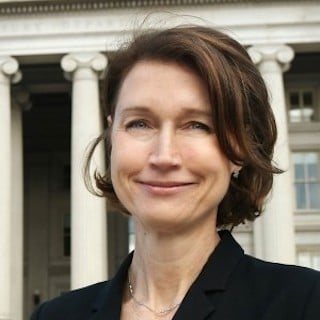
Image courtesy of Melissa Koide

« Previous Page
Next Page »

Primary Sidebar

sign up here

APPLY TO BE A PODCAST GUEST

More to See

(no title)

February 22, 2025

Bellevue Montgomery

February 11, 2025

West Lombard

January 28, 2025

FOLLOW

  • LinkedIn
  • RSS

Tag Cloud

Affordable housing Climate Community Creative economy Crowdfunding Design Development Environment Equity Finance FinTech Gentrification Impact Investing Mobility Offering Opportunity zones PropTech Technology Visionary Zoning

Footer

©rethinkrealestateforgood.co. The information contained on this website is for general information purposes only. Nothing on this website is intended as investment, legal, tax or accounting strategy or advice, or constitutes an offer to sell, solicit or buy securities.
 
Any projections discussed or made may not be accurate and do not guarantee a specific outcome. All projections or investments are subject to risk due to uncertainty and change, including the risk of loss, and past performance is not indicative of future results. You should make independent decisions and seek independent advice regarding investments or strategies mentioned on this website.

Recent

  • The Mulberry
  • Mount Vernon Plaza
  • The Seven
  • Real estate and women.
  • Oculis Domes.

Search

Categories

Climate Community Crowdfunding Development Equity Fintech Investing Mobility Proptech Visionary


Copyright © 2026 · Magazine Pro on Genesis Framework · WordPress · Log in