• Skip to main content
  • Skip to secondary menu
  • Skip to primary sidebar
  • Skip to footer
  • Home
  • About Us
  • Say hello
Rethink Real Estate. For Good.

Rethink Real Estate. For Good.

  • Podcast
  • Posts
  • In the news
  • Speaking and media
    • About Eve
    • Speaking requests
    • Speaking engagements
    • Press kit
  • Investment opportunities

Equity

Reimagining the role of real estate development.

September 28, 2020

The affordable housing crisis in the United States is affecting more people than you might think.

For many Americans, across many income spectrums, a modest apartment is a cost burden and out of reach. There are multiple factors that have contributed to this affordability crisis. Wages have not kept up with rents, fiscal policy has favored homeowners, cars and transport are expensive and take up valuable real estate space and then there’s the rising cost of building affordable housing.

Experiments are being conducted to grapple with this problem in cities around the globe. Berlin is freezing rents, Minneapolis is working towards more affordable housing through updated zoning regulations, New York wants to produce quality affordable housing through careful design, California has passed a law permitting the construction of ADUs (Accessory Dwelling Units ) and many cities, including San Francisco, Boston and Milwaukee, are recapturing highways to provide more land for housing close in. All of this is leading to affordable housing innovation.

Entrepreneurs are working hard to make a difference too. Thibault Manekin founded Seawall Development, a real estate development company, focused on a particular housing niche – affordable housing for teachers. Seawall’s first project, the $20 million Center for Educational Excellence, is an adaptive reuse of a 100,000 square foot vacant factory building. In its reimagined form, the building houses 40 apartments for teachers along with 30,000 square feet of collaborative office space for a variety of non-profits that underpin the success of the school system. Seawall approached the development process collaboratively. They saw this as an opportunity to listen to educators and provide them with affordable, well located housing, shared with like-minded people. And bringing them together with education focused non-profits allowed for further collaboration and sharing of resources. The teachers provided design input for their apartments, chose the amenities for the shared resource center and even chose their own rents based on salaries.

“Everything that we’ve ever done has been built inside out” says Thibault “And what we mean by that is that we start with the end users, the people that are going to be living and working in our buildings. It’s important for us that they have a sense of pride, of authorship and ownership in what’s being created.”

Listen to my interview with Thibault to hear more about Seawall Development’s unusual and wholistic approach to real estate development.

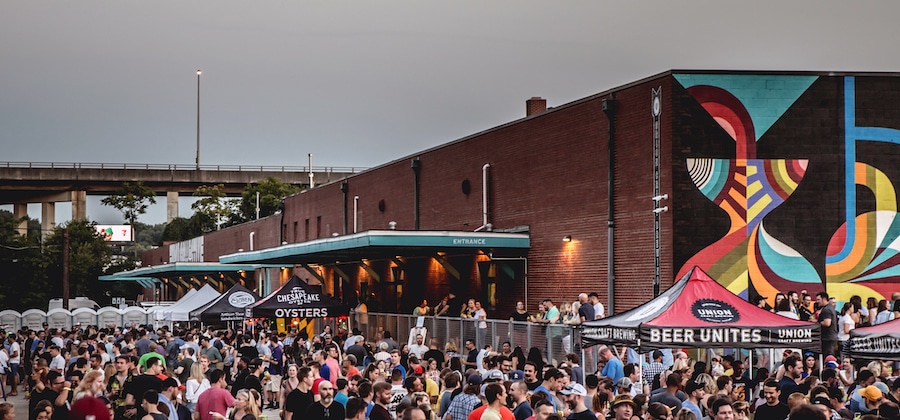
Union Craft Brewing, Baltimore, courtesy of Seawall Development.
Saving places.

September 23, 2020

Patrice Frey is President and CEO of the National Main Street Center, where she oversees the Center’s work. Patrice and her team offer programs and guidance on placemaking, local entrepreneurship, facade improvements, crowdfunding and green rehabs to their network of approximately 1,800 members, all in service of revitalizing commercial main streets in both big cities and small towns alike.

Based in Chicago, Illinois, the National Main Street Center is a subsidiary of the National Trust for Historic Preservation, and has participated in the renewal of more than 2,000 older commercial districts during its 30-year history. Before joining the National Main Street Center in May 2013, Patrice served as the Director of Sustainability at the National Trust for Historic Preservation, where she oversaw the National Trust’s efforts to promote the reuse and greening of older and historic buildings, including research and policy development work through the Seattle-based Preservation Green Lab.

Patrice worked for several years in the field of community development and urban research before joining the National Trust. She is a graduate of the University of Pennsylvania’s program in historic preservation, where she received a master’s degree in preservation planning and a certificate in real estate design and development through the Penn School of Design and Wharton Business School. Patrice completed her master’s thesis on the application of the U.S. Green Building Council’s Leadership in Energy and Environmental Design standards to historic buildings. Patrice also worked for the City of Goleta, California, where she coordinated the acquisition and preservation of coastal open space, as well as a number of community development related programs. Prior to her time in Goleta, Patrice worked for the Brookings Institution’s Center on Urban and Metropolitan Policy in Washington, D.C., where she served as the executive assistant to the center director. She received her bachelor’s degree in politics and international relations from Scripps College in Claremont, California.

Insights and Inspirations

  • Main streets are the heart of their community.
  • They are often the single biggest asset that a neighborhood or small town has.
  • And Patrice sees them as entrepreneurial eco-systems.
  • Two main streets that Patrice loves are in Edenton, North Carolina and Emporia, Kansas.

Information and Links

  • Patrice finds this Roadmap to Recovery a great source of inspiration. She especially loves the community response map at the bottom of the page.
  • The National Trust for Historic preservation wants your help finding 1,000 places where women have made their mark. Submit your entry!
  • Follow this reddit thread for serious lego and creativity talent. Patrice has been collecting since she was eight and her favorite sets date back to the 1980’s.
Read the podcast transcript here

Eve Picker: [00:00:10] Hi there. Thanks, so much for joining me today for the latest episode of Impact Real Estate Investing.

Eve: [00:00:18] My guest today is Patrice Frey, the president and CEO of the National Main Street Center. Through the Center, Patrice and her team offer programs and guidance on placemaking, local entrepreneurship, facade improvements, crowdfunding and green habs, all in service of revitalizing commercial main streets in both big cities and small towns alike. Their network is very big with eighteen hundred members. If you want to hear why main streets matter, listen into our conversation.

Eve: [00:01:04] Be sure to go to rethinkrealestateforgood.co to find out more about Patrice on the show notes page for this episode. And be sure to sign up for my newsletter so you can access information about impact real estate investing and get the latest news about the exciting projects on my crowdfunding platform, Small change.

Eve: [00:01:35] Good morning, Patrice. I’m really looking forward to our conversation today.

Patrice Frey: [00:01:39] Hi, Eve. Thanks for having me. I’m looking forward to it.

Eve: [00:01:42] Good. You have a pretty big job. The National Main Street Center now has eighteen hundred members. Is that right?

Patrice: [00:01:50] It is, yeah. Eighteen hundred members all across the country. Every state in the union, I think, except maybe saving Hawaii.

Eve: [00:01:59] Ok. That’s pretty big. How has it grown under your watch? You’ve been there since 2013, is that right?

Patrice: [00:02:09] Yeah, I have. We launched as a subsidiary of the National Trust in 2013. Before then, we had been a program embedded at the National Trust for Historic Preservation and we have been very fortunate to see a strong membership growth in the last, in the last seven years or so. You know, those 18 hundred members are located all across the country. It’s a really good mix of rural programs and more mid-sized and then quite a bit of representation in some larger cities as well. When we took over in 2013, the team had a real focus on reaching out to folks that had been members in the past and maybe they had lapsed. And we’ve also just put a tremendous focus on developing new content and new resources that have helped to, I think, attract people, attract people to the organization. Yeah. So, it’s been really gratifying. We’re so proud to have such a large and strong membership.

Eve: [00:03:10] So I have to ask, I suppose the main question is why Main Streets?

Patrice: [00:03:16] Well, great question. You know, Main Street is important, I think, in at least two ways. The first is they truly are in the heart of a community and people tend to feel about their town, the way they feel about their downtown, which is to say you’ve got a healthy, vibrant, thriving downtown. I think that’s a real sense of pride, provides a real sense of pride and helps shape the identity, a positive identity for a community. And the reverse is true as well, where if you look at downtown and there’s nothing happening, I think that can help sort of create a sense of distress and incredibly challenged. So, psychologically, we know main streets are extraordinarily important. They’re really important for the quality of life factor, you know, providing restaurants, dynamic shopping experiences, all of that good stuff. But we also know that they’re key to economic competitiveness, right? Because as the economy, we’ve seen these seismic changes in the economy in the last 10, 20 years, we know that people are more mobile and they’re often picking where they live and then choosing a job. And that means for those employers, for local leaders, it’s extraordinarily important that there are high quality places in those communities and downtowns have those qualities in abundance.

Eve: [00:04:40] So that’s what’s going to be my next question. Why is it important to save them? So, one reason is that it offers an option for people. But what if they didn’t have that option? Why is it really important to save main streets?

Patrice: [00:04:54] A couple of reasons come to mind. The first is that often if you’re looking in some of our more stressed areas, cross country, whether that’s in rural or urban areas, other than the people, that commercial quarter is often the single greatest asset that that community has, right? It tends to be affordable, stay flexible, it’s adaptable, it’s walkable and we know more and more people are really appreciating the benefits of walkability. So, it really is an approach to asset based economic development that leverages what you already have. The other thing is main streets, particularly those, you know, those truly that were built like before the 1950s, you have just such a beautiful sense of character. They really reflect the local culture. They were built in a human scale. They’re super, and I’ve already talked about adaptability, but that is extremely important, 5the fact that you can adapt these places, you know, you can do like light manufacturing, you can do a restaurant, you can do standard office. You can, you know, turn upstairs into apartments or condos. So, it’s important and for many communities, this is the single biggest asset they’ve got.

Eve: [00:06:13] Yeah, I always find when I go to a small town or borough with a charming main street, I feel very comfortable with the scale. It’s kind of very easy to relate to, which is a bit of a relief sometimes, I think.

Patrice: [00:06:28] It is, it is. And it’s so funny because, you know, with Covid I’ve been spending a lot of time at home and I have a four-year-old son and we had checked out a book from the library on Roman design, Roman construction. And it’s just, you know, looking at the sketches was just reminded that, you know, this is an urban form that has existed for millennia. And I think it’s existed for a reason. It’s certainly existed for purposes of transacting commerce, but it’s also been a place that people go to connect with each other. And I think Covid is making us realize how much we appreciate having places to go.

Eve: [00:07:09] Yeah, and how much we miss it, right?

Patrice: [00:07:11] Yeah.

Eve: [00:07:12] So a hard question. How do we bring equity to small towns? This is the other pandemic, right?

Patrice: [00:07:21] Yeah, no, no, no. And yes, equally as concerning, if not more so. I think the first thing is acknowledging the problem for what it is and speaking openly about it. You know, in many communities, there is a legacy of African Americans being excluded that dates back to Jim Crow where African Americans were really only allowed downtown on certain days, during certain times to complete their shopping. So, I think some of it is really just acknowledging that in many ways main streets were, just have extraordinary histories of exclusion. And my own thinking is you only fix that by a truly intensive community engagement process where you are committed to reaching audiences and meeting members that you haven’t had traditionally part of downtown and then programming in a way in which those communities, particularly African-American community, feels supported. We, at the Center, do a lot of work on entrepreneurial ecosystems, and we’re taking a fresh look at that in terms of really understanding and helping communities embed within their work practices that really create for more diverse representation downtown.

Eve: [00:08:53] Yeah, I think exciting time about this moment is everyone I am talking to is really thinking about this issue very constructively. And I’m not sure that’s ever happened before. It’s going to be really wonderful to see, you know, what a year of thinking brings, right?

Patrice: [00:09:11] Yeah, it will. And I think now we’ve got to do the work, right? It’s getting past the talking and acknowledging that, yeah, that we have a problem. And, you know, we’re certainly, I personally am really committed to it, and then the organization, Main Street America, are very committed to it as well. You know, I think we’re going to have more tools and resources, support our communities in this conversation in the coming months and I would also say, you know, we’re eager to intensively engage in places where they’re ready to have this conversation and, you know, they want to make some changes.

Eve: [00:09:50] Yeah. Yeah. What are the primary activities of the Main Street Center? How do you help communities?

Patrice: [00:09:57] So, we’re the leading national revitalization organization nationally. So that means we can provide training, technical assistance, grants, networking opportunities. All of that good stuff. But we’re probably best known for something called the Main Street approach, or the four point approach, which is a revitalization strategy that’s been used now by about 2000 communities to help them really identify their values, identify their vision for downtown, and then program in a way to really make that happen. It’s a very comprehensive approach. A lot of times what we see in economic development is, you know, kind of the  one-shot wonder where you build the stadium, or you build the museum or a baseball park, and expect that that will automatically transform an area. That is very rarely the case. Instead, what we know makes a big change, big differences, is small steps, incremental change over time in a way that really takes into consideration the design of the place, economic vitality, the strategies, how you’re, what kind of place you’re actually trying to create and how you are attractor helping those businesses. And of course, promoting it, marketing, marketing it, all that good stuff.

Eve: [00:11:19] Right now, what communities have you been working on?

Patrice: [00:11:24] Well, we do a lot of work in communities. Up until Covid, right?

Eve: [00:11:28] Yes. Yeah, yeah.

Patrice: [00:11:29] We have our field services team that I think was in 200 communities…

Eve: [00:11:35] You know, Covid19, I’m just astonished at the trickle-down effect. Every time I talk to someone there’s another impact I haven’t thought about.

Patrice: [00:11:45] Yeah, yeah. So, our field services typically visits, will visit at least 200 communities a year. And we have transitioned a lot of those services online. But particularly when you’re talking about place, it’s really tough work to do. Place and relationship building. It’s really tough to do.

Eve: [00:12:11] Impossible remotely, right?

Patrice: [00:12:13] I won’t say it’s all impossible. I will say a lot of it is extremely difficult. Yeah.

Eve: [00:12:19] Yeah. I mean, you can only go so far.

Patrice: [00:12:22] Yeah. Exactly. So, you know, it’s hard for me to pick a place where we’re doing work, but, we’re in so many places, but Ohio, we’re doing some really exciting work there in a few of the heavily coal-impacted areas in terms of supporting the development of entrepreneurial ecosystems in that place. And I would say that work is almost certainly shifting off, because of Covid, to be focused on recovery as well.

Eve: [00:12:54] I suppose the question is, you know, how are you shifting your thinking because of this pandemic?

Patrice: [00:13:01] Well, yeah. So, I actually have great hope for main streets on the other side of all of this. I think the reason I’m so hopeful is because I think they, you know, like we talked about, they’re so adaptable. And even though I think we’re going to see the marketplace change a little bit, I think the space to sort of inherently, you know, we can do it, right Eve?

Eve: [00:13:33] Well, you know, I think main streets have a future because I think there are going to be a lot of people who want the calm, peace and space in places that have small main streets. Unfortunately, I think we’re going to go through a period of time where downtowns in larger cities might be scary for some people. And that could be to the advantage of smaller communities.

Patrice: [00:13:59] Well, I think that’s right. And I think we are also seeing where so many of our big cities were reaching peak unaffordability.

Eve: [00:14:07] Oh, yeah, there that too.

Patrice: [00:14:09] Yeah, that combined with the dynamic of, you know, people wanting a little bit more space and realizing that they can work from anywhere. I do think that bodes well for rural towns. I just feel like Americans have reconnected with the value of walkability in recent years. And, you know, I think that persists on the other side of this as well. Even though the economic impacts are going to be severe, we’re going to have vacancies, storefront vacancies that we’re, you know, going to be challenged by, overall, I think, we come out for the better.

Eve: [00:14:44] Yeah. So, storefront vacancies were happening before the pandemic, right? Because retail was really shifting dramatically.

Patrice: [00:14:52] Yeah. Because we’re so massively overbuilt in terms of commercial space especially.

Eve: [00:14:57] And I think because retail activities have changed so much in the last few years.

Patrice: [00:15:02] Absolutely.

Eve: [00:15:02] So, what does that mean for main streets? I mean, hasn’t it changed so much in small places? I mean, I like having my groceries delivered from Whole Foods or Costco or somewhere, but I don’t know if that’s possible in a small town, so…

Patrice: [00:15:17] Yeah, yeah. From what I’ve seen, probably not. I guess maybe there have been some changes. Maybe there will be some changes. We are seeing where, particularly larger retailer vacancies, were really starting to be a problem. My impression is that those tended to be in places, maybe central business district downtown, the malls, the lifestyle centers, et cetera. But I don’t tend to see those national retailers concentrated quite so heavily on our main streets, at least in the type of communities that we’re working with. So, I’m a little bit, you know, less concerned about that dynamic there, because we were seeing, people were really being extraordinarily creative in creating an experience at customers. And whether that was a restaurant or retail. Yeah. And so, again, I think, you know, none of the fundamentals have changed. And so, I see that continuing on the other side.

Eve: [00:16:18] Yeah. So, it’s maybe a shift towards slightly different retail types. Which is kind of exciting to think about.

Patrice: [00:16:26] Yes, it is, it is. I mean, I don’t know about you, but I, I am sick of like trying to online shop for clothes.

Eve: [00:16:34] Oh, I hate it.

Patrice: [00:16:36] I want somewhere I can look at them, you know, like touch them, feel them, like, you know that sort of human want, you know. I think that it’s real and doesn’t go away.

Eve: [00:16:48] So, I’d love to hear about, like, an accomplishment you’re really proud of or a project that you thought sort of exemplified what you do at the Main Street Center, something that’s, that you love.

Patrice: [00:17:01] Yeah. Well, I love that you ask that question, thank you. We are working on an advocacy campaign right now to ask for congressional support for, I mean through organizations, and so, I have been so heartened and just thrilled to see the way that our network has really rallied behind this cause. Unfortunately, state and local Main Street Programs are in peril. We know fiscal budgets, which are a big source of funding for these programs, are badly endangered. And so, we have been rallying and approaching Congress about what sounds like a large number to me, but I’m told is actually a small number. We’ve been rallying around a 100 million dollar ask to ensure that we can sustain these main street programs when small businesses need them most. You know, these Main Street Programs, the leaders of these programs are the folks on the ground who are helping the small businesses with their PPP application or they’re directing them to local community foundations for grants or making sure they understand what might be available through the state. They’re also sometimes in the room negotiating with landlords for rent forgiveness or forbearance. In this moment, what I’m most excited about, most proud of, is the way that folks have rallied to Main Street’s defence. And I’m pleased that Congress seems to be listening. We have a long way to go yet, but I’m feeling good about it.

Eve: [00:18:44] Awesome, that sounds fantastic. So, I’m just shifting a little bit to you. What’s your background and how did you, what led you to this role?

Patrice: [00:18:54] Well, it was a meandering path. So

Eve: [00:18:57] They’re always the good ones.

Patrice: [00:19:00] Well, you know, some people, some people know. Like my husband, you know, knew in third grade what he wanted to do and he’s doing it today. So, I, to make a long story short, I ended up at Brookings Institution. That was the Center on Urban and Metropolitan Policy at that point. And right after, soon after college, because I just love cities and, you know, I was sort of leaning towards the idea of a planning degree. And then I ended up on a tour in downtown Tacoma, Washington, with my dad. And, you know, we had this tour guide. Michael Sullivan, very well known locally, who captured my ardent attention. He just took us down, through downtown, telling the stories of the buildings. And I thought, OK, well, this is what I want to do. So, from there I, because I had really been interested in policy and really interested in architecture, and so I figured, OK, this is preservation is really a melding of those two things. So, from there, I took my time, but I ended up in grad school at Penn for preservation in the Design School. And I did my thesis actually on the greening of older historic buildings and ended up at the National Trust working as their research director. And then it’s it was a lot, I had so much fun in that job working on sustainability and older buildings. And then Main Street came along and I thought, well, you know, there are a lot of parallels between, a lot of threads, between sustainability and main streets. And so, I threw my name in the hat and here I am.

Eve: [00:20:50] That’s fabulous. So, you get to run this really pretty unique organization.

Patrice: [00:20:56] I love it.

Eve: [00:20:57] And spend time on main streets.

Patrice: [00:20:59] When times are normal, I get to see some of the most beautiful, most special places that I think people often never see. So, I am really grateful for that.

Eve: [00:21:11] So what’s one of the most beautiful, most special places you’ve seen?

Patrice: [00:21:17] So, a couple come to mind immediately. One is Emporia, Kansas. And I wouldn’t say it’s like beautiful in the way that, you know, you might think about a landscape or something. But it’s a city of, I think it’s twenty-five thousand, it’s near nothing, right, which is to say, I think Kansas City is a good two and a half, three hours away. And they have done such an extraordinary job of nurturing entrepreneurship there and have had just like success story after success story. I want to say that the Main Street Program has helped to support something like 70 or 80 new business starts there. They will allow good stuff with housing downtown. Just extraordinarily dynamic leadership. Great community. Yeah, just, just…

Eve: [00:22:11] In an unexpected place, right?

Patrice: [00:22:13] Yeah. Yeah. And then, you know, the other thing that I realize is, well the other, to one of the other key lessons I’ve learned, it’s from place called Edenton, North Carolina, and it’s an absolutely charming downtown. But sometimes with the preservation lens you can look at a place and say like, “oh, that facade isn’t”, you know, “that facade isn’t quite right”, “those windows…”, etc., etc.. And there’s a lot of what I would describe as imperfect preservation there, but I say that with no judgment. The thing I realized is, you know, it’s really not about the way it looks, it’s about what’s happening at 2:00 p.m. on a Tuesday afternoon, which is: Is this vibrant? Are people using this space? Are they getting what they need? And, you know, Edenton is absolutely just incredible.

Eve: [00:23:06] Oh, I’m going to have to put them on my bucket list.

Patrice: [00:23:08] Yeah, it is right on the water. It’s a beautiful, beautiful place. I’m probably getting my history wrong, but I think it was very briefly the capital of North Carolina.

Eve: [00:23:18] Fabulous. So, do you think socially responsible real estate is necessary in today’s development landscape?

Patrice: [00:23:26] I think it’s absolutely essential. I’m pleased to see that, you know, there is a bit more attention on it than perhaps in the past. My two big concerns when it comes to real estate are, well really three, building in a way that truly supports the community, is in line with the community’s vision. The second is building with time in mind. Meaning, I think so much of what gets constructed today is just utter crap.

Eve: [00:23:57] Oh, yeah, I agree.

Patrice: [00:23:58] And it will, it will not stand the stand the test of time either design wise or, you know, the fundamentals, the physical structures are so poorly constructed. And then the third thing that is, again, just kind of how I look at the world, is the reuse factor. You know, I tend to really gravitate to projects, you know appreciate projects, that are making use of an old building in some form or some fashion because they, the research I did early on in my career regarding the carbon impacts associated with new construction, was kind of formative in my thinking about this. I mean, there are just massive, massive impacts associated with constructing new buildings and tearing down old ones. And it’s just critically important that we’re giving that our full attention as we’re designing these places.

Eve: [00:24:52] Yeah, and, you know, I’ve done a lot of reuse projects and I find people really love the idea that they’re living in or occupying something that has a history. So, it’s a shame to eradicate it. It’s useful today.

Patrice: [00:25:09] Yeah. And Eve, you are a hero, a true champion among the development community for the work you’ve done on.

Eve: [00:25:19] Oh, thank you.

Patrice: [00:25:19] Yeah, and reuse. I think you’re right. I mean, I do think there’s an element of the human psyche that finds it very important to connect to elements of the past. And that’s what building reuse allows us to do. I mean, unfortunately, so much of what is being constructed today, you know, has so little value that, yeah, it’s hard to imagine 50 years from now that people are going to be fighting to save those places.

Eve: [00:25:46] Yes. Yep. Shifting gears again, what community engagement tools have you seen that have worked best? I know you talked about going further with them in the future, but I’m just wondering what works?

Patrice: [00:26:02] Yeah. So, I mean, there’s certainly the you hold a meeting and you see who shows up and you create the space for them to, for everyone to have a voice and to talk. And that’s very important. But there are two engagement tools in particular that we’ve had some success within recent years. One are surveys. I mean, obviously, that’s a little bit different and limited because you’re not having a dynamic conversation with someone. But that can be extraordinarily helpful in reaching a larger community group about and engaging them in terms of how they want to see their downtown evolve. And the second, and this is really important, is going to where they are, right? So, which is to say, if you have groups that just tend to not engage downtown and yet, you know, there’s a festival happening or there’s some sort of gathering, churches, what have you. That can be a great place to go and engage directly, you know, hand somebody a survey and talk to them at the same time. That’s been extraordinarily valuable.

Eve: [00:27:04] Oh, interesting. And then I have to ask this question. Do you think equity crowdfunding can play a role in building main streets? I’m hoping the answer is yes.

Patrice: [00:27:15] Money? Absolutely. Absolutely. And I think that crowdfunding, is probably the most exciting thing I’ve seen come along and real estate, I’d say full stop. Precisely because I think it creates a foundation for better community engagement, literally community buy-in.

Eve: [00:27:35] Yes. Yeah, that’s the important bit. Yeah.

Patrice: [00:27:37] Yeah. And that is, you know, that’s what it’s all about.

Eve: [00:27:42] Yeah, so they get to vote with their dollars. I mean, they also get to see the upside.

Patrice: [00:27:49] They do. They do. Yeah.

Eve: [00:27:51] Yeah. That’s what I love about it. So final question, what’s next for the Center and what’s next for you if you’re looking five years ahead, like what are the big goals?

Patrice: [00:28:03] Oh boy, I can answer the one for the Center pretty easily.

Eve: [00:28:07] Well, the 100 million for sure, right. That’s a really big goal.

Patrice: [00:28:10] After we get our 100 million and I go on vacation…I will not go on vacation. In terms of what’s next for the Center it is a renewed focus on diversity, equity and inclusion. You know, we’ve recently been doing some strategic planning that we’ve completely, I think, rethought our strategic plan to be aligned with goals of enhancing equity on main streets. I don’t want to be Pollyanna-ish about this and say, you know, we’re going to be able to snap our fingers and massive changes overnight but I do think we’re going to focus on creating tools and partnerships that will really support communities who want to have this conversation, are committed to creating a more diverse representation downtown. So, you’re going to see more resources come from the Center focused on the diversity issue. You know, the five-year question, Eve, is a really hard one because I’m spending all the time with Main Street. So, every year sort of presents a new challenge and you never know what’s coming down the road for you. I hope that, you know, five years from now, we’ve got double the membership and that we honestly have really engaged on the diversity issue in a really meaningful way.

Eve: [00:29:38] Yeah, I think that’s a good goal. And I hope there’s quite a few more main streets with less vacant storefronts.

Patrice: [00:29:45] That’s a good hope as well.

Eve: [00:29:48] Well, thank you very much for talking to me today. And I’m really looking forward to seeing what else, what else happens.

Patrice: [00:29:54] Thanks Eve, great to talk to you as well.

Eve: [00:30:08] That was Patrice Frey, the president and CEO of The National Main Street Center. Patrice impressed on me the importance of main streets. These commercial corridors are often the single biggest asset that a neighborhood or small town has. They are the center of commercial activity, often full of well-built, historic buildings, and they are the heart of their community. It’s important that they thrive. It’s important that they are saved and reused in ways that befit the way we live today.

Eve: [00:30:47] You can find out more about impact real estate investing and access the show notes for today’s episode at my website, rethinkrealestateforgood.co. While you’re there, sign up for my newsletter to find out more about how to make money in real estate while building better cities.

Eve: [00:31:04] Thank you so much for spending your time with me today. And thank you, Patrice, for sharing your thoughts with me. We’ll talk again soon but for now, this is Eve Picker signing off to go make some change.

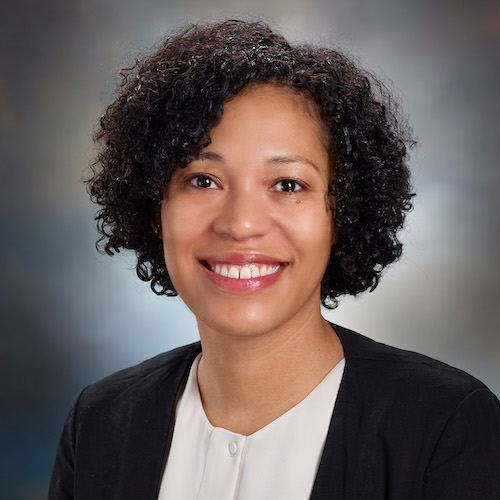
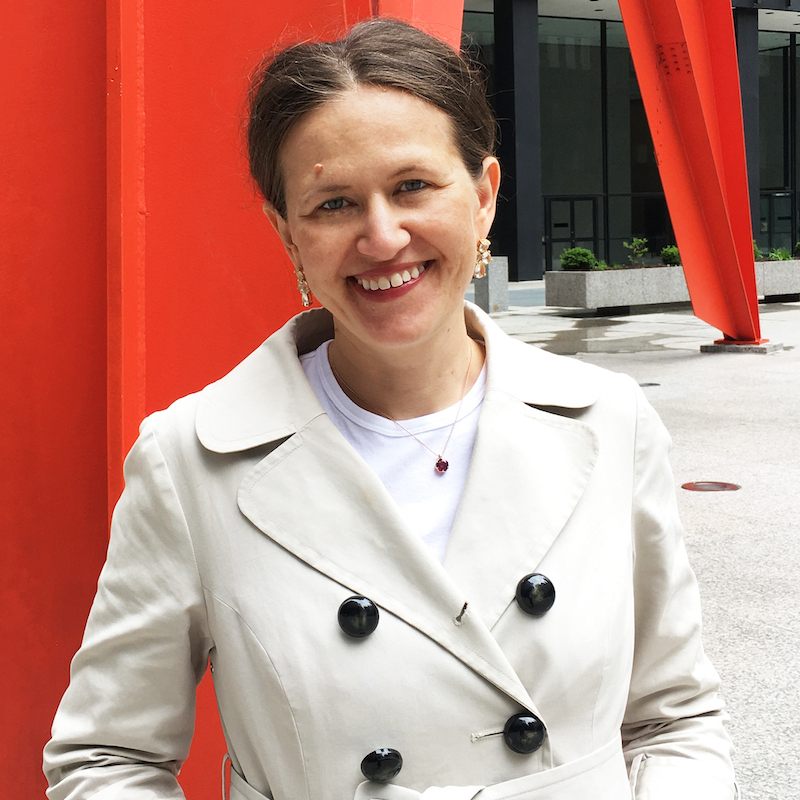
Image courtesy of Patrice Frey

Equity and parking requirements.

September 21, 2020

Zoning, which dictates minimum off-street parking requirements for new and old buildings alike, has led to over 30% of our cities being given over to parking lots. While these parking requirements make for better parking, they make everything else worse.

There is no science to parking requirements. Every city adopts its own zoning rules and parking requirements. If you ask a planner how a parking requirement was set in any particular city, they would have no idea where the number came from.

What we do know is that parking requirements do a lot of damage. By favouring the car, cities have sprawled out of shape to make room for cars. And that spread has discriminated against those with lower incomes as housing close in becomes more and more expensive because of the lack of land. It’s made it harder and harder for those who really need to live close to where they work, to be able to afford to live close. If someone needs to buy a car to get to work because they can’t afford the housing that is close to their job, they also have to be able to afford all the associated costs of owning a car. It’s a vicious circle.

A 2016 study found that the median net wealth of Black families hovered at around $17,000, or 10 percent of the net worth of a typical white family. But some cities require two parking spaces per residence for apartments for low income families, and these are often Black families. How can they afford two cars? Since each space could easily cost more than $17,000 to build, wouldn’t it make more sense to put that cost towards higher-quality housing closer to their work? 

Dr Donald Shoup, a research professor at the Department of Urban Planning at UCLA, has spent his career deeply immersed in parking and land economics. His book, Parking in the City, shows that parking reforms can improve urban metro areas both economically and environmentally. It’s difficult to reform zoning for parking piecemeal says Donald.

“I recommend that cities should just remove off-street parking requirements.”

Many cities are following his recommendations and looking closely at parking requirement reforms and how this will make that valuable land available for much-development housing development instead. Houston recently increased its no parking requirements to cover a larger portion of the city and San Francisco, Buffalo, Hartford, London and Mexico City have already removed their off-street parking requirements completely. Expect to see more cities follow suit very soon.

Donald and I talk parking in this podcast. Listen in.

Image from pxhere

Cities are networks.

September 16, 2020

Over the last 25 years, Bruce Katz has established himself as one of the foremost policy experts working on urban and metro areas. He founded the Metropolitan Policy Program at the Brookings Institution, whose work has helped to reshape and revitalize several cities in the U.S. He is currently a Distinguished Fellow at Drexel University, heading their Nowak Metro Finance Lab. Bruce has also co-written two books on the challenges and opportunities of global urbanization: The New Localism: How Cities Can Thrive in the Age of Populism (2018), and The Metropolitan Revolution: How Cities and Metros are Fixing Our Broken Politics and Fragile Economy (2013).

Bruce’s recent work includes investigating how ‘clusters’ or regional innovation districts helped the resurgence of certain regions, both in the U.S. and abroad, as well as exploring how cities can thrive in the age of populism – what he calls The New Localism. He writes, “Power is drifting downward from the nation-state to cities and metropolitan communities, horizontally from government to networks of public, private, and civic actors, and globally along transnational circuits of capital, trade, and innovation.” It is this ‘new’ framework of governance and economics that drives his current work.

Bruce began his career as senior counsel, then staff director, for the Senate Subcommittee on Housing and Urban Affairs, then served as chief of staff to Henry Cisneros, former Secretary of Housing and Urban Development. He also co-led the Obama administration’s housing and urban transition team.

Insights and Inspirations

  • Cities are networks. They must knit together solutions.
  • It’s an imperative. We need a different model in the U.S. for growth so that it is sustainable and inclusive.
  • Transforming our cities requires long term thinking. It will take a 20 to 40-year cycle.
  • Improving the quantity and quality of affordable housing in the U.S. will take a radical systemic change.

Information and Links

  • Bruce and colleagues are thinking (and writing) about the Covid19 crisis and business recovery for minority owned businesses.
  • Bruce’s books are available here.
  • Research and briefs on The New Localism are available here.
Read the podcast transcript here

Eve Picker: [00:00:07] Hi there. Thanks so much for joining me today for the latest episode of Impact Real Estate Investing.

Eve: [00:00:13] My guest today is Bruce Katz, co-founder of New Localism Advisors. Over the last 25 years, Bruce has established himself as one of the foremost policy experts working on urban and metro areas. He founded the Metro Policy Program at the Brookings Institution and is credited with reshaping and revitalizing several cities in the U.S. More recently, he co-wrote several books shifting his thinking to how cities can thrive in the age of populism, what he calls the new localism.

Eve: [00:00:52] Be sure to go to rethinkrealestateforgood.co to find out more about Bruce on the show notes page for this episode. And be sure to sign up for my newsletter so you can access information about impact real estate investing and get the latest news about the exciting projects on my crowdfunding platform, Small change.

Eve: [00:01:13] Hello, Bruce. I’m so pleased you could join me today.

Bruce Katz: [00:01:16] Well, thanks for having me.

[00:01:18] Yeah, it’s really a pleasure. So, I would really love to talk about your current work and what you call the new localism. And first, I just wanted to know what that means.

Bruce: [00:01:29] Well, I think the new localism is the way we solve problems in the world today. Cities are networks of public, private, civic, community institutions, intermediaries. They’re not governments. And I think the kinds of challenges we have today require multidisciplinary and multi-sectoral solutions. And so, cities have become the places where you can do that. Whether it’s around transportation or housing or small business or any number of other significant challenges we have today.

Eve: [00:02:10] How do you see this trend emerging?

Bruce: [00:02:12] Well, I think it’s been emerging for quite some time. In the United States it’s emerged partly to fill the vacuum left by a dysfunctional and erratic federal government. In many states, also, which have ceased to function in any effective and efficient manner. I mean, obviously, you’ve seen this play out during the Covid crisis in the United States. So, I think what has happened is governments at the higher levels, quote unquote, of our societies have become hijacked by partisanship and have been divided by ideological polarization. And so, the only place where pragmatism and problem solving is the order of the day is the local, is the city level or county or metropolitan level, because that’s where you have different stakeholders who come together to collaborate to compete and collaborate to solve problems. So I think this is partly as a response to the growing partisanship in the United States and around the world, and partly just because 21st century solutions, which are enormously complex, require multi-sectoral horizontal solutions rather than one agency, one bureaucracy, which is more the way government is organized, resolving the issue.

Eve: [00:03:38] So, yeah, I’m not sure whether I find that comforting or scary. So, if the federal government is letting us down, we have to rely on each other locally that could be really good in a way that that could really promote innovation and entrepreneurism that’s probably impossible at the federal government level.

Bruce: [00:03:59] Well, I think for, you know, the mid 20th century is when we saw national governments balloon up in the United States. It happened in the aftermath of the Second World War. And there’s a purpose with national governments. They play a very important role around the safety net, around, obviously, universal health care and, you know, other essential supports for families. They obviously, the defence role they play around the military and so forth. I mean, there are certain things that a national government does that local networks can’t do, and they should do that job well. But they are not the full sum of a nation, you know, and the United States is a federal republic with enormous amount of power and capacity and resources distributed and decentralized. And so, really what the new localism is about is about harnessing and leveraging all this incredible, innovative power that we have in our country to solve problems and push forward. And the national government can be a platform for that and be a participant in it. But we shouldn’t be looking to that level to solve issues that, at the end of the day, require so much local interaction and local networks.

Eve: [00:05:33] That makes a lot of sense. So, I mean, what does this mean pragmatically then, for cities and metropolitan areas, at least in the way they are organized and might reorganize themselves moving forward?

Bruce: [00:05:48] Well, first is recognition that cities are not governments and metropolitan areas are not government, so you shouldn’t be thinking the way we think about government. When we think about government, we say, well, what’s the Department of Transportation going to do? Or what’s the Department of Housing going to do? Very bureaucratic, very vertical, very hierarchical. Cities are networks so we should be thinking about, if we’re going to solve our congestion problem or solve our housing affordability problem or grow Black- and brown-owned business. What’s the network way of doing that? How do we knit together different kinds of sectors, different ways of thinking, different sources of capital? It’s more likely that those solutions that are horizontal rather than vertical will be more sustained over time.

Bruce: [00:06:37] So, you know, thinking through network governance, right? Not just who do we elect to be mayor or county executive, which is very important, but really, how does universities and health care systems and corporations and entrepreneurs and the public sector philanthropies, how do these work together around solving specific concrete, tangible solutions or problems? I mean, what I’m trying to basically put forward with the new localism, which I co-wrote with a close friend of mine, Jeremy Nowak, is a completely different way of thinking about how we solve problems in the 21st century. And it’s to get away from 20th century thinking about government and silos and compartments as a way to do that.

Eve: [00:07:29] So, you know, I have I have a couple of questions around that and one is what brought you to this thinking?

Bruce: [00:07:36] Well, I spent my professional career moving from the federal level to the local level. I was chief of staff at HUD, the federal Department of Housing and Urban Development in the United States. I was chief of staff, staff director of a U.S. Senate subcommittee on Housing and Urban Affairs. So, I, I spent 10 years in the federal government working on issues of importance to cities but coming at it from a top down perspective. Then I left to start a city think tank at the Brookings Institution in Washington, D.C., and really spent the next two decades working with cities all over the U.S. and around the world and beginning to work out a different theory around bottom-up nation building, essentially.

Bruce: [00:08:24] And so I’ve traveled a pretty long circle here of starting at the federal level, wanting to work on cities, but then really trying to work with cities and think through different mechanisms, different approaches and fundamentally different, more transformational outcomes that we’re trying to achieve. So, you know, we’re in an odd moment now because of these multiple pandemics that we’re facing in the United States and beyond. The health pandemic, the race pandemic. But at the end of the day, I think success will occur ultimately when communities, cities, counties, metropolitan areas are able to operate in this in a very radically different way than they’ve operated in the past.

Eve: [00:09:13] Interesting. So, you know, are there some cities that have emerged that are shining examples of this new power shift or new localism?

Bruce: [00:09:24] I think many cities actually have, and the crises that we’re going through have forced more collaboration across multiple sectors. In the book, The New Localism, we wrote a lot about Pittsburgh, which is sort of an informal network of philanthropies, universities, hospitals, corporations, government, community, to sort of lift Pittsburgh from the depths of a industrial collapse, which happened back in the late 1970s. Pittsburgh today is seen as that incredible vanguard of the innovative economy, partly because of…..

Eve: [00:10:04] I have to, I have to say full disclosure. You’re not just saying that because I’m in Pittsburgh, right?

Bruce: [00:10:10] No, not at all. I didn’t even know you were, but.

Eve: [00:10:12] I’m in Pittsburgh, so I’ve seen that transformation firsthand. It was pretty interesting and mind blowing to watch. But please, please go on.

Bruce: [00:10:24] Pittsburgh was a normal older industrial city in the United States. It would have been left for dead. I mean, most were, right? I mean, the comeback of Pittsburgh is because of local leaders understanding their distinctive advantages, investing in them for decades without any significant returns. And now, as the economy restructures and we move to the next generation of technologies, Pittsburgh has the ability not just to be a competitive city, but to be an inclusive city. So, Pittsburgh has an informal network that has been operating for decades. Indianapolis, which we also talk about has a more formal structure where the corporations and the universities and the philanthropies came together and set up an entity called the Central Indiana Corporate Partnership to literally help steward the economy for several decades. And what distinguishes Pittsburgh and Indianapolis is the ability to think long term. The US is a very short-term culture. Someone once said to me their idea of planning was lunch. We have a culture that looks at, you know, the corporations look at quarterly returns. You know, people watch stock market gyrations on a daily basis. The key here is to think in these 20, 25, 40-year cycles, just that’s how long it takes to really restructure economies and to have them have full inclusive effect.

Eve: [00:12:01] That’s really interesting. So, you know, I’ve actually seen that myself as I invested in properties in Pittsburgh maybe two decades ago. And now the city is, I don’t know if I would say booming, but it’s certainly in a very different place. But, you know, one of the things that we haven’t done well here in Pittsburgh and I’m sure is probably mimicked in other places, is the race issue where I think Black people have been left behind for a whole multitude of reasons. And, you know, the affordable housing which affects every city certainly becomes worse when a city gains more value. So, are local leaders really thinking about that well enough in advance?

Bruce: [00:12:48] Well, I think this is a, you know, this is an interesting thing about the United States and the other story we tell of the new localism is around Copenhagen. And how Copenhagen was able to move from an older industrial city where manufacturing collapsed to really one of the wealthiest cities of the world in a 30-year cycle. They did that because they established a public asset corporation that was able to use the land and the buildings that were owned by the public sector to basically grow a very different kind of economy and then to generate revenues as the economy grew so that they were able to reinvest in infrastructure. So, there was a public benefit to growth. In the US, the benefit to growth only accrues to the private sector, right? In Northern Europe, in Germany and the Netherlands and in Denmark and the Nordics there is a public benefit. The public has a piece of the pie, so to speak. So, as the pie grows, you’re able to generate revenues that can benefit a much broader segment of the population.

Eve: [00:14:00] That’s interesting. Yeah, the other place I’ve been watching with interest is Australia, because I’ve been gone from there for a long time, but they really lack an affordable housing policy and they’re…. it’s a very wealthy country. And from what I’ve seen, they’ve done a very poor job of transferring any of that wealth for public benefit. So, I don’t think the US is the only place with this issue. Don’t know if I’m right, but that’s my guess.

Bruce: [00:14:31] Well, I think it’s, again, I think of the US. The US as quite odd because in the United States we tend to localize education policy and to some extent, nationalize housing policy. The rest of the world operates in a completely different way. They tend to natutionalize education policy and localize housing policy, right? So, the reason why Hamburg and Copenhagen and Stockholm are able to grow very robust economies but continually invest in affordable housing is because it’s localized in these places. They’re not looking to their national governments to somehow solve the housing problem. They’re basically baking in affordability in the way they grow. And so, a lot of what really applies to cities is to think at a system level but to also think at a global level, because somewhere in the world there’s a city that’s cracking the code on whatever the issue that bedevils you. And that means that there’s just a very broad sort of pool of cities to draw from.

Eve: [00:15:42] Yeah, interesting. Do you know of any cities in the US cracking the affordable housing code, so to speak?

Bruce: [00:15:50] I think they’re mostly sort of at the edges of the affordable housing problem because I think it’ll take a radical systemic change. I mean, I think it’ll take what essentially is more of a German or Danish model and applying it here. We’re doing bits of that, but we’re not doing it at the scale they’re doing it. So, I think we haven’t quite broken out of our own failed system to tell you the truth. You know, on the other hand, you know, the Germans and the Danes and others could learn a lot from our innovation ecosystem, right? The US is hard wired around technological innovation and the rest of the world, you know, some parts of the world are obviously very competitive with us, but we have basically built the very unique U.S. innovation ecosystem. Built, by the way, on federal research and development like at Carnegie Mellon or Pitt, or etc. But we’re quite good at that and we’re quite terrible at these other things.

Eve: [00:17:00] Yeah. So, and then, how do you think this pandemic, the health pandemic, might change the trajectory for these rising cities, the cities that are actually doing a good job of new localism?

Bruce: [00:17:15] Well, personally, it just depends how long this going to go on for?

Eve: [00:17:20] A yeah, we know it’s going to go for a little while, right?

Bruce: [00:17:22] I’m very concerned as we keep cycling through this. So this is a moment where you really do need the national government to step in and sort of catch everyone if they fall, catch people through unemployment insurance, catch small businesses through capital that’s fit to purpose, catch local and county and state governments because of the loss of fiscal revenue. This is the role the federal government, right? This is why we have a federal government. They play this role during natural disasters like hurricanes or floods. Well, this is a hurricane happening everywhere, for an uncertain period of time. And what we really don’t have at the national level at this stage, curbing the spread of the virus or responding to its economic effects, is any kind of functional, predictable, reliable partner. It’s just partisanship. We’re know nothing-ism, you know, on steroids. So, I am worried that the aftermath of this pandemic is going to be with us for a long period of time because of the centrally federal malpractice. Other countries have already come out of the pandemic like the Nordics, and they were smarter about how they supported their workers, their companies and their cities during the entire process. So, I’m very worried about the decade long effect of the corona virus. And on top of it now, we have civil unrest following the death, the murder of George Floyd and we need systems change in the US. And that’s the only way that we’re going to accelerate any kind of inclusive growth recovery. And it’s going to require some real soul searching about why the economic performance and prosperity we had pre-covid was not shared by large segments of our population. So, there’s no return to normal here. And normal was not getting us the kind of outcomes we wanted in the first place.

Eve: [00:19:39] Yeah, exactly. No more is not getting us the outcomes. You know, the question I have is how, there’s so many answers to this, how do you make cities more equitable places for everyone? Because they are inequitable in a thousand and one ways. And yeah, I could see that networks of people are perhaps the only way to solve it. I don’t know. It’s a very big problem.

Bruce: [00:20:05] Well, we do take what we’re good at. We’re very good at innovation in the US. It’s partly because we have an ecosystem in every major city. Take Pittsburgh, we have advanced research. We have the companies. We have start-ups and scale-ups. We have capital to commercialize research, you know, with angel loans, seed money, series A’s, Series B, we have incubators we have accelerators. We have an ecosystem. If you move that over to, how do we grow Black-owned business or Latino-owned business or even women-owned businesses. There frankly is no ecosystem.

Eve: [00:20:40] No, there’s no ecosystem.

Bruce: [00:20:41] We have a, we have sets of goals. Sometimes we have set asides, but we don’t really have this deep infrastructure, intermediaries and different kinds of capital that fit the purpose. So, I think that’s what has to happen. We should take what we’re good at and begin to apply it more broadly. We’re never going to be the Danes or the Germans or the Israelis or someone else. I mean, we need to take what is exceptionally American, this network of sectors that tend to come together and collaborate to compete globally, we need to build on that because that is what makes us highly distinctive in the world.

Eve: [00:21:24] Yeah. On a slightly different track. Do you think there are any current trends in real estate development that are important to the future of cities? Keeping in mind the pandemic as well, I think about this a lot. And, you know, I own real estate with restaurant tenants, and we talk about whether they will survive or not and what it’s going to look like.

Bruce: [00:21:49] Well, to some extent, what you’re describing is that a lot of landlords in the US are really small business, so…

Eve: [00:21:56] Oh yeah, they are. Absolutely.

Bruce: [00:21:57] So, there’s a domino effect to this crisis as we just shut down the economy. The first that were affected were the face-to-face businesses like restaurants and bars and hair salons. But all of those businesses are ecosystems unto themselves. They have lenders, they have landlords, they have suppliers, they have workers, they have customers. So, this whole crisis has exposed the intricacy and the complexity of our economies. I’ve been working on this idea about a new kind of intermediary that we’re calling regenerators, you know, in our main streets, where many of our face serving businesses are co-located and concentrated. And over the course of the next several years, I think what we need to do is have entities that can refill vacant buildings quickly, maybe pop-ups that can provide master leases. So that we don’t see a collapse in the real estate sector, essentially looking for an intermediary that can stabilize important cadres and business districts and main streets in our cities until we really begin to see businessman come back to where it needs to be. So, I think part of the issue here is just the need for different kinds of business models. If we think that every small business is going to snap back by itself, I think we’re delusional. I think we need more collaborative, cooperative models, particularly around retail and particularly around these business districts in which a lot of enterprises co-locate. And real estate’s a big part of that.

Eve: [00:23:47] Yeah, it is.

Bruce: [00:23:47] Another cost of the equation.

Eve: [00:23:50] Yeah, definitely. I am also very worried. But I’m pretty sure we’re going to get through it one way or another. So, what what’s your hope for cities and metros maybe in the next five or 10 years?

Bruce: [00:24:06] You know the imperative, I think at this point, is that cities and metros begin to grow in very different ways, right? The kind of growth that we had in the US pre-crises was not sustainable and was not inclusive. I mean, the US was not making the kind of transition to a carbon neutral future that needs to be made. Copenhagen is, Stockholm is. But our cities were not. At the same time our cities were not really growing income or wealth for large portions of their populations due to a whole complex set of reasons, some deeply rooted in our history. So, we need a different growth model in the US. And there’s a lot of commitment to, quote unquote, inclusive growth and quote unquote, sustainable growth. But those are slippery terms. They’re vague terms. So my hope in the next year or so is that U.S. cities and metropolitan areas commit to some audacious goals for the next decade and then use this period to sort of back cast the kind of more ambitious initiatives and system change that’s necessary so that they can achieve those goals. And if the federal government can be a partner, fantastic, they should be. If states can be partners, great. But the vision for what our future should look like should be essentially designed locally.

Eve: [00:25:46] Oh, I can’t wait to see that.

Bruce: [00:25:47] These are systems or communities with radically different pasts and different priorities, and they should, so, every major city in Metro of the US should be going through this kind of process.

Eve: [00:26:01] It’s an exciting thought. And so, final question, what’s next for you? You said you’re very busy.

Bruce: [00:26:09] I’ve been spending a lot of time thinking about this question about, and, you know, first of all, looking at the current set of data that we have in the US around Black-owned business, brown-owned business, and trying to think through what would be a step change. You know, only two percent of employer firms in the US are owned by Blacks today. They’re 14 percent of our population. There’s a whole set of reasons around that. So, the question is, if over the next decade we were going to double that share or triple that share and also have Black-owned businesses participate in sectors of the economy which tends to pay higher wages, have higher benefits, higher revenues. What would that take? And I think that’s the kind of system building that I’m really interested in working on, perhaps with the next administration, should that come to pass in this election, but also really growing from the local level on up. So, intensely focused on building what I call community wealth in the US as a antidote to the kind of deep racial and ethnic disparities on income, health and wealth we have today.

Eve: [00:27:31] Well, I, I really can’t wait to see what comes of it and I really appreciate the time you’ve taken today. Thank you so much.

Bruce: [00:27:38] No, thanks for having me. I really appreciate the.

Eve: [00:28:00] That was Bruce Katz. Bruce thinks we should stop thinking about cities as governments and instead think of them as networks. The question is, how can we knit together lasting solutions to improve our cities from a network of leaders, both public and private? Transforming our cities requires long term thinking. It will take a 20 to 40-year cycle. But Bruce believes this is an imperative. We need a different model in the U.S. for growth so that it is sustainable and inclusive.

Eve: [00:28:40] You can find out more about impact real estate investing and access the show notes for today’s episode at my website EvePicker.com. While you’re there, sign up for my newsletter to find out more about how to make money in real estate while building better cities.

Eve: [00:28:58] Thank you so much for spending your time with me today. And thank you, Bruce, for sharing your thoughts. We’ll talk again soon. But for now, this is Eve Picker signing off to go make some change.

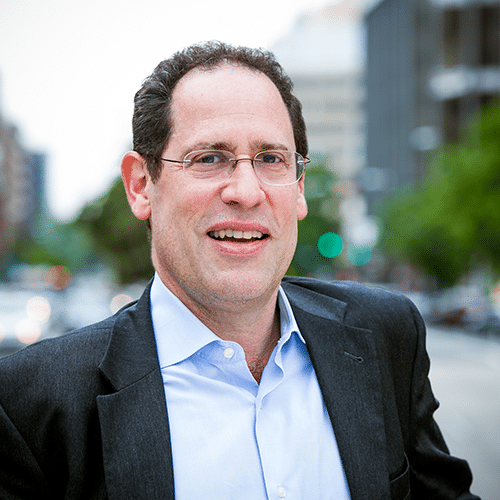
Image courtesy of Bruce Katz

No guilt. Just action.

September 2, 2020

Cynthia Muller is the Director of Mission Investment at the W.K. Kellogg Foundation based out of Battle Creek, Michigan. 

Described as a “thought leader of the impact investing ecosystem and a trailblazer in the field,” Cynthia has been at Kellogg since 2016, first serving as a program officer with their Mission Driven Investments division, then as its director. Previously, she developed and managed the impact investment practice at Arabella Advisors, which involved deal sourcing and structuring of investments in health, education, micro-finance, housing and green technology – domestically and abroad. 

At Kellogg, the team she works with does grant-making and makes investments (in both nonprofit and for-profit organizations). Their core mission is to “improve the lives of children, their families and their communities, with an emphasis on investments that help to dismantle the root causes of racial inequity.” Since Kellogg’s Mission Driven Investments was created in 2007, they have put $100 million towards market-rate investments, and $50 million strategically towards below market-rate program-related investments.

Cynthia also served for seven years as the director of strategic investments for Capital Impact Partners where her work on impact investments targeted health, food, education, energy efficiency and economic development. And she serves on the boards of Groundswell and Enterprise Community Loan Fund. She holds a Master of Business Administration from the Foster School of Business at the University of Washington and a bachelors degree in psychology from Stanford University.

Insights and Inspirations

  • Every time there has been opportunity for black and brown people to build an asset, to build wealth, it has been taken away from them.
  • Who do we consider deal worthy?
  • Their family bought land one generation after slavery. The Reels Brothers Spent Eight Years in Jail for Refusing to Leave It.
  • Cynthia thinks power mapping is the go-to community engagement tool.

Information and Links

  • Cynthia is a staunch advocate of local investment through Community Financial Development Institutions (CDFIs), having done her first community development deal early in her career in her home state of Alaska.
  • She’s particularly proud of the Kellogg Foundation’s commitment to investing in fund managers and entrepreneurs of color, including organizations like Blavity, Impact America Fund and Rethink Impact.
  • At this critical moment, she’s re-reading Jennifer Eberhardt’s book Biased, and the Business Case for Racial Equity.
Read the podcast transcript here

Eve Picker: [00:00:15] Hi there, thanks so much for joining me today for the latest episode of Impact Real Estate Investing.

Eve: [00:00:22] My guest today is Cynthia Muller. She’s the director of Mission Driven Investment at the W.K. Kellogg Foundation. Cynthia doesn’t see herself as a leader, but she is. She’s been described as a thought leader of the impact investing ecosystem and a trailblazer in the field. Cynthia has been at Kellogg since 2016, first serving as a program officer with their mission driven investment division, then as its director. There she is wholly focused on their core mission to deploy investments that help to dismantle the root causes of racial inequity. She’s taking action.

Eve: [00:01:18] Be sure to go to rethinkrealestateforgood.co to find out more about Cynthia on the show notes page for this episode and be sure to sign up for my newsletter so you can access information about impact real estate investing and get the latest news about the exciting projects on my crowdfunding platform, Small change.

Eve: [00:01:41] Hi, Cynthia. I’m just really delighted to have this opportunity to talk to you.

Cynthia Muller: [00:01:47] Me too, Eve. It’s been great, it’s great to connect and I’ve been a huge fan of the podcast and I’m really excited for our conversation today.

Eve: [00:01:54] Oh, that’s lovely to hear. OK, so I like having fans. So tell me, just to set the scene, what’s your background and how did you become a leader in impact investing?

Cynthia: [00:02:11] I honestly, I didn’t set out, by any reason, I certainly don’t think of myself as one now. I’m really just a practitioner and I have the fortune to work for the W.K. Kellogg Foundation, where I lead our Mission Driven Investment program, which is about 13 years old, focused on impact investment. We do both MTRIs, our mission really did invest in market rate investments, as well as concessionary investments known at the foundation as program-related investment. And it’s a small 450 million but it’s really exciting because that pool has really been a tool for us at the foundation to learn how do we invest with a more equitable lend? How do we invest understanding that not only are we achieving a financial return, but we are also targeting demonstratable, tangible social impact?

Cynthia Muller: [00:03:02] And so, 13 years ago when our board approved this, they also declared us an anti-racist organization. In that same year in 2007, our predecessor, previous president of our foundation, as well as board members who are currently and of the past, had, knew that there were opportunities for us to think about how do we use tools differently, how do we think about systems differently? And so, 13 years later, it’s all culminating now this intersection between understand that there would be systems that people operate in and even though these systems are built for everyone, they don’t work for everyone. And I think what I’m heartened, despite this is a terribly difficult time to see what all of the loss of life, as well as the challenges that many folks are facing, and in particular, the poor Black, native and other marginalized groups that were already systematically left behind who now, yet have a double whammy to try and catch up.

Cynthia: [00:04:08] But that is also an incredible opportunity for groups that we fund and that we partner with. These are groups that are in communities. These are groups that, through their advocacy, lived experience and continued representation of the communities, know exactly what tools, what resources they need in order to build the community that will work truly for everyone. So, I’m so excited about that, this work and about the ways in which we can think about these systems, right? Because we’re in such a period of inflection. We, in philanthropy, you know, obviously we, like a lot of other industries, are going through our own reckoning and how we navigate the non-profit sector and social impact and even how we navigate being complicit in some of these practices of white supremacy in these systems. So, for me, it’s really helping to figure out how to use these tools to unlock and really help to support our folks in developing resources, tools and funds, models that truly could be resonant and sustainable for communities in the long term.

Eve: [00:05:12] I read somewhere that you said, you talked about approaching racial equity, not with guilt, but with an impact lens, which I love. I think that’s a really meaningful shift in understanding for me, I suppose. And I wanted to start talking about, like, this is a really huge subject we all know but I’m in the little real estate industry section of it and I wanted to start talking about, you know, how the real estate industry fails people of color and what you think are some of the key things going wrong.

Cynthia: [00:05:47] Sure. And, I want to couch my remarks carefully, because, again to the point, I don’t want to guilt, you know, folks in these conversations. These conversations are really to help illuminate, right? Illuminate how people actually experience working in these systems. And I think, in real estate industry in particular, I think is interesting, obviously built off our understanding of what it means to own land. Our, I should say, Western understanding of what it means to own land. And that’s derived from obviously the theft of land from Native Americans several hundred years ago.

Cynthia: [00:06:25] And so, the start was there. The start with our fundamental understanding of what it means to land. And so, when you have a society that has been built on taking land from folks already there and then re-giving it out, well of course you’re going to have flaws in the system several hundreds of years later because it perpetuates this idea of who owns the land and who has the right to decide on it. But that’s not to say that for 2020, I think in the ways that real estate has left Black communities behind, I think it’s similar to how the finance industry or even the entertainment industry has left Black communities behind. They leverage the work, the creativity of folks in use of their land. And it really started with slavery, with the renaming of the 40 acres and a mule. And so, folks who had nothing coming out of reconstruction where they were promised this land and they had it for a couple of years before it was unfortunately taken back and given to other folks, and in that case, those who have resources. And so, I think compound that over generations. Right? Every time there was an opportunity for black and brown people to build an asset, to build wealth, unfortunately and systematically, it was taken away through, either through force like we saw in, you know, in many examples that we’ve been learning about, but we also learned through other means, through legal means, right?

Cynthia: [00:07:53] And for me in my own journey, in understanding how these systems work, and even myself being complicit and working in organizations that didn’t know, or to understand how, you know, we continue to perpetuate this divide through our financing structures, through how we even underwrite our deals, who we consider deal-worthy, even by zip code. And so I think all of that’s to say that we all operate in this environment of a real estate where we understand who owns things based on who it’s passed down to, the legal structures, but as we have learned through great reporting like The Atlantic and The New York Times and others, there have been generations of folks who’ve been losing their land. And one of the greatest examples right now is the great Black land theft. There’s a great, great piece in ProPublica on just that. Basically, the systematic theft of Black land that’s been left to families through generations. And unfortunately, the families that they gifted this land are unable to, for a variety of reasons, maybe they don’t have the assets to find a lawyer or understand how to reach the appropriate folks to document ownership. And so, this creates more vulnerability and predatory behavior by others who see it as an opportunity.

[00:09:11] And so, I think that’s all to say that’s how the system works. We see how the money comes in. We see who is getting financed, how these big real estate funds are able to amass all this property through systematic purchasing. And we see how this plays out in local communities where there are a handful of individuals or families that own the real estate, right? And so, unfortunately, for folks who, like myself, my father was in Vietnam, came back from the war, settled in Alaska and worked as a civilian on the Air Force base for many years and was ultimately able to buy his own property. But that was after a lot of handwringing. He had to jump through a lot of different hoops, thinking about financing in different ways because traditional banks were going to put him through extra steps that he wasn’t willing to go through. So, every time we talk about creating wealth for people, that’s great. But it’s not that everybody has the same access and opportunity to create that wealth. I think that’s, quite frankly, how real estate fails black and brown communities. That lack of recognition is very much obviously focused on the bottom line and that exchange of the assets and who owns and how much revenue we can glean from it but we never systematically just sit down and think about who actually is benefiting from this and who is it benefiting from this?

Eve: [00:10:37] I mean, that’s just a huge problem. And, you know, and the predatory behavior is continuing today in different ways. So, it isn’t like it’s stopped. So, what would it take to correct this? We’re talking about banks that won’t lend to certain groups of people. We’re talking about people who go into poor neighborhoods and purchase homes for less than market value. We’re talking about all sorts of, kind of, failings that ultimately impact people who don’t have the resources to deal with it, right?

Cynthia: [00:11:13] Mm hmm, that’s right. So how do we, how do we help them, right?

Eve: [00:11:16] How do we start, right?

Cynthia: [00:11:20] So now that we’ve painted this dire… What’s out there? There are some incredible areas of opportunity and great work. One of those is really around community development finance. This is an industry that’s been around for 40-something years. This really came out of church groups, non-profits creating loan funds all over the country to do justice, to be that bridge finance or for, in those places and those communities, for those people who are being overlooked. And so, there are several thousand CDFIs across the country, they’re all kinds of shapes and sizes. Some of them are national, some of them are in places, some of them are thematically structured, but they’re all in the service of deploying capital. And a lot of them are very much active in the real estate market because a lot of great programs in the 80s and 90s and then the aughts have really allowed the industry to flourish. New market tax credits to various CDFI fund programs, healthy food financing.

Cynthia: [00:12:24] I do think the CDFI space has done a tremendous job. We’ve got a great history and track record of these transactions. I think the challenge is that the industry is a little dispersed. Obviously, it’s all over the country and each CDFI has its own individual strategy. And I think further, the CDFI industry has been really, really thoughtful about scaling up and figuring out how do we start to do larger deals so we can be a more significant player with the larger banks. And I think we’ve proven that case. I think, unfortunately, though, we have veered a little bit away from providing capital to the folks in the most need.

Cynthia: [00:13:05] And I say this because when we, as we have been trying to marry this impact and finance, I think this field is borne out of a number of different things and I think the folks that have come to it have brought all of this incredible insight and talent and resources from a lot of the institutional finance investment. Some of those folks came from banks, they came from investment banking, they came from equity, venture capital, the whole industry. Now if you think about it, what are those industries lacking? A lens into these communities, a connection into these communities. And unfortunately, I think that it still comes out in different ways. And so, I’ll say that while we have incredible groups that are providing capital to low-income communities, we’re still not hitting the most marginalized. We’re hitting cities, we’re hitting gentrifying areas. And so, if you actually look at some of the loans across the country, we are, we’re actually, we’re doing work but we’re hitting the wrong areas.

[00:14:02] And so for me, it’s really helping to illuminate what these other opportunities look like and that CDFIs and others have the opportunity to really bring their lens and this 40 years of working in low income communities to the space, and to provide that capital. That quite frankly, and it’s already happening in so many ways. In the news recently, we’re hearing about groups like Netflix and PayPal who are deploying tens of millions of dollars into CDFIs and community banks to help folks address these needs. And PPP, the subsequent round after the first round, they made sure to include CDFIs because, obviously, they realized really quickly that there was a whole flock of folks that were being left behind. I think CDFIs aren’t the panacea, but I do think they are a huge partner, along with other asset holders that help to influence how we structure the practice.

Eve: [00:14:55] Yes. I think developers., OK let’s talk about developers. They’re often, you know, that’s often considered a bad word in underserved neighborhoods, while there are, I think, quite a few developers who really want to do the right thing. So how we train developers to fully understand the consequences of their projects? And can we do that? Can we really, like, look ahead 20 years and understand what might happen in a neighborhood?

Cynthia: [00:15:27] Yeah, I think we can. I think we got a little bit of a lesson with Opportunity Zones. While…. hold out with me here. Opportunity Zones obviously a lot of challenges. I personally have a lot of challenges with them in the way that the program is structured, and I think folks have talked about this in detail. So, I don’t think I have anything else to add. But I do think there were a number of my peers who were really trying to figure out just that. How do they help to show, demonstrate, the practice of making these investments in communities with that land? Right? Because that was the general intent that I think that a lot of folks had expected and unfortunately the program did not have enough accountability metrics to really allow for that to really play out.

Cynthia: [00:16:15] And so we’ve gotten what we’ve gotten, you know, a lot of deals that didn’t go into high need communities. However, the work that Kresge Foundation funded really around, how do we look at these transactions with that lens? I think that was the most valuable piece of what we learned from Opportunity Funds so far, is that we can go in with a good intent, right? We know that the idea was to bring in new money, right? But we also realized that, unfortunately, capital markets need some accountability, you know. And I know that there’s varying degrees of how we can play that. But it’s clear to me that had we been clear about when you’re going into these communities, here are kind of the criteria. How are you engaging with the community? What’s the community’s voice? Does the community have an actual equity stake in this development? If so, how? Right? So how do we get past this rubber stamp where people hold community meetings to say they did it and say the community’s involved, right? How do we actually push for meaningful?

Cynthia: [00:17:18] I think the answer is pretty simple. I think the answer is that communities have a voice. And a voice that I think that people have been so surprised and shocked by. And it’s been social media. Think about what we are able to see now right outside of the news. When I was growing up, you saw the news and that was your world view, right? And whatever news you’ve watched? And now your world view is not just the news you watch, it’s the social media system and the people you connect with. And so, think about communities you see all over the country right now with, you know, Municipal Boards and cities debating and hearing the community talk about how they’re being failed. And that is raising the visibility around a lot of the gaps. And I think that’s really where the opportunity is. Because when you have a community that engaged, that community is willing to be involved and willing to go with you on that journey. And also, it means that there is an accountability there, that you can’t just come into that community and say you’re going to do one thing and not follow up.

Cynthia: [00:18:19] And I think that, quite frankly, developers, unfortunately, have a reputation. And I think this is an opportunity for them to work in a meaningful way, because I think in the long term that actually benefits them. If they have a community that’s bought into, right? It’s going to compound the prosperity of that asset, of that community and the longevity of that community, right?  And bring in more folks. And so, you want that compounding effect, but you have to spend the time to do it. And unfortunately, underwriting, due diligence, structuring doesn’t allow for that. So how do you do that in a meaningful way that still allows folks to get their deals done to set up these projects to house, provide services to folks without going through a two-year journey of learning this community? And I think the answer, quite frankly, is that the community has to be involved in the development, right? It means that we have to think about their engagement differently. And it’s not just the developer who’s developing, it’s the community who’s developing their own community. It’s a very deep philosophical shift, but it’s one where I think where it’s the time for us to be having a conversation.

Eve: [00:19:23] Yeah, no, I agree. But I think, you know, it’s a very different conversation when it’s a small developer versus a large one. It’s about resources and what’s possible and it’s a huge industry doing a lot of different things. It’s difficult.

Cynthia: [00:19:40] When you talk about small, like, the small developer, and I’m thinking about, you know, obviously there’s the developers in New York and L.A. and then you’ve got developers in the Midwest and in these smaller cities. And there are different dynamics there, right? There’s a little bit more, obviously, insular, you know. It obviously depends on who owns what assets, the political leanings of folks in power and whatnot. But I do think, given Covid, given the Black Lives Matter uprisings, we’re in a place in time where that’s our leverage. Right? Because we all want to build stronger communities. We all want to live in safe, strong communities. And I think that’s the message for us, right? Where we’ve been living in the last four months in Covid and all of this. And there’s so much fear and people just want to get to their communities. And so, it just feels like, if there were a call-out to developers, it would be now. You have an opportunity to rewrite how you show up in communities, how you develop communities, who you develop communities with.

Eve: [00:20:50] So, I want to go up the food chain just a little bit more because it isn’t just developers. When developers look for equity, which, you know, over the last 15 years they have needed more and more of as banks have retracted the amount they will lend. You know, when you need to find 35 or 40 percent of the development cost as equity, you have to pay for that. Now we’re in the market where there’s investors who are seeking a return for the risk they’re taking. And I think, more than anything, that return drives what goes on, right?

Cynthia: [00:21:26] It does.

Eve: [00:21:27] And I think there are expectations of return in real estate that I’ve heard, you know, are 25 percent internal rate of return. How can you ever build anything affordable for a community when that’s the equity that you have access to? You know I have Small Change and I’ve been trying to raise money for meaningful projects, and this is this is the question I always get from developers. How much return do I have to give to investors to raise the money? And I don’t really know the answer because I think there is kind of the level of greed and I wish that were kind of reduced right now, but I don’t know the answer. I don’t know if you have thoughts about that.

Cynthia: [00:22:12] While impact investing or social mission investing or whatever folks call it, I think we’re in a moment. There’s enough of us now, we’re in major investment banks, we have our own celebrities now and I think our practice out there. Listen, like Netflix dedicating 100 million to Black banks all over the US didn’t happen overnight, right? These funds that are 200-million-dollar impact funds didn’t happen overnight. There are investors who understand how to manage risk and how to manage impact. I think the challenge is in creating a better flow between those investors and to folks that are raising those dollars. And that’s the piece that I think we constantly run up against. What’s nice is, through the global impact investment networks, through groups like SOCAP and Confluence and others, we have these great anchor organizations within our field that are really able to connect folks to the deal. So, for instance, at Confluence I just think they do a fantastic job, really kind of digging in in specific things and bringing their investors together. So, like any investor that has an interest in an area can go in. And in with other folks that have been looking at similar deals and to engage. I think it’s really creating more visibility and awareness around that practice.

Cynthia: [00:23:36] And one of the things I think that it’s already being seeded, it’s been seeded, is that we are in so many business schools right now, there’s so much impact investing being baked in into MBA programs, into graduate programs all over the country. We are also, we have a dearth of folks who are interested in the space and not enough jobs. And so, I think that I would put it out to developers to really start to look at that. There’s a whole dearth of folks that are coming into the industry with this orientation. Hire them, engage them, especially if they’re from these communities. Because what I have found is that a lot of these students and the young folks, the way that they’re coming up in the world is not in these silos, the way that the world is so much more fluid. And so, it makes so much more sense, the why. For them this is, this integration, is much more, is a no-brainer. Unfortunately, we’re on the other side of it or trying to reorient our infrastructure, our approach, our lens into that. And so, I would say for investors and for folks, for developers, smaller developers, looking for this type of investor, I that that with the impact field in the regard that we have community foundations in every major city in this country, we’ve got family foundations, we’ve got private foundations, and we’ve got a lot of individuals, like a lot of your listenership and your partners, right? And so, we have to start to message that and get that out more. And I think it’s starting to take root. It’s just, it’s a lot. It’s a lot in this environment, right? To introduce in a completely new framing.

Eve: [00:25:12] It is. Yeah. And then, you know, there’s also redlining, which was supposed to be gone, right?

Cynthia: [00:25:21] No, yeah, no it never went away, never went away.

Eve: [00:25:24] It never went away. So how does that get eradicated? How will that go away?

Cynthia: [00:25:31] So familiar. You know, there are recent reports of some of the cases, and current cases of redlining are still there. And so, I think this is also a finer point, right? So, while we are being aspirational, working in this new normal, we still have to recognize we have vestiges of this old practice. And I think that for many groups that are wanting to engage, and what do I do now, it’s really continued to let up and figuring out how do we support those communities. Look at the communities that haven’t been, who haven’t had any investment. And it’s not easy, it’s not hard to find them, right. And you can see exactly who has been flown over and the bank does, or what have you. Start looking at them.

Cynthia: [00:26:16] So, whenever folks come to us and they’re like, oh, my gosh, we got we’ve got 50-million-dollars, which we do. All right. So, I ask them to look at their issue areas, look at and think about who’s benefiting and who isn’t, and then really focus on who isn’t. And that’s your baseline. And then you build from there you look at, all right, so if this community does not have access to housing, we’re like, well, OK, well what other alternatives, right? Is a smaller housing unit? Is it partnerships with other groups? It’s really helping them to reframe their lens instead of how the deals fit within the future is, to look at what the actual deal is and how you look for the opportunity.

Cynthia: [00:26:56] And I think that given that this recession will hit us very much in places different than the last recession and in a sense, because, look how Covid is hitting us now. The wave will be similar. So, I think the developers in those places that will be in a tremendous amount of opportunity and need for creativity.

Eve: [00:27:22] Yes.

Cynthia: [00:27:22] To help to buy up some of these properties, to help them ensure that they maintain affordability, that they are owned by Black and brown community. And so that’s where I would go. I would look at that and start to think about how do we, how do we help reinforce these communities.

Eve: [00:27:38] Right. Oh, OK.

Cynthia: [00:27:43] Sorry, we said we’d go heavy and deep.

Eve: [00:27:48] I know, it’s hard work, isn’t it? Just shifting gears, a little bit, how much money is being deployed in impact investing at the moment and how much you expect that to grow?

Cynthia: [00:28:01] Yes so impact investing has, over the last few years, has grown a tremendous amount. And so, in the most recent global impact investment report, I believe that the size, and they, every year, they do a survey of self-identified impact investing and impact investors, that every year it’s been going up. And so, this year, I think we’re up into several trillion. And what’s really exciting is if you actually look at the impact investing, if you look at that survey, do it every year, you can see, year over year, exponential growth of the folks that are identifying in this space. And even more so, if you look here in the US, you can see more and more folks that have, who have investable assets, who are very much interested. So, the signs show that there is interest.

Cynthia: [00:28:44] I think the challenge is like, OK, what is that interest, right? And how do we translate that interest into capital and into these deals? And I think that’s the piece that, what we do in our grant-making and with our peers in the impact investing field, it’s where, how are we creating new vehicles, whether they’re investment vehicles and organizations or even thinking about the fintech infrastructure, right? So, there’s a lot of conversations around that. And how do we attract investors to participate in, kind of, this fintech revolution or should we in some cases? And I think that’s all to say, that there’s a momentum and it’s just connecting that momentum with folks who have capital. And the folks who have capital are very much interested in that. A least based on my schedule calls.

Eve: [00:29:34] You said the folks that have capital and that that’s actually what interests me most because everyone has a little bit of capital. I think about how everyone could be involved. And, you know, when you build a new project in a neighborhood that is funded through foundation funds or government funds or new market tax credits or however, you basically increasing, eventually, the asset value of that neighborhood. And then there are people who are left behind. We call that gentrification. I think there’s probably some good things about gentrification. You can’t, you know, not leaving neighborhoods in deplorable states is one of them. I think investments have to be made. But how do you make sure that the little people also get to be part of this, maybe even get to invest?

Cynthia: [00:30:27] Yeah, and I think the more that we can democratize investing, I think the better. The same way think about social media, the way that we’ve democratized people’s voices. Some would argue there’s a downside, and there definitely is…

Eve: [00:30:42] Yeah, there definitely is.

Cynthia: [00:30:44] I will not deny that. But think about it. Think of the voices we’ve been able to hear; think of the things that we’ve been able to see.

Eve: [00:30:52] Yes.

Cynthia: [00:30:52] Think about the deals. Now translate that to investment. Think about the deals we’ll be able to do as a result of people’s voices and perspectives who outside of our industry. And I think there’ll be a reckoning for us around what does risk actually mean? When you think about the risk of National Guardsmen coming into your city and bringing, and all of the chaos that could come with that, right, because some of these protests? And so, I think risk is really what’s on the table, is like, how do we, a free market, define risk? And that’s what’s really happening, because it’s clear that people have defined risk in ways that have been self-serving to one group or groups over others, right?

Eve: [00:31:36] Yes.

Cynthia: [00:31:36] And so, and that’s where we’re at. That’s where we’re at. But wait a minute, you didn’t have, you know, how many folks were like, wait a minute, you know, why couldn’t you waive our rent? These are all issues that are based on the system, but we can dictate the system based on what the need is in this given moment. And I think that that’s really caused a lot of consternation in folks, and particularly those folks that are coming, that are growing up, progressing in their careers and realizing they’re not going to have the same opportunities as the parents.

Eve: [00:32:11] Right.

Cynthia: [00:32:12] Or the grandparents. Are you even remotely, you know.

Eve: [00:32:17] So, a completely different question again. What community engagement tools have you seen that have really worked?

Cynthia: [00:32:26] Power mapping. It’s probably one of my, the best tools in the sense of really, if you are an investor who wants to, you want to make sure that you’re engaging in community in a sufficient and a meaningful way and, be real, like the Black community, right? And often folks especially, say a white developer, or white-led organizations don’t know how to navigate that. So, I would encourage folks to look at things like power mapping and helping them to understand why some communities will be so resistant to developers. This takes reflection and really understanding around the barrage of issues that these communities are facing. And obviously, place is paramount, but now on top of that, access to health care, access to jobs. And so, when you think about that and you have developers that are coming in, we’re going to fix your lives with this new development and then not deliver. And then rinse and repeat. That bears out, that really shows up in the community. I encourage folks to always go into understanding power. How has it been stripped from this community? You know, in the past, how has it enabled the community? You learn about the history, right? It really helps you to understand, how do you find a project, or structure a project, that will get through and be meaningful and beneficial to the community. So, I always start with power mapping.

Cynthia: [00:33:48] I also start with, you know, there are a lot of really great local data and analytics there. Folks who are just totally crunching the data for the communities, right? And really using that to program. Look at them. A lot of folks like to bring in national groups and they’re great, too but I think these local groups have access to data, they have the nuance of this data, that I think is far more powerful and insightful to folks who are thinking about a comprehensive project. That’s the data that helps to tell the story of that community. And so, so many stories of communities have been forgotten or reframed. And so, I would also think about them, making sure you’re getting an understanding of that community, not the, you know, not the one that’s told you by folks who are selling it, but really the community. Right? And so, you know, when you’re going in, you know what you experience with blockers in that development.

Eve: [00:34:46] That’s really, that’s really fascinating. OK, so, where do you think the future of real estate impact investing lies, like 10 years from now? What does this all look like?

Cynthia: [00:34:57] Gosh. Hopefully, it means we see more community making decisions about what businesses are there and more deep engagement, right? I think we’ve seen a lot of national chains that go into various communities and doing a lot of extractive practices, unfortunately. And so, I’m hopeful that we see a little bit of a rightsizing of that, right? And I think where we see much more meaningful and thoughtful engagement from a lot of our national corporates who are a critical partner to community development all over this country. I also hope that we have better models for underwriting these projects and ensuring that we’re thinking about risk in the proper way. And then we are also, we’re comfortable with a different form of return from some of these projects we’ll take. We all, many of us, are long-term investors, right? But we all, we say we’re long term investors, but that’s not how we act. And so, I think that’ll be an interesting piece, I hope that it helps us to shake out a new framing around that.

Eve: [00:36:05] And so what’s next for you? What are you working on?

Cynthia: [00:36:10] A couple of things. Something that I’m really excited about, well as much as you can be excited about trying to systematically eradicate racial injustice in the capital markets, is really some of this ecosystem building. So, for instance, like I said, you know, this recession is going to be so localized and so for, in my mind, that it creates a lot of opportunities with a lot of our local leaders and a lot of folks are about to become local leaders. And so, there’s the conversations that are happening in some of these cities around that and thinking about innovative financing structure. So, I’m really excited about that, Eve. I’m also excited about getting a little more visibility to many of our under-banked and under-financed regions, most notably in the US south. The US south are going to have like 45 percent of our population, is probably the most impoverished counties and cities across the country. And yet we barely have banked them. We barely have community banks and other resources to help these communities, kind of figure out the tools and structures that would work for them and so, for me, it’s really connecting those dots and really helping them build those eco systems and driving more capital and connecting investors to those burgeoning opportunities and businesses and funds.

Eve: [00:37:36] Well, I think you’ll have your hands full, in fact, I think we’re all going to have our hands full, but it is, as you said, an opportunity. Thank you so much for talking to me today. I really enjoyed our conversation. Hope we continue it.

Cynthia: [00:37:55] Likewise, Eve.

Eve: [00:37:55] That was Cynthia. Every time there has been an opportunity for black and brown people to build an asset, to build wealth, says Cynthia, it’s been taken away from them. Who do we consider deal-worthy? Cynthia thinks we are in a moment and so do I. This may just be the moment where we should all sit our guilt aside and just take action.

Eve: [00:38:22] You can find out more about impact real estate investing and access the show notes for today’s episode at my website rethinkrealestateforgood.co. While you’re there, sign up for my newsletter to find out more about how to make money in real estate while building better cities.

Eve: [00:38:39] Thank you so much for spending your time with me today. And thank you, Cynthia, for sharing your thoughts. We’ll talk again soon but, for now, this is Eve Picker signing off to go make some change.

Image courtesy of Cynthia Muller

« Previous Page
Next Page »

Primary Sidebar

sign up here

APPLY TO BE A PODCAST GUEST

More to See

(no title)

February 22, 2025

Bellevue Montgomery

February 11, 2025

West Lombard

January 28, 2025

FOLLOW

  • LinkedIn
  • RSS

Tag Cloud

Affordable housing Climate Community Creative economy Crowdfunding Design Development Environment Equity Finance FinTech Gentrification Impact Investing Mobility Offering Opportunity zones PropTech Technology Visionary Zoning

Footer

©rethinkrealestateforgood.co. The information contained on this website is for general information purposes only. Nothing on this website is intended as investment, legal, tax or accounting strategy or advice, or constitutes an offer to sell, solicit or buy securities.
 
Any projections discussed or made may not be accurate and do not guarantee a specific outcome. All projections or investments are subject to risk due to uncertainty and change, including the risk of loss, and past performance is not indicative of future results. You should make independent decisions and seek independent advice regarding investments or strategies mentioned on this website.

Recent

  • The Mulberry
  • Mount Vernon Plaza
  • The Seven
  • Real estate and women.
  • Oculis Domes.

Search

Categories

Climate Community Crowdfunding Development Equity Fintech Investing Mobility Proptech Visionary


Copyright © 2026 · Magazine Pro on Genesis Framework · WordPress · Log in