• Skip to main content
  • Skip to secondary menu
  • Skip to primary sidebar
  • Skip to footer
  • Home
  • About Us
  • Say hello
Rethink Real Estate. For Good.

Rethink Real Estate. For Good.

  • Podcast
  • Posts
  • In the news
  • Speaking and media
    • About Eve
    • Speaking requests
    • Speaking engagements
    • Press kit
  • Investment opportunities

Development

The power of public design.

January 31, 2020

Public design is for everyone. This is the design of spaces within communities, neighborhoods and cities that all of us get to enjoy. Public buildings, civic spaces and parks, green boulevards and even infrastructure such as sidewalks, roads, bridges and transit stations that we all access on a daily basis.

The idea of public design in the United States dates back to the late 1800s, when New York developed a committee, the Art Commission, responsible for civic design and common infrastructure. Other major cities across the country also developed rules and committees for developing public spaces as a way to make their regions both more competitive and attractive.

Over the last few decades, however, there has been a shift in this approach. Once a very much top-down movement reserved for prominent public figures or well-known architects and civic leaders, the design and development of the public realm has increasingly engaged individuals from diverse backgrounds, industries and communities who use those spaces. This shift has been the result of people who want to be involved in how their cities, and their own neighborhoods, thrive, develop and grow.

Public design as a movement

This grassroots movement has led to some major shifts in how these spaces are being created. The most significant change may seem obvious, but is worth focusing on – more people, from divergent backgrounds, and representing different industries and viewpoints are now participating in the public design process. This, by itself, is having an impact on how both new and existing public spaces and buildings are being used, improved and also reimagined. In cities across the country, a broad movement of people is now thinking about their public spaces, committed to improving conditions in diverse communities, and focusing on creating quality, usable public spaces for everyone.

With this shift has also come an increase in the innovation and testing of new ideas, a natural development due to the increased importance placed on the economic and social value of public spaces. This critical attention, paid to exploring what works and what doesn’t, has led to positive and replicable impacts on the development of public space.

What does this mean for communities?

Public design has long been focused on creating spaces that provide a natural or artistic beauty and delight. However, underlying these priorities is a need to create places that engage and function for the users. First and foremost, public design is for the people, but different people find different objects and places beautiful (and useful). This means that there will be no one generic idea, vision or plan that will meet all needs. To be successful, public design must tap into the ideas of those individuals living within the community, and it must work to realize their vision of what’s beautiful, functional and responsive.

In recent decades, the shifts in public design have made it increasingly possible for this to happen. Rather than famous architects or powerful developers being sole arbitrators of what public spaces should be, a multitude of individuals and local groups, across the country, are stepping in to provide a unique and local vision on how public spaces are imagined and developed.

_

To learn more about what this movement has looked like, listen to Justin Moore talk about his work with the Public Design Commission in New York, and take a look at some of the projects offered on Small Change. Each is working to respond to the needs voiced by communities.

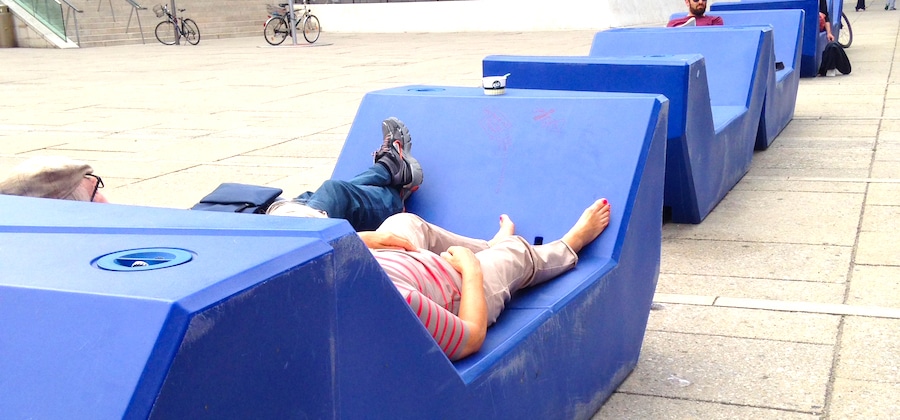
Image by Eve Picker
When public outcry drives change.

January 27, 2020

We’re facing significant challenges in the housing and real estate market these days. And still it seems hard to convince people that change is necessary to respond to the enormous challenges of climate change and the affordable housing crisis. This is especially true in the real estate industry, where trends and practices have developed over many years and are a little set in stone.

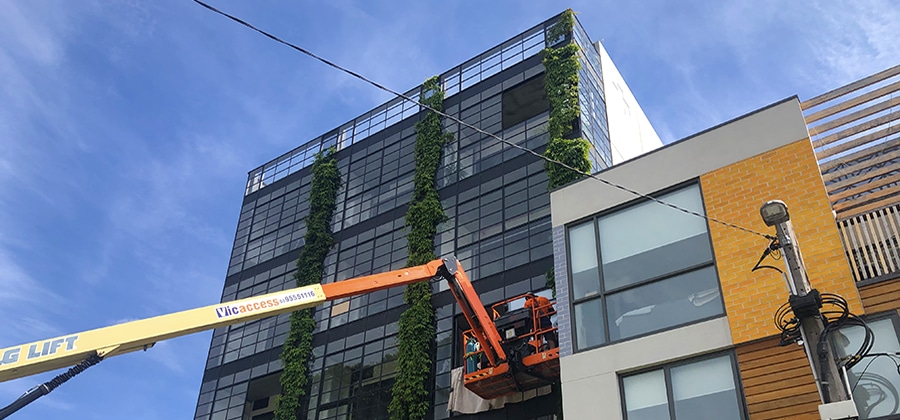
So how does one trigger change? Sometimes unwittingly when an unusual or noteworthy event captures people’s attention. One great example is a planning battle that was fought by an architect in Melbourne, Australia.

Stripped unfairly

Jeremy McLeod, director of the architecture studio, Breathe, is committed to providing affordable and sustainable housing to the Melbourne community. When Jeremy tested these objectives with his first project, The Commons, a mid-sized condominium project in the heart of Melbourne, the project was an unequivocal success, as it quickly sold out, won various awards for sustainability, and was completed on budget.

Sustainable, affordable and pretty gorgeous, people wanted more just like it. And so, with a waiting list of over a hundred people, Jeremy decided to pursue a second project right across the street and went about getting a planning permit to begin the project. The planning permit was approved. And then a neighboring developer challenged it in court. Breathe was building apartments that were 20% bigger, 20% cheaper, and substantially better than traditional apartments in the area, and better than the developer was planning to build. As you can imagine, other developers were concerned that this was going to create issues in the market.

Well-funded and with a powerful legal team, the challenging developer was successful and Breathe was stripped of its planning permit for the building, Nightingale. This put them back to square one, with the task of starting the long planning application process from scratch again. For Jeremy it was a devastating moment and one that nearly broke him and his team.

The public response

While the loss of the permit was beyond disheartening, it unexpectedly became a turning point for the project, bringing waves of public support. The press heard of the permit challenges and became very fired up over the loss of the permit. The idea of shutting down a project that had high community aspirations – affordable, carbon-neutral housing for first-time home buyers in a very expensive housing market – did not sit well with many and got lots of attention. It seemed objectively contrary to the goals of the community. As a result, it worked to spark a powerful public response.

This outcry was only strengthened when the reasons for the permit loss were highlighted. In the Appeals Court, the issue turned over the car parking, namely the fact that there wasn’t a parking lot in the basement. However, the project is on a train line, with a bikeway leading to the CBD right next to it, and 30% of future residents didn’t even have a driver’s license. At least 40% of future residents had already committed to either getting rid of their car or parking it in one of the many lots in the area. All in all, it was a decision that didn’t seem to make much sense.

The result was that support for this type of carbon-neutral, affordable housing literally grew overnight. The waiting list for Nightingale went from 125 to 400 people in one day. Now, there are 8,500 people on the waiting list.

It was a difficult and unusual way to gain support, but the seemingly unfounded stripping of Nightingale’s planning permit was ultimately an incredibly effective way to raise support for a new type of housing. This battle brought some central issues to light, helped frame important topics for the community, and drew attention to what types of changes were possible. In Melbourne, the community responded with resounding support for innovative designs and a new housing model. Hopefully, this is momentum that will carry over to other communities and areas. 

If you want to learn more, listen in to to Eve’s interview with Jeremy about this project and the work that Breathe is doing.

Image of Nightingale I, Melbourne, by Eve Picker

Investing for good.

January 24, 2020

More and more, investors want to do more than make money. They want to invest in triple bottom line projects that are socially responsible as well. Environment, Social and Governance (“ESG”) investing is a rapidly expanding investment category and already offers a wide array of opportunities, many of which produce competitive returns. Unfortunately, many investors still fear that investing in an impactful project means sacrificing returns.

It’s time to get over that. There are lots of opportunities for investment in projects that do good as well as provide a competitive or even above-market return. Just like any other investment, there are some basics to keep in mind when looking for and making socially conscious real estate investments.

How can I make sure a project offers impact?

What exactly is Socially Responsible Investing (SRI)? It means investing in companies or projects that have ethical practices and positive social impacts. Simply put, this means investing in ventures and companies that work to have a positive impact in their community.

Just because a company or a project claims to have a positive social impact doesn’t necessarily mean that it does. You’ll need to evaluate that impact for yourself. You can do that in any number of ways that make sense to you. In real estate you might be interested in affordable housing, energy efficiency, elimination of blight or supporting a neighborhood project. Everyone has their passion project and you will have yours too.

At Small Change we’ve developed our own set of measures called the Small Change Index. These measures are built around three impact pillars – mobility, economic vitality and community. Any project that lists an offering on the Small Change platform must score at lease 60% on our proprietary Change Index survey. This provides some flexibility and quite a variety of impactful projects to choose from.

How should I evaluate return?

When you consider investing in an SRI, you’ll be thinking about two things – the social impact that the project makes and the potential for a return on your investment. These two goals are not always compatible. It’s a balancing act. One may be more important than the other to you. It’s important to consider them independently, weigh each carefully and make your investment decision accordingly. Sometimes the scale may tip towards doing good, and sometimes the scale may tip towards doing well. If you’re lucky, you’ll find projects with perfect balance.

What are some examples?

For example, you may want to invest in a project in your neighborhood. Perhaps it’s a building that fills a lot that has been vacant for many years and has been a neighborhood eyesore. The return on this investment is most likely to be much greater than just a financial return to you. This building promises to improve your neighborhood, and along with that perhaps improve the value of your house. Or maybe you want to invest in an affordable housing project, because you care about housing security for everyone. Affordable housing is an especially difficult socially responsible investment class. The greater the return on equity invested, the higher the end rent the tenant will pay. High returns and supporting housing security may not go hand in hand. You’ll need to decide which matters more to you with an affordable housing investment opportunity.

At Small Change we’ve had first-hand experience with high impact projects that have provided competitive financial returns to investors as well. To date the balance has been pretty well perfect, with not one project that has returned less than 10% per annum to date, and the most successful returning an extraordinary 21%+ IRR. These are competitive returns even for projects that don’t provide any social returns. And take a look as well at the creative ways that Jorge Newberry and his team at American Homeowner Preservation are working to help thousands of Americans stay in their homes, all the while providing handsome returns to their investors.

All that to say, there are plenty of investment options that are socially conscious and that offer investors a good return on investment as well.

Why should I care?

There are plenty of social issues that plague our planet. Climate change and the affordable housing crisis, to name just two, are on everyone’s mind today. When you invest in an affordable housing project, you are taking action to help solve the problem. When you invest in a net zero or a transit-oriented building project, you are taking action to help solve climate change. Similarly, when you invest in your community, you’ll reap the benefits and so will your neighbors. And so on.

_

Socially responsible investment is not rocket science. It’s common sense. Go ahead. Invest in something you care about.

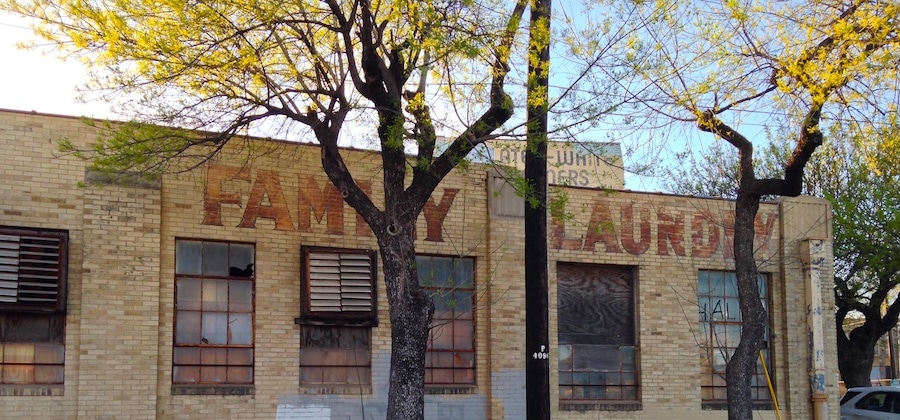
Image of building in San Anonio, Texas, by Eve Picker

Seven rules.

January 15, 2020

Nick Raithel interviews Eve Picker, founder of Small Change on 7 Rules for Real Estate Investing.

They talk about Hobart, impact investing, and how to tell when your property lies in the path of progress.

Image from 7 Rules For Real Estate Investing

The power of incremental development.

January 13, 2020

It’s often thought that community development and revitalization can only come from major projects, substantial policy changes, or top-down adjustments and actions. But there’s another powerful way to change and revive communities, and that is through incremental development. The concept is a simple one, rooted in the idea of starting small and building upon small successes.

Interestingly, when it comes to urban design, the idea of incremental development is based in ecology. In the field of ecology, scientists look at how species of trees or plants naturally promulgate through an area or forest over time. This doesn’t happen all at once, but the growth gradually spreads until you can see the entire species throughout the area.

From this idea comes the concept of urban patch dynamics, which simply takes these basic ecological theories and applies them in urban areas. Rather than being dependent on big projects or favorable policy changes, urban patch dynamics relies on small changes, happening in patches and gradually over time, to create major changes across a community.

Starting small leads to big

The best way to understand how powerful incremental development can be is to look at some case studies. Once such example is in Indianapolis, where Urban Patch, led by Justin Garrett Moore and his parents, is working to improve the neighborhood that he grew up in. The process and philosophy that guides Urban Patch is grounded in incremental change.

The Moores began by being committed to starting small. Their first step was simply to buy vacant houses in the neighborhood, fixing them up, and renting them out. Their idea was that if this worked, they’d keep repeating it as long as it was successful. So far, they’ve improved 8 houses and 9 or 10 lots. As you can imagine, when this amount of development is concentrated in one neighborhood, it begins to have a noticeable impact across the community.

As part of their philosophy of incremental development, Urban Patch has worked to take many different actions – no matter how small the action might be – at the same time. The idea is that these small actions will combine to create a big impact. With that concept in mind, in addition to revitalizing houses and lots, Urban Patch has also led tree-planting campaigns; provided free trees to people in the community to help rebuild the tree canopy; and supported community gardens, artwork, and murals.

A community together

Central to their strategy is the importance of involving the community in the changes that are taking place. They understand that projects like community gardens and tree planting can help to involve all members of the community and invest them in the development. These seemingly small projects give Urban Patch the opportunity to get to know the people in their community, talk with them, and, perhaps most importantly, listen to them. For Justin and his parents, understanding the community that they’re partnering with and listening to the needs of members in that community is an integral part of their work and one of the things that has helped lead to their success.

Right now, Urban Patch is working with a local neighborhood development corporation and a community developer to revitalize a three-block vacant area. Obviously, this is a larger scale development, but one that has been made possible by the incremental strategy effectively employed by Urban Patch for the last eight years.

_

The work that Urban Patch is doing in Indianapolis provides an inspiring model for the impact that small changes can have. Listen to an interview with Justin to learn more about his work and the power of incremental development.

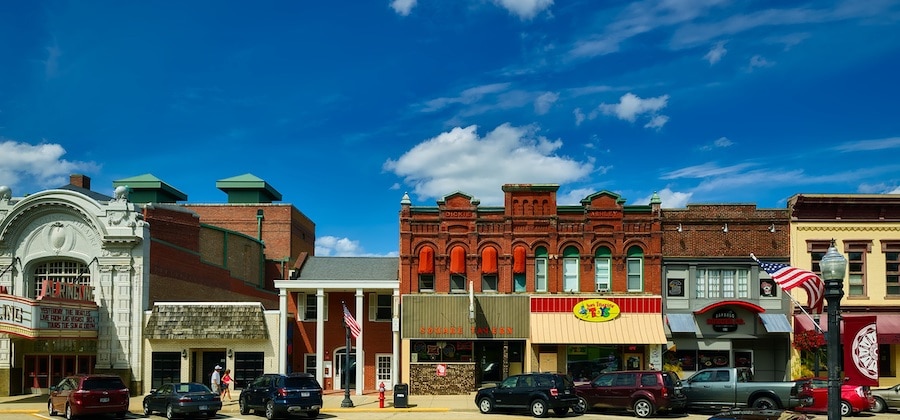
Image from pxhere / CC0 Public Domain

« Previous Page
Next Page »

Primary Sidebar

sign up here

APPLY TO BE A PODCAST GUEST

More to See

(no title)

February 22, 2025

Bellevue Montgomery

February 11, 2025

West Lombard

January 28, 2025

FOLLOW

  • LinkedIn
  • RSS

Tag Cloud

Affordable housing Climate Community Creative economy Crowdfunding Design Development Environment Equity Finance FinTech Gentrification Impact Investing Mobility Offering Opportunity zones PropTech Technology Visionary Zoning

Footer

©rethinkrealestateforgood.co. The information contained on this website is for general information purposes only. Nothing on this website is intended as investment, legal, tax or accounting strategy or advice, or constitutes an offer to sell, solicit or buy securities.
 
Any projections discussed or made may not be accurate and do not guarantee a specific outcome. All projections or investments are subject to risk due to uncertainty and change, including the risk of loss, and past performance is not indicative of future results. You should make independent decisions and seek independent advice regarding investments or strategies mentioned on this website.

Recent

  • The Mulberry
  • Mount Vernon Plaza
  • The Seven
  • Real estate and women.
  • Oculis Domes.

Search

Categories

Climate Community Crowdfunding Development Equity Fintech Investing Mobility Proptech Visionary


Copyright © 2026 · Magazine Pro on Genesis Framework · WordPress · Log in