• Skip to main content
  • Skip to secondary menu
  • Skip to primary sidebar
  • Skip to footer
  • Home
  • About Us
  • Say hello
Rethink Real Estate. For Good.

Rethink Real Estate. For Good.

  • Podcast
  • Posts
  • In the news
  • Speaking and media
    • About Eve
    • Speaking requests
    • Speaking engagements
    • Press kit
  • Investment opportunities

Development

Manufacturing change.

December 2, 2020

Green builder, Scott Flynn, co-founded indieDwell with Pete Gombert four years ago “to change the building industry by offering high quality, sustainable and healthy homes to underserved communities.” In the early 1990s, Scott worked as a carpenter’s apprentice building and remodeling homes, and even after he graduated from college as a chemical engineer, he continued to do building projects on the side. In 2001, Scott set up shop full-time, as Flynner Homes, a design-build firm based in Boise, Idaho, where indieDwell is also based. There, he was an early pioneer in the construction of high-performing, certified green homes, including at least two net-zero homes.

IndieDwell’s mission is to produce similarly sustainable houses, with a smaller footprint, that everyone on the income spectrum could afford. They work with developers or local organizations that can develop housing with an emphasis on creating mixed income, place-based communities. The first half of indieDwell’s model is about embracing modular construction, creating components in factory that then can be assembled on site. The second half of indieDwell’s model involves partnering with local communities to create employee owned/joint venture factories that produce housing for that community and region. They have already opened a second facility in Pueblo, CO, and they are in discussion with communities in Northern and Southern California, Virginia and Florida.

indieDwell’s innovative approach has received support from the Chan Zuckerberg Initiative, Enterprise Community, and a number of both financial, civic and philanthropic organizations. Scott, himself, is a Certified Green Builder, and both his companies have earned B Corp recognition.

Insights and Inspirations

  • It took months to manufacture their first home. Now IndieDwell is manufacturing 2 homes per week per line. With 5 lines in place, and more planned, the number of homes is growing.
  • IndieDwell is an employee-owned B-Corp. People are at the heart of everything Scott does.
  • Containers are complicated to build into homes. In a few months, IndieDwell will be moving to steel-studded framed systems for their modular homes.
  • IndieDwell sells their modular homes to like-minded organizations to ensure that the end-user gets the full-benefit of their carefully planned modular homes.

Information and Links

  • Scott likes B Corp.
  • He likes to listen to the Simon Sinek podcast.
  • And he wants to point out the great resource that is the Greater Good Science Center, at UC Berkeley.
Read the podcast transcript here

Eve Picker: [00:00:13] Hi there. Thanks so much for joining me today for the latest episode of Impact Real Estate Investing. My guest today is Scott Flynn, chief impact officer for indieDwell. Scott founded and ran indieDwell for four years, growing it from a one per quarter modular home manufacturing company to 10 per week. And it keeps on growing with joint venture manufacturing facilities planned all over the country. For indieDwell, the focus has been on affordable modular homes made from recycled shipping containers, although that is about to change. Be sure to go to EvePicker.com to find out more about Scott on the show notes page for this episode, and be sure to sign up for my newsletter so you can access information about impact real estate investing, and get the latest news about the exciting projects on my crowdfunding platform, Small Change.

Eve: [00:01:23] Hello, Scott. I’m really pleased to have you on my show today.

Scott Flynn: [00:01:27] It’s a pleasure to be here, Eve.

Eve: [00:01:28] You build tiny, affordable homes in Boise, Idaho. And I wanted you to tell us how, how do you do that?

Scott: [00:01:37] Well, it’s much bigger than just Boise, Idaho. I mean, we’re starting to scale this across the country. We’re scaling our impact with factories, with partners, factories across the country. Just to be clear, we don’t build tiny homes. We build modular homes.

Eve: [00:01:57] Umhmm.

Scott: [00:01:57] So, you know, for just some background here, the difference between a modular and a manufactured home, there’s a big difference. So, a manufactured home is built to lower quality codes, and that’s where you get the trailer homes and the mobile homes come into that category.

Eve: [00:02:17] Ok.

Scott: [00:02:17] But a modular is the same as a site-built stick-built home. It goes on a permanent foundation. It appreciates with the market. That’s the big thing here, the difference between these two.

Eve: [00:02:30] Umhmm.

Scott: [00:02:30] A manufactured home is considered personal property, so it depreciates over time.

Eve: [00:02:35] Kind of like a recreational vehicle.

Scott: [00:02:37] It’s exactly the same …

Eve: [00:02:39] Ok.

Scott: [00:02:39] Yes. But we build modular, so it’s real property and therefore it appreciates with the market. And therefore, when you can get anybody into one of these homes, say, the underserved or the left behind, so to speak, they can start to build wealth.

Eve: [00:02:58] And you’re doing that using shipping containers.

Scott: [00:03:02] That’s true. Yes. We started this five, about four and a half years ago now, the idea came into my head and it just seemed like the right thing to be building with. And, you know, we’re not builders, we’re manufacturers, so, you know, there was 50 million shipping containers in the world. And now there’s well, more than that. And half of them are sitting around being decommissioned, but still have the structural integrity in them, and I thought, wow, they’re, the structure’s there. It’s a resource. It’s doing nothing. You can put them on flatbeds easy and ship them around. So, that’s what we started building with.

Eve: [00:03:49] And that’s amazing recycling story, right? Are you still building with shipping containers?

Scott: [00:03:55] We are. But I will let you know we are starting to phase out of them in about four to six months. We realize that they’re extremely hard to work with.

Eve: [00:04:08] Interesting.

Scott: [00:04:08] Yeah, they’re really complicated. Especially when you get into a commercial-type project where you have more restrictive codes. You’ve got fire codes you have to comply with, and boy, it can really become challenging. And, you know, we’re in the business to put as many people in homes as possible, not try and build with the most complicated thing. Shipping containers are extremely difficult to work with, especially when you’re doing a commercial project, so that means, you know, a multi-family, multi-story project. And it’s, you know, we’re not in the business to prove that we can build the most complicated home. We’re in the business to put good citizens into a high quality, healthy home. And so, we are in the process of switching into a steel studded frame system. So, the story is still there.

Eve: [00:05:12] Right.

Scott: [00:05:12] It’s still steel screwed to steel. And there’s still high performance and energy efficient and durable and sustainable, and healthy. It’s just going to be packaged in a way that where, it’ll just make our lives easier and we’ll have more homes.

Eve: [00:05:29] Right. Right. So, a little more efficient to build. And what about cost-wise? Because I think, you know, these sound like they’re pretty affordable homes.

Scott: [00:05:39] Yes. I mean, the new product will actually lower the price even more. Our base model is a 640 square foot, two bedroom, one bath, large kitchen and living room. We’re offering that at 85,000 dollars. You still have to have your land, and then you put in foundation.

Eve: [00:05:59] Right.

Scott: [00:06:00] But depending on where you are in the country, you could be on the ground for 100,000, plus your land.

Eve: [00:06:09] Yeah. You know, I built a tiny house in Pittsburgh and that’s pretty well, what it cost me was a bit smaller, but the land was the killer because it was on vacant city land and that was an old basement for the house in the land. And we had to dig it out and remediate it. And that cost more than the actual house.

Scott: [00:06:30] Yes, that’s typically the case.

Eve: [00:06:33] Yeh, so you have to pick your land carefully, right? It’s great that you’re evolving and with the goal of keeping prices down. And what do these homes look like? You said there’s a typical, did you say two bedroom, one bathroom … or was it one bedroom, one bathroom house?

Scott: [00:06:50] The base model is two bedrooms. One bath.

Eve: [00:06:53] Ok.

Scott: [00:06:53] Has a full shower.

Eve: [00:06:54] Yes.

Scott: [00:06:55] And then it has a large kitchen area, and that leads right into the living room. So, when you walk in the home, you walk right into this 16 foot wide, 20 foot deep space that has your living room and kitchen in it. It feels very homey.

Eve: [00:07:15] Mmhmm. And what happens if someone wants extra bedrooms? How do they add them on?

Scott: [00:07:20] We just add another container onto it. We can get up to four bedroom, two bath.

Scott: [00:07:24] Ok, so that’s pretty, pretty simple. And when you do the steel frame system, you’ll have a little bit more flexibility, right?

Scott: [00:07:33] Yes. We’ll be able to go a little bit wider. So, we’re still deciding between a 12 and 14 foot module, but it’ll make a world of difference.

Eve: [00:07:43] Ok, and who do you sell these to? I was reading that you only sell to organizations, not to individuals.

Scott: [00:07:50] Yeah, our goal is to partner with like-minded developers, foundations, possibly other builders. We go through so much effort to build a product that is high performance and healthy, and a business culture that comes along with that, and capping our margins. We haven’t talked about that yet. We cap our margins to keep our pricing down.

Eve: [00:08:19] Mm hmm.

Scott: [00:08:21] And what we want to do is work with partners that are going to take the product from us and continue that impact all the way to the end customer. We don’t want somebody coming in along the way and taking that margin that we worked so hard to keep down.

Eve: [00:08:44] Yes.

Scott: [00:08:45] So, that’s why it’s really important for us to align with like-minded people.

Eve: [00:08:51] So, what sort of organizations have purchased these so far? And I suppose they’re purchasing them in bulk. So, who lives in the homes? Today?

Scott: [00:09:01] Our first two, and we’re heading into our third and fourth with them, is a charity. LEAP charities, led by Bart Cochran. And Bart did something amazing. He built the first ‘extremely affordable,’ so, we’re talking 30 percent AMI, with the most underserved group of people in this country, with healthy, high performance homes. And then he made the community net zero energy by putting solar panels on all the roofs. So, he has demonstrated the ultimate community is possible, that we can build high performance, healthy communities and serve everybody in the income spectrum. It’s beautiful. And so, we did a small community with him called Windy Court One. He built a Windy Court Two right next to it. So, he even made the community bigger, you know. Right across the street, he’s putting in, I believe it’s a 12-block subdivision. And you can see he’s just going to grow off of this.

Eve: [00:10:11] Mm hmm.

Scott: [00:10:12] That’s the like-mindedness that we do our darndest to connect with.

Eve: [00:10:19] And so where else in the country, like what other organizations are you connecting with?

Scott: [00:10:24] Well, some of the biggest names are Chan Zuckerberg Initiative, are you familiar with Chan Zuckerberg?

[00:10:31] Um Hmm, yes.

[00:10:31] Yeh, so they’re one of our partners. Northern Trust, Gary Community Investments out of Colorado. Enterprise. And there are several more.

Eve: [00:10:44] So, it sounds like you’re going to explode …

Scott: [00:10:46] Well …

Eve: [00:10:47] … building these little things.

Scott: [00:10:47] We have our second factory in Pueblo, Colorado, and it’s actually four times the size of our first factory here in Boise. You know, our first factory is 20,000 feet. It only has one line in it. It’s more of like our R&D line, as we like to say. But Pueblo is 100,000 square feet with four lines. And that’s what we are modeling all of our factories off of. And we have a minimum of four to six other partners that are inches away from pulling triggers in Northern California, Southern California, Virginia and Florida. And others on the way.

Eve: [00:11:38] So, with all these joint venture factories, like right now, how many of these homes are you manufacturing, and how big do you hope your production numbers will grow?

Scott: [00:11:49] Well, right now, it’s estimated that each line will produce about four modules a week, which is on the low side. And if you scale that across eight to 10 factories, that’d be about eight to ten thousand modules a year, which would be equal to about an average of, say, so half that. You start to put modules together, you know, four to five thousand homes.

Eve: [00:12:20] That’s pretty good.

Scott: [00:12:22] Yeah.

Eve: [00:12:24] What’s the biggest challenge you have in scaling like this?

Scott: [00:12:29] It’s actually scaling the business. It’s scaling the the inner workings and the processes and procedures of all of this, you know, as it scaled? That seems to be our biggest challenge. Here’s the amazing thing. We have zero dollars in outbound sales marketing. Zero. We have over 700 million dollars in our sales pipeline.

Eve: [00:12:57] Wow.

Scott: [00:12:58] So the sales and the inbound traffic is not the problem. There’s no problem there. Our product is in high demand. It’s just getting all of the inner workings to flow a little bit better as we scale. But typical, I mean, this is the definition of, you know, a startup and scale.

Eve: [00:13:25] Mm hmm. So what led you to start indieDwell.

Scott: [00:13:27] Oooo. Love this question. I’ve been in the construction industry for approaching 30 years and the last, well, starting in like 2003, I actually left my engineering career. I was a, I was a chemical engineer, for my passion in building and homes and architecture. And I started my own company, name of that company, Flynner Design and Build. And that company became the Boise Valley’s, you know, green builder. Healthy, high performance custom homes. And I, because I coupled my passion for design and architecture and construction with chemical engineering, which is heat energy and mass transfer. Well, that’s what a home does. A home is constantly transferring heat, energy and mass. And that’s at the core of energy efficiency and comfort. That’s what it is. And that’s what drew me into becoming a net zero energy builder, and just known as a green builder. The Flynner Homes cater to say the top 10 percent. Right? I put a question on myself, what would it take to put everybody on the income spectrum into a Flynner home? And that’s where IndieDwell came out of that question. And I had to figure out how to disrupt the typical construction business in ways to make that work, and one of them was how we incorporate as a corporation. We became a public benefit corporation. And really, that’s the heart of everything here. It’s, you know, typical corporations are inherently bound to maximize profits for its shareholders. That’s its job. A public benefit corporation, we’re still a for profit company, so it’s still business 101 at its core, but we are here to maximize our impacts on all of our stakeholders, just not our shareholders. And so when we look at it through that lens, it just opens our eyes to all of the possibilities of what business can have on impacting society and the environment positively. And that’s what’s brought us here today.

Eve: [00:16:06] That’s pretty great. You know, my husband also got a background in chemical engineering, but he ended up becoming a philosopher of science instead.

Scott: [00:16:14] Well, we could talk that, too, if you want, but …

Eve: [00:16:18] So, careers are meandering, aren’t they? And everything you learn is useful in the end. And so, like, how long did it take you to produce your first ten homes?

Scott: [00:16:32] Oh, my gosh, this is starting a manufacturing process from scratch …

Eve: [00:16:40] I can only imagine.

Scott: [00:16:41] … isn’t the most efficient thing today. We measure our throughput in days. You know, how many modules can we get through a day. I think when we first got started, it was almost two and a half years ago, it was how many weeks, if not months, I think it could be months, to get the first …

Eve: [00:17:01] Yeah.

Scott: [00:17:01] … home through.

Eve: [00:17:03] Yeah.

Scott: [00:17:04] And I mean, you just look at our efficiency curve and we’re being close to where we want it to be.

Eve: [00:17:10] That’s fantastic. What’s your big, hairy, audacious goal then?

Scott: [00:17:16] Oh, it’s really to demonstrate that when you put all of your stakeholders first. All of them. That not only are you more satisfied, but everybody you touch is fulfilled. Right? And so, you don’t have to be a manufac …, you could build any widget or have any service to have a company that impacts every person and place and thing’s life in a positive way.

Eve: [00:17:55] I mean, that’s an interesting statement because, you know, I think that’s probably the difference you’re talking about between a public benefit organization and a regular corporation, because most people would have a goal, like 50,000 homes a year. But your goal is to put people first, right?

Scott: [00:18:17] Yes. And when you do that, all of the metric goals come out of that.

Eve: [00:18:24] Yes.

Scott: [00:18:24] Right. But this is the, this is the foundation, the human connection, the, that creates all of those metrics.

Eve: [00:18:37] Yeah. So, just shifting gears a tiny bit. Are there any current trends or innovations in construction or real estate development that you think are really important for our future?

Scott: [00:18:51] Well, being a building scientist, because I can couple my engineering with construction. So as far as assemblies go, is understanding how to use less material and achieve the same outcome. For instance, our container home, we’ve got, it’s what is known as a double thermal break. It means that …

Eve: [00:19:16] Mm Hmm.

Scott: [00:19:16] … it’s hard for energy to get insi … from outside and in, and inside and out. And because of that, we get to shrink our wall down to four and a half inches instead of a typical five and a half inches that a two by six would deliver.

Eve: [00:19:32] Mm Hmm.

Scott: [00:19:32] Right? So how many more areas can we do that in? What is available to use less, but achieve equal or more?

Eve: [00:19:43] Right, because that translates into cost savings, right? And …

Scott: [00:19:47] Costs …

Eve: [00:19:47] … material savings and everything else.

Scott: [00:19:50] That’s, yes, absolutely. Less waste. You know, and on that front, it’s, you know, generally, it’s how efficient can you become and waste as little as possible, if not zero waste, which we’re working towards that, too.

Eve: [00:20:09] I have to wonder, like, you’re creating this enormous production line and, have you thought about anything else you might produce on it? You know, once you have a system in place.

Scott: [00:20:19] You know, we we have this book that we pass around. It’s about manufacturing. And it’s this particular book is specific to modular manufacturing. But the author in his first paragraph says, ‘I’ve spent many time in all sorts of manufacturing processes like automation and pharmaceutical and aeronautical.’ But he said, ‘the hardest one by far is building homes.’ So, are all of our efforts are going to be put into how to build the most efficient home in a manufacturing process. And for us to run other product through it is just not even discussed.

Eve: [00:21:00] Distracting.

Scott: [00:21:02] Oh yeh, plenty.

Eve: [00:21:04] Well, what’s next for you? Besides focusing on this for the next few years?

Scott: [00:21:10] Well, you know, so I’m the chief impact officer. I ran the company for the first four years, say I was the CEO, and then we put an amazing person in my place, Christina Ortiz, and she’s doing a fantastic job. I couldn’t ask any more out of her. And I took the role as the chief impact officer. So, you know, we’re looking at culture, going back to the people. How do you inspire the people? How do you, you know, we say that we have workplaces of safety, support and trust, and a culture of inclusion, diversity and equality, or equity. And so, my job is to make sure all of that is going into place, so that we do protect one of our most cherished stakeholders, which is our teammates, and I say teammates, because everybody at IndieDwell is an owner. We all have shares in this company. So, you can say it’s an employee-owned company.

Eve: [00:22:16] Mm hmm.

Scott: [00:22:16] So, everywhere along the line is like, where can we add more inclusion? Is everybody being heard? And do they know that everybody from the top actually cares about them and cares about everything that we touch, and making sure that message is driven home. And we’re not going to get it perfect all the time. There’s a long road ahead to make sure all these trainings and programs are put into place, but, you know, we’ll keep pushing forward and continuing to elevate it.

Eve: [00:22:56] Well, Scott, IndieDwell sounds like a fantastic company, and I can’t wait to see how it grows and evolves. And it’s very exciting. So thank you very much for sharing with me today.

Scott: [00:23:08] You are so welcome.

Eve: [00:23:19] That was Scott Flynn. His winding career has taken him from chemical engineer to home builder to home manufacturer. He calls himself a building scientist. But while Scott is focused on reducing building costs and unpacking the science of building homes, I hear quite loudly that first and foremost, he’s focused on people. He wants to build homes that everyone can afford. But he also wants to build a company that makes a difference in each employee’s life. And he’s doing that by providing ownership for all employees in the company that he’s building. You can find out more about impact real estate investing and access the show notes for today’s episode at my website EvePicker.com. While you’re there, sign up for my newsletter to find out more about how to make money in real estate while building better cities. Thank you so much for spending your time with me today. And thank you, Scott, for sharing your thoughts. We’ll talk again soon. But for now, this is Eve Picker signing off to go make some change.

Image courtesy of Scott Flynn/indieDwell.

Triple bottom line development.

November 23, 2020

Triple Bottom Line

The term was coined some twenty-five years ago by John Elkington, author of 19 books, co-founder of Environmental Data Services and SustainAbility, and a pioneer of the global sustainability movement. Traditionally, investors were only concerned with profit, but the concept that investment can also be socially and environmentally beneficial is one that began with this term and has been gaining traction and even driving decision-making ever since.

In the same way, triple bottom line real estate development can create a win-win-win for the developer, the community and also the planet.

The developer

Real estate development is a hugely risky business. Developers must make a reasonable profit not only to cover overheads, and a salary for themselves, but also to make it possible to secure loans, without which real estate projects cannot happen.

Community

The social component of community might be the most important. A development can bring many benefits to a community including the removal of blight, providing affordable housing, adding amenities, adding civic space, encouraging local business, bringing jobs, increasing the tax base to pay for more services and generally improving the quality of life through place-making.  It’s important that developers work closely with the community to make sure their project is both beneficial and embraced.

Sustainability

Real estate projects can incorporate sustainable practices into their work in many ways — by saving energy during construction, using renewable building materials or energy, by adding insulation and rainwater collection facilities, by locating in a walkable or bikeable location and by being close to transit. These are just a few of the options which developers might consider.

Ken Weinstein is a developer who strives for the triple bottom line in each of his projects. His company, Philly Office Retail, tackles underutilized and blighted properties and re-develops them to serve their local communities.

Not satisfied with what he can add to his community in terms of real estate, he’s also become a teacher by launching Jumpstart Germantown, a bootcamp for wannabe developers, open to everyone in his community. Still not satisfied, he’s gone even further to launch a loan program to support their projects as well.

The High Line, New York by Brian Ledgard , CC BY-2.0

Change accelerated.

November 16, 2020

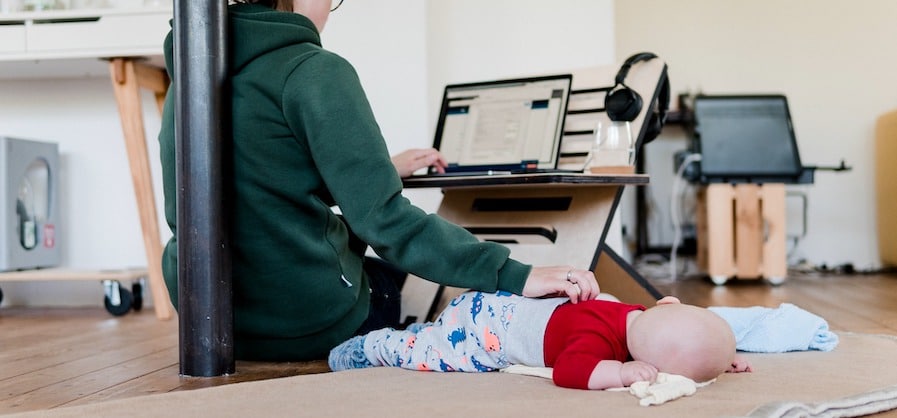
Over the last few years something has become pretty clear. The internet has infiltrated our lives, with a steady shift towards online shopping, remote work and more. Now, a pandemic has cemented and accelerated these shifts in the way we live and work. They are no longer gradual but have been condensed and forced upon us.

According to IBM’s US Retail Index, the shift to e-commerce has been accelerated by a startling five years. And while remote work was also possible before the pandemic, many office spaces now stand empty and office work is no longer an option. Zoom meetings are the new normal. Even though we are certain there will be a return to the physical office for some, there may also be compelling reasons for others to continue to work from home. Consider the artefacts of the work commute – unproductive time spent travelling, the carbon footprint of cars, crowded transit endangering health and the cost of childcare.

The pandemic is motivating change. But how can we grab this opportunity to do better, for everyone?

With the change in work and shopping habits comes a need for change in the physical spaces we occupy. And architects like Katie Faulkner have been thinking about how this pandemic will impact architecture and design. Katie’s ambitions have always been to design impactful, sustainable and socially responsible architecture, but now there is even more to think about.

Now she’s thinking about different ways of delivering projects and the materials that are used to build them; ways in which the building industry can reduce its carbon footprint; ways in which  the carbon footprint of buildings can be reduced to zero and ways in which to make buildings more useful, more productive. Issues to be considered include storm surge, climate change and the need to make the world a more sustainable, fair and inclusive place. And as our space needs change, so will the need to revisit land-use restrictions, zoning requirements and building codes as the need for change becomes more pressing.

There’s a domino effect here. The first domino to fall was the pandemic. There are many more to come.

Listen to my interview with Katie Faulkner to learn more.

Image by Standsome from Pixabay

Everything old is new again.

November 4, 2020

Daniel Dus lives and breathes solar. After college, he moved into real estate, got an MBA and then leapt head first into the energy industry. Today, Daniel heads the North American Renewables division for Adani, an Indian multinational group that has one of the largest solar portfolios, globally.

But his heart is equally someplace else –  in the Berkshires. That’s where he grew up and that is where he is planning his next act. The Berkshires, in western Massachusetts, a vacation and cultural destination, has an amazing inventory of luxury estates dating from the 1800s up to the early 1900s. But many of them now stand dramatically underutilized. Daniel and his team at Shared Estates want to develop these estates for the shared economy, bringing them within reach of the middle class. Plus, they will make all the projects carbon-neutral, through sustainable practices and carbon offsets.

Previously, Daniel worked for Dynamic Energy (with a focus on greenfield development, community solar and shared renewables), Safari Energy, and Martifer Solar (where he was responsible for over 1,200 solar clients under leases, power purchase agreements, community solar projects). He also helped found Solairo Energy, working on turnkey solar and wind generation projects. He is a certified solar designer, and holds over 50 certificates in energy hedging, grid infrastructure and emerging energy technologies.

Insights and Inspirations

  • Luxury estates like this can really only be fully utilized in the shared economy. And they are by no means only in New England. Hint. Hint.
  • These unique projects can only be done affordably in rural areas, and these are communities in growing need of economic support.
  • Banks do not want to lend in rural areas.
  • Every one of their properties contributes a percent of income to a local nonprofit, further benefiting the community.
  • Why not make it (or any project) carbon-neutral?

Information and Links

  • Daniel and his team are crowdfunding equity for their next shared estate, The Freeman Berkshires, at Small Change. And anyone over the age of 18 can invest. Check it out!
  • Vote Solar is a national advocacy group working on solar energy issues at the local level.
  • Daniel renovated The Playhouse, originally built by George Westinghouse, and the first place in the world powered by AC electricity. Now it’s the number one estate to stay in on VBRO.
Read the podcast transcript here

Eve Picker: [00:00:11] Hi there. Thanks so much for joining me today for the latest episode of Impact Real Estate Investing. My guest today is Daniel Dus. While Daniel has forged a career taking him to the top of the solar industry class, his heart is someplace else, in the Berkshires. That’s where he grew up and that’s where he’s planning his next act. The Berkshires, Massachusetts, is rich with travel destinations and has an amazing inventory of luxury estates dating back to the 1800s. As industry collapsed, so did the use of these estates. Many of them stand dramatically underutilized today. And that’s where Daniel and his team come in. You’ll want to hear how Daniel is planning to reposition these estates for the sharing economy. Be sure to go to EvePicker.com, to find out more about Daniel on the show notes page for this episode. And be sure to sign up for my newsletter, so you can access information about impact real estate investing, and get the latest news about the exciting projects on my crowdfunding platform, Small Change.

Eve: [00:01:42] Hello, Daniel. Thanks so much for joining me today.

Daniel Dus: [00:01:44] Thank you, Eve. Great to be here.

Eve: [00:01:46] So, your career has been in the solar industry, and I would love to start by just hearing what you’ve accomplished in your career.

Daniel: [00:01:56] Yes. 15 years in solar now. I’ve had the pleasure of helping create and build some of the largest solar companies and projects in the solar space, in the United States, over the last 15 years. Currently, with a company, when I joined, had just completed its first solar project, and it’s recently ranked the largest solar company in the world with 15.4 Gigawatts of operating and contracted projects.

Eve: [00:02:25] Oh, wow.

Daniel: [00:02:26] So, seeing growth like that in the space, which is really focused on carbon, SOx and NOx, emissions reductions, is really, really been exciting – to see the industry go from almost nothing 15 years ago, to now solar is number one in energy in terms of new, installed capacity year over year. So, just that transition, rapid transition, has been exciting to be a part of.

Eve: [00:02:52] Yeah, I’ll say. So, what’s your background? How did you get into the solar industry?

Daniel: [00:02:58] Actually came into solar out of a focus on real estate. I spent a few years developing real estate along the East Coast U.S., and that’s where I was exposed to the trades, financially structuring projects, and ended up selling those assets, but it, this was right in the middle of the financial crisis. Nothing really made sense. Went back to get an MBA and launched my first solar company out of the Drexel business incubator, so … and the rest, as they say, is history.

Eve: [00:03:30] Oh, very good. So, that brings us back to where you are today. Because I’ve gotten to know you for an entirely different reason. And that’s your new company that you’re starting up, called Shared Estates. So, why the name Shared Estates? Tell me a little bit about that.

Daniel: [00:03:45] We fell upon it as an exemplification of our primary objective, or one of our primary objectives, which is to bring these beautiful, historic, storied estates that in the past have primarily been in the hands of the wealthiest U.S. families, and bring those into the reach of the middle class. In many cases, our properties will cost less per person than a standard hotel room would, but with significantly different benefits and amenities. So, we really want the community to enjoy these spaces, use these spaces. One of the really fun things about the business is seeing families and friends create memories in these spaces. So, it’s a major driver for us.

Eve: [00:04:30] Basically, buying and repurposing enormous luxury estates, and sharing them in the shared economy.

Daniel: [00:04:39] Yeah, that’s exactly right. And our geographic focus offers quite a few of these properties. The Berkshires of western Massachusetts, also known as inland Newport, often, was developed in the 1800-1900s. Many of the wealthiest families built these estates there. They called them ‘country cottages,’ but these are often multi-100 acre, often over 10,000 square foot properties. And there’s not as much of a market for these properties as single family, second or third homes today as there was then. And they often end up being very underutilized. I mean, talk about an underutilized asset. Often, they may be used a couple of weeks a year, a few weeks a year, by these families. And so, we’re taking those estates and we’re putting them into the shared economy where they can be much, much more accessible both to the local community, as well as to the tourist economy there.

Eve: [00:05:35] That’s really interesting. How did you come up, upon this idea? Like, it’s an unusual take on a real estate company.

Daniel: [00:05:41] It’s a good question. I wish that I could say that I analyzed the market, that I did a bunch of market data research and saw that large group, short-term rentals was a rapidly growing subset of the short-term vacation rental market, and the broader tourism market. But that’s not the case. I fell into it entirely. I was living in Manhattan and purchased a property in the Berkshires, which is where I was born and raised, and originally was going to use it for weekends, myself, and went through a deep rehabilitation process, and ended up taking a job in Philadelphia, so moved a little too far away to really use it for myself. And I put it on HomeAway VRBO, originally at, I think, $350 per night. And I figured if it rented 20, 25 percent of the time that it would cover its own mortgage and that would be a win. Well, it booked so much in the first 72 hours that I had to raise the price multiple times, and it now books for well over a $1000 dollars a night, and books 65, 70 percent occupancy. So, it’s just such a phenomenal project that it really opened my eyes through the process of developing and listing the property to this underserved market, right? There are very few, if any, large-format, short-term rentals in urban areas, because if they existed they’d be exceedingly expensive. But, in rural America, there are a lot of these properties that are beautiful and really underutilized today. So, it, really fell into it.

Eve: [00:07:18] Was that first property the Playhouse?

Daniel: [00:07:20] Yeah, that’s right. So, the Playhouse is a great example. It was originally built by George Westinghouse in the late 1800s. It was the first place in the world ever powered by AC electricity. He built an AC microgrid there to test what was really the theory of Tesla and the products being developed by Westinghouse and Stanley. So, we know that President McKinley, Tesla, Stanley, Lord Kelvin all visited the property. Westinghouse in the late 1800s had an electric boat; he had an electric car he drove around the property. It was really a leading point of innovation at the time. And this particular structure was called the Playhouse because he built it as a gymnasium, basically, for his children. 7000 square feet. He had a bowling alley in the building …

Eve: [00:08:13] Wow.

Daniel: [00:08:13] … and he later converted it into a theater space, for when his kids were getting older, and entertained there. So, it’s a beautiful open floor plan building …

Eve: [00:08:25] Yeh, I’ve seen photos of it. It’s stunning. It’s beautiful.

Daniel: [00:08:27] Yeah. And it was, when we took it, our architect told us that it was structurally failed. It was literally ready to fall over, and required a lot of structural work to maintain the open floor plan and to make it structurally sound. But in the process, we created a space that has really resonated with folks, where they can bring groups of families, family and friends, and enjoy each other and celebrate each other – weddings, anniversaries, birthday parties and other small gatherings like that.

Eve: [00:08:56] I think you told me that it was ranked number one, or is ranked number one place to stay.

Daniel: [00:09:03] That’s right. Yep. It, on YVRBO, it quickly shot up to the most-booked, most-reviewed property out of over 500 properties listed in the county on VRBO.

Eve: [00:09:13] That’s amazing. That’s a great story.

Daniel: [00:09:16] It was. It was. You know, I love the space. I love the property. It means a lot to me and I love that folks get to make memories there.

Eve: [00:09:26] So, how does this fit in with your solar background?

Daniel: [00:09:32] Yeah, it’s a, it’s a good question and one I get often. Solar development, financing and construction is very similar to real estate development, financing and structuring. You’re talking about zoning approvals, you’re talking about geotechnical studies. If you’re doing any ground work, you’re talking about structuring projects for financing, financial modeling. You’re talking about construction and ownership and operation and optimization of assets. It’s all exactly the same in both industries. It just is that the asset itself is slightly different, but a lot of overlap there. I’m a Stanford-certified project manager, Villanova-certified Six Sigma, and that’s because developing processes for execution of these projects is really at the core of these businesses. So, I think there’s just a ton of overlap.

Eve: [00:10:24] Yeah, but I suppose I’m also wondering, what of your love for the energy industry are you going to bring to these properties, because they weren’t built that way?

Daniel: [00:10:34] Yup. That’s exactly right. And Shared Estates is also, to a large extent, a conduit for investment in a carbon neutral and sustainable asset. That’s, all of our properties will be carbon neutral, offset by either on-site or off-site renewable energy projects, which we’re very excited about. And so, we will bring that attribute to all of our properties.

Eve: [00:11:02] And I think probably some other features that I’ve heard about, but we’ll go into that later. So, In the Berkshires, which you seem to be focusing on, how many underutilized estates are there?

Daniel: [00:11:14] There are a surprising number of them. Again, it was over the span of over 100 years of this economy developing and building, but also had an industrial heyday, itself. General Electric had a major presence there, thousands of jobs. So, there are dozens and dozens and dozens of these estates, in varying states. Some of them are really in rough shape, frankly. These historic properties really need dramatic investment to help bring them up into today’s standards, with IT infrastructure, you know, sometimes structural upgrades, definitely bringing back their former glory and beauty. So, everything from landscaping to paint, new fixtures, etc, is all really critical for these properties. And we try to do that and maintain historic elements of them, as well. So, at the Playhouse, for example, we retained the original Westinghouse lighting fixtures from the 1890s.

Eve: [00:12:14] Oh, lovely.

Daniel: [00:12:14] And so, we do our best to keep the historic elements of the properties. But there are a remarkable number of these in the Berkshires. And frankly, nationally, there are a lot of large, rural farmhouses that are not in their heyday today that could use deep renovations, and other properties that really are, I think, historic to America and deserve to be rehabilitated and brought into the shared economy, which in my opinion, is one of the best possible uses for them.

Eve: [00:12:45] If I want to rent one of your estates how will it compare to holding a gathering in a traditional local venue like a hotel, just price-wise.

Daniel: [00:12:55] In my opinion, this is the core to our ultimate success. The macroeconomics of our properties versus the alternative. There’s kind of no comparison in my mind. Our properties will often be less per person than a standard hotel room would be, but our properties will have … in the next project we’re doing, we’ll have 40 acres of private space, it’ll have a dedicated pond, docks. It’ll have a five-acre vineyard, greenhouses, multiple living spaces, multiple dining rooms, multiple quiet spaces, an office, library. All for your own private use with yourself, your friends and your family. You just have to get a group of family and friends to travel with you. But, in terms of the amenities, there’s just no comparison. These are the most luxurious possible properties. And with the right group of friends and family, on a per person basis, they could be less than a holiday.

Eve: [00:13:52] That’s amazing.

Daniel: [00:13:54] Yes.

Eve: [00:13:54] So, this is really the shared economy in a very different way.

Daniel: [00:13:58] That’s right.

Eve: [00:13:59] So, you have the Playhouse under your belt. You said, you mentioned the next property. You want to tell us a little bit about that one?

Daniel: [00:14:06] Sure. Yeah. We are calling it the Freeman Berkshires. So the Freeman is currently an 11,300 square foot brick mansion on about 40 acres, with a private pond, tennis court. We are going to deeply renovate, rehabilitate this property, new fixtures, new paint, add some square footage, hopefully.  We’re going to install a 500 square foot English-style greenhouse and extensive gardens, five acres of vineyard, and in-ground pool, and really bring this into 2020. Modern IT infrastructure. Games rooms and a virtual gaming room, so that there’s something for all generations. The name, the Freeman Berkshires comes from a local woman, Elizabeth Freeman. She was the first African-American slave to sue and win her freedom under the Massachusetts constitution. And she was abused at the hands of her, quote unquote, Master’s wife. And so, the property will be a tribute to her. We’ll be installing a sculpture garden by local artists in tribute to Elizabeth and her story. And we’ll be donating a percent of profits to the Elizabeth Freeman Center, a local nonprofit that’s been operating since the 1970s, serving battered and abused victims of assault and sexual assault. And so, we’re very excited, and that local nonprofit engagement is part of every property that we’ve done and will do. The Playhouse contributed to St. Jude’s, Sierra Club and the local Humane Society on a recurring basis. So, we’re very excited about the Freeman Center contract and we’ll be closing imminently here in the next weeks. And so, we can’t wait to get started on it.

Eve: [00:15:54] So, tell me a little bit about financing. I mean, I have been hearing over the last few months the difficulty that people are having financing anything unusual in the real estate market. And this is definitely unusual.

Daniel: [00:16:08] Yeah. And in fact, our biggest challenge, Eve, is that these are rural projects. They’re all in rural America. And what I didn’t realize before going to the market the first time, a couple of years ago, for commercial financing in rural America is that many banks will simply not finance projects in rural United States. They’re very focused on urban areas, suburban areas. Commercial lenders like to invest in New York, Manhattan, Philadelphia. They basically red-line rural America, and in places like the Berkshires that really need economic development, that’s a real problem.

Eve: [00:16:47] Did they just come out and say we don’t lend in rural America.

Daniel: [00:16:52] Yeah. I have had dozen of lenders simply say, you know, we do not invest in rural properties. Which …

Eve: [00:17:00] Wow.

Daniel: [00:17:00] It’s kind of like red-lining. Right? I mean, I can’t think of any other …

Eve: [00:17:06] Yes.

Daniel: [00:17:06] … comparison. So, it was pretty shocking, frankly. The local banks are fantastic and supportive, but they often have relatively modest caps on the amount of capital that they can contribute. And so, the value of Small Change really shines here in its ability to help bring capital into places like this, and frankly, to offer the ability of the local community to invest. As you know, traditionally, only accredited investors can invest in GP/LP-type structures like ours, and that’s highly limiting, you know. The local community is not, on average, worth a million or more dollars, but they’re the ones that, they deal with the tourist economy every day, they often work in the tourist economy, and so, they should be able to benefit from that economic activity.

Eve: [00:17:53] So how are you financing this project if you don’t have the bank? How do you do it?

Daniel: [00:17:57] Yeah, this project is particularly unique. We’ve obtained seller financing for a large portion of the acquisition cost, actually 95 percent of the acquisition cost, allowing us to focus our equity on the rehabilitation and upgrade of the property and aesthetic improvements. And we will be conducting a Small Change raise. So, we’re excited.

Eve: [00:18:20] Yes, we’re excited, too. So, but how long did it take you to negotiate the seller financing? That’s not an easy thing to accomplish.

Daniel: [00:18:28] It was almost a year, Eve.

Eve: [00:18:29] Wow.

Daniel: [00:18:29] Of what it was about 11 months of back and forth, and educating the seller on us, what we’ve done, what we plan to do …

Eve: [00:18:38] Wow.

Daniel: [00:18:38] … and ultimately reached a deal that we’re really happy with and I think they’re happy with, too.

Eve: [00:18:43] So, tenacious must be your middle name.

Daniel: [00:18:47] You have to keep that deals, right …

Eve: [00:18:49] Yeh, yeh, yeh.

Daniel: [00:18:49] … that’s the nature of development.

Eve: [00:18:51] So, final question for you. What’s your big, hairy, audacious goal? Where are you going with all of this?

Daniel: [00:18:58] For Shared Estates, specifically, I’m born and raised in the Berkshires. I love the Berkshires. I drove by these properties when I was a kid and fell in love with them. And the Berkshires is a really special place. The Boston Symphony Orchestra summers there at Tanglewood, has the oldest and longest performing dance center in the country, Jacob’s Pillow. It has one of the largest standing Shakespearean companies in the world, frankly. And these beautiful bucolic views. It’s just a phenomenal and special place. And I really want Shared Estates to contribute to the local economy, through taxes, through the nonprofit contributions we’ll be making, hopefully through investments by the local community in the business. I want the business to be ‘by and for’ the local community. And I want it to contribute, honestly, millions and millions of dollars of benefit, both direct and indirect, to local businesses. Every one of our properties supports local businesses. We champion and celebrate local businesses. We have local gift baskets and literature, and we really try to get folks who sometimes travel … they used to travel from Europe, now generally in New York and Boston, as those families are traveling more domestically. And we’ve seen a dramatic uptick, frankly, in our activity in rentals.

Eve: [00:20:19] Oh, that’s interesting, yeh.

Daniel: [00:20:19] But we really want this to be a massive engine of growth for the local economy, and to be a benefit to the local organizations there. I mean, that’s, that’s really our goal.

Eve: [00:20:30] That’s a pretty fabulous goal. And I hope you’re incredibly successful. So, thank you very much for joining me today.

Daniel: [00:20:37] Thank you, Eve. It’s been a pleasure.

Eve: [00:20:38] I hope I get to visit sometime.

Daniel: [00:20:40] Absolutely. Us, too.

Eve: [00:20:41] Ok, bye.

Daniel: [00:20:55] Bye.

Eve: [00:20:55] That was Daniel Dus. He’s planning a comeback for the many underutilized luxury estates in the Berkshires. Daniel and his team plan to reposition them for the sharing economy. Not only will they be available for middle class families to enjoy, they’ll be carbon neutral renovations, making them the ultimate recycling projects. And he’s taking the democratization of these estates one step further by offering the opportunity to invest to anyone over the age of 18. These estates won’t just be owned by the wealthy any longer.Eve: [00:21:42] You can find out more about impact real estate investing and access the show notes for today’s episode at my website, EvePicker.com. While you’re there, sign up for my newsletter to find out more about how to make money in real estate, while building better cities. Thank you so much for spending your time with me today. And thank you, Daniel, for sharing your thoughts. We’ll talk again soon. But for now, this is Eve Picker, signing off to go make some change

Image courtesy of Daniel Dus

The power of cities.

November 2, 2020

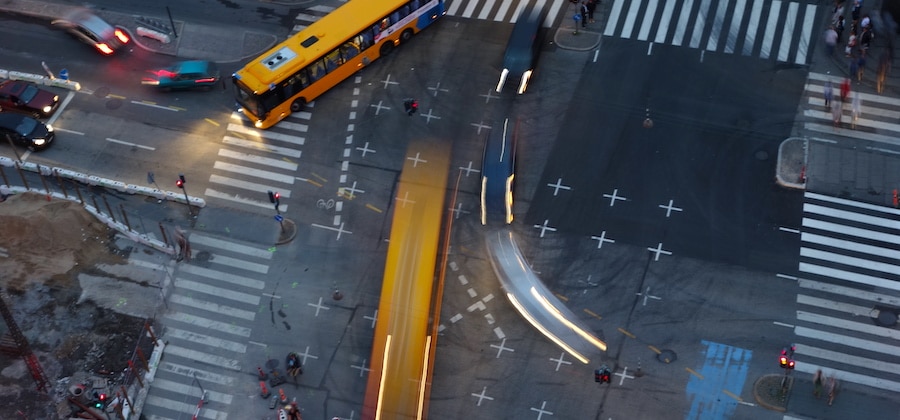
The world is reeling from the effects of the coronavirus pandemic and the resulting economic downturns. Add to this levels of civil unrest not seen since the 1960s and governments which are more ideologically polarized than ever before. How then do we collaborate to solve the enormously complex problems of our times?

The federal government plays an important part as the safety net for people, healthcare and defense. But pragmatic and localized problem solving might occur best at county, city and local levels. Here, impacted stakeholders can come together to compete and/or collaborate. 21st Century problems are complex and can’t be solved by one bureaucracy. They require multi-sectoral horizontal solutions. As a result, problem solving has become increasingly bottom up rather than top down and delivered by networks of institutions and leaders rather than the public sector.

Bruce Katz calls this phenomenon ‘the new localism.’ He believes cities have the power and ability to harness and leverage all the incredible innovative power in our country to solve local problems and to improve peoples’ lives

“Cities are more than governments, they’re networks. That’s why they’re so resilient, that’s why they’re so adaptive, that’s why in many places they’re so prosperous: they’re ecosystems.“

That’s not to say that the federal government can’t still be a platform or a participant in creating solutions, but issues that require local interaction and local networks might be best solved at the local level. We need to stop believing that all of our problems will be solved by bureaucrats and start believing in ourselves. Solutions can be created by networks. If we want to solve congestion, housing affordability or the integration of Black- and brown people into our economy, we need to bring together different sectors of our society to promote different ways of thinking. We need to develop a system where universities, health care systems, corporations, entrepreneurs, public sector philanthropies and individual stakeholders all work together to find tangible solutions to local problems, and to plan together how our cities will thrive.

Listen to my interview with Bruce Katz to learn more.

Image courtesy of John D Norton

« Previous Page
Next Page »

Primary Sidebar

sign up here

APPLY TO BE A PODCAST GUEST

More to See

(no title)

February 22, 2025

Bellevue Montgomery

February 11, 2025

West Lombard

January 28, 2025

FOLLOW

  • LinkedIn
  • RSS

Tag Cloud

Affordable housing Climate Community Creative economy Crowdfunding Design Development Environment Equity Finance FinTech Gentrification Impact Investing Mobility Offering Opportunity zones PropTech Technology Visionary Zoning

Footer

©rethinkrealestateforgood.co. The information contained on this website is for general information purposes only. Nothing on this website is intended as investment, legal, tax or accounting strategy or advice, or constitutes an offer to sell, solicit or buy securities.
 
Any projections discussed or made may not be accurate and do not guarantee a specific outcome. All projections or investments are subject to risk due to uncertainty and change, including the risk of loss, and past performance is not indicative of future results. You should make independent decisions and seek independent advice regarding investments or strategies mentioned on this website.

Recent

  • The Mulberry
  • Mount Vernon Plaza
  • The Seven
  • Real estate and women.
  • Oculis Domes.

Search

Categories

Climate Community Crowdfunding Development Equity Fintech Investing Mobility Proptech Visionary


Copyright © 2026 · Magazine Pro on Genesis Framework · WordPress · Log in