• Skip to main content
  • Skip to secondary menu
  • Skip to primary sidebar
  • Skip to footer
  • Home
  • About Us
  • Say hello
Rethink Real Estate. For Good.

Rethink Real Estate. For Good.

  • Podcast
  • Posts
  • In the news
  • Speaking and media
    • About Eve
    • Speaking requests
    • Speaking engagements
    • Press kit
  • Investment opportunities

Development

Net zero building.  It’s a boom!

May 2, 2022

“A mix of high-tech and old-fashioned energy efficiency tactics can deliver carbon-neutral buildings, right now. But the U.S. needs to pick up the pace” writes James S. Russell for Bloomberg.

Oil shortages are a hot topic since Russia invaded the Ukraine, prompting the International Energy Agency to release a 10-point-plan for cutting oil use. But the plan only focuses on transportation and overlooks substantial energy savings that might be found in the built environment. Buildings consume about 40% of our energy in the US, but reducing fossil fuels is still seen as a detrimental impact to our comfort. In reality, we could pretty quickly decarbonize by implementing some simple measures already available to us. These include better insulation, energy star appliances and more efficient heating and cooling. The technology sector has also provided us with sensors, controls, and advanced energy modelling.

Paul Schwer, is the president of PAE, an engineering firm that designs mechanical, electrical and plumbing systems for low emission buildings. He dramatically reduced the energy emissions of his own home by electrifying everything. And his company built a 58,000-square-foot net zero building in Portland through the use of natural lighting and ventilation (lots of windows that open), radiant floor heating, good exterior insulation and a solar array. Paul is convinced that the majority of buildings in the US are good candidates for retrofitting for energy reduction.

The high performing energy-efficient ‘Passiv Haus’ is the gold standard for new construction, achieving energy reductions of up to 75%. But even without following the exacting Passiv Haus methodology, energy efficiency can be accomplished through the use of freely available passive measures, such as natural daylight, sun shading, wide overhangs, sun louvers and natural ventilation.

But what about the carbon footprint or embodied energy of buildings themselves? The materials used to construct a building, such as steel, concrete and aluminum, are a large proportion of a building’s carbon footprint. KierenTimberlake, an architecture firm known for its innovative approach to energy efficiency, devised a digital tool to calculate the carbon emissions embodied in the manufacturing of an existing building’s materials which they intended to develop. When they compared it to how much carbon would be emitted by building a new net zero building, they found that it would take 186 years to reach parity. 

Embodied energy is one of the reasons that mass timber, or cross-laminated timber (CLT), has become so popular. Mass timber is more environmentally friendly as it’s made from small strips of timber, can be locally sourced and can replace carbon-heavy materials such as steel and concrete. US building codes will soon allow mass timber buildings of up to 18 stories to be built.

President Biden’s March spending bill includes $3.2 billion for retrofitting homes to make them more energy efficient. That’s a good start. But to achieve scale in the reduction of energy in the building sector will require much more. If all new buildings were net zero, as well as our transport vehicles electrified, we could cut our emissions dramatically by 2030.

Read the original article here.

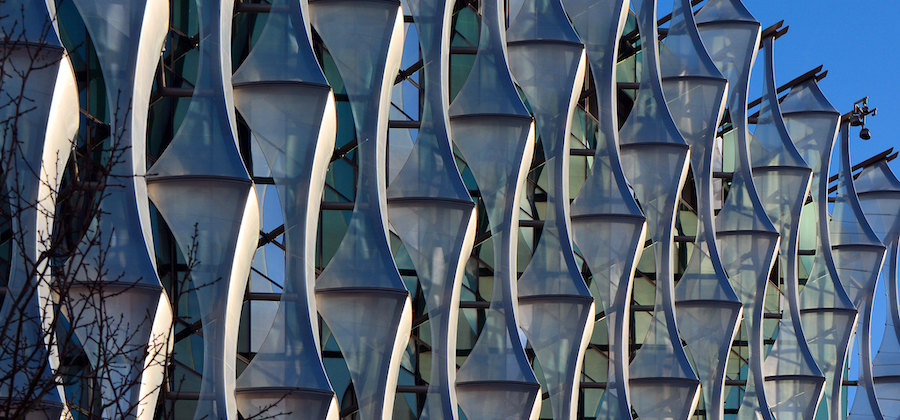
Image of New US Embassy facade by Images George Rex from Flickr CC BY-NC-SA 2.0
Skylight studios.

April 13, 2022

Stephanie Blake is the CEO of Skylight Studios and an historian at heart. That’s what she studied at Yale, much to her parents’ dismay. They didn’t understand how she could leverage history into a career. But she has. In a big way. Skylight Studios has built a business on taking short-term leases on large, derelict buildings to transform them into venues, often for fashion shows, art shows and corporate brand events.  

They revel in enormously gorgeous and gritty vacant buildings. The sort of buildings that most people can’t reimagine to have any useful life today. 19th century post offices, millions of square feet of vacant commercial space and empty industrial buildings that all have a story to tell. Skylight Studios finds good use for those spaces, turning them into a branding campaign for their next act. What began as a small business creating temporary popups in unused spaces, has become a big one – with a non-traditional portfolio of venues, where temporary can mean a decade.  For Stephanie there is always a story that will pave the way from old to new. She calls it “intentional short-term real estate opportunities … reimagining the industry in the way coworking companies changed the way we use office space.”

The company was founded by Jennifer Blumin, in 2008 (during the recession, by the way). But when she unexpectedly died in 2017, Stephanie was then the company’s president, and she had to step up in a big way under difficult circumstances.

Today, Skylight has assembled a set of remarkable venue spaces in New York City, San Francisco, Los Angeles, and coming soon, in Chicago and Ontario. From Art Deco to Modern Warehouse to Powerplant Industrial. Today, Skylight works directly with major development firms like Vornado Realty Trust, Brookfield, L&L Holding and Atlas Capital Group, taking their unused or underused real estate and offering it to brands and studios for immersive experiences. It’s not just high-profile events, but also smaller economic development projects such the “Love, Bleecker” project, a retail activation project that Skylight did with Brookfield Properties, which drew shoppers via curated stores and events. Stephanie has also talked about the possibility of adaptive reuse in office space, something that has barely been touched. A fascinating way to approach marketing, Skylight projects not only benefit real estate owners who have vacant buildings, but it can draw attention to neglected architecture, neighborhoods, and local businesses.

Read the podcast transcript here

Eve Picker: [00:00:05] Hi there. Thanks for joining me on Rethink Real Estate. For Good. I’m Eve Picker and I’m on a mission to make real estate work for everyone. I love real estate. Real estate makes places good or bad, rich or poor, beautiful or not. In this show, I’m interviewing the disruptors, those creative thinkers and doers that are shrugging off the status quo, in order to build better for everyone. If you haven’t already, check out all of my podcasts at our website RethinkRealEstateForGood.co, or you can find them at your favorite podcast station. You’ll find lots worth listening to, I’m sure.

Eve: [00:00:59] Stephanie Blake is an historian at heart. That’s what she studied at Yale, much to her parents’ dismay. They didn’t understand how she could leverage history into a career, but she has in a big way. Stephanie leads a company that revels in enormously gorgeous and gritty, vacant buildings, the sort of buildings that most people can’t re-imagine to have any useful life today. 19th century post offices, millions of square feet of vacant commercial space and empty industrial buildings that all have a story to tell. Skylight Studios finds good use for those spaces, turning them into a branding campaign for their next act. What began as a small business creating temporary pop ups in unused spaces has become a very big one, with a non-traditional portfolio of venues where temporary can mean a decade. For Stephanie, there is always a story that will pave the way from old to new. You’ll want to hear more. If you’d like to join me in my quest to rethink real estate, there are two simple things you can do, share this podcast and go to rethinkrealestateforgood.co where you can subscribe to be the first to hear about my podcast, blog posts and other goodies.

Eve: [00:02:34] Hi, Stephanie. Thanks so much for joining me today.

Stephanie Blake: [00:02:37] Thanks so much for having me.

Eve: [00:02:39] So, you run a really fascinating and innovative company known for creating intentional short term real estate opportunities. Do you want to tell us what Skylight Studios is all about?

Stephanie: [00:02:53] Yeah, you know, Skylight Studios, we consider ourselves to be a creative place making and non-traditional venue development and management firm. And I think the two businesses are really linked because about a decade ago we started, really longer now, during the 2008 recession to sort of identify creative use for underutilized buildings. And I think by bringing in really interesting events and experiences with some of the most creative brands at the time, organically, we created a sense of place and identity for these buildings that jump started development investment. And we’ve seen that only continue in terms of the way the built environment just can’t keep up with how human behavior and the sort of cycles of.

Eve: [00:03:45] And viruses, right?

Stephanie: [00:03:47] Viruses, yeah. Exactly. Yes.

Eve: [00:03:52] How does it work? How does the business work?

Stephanie: [00:03:55] We were founded in New York City specifically because in sort of an urban environment. And back in 2008, there were so many incredible buildings that were sort of either historic or purpose built that didn’t have a use in sort of at that time, and so we really focused on adaptive reuse and looking at buildings and seeing why are they vacant, how are they so underutilized, and how do we partner with the owners of those buildings to both generate revenue but also create activity that enhances the community and provides a canvas for potential future tenants. So, I think that’s really mainly it’s a function of partnerships with the owners of buildings, often historic and underutilized buildings and Skylight having a vision around what makes the bones of a creative canvas. And then, throughout the year, as we’ve seen starting back in 2008, with fashion being sort of at its height in New York, seeing some of the creatives like a Ralph Lauren or a Chanel or any of these guys who are setting the tone for interesting experiences, who also appreciated history and architecture and something that others might see as just a dilapidated warehouse and celebrating that and putting investment against these ephemeral experiences, and from that they would set the tone and media and tech would follow and they would want to also create experiences. So, from that, we feel like we’ve created the sort of luxury shared economy where for a building that is interesting and an interesting canvas, you can achieve market rent or greater by putting together the best of industries in an environment that isn’t set up for necessarily even having all the power and the restrooms and the things you would imagine you need in a traditional venue.

Eve: [00:05:53] So how big are the buildings or the spaces that you tackle? Is there any typical?

Stephanie: [00:05:58] Yeah. You know, I think for us we do look at larger spaces, but I think it’s not a typical venue because we’ll do it in part. The High Line was an amazing project for us working on still today with four Freedom Park, the Louis Kahn Design Park on Roosevelt Island. It’s really about, we often talk about the third place. So, yes, it usually is 10,000 square feet or greater just because the types of events and the creativity and the experience of a space for us, be it for filming content or events, does require a bit of scale. We are looking for high ceiling heights, which is the interesting part about when we say adaptive reuse. These purpose-built buildings, whether it’s power plants or warehouses or post offices or printing presses, they’re meant for production, and the ceiling height and the materials used allow for both a sense of strength and of soulfulness, but also just purely from production, if you’re doing something in a temporary way, you want to create an incredible experience and it helps to have scale to do that.

Eve: [00:07:12] Let me back up a bit. So, these are short term events and do you pick spaces and find partners to activate them with or do you find spaces and talk to the landlords about the potential or do people with vacant buildings come to you or all of the above?

Stephanie: [00:07:30] Yeah, that’s all of the above for us. While our events are short term, our engagement is not short term, even if it might be an interim use. Often it might be five years, seven years with a lot of these projects that are stalled and looking to be jumpstarted through creative activation and revenue and to gain interest. So, Moynihan Station is a great example of that. Thinking about the middle of New York City and Midtown, the post office that was the sister building to the original Penn Station was vacant for 30 years and counting. A significant portion, probably 10% of it was still an active post office. There were leaks in the ceiling, there were cobwebs and pigeons all over the building and it’s 2 million square feet that’s just vacant.

Eve: [00:08:19] Wow.

Stephanie: [00:08:20] And you needed $10 million to even begin to make it into something that a standard tenant would take on. The carrying costs were significant and we walked in and we lit up and it was the skylights and the nature of the sort of black resin floor where 80% of the mail would come across from Europe and it was black so that you could see the mail that would fall on the floor and you had these catwalks before there were security systems where people would sit up in these catwalks and this 60 foot ceiling and look and watch people sorting the mail to make sure that no one was stealing anything and it was being done the way that is expected. And to have that and recognize the creatives we work with, we move New York Fashion Week from Lincoln Center there because the designers that want to create these experiences that feel otherworldly, they really appreciate the history and also the nature of what that building was. Buildings aren’t built that way anymore. And so, for us, you know, we came in, we created a short term event venue, but it was over the course of five years and counting. And to this day, they credit Skylight moving New York Fashion Week, bringing through the Anna Wintours, doing things with, you know, Hermes and the Whitney Museum and Edible Schoolyard and all of these things just to bring an audience and exposure. And also, you know, we generated over $17 million and so for Vornado and related to them come in and see the investment and for them to restore the skylights in a way that originally, they thought they were going to just rebuild. It was just a very interesting arc to then also, as Vornado’s doing this $3 billion redevelopment Skylight has come back in, Vornado tapped us to think about how can we continue now that they actually have redeveloped and are launching? We have two venues that will be operating and we’re also the partner to think about interesting programming to help keep that redevelopment vibrant and the future of work and sort of what that can be to Midtown requires more than just the materials and an incredible architect to design spaces. You need that heartbeat of what actually keeps these spaces active and interesting and engaging.

Eve: [00:10:40] It sounds like your role is unexpectedly become historic renovation advocate as well.

Stephanie: [00:10:48] Yeah, I like that term. We often consider what we do to be urban archaeology because I think we’re sort of seeing these buildings, understanding how they were built, how incredible the bones are and the stories of why and how they were built and what they meant to the city and bringing them back into today’s context and through.

Eve: [00:11:12] Fascinating.

Stephanie: [00:11:13] Yeah, I think we have a real a deep appreciation for history.

Eve: [00:11:17] It sounds like it’s so just run through for me. What type of vacant spaces do you tackle? Like, how big is the range?

Stephanie: [00:11:24] Yeah. It ranges from, you know, 10,000 square feet to millions of square feet, I think, at this point we have a 32 acre district that we work with in downtown L.A. Obviously, the post office Moynihan was 2 million square feet and counting. Thinking about some of the parks that were brought into, I think that, you know, we’re working with Ford on the revitalization of Michigan, Central and Detroit. I think that a lot of these projects I think what I was starting to say earlier around the third place, you know, especially coming out of COVID, we’re very aware of the first place being your home, the second place being where you go to work and these third places are not defined for us as a culture, as a society. And I think they can be parks; they could be libraries maybe once upon a time they were the mall. And I think it fuses sort of entertainment with community and art and culture and music and the different things that bring us together. And I think more than ever, a lot of developers, landlords, cities are focused on how do you make sense of this third place? What does that mean for vacant retail, for the future of malls, for even the way people are questioning office and how and why and when we come together? And so, I think a lot of what Skylight looks at and the reason I think our spaces have gotten bigger and even more interesting is because it is what is the third place when you have a district, how do you think about the negative space, the walkways, the common areas, the outdoor environment that might be the quad between your retail. So, I think we like to think of what we do as not just being confined to a specific building or 10,000 square feet, but truly how do we think about the sort of master operations of a district or a neighborhood? And how do we connect the public space to the private space, to the retailers, to the SMB in a way that can be fused through intentional programming and experiences?

Eve: [00:13:28] So you really are urban design strategists. That’s really what it sounds like. How do you interconnect everything in the environment?

Eve: [00:13:35] I think we work with a lot of experts in different fields and whether they are urban planners or economists or the bid or the Economic Development Corporation or architects. And I think a lot of these experts help inform our activation strategy where we see so much value and bringing expertise to the table. But ultimately, I think what we’ve organically evolved into is to your point, that of these urban planning sort of activators, if you will, because I think that as we’ve seen between technology, these viruses, all the things in which has just sort of sped up the world and how we interact and our expectation of space and environment, the built world just can’t keep up. And so a lot of the experts and a lot of the things that are static and built can’t keep up. And so I do think our role is to think about how everything from in real estate, where everything has been about these traditional asset classes and these types of uses. And then when you think about on the flip side, the idea of urban planning and it’s meant to be built in a sustainable way and last for decades, but our behavior is changing quickly. So, I think it’s Skylights role to interpret and take in information and allow for a program that helps adapt and change and that that really is events and experiences in a way that maybe even five years or ten years ago, events were seen as a very superficial thing. But now I think it’s truly a fundamental part of our society and the development of the built environment.

Eve: [00:15:19] So the big question I have is, is does the ultimate post-event goal differ for your clients or you? I mean, do you have different end goals in mind?

Stephanie: [00:15:30] I think we do. But I think ultimately there is this concept of all ships rise with the rising tide and the idea of even there is a disconnect between a landlord’s goals and the retailer who or the tenant who’s filling their space but if you’re choosing to be in a space because of the neighborhood, because of the architecture, because of the design, because of the demographic that’s there, it works. And I think we’ve seen more and more a lot of brands and activations be a way that creates community. The goal for product driven brands is to create loyalty from their customers and I think honestly, a big part of Skylight has been finding that common ground between the city officials, planning, the police department, the fire department, the landlord and the brands. And I think there’s common ground to be found because when you create a great experience, it helps everyone. And I think there’s a pressure on brands more than ever to have a mission to do good in the world, and I think that falls very nicely in line with generating community and thinking about a neighborhood and that the experience is not just slapping up your logo and showing your new shoes, it’s the story. And that’s the stuff that resonates with people and humanity generally. And I think the storytelling through events is something that you can find the right thread and it can be very powerful to identify that common ground in terms of how are you playing a role in revitalizing this neighborhood and establishing community, and where does your brand story fit into that?

Eve: [00:17:07] So do you think your model can help to rescue the central business district, which is facing an existential crisis right now? Like we’re thinking about entire places, not just buildings, right, that are looking pretty vacant and have to really think about how to reinvent themselves.

Stephanie: [00:17:26] Yes, I do think it’s a big challenge and I think it’s very dependent on the buildings and the way a central business district might be set up for us we’ve had interesting experiences in Chicago with the Board of Trade Building, having these trading floors that are 30, 40 foot ceilings, 30,000 square feet, and when you have that, we could do interesting things, not just trying to repurpose ten foot ceiling height.

Eve: [00:17:57] Right.

Stephanie: [00:17:58] Old eighties offices. I think there’s different ways to think about Skylight being a catalyst for what is the future of some of this vacant office space and how do you still draw people to it? And if there isn’t the triple net ten-year lease, how do you think about why companies are bringing people together and can you create spaces that can be shared and still draw people to that space, which then allows for the other businesses that exist, be it the cobbler or the Sweet Greens or whoever needs to be patronized by the office workers. So, I think there’s some ways we’ve thought about that and depending on the physical bones of the buildings in that area, I think we can play a role in that. I think it’s different than the plight of retail and malls, but I think there’s some similarities there where I think just the expectation in the use of physical space is changing. And I think there’s been an understanding for a very long time that it is traditional, it’s one use, it’s a restaurant, it’s an office space, it’s a brick-and-mortar store that just sells what’s coming out of its inventory there. And I think the world is changing and I think entertainment experience work, all of that in combination with content creation and the digital footprint against the physical is an important formula for central business districts, because I think there’s an inherent challenge. I don’t think they can stay static and just be revitalized with the existing mix of types of businesses, particularly for some of the less interesting central business district where they don’t have a historic, beautiful building or they don’t have the bones, they’re very sort of built for what was meant to be there, which is you have your cubicles, you have your office, you have the smaller retail down below, and I think with that, it’s taking a more holistic view. I think that’s also a big thing we’ve seen that can be a factor is how do the landlords come together? Like what’s the role of the bid? Or does a landlord come in and swoop up a significant portion of real estate so that they have a more cohesive approach to the tenant thing, to the community, to what’s happening there? I think we’ve seen that be a pretty big factor in where even where Skylight can make a difference or not.

Eve: [00:20:24] You were involved in the remaking of Bleecker Street, which sounds really interesting because I think there were financial aspects for how that street came back that also play a really big role. So that that was five blocks, right, a five block street that was in pretty bad shape. What happened there to bring it back?

Stephanie: [00:20:45] Yeah, I think that’s a great jumping off point because it was Brookfield coming in and purchasing a number of those storefronts and providing that sort of overarching opportunity to not just have one storefront but multiple across these few blocks. And I think Bleecker Street was always, in terms of the corridor and the West Village and having this sort of sense of being a charming place where you have discovery and surprise and delight, as it became more successful, and landlords saw they could increase rents and they could take the stores that could pay top dollar and Fifth Avenue and put them there. You know, the community and the neighborhood, it was disconnected with its identity.

Eve: [00:21:32] No more surprise and delight, right?

Stephanie: [00:21:35] No more surprise and delight, exactly. And so, I think as vacancy increased and it was recognized that these stores, even the big box, the one the ones that were very well resourced, it didn’t make sense for them to stay open. It made more sense for them to even hang on to their lease, but not to staff it, which is a crazy challenge. And so I think Brookfield really saw an opportunity as place makers and part of that sort of ethos to shift that and take a chance, and so I think by taking five storefronts and working with a firm like us, it was very much to think about not just filling the stores, but also how do we create sort of a sense of community and programming on that street to bring back the legacy of what Bleecker was to the beatnik poets, to the days of Kerouac, to the music, to all of those pieces. And think about also what is the future of retail and how do you take some of these digitally native brands and give them an opportunity? For Skylight I think we were very thoughtful around even thinking about mentorship. So, the stores that had survived and that were there, why did they survive and how can you create a community and a platform between these digitally native brands and those that had been there that were really based in brick and mortar and have connectivity? And it was successful in that, it became self-sustaining. So, once we connected these different brands with one another, and I think that’s where the special sort of connection happened, was just not only to be thoughtful about who you were trying to place there, but also how did they jive with the existing stores there? And how do you create a program for programming and experiences and activation that allow these brands and companies to get a jump start in terms of seeing how programming on the street and doing things together can actually drive traffic and sales. And then once Skylight, once we set that program, they got it and they were able to continue that level of programming to today, and I think that’s been a huge success for them.

Eve: [00:23:49] It sounds like a really interesting model that might be used in other places. You know, as we see a lot of vacancies in in retail strip districts, main streets.

Stephanie: [00:23:59] Yeah, I think it’s definitely the West Village is a really you know, we had a lot to work with. I think when you think about some of the other districts, I do think community and a platform that really creates a shared sense of responsibility and also a shared customer or shared approach because I think that there does need to be some structure, even though everything can and will and should be hyper localized, I do think there’s a formula around how to give tools and resources to these sort of retail districts and help them move into a space where they can meet the consumers the way that the landscape is changing.

Eve: [00:24:42] So what about big tech? Have you worked with Big Tech at all and what are they trying to accomplish?

Stephanie: [00:24:51] Yeah. I think, you know, we have worked with all of the big tech. And I think it’s really interesting to see their emphasis on short term experiences and being able to sort of experiment and build on proof of concept. I think similarly to how we were just speaking about the built environment not keeping up, I think Big Tech is aware of a lot of what they’re doing digitally, and in the cloud, but I think ultimately they recognize that we’re human beings with bodies and need to also come together around what big tech is doing. And I think whether it’s Netflix, right, they are content platform, at the same time, I think the number of experiences that they’ve launched in person shows the value that they see in creating loyalty and experiences around their shows and connecting fans with one another through physical experiences. I think similarly in the work we’ve done with Meta and with Google and Amazon, events foster these moments that are memorable, that I think as humans, nothing can be replaced with what you experience online, with what you might experience in person, and so I think creating a level of engagement and identity, I think Big Tech is really aware of the importance of events and experiences and the in-person value against the platforms that they’ve created in the digital space.

Eve: [00:26:34] Is there any backlash to brand bankrolled community space and how do you engage a community that’s already there?

Stephanie: [00:26:44] Yeah, I think that’s a great question. I think that ultimately, as I’ve seen, you know, even sitting in my small city that I live in now, I sit on the advisory committee to city council on setting the general plan for the next 20 years, and cities and politics is very, very slow and hard to get things done. I think the beauty of some of these bigger brands with the right intention is that they can be these 21st century patrons of community, of the arts, of these spaces. I think there’s a lot of ways that Skylight has structured things to allow for the sort of VIP, the product launch, but then also community programming and educational programs that come from that. And I think there can be the same level of investment that gets amortized over the course of a couple of weeks, where initially there is this big experience that is for their top clientele or for the creators that are part of their network and all of that. And then to think about that same build and that same experience and how to translate it. I think there’s also a lot of ways that we look at a full calendar year or five years of a project where these brands come in and they are the ones paying and subsidizing for the community driven programs. So, if you’re thinking of a lot of our model at Skylight, is this sort of lower frequency, high caliber where you have maybe 25, 30% of the calendar year filled with the stuff that provides that revenue stream and also provides the investment to then work with the community. And I do think that there is this focus on an overused authenticity or honesty around what you’re doing as a brand and as a developer and there’s so much more of a spotlight, even from the community, to have a voice and what that looks like. And so, I do think generally, yes, gentrification is not going to go at any time, you’re redeveloping, you’re doing something. But I do think there’s a way to be really thoughtful around the brands, what they’re doing, how those dollars get reinvested and creating a place for the community and continuing to work with the existing organizations that have been a part of that community, the artists, the various non-profits that have played a role in whether it’s education, the schools, all of that to integrate in a calendar that does feel like it’s addressing all of the different parts of a community.

Eve: [00:29:18] Little authenticity. So, what’s your story? I mean, how did you get from Yale to here?

Stephanie: [00:29:27] Um, you know, I was a history major, and I think I’ve always had an appreciation. What?

Eve: [00:29:34] Yeah, I said, well, that fits the history, Major.

Stephanie: [00:29:40] It does it. And it’s so interesting because I could have never predicted from being a history major at a liberal arts school that this would become sort of my my path. But I did, and my parents actually, they are they grew up in Jamaica. They’re immigrants who sort of really self-made but felt really strongly that history was not a super useful degree. And when I was graduating and I was offered a job at Google, that was a great opportunity, even though I didn’t understand, I mean, Google explained that they don’t hire people that necessarily have a tech background or know what to do in this sort of framework but they just want smart people who can think, but I think my parents were very surprised and excited that that was a transition from history major. And I think being at Google, it was an incredible environment to learn a lot and to understand the tools that are being used and the sort of digital space and sort of the software and the. For me, it felt so intangible. But to understand how this platform was created around something that I couldn’t touch, see, feel or really understand, and I think I struggled with that, even though I was really grateful and excited to be part of something at a time. You know, this is 2005 where it was changing rapidly, and it did feel like it was truly the pioneering thing that was changing the world and being around other people who were so smart and innovative. But I think I always knew that being in a physical space design, how the built environment really affects your mood, it affects how you connect with people. It’s just end of the day, I just I feel so much that we’re physical beings and the built environment is a really important piece of how we see the world and how we connect with one another and so, it was just an interesting opportunity that a good friend of mine who was at Google said, Hey, I met this woman who’s doing this interesting thing in this warehouse and we were going to do something there for YouTube. At the time, a YouTube had just become a part of Google, and I met with them, and one thing led to another and I helped think about how space and the creative nature of a lot of these companies building things in the cloud and how that revenue stream can really help with the revitalization. And I think that at the time it really wasn’t more than thinking about vacant space and creative experiences and having a revenue stream that could help float these spaces in the interim pay for offset the cost of just the carrying costs. And I think it really evolved into understanding the power of these types of experiences, the way that these big companies thought differently about short- and long-term investment in space and the value of that against saturation of the digital space.

Eve: [00:32:37] That’s interesting.

Stephanie: [00:32:38] And I think today it’s interesting to see it in the way that I can see real estate, almost as in my head. It’s very bizarre, but I do see it almost as like the search function of you have your ads on Google and they enable the search platform. I think there’s a lot of controversy of how much can you tell between ads and the actual search results these days but, I do think there’s a lot of value in thinking about, to your question earlier, how these big companies and brands can affect the quality of the built environment and how they can help fund that shift, and I don’t think that the traditional model of just the landlord tenant relationship across all of these spaces where they are purpose built for one tenant and one use is the future. And so I think it’s interesting to apply some of the ways that I think being at Google in those sort of early days of my career and seeing how they were thinking so differently about this sort of space in the cloud could be applied to the built environment.

Eve: [00:33:42] So I’d love to know what services you don’t provide yet that you’re thinking about or how you’d like to grow this company. Because it seems like you must be getting bigger pretty quickly. What are you thinking about? Where else can this go?

Stephanie: [00:33:57] Yeah, I think the primary use of our portfolio these days is twofold. It’s really offering location based, interesting environments for film and content, and that’s often sort of the easiest way to go into. We have this 800-acre active steel manufacturing plant off of Lake Ontario or the power plant sitting on the Pacific Ocean in Redondo Beach. And that’s something that I feel with the amount of dollars and the craze around the white-hot market that is studio, there’s still a significant amount of content and film that’s done outside of the studio. And so, I think identifying these really amazing assets for as film and content locations is something that I think could grow very quickly for us, especially because you can repurpose the workforce. The workforce that was part of the steel manufacturing plant can be the workforce to make this a content environment. And so, I think that’s been really interesting and I think offers up a lot of different environments across the world for Skylight to go into. And I think additionally thinking about this place and Skylight being the operator of the third place, I think there are so many amazing historic buildings and spaces, museums included, who are starting to struggle to come into their identity as the world is changing and technology is changing, and all the immersive experiences are all of the sort of trend. And how can Skylight identify how to increase revenue streams and direct dollars, given that a lot of the biggest brands spending the most money on these creative experiences trust our vision. And so in my ideal world, we would look to identify existing businesses even that we can help amplify and add to not just these sort of underutilized buildings and I think that’s a huge opportunity for expansion for us, is to take some of the trends where we see whether it’s Netflix or Google or these companies creating experiences, how could we layer them into existing business models and existing uses like museums in a way that museums have been so thoughtful and evolving also and doing very creative exhibitions and installations. But I think the dollars I think we could help bring the dollars and connect the dots in a way that hasn’t been done yet.

Eve: [00:36:20] It sounds fabulous. And I thank you very much for joining me. I really enjoyed the conversation.

Stephanie: [00:36:25] Well, thank you so much for having me. It was fun to talk about.

Eve: [00:36:43] Buildings is branding, buildings to tell stories, buildings to make places. Skylight studios take storied and important buildings and reinvents their future quickly while the expensive and permanent redevelopment process churns on in the background.

Eve: [00:37:18] You can find out more about this episode or others you might have missed on the show notes page at our website RethinkRealEstateForGood.co. There’s lots to listen to there. A special thanks to David Allardice for his excellent editing of this podcast and original music, and thanks to you for spending your time with me today. We’ll talk again soon, but for now, this is Eve Picker signing off to go make some change.

Image of Stephanie Blake by Allan Zepeda

Reclaiming your Community.

April 6, 2022

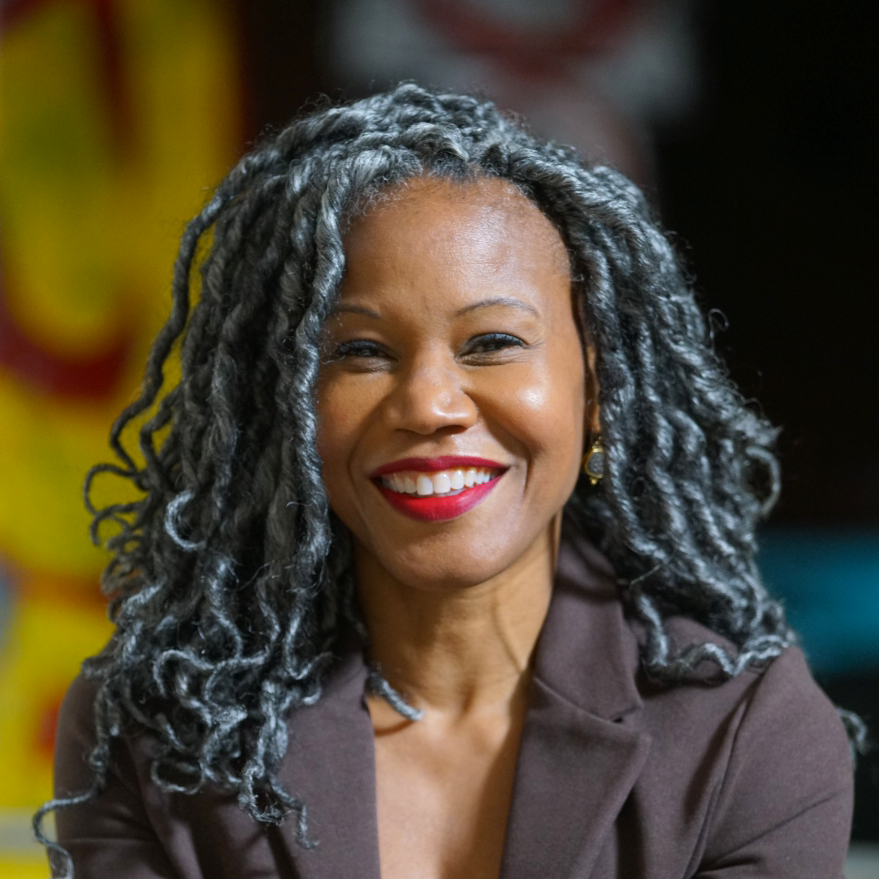
Majora Carter’s career as urban revitalization strategist has spanned environment, economy, social mobility, and real estate development. Her work has won major awards in each sector, including a MacArthur ‘genius’ Grant and Peabody Award winning broadcaster.

Majora’s words — “Nobody should have to move out of their neighborhood to live in a better one” — are inscribed on the walls of the Smithsonian Museum of African American History and Culture. And her new book, called “Reclaiming Your Neighborhood”, the subject of our podcast, takes a next step in her thesis – build where you live,  talent will stay and your neighborhood will prosper.

Born and raised in the South Bronx, Majora has long-focused much of her work there, looking always to make positive change for her community, and in doing so, gained both national and international attention. She believes that talent retention may be the key to turning around low-status neighborhoods. And she’s backed that up with her Boogie Down Ground Hip-Hop coffee spot which she owns and operates with her husband in Hunts Point, around the corner from where she grew up.

Majora is also a lecturer at Princeton University’s Keller Center, serves as editor and senior producer at GROUNDTRUTH, a platform for telling stories of people building community power, and she previously served as associate director of The POINT Community Development Corporation. She founded and ran Sustainable South Bronx and co-founded Green for All.

Read the podcast transcript here

Eve Picker: [00:00:07] Hi there. Thanks for joining me on Rethink Real Estate. For Good. I’m Eve Picker and I’m on a mission to make real estate work for everyone. I love real estate. Real estate makes places good or bad, rich or poor, beautiful or not. In this show, I’m interviewing the disruptors, those creative thinkers and doers that are shrugging off the status quo, in order to build better for everyone. If you haven’t already, check out all of my podcasts at our website RethinkRealEstateForGood.co, or you can find them at your favorite podcast station. You’ll find lots worth listening to, I’m sure.

Eve: [00:01:01] My guest today is Majora Carter, my second interview with this powerhouse. Her career as urban revitalization strategist has spanned environment, economy, social mobility and real estate development, and her work has won major awards in each sector, including a MacArthur Genius grant. Majora’s words are inscribed on the walls of the Smithsonian Museum of African American History and Culture: “Nobody should have to move out of their neighborhood to live in a better one.” Her new book called “Reclaiming Your Neighborhood”, the subject of our podcast, takes a next step in her thesis. Build where you live, talent will stay, and your neighborhood will prosper. Look for the book on Amazon, in bookstores or on Majora’s website. There is no way around it. If you are really interested in impact investing, this podcast is a must listen.

Eve: [00:02:19] Hello, Majora. I’m so delighted to have you back on this show.

Majora Carter: [00:02:23] Thanks for having me.

Eve: [00:02:25] It’s been a while, but you’ve just written a book called “Reclaiming Your Community,” and in it you ask how we can address the problem of persistent poverty in low status communities differently. So, I wanted to start by asking you what is a low status community and what does it mean to you?

Majora: [00:02:46] A low status community to me – the way that our company defines it is a place where inequality is assumed by both the people that are in that community and those outside looking in. And so, what that what it looks like and I think that’s easier to describe that way; It’s the kind of places where there are more environmental burdens, where there’s higher rates of poverty, lower educational attainment, the kind of places where you won’t find diverse options for food. Not many great places to invest your money or you’re charged for it, like through check cashing stores or places like that. And it’s just literally the places where inequality is just understood. And so and they look different. They can be inner cities, they could be Native American reservations, they could be the kind of former booming Rust Belt towns that only white people lived in. But the jobs are long gone.

Eve: [00:03:44] This is a really big and hard question. So why is it difficult to improve the status of a low status neighborhood?

Majora: [00:03:52] Well, like a lot of things, it comes down to who benefits from it. And because if you look at those communities, literally billions of dollars are pumped into them through the philanthropic industrial sector and as well as our government. And it looks different, but it comes in the form of whether there are subsidies to build very low-income housing and homeless shelters, whether it’s the multibillion dollar economic engine that’s our pharmaceutical industry that absolutely does profit off of lifestyle related health conditions from diabetes and obesity and heart conditions. And it’s the, you know, the fact that there’s such low educational attainment but really, we’re not investing in public education within those areas either. And so, again, so it’s always like a problem to be solved. Again, folks, there are definitely industries set up to perpetuate that and actually benefit from them, but the people in those communities are not getting any better.

Eve: [00:04:53] So how does the redevelopment industry impact this cycle?

Majora: [00:04:58] Yeah, so like I think there’s an old saying, “all relationships are about real estate” and I believe it’s true in this regard because real estate development can be used as a transformational tool if we use it that way. I mean, think about it. What we’re doing is literally redefining what constitutes what is happening in those areas. So, when you do it by creating really interesting commercial, industrial, residential development. And so, you can tweak the formula and create benefits for the people that are there or not. Right?

Eve: [00:05:32] Right.

Majora: [00:05:32] And so if we’re thinking about development as a transformational tool and if we know that sort of status quo development, which either content to concentrate poverty and everything and all the ills associated with it from low health outcomes, low educational attainment, you know, higher rates of people being incarcerated. If we know that, then what if we designed those places and developed them in ways that actually promoted the opposite?

Eve: [00:06:01] Right.

Majora: [00:06:01] And that’s when we decided to look at a tool. We literally borrowed a page from the business community that looks at if you are an employer, if you own a business and you train, you hire your staff, that’s your talent and you pour resources into them, whether it’s training or benefits or reasons for them to want to stay. You know, you’re not doing it so that your competitor will hire them away. You’re doing it so that your talent sees you as the place to be. But we don’t do that in American low status communities. We don’t treat our communities that way. And so, what we’re trying to do is apply a talent retention approach to real estate development. Like what do folks that are born and raised in those communities, the talented ones, the ones that are either academically or artistically or any kind of talent, the ones that are literally taught to measure success by how far they get away from those communities, what can we do to keep them there? And so, we ask, what are you looking for in the community that you desire? We ask community members in my hometown in the South Bronx, what’s that? In that classic kind of low status community and people of all income levels, they were looking for kind of things that made them feel good about being in their own community, whether it was good places like cafes, restaurants, great parks, places to play and work. Those are the kind of things that they wanted. And so why aren’t we building those things here in our own community? And that is when we realize that that’s the kind of real estate development we wanted to do. And we labeled it a talent retention, real estate development strategy.

Eve: [00:07:47] You talk about real estate development impacting low status neighborhoods in one of two ways, and the first is displacement gentrification, which we touched on, and the second is poverty maintenance. So, tell me about poverty maintenance.

Majora: [00:08:03] Yeah. So, poverty level economic maintenance as we’ve called it, or PLM, which really sounds gross, but because it kind of is, where again, billions pumped into these communities from government and philanthropic sources, but the economic level of the people in that community does not change. So, subsidies that go to low income, quote unquote, affordable housing developers, which is only for very low income housing and even homeless shelters, lots of money in terms of the health clinics and the multinational pharmaceutical industry that are government subsidized and actually do support lifestyle illnesses according to, whether they are diabetes, obesity. But things related to the quality of life that that happen in communities, low status communities and seeing those type of things, even community centers that are that I think are often just there’s like resources that are poured in specifically to support the bright ones in the community. And so those are the ones that measure success by how far they get away. And those type of things literally pull people outside of our own community to seek greener pastures. But again, the people that remain are usually the ones that remain in poverty. And that is the way that those communities are treated.

Eve: [00:09:31] Right.

Majora: [00:09:32] Whether it’s by the philanthropic and our government interest, it’s like we play to that in terms of like creating more low-income housing, more health clinics and opportunities to support people that are chronically suffering from lifestyle health conditions. And through that, we are not seeing the kind of transition from people who are actually creating more healthy opportunities for them, for themselves in those communities. And we’re seeing more and more money pumped into those things. And thus, we’re seeing the concentration of more and more poverty and all the things associated with it, whether it’s low educational attainment, higher rates of folks involved in the justice system, poor health outcomes, and more reasons for more people to want to leave those communities. So again, poverty level, economic maintenance, somebody is doing well, but not the people that are in those communities.

Eve: [00:10:27] So, you know, I think actually in the built environment, what you’re talking about is perpetuated by the affordable building types that we see, because you can really drive through a neighborhood and you can see you can point out affordable housing very clearly. And that, I think, is a very visible manifestation of that Poverty Maintenance or PLM, as you called it.

Majora: [00:10:49] Yeah. The architecture of poverty is, you know, you know it when you see it.

Eve: [00:10:55] Yes.

Majora: [00:10:55] It’s kind of like pornography. It’s like you know it when you see it.

Eve: [00:10:59] Yes, it’s true.

Majora: [00:11:01] Yeah, it may look different in a rural or urban or a suburban context, but everybody knows.

Eve: [00:11:07] That’s right. So, you know, you’ve already touched on this, but you write about how third spaces are key to talent retention in low status community economics. And so what is a third space?

Majora: [00:11:21] So, third spaces are these urban planning parlance for places that are neither work nor home. Right? And it’s just this third space where community can happen. And to us, community is not just a place, it’s an activity. Right? It is literally an action verb, but you do need places to do it. And so, if you don’t and so if you’re in general, if you’re in a low status community, the kind of places, the kind of third spaces that are in those communities are generally not the kind of places where people feel like they’re vibrant and they’re working to support the kind of goals and aspirations for their lives. It’s like, I think about some of the places in my neighborhood in the South Bronx where the largest places were communal real estate was either the waiting rooms at health clinics or pharmacies and also community centers where most people do not go and hang out or don’t want to be seen in. Right. Or for long anyway. And it’s just like, you know, in terms of cafes or cool places to hang out, very few. And so that’s when we realize we’re creating this this architecture or the architecture that’s here is literally creating this sort of like talent repulsion experience for people who are feeling like, I know I’ve got something good to offer because I don’t – Low status communities have never had a shortage of amazing people coming from them. Right. But I do have a problem with them staying. I mean, even America loves the Cinderella story of like somebody being born into some kind of hardscrabble community and they have to pull themselves up and then they go out and make something great of themselves. They’re coming from these communities. Why can’t we make something of ourselves here?

Eve: [00:13:13] Yeah.

Majora: [00:13:14] And that’s both the challenge, but also the joy of realizing that it’s not just this thing that this this miracle that needs to happen, it’s something that we can do because we already have the tools and the keys to our own recovery within our own communities.

Eve: [00:13:33] So, you know, I visited you in the Bronx and there’s not a lot of third places there. But you created a coffee shop, and didn’t you tell me that it was voted, what was it voted, number one?

Majora: [00:13:44] We were voted the best cafe in New York in 2021.

Eve: [00:13:49] Can you believe that? That’s awesome.

Majora: [00:13:51] Yes, I can. Yes, I absolutely can. And it’s because we but it was by time out in New York and it was because we were, and yes, we do have great specialty coffee. I’m sorry. Do you hear that.

Eve: [00:14:09] The dog? Yes.

Majora: [00:14:09] Yes, I’m sorry.

Eve: [00:14:10] Everyone will have to deal with the dog on this podcast.

Majora: [00:14:13] I know.

Eve: [00:14:14] Is my life, right?

Majora: [00:14:15] He’s like really upset because my husband just walked out and he’s like, “don’t go” anyway. I’ll Start over. But yes, we were voted best cafe in New York City in 2021 by “Time Out New York magazine.” And I like to think it wasn’t just because we’ve got great coffee and tea and an awesome local craft beer and wine and sangria, but and really awesome community vibes. But it really was the vibes part because what we did was really instil within our community that our cafe was simply a vessel in which to hold all the great hopes and dreams and aspirations of our community and then gave it a platform to show it. We absolutely took advantage of having to do much of our work outdoors because of COVID, and suddenly we became this, this wasn’t just encased within the four walls of our cafe, but we took it outside and people were doing things like open mics and even credit repair workshops and art exhibits, and basically it was just such a liberating way for people to see how beautiful their community was. And because it was literally like spilling out onto the sidewalk for everybody to see. And I feel like that is the reason why we won that award. You know, not, you know, again, we do have really good stuff there, but it was mostly that we created this this environment that allowed people to see how beautiful their community was and participate in it.

Eve: [00:15:54] So you tested this thesis out. Do you know of any people who stayed in the community because of this third place? So, what’s next? How do you – that’s a big block you’re on, by the way. And yes, that’s going to take quite a lot of work to transform into a community asset, shall we say.

Majora: [00:16:12] Yes. Well, you know, you’ve got to start somewhere. I mean, some environmentalists would say, what’s the best time to plant a tree? You know, 20 years ago. What’s the next best time? Today. And so that’s where you start. And you have to start somewhere. And by creating examples and showing them what it does do is give people that are open to it an opportunity to say, well, if they could do something, why can’t I?

Eve: [00:16:37] Yes.

Majora: [00:16:37] And that is exactly what we’ve seen, like our little cafe has, actually, because it’s just allows people to connect together. We’ve seen everything from people being able to buy homes from one another. We’ve seen people start new businesses and locate them within the community. We’ve seen people develop their own capacity to see themselves as a different person, but the same one, but being able to do it within their own community. I’ve been incredibly excited by seeing folks realize that looking around and going, Wait, there’s people like me here. Why do I feel like I need to to escape when I could build something right here? So, yes. And what’s also super exciting is that I’ve also seen folks from around the country intuitively do this. And writing this book was simply a way to help other folks see that this may be mostly my story and how I got to the point where it’s like reclaiming my community was something that I want to see everybody to do because I feel like we have to do something to sort of repair the social fabric of our country. And we should start in the places that are most impacted by some of the specious problems that whether it’s systemic racism and classism have actually created in this country, but really created low status communities that are not helping us as a as a country evolve into the greatness that it could be.

Eve: [00:18:11] So I know you’re also working on a second third space, which I’ve had the good fortune to visit.

Majora: [00:18:16] Yes.

Eve: [00:18:17] A beautiful old railway building. Tell us about that. What’s going on there? It’s not far away. It’s like less than half a block away from your coffee shop, right?

Majora: [00:18:28] My world is really small at this point. I mean, the coffee shop is literally a three-minute walk away. The other project that you’re referring to is even a minute walk away from where I live.

Eve: [00:18:41] Yes, yeah, yeah.

Majora: [00:18:43] It’s a historic rail station designed by Cass Gilbert, America’s first starchitect, as they call them, Cass Gilbert, who designed also the Woolworth Building and the US Supreme Court building. It was quite the dandy in his day in the early part of the 20th century, and so we had this beautiful aesthetic. And so, this old rail station is about 4000 square feet, and so we’re transforming it into an event hall. So, my husband James and I actually literally did the initial demolition ourselves. Fortunately, we got other people to help us to finish it up, and it’s super exciting because the idea that we can take a space and by its nature as an event hall, it’s literally being filled by other people to do all sorts of things. And so we’re hoping to see it used as an amazing music venue, which actually sort of hearkens back to literally right across the street from where the rail station is, used to be a place where vaudeville excuse me, vaudeville, you know, Latin music as well is like it was like a musical and theater place where people would come right across the we want to bring some of that back as well. You know, and it’s also really interesting for me because that rail station is the reason why my family decided to settle there. My father was from down south, a big old black man who was a Pullman porter, and he bought our house for cash because back in the 1940s, there weren’t a whole lot of banks giving money to black men for mortgages. So, he actually won 15,000 in a horse race in California, put it in a satchel, literally cash, put it in a satchel, brought it back to New York. You found an Italian family that would sell to him, and he bought it.

Eve: [00:20:38] Which, in itself, was unusual, right?

Majora: [00:20:41] Literally, yeah. And he didn’t feel comfortable staying in the house for a couple of years, so he just rented it to them because it was the neighborhood was all white, but he bought that house because there was talk that they were going to reactivate that particular rail station and that was actually his line. So he was just like, Oh. Two blocks from my house. That’s what I want!

Eve: [00:21:01] He understood the power of transit, right?

Majora: [00:21:04] Exactly. Unfortunately, they never reopened it for transit, but he did have the conductor to slow down the train so he could hop off and climb out to his house.

Eve: [00:21:12] Oh, that’s great.

Majora: [00:21:13] Yeah, so that was pretty funny.

Eve: [00:21:16] Right? So, you know, I have to go back to the words that you’re quote that’s on the walls of the Smithsonian Museum of African American History and Culture. And you said, “Nobody should have to move out of the neighborhood to live in a better one.” And it really sounds like you just got tired of waiting around for someone to fix yours.

Majora: [00:21:34] Yes. In a nutshell, it was just like, you know, I mean, it was a little deeper than that, actually, because it really did come from this place where, you know, because I was one of those kids who measured success by how far she got away. I was told from very early on that I was a smart kid and that I was going to grow up and be somebody. And of course, I believed that I was just like I was really smart. I was reading when I was three. I was like, I’m getting out of here, especially when my brother was killed. And, you know, and I did watch, you know, because of financial disinvestment. All, so many of the buildings in my neighborhood were burned down. And I watched a lot of it. And there was a there was some trauma associated, I think, with like seeing and feeling these things, experiencing these things. So, yeah, I was like, education’s going to be my ticket out. And it was until I ended up back here only because I was broke and I needed a cheap place to stay when I went to graduate school. And that’s the only reason why I came back. And it did. It felt like such a horrifying defeat to be this kid with like I had a bunch of letters behind my name. I went to good schools, and then all of a sudden, I’m like back home and mommy and daddy’s house in the South Bronx. Hard and, but what was amazing was discovering that that education and distance actually was a blessing because like that’s when I saw when the city and state were building this huge waste facility on our waterfront, and we already handled an enormous amount of it. I was like, Oh my gosh. Like, it’s because we just this is history repeating itself. We are a poor community of color, politically vulnerable, and this is what happens. And all I could think was I mean, first was shame when I understood it and I was like, oh, like I just wanted to run away. And I did. And you know what? No one blamed me. But now I see it like, literally, with like eyes completely wide open, and I wanted to do something about it. And yeah, like, I wanted nice things in my own doggone community. Absolutely. For me and for everybody else.

Eve: [00:23:51] Yes. Yeah. I don’t know what to say next because I know how hard it’s been for you. It’s an amazing it’s an amazing journey that you’ve taken. I just want to say that. So, you also talked to me about the Jumpstart program in Philly, which I actually I interviewed Ken Weinstein, who launched the program in our second podcast season. If anyone wants to listen, it’s an amazing program. Tell me about it and why you why you love it so much.

Majora: [00:24:23] Wow. Yes. So, I was actually getting an award in Philadelphia, and it was the Edward Bacon Award who was actually it is Kevin Bacon’s father. And but he was like this amazing urban planner in Philly, and everybody loved him. Yeah.

Eve: [00:24:42] Yeah, yeah.

Majora: [00:24:43] And so I was getting this award and like part of it, and it’s like a really big thing over there. And so, part of it was that I got to hang out with some, some notable people in Philly, and I was like, okay, cool. And I sat in on this roundtable with graduates from this program called Jumpstart Germantown. And they were all, almost all black folks younger than me. And they were all talking about, like, the deals that they were doing. And I was just like. What? This many in a major American city talking about real estate deals and what they’re doing and how they’re doing it. And I was amazed. And so, but Jumpstart Germantown literally was a way to get folks from communities just like mine to be more involved in residential real estate development in Philadelphia, in Germantown. And so, the way that it was done, Ken Weinstein was literally, was getting inundated with, because he’s really a nice affable guy, and folks were just like, how do you do this? And he’s just like, oh, I can tell you. And he’d give them that information, and then he realized this is too much. And then he got his friends like help, created a training that gave people just enough information so that they could actually get out on their own. And then the best thing that he did was create a fund. So, where he gave the first couple of loans to those folks to do their first few deals.

Eve: [00:26:13] I remember him saying he realized that no matter what he taught them, if they couldn’t get the financing, it was useless.

Majora: [00:26:18] Exactly.

Eve: [00:26:19] And they couldn’t get the financing.

Majora: [00:26:20] No, no, no.

Eve: [00:26:22] What a guy. Yeah.

Majora: [00:26:24] So I was just like. Wait. What? And I totally flipped out and actually decided, I mean, I literally went to Philly for the next four weeks to just to take that class. And I’d love at some point to be able to start a project like that here in New York. And I actually encourage everybody to consider it in other places, too. But again, what we saw there was an incredible example. It wasn’t like a non-profit kind of like, “Oh, we’re here to help the poor people.” It was more like, “Nah, we’re going to help you compete” in this capitalist system that we’re in so that you can actually reclaim your own doggone community. And I was blown away.

Eve: [00:27:05] Pretty fabulous. And he’s franchised it, right? So, there have been a number of different neighborhoods and cities that are now have jumpstart programs.

Majora: [00:27:13] Yes, quite a few at this point.

Eve: [00:27:15] If I weren’t so busy, I would start one.

Majora: [00:27:17] I know.

Eve: [00:27:18] Pretty it’s pretty fabulous. But requires a little bit of resources. I want to ask one other big question and that is what does meaningful community engagement look like, especially when it comes to redevelopment of an area? What should it look like?

Majora: [00:27:37] Yeah. For us, meaningful community engagement means that it’s actually driven, at least in part, by listening to what the community’s hopes and dreams and aspirations actually are. And by no means assuming that you know what they are before you start. Because if you do, basically what we’ll do is what we see the non-profit industrial complex and even our government telling us what needs to happen in those communities. And that’s the same kind of status quo development that actually concentrates poverty. And what we did, we literally created surveys and did focus groups, and we even had an advisory board built from very informal leaders within our community that allow folks to give them reasons to think about. Yeah, what does it look like? What does a great community look like for me? And they were really specific about what those things were, and we knew it because they would talk about the things that they would leave the community to experience. And when we realized like honestly, where somebody’s hardest is, where they spend their money, and if you weren’t spending it in your community, what were you spending it on? And could we actually create the same kind of experience in our community that make people that just to give people a second look. And it has been hard because there’s such low expectations applied to low status communities and after a while people even internalize them. And that’s why it’s difficult to do that, which is why I’m so glad that I’ve actually gotten there’s company now. I mean, being the first one in to do something as crazy as like a really high-end specialty coffee shop in a place that hasn’t had anything like that in decades. It was exhausting. But at the same time.

Eve: [00:29:35] You got a lot of pushback early on from the neighbors, right?

Majora: [00:29:38] I got some pushback. I didn’t get a lot. What I got was they were very loud, but I think it was basically rooted in fear.

Eve: [00:29:46] I agree. I was going to say the same thing. I think change is very difficult for most people. And.

Majora: [00:29:52] Yeah.

Eve: [00:29:53] And they’re worried about being left out, you know, and, and they usually are left out, let’s be honest about it. So, you know, that was really why I asked that question. Like, how do we make people feel like part of something?

Majora: [00:30:08] Right, and their people are left out because the folks that are doing most of the development never had any intention of letting them in in the first place. I mean, if you think about the kind of development that happens in poverty level economic maintenance, I mean, there isn’t a place for most of the people in our community to even participate at all. I mean, there’s this thing, like, oh, we do community engagement and outreach, which means you get people together for some kind of little visioning thing and some ridiculous highly paid consultant gets like post-its up on a wall. And then you say, you did it. What did you do? I mean, it’s just like this is ridiculous. The kind of development that happens in low status communities was never intended to include people from those communities, except as recipients of like whatever they’re putting out, which we know concentrates poverty, and everything associated with it.

Eve: [00:31:04] Or gentrified it. Right. But either way, they’re left out. Yeah.

Majora: [00:31:09] Yeah, totally. And so, they know that. And that’s why I’ve been advocating as much as I can and also literally putting myself in that role of developer because I’m like, I’m already trying to create more opportunities for folks like we’ve done revenue shares for the cafe. We, we set it up so that people from our community can actively use it in a way that meets their goals and dreams and aspirations. I do that and I’m not a non-profit of not like I do that on my own. We’re absolutely looking to develop more opportunities for crowdfunding investment projects, for people within our community, for the other projects that we’re doing, because we want them to feel like they actually have an investment in their own community. And the only way to do that –

Eve: [00:32:01] I’ll help you bring them to Small Change. That’d be so cool, I’ll be waiting.

Majora: [00:32:02] I’m pretty, I would love that. I would love that. So, it is different when people do the development from our own communities because we are sensitive to what we haven’t had and what we do need and what our dreams are, because we bothered to ask and I’ve also experienced it, you know, I was that little girl who was just like, there’s nothing in this neighborhood. And it makes me feel like I’ve got a stain attached to me because of the way people think about my community. And, and I don’t want that on anybody. Like, I also don’t want them to feel like they’ve got to leave in order to believe that that they’re of any value.

Eve: [00:32:48] Awesome. So final question. If you were to change one thing about real estate development in the US to make better cities for everyone, what would that be? Maybe that’s unfair, you can say two or three.

Majora: [00:33:04] Yes, I’m going to say a few things. I’m sure. So, oh, gosh. If I could change the way real estate development happens in order to support more people doing it. I mean, I’m not exactly sure how to do this, but I know that the cost of doing it just literally is physically doing it is just so high. And I just wish that the cost of construction could go down. Don’t ask me how to do that.

Eve: [00:33:30] Oh God, yeah, everyone I think wishes that.

Majora: [00:33:33] But it’s just insane. And then sort of like the barriers to entry I wish would be a lot more equitable. I mean, I remember my very first deal where and it was just to do a small rehab know our mortgage broker literally made me write a letter because she looked at me, looked at my community and literally said, you know, I have a story in the book. She was like. Why did you want another house? Or another property? You already have one. And I was like, do?

Eve: [00:34:09] Because this is called wealth creation. This is called Building My Future, right?

Majora: [00:34:14] Yes. And but she, to her, it was just like, why would a black woman want to do that? Especially from a neighborhood like that. And so, she made me write a letter to the underwriters explaining to them that I was a fine, upstanding individual. That does nice things for her community. And I was like, I know she doesn’t ask any white men about this, but you know what? I wrote the letter. So, this was me. And I had great credit, property in mind, a willing seller, a free development loan, already pre-approved. I mean, it was just like and that’s a small example. You know, I hear about them all the time, you know, access to capital, how hard it can be.

Eve: [00:34:58] Yeah. So do I, I think the access to capital is completely inequitable.

Majora: [00:35:02] Yeah, exactly. And those are the main two things. But also, I think the other one is making sure that people in low status communities see themselves as rightful developers of their own community. Because that is one of the hardest things where I think even some of the challengers that I get is more like, who do you think you are? And these are people from communities like mine within the social justice industrial complex who are just like, “You shouldn’t do that.” And it’s just like, why should that? It does like because again, such low expectations of folks in our communities like here, I’m being challenged because I’m actually saying, no, I can do better than what’s actually happening here. Yeah. And I get it coming and going sometimes. But there are more people who see the value of it and who are actually thinking about how they can do it themselves.

Eve: [00:35:59] Well, thank you, Marjora. I love you to death. And I think this is fantastic. And I can’t wait to visit again.

Majora: [00:36:08] I know.

Eve: [00:36:09] Hang out in that coffee shop.

Majora: [00:36:11] Yes. Yes. Oh, my gosh. It’s so super exciting. And wait till you see the rail station within the next few weeks. We’re getting it ready for a pretty big event. Ted X the Bronx is

Eve: [00:36:25] Fabulous!

Majora: [00:36:26] Doing their event there. Yeah,

Eve: [00:36:27] That’s really fabulous.

Majora: [00:36:29] You know, we’re phasing it in.

Eve: [00:36:31] I have to come back again soon.

Majora: [00:36:33] You’re going to love it.

Eve: [00:36:34] Cool. Okay. Bye.

Majora: [00:36:35] Thank you. All right. Take care. Bye bye.

Eve: [00:36:44] That was Majora Carter. I’m repeating myself, but I’m still in awe. Majora is uncompromising about her mission. She lives and works in Hunts Point in the South Bronx, one of America’s lowest status communities, just two blocks from the house she grew up in. When it became clear that no coffee shop operator wanted to operate out of her space in the neighborhood. She created her own business to achieve a goal. Now that is putting your money where your mouth is.

Eve: [00:37:27] You can find out more about this episode or others you might have missed on the show notes page at our website RethinkRealEstateForGood.co. There’s lots to listen to there. A special thanks to David Allardice for his excellent editing of this podcast and original music, and thanks to you for spending your time with me today. We’ll talk again soon, but for now, this is Eve Picker signing off to go make some change.

Image courtesy of Majora Carter

Public Practice.

March 30, 2022

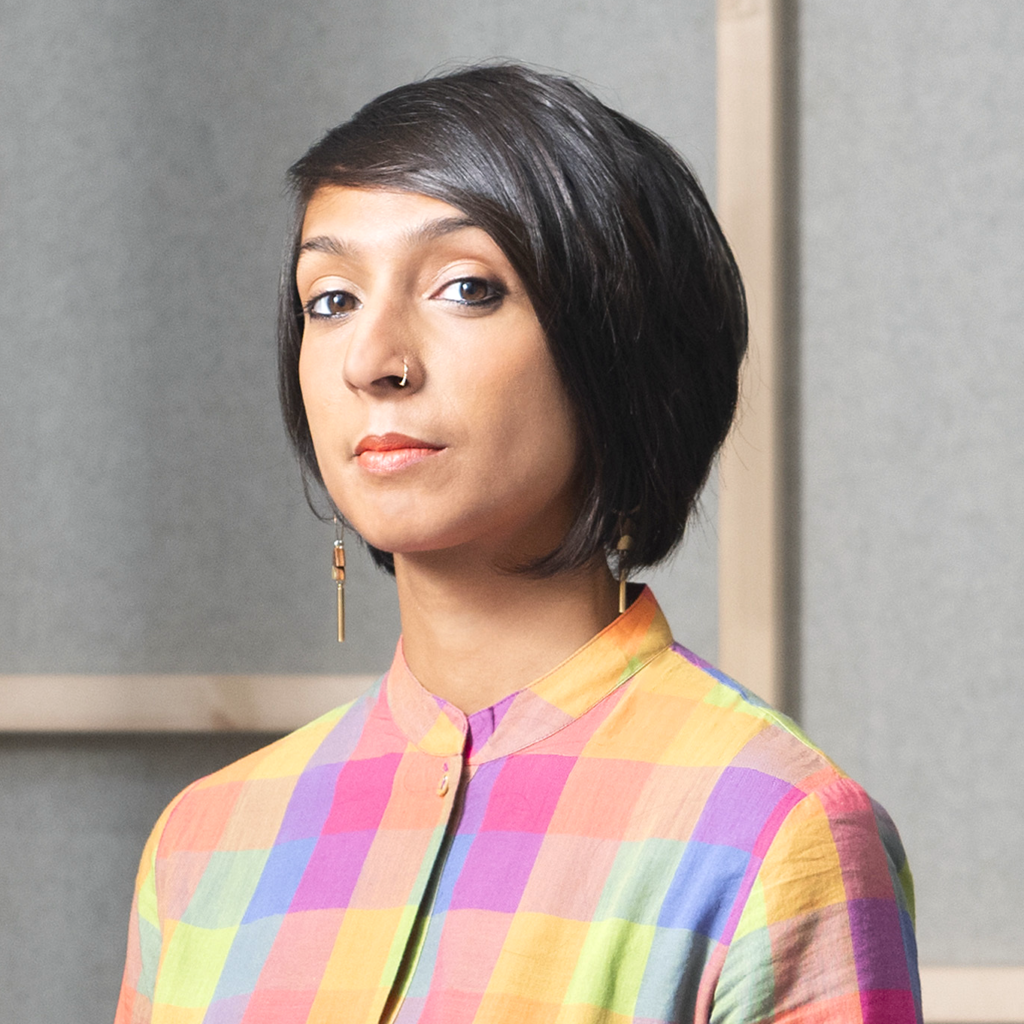
Trained as an architect, and with a background in planning and government, Pooja Agrawal understands the need for talented architects and planning practitioners in local government, where talent is thin. She co-founded Public Practice to fill that void.

Based in London, Public Practice trains and places architects and planners in local government positions with the  aim of  building capacity to respond to the affordable housing crisis. They currently onboard two cohorts per year and place them in 24 partner councils across London and south-east England but they are growing.

Many associates stay beyond their one year placement. Over time Pooja expects Public Practice to grow and strategically change the talent and culture in government in additional sectors, such as energy solutions, all towards building better places for everyone. 

And in case she’s not busy enough, Pooja also co-hosts a ‘diversity platform’ called Sound Advice, and has a slew of honors and engagements attached to her name.

Pooja has worked as a public servant at Homes England and the Greater London Authority, and in private architecture and urban design practices including Publica and We Made That. She co-published Now You Know, a compendium of fifty essays exploring spatial and racial inequality, is a Fellow at the Institute of Innovation and Public Purpose and an Associate at the Quality of Life Foundation. She has previously mentored at FLUID and Stephen Lawrence Trust, taught at Central Saint Martins and was a trustee for the Museum of Architecture. And she was nominated for the Planner’s Woman of Influence in 2018 and 2019.

Read the podcast transcript here

Eve Picker: [00:00:09] Hi there. Thanks for joining me on Rethink Real Estate. For Good. I’m Eve Picker and I’m on a mission to make real estate work for everyone. I love real estate. Real estate makes places good or bad, rich or poor, beautiful or not. In this show, I’m interviewing the disruptors, those creative thinkers and doers that are shrugging off the status quo, in order to build better for everyone. If you haven’t already, check out all of my podcasts at our website RethinkRealEstateForGood.co, or you can find them at your favorite podcast station. You’ll find lots worth listening to, I’m sure.

Eve: [00:01:08] Today, I’m talking with Puja Aggarwal, the founder of Public Practice and what a pleasure it is. Trained as an architect and with a background in government, Pooja understands the need for talented architects and planning practitioners in local government where talent is thin. She co-founded Public Practice to fill that void. Based in London, Public Practice trains and places architects and planners in local government positions with the aim of building capacity to respond to the affordable housing crisis. They currently onboard two cohorts per year and place them in 24 partner councils across London and South England, but they are growing. Many associates stay beyond their one year placement. Over time, Puja expects Public Practice to grow and strategically change the talent and culture in government in additional sectors such as energy solutions, all towards building better places for everyone. And in case she’s not busy enough, Puja also co-hosts a diversity platform called Sound Advice and has a slew of honors and engagements attached to her name. Puja is a dynamo. Listen in to learn more.

Eve: [00:02:37] If you’d like to join me in my quest to rethink real estate, there are two simple things you can do. Share this podcast and go to RethinkRealEstateForGood.co, where you can subscribe to be the first to hear about my podcasts, blog posts and other goodies.

Eve: [00:03:13] Hello, Pooja. I’m hugely excited to talk to you today.

Pooja Agrawal: [00:03:17] Hi Eve, thank you so much for having me.

Eve: [00:03:20] You’re an architect by training, but you launched a non-profit called Public Practice, which I think has a really clear and simple vision. “We find, select, and place built environment professionals into local authority teams.” I’m just wondering, why did you start Public Practice? Can you take me on that journey?

Pooja: [00:03:39] Yeah, absolutely. So, you’re right, I am an architect by background, and it takes a very long time, I think probably in most places in the world, to become an architect. I guess the things that always attracted me to architecture was the impact it can have on people’s lives. And throughout my career, I was always trying to work for places that were sort of pushing what that actually looks like. So, I was always interested in looking beyond the building. And I think even when I was studying, it was always that same kind of radical at the time. So, hold on, why are you talking about what’s happening just outside the building? We’re interested in the fabric of the building or the form of the building. And I was more interested in the wider context of the places that we were designing these propositional buildings in, or through actual practice. I worked in both New York and in London for a number of years in private practices. And I guess increasingly started to come across some really interesting clients who tended to be public sector clients. And I realized then that, I guess, actually the clients had some of the really interesting opportunities to shape those places. So, I guess as an architect, you were given this remit. We were given you’ve got a budget of 300,000 pounds to design this town centre in this place. And I suppose I was asking, hold on, why are we even looking at town centres in the first place? Why is it this particular town centre and why only 300,000 pounds?

Pooja: [00:05:16] And I realized, actually the people that were making that decision had a lot of power, and there was this really interesting opportunity to be in that position and make change from that side of the table. So, I joined the Greater London Authority, which is the equivalent of the city mayor, the Mayor of London. And here that’s about eight hundred people working in an organization. So, I brought, I suppose, my architectural background and design into this team that was looking at regeneration more broadly and was able to make, I guess, some of those spatial decisions with my background, but also input on a whole range of other things like policy, looking at design quality in housing, or looking at the circular economy- how can that be embedded in the London plan? Or just all public spaces – how can that appeal and be equal for all different types of people? So, I guess that was the beginning of my journey.

Eve: [00:06:16] It sounds really, really familiar to me because I made very similar choices, maybe not as clearly as you, but it was very frustrating to be an architect, to be told to kind of draw lines and toilet details and stair details for projects that I wanted to understand why this project in this place? So, I totally get it. I actually ended up at a planning department myself for very similar reasons. Yeah,

Pooja: [00:06:43] That’s fascinating.

[00:06:44] I’m not sure what at the time, I was too young to realise that’s where the power lay. But I think the power definitely lies there, and with finances. There’s no doubt about it. And architects hold, unfortunately, very little power, right?

Pooja: [00:07:00] Completely. And I think that’s it. I realise as an architect, I felt like I was at the bottom of this pecking order of decision makers and people with power. And actually, the higher you would go in that decision making process, you’d be able to make more decisions. So, I guess the ultimate aim is to be the Prime Minister, right?

Eve: [00:07:18] Yeah, exactly. Oh yes, way to go Pooja! So, you know, the thing that’s odd about this is that I think architecture training is probably the best training that you could possibly get. It’s like creatives trained to take absolutely nothing and turn it into something. That sort of brainpower is unbelievable, right?

Pooja: [00:07:41] It’s a really good question. So, especially in the UK system, it’s very siloed the way we think about learning. Actually, I moved to the UK from India when I was about 16, so I’ve done most of my higher education and formal education in this country, and I was really surprised, aged 16, you were having to choose three or four subjects. And I know it’s really different in America and even through university, we choose one subject. Lots of friends are choosing English or science or biology, and yeah, I just…

Eve: [00:08:15] I mean, it was the same for me in Australia. I think we’re based on the English system.

Pooja: [00:08:19] Yes, it’s very similar. Exactly. Unfortunately, I don’t know why. So, I think the appeal for me, even with architecture, was because I have a creative mind, but I also have quite a practical and technical mind, and I’m quite entrepreneurial. So, architecture somehow always was this kind of, the most broad education I could have had and hence choosing architecture. So yes, in many ways, I find it a really interesting training because you do have so many different parts of your brain are working and you’re trying to think about all of these different complexities. What I felt was missing in my own personal education and training, even in architecture, was the more city-making side of things. And I guess that’s why I sort of pushed and found myself working in practices or places that were kind of influencing that. And I suppose, I guess, going back to where Public Practice evolved or came from, it was at the Greater London Authority that when I was working there, we work very closely with lots of different partners, including the municipalities and where I saw places having the most holistic visions or ambitions was where the people were most ambitious or the places or municipalities that had the people power.

Pooja: [00:09:37] So there was a huge gap in terms of the capacity of local authorities, and there’s lots of evidence on this whole subject about, I guess, austerity. You know, the public sector has massively shrunk over the years. There’s a lot of what municipalities do here is kind of children’s and adult services, and all of the more innovative vision making side of public sector has shrunk and planning is a huge part of that. And on the other side, you have all of these brilliant people working in architecture, urban design, who just didn’t really think about working the public sector at all because, I mean, no one ever came and spoke to me about that when I was at university.

Eve: [00:10:22] Yeah, that’s true.

Pooja: [00:10:22] And I do think things have changed over the last 10, 15 years. I’d like to think Public Practice has had a big part of that, at least in this part of the country, but it wasn’t really seen as an ambitious and fulfilled, like an ambitious thing to do. So, I suppose in summary, where Public Practice emerged or came from, me and a colleague set it up from within the Greater London Authority but spun it out as an independent organisation. And the whole purpose of Public Practice is to be able to find those people, attract the most talented people, really advocate for working in the public sector is a really ambitious thing to do. And we place them in the public sector for a variety of different roles that influence places for a year-long program. That’s the kind of core of what we do, and we…

Eve: [00:11:14] It’s a yearlong programme. It’s a specific programme.

Pooja: [00:11:17] Exactly. So the programme itself is a yearlong, but we have found that most of the people we have placed in the public sector, we’re young organisations only just over four years old, over 90 percent of the people we’ve placed have stayed on from that first year. So, from the architectural design side, people have found us. It’s almost like they’re kind of dipping their toes and they’re like, “oh, wait, this is great!” and have continued to stay on. And in parallel, these people who, we call them are associates, we put in a cohort of people, so they all start at the same time. So, there’s say twenty five people starting on this journey together, we have a whole training programme for them that happens in parallel, both in terms of kind of hard knowledge, but also some of the more softer support network that they have with each other that helps them transition into the public sector.

Eve: [00:12:12] That’s really interesting. I mean, I had a very similar journey myself, and I think it’s almost like trade school when you’re at high school. I don’t know what you call trade school in England, but the trades, like being a chef or welding or something that isn’t a college degree. They just don’t talk about them at high school as if they’re some lesser way to live your life, right? So, it’s really interesting. So, you’re pretty young. How do architects and other built environment professionals find you?

Pooja: [00:12:47] So we have really established our brand where we are in London, but in the wider region of this country at the moment, and we really, I think just advocating for the public sector, we just seem to have really grown our support network over time. So, we, really practically and pragmatically, we just really, we’re out there where we have written opinion pieces, we do lots of events, we go to universities so that four years on, they’ll come and join the program. So just to say, this is not, we attract people who have been working for at least three or four years in a professional environment. So, we want people who know what they’re doing and can hit the floor running as it were. So, I guess we’ve just been able to really build our brand and reputation over time. And when we first started four years ago, we were very much focused on design skills and were very much looking at London. But over those last four years, what has been quite interesting to see is actually the local authorities are asking us for a whole variety of different skills to be able to impact their places. So, for example, loads of local authorities have committed to being net zero by 2030, but do not have the skills to be able to even envision what that looks like. So they come to us

Eve: [00:14:10] That’s pretty ambitious, yeah.

Pooja: [00:14:12] Absolutely. So, they come to us and we’re able to find those people who are really committed to making change and put them in those positions. So, it’s been an interesting journey for us.

Eve: [00:14:24] So that was my next question. Do you place everyone? What does the process look like for someone who is interested in participating in your program?

Pooja: [00:14:33] So we run a really competitive process, and I think that’s part of the, being part of the cohort is almost that like stamp on your CV because it’s so competitive to get on the program. So, every round of applications, which in this region we do every six months, we get a couple of hundred applications and twenty-five people tend to go through. We run a very bespoke recruitment process, which is a three-step process, and I won’t go into all the detail, but the process has been designed to be really inclusive, and we look at best practice in terms of, how do you create a really inclusive environment for a whole variety of different needs? We look at a whole range of different things. So yes, we look at, you know, a little bit maybe about experience, but actually we look at things like, how do these people work in a team? Are they kind of humble enough? Will they listen to other people? Because working in the public sector is, if you’re talking about architects, you really need to leave your ego behind to get anything done.

Pooja: [00:15:41] The one thing about a public service is bringing people together on a journey to make something happen, and you will always have people with really strongly differing views. Not even in the public, just but within a public sector organisation. And that’s because every single department has a different ambition or is trying really hard to do something really specific. So how do you build consensus, for example? And that’s one of the things we test in our recruitment design process. And then we try and understand people’s own personal motivations and ambitions. We’re a value-led organisation. We believe strongly in the public sector about change-making from within the system. We really believe in social equality, and we believe in that interdisciplinary approach. So, we see whether these people have a passion and really believe in these things. And so that’s how we shortlist from, like I said, a couple of hundred people to about twenty-five people at the end. And at the same time, we do the same with local authorities. We really push them to say, hold on are these ambitious roles because we have ambitious people who want to make change. It shouldn’t just be the standard role that you’ve been trying to recruit to for three years and haven’t had any luck. Like what is it that’s slightly different? Are you being really ambitious about this? Are you engaging with your communities? We push them as well.

Eve: [00:17:05] It’s a real matchmaking process.

Pooja: [00:17:07] Exactly. So, we have a very complex matchmaking process, which we’re refining every round, but we are getting there and it’s really fulfilling to see when it all kind of comes together and all these people the first week when they start their journey together, it’s truly inspiring. And every six months you think, great, this is this is amazing.

Eve: [00:17:26] Well, that was my next question. You talked about a cohort. So, it’s yeah, twice a year event at the moment.

Pooja: [00:17:32] At the moment it is exactly. And at the moment it’s also within a particular region. So, we say that in this country, it’s like the southeast of England, the east of England and London. We have, as of a few weeks ago, actually just got funding from national government to expand our services to across England. So, we are in a really exciting, pivotal moment. And I guess we are in that process of just determining our strategy, but within the next two years, we should be operating across the country.

Eve: [00:18:05] Well, that’s very exciting. And I had a question about diversity, and you touched on that. What does diversity look like in architecture and the built environment in England today?

Pooja: [00:18:16] It’s pathetic. It’s really quite depressing. So I personally have been an advocate for diversity in the industry more broadly for quite a long time, and I have sort of attacked it in lots of different ways. So, when I was at the Greater London Authority, we tried to, with the team obviously, it was not only me, but we worked on a more policy-led approach. I have also set up another organisation called Sound Advice with a dear friend, and that was really provocative, really like gets people really uncomfortable and primarily on Instagram, and we published a book with the whole variety of people of colour a couple of years ago, last year. So, I suppose I’ve always attacked it in different ways. At Public Practice in the last six months actually, since I’ve come, we’ve just been trying to break down the data a little bit more and actually seeing where the data gaps are. So historically, we have always compared the data of our associates, of our cohort compared to the industry, and we tend to do way, way better than the industry. But the problem is that that’s not actually that hard. To date Public Practice has done quite well compared to the industry. So, if we were to take something like ethnic minorities, public practices cohorts have been twenty-six percent diverse in that instance.

Pooja: [00:19:46] But some something like architect is only four percent in this country and planning and surveying is even much less. So, we’ve tended to be really like good in terms of the industry or, for example, over 60 percent of people identify as women. And again, I think architecture is about thirty five percent here in this country. So, in some ways, we could pat ourselves in the back and say, we’re doing really well. But actually, what we’re trying to do now is compare ourselves to the regions or the places we represent. And as soon as you do that, of course, our statistics drop. But if we target that in the longer term, that’s really where we’d like to be. So, we, from our data analysis, learned that the lowest number of candidates we’ve had have been black men. So, we have in the last six months launched a #BlackInThePublicSector campaign, and you can see that on our Twitter and LinkedIn, but it’s very much targeting and celebrating Black men in the public sector to be those role models for people to see that as a career ambition. And this will take time to build, make that change within public practice but more broadly, but it’s something that we are genuinely passionate about and are trying to take a very data-led approach to it.

Eve: [00:21:06] You know, I’m kind of surprised because I always think of England as, especially London, as such a diverse place. These statistics are pretty awful. Does that start in architecture school? Like, can you, are you controlled by what’s happening there?

Pooja: [00:21:22] Yeah, there’s a lot of interesting literature about this. And in fact, one of the pieces of work I worked on at the Greater London Authority was called Supporting Diversity, and there’s a lot of evidence there. It looks at the architecture career, journey even, at each stage and shows what is happening, what are the key barriers. And I’m sure this is common everywhere. At every stage you seem to lose, if we’re talking about ethnic minorities, at every stage you get less and less and less. And as soon as you get to the director level of running a practice, it becomes minuscule. So, there’s lots of different ways you can tackle this, but there is definitely a sense of urgency of trying to tackle it, in a real, tangible way.

Eve: [00:22:06] Right. Interesting. How many are there? I mean, you said there are 25 people in a cohort. Is that 25 authorities that you’re dealing with it? That would be a lot.

Pooja: [00:22:15] Yeah. So, at the moment, it tends to be at around twenty, twenty-five authorities in one particular cohort. But of course, there’s always two cohorts running in parallel. So while our network of authorities fundraise, and what we try and do is create those spaces for them to learn from each other as well. And I think that’s a really important and interesting thing. Over the years, it’s been interesting to see where, so it’s been four years now, we’re seeing teams develop, in particular authorities of our alumni and then new associates. So, we might have 12 or 15 people in a particular authority who’ve had some sort of link or route through Public Practice. And another thing that’s really interesting there is seeing people placing people in different departments. So, you might have someone in the transport and highways team, and you might have someone in the housing team. And because of Public Practice, they have a relationship, and you start to see them working together within their local authority. So, we’re seeing that sort of culture shift that is building over time and when you start to see local authorities talking to each other across the region, say, we’re all trying to tackle coastal poverty, for example, you can start to see how we’ll be able to use our network to connect those dots and share those learnings.

Eve: [00:23:38] So you’re building a complete ecosystem of architects who are not practicing architecture but are using their skills in an entirely different way. It’s pretty exciting. How do you think about impact and how do you track that for your organization? Like, what are the stats look like?

Pooja: [00:23:53] It’s a really good question. So, there’s so many different ways that we can track that way. Like I said, we’re quite young now. So, so far, what a really tangible impact is us being able to say we’ve placed over two hundred people in over 50 authorities in this region. We can say things like, from the first few years what we’ve been able to track, over 90 percent of people have stayed on. It’s those types of impacts and statistics that we’re able to capture. Where we’re getting to now, a few years on, are actually looking at particular case studies. So, looking at places like Cambridgeshire. So, we’ve just actually made a video which shows, over the years, the different types of skills we brought into Cambridge, whether it’s digital skills or community engagement skills or architecture and urban design skills, and how they have worked to create different projects in places. It’s hard for us to take the impact of what associates are doing on the ground as the impact that Public Practice is making directly but we see that more as that qualitative evidence that we’ve been able to influence these places by those places having those multidisciplinary skills within their authorities.

Eve: [00:25:09] What are some examples of some really notable projects that have been impacted by your placements, that you love? Your favorites.

Pooja: [00:25:18] One, if the local authorities we’ve worked with quite a lot over the years and we’ve placed a whole number of different associates, I think it’s over 10 people there over the last few years is, it’s a district council called Epping Forest District Council but there’s a particular area where five different authorities come together working on a garden town. So, Harlow and Gilston Garden Town. And their whole ambition was delivering over sixteen-thousand homes. What is really particularly interesting about this is the different types of skills they came to us for. So, we’ve placed urban design architect and master planning skills, but we’ve also placed sustainability skills, landscape architecture, planning skills and also ecology and biodiversity. And that has been really interesting seeing all of these different people working together. So, we placed someone who had a very specific specialism in SUDS (sustainable urban drainage systems) and other people who were more transport experts. And one of the kind of, I guess, outcomes of products that came out of the work they were doing was a sustainability guidance and checklist. And these things seem really like, oh, it’s another report or a technical thing, but a lot of what, about working in public sector is bringing all of these different people to commit to saying, we’re going to do this. And in this document, they’ve committed to making these different types of changes or encouraging developers or encouraging people. These are the things that you actually really pragmatically need to look at if you want to create a sustainable place. So, I think that is one, like a more process-driven example.

Pooja: [00:26:54] I guess another example that springs to mind is a project in Oxford City Council, and I think that speaks quite well to where we’ve been over the last few years with COVID. So again, we’ve placed a few associates there with actually more urban design and engagement and actually social enterprise skills there. And with COVID, I guess we were in that position, you know, everyone knows how over the last few years.

Eve: [00:27:33] Very weird,

[00:27:35] Really hard. And suddenly you realize the importance of public spaces as a place to actually bring different people together. And when you’re not allowed to go inside and have a coffee with a friend what do you do? So actually, a few of our associates worked, bringing their different expertise to create a temporary outdoor space, and it’s called Broad Meadow. And it was meant to be this temporary project. And yeah, it has all of these like lovely green elements to it, and it became such a kind of loved place in the town center that actually it’s become a long-term project and the council are investing in it. And most, like, you know, it’s like 90 percent of the respondents said that they want this to become a permanent scheme and building that momentum from the community and really delivering something tangible on the ground that has been really celebrated and loved is a really exciting and another interesting example of something we’ve seen on the ground.

Eve: [00:28:34] What excites you most about the work you’re doing?

Pooja: [00:28:40] What excites me the most is seeing people excited about their jobs. I guess a lot of what I’m doing is bringing all of these people into public sector roles, and I think that, almost that first day when people are sort of bright-eyed and thinking, oh, this is going to be a really exciting year and then tends to be about four months in, they’re like, oh my God, this is so hard and I’m not going to be4 able to do anything this year. And then eight months in they’re like, oh, I don’t know if I’m gonna achieve anything. And then 10 months in, they’re like, oh, wow, look at this thing, it’s happening. And seeing that journey…

Eve: [00:29:17] That’s great. That’s really great.

Pooja: [00:29:18] …it’s really exciting. And now, you know, whenever I go to any built environment, architecture planning event, there will be someone from the Public Practice family that is there. And just knowing that you’re making that influence like you’re creating this network of change through people. For me, it’s really, I find that quite powerful. And I’m sort of this idealist, I do really believe in the public sector and the impact public sector can have. If it’s designed well, if it’s really representative of communities, I do believe that that’s where change can come from. So, for me, that is seeing that kind of change build over time makes me excited and passionate about what we’re trying to do here.

Eve: [00:30:08] So would you say that Public Practice has met your expectations?

Pooja: [00:30:13] Well, I mean, nothing ever meets my expectations. Eve, I’m always trying to improve things.

Eve: [00:30:22] So what can you do better? Then what do you want to do better?

Pooja: [00:30:26] That’s a good question. So, I guess the first thing would be about measuring our impact better, you know, to be honest. You touched on that already. Like, how can we really capture what we’re doing? It sometimes can feel nuanced. Like, how do you capture culture change? That’s hard. And that’s something we’re thinking about. How do we grow across the country and still ensure that quality is going to be a really interesting challenge for us over the few years? And that’s something I’m thinking about. And being maybe just still being in that kind of thought leadership space. What is the next type of need? What is it that we need the public sector to have in-house in a year’s time or two years’ time knowing what is happening in our wider context? Being able to be able to predict that and build. Be ready for that or always tell them that that’s what they need. I think that is another interesting space that we are constantly thinking about.

Eve: [00:31:26] So what is that next need? I’m going to have to ask,

Pooja: [00:31:30] What is that next need? =I like, I’m… We just launched this report around town centre recovery, looking at high streets and one of those things that, I guess I’m interested in what you do as well. We had a crowdfunding platform at the Mayor of London and…

[00:31:50] Spacehive, right?

[00:31:51] Yeah, exactly.

Eve: [00:31:51] I love Chris Gourlay. I interviewed him. I’ve known him for years. It’s a really fabulous platform. I was going to ask you, you know, because his model sort of reminds me of what you’re doing, and it’s fascinating to me how he has this partnership with all these local authorities. It’s fascinating how the local authorities are so engaged in the U.K.

Pooja: [00:32:12] Yeah. No, it’s interesting. And maybe it’s almost the work that Spacehive are doing and we’re doing is almost engaging local authorities to see that they can drive that change. I’ve forgotten your question now.

Eve: [00:32:25] Oh, me too. Okay.

Pooja: [00:32:26] What were we talking about?

Eve: [00:32:26] So, what’s the what’s the next step? You know, and…

Pooja: [00:32:30] Oh yeah, what’s the next thing? Yeah, I think it’s something, I feel like we’re still a little bit, and I think I’ve thought of this as well. We can be quite siloed and being like, it’s all about communities leading the change. It’s all about the public sector leading the change. And increasingly, there is something a bit more nuanced about how all of these different players play a role. We also tend to think, where does the private sector fit into this space as well? You know, increasingly there’s a whole conversation about B Corps or, you know, green financing and all of this stuff. And like, how do all of these different bodies, if you want to call them that, these organisms work together in a more network way or in a way that’s not so perhaps idealistic, which I can critique myself for, and not feel like you’re giving up on your ethics because you’re making that longer-term change. So, there’s something there around… oh, that’s so boring to say a partnership working, but there’s something more about, like, a bit more nuance around power and change-making, perhaps.

Eve: [00:33:40] Interesting. So, what’s your big, hairy, audacious goal, as they say in the US – your BHAG?

Pooja: [00:33:48] My what? I’ve never of this.

Eve: [00:33:50] You never heard that before? The big, hairy, audacious goal.

Pooja: [00:33:54] Big, hairy audacious… No, I need to write this down, look it up and make one.

Eve: [00:34:00] I love that: big, hairy, audacious goal. You don’t have one. I can’t. Well, it’s the Mayor of London, right? That’s your BHAG.

Pooja: [00:34:08] Yeah, sure. Or, Prime Minister, we joked about that. No, I think that increasingly I feel like we’re in this interesting space where it’s nice not to be like, this is what I’m going to do in five years’ time. Actually, especially the people we bring into the public sector, our associates have quite squiggly careers. I actually find that quite inspiring that we’re finding our way and through making change you find different opportunities and it’s almost like creating Public Practice. Six years ago, I wouldn’t have been able to say I’ll be CEO of an organization that I’m going to create. Like, who knew that was going to happen? So, I guess it’s hard for me to predict what it is that’s going to capture my imagination next.

Eve: [00:34:54] I have a feeling your mother probably knew, but. Anyway, this is truly inspirational, and I’ve really enjoyed talking to you, and I’d love to chat more, and I just feel drawn to come back to England at some point and just… There’s something about the way that you approach working with authorities there that’s very different. I love what I see with Spacehive and with Public Practice, and I love that connectivity. It’s really interesting. Congratulations.

Pooja: [00:35:30] Thank you so much. It’s been such a pleasure, and I hope…

Eve: [00:35:33] Can’t wait to see what happens.

Pooja: [00:35:34] Yeah. Oh well, you’ll know, I’ll keep you updated. But come and visit, it’ll be lovely to meet you properly.

Eve: [00:35:40] Okay, wonderful.

Eve: [00:35:48] That was Pooja Aggarwal. She’s an insightful and forceful leader, trained as an architect and with a background in government. Puja understands the need for talented architects and planning practitioners in local government where talent is thin. She’s not waiting around for anyone else to fix that problem. She plans to fix it herself.

Eve: [00:36:17] You can find out more about this episode or others you might have missed on the show notes page at our website RethinkRealEstateForGood.co. There’s lots to listen to there. A special thanks to David Allardice for his excellent editing of this podcast and original music, and thanks to you for spending your time with me today. We’ll talk again soon, but for now, this is Eve Picker signing off to go make some change.

Image courtesy of Pooja Agrawal and Public Practice

Building efficiency.

March 23, 2022

Adrian Washington says that until he was past 30, he had never even heard the term ‘real estate developer.’ Today he is known for over two decades of experience in urban real estate development, construction and management and the startup of several companies, the most notable being Neighborhood Development Company, founded in 1999 in his hometown of Washington, D.C. 100% minority owned, NDC is a triple-bottom-line company, responsible for over 1 million sf of completed residential and commercial projects, and about 1 million sf waiting in the development pipeline. Adrian also served for 18 months as the head of the Anacostia Waterfront Corporation, charged with leading the $10 billion, 20-year redevelopment initiative of the city’s Southwest and Anacostia Waterfronts.

Having started in management consulting, Adrian shifted gears after he bought an old brownstone in a run-down, but up and coming part of town. He started fixing it up, and found that he loved the process, as well the potential impact on the neighborhood, and eventually he found himself asking, why not try doing something you’re really passionate about? He has said, “I think disrupting is almost always good for an industry,” and true to that Adrian just launched a new business, Platform, to “revolutionize the way that buildings are built.” The idea is simple – integrate all the services required to build the platform (foundation structure) of a building to provide a ‘one stop shop’’ for this critical part of any construction project. Plus, they want to leverage ‘green technologies’ and are aiming to be carbon neutral in five years. It’s ambitious and challenging, but we wouldn’t expect any less.

Read the podcast transcript here

Eve Picker: [00:00:09] Hi there. Thanks for joining me on Rethink Real Estate. For Good. I’m Eve Picker and I’m on a mission to make real estate work for everyone. I love real estate. Real estate makes places good or bad, rich or poor, beautiful or not. In this show, I’m interviewing the disruptors, those creative thinkers and doers that are shrugging off the status quo, in order to build better for everyone. If you haven’t already, check out all of my podcasts at our website RethinkRealEstateForGood.co, or you can find them at your favorite podcast station. You’ll find lots worth listening to, I’m sure.

Eve: [00:01:05] Adrian Washington is determined. A veteran developer with a pedigree that includes a Harvard MBA, Adrian became a developer out of his love of cities. He founded the Neighborhood Development Company in Washington, D.C. over 20 years ago and has built 50 projects to date. Even early on, his goal was to provide affordable housing opportunities. His deals grew from four units to 100. And then the housing crisis hit. His biggest challenge was the rapidly rising construction costs, which make the job of building affordable extremely difficult. So, in 2021, he launched another company, Platform USA, which is focused on providing efficiency and affordability for the messiest, most inefficient part of constructing a building, the platform that supports the building above. This portion of a building amounts to 25% of a building’s cost but takes up 40% of the construction time. And Adrian’s company is on a path to create much more efficiency and therefore cost savings in this critical part of the structure. You’ll want to hear more.

Eve: [00:02:45] Hello, Adrian. Thanks so much for joining me today.

Adrian Washington: [00:02:48] Good morning, Eve. Thanks for having me.

Eve: [00:02:51] So you’ve been a real estate developer for decades, one of a pretty rare breed of Black developers. And I’m just wondering, what led you to become a real estate developer?

Adrian: [00:03:02] I became a real estate developer because I loved cities, I love housing, I love the interaction of all the energy that goes on in cities. And I wanted to provide opportunities for people to have affordable options to live.

Eve: [00:03:16] Okay. So that was the biggest problem to solve back then. And it sounds like it’s bubbled up to be one of the biggest right now. And then you went on to found your own company, Neighborhood Development Company, which you’ve owned for over 20 years now. Is that right?

Adrian: [00:03:32] That’s right. We were founded in the 1999 and exactly, as you said, Eve, that back then the challenge was sort of attracting people to cities. Cities still had a bad reputation, but I think we’ve become a victim of our own success. There are so many people flocking to cities and rents have gone up. Prices have gone up. So the challenge has become a totally different challenge than the one we started with.

Eve: [00:03:54] Yeah, actually, that’s a really good perspective. I remember when the word urban was a bad word, but it’s definitely not anymore, is it?

Adrian: [00:04:02] No, no. It’s quite a desirable place to live.

Eve: [00:04:05] Yeah, what a big shift. Okay, so tell us about the projects that you typically tackle. How big are they and what type of projects?

Adrian: [00:04:15] Okay. Well, we started with very small projects and as we’ve grown over the years, we’ve progressed to much bigger ones. So back in the beginning, our projects were very small buildings, four-unit buildings, six unit buildings, and we grew to now the typical building size that we do is somewhere plus or minus 100 units of housing.

Eve: [00:04:34] That’s pretty large and only housing or they mixed use, or commercial?

Adrian: [00:04:38] It’s primarily housing, but we have done several mixed-use buildings. We really focus, in terms of mixed-use of the commercial side, on neighborhood-serving commercial properties. So, for instance, we’ve done charter schools, we’ve done exercise studios, we’ve done fresh food markets, we’re doing a farmers market sort of marketplace in one of our current projects, we’ve brought medical care, health care. So housing is our main thing, but we’ve tried to provide retail and commercial options that help serve the neighborhoods we work in.

Eve: [00:05:13] And where do you find those?

Adrian: [00:05:16] We found this all over. I mean, primarily now because of the scale of projects we do, our projects are ground up. So typically, we will find vacant land in underserved parts of cities, and we’ll take those and we’ll develop what’s there. Sometimes we have to rezone them to make them more suitable. Sometimes we can just build on what’s called a ‘as is’ basis, but we find them in a variety of ways and a variety of places.

Eve: [00:05:40] And so over the years, like, how many buildings have you developed now?

Adrian: [00:05:44] We developed over 50 projects now.

Eve: [00:05:47] Oh, that’s pretty substantial. And you know, I forgot to ask you, where are they located? I know you live in D.C., but are all your projects there, or do you go further afield?

Adrian: [00:05:57] Primarily, most of our projects are in Washington, D.C. proper. We have a couple under development now in suburban Maryland and we’re expanding to suburban Virginia for future projects. So primarily this area. We looked at other areas of the country to expand. We have some, sort of, places that we’re interested in and I think in the years ahead we’re going to be there because we see the need, not just in the D.C. area, but in other areas as well.

Eve: [00:06:22] So what’s been the greatest challenge in doing this work over the years?

Adrian: [00:06:27] I think there’s been, I wish it was just one challenge, Eve. It’s really a number of challenges. I think that the big challenge we’re seeing now is the economics. Land prices have gone up somewhat, but really its construction costs have gone up tremendously. And the cost to build a building has gone up maybe three-fold since when I started. And also, the time it takes is increased as well. So, we’re constantly looking at ways to reduce that cost and reduce that time to build.

Eve: [00:06:59] And of course, that trickles down to the tenants, doesn’t it?

Adrian: [00:07:02] It absolutely does. I mean, the economics are hard to modify. If it costs you more to build, you’ve got to charge more rent in order to pay for the building.

Eve: [00:07:13] So the affordable housing crisis seems almost impossible to solve with all of this going on. It’s a little depressing, isn’t it?

Adrian: [00:07:20] Well, I mean, it’s not impossible. It’s challenging, you know, and we’re working on different ways. So, we’ve been able to overcome those challenges and we continue to try to get better in finding new ways to do that to meet the need. And we’re not going to be deterred. We’re going to make it happen.

Eve: [00:07:35] So that brings me to your new company which you just founded last year, I believe, called Platform USA. So what is Platform?

Adrian: [00:07:46] It’s called Platform because we’re really focused on the building platform, the part of the building that you really don’t see once the beautiful vertical part is built. But the platform is an extremely important part of the building. It’s where about 25% of the cost is, and it’s about really 40% of the time it takes to build a building is in that part of the building that’s scheduled there. So, we found that there were tons of money, tons of really smart people, lots of focus on the vertical part of the building but almost no company and no company that we’ve seen has a single-minded focus on the underground part of it. So that’s where we focus Platform.

Eve: [00:08:23] What are all the things that go into that underground part? You know, what sort of skills?

Adrian: [00:08:29] Yeah, there are five or six, primarily, components or trades that go into it. There’s the excavation actually digging the hole. There’s sheeting and shoring, holding up the hole before you pour the concrete in. There’s a concrete portion of it that’s part of the structure going up to what’s called a podium. But then there are things like underground utilities, there are things like testing, there’s environmental aspects. So, there are parts that are both what you typically consider the hard cost, construction and excavation, etc. But there are all these other types of things that are in the soft cost and what Platform does uniquely, it provides a one-stop shop for all of those things.

Eve: [00:09:09] And probably a lot of engineering, too, right?

Adrian: [00:09:12] Absolutely.

Eve: [00:09:13] And so how is that handled today and how are you hoping to shift that?

Adrian: [00:09:19] I mean, it’s a mess right now today. I mean, right now it’s just a forgotten backwater of the industry. And developers and contractors they have to go out and, you know, trade by trade, company by company, discipline by discipline, you know, handle all of those individually. So, you’d go out to a geotechnical company to do your drilling. You’d go to a structural engineer to design the underpinnings. You’d go to a excavation contractor to do that. And all of these entities have conflicting desires. There’s a lot of finger-pointing, it’s really a big mess. And so, I think our key innovation in platform is that you can go to one person, one company, a one-stop shop that can deliver all of that, and there’s no finger-pointing. You give us your specification for the platform, we give you a price, and we deliver on that price. One contract, one guarantee. This is much simpler, it’s much faster and it’s much cheaper.

Eve: [00:10:15] Interesting. So how are you going to build those capabilities?

Adrian: [00:10:20] We build them in a couple of ways. In the early phases, we’ve assembled a team of specialized one, who work with us project after project. We do that. So that’s phase one. But phase two, we’re going to acquire companies because we believe that the key to really getting the savings that we need to get is to have all those elements directly under our control. So, we’re going to do acquisitions, what’s sometimes called as a roll-up strategy to acquire these different companies. We have one company right now that we’re in discussions with and we’re going to add more as we go on. So, after year two, year three, we’ll have a fully integrated company with all these components under one roof.

Eve: [00:11:00] And what’s your progress so far?

Adrian: [00:11:02] So far, we’ve started construction on our first project. We are wrapping up our contract negotiations to start in the second. We have two more that we’re slated for later this year. So, we have very aggressive growth goals and right now we’re right on track for meeting this.

Eve: [00:11:20] Interesting. So, are the projects you’re going to focus on like the projects you build?

Adrian: [00:11:25] Well, that’s one of the great advantages Platform has. I mean, we have a sister company, my real estate development company Neighbohood Development Company and platform is going to be the exclusive platform provider for that. So, we’ve got a robust pipeline in Neighborhood Development Company. And so that provides a great underpinning, no pun intended, for Platform’s growth, but we’re also going out to third parties. So, we are negotiating several third party contracts right now, and we’re going to do both NDC’s projects and a much greater volume of third-party projects.

Eve: [00:11:57] Pretty fabulous. It’s a really interesting company. It’s got to cost a bit of money to buy these companies and scale up. And full disclosure, you’ve just started a crowdfunding offering on Small Change. So what’s your plan for the financials for this company? How do you think it will grow?

Adrian: [00:12:14] Clearly, the reason that we launched our crowdfunding campaign on Small Change is to provide equity for those acquisitions. I mean, the way our economics are set up, we’re going to be profitable very early on in terms of our base business where we’re predicting profitability for 2022. So, the equity need is not to fund the base operations of the company, but it’s to fund the acquisitions that we’re going to do. And so, we’ve built it into our budget. The money that we hope to raise on Small Change will fund the first couple of acquisitions. And then as we grow, we may go back to crowdfunding or we may use institutional equity to fund that acquisition growth.

Eve: [00:12:51] So what’s the ultimate goal here, Adrian?

Adrian: [00:12:53] The ultimate goal is to change the industry. I’ve been in the industry for decades, both on the development side as well as construction side, and there’s just like a crazy lack of innovation, particularly on underground components that Platform is going to address. So, our goal is nothing less than to change the industry, to change the way that platforms are created, to make the creation of platforms better, cheaper and faster. And by doing that, to lower the cost of housing to address that critical need in housing.

Eve: [00:13:25] Well, kudos, Adrian. It’s a really fascinating company and you’re tackling a super messy problem. So, I wish you great success.

Adrian: [00:13:35] Thank you.

Eve: [00:13:35] Can’t wait to see what happens.

Adrian: [00:13:37] Me too.

Eve: [00:14:00] You can find out more about this episode or others you might have missed on the show notes page at our website RethinkRealEstateForGood.co. There’s lots to listen to there. A special thanks to David Allardice for his excellent editing of this podcast and original music, and thanks to you for spending your time with me today. We’ll talk again soon, but for now, this is Eve Picker signing off to go make some change.

Images courtesy of Adrian Washington, Platform USA

« Previous Page
Next Page »

Primary Sidebar

sign up here

APPLY TO BE A PODCAST GUEST

More to See

(no title)

February 22, 2025

Bellevue Montgomery

February 11, 2025

West Lombard

January 28, 2025

FOLLOW

  • LinkedIn
  • RSS

Tag Cloud

Affordable housing Climate Community Creative economy Crowdfunding Design Development Environment Equity Finance FinTech Gentrification Impact Investing Mobility Offering Opportunity zones PropTech Technology Visionary Zoning

Footer

©rethinkrealestateforgood.co. The information contained on this website is for general information purposes only. Nothing on this website is intended as investment, legal, tax or accounting strategy or advice, or constitutes an offer to sell, solicit or buy securities.
 
Any projections discussed or made may not be accurate and do not guarantee a specific outcome. All projections or investments are subject to risk due to uncertainty and change, including the risk of loss, and past performance is not indicative of future results. You should make independent decisions and seek independent advice regarding investments or strategies mentioned on this website.

Recent

  • The Mulberry
  • Mount Vernon Plaza
  • The Seven
  • Real estate and women.
  • Oculis Domes.

Search

Categories

Climate Community Crowdfunding Development Equity Fintech Investing Mobility Proptech Visionary


Copyright © 2026 · Magazine Pro on Genesis Framework · WordPress · Log in