• Skip to main content
  • Skip to secondary menu
  • Skip to primary sidebar
  • Skip to footer
  • Home
  • About Us
  • Say hello
Rethink Real Estate. For Good.

Rethink Real Estate. For Good.

  • Podcast
  • Posts
  • In the news
  • Speaking and media
    • About Eve
    • Speaking requests
    • Speaking engagements
    • Press kit
  • Investment opportunities

Development

Citizen architect.

June 15, 2022

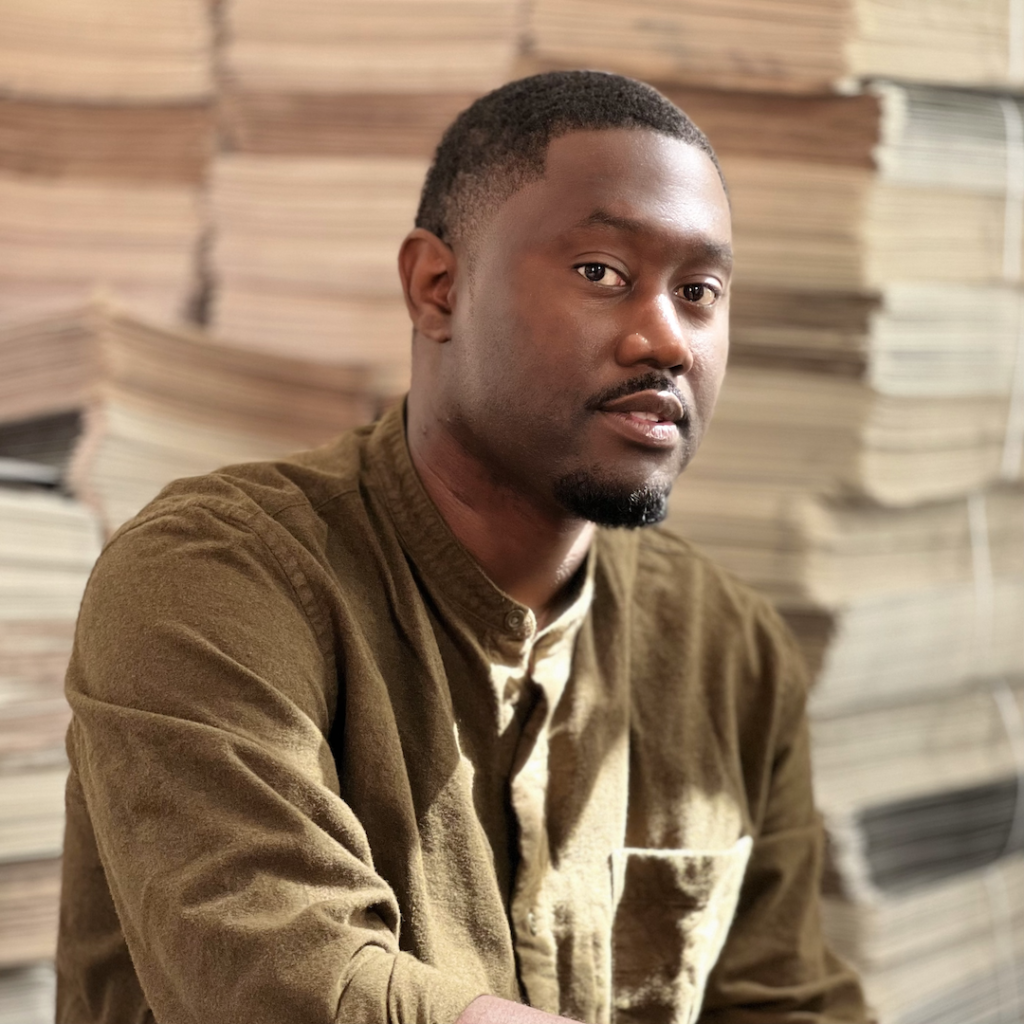
From an early age, Rico Quirindongo was interested in the impact of the built environment on people. That’s why he became an architect. But he sees an architect’s role as much larger than just designing buildings with a useful life. He believes every architect has an obligation, a responsibility to engage in a civic conversation for design justice – to absorb the history of a place and the needs of the current community in a meaningful way, into each and every design.

Rico started his career as an architect in St. Louis, MO, and later moved back to his hometown of Seattle to work first with Donald King, and then with the DLR group. He has been twice recognized by the AIA as a citizen architect – in 2011 and again in 2020. The AIA looks at more than just the physical aspects of architecture. They also value the architect’s ability to uplift diverse voices, influence social change, and bring about community engagement – all of which hold great importance in Rico’s work.

In 2021, Rico took on the role of interim director at the Office of Planning and Community Development for the City of Seattle, hoping to increase the scale of his social impact. This role feeds his soul. Here he can push harder for what he believes in. Positive results are already rolling in. The trajectory of the Seattle Midtown Square project was significantly altered when Rico gave the local community a role in its planning. The development was transformed from a building of 430 units with a CVS on the corner into a destination location featuring a not-for-profit organization, an artist residency location, an art gallery, and more.

Rico’s success stories show us the amazing results that collaboration can bring. He reminds us that local residents – those who know and love their neighborhoods – can bring a fresh perspective, helping developers create buildings that benefit the people.

Read the podcast transcript here

Eve Picker: [00:00:09] Hi there. Thanks for joining me on Rethink Real Estate. For Good. I’m Eve Picker and I’m on a mission to make real estate work for everyone. I love real estate. Real estate makes places good or bad, rich or poor, beautiful or not. In this show, I’m interviewing the disruptors, those creative thinkers and doers that are shrugging off the status quo, in order to build better for everyone. If you haven’t already, check out all of my podcasts at our website RethinkRealEstateForGood.co, or you can find them at your favorite podcast station. You’ll find lots worth listening to, I’m sure.

Eve: [00:01:04] From an early age, Rico Quirindongo was interested in the impact of the built environment on people. That’s why he became an architect. But he sees an architect’s role as much larger than just designing buildings with a useful life. He believes every architect has an obligation, a responsibility to engage in a civic conversation for design justice, to absorb the history of a place and the needs of the current community in a meaningful way into each and every design. Recently, Rico became interim director at the Office of Planning and Community Development for the City of Seattle. The city he has lived his life in, and this role feeds his soul. Here he can push harder for what he believes in. Positive results are already rolling in. Please listen in to hear more.

Eve: [00:02:13] If you’d like to join me in my quest to rethink real estate, there are two simple things you can do, share this podcast and go to rethinkrealestateforgood.co, where you can subscribe to be the first to hear about my podcasts, blog posts and other goodies.

Eve: [00:02:39] Hi Rico, I’m just delighted to have this opportunity to talk to you today.

Rico Quirindongo: [00:02:44] Morning.

Eve: [00:02:45] It’s very early for you. Yes.

Rico: [00:02:49] I’m an early riser, so it’s okay.

Eve: [00:02:51] Oh, well, that’s good. Yeah. Let me start by asking you, you know, a big question. What led you to move from an international design practice to a planning department in Seattle?

Rico: [00:03:03] Well, I would want to take a step back. So, I began working as a Black architect. Actually, I started working as a Black architect in St Louis at a Black owned firm called Kennedy Associates. Moved back to my, this was after college, I moved back to Washington State to do my graduate work at University of Washington. And in doing my thesis, which was the creation of an African American museum for the Northwest, I met a man who was also helping to lead the community, who was also an architect, Black architect. He essentially adopted me. I became an intern in his practice. This was in the mid 90s. Donald King, who is a mentor and a friend. I worked for Donald and, with Donald, became a partner of his firm for the better part of 17 years, moved over into this international practice to build the civic side of the practice, this was DLR Group, a wonderful firm. Really appreciated my time there, and I essentially was recruited to join the city.

Rico: [00:04:42] I had actually been interested in the Office of Planning and Community Development when it was created. I think that was five and a half years ago. That position was taken by Sam Assefa, who is now providing leadership in this realm in California for the state. He did a great job in building the office, and I was honored to be able to be brought in. I would say that I’ve always been looking for, I’m always looking for how I can leverage whatever I’m doing today to get to something that has a larger positive impact for community, that is scalable. And so, taking my small firm community-based practice to an international firm to kind of infuse that type of community based leadership and design thinking in the international practice and then bring that same thinking to the City of Seattle now where I’m able to hopefully impact a much larger community locally. It’s very meaningful to me.

Eve: [00:06:03] So, what’s your role there?

Rico: [00:06:06] So, I am the acting director for the Office of Planning and Community Development, and it’s a multifaceted role. I mean, so on the planning side, we are in charge of our long-range planning for the city. So, Growth Management Act Coordination and compliance with the Puget Sound Regional Council. So, we have six urban growth areas, sub area plan work that we have to do. We are leaning into redevelopment of our comprehensive plan, which will be a ten-year plan. So, it will look out to 2044 and address issues of continued growth of the city, working with our Office of Economic Development regarding what is the relationship to built environment and job growth. And we also are leaning into a discussion around equity. So, how do we look at a terrible history of redlining in our city, which is no different than what we saw in cities across the nation? And how do we really begin to reverse some of that damage and help lay the groundwork to build generational wealth for our communities of color who have been under served and under supported? I would say a couple of other things are office convenes a capital subcabinet. So, I’m a member of the cabinet for the mayor and we convene on a monthly basis a cross collaborative discussion with ten capital departments across the city, including our Seattle City Light and our public utilities and our department of transportation.

Rico: [00:08:03] To look at how are we making place-based decisions related to how we’re investing dollars and kind of to try to push beyond the silos of kind of each department’s individual capital program. And then lastly, we, I also help lead our Equitable Development Initiative, which is a, it’s our largest investment in the community development side of the work. So long range planning, the stuff that’s up to 20 years out. It’s really hard for people to, people that are living their daily lives. Like, what does that work really mean to me? The community development side, we’re working on the ground in the trenches with our actual development initiative, investing around $20 million a year into community led projects. It is BIPOC-led projects, community based, multifaceted, many different types of projects, some housing related, all invest in different types of services being provided to community. It’s very inspirational and it really connects the dots between kind of our aspirational long-term goals and like work that we do in the day to day that’s actually making a difference in people’s lives.

Eve: [00:09:34] So one of the questions I was going to ask you, which I think you answered, is, does this work feed your soul a little better than the private practice?

Rico: [00:09:42] Yes, absolutely.

Eve: [00:09:43] Sounds like it does.

Rico: [00:09:44] Yeah, I would say that I feel very fortunate. I think that, from the beginning, really, as an intern, it was important to me to be able to do work in the community and to do work that had meaning and value. Whenever I have the chance to be on a panel discussion or speak with students at a university. My message has been that you really can’t wait for a tomorrow that you’re never going to get to. And, if there is something about which you’re passionate or that brings you a sense of purpose or meaning, it is important to try to lean into that, like in real time, like in your day to day. And it doesn’t mean that you can have that meaningful value in your work every single day, necessarily. I mean, there are certainly days where the work is just hard and difficult, but this job does get me out of bed every day.

Eve: [00:10:46] I completely agree with you. So, you know, I think architects are in a unique position that they really do need to think in advance, like 10, 20 years. And so we sort of trained to think about what a piece of land can become 20 years from now. So it’s sort of a very natural shift to add a little bit more to it, right?

Rico: [00:11:09] Yes, absolutely. I think that my thesis, in graduate school was. My thesis chair, George Rolfe, was an urban planner and provided leadership for our school, for the department. Actually, he was also the first ed for the Pike Place Market, which I was chair for three or four years. I was on the board for seven years. But the thesis. At the end of the day, was around development of a large city block and turning it into housing. And this African American museum, which we actually had the good fortune of being able to work with Donald King to see that project into reality with the city and the community, I think it was a decade after the thesis was completed. But as a student, what was foundational for me was that the project, while important, started with a analysis of the neighborhood and the city and context. I think that it is critical that as we make investments in individual site solutions as architects, or as individuals or as a city like it, it is critical to think about what’s the ripple effect of that individual site outward into community, into a urban context, or depending on where you live, a rural context as well. It’s more than just what happens on that single site.

Eve: [00:12:53] Yes. So, you know, this brings me to the architecture profession and an architect role. And is the profession of architecture and planning becoming more focused on equity or does it have a long way to go? How can we impact, how can we make that profession sort of reflect on this more? I suppose I’m coming from this. I also taught in an architecture school, and I found it to be startling how little students were told what they could do with this knowledge they were learning. I think architects are sort of uniquely trained and have the capability to do all sorts of things with that training, you know. But it feels to me like architecture. You know, the iconic building architecture has got to shift a little, right?

Rico: [00:13:44] I think it is. I mean, I think that 150 years ago, if this was a very white male led profession and, in some regards, that is still the case. But it was a profession that was of privilege. Again, still is, but one where the focus was on more of a elite clientele that could afford to bring on board an architect and do expensive developments that were focused on the individual. I think that what we have seen is the beginnings of a shift where we really are. Architects are servants to the community. I was recognized by the American Institute of Architects as a citizen architect in 2011 and again in 2020. And I think that part of what the Institute of Architecture has acknowledged is the importance and value of what the profession can and should be doing to help lift up diverse voices, invest in social change through built environment projects, and understand that to get to a place that is about equity in the community is a multifaceted discussion.

Rico: [00:15:18] And I often talk about Kaiser Family Foundation social determinants of health, which there are six buckets of consideration regarding if looking at the whole health of an individual or family or community, you have to address all six of those buckets. One of them is social and cultural context. One of them is built environment, food, health, health care, access to good education. And so, I think that we hold one of those pillars as architects. And I do think in 2020, with the horrible atrocity of George Floyd’s death and kind of the elevation of the critical issues around how people of color have been disrespected and held down for centuries. You saw a lot of architects actually asking the question, what can we do to be a value to make a difference in this discussion? And I think that we are now doubling down on trying to answer that question. I think it is about being an ally. I think it is about being a support. I think it is about transfer of wealth from those that have to those that do not, and that can be done through environmental projects.

Eve: [00:16:59] When you think about a space or a place that’s being designed, what elements do you think are critical for it to become more equitable.

Rico: [00:17:10] This can be hard depending on the project type. I think that looking at the context of a place. I mean, you have to start with what is the history of that place, right? Like, who did the land belong to? We in our, in these United States have stolen land from our Indigenous population. And that is a burden that we need to carry forward in the work and looking toward righting past wrongs. I think that looking at a context of place, you have to look at the generational history of that place, how that informs site and context. And then what is the community, the resident community that is there in the present and how might they be affected by whatever the built environment project is that is being proposed? And what is the opportunity for that resident community to be invited into the conversation and the process for visioning for the redevelopment of a site. I think depending on what the type of project is, will determine on what the community role is or can be in that project. But I think that it is critical for us as architects to ensure that the community does have a seat at the table.

Eve: [00:18:50] Interesting. Yeah. I mean, I was at the planning department many years ago, and community engagement really meant just some meetings with the community many years ago. I mean, how has that shifted? What does that really mean today? Like community engagement?

Rico: [00:19:05] It is a dangerous prospect. It’s very easy to get trapped in a box checking process where, you know, City of Seattle, we have a regulatory process which requires that for many projects you have to go through design review in order to get your building permit, and that requires that you have two community meetings. So, you go out and talk about height, bulk and scale of the project and then come back for a second meeting and talk about how facades will be articulated. And it’s easy to, I shouldn’t say easy, but it is not unusual for that process to look or function performatively but not actually engage the community in the real conversation about things that they care about. I think that that latter conversation is hard.

Eve: [00:20:03] It’s very hard. Yeah.

Rico: [00:20:05] It is.

Eve: [00:20:06] Very hard.

Rico: [00:20:07] When I was the chair for the Pike Place Market, PDA Council, Preservation Development Authority, honestly, we had public open meetings every single week with a very engaged resident population. Between over 300 businesses, mostly small businesses and residents that live on that urban campus, if you will. A lot of people very much cared about their built environment and their families and businesses and would show up to those meetings to hold us accountable for decisions that we made, many of which were about the buildings that we owned and the public realm environment that we were responsible for. And it is much easier to make decisions about what a building looks like and how it impacts the environment when you are doing the design, executing the project and then walking away, it’s much harder to do that when you’re going to be held accountable week to week long after that project is completed.

Rico: [00:21:23] That is certainly an attitude that Donald and I shared in private practice with our small Black-owned firm that, not only around the idea of repeat clients, but just around community accountability. You have to do well by community through the process. Community has to see themselves as a part of the conversation and not, in a tangible way. There’s a project that I worked on where the part of the call and response with Community got to a place where we really had to have a very explicit conversation about, this is what we hear you saying that you need. This is what we can do. And this is how that input is being incorporated in build form in the project. And this is what we can’t do, and this is why we can’t do it. I think so often we’re afraid to be honest or transparent about what we can and what we can’t do and what the whys are, because then we can be criticized or someone might not agree with us, but the reality is that is the only way.

Eve: [00:22:34] Yes.

Rico: [00:22:35] By having an honest and transparent and real conversation with people, can we build trust and actually do well for ourselves and on behalf of community?

Eve: [00:22:48] The question I always have is this is a very high resource, intense activity. And for the thousands of little projects going on with small developers who don’t have the capability to have that sort of continued conversation, I wish that there was someone building resources for them because I think often that community activity can be perfunctory when you simply don’t have the ability to manage it, right. I mean, if you’re a big developer and you set aside a bucket of funds and time and you can plan for someone to be managing that, you can get it done. But if it’s something small, which could matter equally. Equally, right? It’s difficult.

Rico: [00:23:43] Yeah. I appreciate your point. And I do think that for smaller developers, it is important to be able to provide a small development community. And I have been in conversations with an organization called LISC.

Eve: [00:24:01] Oh yes, I know LISC.

Rico: [00:24:02] That does investments, large investments in the community nationally. Locally, they are engaging in a program to invest in small bipoc developers, figure out where they are in the development of their practices, and then how they can help provide them resource to grow their capacity. Like I said before that level of community investment that is meaningful is hard. But I think that if authentic, then it becomes more straightforward. And what I mean by that is, it is very difficult for a developer to come in from outside the community, into a place, propose a project without having community context or contacts. And I think that, while I understand that if you’re a small developer, you have limited resource, I still think that from a place of responsibility, that part of that resource has to be allocated to talking to people in the neighborhood. Talking about your project. Understanding what the context and impact of it is. And having that inform the design and implementation, including hiring of small business, other small businesses that are part of the construction project or become residents in the project, I think that the activity is scalable. I understand that smaller projects have more limited resources and therefore can’t do the same things that large projects can. But I also know that small developers often find themselves more connected with community in their projects than large corporate ones. I don’t think it’s simply an issue of scale.

Eve: [00:25:55] Yeah, no, I see that. So, I suppose I want to know how can we actively make places that work for everyone and that everyone feels comfortable in? I understand the history and the engagement, but how does that translate physically? Like, have you got an example of a project where you think it might have turned out very differently if there hadn’t been that engagement?

Rico: [00:26:22] I’ll talk about this project that’s opening up now called Midtown Square. It is a project that was built by Lake Union Partners here in Seattle. I was brought in to lead a community conversation because there was a fissure between what the white majority developer was looking to do, building of 430 units, and what the community saw, which was a white developer coming in and taking over what was a very important site to that community at Union and 23rd in the Central District, which was a historically Black neighborhood in the city.

Eve: [00:27:02] You don’t choose easy conversations, do you?

Rico: [00:27:04] No. No, I don’t. Through a community engagement process, so there were, we created a series of open houses, one on one interviews, small group discussions, meeting people where they’re at, going to the local school public events to talk about the project really sought to get community input and direction. What we built was an art program for the project where we brought in eight locally connected BIPOC artists that transformed both site and building, like the facades of the building, actually were turned into canvases for artists to transform. And what we ended up with is a destination location at that at that intersection now where in addition to the art program, we created a new non-for-profit at the prominent city corner, which is dedicated to the artist community, largely Black artists. There’s a place for artists to sell their wares. There is an artist residency location, there’s a gallery. None of which was conceived of in the original project. And the ground floor of that building, both the interior courtyard and the two prominent facades that face major street fronts, will be filled with Black-owned businesses. And so, the transformation of the public realm is both bringing back businesses that were pushed out of that portion of the neighborhood and also creating opportunities for new business or expanded business that’s contributing back to the generational wealth of the owners of those businesses.

Eve: [00:29:08] That’s a remarkable outcome. And it’s a very, very lovely one. I can picture it. And was the developer happy with this outcome?

Rico: [00:29:19] Very much so. And I have to say that I feel like we were very fortunate to. And, you know, transformation happens over time, right. They had done two other projects in the neighborhood that had no investment in a community conversation, at least not one that that was evident or one that was felt and understood by the community being impacted to see the, this developer lean into a different process. And to be clear, like it began because the City of Seattle, through the regulatory process, said, yes, we understand what you are trying to do, but the community is not aligned with you on this project and you’re going to have to go fix it, figure it out.

Eve: [00:30:08] That’s a great role.

Rico: [00:30:10] It was an important role. I think that we were very fortunate to be able to work with a developer who could respond to a different viewpoint and different ideas than what they may have initially visualized, or the extent to which the level of investment that was asked of them was very different than where they were, where the project conversation started

Eve: [00:30:39] I don’t know how they could have imagined that outcome. It’s pretty terrific. I do want to say, like just on our funding portal, what’s been a really interesting shift that we’ve noticed over the last year or two, again since the horrible George Floyd episode, larger and larger developers have been coming to us in an effort to kind of integrate raising capital from the community or letting the community have some ownership in their project as well, it’s been a really pronounced shift. So, I think all of this is kind of happening together. It’s fascinating and fabulous.

Rico: [00:31:18] And even on that project. And so, we, now that I’m on the city side, I get to see it from the other side of the table, like the new not-for-profit applied to the city for funding for their tenant improvement. The ones dedicated to artists on the ground floor, that, there was a push. Like, that was not what the original intention was for that corner actually was going to be a CVS pharmacy.

Eve: [00:31:48] Oh, I like this much better.

Rico: [00:31:52] Yes, everybody did, developer included. But the big push there was a condominiumization of the building where that ground floor unit is now owned by the not-for-profit and providing generational wealth to artists that will be involved with that collective, which was again not what was originally, it was not what was originally conceived by the developer. And so, there is a big push that we are making. At least in this work that we’re doing through the EDI program, to ensure that moneys that are being invested, the properties are held by community members, by BIPOC owners that actually helps them get to a better financial position.

Eve: [00:32:47] We just completed an offering actually for the San Francisco Community Land Trust, which was really interesting because they purchased a 41 unit building with some retail space that was a commercial rental building, and they are going to be converting it over the next few years into a BIPOC owned cooperative for the people who live there. Very complicated project, but we actually help them raise money. Although they didn’t need the money for their business plan, they wanted to let the community invest, and there are so many people out there who want to help. It was very interesting. The return offered was low, but that doesn’t matter to some people. Yeah, we’re hoping that we’re going to raise. I mean, that was probably one of the best do-good projects we’ve ever done. I thought it was a pretty amazing project. So, I think more and more this is happening, which is just in all sorts of ways, which is just fabulous. So, I wanted to talk to you about the Waterfront Seattle Park as well, but we may have run out of time because that’s a huge project that looks amazing. And I know you were involved. And how did that impact the outcome of what’s being built, I suppose?

Rico: [00:34:03] I was recruited to join the Pike Place Market Council in large part because a parcel Pike Place had one remaining parcel on our campus which was able to be developed, and it was essentially an early win for the Waterfront project, which is headed up here by Marshall Foster, Office of Waterfronts and Civic Projects. That opportunity was to develop a site that contributes to the Pike Place Market in creating a huge plaza that allows you to look out over the waterfront and the city, and that’s a public gathering space. Added farmer and market stalls that became an extension of marketplace for us, but, well and created 10,000 square feet of makerspace for businesses. But underneath all of that, and that’s what’s important for the Waterfront project, we built 300 parking spaces which were part of a replacement. There was a study done as part of the Environmental Impact Statement for the Waterfront Project that acknowledged that I believe over 600 spaces were being lost in the redevelopment of the waterfront and that that was a critical impact to the downtown community. And so, Pike Place Market essentially answered an RFP from the city for a replacement of a portion of those parking spaces. So below the project, invisible to anybody that comes into the market, we have provided a solution to a need for the Waterfront development. It’s not what drives the placemaking, but important for the functioning of the downtown.

Rico: [00:36:11] On the placemaking side, the Marketfront Project, that’s what we call it, it was the first development, and I would call it a public private partnership, right? Because half of the 34 million was committed into that project by the city, the rest of it was committed and developed through funding from our Pike Place Market foundation. And we actually, the PDA did a large bond funding to fund the project and tax credit financing. But we had this opportunity to create a public space, public gathering, that contributes back to public realm. And it is the first stage of creating a bridge from a Pike Place Market site across to a future aquarium expansion Seattle Aquarium that then takes you down to the new waterfront. Our project is great. The development, once it’s complete in entirety is going to be incredible, including the Overlook Walk, which connects from the waterfront up into the market. It has been very complicated. Many voices. A huge vision that was the waterfront bringing together the entire city to be a part of that visioning process. It’s been an honor to be able to be a part of that.

Eve: [00:37:39] Interesting. Yeah. The many voices is scary, but it sounds like you manage them very well.

Rico: [00:37:46] I do the best that I can. And, you know, I think that now being at the Office of Planning and Community Development, I have a benefit of having 44 staff that are all very invested in this vision for equity, leading with equity, and kind of doing right by community. And so, this has work. I mean, to be clear, we are the City of Seattle, as an entity is over 11,000 employees. And so, we’re a very small complement, but we are leaning into what is transformation look like for the city and how do we do this work in a way where people have voice and can be seen. And it is hard work, and it does take a village. But I feel like we are starting to make some headway.

Eve: [00:38:47] So one final question. What’s your big, hairy, audacious goal?

Rico: [00:38:54] That’s a good question. I mean, the honest reality is, is that I think that on this conversation of generational wealth, that we have a responsibility, both as a city and as a nation, to look at harms that we have caused for the Asian community, for the Black community, and for the Indigenous community and for the immigrant community and ask ourselves, how do we change policies that we have in place, built environment and otherwise economic investment to get our communities of color to the place that they deserve to be? And what does that mean? That does mean investing and curating a authentic discussion in each of those communities to ask what that means, of the communities that we are engaged with. And then we have a responsibility to act to support those needs. That is not an easy thing to do, but it is a responsibility that we have. And it’s something that I have been committed to since I started. I got into architecture because I saw how much built environment affected people, myself included, and how you could get to transformational social change through built environment projects. That is one piece of the puzzle. But the reality is, is that we have a lot of work to do to get us all to a better place. And I am really excited about it. It is hard work, but it’s what gets me out of bed every morning.

Eve: [00:40:46] Well, I’ve really enjoyed this conversation. And honestly, if every single large development ends up with an outcome like the non-profit on the corner, that would make change pretty rapidly. That would be a fantastic thing to see. So, thank you very much for your work. I really enjoyed this.

Rico: [00:41:04] Thank you.

Eve: [00:41:09] Listening to Rico talk about just one project was inspirational. If one developer can move plans for a retail space from a CVS to a community-owned arts building, then just imagine what an army of them can do.

Eve: [00:41:32] You can find out more about this episode or others you might have missed on the show notes page at our website RethinkRealEstateForGood.co. There’s lots to listen to there. A special thanks to David Allardice for his excellent editing of this podcast and original music, and thanks to you for spending your time with me today. We’ll talk again soon, but for now, this is Eve Picker signing off to go make some change.

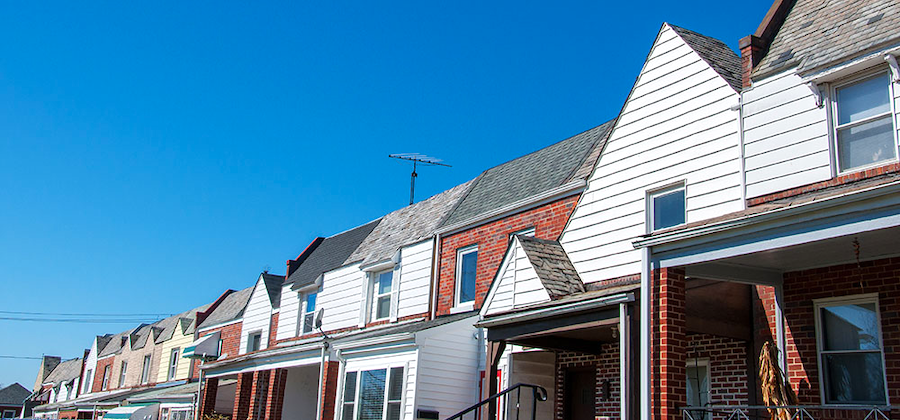
Image by M Nakamura courtesy of Rico Quirindongo
Valuing Black neighborhoods.

June 13, 2022

“Black communities are routinely undervalued. Even when they are among the nation’s wealthiest” writes Tracy Jan for the Washington Post.

Undervaluation of homes plays a large part in racial wealth inequality. In 2019 the median wealth of White families was eight times that of Black families in the United States, according to a Federal Reserve survey, and those figures had hardly changed over the previous three years. 

For homeowners, appraisal bias can reduce their ability to leverage home equity for things like repairs, family education, business or any of life’s important events. For buyers, appraisals lower than the contract price can require a larger down payment. And for sellers, profit and wealth accumulation is reduced. Undervaluing properties can also lead to lower property taxes which are used to fund local services and amenities. According to a new Biden Administration report, just one low appraisal could have wealth consequences for an entire community. And a study by The Brookings Institute found that, despite similar attributes and amenities, homes in Black neighborhoods are appraised at, on average, 23% less.

Andre Perry, a senior fellow at Brookings and author of  Know Your Price: Valuing Black Lives and Property in America’s Black Cities, believes this loss of equity adds up to approximately $156 billion – equity which could have been spent on education and entrepreneurship.

You can listen to the podcast with Andre Perry.  Or read the original article here.

Image courtesy of Small Change

Design justice.

May 25, 2022

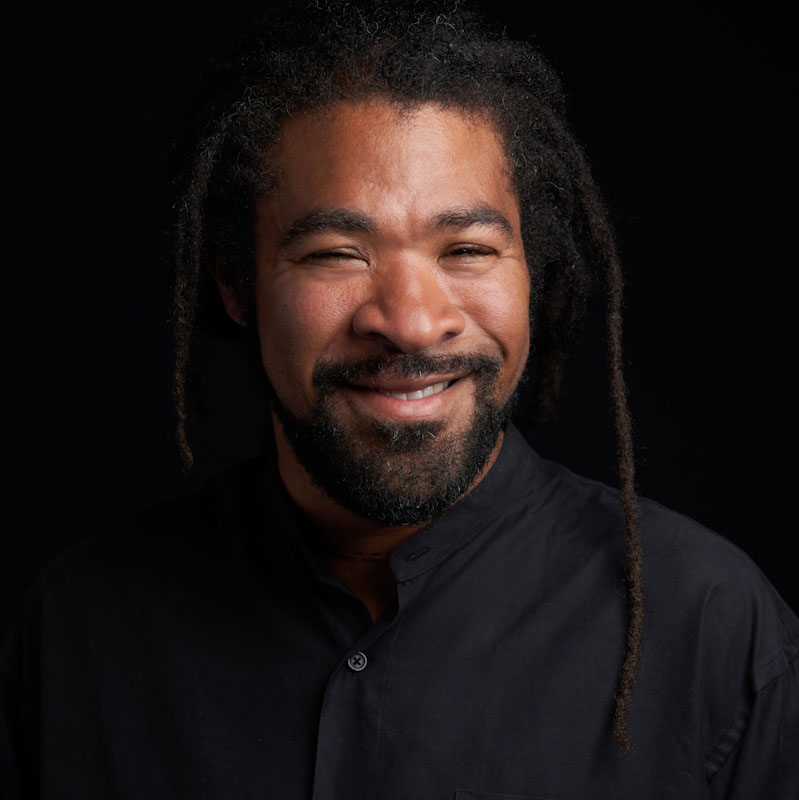
Bryan Lee, Jr. may have studied architecture, but he is by no means just an architect. Bryan’s philosophy and ideas are big, challenging and adamant. To address these ideas, in 2017, Bryan created Colloqate Design in New Orleans, a firm that uses design thinking to create a conversation or dialogue (thus, the  name of their firm) within the community to speak both to “collective values and ideals or reveal persisting inequity and injustice.” Everything is on the table. Sustainability, community history, immigration, transportation, food security, housing values. Bryan says, “Design justice is a foundational principle; it is not a design process, yet. It is an underlying framework for how to think about getting to the architecture.”

Interested in architecture at a very young age of ten or eleven, Bryan recalls, as a child, noticing the dramatic difference between the spaces and places of Sicily (he was an Air Force brat) and the streets of Trenton, NJ. Out of school he did a stint in an architecture firm, as well as two years as Place and Civic Design Director for the New Orleans Arts Council. But with Colloqate established, alongside the last few years of intensely heightened awareness of issues of racism and climate change in the U.S., his firm’s impact is growing.

Bryan is a founding organizer of the Design Justice Platform, and he co-organized the Design As Protest National Day of Action (hosting more than 30 workshops). Most notably, he was named 2021 National Design Award winner in the emerging designer category by the Cooper Hewitt, Smithsonian Design Museum. He was also a 2018 Fast Company Most Creative People in Business and a 2019 Architectural League Emerging Voice.

Read the podcast transcript here

Eve Picker: [00:00:06] Hi there. Thanks for joining me on Rethink Real Estate. For Good. I’m Eve Picker and I’m on a mission to make real estate work for everyone. I love real estate. Real estate makes places good or bad, rich or poor, beautiful or not. In this show, I’m interviewing the disruptors, those creative thinkers and doers that are shrugging off the status quo, in order to build better for everyone. If you haven’t already, check out all of my podcasts at our website RethinkRealEstateForGood.co, or you can find them at your favorite podcast station. You’ll find lots worth listening to, I’m sure.

Eve: [00:01:01] Bryan Lee may have studied architecture, but he’s more than an architect. He launched Colloqate Design in New Orleans to explore big, challenging and adamant ideas about equity in the built environment. At Colloqate Design, a community conversation puts everything on the table. Sustainability, community history, immigration, transportation, food security and housing values. The end goal is an equitable, physical landscape. It’s a fascinating conversation. Listen in to learn more. If you’d like to join me in my quest to rethink real estate, there are two simple things you can do. Share this podcast and go to rethinkrealestateforgood.co where you can subscribe to be the first to hear about my podcasts, blog posts and other goodies.

Eve: [00:02:06] Hi, Bryan. I’m just delighted to have this opportunity to talk to you today.

Bryan Lee: [00:02:10] Yeah, wonderful. Thank you for inviting me.

Eve: [00:02:13] You have a really big, bold idea to design spaces of racial, social and cultural justice. What does this statement mean to you and why is it so important?

Bryan: [00:02:26] Yeah. I mean, the way that I kind of define culture is that it is the consequence of persistent circumstance and immediate condition, meaning there’s a long history that drives how culture is formed and it is directly impacted by how we’re currently living, which means that every space that has a connection to our racial, social, cultural worlds is significant in the shaping of our lives. And so, for me, when we think about justice in any of those spaces, it requires us to have a cultural framing. It requires us to understand a history of racial violence, racial oppression and racialized joys. There are there are joys that come as a by-product of the communities that are formed through moments of oppression. And so, I think recognizing those, not ignoring them and elevating them to a valuable asset within a design process, within an architecture, within an urban plan or urban design, allows us to have more just spaces that serve more people.

Eve: [00:03:45] I love that you talk about joy in there as well.

Bryan: [00:03:48] Yeah, it’s necessary.

Eve: [00:03:50] My parents were actually refugees and what always surprised me about them was they went through six really long, hard years in labor camps, but they always spoke about these joyful moments that, you know, were part of that community. Exactly. Exactly what you said.

Bryan: [00:04:06] Yeah. Even to that, I grew up and my father used to tell me he didn’t know he was poor until he went to college and people told him he was poor. And part of that is that, like, community is so necessary and specifically for marginalized or disinherited communities. We often form social capital and cultural capital together that allows us the currency to move through the world, and that is usually shaped by the moments that are created through joy, through those experiences that build connection with one another. And so, I find it utterly necessary for us to conceive of an architecture that responds to those joys or responds to those disparities, and acknowledges the fact that people who have had to create cultures out of violence or oppression or harm or trauma have spatial solutions to a world that is actively seeking to harm them oftentimes. So anyway, yeah.

Eve: [00:05:07] Yeah, my parents actually met in those labor camps. So that was a very, you know, and they were a long love story. So, it was it was a strange mix, as you said. So, your platform is called Colloqate. What exactly is Colloqate?

Bryan: [00:05:26] Yeah, thanks for asking. Most people don’t, so it’s nice. So Colloqate is a combination of two words and one formal word. So, if we think about kind of colloquial, the kind of informal or sophisticatedly informal use of formal language, whether that be written language, whether that be cultural language or spatial language is a necessary understanding. So, understanding that informality and how people use that informality to shape their space is significant. And then location. So, what is the informal language of a place? Right. And so Colloqate is really trying to understand those relationships. And then the term I found, the word collocate with a C, to be even more enlightening when it comes to the type of work we’re looking to do, because it talks about the sequence of words and phrases habitually juxtaposed at a greater frequency than chance. And for us, that is exactly what we’re looking at. We’re looking at the sequence of people in place habitually juxtaposed at a greater frequency than chance, where there are people and places and spaces. How often are those people there? Why are they there? What are the relationships that people have between those spaces? Acknowledging that they are unique to particular cultural, racial, social communities means that we can understand that frequency as an affirmation of the type of space that might want to be built in the future. So that’s what Colloqate means.

Eve: [00:07:08] That is what Colloqate. So, what services do you provide and why do you think they’re important?

Bryan: [00:07:15] We are a non-profit design justice practice, so our focus is a, it is a social mission to deal with projects that are around advocacy, around organizing and around design. And so, we provide services that fit within those three brackets. From an advocacy standpoint, we do trainings on all of our projects as well as we do trainings on a project-by-project basis or just for the general public. So, the intention then is to kind of create a wealth of knowledge for folks to move and move their practice in the direction of design justice. And so that’s part of the advocacy. We also advocate for housing rights, tenant rights. We advocate for community voice in projects. We are a firm that does research and works on projects that are focused on anti-Carceral spaces. So how do we kind of think about the abolition of space, not just as a way to eliminate a certain type of space, but as an opportunity to create new types of spaces that hold people with care and value. And so those are the types of things we do. And again, practically, we still kind of hold the standard scope of services. We do planning work. We do engagement work pretty heavily and a lot of organizing work.

Eve: [00:08:54] But I mean, it’s an unusual practice. First of all, the fact that you’re a non-profit is pretty unusual in the architecture world and the range of services is pretty unusual as well. What led you to use your training in this way?

Bryan: [00:09:08] I worked in the field in the kind of, quote unquote, traditional architectural practice for, I don’t know, 14, 15 years before leaving, going and working for the city and then expanding and starting my own practice. I think the thing that led me here, well, there’s obviously multiple moments along the timeline that shape and shift how you get to at any given point. But I think leave grad school, I graduated in 2000, end of 2008 right before the market crashed. So maybe a month or two before the market crashed. Yeah, there were no jobs for a significant amount of time. And so, I had to re-evaluate how I wanted to exist within the profession, whether or not I was even going to be in the profession. I didn’t know that there was going to be a profession for me to go back to. And so, or at least in the way that I wanted to. And so, part of it was taking a moment during that recession and reflecting on how I wanted to exist if I were going to exist in the architectural world, how might I do that? And so, I wrote down the things that that were important to me and thinking about some of the other organizing work that I had done in the past, whether that was kind of community organizing or kind of in the political space, I found that to be extremely vital to who I was as a human. And I found the architecture world to be very kind of necessary for me to kind of grow as well.

Bryan: [00:10:45] And so, I couldn’t, but I couldn’t figure out how to connect those two things. And so, what really led me to this is that I started a program or expanded a program called Project Pipeline here in New Orleans, Louisiana, in 2012 with a bunch of people, all of the names which I can’t name immediately, just because it’s a lot of people. But we started this program, expanded it to this idea around social justice, through design education. And so, we taught students across the city for six years, and the program still goes, I turned it over. But we taught them, thousands and thousands of students to think about their spaces through that lens. And the more and more we did that, the more and more kind of connected we felt in our communities through that work.

Bryan: [00:11:39] It made me realize that a) it was possible that it was easier to understand than most architects are kind of adults may lead you to believe. And then I had the opportunity to leave the kind of traditional practice and go work for the Arts Council of New Orleans to essentially work on place and civic design work. So, ground level work that was still architectural in nature or sculptural in nature. It was public art and community design. And from there I really found that to be hyper intriguing, in large part because the people who are engaging in those art pieces and those spaces were wildly different than the folks that you often see engaging in the architectures that I was building and that felt wrong. It felt wrong that that the communities I serve, the communities that I’m a part of were not, did not have access to the type of space that we wanted to create in other realms. So that was the driver. And once I left the Arts Council, I said, I can go back and work for another firm or I can give this a shot. And so that’s what we did. We started a practice and really wanted to kind of lean into that as a tool, lean into design justice as the tool to drive how we conceive of the architecture we’re putting into the world.

Eve: [00:13:10] You know, I find this especially interesting because I don’t know if you realize this, I’m an architect by training. And I’ve always thought that architecture training is perhaps the best training that anyone could get. We were trained to be makers. We make something out of absolutely nothing. Right. So, there’s this really incredible problem-solving path that you take from nothing to, you know, sometimes enormous projects. And it’s always been bewildering to me that more architects don’t take a different path because architecture, dare I say it, is a little precious.

Bryan: [00:13:45] It is.

Eve: [00:13:47] And it’s just such a wonderful tool. So, yeah, I totally get, I totally get why you went in this direction. So, when you do this work, how do you bring stakeholders on board to see the issues that you know to be true.

Bryan: [00:14:03] The way that we engage is first with the acknowledgement that there are three different types of outreach that happen. One is just a general outreach, which is, which is a communication tool that is often from a developer or an architect or a client to a community, oftentimes doesn’t have a lot of feedback, but it is an acknowledgement that something is happening. We try to avoid that pretty much at all costs. Moving into engagement, you often have some sort of dialogue, right? So, it is, there’s a feedback loop that happens with engagement. But if you’ve worked in a design firm, you often, you’ll recognize that it is often extractive because we don’t stay in those communities. We’re often in grab it, form relationships, and then we’re gone, right? And so that is also harmful. If you also on the other end of that, if you’ve ever talk to your community members after that process, you’ll hear from them that they feel jilted and don’t like that process over and over and over again. And so we tend to move ourselves more towards the organizing space, which is a means and opportunity for us to build power in communities through a design process. And we really bring this to a head when we kind of bring to bear that there is no better way to build community than through organizing one’s community around building a space. It takes an awful lot of time. There’s an awful lot of money, there’s an awful lot of money involved and there’s a ton of decisions. And so all of those things communities want some self-determination around. And if we create a process within the design of a building that or space that reflects the voice of those people, then not only will there be more investment into those spaces, but the spaces will reflect and be more present for the communities we serve.

Bryan: [00:16:06] And so the way that we do that just in general is a couple of ways we hire what we call community design advocates as a part of the team, so they become a part of the design team. They are they are not a focus group. They can serve in a focus manner, but their primary obligation to the project is to continue doing the organizing work that they were previously doing. So, if they were talking about tenant rights or if they were talking about cultural spaces throughout a particular neighborhood, their job is to, kind of, continue engaging with their community members around those things that they care deeply about. And so, in doing so, they have pre-existing relationships, they have pre-existing knowledge that we will never get, right. We can’t have it through unless we have those previous relationships as well. We just can’t. And so, can we relinquish some of our ego and need to hold power along every single step of the way and allow for community members to thoroughly describe how they experience space, how they think about space, and how they want to see space articulated, and then try to translate that. And our job then becomes translator rather than to present a series of drawings or renderings that may completely miss a mark. So that’s one way.

Eve: [00:17:39] I like the notion of relinquishing ego, which is probably very hard for many architects to do.

Bryan: [00:17:46] Yeah. Yeah, it is. It’s difficult and understandably so. Like, people don’t really fully understand how hard it is to be an architect.

Eve: [00:17:55] Yes. No, I think that’s true. I think that’s true.

Bryan: [00:17:58] So very difficult and the stakes are high. But anyway, the other two things is we create. So along with the CDOs, we create what we call a spatial implications document. And so, every conversation that’s had throughout the course of a project is tracked, and that might mean 30 to 40000 comments. And we tag and theme those comments. Those comments are then broken down into process implications, program implications and spatial implications. And then we talk with the client about process implications, meaning we can make the spatial suggestion, but if you don’t change a process, then the outcome is going to be the exact same. So that’s one thing. Programmatic Solutions. What activities are people kind of reflecting throughout the sets of conversations? So, we talk with community members again to kind of compare and reflect on the activities that people want to have. And then the spatial documentation is really just about the design team and how we reflect some of those other process and programmatic implications into an architecture, into the spaces we’re designing. And then lastly, we infuse what we call a design justice set into our standard architectural set, which just means that for everything that’s produced, whether it’s on safety, whether it’s on recreational space or restrooms, we create the themes, and it will reflect itself into the architectural drawings. And so, we tag and annotate every design decision that was critical through the engagement process and through the project management team’s process. And we tag those on the drawing, so we talk about the things and hold ourselves accountable to the things that the community said. And we attempt to say, these things are happening, these things are not happening, and here’s why they’re not happening. Right? So, it’s a level of accountability that will live on past the submission of the architectural documents.

Eve: [00:20:12] That’s pretty fascinating. So, I have to ask, how different do these spaces end up because of that process? If you sort of reflect and say, okay, if I were to go in and design this without this process, you know, how different would it look?

Bryan: [00:20:28] I don’t think it’s major. What I think is that there are I mean, I think it’s like a tone and intonation in someone’s dictation or speech to someone like you can tell when someone means something sarcastically or when they mean something genuinely. I think it’s that, I think the community voice is very much a tone and inflection in the architecture rather than large gestural moves most of the time. It doesn’t mean that it’s not those. Yeah, but, but so for instance, whether that’s finding the moments across an architecture that are, across a building that allow for participatory designs that might mean facade design, that might mean kind of internal artwork in a building, that might mean the community spaces are culturally reverent versus architecturally simple to create, structurally simple to create. So, it might mean that we have this, and I say we, can you create a space that thinks about prayer circles or freedom circles or kind of native. So, like, again, the types of spaces that are created may shape and reflect the cultural resonance. So that’s another thing. And then I would say the other things are really about marginalized communities that often pops up. So, when we talk about non gendered restrooms, right? So that is a touchy subject in every project that we do. But having those conversations brings to bear a lot of conversations. And so, while a client may want to approach it in that particular way, and we might as a design team, when we hear some of the religious entities who are a part of these spaces say, Well, while we want to make sure that other folks feel comfortable, we also know that our kind of religious background doesn’t allow us to operate in this particular way. And so can you also accommodate us as well? And so, it means that you shape the restrooms a little differently. You don’t have all kind of non-gendered restrooms, but you have spaces that other people can use based on their own principles and values.

Eve: [00:22:51] So there are other stakeholders like the city and funders and. What do they have to say about this process?

Bryan: [00:23:00] The city loves it because the city is, oftentimes is directly accountable to the to those stakeholders, to the neighborhoods. Right. Those are the people who are going to show up at the doorstep if they don’t if they don’t listen to them. So, the city views it as a tool to accommodate the conversations that they would otherwise not be able to have. I don’t often care about what funders have to say about anything. You know, I think mostly those conversations are wrapped around a, it’s choosing the appropriate clients. So, I would say I don’t care what funders say that are in opposition to to considering the voice of community. So, we wouldn’t work for them in the first place. But the developers that we often work with or the clients that we often work with are usually institutions or other non-profits who actively want to understand the impact of their work on a larger community. And so, they are they are pre invested in this type of work in the first place.

Eve: [00:24:10] So what kind of architecture would actively dismantle barriers and make buildings more equitable?

Bryan: [00:24:17] Yeah. So, part of the kind of continuum that we think about in architecture or at least in design justice reflects on what liberation looks like in this work. And so, what that really means for us is that we have to reflect and dismantle past structural systems that have implications on the current policies, procedures and practices within our own, within our own realm. So, we have to kind of think about those structural systems before an architecture can even come to be, because systems are created for a reason. They’re created so that the outputs of those systems are consistent, that they don’t have to worry about the outputs diverging too much from the standard. So, first things first is acknowledging and understanding those systems. The second thing is to make things fair or accountable in the present. So that really just means that we want to make sure that whatever architecture we produce has a mutual, a mutual aid about it. Right. Meaning that there are no private properties, even if there are, everything’s private, even if it’s privately owned, whatever property exists for a developer or a client or institution, it abuts or is adjacent to a partner, to someone else, to a community. And so, we thusly have a responsibility to those partners. The third thing is, can we create spaces that are fundamentally about future setting? And so, when I say future setting, that might mean that we have to rethink or recalibrate the typologies of space that are better informed by cultural, social, racial communities. So, meaning we acknowledge that redlining has had a tremendous effect on black and brown communities across the entire country, and it drives even current gentrification processes.

Bryan: [00:26:19] We also acknowledge that policies that exist in a lot of cities restrict the square footage of housing that can go on any given site, restrict the density within places. All of those things are often and were often developed as a means to negate or to push out black, brown, BIPOC communities more generally. And so, it really is both challenging those policies and procedures, but then taking that as an opportunity with community to redevelop or to develop new ideas about how we can exist in space. What new spaces should exist on the other side of abolition of prisons? Because it’s not as though we’re not still going to have issues and communities. And I don’t think anyone’s ever said that even in the defund world, it is always to say, can we create new spaces that serve our community a little bit better? When we talk about housing and affordable housing and we drive so much of our housing propositions on area median income, that negates the fact that wealth was stripped from so many communities for the last 100 years, 150, 250 years. Right. So depending on what timeline you want to use. And so, it means changing a policy around income so that we can actually develop a housing stock or a housing typology that recognizes that wealth discrepancy.

Eve: [00:27:57] And I mean, you know what the architecture profession is like. It has a very small minority population. Right. So, you know, given that, how do you see the role of racism and race as influencing contemporary architecture?

Bryan: [00:28:18] Yeah. I mean, I think it’s substantial because we are often conduits of power. We are reflecting the will and the needs of our clients and the will and the needs of those clients who have the money that’s available to build architecture at that scale is often conservative, is often coming from a different specific perspective. When I say conservative, not from the political lens, but.

Eve: [00:28:50] No, I, the industry is very monoculture and.

Bryan: [00:28:54] Yeah, precisely.

Eve: [00:28:55] And, in many ways beyond architecture.

Bryan: [00:28:57] Yeah. And so, I think that those, the values there are then reflected. We often say in our work that our values are validated through the spaces and places we design. And so, if a history of racialized spatial violence as it still exists, who’s to say that those principles of practice don’t still permeate through the architecture that we design? Because those are the rules. That’s the system that we’ve created. Even thinking about the kind of growth of modernist design in a way that and even super modernist design that that starts to think and postmodernism starting to think about an architecture that disassociates itself from its cultural implications means that you’re valuing an architecture that does not reflect other types of cultures. Right. Because it’s ornamental or it’s extra. And therein lies so much of what other communities who haven’t had the opportunity to shape their environments find valuable. I mean, we talk often about the reason that so many black and brown communities have a lot of murals and visuals in that particular nature. But we don’t have a significant home ownership ratio. We don’t have, we haven’t been able to control the wider or broader landscape of neighborhoods in order to shape and self-determine those outcomes, which means that we use visuals, we use art, we use muralism we use a lot of those other expressions to put a fingerprint on the spaces we live in. And so, when the architecture doesn’t allow for that, when the architecture doesn’t allow for a cultural resonance to be prominent, then those values are validating one set of groups over the other.

Eve: [00:31:01] So is there a little bit, a little tiny glimmer of hope for you? You see any glimmers of hope, like anything changing over the last few years that have led you to sit up and say, oh, that’s interesting. That’s a shift going on.

Bryan: [00:31:15] Yeah. I mean, first of all, you know, a lot of this work came to be through another program or work that we did called design as protests. And one of the core definitions that we use during those workshops is to say that to protest is to have an unyielding faith in the power and potential of a just society. It is fundamentally about our collective hope, and if design at its best serves that same purpose, we have no choice but to be hopeful in a future that connects and serves the communities we serve. So yes, I am always hopeful. I don’t think we have a choice. But I’d also say that the things that give me hope, the least of which is our organization still being around. I mean, I think we knew that this was going to be a very difficult pitch but turns out it really isn’t. A lot of people have been clamoring for this type of work for a long time, but the architectural world has ignored it. And to that note, you see more and more RFPs that are popping up that call for critical race theory or design justice as a part of their core evaluation metrics. And I think going from three years ago, one project in the northwest that was maybe $32 million, something of that sort. There’s probably $2.8 million or $2.8 billion worth of work over the last four years in the northwest. That is leaning more towards this direction, that is looking at critical race theory and that is looking at design justice as a core component of their work. Interesting. And it’s huge. So, I am hopeful in the sense that I see clients and institutions shifting and demanding more of us. And the more that that happens, the more that we will hopefully do the work to meet them where they need to be or where they are.

Eve: [00:33:27] So I have one more question for you. Actually, a couple, but this one is what do you like best about the work you do?

Bryan: [00:33:37] Yeah, I love that question. I love people. I love the fact that we get to connect and work with communities over and over and over again. It’s the best part of our job is working with, let’s say, people say stakeholders or end users. But what I love about it is that I get to be in community daily and get to grow with people. That is not from a extractive perspective, not from a position of transaction. Right. And to build those relationships is amazing.

Eve: [00:34:12] Yes, I can see that. So, one final question and that is, what is your big, hairy audacious goal?

Bryan: [00:34:20] My audacious goal is to fundamentally shift the way that practice standardizes engagement and organizing into the work. And by that, I mean, can we stratify the profession. A) bringing in new community members who historically would not have an opportunity to be a part of the design profession. So, creating a community design advocate as a general role on all projects across the board, it would be to create and, continue to create and build out the processes for engagement that make it, not just the processes but the tools for engagement that make it infinitely easier for all firms to do it.

Eve: [00:35:13] Because it is hard.

Bryan: [00:35:15] It’s very, very, very hard work.

Eve: [00:35:17] Very hard. Yeah. Maybe harder than designing a building, right?

Bryan: [00:35:22] It’s very, very difficult work. I mean, a lot of it is just so much research, it’s qualitative. And to be able to summarize and think about those spatial implications is a design process unto itself. And so, if we can find and build out the Autodesk architectural suite, that is something comparable to that, that allows us to create the tools for people then generally, will make it more tempting for clients to demand that work in their process. And if we can do that, you entirely shift the field. So that’s the idea. That’s where we’re going. And it’s happening slowly.

Eve: [00:35:59] Well, thank you very much. I can’t wait to see the end result.

Bryan: [00:36:03] Yeah, no problem. Thank you for taking the time. I appreciate it.

Eve: [00:36:20] That was Bryan Lee, founder of Colloqate, and an architect pushing the traditional boundaries that the architect’s role into something far more significant.

Eve: [00:36:41] You can find out more about this episode or others you might have missed on the show notes page at our website RethinkRealEstateForGood.co. There’s lots to listen to there. A special thanks to David Allardice for his excellent editing of this podcast and original music, and thanks to you for spending your time with me today. We’ll talk again soon, but for now, this is Eve Picker signing off to go make some change

Image courtesy of Bryan Lee, Jr.

On making waves.

May 16, 2022

Eve Picker, founder of Small Change, talks to Brian Gaudio of Module Housing.

Eve has a passion for cities and for working on real estate projects that make a positive impact in neighborhoods. Originally from Australia, Eve trained as an architect and has a master’s degree in urban design. She moved to Pittsburgh where she fell in love with the city and, through a series of ‘accidents’, transitioned from architect to real estate developer, building a small but meaningful portfolio of projects.

In 2016, Eve launched Small Change, a real estate crowdfunding platform matching developers with every day investors. The idea was born out of the Jobs Act of 2012 which allowed crowdfunding to be used for investment, rather than just donations. Now people who wanted to make their neighborhoods better could become investors in developing properties on their own streets.

Small Change focuses on impact by scoring every project to ensure that it creates impact in some way. They also tackle a lack of diversity within the real estate industry – over 54% of developers working with Small Change are women and minority developers. And they help those developers raise meaningful funds – up to $5M per year from anyone who is 18 or over.

Listen in to the conversation.

Image from PxHere

I do a bunch of weird stuff.

May 4, 2022

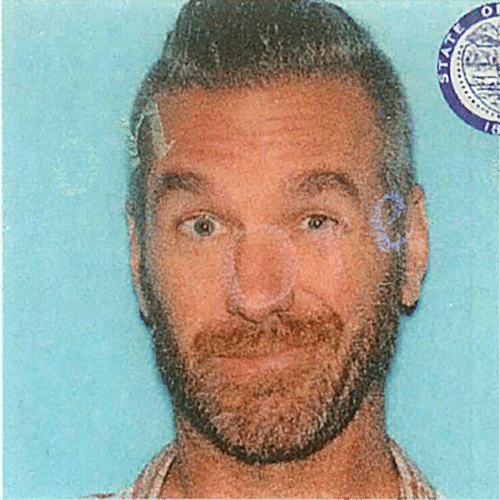
Kevin Cavenaugh is a rare developer.  Left brain, right brain, head and heart all come to bear on his wildly creative buildings. He has carved out a special place for himself in the Portland real estate world. He has said, “I’m tired of mocha-colored, vinyl-windowed boring. I can’t change the fact that the streets are gray and the sky is gray. But the buildings?”

One recent project, Tree Farm, has 50 small trees in planters mounted on the outside of a six-story building, and his projects often have far out names like: Dr. Jim’s Still Really Nice, The Ocean, Burnside Rocket, Rig-a-Hut, Two-Thirds, and The Zipper. Two of his projects, Jolene’s First Cousin and Atomic Orchard Experiment, have units reserved for homeless people and social workers at reduced rates.

Trained as an architect, with a tour in the Peace Corps in Africa, Kevin was also a Loeb Fellow in 2007. After the Peace Corps, Kevin says, “I had my dog I brought back from Africa, and I bought a $300 little Chevy truck,” he says. “I grabbed a duffle bag, my skis, my golf clubs, and my dog—that’s everything I had—and I drove up I-5” to Portland. A newspaper ad got him a room in a shared house and a dishwashing job. Soon, he and his landlord/friend went in together to buy a house on NE Alberta Street for $16,000 financed on a credit card.

Kevin said in one interview that he creates projects that attract attention so the people will say “I want to live in that city.”

Insights and Inspirations

  • “I’m driving the van” says Kevin. He doesn’t like to develop by committee. If you are on board, you’re in a back seat.
  • You can download Kevin’s pro-formas, open-source, from his website. Check out each building!
  • Kevin’s goal as a developer is to make a building that makes you happy to be there.
  • He calls the monotonous buildings we are used to seeing, “pro-formas with windows”. He likes to use his right and left brain together to develop a building – iterations between design and the numbers. Both have to work.
  • He’s been called ‘dangerously optimistic.’
  • These days, more than right and left brain, he’s focusing on ‘head and heart,’ trying to weave “the good” into his projects.
  • Of himself, he says “I’m not the smartest person in the room, but I’m the biggest risk taker.”
  • Kevin loves his buildings. They are like his progeny. He never wants to sell them.
Read the podcast transcript here

Eve Picker: [00:00:15] Hi there. Thanks for joining me on Rethink Real Estate. For Good. I’m Eve Picker and I’m on a mission to make real estate work for everyone. I love real estate. Real estate makes places good or bad, rich or poor, beautiful or not. In this show, I’m interviewing the disruptors, those creative thinkers and doers that are shrugging off the status quo, in order to build better for everyone. If you haven’t already, check out all of my podcasts at our website RethinkRealEstateForGood.co, or you can find them at your favorite podcast station. You’ll find lots worth listening to, I’m sure.

Eve: [00:01:11] It’s busy, and my best intentions to get you a brand new podcast this week evaporated. But this is almost better. Here’s an interview I conducted with Kevin Cavenaugh last year. Kevin Cavenaugh may very well be my favorite developer. He has carved out a special place for himself in the Portland real estate world. His buildings are memorable escapes from the mocha-colored vinyl-covered buildings he so disdains. Forgotten buildings in forgotten neighborhoods, buildings that you and I would not look twice at, are transformed into little creative hubs and bright spots in Kevin’s hands. And now he’s bringing heart into his practice as well, setting himself the challenge of incorporating homeless housing or anti-gentrification into his projects. All with no subsidy and all providing a return to his investors. You’re going to learn a lot from Kevin so listen in.

Eve: [00:02:12] If you’d like to join me in my quest to rethink real estate, please share this podcast or go to RethinkRealEstateForGood.co, and subscribe to be the first to hear what we’re cooking up next.

Eve: [00:02:34] Hello, Kevin, I’m just really thrilled to have you on my show.

Kevin Cavenaugh: [00:02:38] Howdy, Eve. Thanks for having me.

Eve: [00:02:41] You are one bad ass developer. I’m really not sure where to start with this interview. I’ve seen so many tantalizing quotes by you, so I figured I’d start with those. Is that Okay?

Kevin: [00:02:54] Okay. Yeah, of course.

Eve: [00:02:56] The one I probably love the most is, “I do a bunch of weird stuff.” So what is it you do?

Kevin: [00:03:03] Oh. Boy, that’s a big essay question. So I guess for your audience, I’m educated as an architect and I became a developer only because I knew nobody would hire me to do that weird stuff. Well, and when I was working for an architecture firm, I was doing really boring stuff. And I realized early on that I was being hired at phase one as the architect, and the interesting thing is phase zero. Like I wasn’t deciding what the ‘it’ was supposed to be, what the program is. Here’s a piece of land, who gets to decide whether it’s going to be an apartment building or retail or mixed use. I wanted to decide that. That’s why I became a developer. Once that I realized that the developers weren’t necessarily smarter than me. They just control the money. And once I realized that it wasn’t their money, they just grabbed the important seat at the table. They asked around. I took some of the developers to coffee. I’m like, hey, is there any reason I can’t grab that seat myself? And they all said, no, you know, go for it. So that allows me to build my weird stuff. So I design and then develop and own and manage projects that I always wished somebody would hire me to do. If that makes sense.

Eve: [00:04:18] Yeah, it does. So there’s another quote which probably comes right off that. “I’m tired of mocha colored vinyl window boring. I can’t change the fact that the streets are gray and the sky is gray, but the buildings?” So is this your mission statement? How does this play out in your world?

Kevin: [00:04:37] Well, I’ve got like a dozen mission statements. It’s an ever evolving mission statement. But Portland, Oregon, the skies are gray and the city’s gray and it’s that’s great. I can’t change that. But I rail against institutional money. I never, I run away from institutional money. I run away from national franchise tenants. I want to be quirky and local. And actually, I want to prove that being quirky and local and colorful and not doing copy and paste buildings is just as profitable, if not more profitable than the mocha colored vinyl windows buildings. I don’t put vinyl in anything. As a trained architect, the design comes first.

Eve: [00:05:18] Vinyl is pretty offensive.

Kevin: [00:05:20] It’s so bad, it’s so bad. And it’s cheap and it makes sense in a pro forma if I’m going to sell the building. But because I don’t sell anything, I can do deeper dives on what I put in the building. I can paint The Fair-haired Dumbbell. That paint job on that building…

Eve: [00:05:36] Is insane.

Kevin: [00:05:36] Cost a half a million dollars. It’s the most expensive paint in the world. And I’m never going to sell the building, so I can make different decisions and I can add to the city skyline in a way that institutional money would never consider.

Eve: [00:05:51] Yes, and that is impactful, isn’t it?

Kevin: [00:05:54] I think so. I hope so.

Eve: [00:05:55] So there’s a final quote I’m going to read to you.  “I just realized that I don’t have to play by the rules. It’s that simple.” How does that play out?

Kevin: [00:06:06] Real estate development is so easy and straightforward and simple. It’s almost, I’m never the brightest person in the room. The only thing I am is the person with the largest risk appetite, in the room. So once I took Francesca Gambetti to coffee and she was a client of ours when I was in the, at the architecture firm and I said, hey, how do you, what is a pro forma, how do you do what you do. And she laughs. She’s like, you’re already doing it, Kevin. You just bought a house in my neighborhood and I saw that you’re fixing it up and you’re selling. That’s development. That’s real estate development. You just have to shift the decimal point over. And instead of doing your house, do a little mixed use building. Or it could be an adaptive reuse. It could be new construction, but A plus B equals C, um, you know, hard cost plus soft cost plus land cost, you know, that’s that’s your total all in cost. And as long as when you’re done, throw a cap rate on it, it’s worth more than what it costs. You’re a successful real estate developer. So then my first question is like, that’s great, Francesca, what the hell’s a cap rate? So like, I was starting at zero. And after twenty minutes, I knew I knew everything. And then she emailed me her pro forma, which is the pro forma that I still use today, and all of my pro forma are up on my website open source. So people are downloading my pro forma from my products every day because if she gave it to me, I can pay it forward. It’s not complicated. It’s simple. And when people try to make it complicated, they mystify it in a way that keeps the layperson out of real estate development.

Eve: [00:07:40] Absolutely.

Kevin: [00:07:41] Which makes American cities dumber and uglier and more mocha colored.

Eve: [00:07:45] And doesn’t spread the wealth around. That’s what I deal with every day in crowdfunding. The fact that people don’t understand the special language that’s been developed for the developing incrowd, that just doesn’t have to be that complicated.

Kevin: [00:07:56] It’s not necessary.

Eve: [00:07:57] Yeah.

Kevin: [00:07:58] It’s so dumb. It’s just it’s you buying the neighbor house across the street that’s dilapidated and fixing it up and selling it. That’s real estate development. What you and I do, Eve, is no different. It just takes a little longer and it’s C for commercial instead of R for residential. But…

Eve: [00:08:14] That’s right, right.

Kevin: [00:08:15] Everything else is the same.

Eve: [00:08:16] Yeah. I can’t wait to download one of the pro formas. I’ll probably use it.

Kevin: [00:08:21] You’re welcome to it.

Eve: [00:08:22] There’s nothing worse than getting a pro forma that’s like 20 pages, 20 tabs, an Excel spreadsheet and you’ve got to work your way for every number, trying to figure out where it came from.  That’s just too complicated for me.

Kevin: [00:08:32] Not necessarily. Mine’s one page. And the funny thing is, I go to a bank, with that pro forma that that you’re about to download, and it’s one page and I show it to a bank and I can get a 10 million dollar loan. So complex isn’t required. Banks aren’t demanding it. It’s just part of that language that we feel we have to create to keep the outsider out, which is just not helpful.

Eve: [00:08:56] Not at all. So going back to your quote about the mocha colored vinyl window boring, many of your projects have really both striking facades and pretty far out names like Atomic Orchard Experiment, Burnside Rocket, or Dr. Jim’s Still Really Nice, which I admit is my very favorite building.

Kevin: [00:09:18] That’s where I live. That’s that’s what I’m talking to you from, right now.

Eve: [00:09:20] Oh, that’s a beautiful building.

Kevin: [00:09:21] There are stories behind all the names. I don’t know that I want to tell you the stories, though.

Eve: [00:09:24] Oh, well, what are you trying to accomplish with your buildings? Let’s talk about that.

Kevin: [00:09:30] They are all experiments. They’re all just things that I want to do and I’m curious about professionally and sadly probably like you, it all is interesting. It all like when someone brings an opportunity to me, I look at it. I have such a hard time saying, no, I’m an actual addict. Like I, I can see fun in almost any project. And I go to my coworkers, like should we do this and they’re just as bad as me. They’ve never said no, no boss, don’t buy that property, don’t do that building. We are all in all the time. The names are funny. It’s just that if I told you that the names are so deeply personal to me and I found in the past that when I explain to somebody what a name means, they’re almost disappointed because the story that’s in their head or what they’ve kind of thought of is much more compelling than what I just told them.

Eve: [00:10:21] I have no preconceptions about who Dr. Jim is.

Kevin: [00:10:25] Dr. Jim Saunders is an eye doctor.

Eve: [00:10:28] Oh.

Kevin: [00:10:29] And he sold me a warehouse over on Southeast Ankeny Street. And I got really creative financing and I borrowed hard money for hit the down payment. He carried a contract so I bought his building without any money of mine. And as soon as I closed on it, a hard money guy reached out to Dr. Jim Saunders and said, hey, Cavenaugh has no skin in the game. I want to replace him. I want, the buildings worth more than you sold it for. I’ll pay you more.

Eve: [00:10:55] Oh. Eww.

Kevin: [00:10:56] A just as little end around. And I had bounced a check, my first payment to Dr. Jim bounced. So like, I was in a really vulnerable place. And Dr. Jim called me up and he’s like, Hey Kevin, like what are you doing. Like I like you. You’ve been, we’ve been talking for a year. We’re like, you put this together and like I believe in your vision. Don’t like, I don’t want to get calls like this. So he could have made more money. And he said he had other offers for more than than what I was paying him as well. And he kept honoring his handshake to me.

Eve: [00:11:30] He is really nice.

Kevin: [00:11:33] Yeah, he’s really nice. So ,that building, that project was called Dr. Jim’s Really Nice. Now, in the recession, I had to sell that warehouse because the bank put a gun to my head and I lost everything in the recession.

Eve: [00:11:46] Awww.

Kevin: [00:11:46] But lo and behold, eight years later, I bought another warehouse, a hundred year old warehouse, one more neighborhood over. The exact same program, that exact same phase zero that I talked about, I was doing. And when thinking of a name, I just I wanted to still honor Jim Saunders. So I named it Dr. Jim’s Still Really Nice. That’s the LLC of the building and it’s a single asset, LLC. Dr. Jim doesn’t know this building is named after him. I haven’t I haven’t talked to him in a while, probably should mention to him that I’ve given him props.

Eve: [00:12:20] Well, I think that’s a great story behind the name. So what are you trying to like, they’re all experiments, but I know I’ve been to some of these and I love your buildings.

Kevin: [00:12:32] Thank you.

Eve: [00:12:32] And I can see that they are, you know, experiments with a clear purpose. There’s got to be more than just I’m going to experiment with this building.

Kevin: [00:12:41] Yeah. Yeah. So there’s a couple different layers to that. When I first started, it was about left brain, right brain. Even before that, I think most buildings have too many cooks in the kitchen. I think buildings that we’re all drawn to and we all see have one dominant voice, one dominant vision who is in charge. And and it’s not a committee of designers or a community.

Eve: [00:13:07] Not a democracy, right.

Kevin: [00:13:08] It not a democracy. No. And I say that to my investors and I say that to other folks. I don’t collaborate. I don’t have any interest in collaborating. If you want to if you want to hop into my 15 passenger van, that’s great. Just you got to sit in the back. I’m going to I’m driving this van. I’m not sharing the steering wheel with anybody. And you end up getting these hopefully iconic, singular, visionary buildings that I don’t need to explain them to you. You as the observer or participant or tenant. You just get it. And you don’t know how I got there. You don’t care. You’re just really happy to be in the building. That’s the goal.

Eve: [00:13:41] Right.

Kevin: [00:13:41] When I started, the first layer was left brain, right brain. So a product always starts with the design. And then I instantly toggle over and do a pro forma. And if the numbers don’t work, then I crumple up the paper and start with a new design. So it has to be design first and then the numbers. But the numbers can’t be ignored because there’s a lot of architects who become developers and just done one project and it’s an ode to their ego and then they can’t do it again because all of their money is sunk in the building. It’s not really a successful financial deal in the bank. The bank says next time, like, nah, I’m not that interested in giving you the million dollars because that wasn’t very pretty the first time. So the numbers have to work. But the vast majority of our peers, Eve, it’s only the numbers. So I view those mocha colored vinyl windowed buildings. I call them either Greavy buildings or I call them pro formas with windows. And I look at them. I think I know exactly what the numbers look like in that, because it’s just a pro forma that the developer is only tasking the architect to do the bare minimum to reach this ROI, to reach this return, to reach to reach this number.

Eve: [00:14:53] Right.

Kevin: [00:14:54] And the funny thing is. None of our buildings are maxed out. So if a developer says, hey, I know I can put 100 apartments on this site, so they hire the architect and the architect has no option of building designing 90 units. When a 90 unit building might be significantly better to the city skyline, to the  streetscape.

Eve: [00:15:12] Right.

Kevin: [00:15:12] There are no dog units with their 90 units, but if there’s 100, there’s going to be some dog units. But the developer doesn’t care. He or she just wants the 100 units. So toggling back and forth between my left and right brain is all about making sure the design is always front and center and it just has to make enough money. And then I pull the trigger, then I go for it. The tricky thing is that the last layer to that equation, what makes a building compelling or not, is about social repair. So now it’s more about head and heart instead of just staying left brain, right brain all on my head. Now I look around the city and I see homelessness or I’m doing a project that supports social workers. I’m doing a project that supports 18 year olds aging out of foster care, which have a higher proclivity to become homeless. I tried to do a reverse gentrification project, which isn’t actually a thing, but in the office we call it gentlefication. So how do I how do I develop in a neighborhood that’s turning without displacing anyone who’s already there? So these are the more social repair elements that I’m trying to lean into, which is super fun, but hard.

Eve: [00:16:22] Very difficult. Yeah. Oh, that’s really interesting. So these projects I mean, I’ve seen you do some pretty remarkable projects, which includes homeless housing and in neighborhoods that no one else have looked at really before. Are they making you money? Are they making your investors money?

Kevin: [00:16:42] They are. Jolene’s First Cousin is my first attempt to tackle homelessness, and it’s up and running. It opened last summer and we cut Q4 distribution checks last month.

Eve: [00:16:59] That’s amazing.

Kevin: [00:16:59] And it made five percent from the crowdfunded equity. It made, I think seven percent for the long term tranche of investors. I raised three hundred grand of crowdfunding and three hundred grand of accredited investors. And there’s not one dollar of public money in that project. And I’m super proud of that.

Eve: [00:17:18] Amazing. That’s amazing.

Kevin: [00:17:20] It’s fun.

Eve: [00:17:21] Congratulations.

Kevin: [00:17:22] Thanks. And the performance online, go ahead and take it. And I’m I’m breaking ground on Jolene’s Second Cousin and I’m buying the land for Jolene’s Third Cousin. So I’m just going to pepper, these nestle into neighborhoods. I don’t like Pruitt-Igoe or Cabrini-Green. I don’t like when thousands of poor folk are crammed into a building. That’s a great way to not break the cycle of poverty from generation to generation. So each Jolene’s Cousin only has like a roughly a 12 bed SRO plugged into it, like a 12 bedroom apartment, like a flophouse, and the tenants pay rent. It’s just that it’s super, super, super cheap rent. And there’s usually a subsidy for that rent. That’s not my, I’m not involved in that. I just provide the …

Eve: [00:18:11] What’s the what’s the rest of the building. How do you make that pro forma work?

Kevin: [00:18:17] It’s internally subsidized. So, Jolene’s First Cousin has three retail spaces. It has a hair salon, a coffee shop and a bakery. It has two market rate apartments that are very expensive and it has the SRO, the homeless housing unit. So when all six rents are added together, it’s enough to spin off a profit. And the other fun thing is, it’s allowed by a right. So I didn’t have to do any special entitlements to get it. In Portland, you have to go and present to the neighborhood association on any project. Because it’s a law by  right, you don’t have to do what they ask, but you just have to be a good neighbor and be transparent. This is the first neighborhood association I thought I was going to go in front of where I was going to get rotten tomatoes thrown at me. Because here I am, I’m bringing homeless in. I mean, there’s a single family house right next door and I presented it and I kind of stood back and waited and there were no questions and there were no tomatoes. And then I asked a question, how do you guys, what’s your take on this? Like, how do you feel about bringing homeless into your neighborhood? And then a woman in front said, well, once they lived there, they’re not homeless anymore.

Eve: [00:19:23] And they’re probably already in the neighborhood, so giving them a home…

Kevin: [00:19:27] Exactly. And then another neighbor said, with 11 bedrooms, like, we’re going to know their names. It’s going to be like Suzy and Jim and Frank. And if it was 100 units, we probably would be pushing back Kevin. But there’s 11. So they were in total support. And they’re it’s been wonderful.

Eve: [00:19:45] That is wonderful. And, you know, I think it’s vastly different than it might have been five years ago. I think homelessness and affordable housing is now on everyone’s mind. And it’s a real shift. But, you know, what about the two market rate units? How do they feel about the SRO unit right next to them?

Kevin: [00:20:02] That’s a great question, because there was so much speculation in the papers, on blogs, like like Cavenaugh’s an idiot. Like no one’s going to rent those. Nobody’s going to want to, like, be paying 1,800 bucks a month living like next to guys who used to be living in sleeping bags out in front on the sidewalk. And my response was like, well we’ll see, you know, like all of my products are all experiments. It’s a question. There’s only two units. My guess is there are two people who will love being part of this. And lo and behold, they rented out in about 20 minutes.

Eve: [00:20:40] Oh, that’s fantastic, Kevin.

Kevin: [00:20:41] There’s a huge backup. Yeah. Backup for people who want them when they become vacant again.

Eve: [00:20:46] Are you sure you won’t partner with anyone? Because I want to do a project with you.

Kevin: [00:20:52] Just take it…

Eve: [00:20:52] I would like to be in the passenger seat, not the back seat. 

Kevin: [00:20:56] You’re welcome to be in the passenger seat. I do. I do talk about that. I said it’s not a pretty ride. It’s usually scary, but I always arrives safely at the destination.

Eve: [00:21:08] Oh, it really sounds wonderful, sounds wonderful. Okay.

Kevin: [00:21:10] But you know exactly how to do this, Eve. You should just take my plans and my pro forma and build it in Pittsburgh.

Eve: [00:21:18] Yeah, I should. I’ve been thinking about it for a long time, actually. I have one in mind, but it’s a lot of fun what you’re doing and really impactful. So, you did mention crowdfunding. So, you know, I first became aware of your work when I started to build Small Change, my crowdfunding platform. And you had launched a Regulation A offering, which, if I’m remembering properly, may have been the first of its kind for one of your buildings in Portland.

Kevin: [00:21:42] Yes.

Eve: [00:21:42] The Fair-Haired Dumbbell. And what was that about? Why did you do that?

Kevin: [00:21:47] Good question. I don’t, I didn’t realize it was the first until we were done and then my lawyer, I chose this lawyer who was recommended to me because he was an expert in crowdfunding, all the hoops that he had to jump through. And when we were done, it took me a year and a half to to get through the SEC regulatory framework. He, on the phone is like, oh, my God, congratulations. We’re so excited. This is our first one. Wait, what? Like you’re the expert? What do you mean? Like this is your first one. He’s like, no, this is everybody’s first one. So,

Eve: [00:22:20] Wow.

Kevin: [00:22:21] It was a big deal. It was the the first new construction. I think there was one prior to me, construction that the Fundrise brothers put together.

Eve: [00:22:29] Yes. I remember seeing a photograph of the paperwork they had to submit, which was about three feet high.

Kevin: [00:22:38] Yeah. Yeah.

Eve: [00:22:39] And just, um, just for listeners who are not aware, Regulation A is an offering that lets anyone over the age of 18 invest. It requires really writing almost like a mini IPO and submitting it to the SEC and getting their approval before you can launch and raise money. Right?

Kevin: [00:22:54] Exactly right. Yeah. And it’s it’s a lot it’s a it’s a heavy lift.

Eve: [00:22:59] It’s really not worth it for, you know, anything much under five or ten million dollar raise. It’s too much work. Right?

Kevin: [00:23:05] I raised one and a half million dollars.

Eve: [00:23:07] Oh!

Kevin: [00:23:08] I don’t know that I would do it again for that amount, but I want to do it again because the idea of it is so profound to me and I know to you too, Eve. So, I’m legally not allowed to talk to my mailman or my kid’s teacher about a very lucrative development deal that I’m working on. They’re not accredited investors. They’re not already wealthy.

Eve: [00:23:33] Right.

Kevin: [00:23:34] And part of the social repair that I’m working on is the wealth gap in America. It’s broken, it’s distorted. It’s not sustainable in the long term. It’s not sustainable today. So when I decided to dip my toe into the crowd investing pool, it was purely to allow mechanics and school teachers and librarians to own a 17, 18, 20 percent, 10 year IRR building with me. Right. Internal rate of return, a really lucrative investment. Like my wife has a 401k and she puts her money in a mutual fund. And that’s all she, the options to her are different than the options to somebody who’s on the 17th fairway of a country club golf course talking to his buddy about deals.

Eve: [00:24:21] And many people don’t have a 401K at all. They’ve just got the bank with less than zero percent interest.

Kevin: [00:24:29] Exactly. So it was important to me, just ethically and profoundly to do this, even though it was, it would have been so much easier to just tap some rich guy’s shoulder and say, hey, I need 1.5 million, that’s the gap to get this product off the ground. Instead, I took a year and a half and people for as little as 3,000 dollars now own the Dumbbell with me. And they’ve been getting paid from day one, eight percent.

Eve: [00:24:50] That’s fantastic. So, yes, since then, regulation crowdfunding has come into play, which is, would be much easier for you. But I have yet to convince you, yet.

Kevin: [00:25:00] Well, I’ve done two other crowdfunding vehicles on the homeless housing project. I did raise 300,000 dollars that way…

Eve: [00:25:08] Through a state vehicle, right?

Kevin: [00:25:10] Yeah. State only. And that was unaccredited. And then on my Tree Farm Building. I like that one for your listeners…

Eve: [00:25:18] What is a Tree Farm Building?

Kevin: [00:25:21] You got to go my website and see it, but it’s like it’s self-explanatory.

Eve: [00:25:27] Okay.

Kevin: [00:25:29] But I raised two million dollars that way, but they’re more accredited and I don’t want to holler from the rooftops about that. But it is legally, it’s another form of crowdfunding.

Eve: [00:25:39] Well, we just had a breakthrough on our site. We raised almost 900,000 dollars through Reg CF.

Kevin: [00:25:45] Wow.

Eve: [00:25:46] For a project in the Berkshires. And the issuer was the most pleased when the local librarian made an investment.

Kevin: [00:25:53] Yeah.

Eve: [00:25:54] He was just delighted. And I mean, that’s really the point, right? That’s why I do it.

Kevin: [00:25:00] It democratizes real estate investing.

Eve: [00:26:02] Yeah.

Kevin: [00:26:05] I understand why there are fences up that keep the shitty developers from bilking Mrs. McGillicuddy from her retirement. Like there should be there should be rules and laws against that from happening. So so lowering the bar for me to talk to Mrs. McGillicuddy can be scary, but it’s still a pretty damn high bar. I just like that I can jump through some hoops and you can jump through some hoops and Mrs. McGillicuddy can invest in a building.

Eve: [00:26:32] Well, you can actually, under Reg CF talk to her, but you can’t tell her the terms of the offering. That’s got to be on a registered funding platform. But you can say to her, we’re doing a project and it’s around the corner from you and you can invest. If you go to this funding portal, right?

Kevin: [00:26:49] Yeah, yeah, I love it.

Eve: [00:26:51] Yes, I love it, too. Okay, so so you’ve gone from getting your architecture degree, to joining the Peace Corps, to far out real estate developer. And told us a little bit about how you did that. And what’s the biggest challenge you’ve had?

Kevin: [00:27:11] Mmm, well I lost everything in the 2008-10 recession. That was difficult, but, it I mean, on paper, that should be the most challenging. I lost everything. On a Thursday, I had a net worth of four million dollars. And then a month later on this day, on a Thursday, I was a million dollars underwater. And that should be bad. That should be difficult. My buddy claims that I have HSP, which stands for hyper serotonin production, which isn’t a thing, but I didn’t even know at the time that I was getting punched in the face by the economy. Every day I would wake up like, Okay, I guess this is the puzzle and I like puzzles and I know you like puzzles and just everything.

Eve: [00:28:03] Yes.

Kevin: [00:28:03] All of our products are puzzles and it’s just another puzzle. And I got to figure this one out. So I should have probably been more devastated by it, but I was too dumb to know that I was, you know, in a hole.

Eve: [00:28:13] Oh, I don’t know that that’s forward looking, right?

Kevin: [00:28:18] Yeah, I think that my internal wiring is probably such that I, like my wife calls me dangerously optimistic. So there are probably things where I should have been more concerned or realized that I was on the ground, but I just didn’t even realize it.

Eve: [00:28:34] Wow. So, you allowed to talk about your next project. What are you working on now?

Kevin: [00:28:39] Sure. This is a fun one, so I never want to sell anything.

Eve: [00:28:44] Why is that? Is it because you love your buildings too much?

Kevin: [00:28:49] Yeah, it’s like selling my progeny. Like, I spent so many, like I lie in bed for I go to sleep and I’m like building. I close my eyes. I’m building the building in my head and by the time it’s drawn, I’ve already built it 100 times in my head. It’s my baby. Like in the 2008 recession, now a lawyer owns the Burnside Rocket. And I did, it’s LEED Platinum. There’s a geothermal open loop heat pump under the under the building, although all the water is, you know, I have tapped into a 10,000 year old aquifer for all the potable water. It’s it’s a crazy fun experiment. And now some like, you know, kind of a knuckleheaded lawyer who doesn’t care about that, owns that. It’s just an asset. And he views it differently than I view it. So I don’t want to sell. Was it Monday, my most recent project? I’m buying a house on a big lot out in what’s called The Numbers of Portland. It’s a pretty trashy area. It’s no sidewalks, deeper poverty, houses without foundations, double wide trailers. It’s it’s it’s rough, but it’s also where all the young families are moving because they can buy there. Because the house prices have just gone through the roof here. So we all understand that in five, 10, 20 years, it’s going to be a place you want to be. It just not a place, now. You’re on the bleeding edge of gentrification. So, I’m actually going to buy this house for 265,000 dollars. And on Zillow is worth 100,000 more than that. It wasn’t on the market. Someone just called me up and I’m going to split the house off and probably give it to someone else to fix up and keep that. I don’t need the profit from that. Someone else can go get the profit, but all they want is the land and the rest of the land, the, a guy named Eli Spevak is a developer in town. And he does forward thinking policy. And Portland has some wonderful density promoting policy and Eli’s work to change all the zoning for every single family house you can now build fourplex on. You’re allowed by right to build a fourplex on it, in the entire, everywhere in the city. And this lot is such that I could build 12 houses if I wanted to. I don’t want to own rentals out in The Numbers. So what I’m going to do is I’ll fit seven. There will be seven two bedroom cottages, two story, two bedroom. Little front porches, you’ll walk down a path and they’ll spin off to the left and right. And these will cost 200,000 dollars each but be worth 300,000 dollars each. And I will sell them off for two hundred thousand dollars to first time homebuyers who qualify. You have to be poor, whether it’s a perfect partner with Habitat for Humanity or some agency to identify who the buyers are. But held against the deed of the house, if you buy this for 200 and that’s worth 300, that’s great, but has to always be owner occupied. And if and when you sell it, you have to sell it at two thirds of the appraised value. So it has to always be affordable. So if you sell it for, if it’s worth 600,000 grand in a decade…

Eve: [00:31:52] How are you going to track them?

Kevin: [00:31:55] Just put a covenant against the deed on everything.

Eve: [00:31:57] Wow, and are you going to break even on this?

Kevin: [00:32:01] I’ll probably make 10 grand per house, so I’ll make 60 grand and it’s not enough to, you know…  Yeah, I’ll break even. It’s it’s a deep experiment. The other projects, I’ve got 21 other projects and since I keep them ,they all spin off a little bit of money to me. But you know, it’s been a decade since the last recession and now I’ve got those 21 projects, 14 of them are spinning off money and I now make enough passably that I don’t need each project to work.

Eve: [00:32:39] Yeah, yeah.

Kevin: [00:32:39] If it breaking even is is a fine. Not everyone do I want to do that with, but…

Eve: [00:32:43] Interesting.

Kevin: [00:32:43] This feels fun. I’m also this week I’m putting an offer in on Jolene’s Third Cousin, so I’m keeping that going. So there’s, there’s no lack of fun stuff. I’m breaking ground on an apartment building where 20 percent of the lofts are being held aside at 60 percent of median family income for, I mentioned before, 18-year-old aging out of the foster care system in a really great neighborhood. Most see their options for living are way out in The Numbers, not near jobs, not in your transit, not near opportunities. So that’ll be fun.

Eve: [00:33:19] It all sounds fun. And I’m really jealous.

Kevin: [00:33:22] I just I’m just I virtue signal like nobody else, you know, that’s all I’m doing.

Eve: [00:33:28] So I’m going to ask you one wrap up question and that’s what’s your big, hairy, audacious goal?

Eve: [00:33:35] Oh, that’s a that’s a great question, because I just spent the month of January vacationing and usually the big, hairy, audacious goals happen when you’re not in your 9:00 to 5:00. You have to step outside of your life to to have them kind of allow your your brain to accept them. So, my youngest of three is a junior in high school, and in a year and a half, I’ll be an empty nester. And I have been courted by lots of other cities. Cincinnati, Honolulu, Denver. And I’ve always said no because I can’t do what I do it unless I am embedded in that city. I do a lot of micro restaurants. I find that food is a great inroad into a neighborhood. It’s a great, micro restaurants are like a a variation of the food cart. I understand the business model. I need to live in Pittsburgh to know who the sous chefs are, looking for a space that can afford 25 or 30 grand if they call their uncle and their neighbor and they can cobble together some money and open up a restaurant. I’ll never know that person without living in Pittsburgh.

Eve: [00:34:43] Mm hmm.

Kevin: [00:34:44] So in a year and a half, I know that I’m start taking the show on the road. And to kind of continue the the virtue signaling theme. I am a fifty three year old white man. And the vast, you know, this Eve, good God, the vast majority of developers look like me. Maybe 10 years older, maybe 50 pounds fatter, and it’s just it’s a caricature.

Eve: [00:35:10] Mm hmm.

Kevin: [00:35:10] But it’s true. And there’s no license you need to be a developer. There’s no special credentials or, you just need to have knowledge and you need to be invited into the room. You need to have access to the 17th fairway, the country club, and that’s a broken system. So, as I go into cities like Honolulu or Tucson, I’m thinking of Detroit as well. And I create branches of Guerrilla, and I go and I drop myself in for three months at a time. I want everyone that I hire to eventually run the show. To be native Hawaiian or Latino or African-American, and when I leave, I’m gonna drop the keys off to the company, to the next generation, a developer that looks nothing like me because that doesn’t happen to them. When I lost it all, it took me about a minute with my 505 credit score to get a loan for a million dollars for my next project.

Eve: [00:36:09] Mm hmm.

Kevin: [00:36:09] That’s not OK. There are people who are much more deserving and I didn’t question it at the time. I was just so happy that I can merge back into traffic and start developing again. Now, we all realize that there are people at that same bank getting rejections that were much more deserving of the money. They just didn’t look like, I look like I’m good at tennis and golf. I look like, I have the gift of gab. That helped me get that million dollars and my face more than anything else. I had a 505 credit score. That’s offensive. That’s really, really bad. And only now am I realizing that other people need to just be handed opportunities and they need to have hutzpah and they need to have tenacity, the way that I know you have, Eve. I mean, it’s more about personalities than skill. I can teach you skill. I can teach you how to do certain tasks, like just the way that Francesca Gambetti taught me.

Eve: [00:37:04] It’s about sticktoitness, too, isn’t it?

Kevin: [00:37:07] Oh, my God, yes. If you don’t have a risk appetite and when I’m interviewing the next generation in Detroit, I want to know all about you as a person. I don’t care about whether you know Excel. I don’t care about where you went to school. I need to know what happens when you get punched in the face.

Eve: [00:37:21] Yeah.

Kevin: [00:37:23] And I can’t wait ten years from now, to walk away from these branch companies and hand the keys off to the next generation and change the face of what development looks like.

Eve: [00:37:32] That’s an amazing goal. And I really appreciate you taking the time to talk with me. I’m totally in love with what you do, Kevin, thank you so much.

Kevin: [00:37:43] Thank you. It’s fun.

Eve: [00:37:56] You can find out more about this episode or others you might have missed on the show notes page at our website RethinkRealEstateForGood.co. There’s lots to listen to there. A special thanks to David Allardice for his excellent editing of this podcast and original music, and thanks to you for spending your time with me today. We’ll talk again soon, but for now, this is Eve Picker signing off to go make some change.

Image courtesy of Guerrilla Development/Kevin Cavenaugh

« Previous Page
Next Page »

Primary Sidebar

sign up here

APPLY TO BE A PODCAST GUEST

More to See

(no title)

February 22, 2025

Bellevue Montgomery

February 11, 2025

West Lombard

January 28, 2025

FOLLOW

  • LinkedIn
  • RSS

Tag Cloud

Affordable housing Climate Community Creative economy Crowdfunding Design Development Environment Equity Finance FinTech Gentrification Impact Investing Mobility Offering Opportunity zones PropTech Technology Visionary Zoning

Footer

©rethinkrealestateforgood.co. The information contained on this website is for general information purposes only. Nothing on this website is intended as investment, legal, tax or accounting strategy or advice, or constitutes an offer to sell, solicit or buy securities.
 
Any projections discussed or made may not be accurate and do not guarantee a specific outcome. All projections or investments are subject to risk due to uncertainty and change, including the risk of loss, and past performance is not indicative of future results. You should make independent decisions and seek independent advice regarding investments or strategies mentioned on this website.

Recent

  • The Mulberry
  • Mount Vernon Plaza
  • The Seven
  • Real estate and women.
  • Oculis Domes.

Search

Categories

Climate Community Crowdfunding Development Equity Fintech Investing Mobility Proptech Visionary


Copyright © 2026 · Magazine Pro on Genesis Framework · WordPress · Log in