• Skip to main content
  • Skip to secondary menu
  • Skip to primary sidebar
  • Skip to footer
  • Home
  • About Us
  • Say hello
Rethink Real Estate. For Good.

Rethink Real Estate. For Good.

  • Podcast
  • Posts
  • In the news
  • Speaking and media
    • About Eve
    • Speaking requests
    • Speaking engagements
    • Press kit
  • Investment opportunities

Design

Maintaining a place for the community.

April 6, 2020

When wealthier individuals and organizations move into an urban neighborhood, both the rental and property values as well as the culture and character of the community can change. This process is known as gentrification. While this shift can do good and often results in the revitalization of struggling areas, it can also leave many people in the existing community priced out of their own neighborhood and even worse, displaced. Today, as gentrification takes place in more and more urban areas across the country, many socially conscious developers, investors and urban planners have thankfully become sensitive to the issue. And many of them are looking for ways to maintain a place for existing, lower-income members of communities that are faced with the changes that will inevitably come. One such example of a large project in a rapidly gentrifying community is the Bushwick Generator in the East Williamsburg area of Brooklyn.

Background

Williamsburg, a north Brooklyn neighborhood situated on the waterfront, was historically a manufacturing district. It originally developed due to a boom in industry in the area in the early 1900s. Over the last two decades it has increasingly transformed into a trendy neighborhood, for living, eating, shopping and visiting. And as always, the pressure of development has resulted in spill-over development activities in the adjacent neighborhoods of East Williamsburg and Bushwick which have now also become much sought after areas to live in. This is in part due to the fact that these neighborhoods are well-served by public transit. They are right on the L train, a primary mode of transportation between Brooklyn and Manhattan.

The Bushwick neighborhood itself is a diverse community with a strong Latino and African-American presence along with other immigrants and young creatives. But Bushwick is now beginning to experience the leading edge of gentrification with the arrival of affluent media and tech businesses, along with their employees, into the area. These new businesses threaten to change the neighborhood’s long-standing character and are putting at risk the affordability of the neighborhood for some of its existing residents.

About the Bushwick Generator

The Bushwick Generator is housed is a massive warehouse which was purchased by a developer in 2015. The developer’s goal was to create a “community influenced innovation lab and creative hub.” The Generator has 100,000 square feet of space and is in the process of being developed for commercial, nonprofit and creative tenants, and, most importantly, as a resource for all members of the community.

In 5,000 square feet of now-completed space, Emerick Patterson, one of the leaders of the project, does community outreach and neighborhood work. His primary goal is to offset the effects of ongoing gentrification. As media and tech tenants continue to move into the area around it, the Bushwick Generator offers not only a resource for members of the existing community but also an opportunity for them to impact what goes on in the large spaces around them.

The project is still in its early stages and is exploring how the total space can be used. Yet, at the forefront of this planning process is what members of the neighborhood want, whether that be a place for job training, job readiness, or simply a space to gather and meet. The Bushwick Generator has an open-door policy and works to get as many members of the community through the doors as possible. They regularly host events, working hard to ensure that all events are attended by members of the community. First and foremost, they want to ensure that locals are getting access to knowledge about what is now going on in the neighborhood.

Patterson says that, ideally, these efforts will result in some changes to the ongoing tech influx in the area and that the Generator will enable all members of the community to feel connected, comfortably engaging in area events and confident enough to ask for help when needed.

To learn more about the Bushwick Generator and other projects in the area, listen to the full interview with Emerick Patterson.

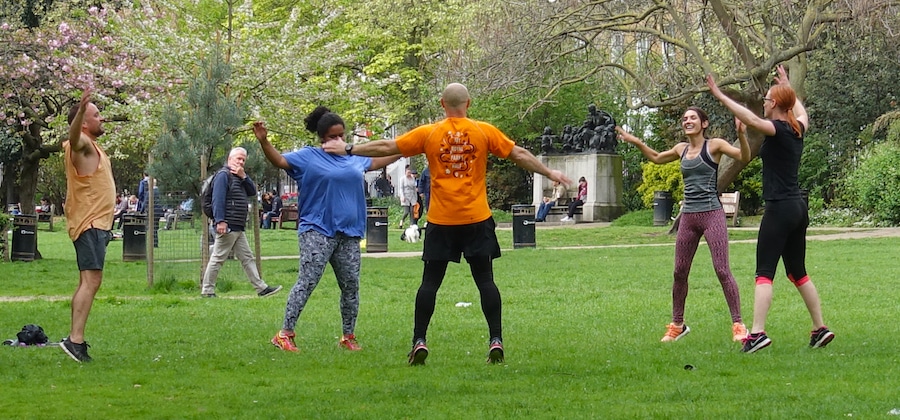
Image from Pxhere licensed CC0 Public Domain
Public space. The heart of the city.

March 30, 2020

There are numerous factors that city planners, politicians, developers and designers consider when planning cities; from infrastructure to transit to the creation of residential, commercial and retail space, all to draw new businesses and residents. But often the last thing to be considered, and yet perhaps the most critical component in any city neighborhood, is public space. Parks, plazas, walking and bike paths and even wide, strollable sidewalks all play an integral role in connecting communities and giving people a sense of belonging.

In a recent podcast interview with Eve, former Pittsburgh Mayor, Tom Murphy, reflected on some of his administration’s big wins in revitalizing the city of Pittsburgh, as well as some missed opportunities. In his post-mayoral career, Mayor Murphy regrets not putting public space front and center.

Turnaround mayor

Tom Murphy served as Pittsburgh’s major from 1994 to 2006, a turbulent and transformative time for the city. He took over the reins of the city when it was decimated by a loss of the steel industry and out-migration of over 50% of its population. During his tenure Tom created a $60 million development fund to jump-start development in abandoned neighborhoods, built two new waterfront stadiums, and developed many miles of river trails. At the end of his tenure, he had presided over a remarkable urban comeback story, and the city has been transformed in a myriad of ways.

At the heart of Murphy’s plan to revive Pittsburgh was the purchase of 1,500 acres of land for new development. This gave the city a chance to create effective public-private partnerships with developers to restore struggling parts of the city, all the while luring new businesses to the region and encouraging others to stay and grow.    

Planning for public spaces

Murphy strongly believes that a sense of “place is everything,” and can have a huge impact on the quality of peoples’ lives. He notes that in addition to the large-scale developments his administration sponsored, they were also able to also rebuild all of the city’s 100 or so neighborhood parks, both small and large, all while involving the local communities. But he is quick to add, that although their instinct was right, they should have gone further, expanding the city’s park system instead of just rebuilding it. Some neighborhoods that have long lacked communal gathering places would have benefitted from the creation of wonderful new plazas.

Reflecting on his experiences in Pittsburgh, and as a frequent visitor to cities all over the world in his role as a Senior Fellow at the Urban Land Institute, Tom has come to believe that an even a stronger sense of community can be encouraged through the use of public space, whether it’s a playground or a park. He wonders how you can thoughtfully connect people in a neighborhood so that they feel a sense of belonging to the place. He believes that “if people feel rooted in their neighborhood, … they’re willing to put up with a lot of problems if they see themselves and others committed to wanting to making it better.”    

Getting communities invested

Public spaces are crucial for building successful cities. They help to bring communities together and invest people in their neighborhoods, regardless of background or income. Amidst lucrative development plans, it can be easy to overlook the importance of public space, but as Murphy notes, city government and local communities can and should work in partnership with developers to make sure public space is at the forefront of every new development and planning project.      

Listen to the full interview with Tom Murphy to hear more about his vision for public spaces and the role that public space plays in building better cities.      

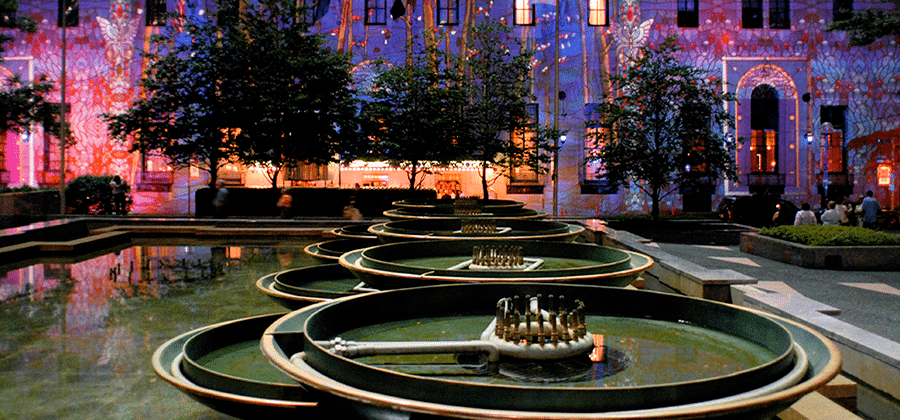
Artlumiere light projections ’09 courtesy of Jonathan Greene

Back to wood construction.

March 16, 2020

As the creation of affordable and sustainable housing becomes increasingly urgent, focus has shifted to innovative ways to meet these goals. I found one such example in Amsterdam where Marc Koehler and his design team develop creative solutions for urban living through their Superlofts Project. Broadly speaking, a Superlofts project starts with the bare structural frame of the building. Each future resident designs her own home, which is then inserted into that framework, making a vertical village. This interactive process is a rather wonderful flexible and community-centric model for the creation of urban co-living.

Not satisfied with creating just a flexible living model, Marc’s team also strives to improve the sustainability of each of their projects. One way they are considering this it to move towards heavy timber construction. Their first timber project is already under development – a six-story building in the Netherlands. This push highlights the growing awareness of the benefits of engineered wood materials even for large-scale projects.

The benefit of using timber

For Marc, the two primary benefits of building with timber are flexibility and sustainability. The Superlofts vision is intended to offer flexibility in the design and configurations of buildings. Using timber adds to that goal, since timber construction makes it far easier to alter the configuration of a building. Wood is easily adaptable and can be reconfigured with minimal costs.

By contrast, concrete structures limit changes in unit and building configurations, making it more difficult to offer changes to living arrangements as families grow (or contract). By transitioning from concrete to timber, Marc believes his projects will become more like a Tetris game, with living spaces that can easily be connected and reconnected in a multitude of ways. This flexibility reduces waste and makes future adjustments far more efficient.

Simply put, building with timber is a sustainable practice. First, unlike many building materials, wood is organic – a natural material. This means that it is non-toxic and ages naturally. Second, it’s a renewable building material. As long as more trees are planted to replace those that are used, it serves as a renewable resource. Third, wood stores carbon dioxide, which otherwise would be released into the atmosphere. This means that as long as the timber is being used, it’s retaining that carbon dioxide, stopping it from being added to the atmosphere. Lastly, because wood is a good insulator, using it leads to more energy efficient buildings.

How tall can timber buildings be?

It has long been imagined that wood construction was limited to just a few stories. It’s so light and flexible that it’s generally not considered for taller buildings, which are more typically constructed of steel and concrete. However, engineering innovations are quickly producing wood products that have greater structural integrity, leading to a wave of new, tall heavy timber designs.

On the other side of the world, in Toronto, Sidewalk Labs has developed a digital proof-of-concept for a 35-story all-wood building. The design incorporates cross-brace frames, a technique often used in high-rise construction, along with cross-laminated timber beams. By using structural, diamond-shaped supports on the exterior, additional space is freed up on the interior. To keep the building from rocking, the design does have a steel mass damper, but this is the only non-wood component used in the structure.

Superlofts’ vision for mass timber is all-embracing.  Marc and his team realize that timber today not only has the structural integrity needed to build larger structures along with its important sustainability features, but it also provides the potential to easily adapt a building during its lifetime.  And that is something they are interested in exploring.

To learn more about why and how Marc is using timber in his new project, listen to our podcast interview here.

Image by PIRO4D from Pixabay

Scaling up.

March 11, 2020

Brian Gaudio believes that everyone deserves access to good design. The inspiration for starting Module came while he was directing Within Formal Cities – a documentary about the housing crisis in South America, which debuted in 2016. Brian, then a college senior, saw the broader possibility of modular “pay-as-you-go” design. As opposed to simply designing yet another prototype for affordable housing, he decided to create a startup around it. And so Module was born.

Brian Gaudio and his team are based in Pittsburgh, Pennsylvania. The three principals bring eclectic experiences in affordable housing, urban design, theme rides, industrial product design, tiny houses and small scale interior remodeling to the table. At Module they have turned that expertise into creating perfect little housing solutions that meet zero energy standards, and are smaller and flexible so that they can grow with a family’s needs.

Module envisions houses half of the typical size of American houses being built today, working as infill and affordable housing solutions – 600 s.f. to 1,600 s.f. – the smallest model could be erected on a 20-foot wide city lot, a standard lot width in Pittsburgh. New homes reimagined for a newly reimagined city. Rooms (and floors) can be added (like Legos) as needed, a concept that has been around for a number of decades as a path to home ownership, with sustainability a critical added component. Their first house was built to Passive House standards, but they’re using the Zero Energy Ready standard now, since it is easier to work with.

Prior to starting Module, Brian was a Fulbright Scholar in Santiago, Dominican Republic, where he led an urban design research initiative. He has lectured and given presentations for the American Institute of Architects, the Rockefeller Foundation, and numerous universities in the US and abroad. Brian has design experience in both the for-profit and nonprofit world. He worked in Blue Sky Department at Walt Disney Imagineering where he helped create new ride concepts for the Disney Parks, and he served as an architectural intern at the Gulf Coast Community Design Studio. Brian graduated Summa Cum Laude from North Carolina State University with a Bachelor of Architecture where he was a Park Scholar, started a non-profit organization, and was a finalist for the Harry S Truman Scholarship.

Insights and Inspirations

  • Module wants to build 100 units in the next four years. Brian’s goal is to make change through scale.
  • Brian thinks the Friday Morning Serial at the Gulf Coast Community Design Studio is one of the most engaging and inclusive community experiences he has experienced.
  • A close second is Pittsburgh’s Open Streets.

Information and Links

  • Module sells houses that grow with their owners.
  • Module’s mixed income housing project that’s in construction on Black Street is in partnership with the Urban Redevelopment Authority of Pittsburgh and the Bloomfield Garfield Corporation.
  • Brian co-directed a documentary on the housing crisis in South America.
  • The Gulf Coast Community Design Studio is doing great place-based work in Biloxi, Mississippi.
Read the podcast transcript here

Eve: Hi there. Thanks so much for joining me today for the latest episode of Impact Real Estate Investing.

Eve: [00:00:06] My guest today is Brian Gaudio, founder of Module Housing. While working on a documentary about the housing crisis in South America, Brian, then just a college senior, saw the broader possibility of modular pay-as-you-go design. As opposed to simply designing yet another prototype for affordable housing, he decided to create a startup around it. And so Module focuses on perfect little housing solutions that meet zero-energy standards, and are smaller and flexible, so that they can grow with a family’s needs.

Eve: [00:00:53] Be sure to go to EvePicker.com to find out more about Brian on the show notes page for this episode. And be sure to sign up for my newsletter so you can access information about impact real estate investing, and get the latest news about the exciting projects on my crowdfunding platform, Small Change.

Eve: [00:01:9] Hi, Brian. Thanks for joining me today.

Brian Gaudio: [00:01:24] Hi Eve, thanks for having me.

Eve: [00:01:29] It’s a pleasure. So, I’ve been watching you build your company, Module, for a few years now, and I’m really excited to talk to you about it. You’ve decided to focus your life’s work on designing modular housing, affordable-by-design housing. And that was a pretty bold move straight out of school. So, what problem are you trying to solve?

Brian: [00:01:47] It is a big problem. And it’s a problem that, in school I was always, you know, in studios I would always be thinking about. It was something that was rattling in the back of my head, was how do we bring good design to more people, right? In architecture school we’re often told how important design is. And then we get out in the real world and we realize how the designers need to have a larger seat at the table. So, in my work after school, it was always trying to answer that question of how can we bring good design to more people. And there may be non-traditional ways to do that, is what I’ve been learning.

Eve: [00:02:20] That was the biggest problem. But I think I also read that you became very interested in affordable housing issues during your Fulbright Fellowship. You want to tell us a little bit about that?

Brian: [00:02:30] Yes. In school I actually was studying under one of the fathers of community design and participatory design, Henry Sanoff. He had founded an organization called the EDRA, the Environmental Design Research Association. So, I was sort of a student of his and a student of Brian Bell, who had started the Public Interest Design Institute, in the United States. So, it was really learning from folks who were leaders in the public interest design space. So, after school, I tried to pursue that as a career and worked at the Gulf Coast Community Design Studio doing affordable housing and disaster recovery housing, as an intern there. For those who don’t know, Biloxi, Mississippi, on the Gulf Coast, is not too far from New Orleans. And when Hurricane Katrina hit New Orleans, it also hit Biloxi. So, I spent a little bit of time on affordable housing in Biloxi, Mississippi. And then, also, after that, went to the Dominican Republic and did a Fulbright scholarship trying to understand housing affordability as it relates to disaster recovery and urban design, in general. I was working in a neighborhood that was alongside of the, a waterway that during some of the tropical storms, people would be washed away, and housing would be wiped away.

Eve: [00:03:49] Hmm, wow.

Brian: [00:03:50] So, that research was really thinking about housing from the perspective of, where is it safe to have people housed? And what do you do when a neighborhood exists in a place that is really at risk, when we think about environmental and natural disasters? So, that was some of the kind of affordable housing work and research I was doing right out of school.

Eve: [00:04:15] That’s pretty intense work. So, how does that tie into what you’re doing today? I mean, what got you from there to where you are today, building small modular homes.

Brian: [00:04:28] Being exposed to these different methods of practice … so, in Biloxi, Mississippi, I was working for a nonprofit architecture firm that was an arm of Mississippi State University. So, I was exposed to this business model of a nonprofit architecture firm. And then at the Fulbright, it was really a bit more of an academic endeavor. Technically, the Fulbright’s under the U.S. Department of State, but you work with the local university. So, again, thinking about some of these issues from a, an academic perspective, I would call it. And then after that, I had spent a little bit of time with a friend directing a documentary, again, trying to educate ourselves on the problem of housing affordability. So, in that documentary, we interviewed a lot of architects, governments, designers, businesses about the housing crisis in other countries, specifically in South America. And it was in this kind of three, four years or so of, I would call it, a research phase, of understanding what are the practices and models that other organizations and groups are taking as it relates to housing affordability and what things worked from those models and what things didn’t work. And I guess how that ties into Module, what we’re doing today was, while these nonprofit architecture centers, these design centers, can work really well at a neighborhood scale, the question I always had was how can we move beyond the neighborhood scale and effect change at a greater scale? You know, at the city scale, and at the state scale, and eventually at the scale of a, you know, a country like the United States? How do we take some of those principles that worked really well at the neighborhood scale, but may not be able to affect thousands of people?That’s really why we chose to start Module, not as an architecture practice, but as a startup company. The idea being that you could scale faster through alternative capital means and have ultimately a greater impact once we do reach that scale. So, that’s kind of how those experiences influenced starting Module.

Eve: [00:06:29] That’s a really interesting path. I know you also were a company in Alphalab, which is a, I suppose, a startup accelerator. Has that worked for you, as a startup company, rather than a building company?

Brian: [00:06:44] Yeah, it’s a very good question because we went through, so you are referring to Alphalab and for those who are not in Pittsburgh, Alphalab is a startup accelerator, kind of like TechStars or Y Combinator, where they give early stage companies, basically folks with an idea and maybe a business plan, some initial seed capital, typically 50,000 dollars and some free office space and mentorship, to basically start to try to build their own business. A lot of the businesses in that accelerator program were tech businesses. So, think about software as a service company, SaaS companies like Slack, for example, you know, being the typical type of company that’s supported by an accelerator. So, I think we learned a lot about asking questions and testing our hypothesis through that accelerator program. And we were able to raise some initial angel capital, I would call it, in the Pittsburgh startup community and get our name out there and, you know, learn how to market, create a website and things like that. I think we also learned that as we look at investors and ways to support our business, you know, a typical venture capital investor is not likely the right kind of investor for a company like Module because they look to 10x their money in five years, which, we’re building a different kind of business than that. So, those are some of the things we learned from Alphalab.

Eve: [00:07:06] Yeah, interesting. So, you don’t think you’re a unicorn, like the rest of us, right?

Brian: [00:07:07] Right. No. Not in the traditional sense, no.

Eve: [00:07:18] So, what distinguishes your product, your modular housing products, from other products in the marketplace.

Brian: [00:08:26] So, as we think about off-site construction, modular housing, prefab construction, there are many companies now who are pursuing this as a business model. And I think we identify with the overall trend. The reason why so many people are pursuing modular or prefab construction is the labor shortage is getting worse and worse. And Eve, I know in your business, you’re doing a lot of development. So, I’m sure you’re familiar with the shortage of qualified skilled labor here in Pittsburgh. But at a national scale, we have that challenge. So, the labor shortage is real. And then we have a supply shortage, as well, in certain markets. So, they can’t build things fast enough. And so that’s really why prefab or off-site construction has started to take off. So, parts of the home or the development are built in a factory environment, shipped to site, installed with a crane on a traditional foundation. So, as we think about our company, Module, and what differentiates us, we are really thinking about the entire customer experience. So, we’re offering turnkey design-build-develop services. So, we’re not a manufacturer of homes. We work with a third-party manufacturer and we work with a third-party contractor. So, we don’t own those parts of the supply chain. But what we do own is the customer experience. And we’re trying to really redesign the customer experience, and redesign homeownership from the ground up, because we think the typical way that the top ten voters in the country do it are very dated. The floorplans they are using are dated, the construction methods that they’re using are dated often times. And today’s consumer is used to the convenience of making purchases online and browsing of things online. And they want things now, and they want help. A lot of customers expect to have, kind of the user experience that they go through purchasing a computer or something, in all of the purchases in their lives. And not many builders can offer that experience. So, I’d say that’s one thing that’s really unique about us as a company is the customer experience that we’re building through our web application. If you go to our website ModuleHousing.com, you can see some of that. That’s one thing that’s unique about our product. I would say the other thing is all of our homes are certified by the U.S. Department of Energy as zero energy-ready. We build to that spec. It’s a sustainability spec. And we chose it because we believe it offers the best bang for your buck as we think about customers. So, while LEED and Passive House may be, sometimes those certification programs can be really challenging and costly to do. We feel that the Zero Energy Ready Home program offers some of the benefits of lower operating costs in your house at a much more reasonable price point.

Eve: [00:011:11] So, it’s an energy program for everyday people.

Brian: [00:11:15] Mmm hmm. Exactly.

Eve: [00:11:16] Yeah, interesting. What is your process? Can you describe that?

Brian: [00:11:19] Yes. So, we work with, I’ll call it, several types of customers. We work with individual home buyers. So, folks who want to purchase one of our homes or build a home with us. And then we will also work with real estate investors or mom-and-pop developers, I’ll call it. So, these are folks who may have purchased land recently. They may have fixed up some houses or have some rental units, but they’re not a new construction contractor. But they own land and they’re looking to do something with it. We service, I’ll call it, mom-and-pop developers and home buyers. And we’ll do two types of processes. One is, if you’re a home buyer, you come to our website and you fill out a form on our website. And on that form you’ll share here’s my current needs, my future needs, my financial health, and here’s some of the areas that I’m thinking about owning a home in the city of Pittsburgh. And we have a proprietary GIS database of every vacant lot in Allegheny County. We’re able to basically help that customer find the right lot for them, help them purchase that lot, and then help them build a home with us. So, we’ll take them through the process from zoning approval, permitting, financing, estimating, and we will basically hold their hand through the process, through construction administration, until we’ve turned over the keys to their house. So that’s really a turnkey service that we offer. And then, the other type of process we have is as a developer. So, we as a developer on spec, will go out and purchase land and build multiple units at once and then sell those units to customers. We’re working on a project right now in Garfield, in Pittsburgh, where we are building four units, it’s a mixed-income project, and we’ll be selling those, those will be on the market, those will be finished this summer. And that’s where we are going out as a company, acquiring the land, financing the project, and then customers will come in and have a traditional mortgage when they purchase the homes.

Eve: [00:13:12] And as these homes affordable compared to others? Where they sit in the marketplace?

Brian: [00:13:19] We will build for multiple income brackets. For instance, this project in Garfield is a good example, where we have a home that will be sold to a buyer making 80 percent or less of area median income. So, that home will be sold for 183,000 dollars. I believe that’s the list price right now. And that’s only for income-qualified buyers, who meet certain income limits. And we’re able to do that because we had partnered with a nonprofit community development group in the neighborhood and Urban Redevelopment Authority of Pittsburgh, and we were able to secure a subsidy to subsidize the cost of that home to a buyer in the neighborhood. So, in that case, we’re serving a kind of, for sale, affordable, 80-percent AMI customer. But our bread and butter products, our market rate product is going to be anywhere from the mid-threes to 500,000 dollars for a home. And to give listeners some context, as we track the new construction in the city of Pittsburgh, a lot of the new construction that’s going up in the East End of Pittsburgh is going to be 600 to 800,000 dollars. So, that’s kind of the going rate for a new construction builder-grade home in the East End of Pittsburgh. And because we’re building less square footage and we’re building, basically, in neighborhoods just next door to those, we’re able to provide what we believe is a better quality product at a price point, let’s call it the 400,000 dollar range, for our client.

Eve: [00:14:53] That’s somewhat affordable, and partnerships to really create serious affordability. But like everything else we’ve heard and know, it’s very difficult to build truly affordable housing without subsidies, if not impossible. This is another example of it. You really need a subsidy to make that work, right?

Brian: [00:15:11] Absolutely. I think coming out of school and you’re thinking, you know, as I am thinking about myself graduating from school, I’d be like, wow, you know, we can design anything and we’ll find a way to make naturally-occurring affordable housing with just great design. Then you realize affordable housing is really about financing, you know, and the capital stack. So, that’s one lesson we’ve learned over the past four years.

Eve: [00:15:33] Yes. And so you’ve been at this for four years. How many houses have you built now?

Brian: [00:15:38] So we’ve finished our first home for a customer last year, in 2019. It was a one bedroom, one bathroom home in Friendship. It was sort of an aging-in-place model. We built it for a clients’ parents. So, almost like an in-law suite, or an accessory dwelling unit, but on a separate property. That project is finished and we are now under construction to complete our next four homes. And those should finish in the summer of this year. And we have some other projects in the pipeline.

Eve: [00:16:08] What’s the big hairy goal for Module?

Brian: [00:16:12] The big goal is really to push the industry. I feel that the way we build homes is dated. From the types of design, to the types of families and household types that a lot builders are serving. We want to push the construction industry to really wake up and understand that there are different types of customers who need to be served and we’re ignoring those customers. So, I think that’s really the goal. Module is a  vehicle to do that. So, as we think about the young first-time homebuyers who are burdened with student loan debt, getting married later, fewer kids, they don’t need to buy the homes that their parents bought in terms of size and programming and things like that. So, we’re trying to push the industry to say, hey, there’s a huge entry level housing need in the country. And there’s also a huge need for baby boomers who are looking to downsize, and they have too much house. And we need to be thinking about these two customer types, because they’re going to be a huge component of the nation’s housing needs. That’s really the ultimate goal for Module, is how can we push the industry forward and provide a demonstration of how a development company can do that responsibly, really.

Eve: [00:17:22] What are your goals just for the next few years? You’ve built a few houses.

Brian: [00:17:26] Yeh.

Eve: [00:17:26] How quickly can you ramp up now? I know how long it takes to get to the point where you get the first one out the door, so now things should speed up a little, right?

Brian: [00:17:35] That’s right. Our goal, we talk about 100 units over the next four years, in Pittsburgh. So, that’s the goal that we’ve set out. And so for us to do that, we have to start taking on larger projects. So, I’m looking at parts of the city where we can do, I’ll call it, impact-scale projects, thinking 20 to 40 units and working with the local neighborhood groups to understand what their needs are and how we can serve them. So, we’ll be finished our first spec project in this summer and we’re looking at projects where we can build 10 or more units. And that’s really what will help us scale faster. We’ll do some of these one-off customers, you know, taking them through the process, just sort of, it’s about brand awareness and it’s about understanding the customer journey. But really, we want to be working on projects where we can assemble sites that build 10 or more units at once.

Eve: [00:18:25] And you think you’re going to stay in Pittsburgh for now.

Brian: [00:18:28] Yes, we will. Obviously, to build thousands of homes, we’re gonna have to get outside of Pittsburgh. But Pittsburgh will be the first market. It’s my hometown. I’m from here originally. And so, we thought it was a worthwhile test market. And what Pittsburgh has some other cities don’t, is we have an insane amount of vacant land that is yet to be built.

Eve: [00:18:59] We really do, don’t we?

Brian: [00:19:00] That’s one asset that we have. So.

Eve: [00:19:01] Yes. Yeah.

Brian: [00:19:05] And that’s one reason why, getting getting projects off the ground, you know, if we were in New York, for instance, getting access to land as an upstart developer might be nearly impossible. And so, there are still parts of the city of Pittsburgh where there are larger parcels of land, and we see that as one benefit of being in Pittsburgh.

Eve: [00:19:14] Great. So, I’m going to shift gears a bit and just talk to you about impact investing, socially responsible real estate. And do you think that’s necessary in today’s development landscape, thinking about the impact of what you build?

Brian: [00:19:28] Absolutely. I think, and one reason, kind of when you talk about a goal of our company or a reason that we were founded, is we feel that often times what gets built in a particular site may be really great for the bottom line of a particular limited partner or, for the preferred return of a particular investor. But that becomes the primary goal of the project. And the folks who end up living in the space, whether they’re buying it or renting it, are an afterthought. And I’m not saying that’s, by no means are all developers that way, but we’ve seen a lot of development projects that really ignore the end user. And I think why I’m excited about impact real estate investing is the ability to bring the end user back to the forefront of the conversation, because we build housing ultimately to shelter people. And I think sometimes people in this industry lose sight of that. So, I think impact investing has the ability to bring the end user back to the forefront of the conversation.

Eve: [00:20:33] Yeah. You know, when you talk about that, are there any current trends in real estate that excite you or interest you the most, that you think might have legs in the future?

Brian: [00:20:43] Trends with respect to impact investing, or just trends in general?

Eve: [00:20:46] Anything, I mean, obviously you think modular housing is important. But anything else out there? I’ve been watching, we’ve seen co-working, for example, really change the landscape. Today, I was reading along those lines about people who are starting to co-purchase homes because they can’t …

Brian: [00:21:07] Yeah.

Eve: [00:21:07] … they can’t afford them individually. So, there are some weird trends emerging in an effort to deal with this housing affordability crisis.

Brian: [00:21:17] Absolutely. Speaking of those trends, I mean, we operate in the startup world, so we do meet a lot of startup companies working on innovative finance models. And there’s a company called Divy, which again, sort of supports co-purchasing of homes. And that’s a company, you can look up Divy. And there’s another company called CoBuy. So, these are finance companies which help either friends or folks who want to purchase a house together. So, that’s one model. There’s been a couple other startups as it relates to purchasing of homes where they will buy the house for you and you will rent from them for a certain period of time, and then with the option to purchase. I don’t remember the name of the company that I was reading about the other day, but that’s another interesting finance play. And then, I follow, obviously, these smaller, you know, lot size movement. So, with what’s happening, California with ADUs really interests me. And then I think it was Minneapolis that out with the single family zoning restrictions …

Brian: [00:22:19] Yeah, that was really interesting. Yeah, they’re really interesting trends, aren’t they? People sort of really adapt to the marketplace in really fascinating ways, beyond just the companies that emerge. People are immensely creative. So. that’s kind of comforting, isn’t it?

Brian: [00:22:36] Yeah, absolutely. There’s a company that’s working on 3D printing of houses, which I am a bit skeptical, I admit, I’m a little bit skeptical of. But I think it’s amazing that we have, now, three or four startup companies that are 3D printing homes. I think of it as a fascinating R&D project. I’m not sure how commercially viable that technology is. But the idea that, you know, it sort of get to the same pain point of modular construction with regards to the labor force.

Eve: [00:23:06] Yeah. I mean, I think …

Brian: [00:23:07] Preprinting the home, that could really save some labor costs.

Eve: [00:22:12] Yeah. I mean, that seems to be the heart of it all. Because when you think about affordable housing, there’s always been the skeptics. It doesn’t really matter what city or state you’re in. There is a gap between the cost of building something and what someone can afford to pay towards that cost. There’s just this financing gap. And until we figure out new technologies in construction and ways to reduce the cost of construction, that gap just isn’t going to disappear. It’s not going to go away.  I don’t see that there’s any other way to make it go away. It’s a really big problem. Yeah, it’s a really big problem. How do you think we need to think about our cities and neighborhoods so we can build better places for everyone?

Brian: [00:23:59] As I think about a neighborhood and a city, sometimes neighborhoods are microcosms of the city. So, for instance, we’re working on a project in Garfield, which is, sits in the East End of Pittsburgh. And Garfield was a neighborhood that still has a significant amount of vacant property and blighted properties. But it’s a neighborhood that’s starting to turn the corner.

Eve: [00:25:26] A few years ago, like, 400 of the 1,700 lots were vacant. That’s a real big number.

Brian: [00:22:24] Yes. And, you know, I think there’s evidence of a neighborhood like that, that’s starting to make significant progress in reducing blight. But the question that everyone has is how do you reduce blight and promote new home ownership and things like that in a neighborhood without pricing out people who are from the neighborhood, or displacing residents. You know, like gentrification happens, it is a thing. Change happens. And managing that change, I think, is something that a neighborhood, like at the neighborhood level, can be done. But then I think there’s, we’re in the city of Pittsburgh. We have to think about managing change, encouraging growth in our city and then trying to manage that in a way. And I was just at an event yesterday with someone from the city of Pittsburgh, a representative from the city, and they talked about the number one need Pittsburgh has is turnkey new construction for people who are relocating to Pittsburgh. And I was really surprised by that statement. But I think it shows that while at a neighborhood level, there may be a particular issues that are really important, at the city level, sometimes those issues can be quite different. And so how did neighborhoods speak to cities and back and forth is a really important dialogue that has to happen.

Eve: [00:25:45] So, do you think a neighborhood like Garfield is managing the change? Because I know it’s changed a lot in the last few years. It was a very poor, underserved neighborhood, and it’s received quite a lot of attention in the last few years.

Brian: [00:25:59] I think it is a neighborhood that’s actively managing that change. There are some neighborhoods … we work with a lot of neighborhood groups, and we’re not a nonprofit. Right? We do have a mission behind us, but there are some neighborhoods in the city of Pittsburgh where you talk about development and new construction, and people will just, they don’t want even have a conversation about it. And they’re trying to prevent change from happening. And that can be really challenging for the residents, and for people who want to be working in that neighborhood or living in that neighborhood. So, I think Garfield has done a good job of … and then there’s other neighborhoods on the other side where they’re just sort of like, hey, it’s we’re open for business, you know, no rules and no regulations. So, I think Garfield has done a good job of balancing those two. And I think it’s really up to the local community development organization, because they’re looked at as the kind of voice of the neighborhood. So, how well can that director and the staff people manage those multiple voices? And they need to see, for instance, Garfield talks about, we need to see affordable new construction, but we need to see market rate new construction as well. We don’t say we don’t want that, we need that for our neighborhood. So, I think groups that realize you have to have a balance of those things are always the ones that we like to work with.

Eve: [00:25:19] Yes. So, what community engagement tools have you seen that have worked? You talk a lot about working in communities and making sure that you’re sort of representing what they want. That can be hard, right?

Brian: [00:26:11] Yeah, it can be really hard. In Biloxi, Mississippi, we had different methods for community engagement. One method I really liked was we would host, and this is at our design studio in Biloxi on the main street there, we’d host something called Friday Morning Serial, S-e-r-i-a-l, but we served cereal, so we served cold cereal and coffee. And every Friday we would invite someone from the community to come in and talk about what they’re, what they’re doing, who they are. And we would invite folks from the neighborhood to sit. And it wasn’t a long, wasn’t a TED talk. It wasn’t overly produced. It was come, talk for 15 minutes, and then we’re just gonna have cereal and chat. And honestly, that was the best community engagement I had witnessed, because it was, it was a great organic way for people to start talking to their neighbors and learning about one another. And it wasn’t like this formal presentation of the drawings, OK, here’s the development site, it was a very natural conversation. That was one piece of engagement that I participated in that I thought was really fun.

Eve: [00:27:39] That’s sounds really, that sounds charming.

Brian: [00:27:42] Yeah.

Eve: [00:27:44] We should do that here. That’s really lovely.

Brian: [00:27:47] We should. And perhaps you’ll have the, Elizabeth, she was running Friday Morning Serial at the Gulf Coast. Maybe she’ll be a podcast guest at some point.

Eve: [00:27:57] Oh, very good. Yes.

Brian: [00:27:59] But in Pittsburgh, there’s another kind of non-traditional community engagement. There’s an event every year called Open Streets, where in different neighborhoods, they will shut down the streets to vehicular traffic and let people walk and bike in the middle of the street through different neighborhoods. And we’ve participated in that several times. You know, kind of little pop up booth. And that’s a great way to talk to people and engage with folks, because they’re out there having fun. And it’s another way to get some informal community participation. So, it’s called Open Streets Pittsburgh. And I think it’s a great event.

Eve: [00:29:36] Well, I’m really delighted you mentioned that because, do you know I founded that, I  co-founded that.

Brian: [00:29:43] Oh really? Well, there you go.

Eve: [00:29:45] Yeah.

Brian: [00:29:45] So, did you found it with the intention of doing that?

Eve: [00:29:48] Founded with the intention of opening the streets to everyday people. It’s not rocket science. People were doing it all over the world. Pittsburgh’s always a little bit behind, right? But I’m really thrilled to hear you say that it’s meaningful to you. It’s a great event.

Brian: [00:30:07] And it just activates neighborhoods in a different way. When you’re walking through the streets …

[00:30:111] Amazing.

[00:30:11] … I think they’ve done a good job of putting it in neighborhoods where the folks who typically engage in Open Streets, they might be more cycling-oriented, or like transit advocates, but they’re doing it in neighborhoods now which may have seen a lot of disinvestment over the past 30, 40 years. And I think it’s a great way to get people engaged in the neighborhood.

Eve: [00:30:32] Yeah,.

Brian: [00:30:32] Non-traditional. So good job, Eve, and other co-founders.

Eve: [00:30:43] I did not do alone. But, you know, it’s interesting because streets and roads take up so much of our open space and it’s pretty wonderful to be able to, you know, use it as a park for a short time. Once a month, you know, you just open the space and get rid of the cars, let people go out there, and have exercise classes, or walk, or bike, whatever they want to do. It’s a really wonderful thing. It’s really fabulous. So, I’m glad you enjoy it. But you and I also have talked about equity crowdfunding. And I’m wondering, you know, that’s what I do. And I’m wondering, you know, if you think that would be helpful for engaging a community like Garfield. In what’s happening there?

Brian: [00:31:15] Yeah. Yeah. As I think about equity crowdfunding, or just crowdfunding, in general, you know, part of the model opens up the company to a broader audience. Right? Not as many people participate in real estate deals as to equity crowdfunding deals. And then when you add the marketing component to it, you’re really telling a story. I’ve saw some of the projects that you’ve had on your platform. And Jonathan Tate, he and I have spoken together at a couple of events, and I really think it’s an opportunity to tell the story of a particular project really well. So, in addition to funding the project, I think the narrative that you create and the engagement that you can have in an open, a more open platform, is exciting. That’s when I think about equity crowdfunding.

Eve: [00:32:05] Yeah. I think for me is, my hope had always been that it would be a way to let communities invest in what’s happening around them. And I don’t think it’s working too well for that yet. I think there’s just a very nascent industry and people don’t know very much about it. And I think that maybe investing is a pretty threatening activity for most people who’ve never done it before. So, I hope that over time we can educate people and they understand that investing in their own community could be a really great thing. But that’s down the road, right?

Brian: [00:32:38] Yeah.

Eve: [00:32:38] So, I’m going to wrap up with one question that I really want to ask you, and that is if there was one thing that you could change about real estate development in this country, what would it be?

Brian: [00:32:50] I would change … the people who are thought of as developers, the type, you know … like I am late 20’s white male. Right? So, I may not be like a slicked back hair, like 50s suit-wearing 55-year old guy, who’s a real estate developer. But I think there are many other people who don’t think of real estate development as a career, a path. Whether it’s particular minorities or gender types. I would love to see more diversity in the world of real estate development, because I think the more people that are able to see that as a career and engage in it, then will bring fresh perspectives to the projects that we see developed around our country. And when it’s this, you know, when it’s kind of the majority of folks working in that field or who are perceived as successful in that field, fit one type of persona, then it limits the quality of projects that are going to be executed. So, I’d love to see many more types of people become developers then kind of what we think traditionally of as a developer.

Eve: [00:34:03] Well, I completely agree. And I want to thank you very much for spending your time with me today. It’s fascinating. And I’m sure we’re going to be talking again soon.

Brian: [00:34:12] Absolutely. Thank you very much, Eve. I’ve really enjoyed it.

Eve: [00:34:13] That was Brian Gaudio. As a young student, Brian absorbed ideas from many places. Both Elemental’s incremental housing in Chile, and the 100,000 Houses Project by the Philly-based firm Interface Studio Architects, have influenced his thinking along with the housing crisis in South America which he was exposed to during the filming of his documentary. It’s fascinating how new ideas are developed out of such varied influences.

Eve: [00:34:45] You can find out more about impact real estate investing and access the show notes for today’s episode at my website, EvePicker.com. While you’re there, sign up for my newsletter to find out more about how to make money in real estate while building better cities. Thank you so much for spending your time with me today. And thank you, Brian, for sharing your thoughts. We’ll talk again soon. But for now, this is Eve Picker, signing off to go make some change.

Image courtesy of Brian Gaudio

The importance of community.

March 9, 2020

When we think about housing, especially in urban areas, we’re not just thinking about a place to rest our head. Instead, housing must include some broader amenities, such as access to transportation, services and jobs. And even more importantly, as more and more people move back from the suburbs to urban neighborhoods, there is an increased focus on finding community. Today, city planners, developers and architects are paying attention to the role of community in the planning and building of urban spaces.

One notable example which goes even further, by creating spaces fully centered on the people who will occupy them, is the Superlofts project.

Background

Superlofts was founded and grew out of the architectural studio Marc Koehler Architects by Marc Koehler. Superlofts combine some extraordinary features to create amazing and unique buildings, with flexible housing layouts, carbon neutral living and curated communities.

The vision behind Superlofts is rooted in a process that Marc and his team developed in Amsterdam. Fifteen years ago, the studio was a boutique design agency, primarily focused on designing houses and renovating apartments. They learned the importance of listening to what people wanted in a home.

The ideal day

Over time Marc’s team developed methodology known as “The Ideal Day.” Rather than asking clients what about their physical space needs, they asked them to describe their daily routine. Their clients scripted out an ideal day in their life, how they imagined an ideal day, from waking until bedtime. Using these scripts, Marc and his team designed spaces that responded to the way their clients wanted to live, not to the spaces they thought they should have.

This exercise helped people to imagine the possibilities for themselves, and for change and improvement in their lives. Marc believes this is the fundamental purpose of his work – to find ways that architecture and design “can really change your life if you take the opportunity and really think of what you want to achieve in your new space.”

The business of bringing people together

Marc describes Marc Koehler Architects as being “in the business of bringing people together.”  This is a unique role for an architect to assume. They are generally focused on buildings and spaces, not on people. Superlofts is the culmination of this idea. Superlofts is “a system for living that puts people in control with a flexible, modular, co-creation approach to the ultimate urban space: the loft.”

The first Superlofts project began with a simple concrete frame structure. Future homeowners were able to build their dream space in a “vertical village.” The process involved co-creation sessions which brought together the future residents of the building and provided them with the opportunity to plan how they wanted to live together. This filled an important need for many people by introducing them to the community of people they would be living with and providing them with the powerful opportunity of developing shared spaces. Ultimately, Superlofts aims to create urban villages with buildings where people’s daily lives intersect, allowing them to be responsible for one another.

The Superlofts concept flips the normal planning and design process on its head. Rather than starting with the building, planning and design starts with the people. The resulting spaces are functional and sustainable, communities with happy people that are well-connected and supported. This a new way of thinking about how to create ideal living environments in cities.

Listen to the full interview with Marc Koehler to learn more about Superlofts and the business he has built himself, bringing people together.

Image courtesy of John D Norton

« Previous Page
Next Page »

Primary Sidebar

sign up here

APPLY TO BE A PODCAST GUEST

More to See

(no title)

February 22, 2025

Bellevue Montgomery

February 11, 2025

West Lombard

January 28, 2025

FOLLOW

  • LinkedIn
  • RSS

Tag Cloud

Affordable housing Climate Community Creative economy Crowdfunding Design Development Environment Equity Finance FinTech Gentrification Impact Investing Mobility Offering Opportunity zones PropTech Technology Visionary Zoning

Footer

©rethinkrealestateforgood.co. The information contained on this website is for general information purposes only. Nothing on this website is intended as investment, legal, tax or accounting strategy or advice, or constitutes an offer to sell, solicit or buy securities.
 
Any projections discussed or made may not be accurate and do not guarantee a specific outcome. All projections or investments are subject to risk due to uncertainty and change, including the risk of loss, and past performance is not indicative of future results. You should make independent decisions and seek independent advice regarding investments or strategies mentioned on this website.

Recent

  • The Mulberry
  • Mount Vernon Plaza
  • The Seven
  • Real estate and women.
  • Oculis Domes.

Search

Categories

Climate Community Crowdfunding Development Equity Fintech Investing Mobility Proptech Visionary


Copyright © 2026 · Magazine Pro on Genesis Framework · WordPress · Log in