• Skip to main content
  • Skip to secondary menu
  • Skip to primary sidebar
  • Skip to footer
  • Home
  • About Us
  • Say hello
Rethink Real Estate. For Good.

Rethink Real Estate. For Good.

  • Podcast
  • Posts
  • In the news
  • Speaking and media
    • About Eve
    • Speaking requests
    • Speaking engagements
    • Press kit
  • Investment opportunities

Crowdfunding

Building generational wealth.

January 20, 2021

Last May, Lyneir Richardson told us about his audacious goal to help 1,000 urban entrepreneurs grow their businesses, through a nine-month program run by the Center for Urban Entrepreneurship & Economic Development (CUEED) at Rutgers University in Newark, NJ. This year we are talking to him again about his latest project, implemented through The Chicago TREND Corporation, where Lyneir is co-founder and CEO, to buy 100 community shopping centers with 100 community members. The first one will be Walbrook Junction, in Baltimore, MD.

The Chicago TREND Corporation is a social enterprise that was initially funded by the John D. and Catherine T. MacArthur Foundation and Chicago Community Trust. It was created as a centralized resource, for real estate developers, retailers and community development organizations wanting to invest in and understand Chicago’s neighborhoods, that can drive transformative change. Describing himself as an urban entrepreneur who is interested in strengthening economic conditions in underserved areas, Lyneir says he likes to work on bringing together private, public and philanthropic funds to support these kinds of projects. And he does that with incredible energy.

Lyneir was also formerly the CEO of Brick City Development Corporation, where he had responsibility for real estate development, small business services and business attraction in Newark, N.J. He is an experienced commercial and residential real estate developer with almost two decades of experience in urban retail development.

Insights and Inspirations

  • Wealth is generated by owning assets that generate revenue and appreciate over time.
  • Retail can be catalytic.
  • Lyneir started his career as a bank lawyer, but found his passion in smaller loans that made a serious impact.
  • His big hairy audacious goal is to buy 100 community shopping centers with 100 community members.
  • Lyneir’s first offering on Small Change, Walbrook Junction, can be found here!
Read the podcast transcript here

Eve Picker: [00:00:10] Hi there! Thanks so much for joining me today for the latest episode of Impact Real Estate Investment. Wealth is created by owning assets that generate revenue and appreciate over time. And today, I’m talking to Lyneir Richardson, the CEO of The Chicago Trend Corporation, about his wealth creation strategy, a strategy that he is  sharing with those who have missed out on wealth generation opportunities before. Lyneir is planning to buy 100 community shopping centers. He and his team have developed a rigorous set of criteria for finding and buying shopping centers that have solid cash flow and also added value over time. He wants to empower Black entrepreneurs and community residents to have a meaningful ownership stake in the revitalization and continued vibrancy of commercial corridors and Black shopping districts. And now he’s onto the next phase of his plan with a crowdfunding campaign for a shopping center he wants to purchase in Baltimore, which everyone over the age of 18 can invest in. You’ll want to hear more. Be sure to go to EvePicker.com, to find out more about Lyneir on the show notes page for this episode. And be sure to sign up for my newsletter so you can access information about impact real estate investing and get the latest news about the exciting projects on my crowdfunding platform, Small Change.

Eve: [00:01:54] Hello, Lyneir, thanks so much for joining me today.

Lyneir Richardson: [00:01:57] Thank you for having me.

Eve: [00:01:59] So, you’ve lived a life in economic development and I’m just wondering how you got there from your initial career choice of the law.

Lyneir: [00:02:08] I tell people all the time that hopefully life is long and the world is big. I started my career as a bank lawyer. I worked in a law department of 90 lawyers and every day we’d work on transactions where we were making loans of 50 million or a 100 million dollars to some big corporate institution. Every day in the afternoon, around two o’clock, I started to fall asleep on the loan documents. The work was boring. It wasn’t until I had an opportunity to do a pro-bono assignment, which was making a 100,000 dollar loan to a local business on the west side of Chicago, and it was at that point that the work came alive. It was the same loan documents and, you know, mortgage and guarantee, and it was a 100,000 dollar loan as opposed to a 100 million dollar loan. But it was a lot of fun. And, you know, giving resources to people and places, that other people overlooked or undervalued, became my mantra. So, I’ve had a lot of fun with that. I left the bank shortly thereafter.

Eve: [00:03:17] Yeah. And what did you do after that?

Lyneir: [00:03:19] So, I went to a homebuilder who was building houses in on the south side of Chicago. I worked for him for a couple of years and really saved up some money. I was 27. I’d saved about 70,000 dollars of my own money. And I jumped out and I started my own little business. The first year I developed, built and sold, and I want to come back to ‘and sold’, six single-family homes in Chicago. I grew that business over the next maybe six and a half, seven years to about nine million dollars of annual revenue, building 80 to 100 homes every year.

Eve: [00:03:54] Wow.

Lyneir: [00:03:55] And it was, it was a wild ride. I was a ‘Young Entrepreneur of the Year.’ And I always tell people I’d won what we would call today a pitch competition. I won a business plan competition and I won a 100,000 dollar prize. And what they said was the 100,000 dollars was rocket fuel, but no one ever told me that rocket fuel is highly flammable. So, I had all the highs and lows. Couple of claims, the need to sell that business, in like, a fire sale. But luckily, I was able to keep my reputation and sort of figure out what my next move is, would be. And now it’s sort of fun to talk about failure, and failure is necessary. And you learn it’s only lessons that failure can teach. But I’m telling you, at that point, it was hard for me.

Eve: [00:04:41] Yeah, I’m sure.

Lyneir: [00:04:44] But I got lucky. I met a guy at an Urban Land Institute meeting who was being honored, you know, for real, in the real estate industry, a guy named Matthew Bucksbaum and who was the founder and CEO of General Growth Properties. He ultimately gave me an opportunity. I send him a letter and said, I’m trying to figure out what to do next. And it worked. I got an opportunity to work at General Growth and and work directly with the CEO to formulate an urban development group. Again, back at passion work. How do you get retail development in ethnic, urban and underserved areas was the charge. The CEO had a personal interest there. I formed a national group and I got the resources in General Growth to do projects in Baltimore, in New York, in Detroit and Birmingham, Alabama. Worked on projects in Milwaukee. It just was a lot of fun. So, you know, step two, I always tell people the career is long and winding road. In 2007, General Growth experiences the financial, was the poster child for financial, financial sort of illiquidity, had great assets, but couldn’t refinance. It was the recession. And so, I left General Growth. Same way, trying to figure out what do I do next? And I moved to Newark and found this great opportunity working for Cory Booker and heading the Economic Development Corporation in Newark, New Jersey. And when the recession thawed out, we did two billion dollars of new projects, hotels, grocery stores, office towers for Panasonic and others. It just was a lot of fun. And then, when he became Senator Booker is when I started my current sort of career path. I lead an entrepreneurship center at Rutgers Business School and I am CEO of a social enterprise, again, focusing on development and getting capital to underserved, changing ethnic neighborhoods. So, it’s been a lot of fun.

Eve: [00:06:44] That’s really what we’re going to talk about today. So, you founded and lead The Chicago TREND Corporation?

Lyneir: [00:06:50] Yes.

Eve: [00:06:51] And what does TREND do?

Lyneir: [00:06:53] So, TREND aims to empower entrepreneurs and strengthen neighborhoods. That’s really our mission. We were formed out of a research assignment from the MacArthur Foundation and the Chicago Community Trust that really aimed to determine how retail impacted neighborhood change. And so, it was what every community kind of wanted, a grocery store or a coffee shop or sit-down restaurant. And the foundation at the time was trying to determine where to put its resources. They didn’t want to put grant and investment in neighborhoods that didn’t need it, that would act on it, would have that development on its own market forces. It also didn’t want to do grants in neighborhoods where the project would fail. And so my co-founder and I, Bob Weisbord, worked on a process, a data analytic tool, leveraging our retail relationships and then ultimately getting capital. We launched in 2016 with about seven million dollars of support from philanthropically motivated impact investors: MacArthur Foundation, Chicago Community Trust. We subsequently raised another 10 million dollars from Fifth Third Bank and something called Benefit Chicago, and the American Baptist Home Mission Society, and a host of other, again, philanthropic impact investors. Really excited.

Eve: [00:08:20] What do you do with that money?

Lyneir: [00:08:22] We find projects. We’ve now invested about nine million dollars in projects really largely led by the Black entrepreneurs or nonprofit organizations. Initially, all of our work has been in Chicago. We’re just starting to expand outside of Chicago. We invested in everything from, our first project was an urgent care and health care center, urgent care and a daycare center right next door to each other. A second project was relocating a historic restaurant in Southside neighborhood, literally across the street in a new building; a new restaurant in there. I think the restaurant was more than 70 years, 80 years old. And we brought in additional retail and African American UPS store franchisee, Military Veterans Doing Great Work. We’ve invested in land with the developer, two million dollars to buy land for a mixed-use project. We invested in a performing arts center. So, it’s that type of work. The theory is retail can be catalytic and can either stem the neighborhood’s decline or strengthen the neighborhood. That your first impression of a community is the commercial corridor, right? You drive in there, you see it. And so we try to use data and analytic tools to identify strategic commercial corridors where investment could happen. We then use a whole host of, we call it deal facilitation, relationships with URI, our relationship that ICSE, going to the shopping center convention and talking to the retailers, leveraging my old relationships at General Growth, but then ultimately finding projects and developers and investing 200,000 dollars to two million dollars on projects that have been our work up until the start of 2020.

Eve: [00:10:18] What are some of the challenges that you’ve been confronted with with this work?

Lyneir: [00:10:23] Well, this work again, I’ve been doing this since my time at General Growth in 2004. It is about perception, in some instances, that still redlining, retail redlining of neighborhoods. That’s been a challenge in communicating that it really is income and market viability to sites and finding the right location that has components that will work for retail. Accessible and visible, and finding projects that work and assembling land. So, just the nature of real estate development and getting tenants attracted is a challenge. Of course, retail, the industry is changing. So, right now there’s this thought about everything is Amazon, and Amazon sells everything. And so what retail is still necessary to communities are: restaurants, entertainment, necessity-type goods, health services and other things of that sort. And then finally, I always say it’s the narrative in the numbers. It’s sort of making sure that the project works, the project proforma works. There’s clearly often a narrative around communities. Maybe it’s a food desert, or a community doesn’t have a sit down restaurant. But you got to find a place where the numbers work, both from a development standpoint as well as for the retailer or the entrepreneurs operating the business. So, intelligently identifying, structuring, using data to identify opportunity and invest in it, all of that’s the challenge. Then just communicating and building relationships to get people to take a look at the projects.

Eve: [00:12:05] It sounds like up until now, in Chicago, transferral hasn’t really been as development, but more investment in development projects.

Lyneir: [00:12:13] That’s correct. That is correct.

Eve: [00:12:14] And so, now you’re shifting gears a little bit because you’ve listed a project on Small Change.

Lyneir: [00:12:20] Yes.

Eve: [00:12:21] And it seems you shifted into development mode. And why is that?

Lyneir: [00:12:27] Yes, I’m really excited about it. So, you know, 2020, we all know it was the year of pandemic, of protests and a political pandemonium. That’s what I call it, the PPP. And in Chicago, right after the murder of George Floyd, there was looting in commercial corridors. And as I, as I watched the news and sort of talked to friends who were on the ground, and community, people were lamenting the fact that we just got these stores open. We fought for everywhere to get a Wal-Mart open or Walgreens open in the community. And there was looting even to some of the Black-owned business. There was looting. I’ve just observed that, that my thought was a very few people of color-owned commercial real estate. People of color didn’t have opportunities, sufficient opportunities to be commercial real estate agents or commercial property managers. And so, my thought was we should own assets. And as you remember, I talked about my initial business of developing, building and selling homes. Then, when I got to General Growth and met, you know, the Bucksbaums, when I got to Newark, I met a guy named Jerry Gottesman where they said, you know, we don’t sell. That wealth is created by owning assets that generate revenue and appreciate over time. So, my thought was, why don’t I start to buy assets? Commercial, small strip centers that generate revenue, have the potential to appreciate over time, are important to the community and provide services. And so, we bought our first shopping mall. It literally was our Chicago TREND business. You know, it was a pilot. So, literally, the first project, my wife and I put our own money alongside of our philanthropic capital. And one of the industry icons invest with us. And we bought the first center. And what we found is even during the tough part of the pandemic, the first center had non-Amazonable retail tenants. It had an MRI center, a carry-out chicken restaurant, State Farm dealer, Dunkin Donuts, a beauty salon. Right? So, those tenants, there were entrepreneurs. They were fighting and finding ways and finding grants to stay open. They paid their rent. They continued to provide services to the community. I say, essential services, and again, essential in the context of the pandemic is taking on different meanings. But these are places that people still went to that are, quote unquote, not Amazonable. And so, we bought our first one in the early part of 2020. We bought a second one in October of 2020. The second one we bought in partnership intentionally with local entrepreneurs and we decided that we could do that more. And so, that’s the project we’ve listed on Small Change and we’re really excited about continuing to grow this business line.

Eve: [00:15:41] Tell us about that particular offering that you have on Small Change. What does the building look like?

Lyneir: [00:15:46] So, we’ve put under contract a 47,000 square foot shopping center in West Baltimore. West Baltimore is a largely African American community, densely populated, median household income of a little over fifty thousand dollars a year. And we found a community essential services shopping center. Now, I want to brand the name. I want to call it SOCS, Service Oriented Community Shopping. Right, everybody needs SOCS. Everybody needs black socks, right? Service Oriented Community Shopping. You know, it’s a small shopping center, nothing glamorous. But even during the pandemic, it continued to perform. It has a Save-a-lot grocery, RiteAid Drugstore, carryout pizza, Papa John’s, a laundromat, a liquor store, all of those things, as you can imagine, even though the pandemic were still needed services for the community.

Eve: [00:16:50] Right.

Lyneir: [00:16:50] And over time, we’re going to own it. We put a contract. We’re going to invest. Initially, our plan was let’s buy it. Let’s talk to the city of Baltimore. But we intentionally have created this structure where we want to co-own with local residents and entrepreneurs and people that have some connection to the community. And so we create we create an opportunity. We’re investing half of the money, up to 70, 80 percent of the money if necessary. With our Small Change offering, we’re providing an opportunity for people with a little amount of money, anyone over the age 18 to invest with us and to co-own the asset with us.

Eve: [00:17:36] That’s pretty great. What’s the overall strategy? So, this is shopping center, number two, right?

Lyneir: [00:17:42] It would be number three, actually.

Eve: [00:17:44] OK, number three, what’s the overall strategy?

Lyneir: [00:17:47] So, our goal, it depends on who you’re talking to. Right? So some people only get excited by the big numbers and some people say, oh, big numbers are too, too aggressive, why be greedy? Our initial goal is we want to own 10 more shopping centers in partnership with local residents and impact investors, and sort of structuring these deals. We want 10 more of these in 2021. And the big business … could we own 100? Could we form the first urban shopping center that’s owned by people of color and have local investment? Can we make these assets better over time? So, imagine the conversation with the city is not just Lyneir and Chicago TREND saying to the city of Baltimore, you know, let’s help us make the center better. But it’s the community. It’s sort of the crowd. There’s power in the crowd. I believe in that. And then over time, just lastly, just measuring impact. Imagine if the neighborhood continues to get stronger. Imagine if more entrepreneurs found opportunity in the center. Imagine if the center becomes more profitable. The neighborhood becomes safer because there’s ownership here. All of those big, old, dreamy impact goals really excite me.

Eve: [00:19:00] Yeah, it is very exciting. Wow. Who do you hope the investors will be? What what do you hope they will look like? Do you have some avatars in mind?

Lyneir: [00:19:12] Yes. But, I mean, literally, we started with the thought of could we find more people of color? Right? That right now there’s a real conversation going on around racial justice investing and racial wealth gap closing. I firmly believe it can. I woke up one day with this sentence in my head, ‘that wealth is created by owning assets that generate revenue and hopefully appreciate over time.’ And by owning those assets over the long term and having a long term perspective, you have different opportunities. Maybe it’s a redevelopment, maybe it’s new tenant, maybe it’s a new program that provides capital. So, I really would love to have a whole lot of local community residents .. open a shopping center in Baltimore, have some Baltimore residents own it with me, open a center in Cleveland or Pittsburgh or Greensboro or Columbus, Ohio, or more shopping centers in Chicago. That there’s a place in our offering for local Black entrepreneurs so that they’re learning about commercial real estate development and ownership and also benefiting from the appreciation of the income that might be generated from the asset. But then lastly, I’m hoping that impact investors, not just them, I’m hoping that people who want a good return, want to strengthen neighborhoods, want a project that has the narrative, what we’re strengthening neighborhoods and bridging the racial wealth gap, but also has a return. So it doesn’t just have to be Black entrepreneurs. It doesn’t just have to be Baltimore residents or Columbus, Ohio residents or Chicago residents. It’s impact investors who want to believe that a commercial asset, community owned, well managed, managed from an advantage point of social impact as well as profitability. People want to invest and get a return. So foundation programming officers, impact investors, small people around the country, outside of the country. Anyone who wants to help neighborhoods get better. That’s my passion. I always tell you this this thing, you know, I have a younger brother who is financially much wealthier than I am, much more financially. But my goal was not to be because I never wanted to be the poor nonprofit executive. But I wasn’t, I didn’t want to be the billionaire either. Right. That was my first objective.

Eve: [00:21:53] Right. That’s pretty clear when the 100,000 dollar deal excited you, right.

Lyneir: [00:21:58] Exactly. I never want to be the poor nonprofit executive, but I wasn’t profit maximizing either. Right. So, it’s about impact. It’s about strength in the neighborhood. It’s about the small deal that again, seeing value where other people say that’s too small. You know, people will tell me all the time is just as easy to do a 60 million dollar deal or a 100 million dollar deal as it is to do a six million dollar deal.

Eve: [00:22:22] But do you feel as good about it?

Lyneir: [00:22:24] I don’t feel as good about it.

Eve: [00:22:26] No, you and I are alike.

Lyneir: [00:22:26] So, I’m hoping that some of those people want to do the big deals, but know that it’s important to do the little deals will also invest with us.

Eve: [00:22:34] Yeah.

Lyneir: [00:22:34] They’ll say, all right, I see he’s doing good work. I see that they’re intelligent about it. They understand how to operate it. Again, this is not just about imaginary goals or, you know, we’re going to close the laundromat and tomorrow we’re going to bring in Starbucks and Cheesecake Factory. We’re going to see opportunities. We’re going to find things that can also work with the municipality, we’re going to hopefully continue to own and improve the project in a way that both makes money and makes sense and is valued and appreciated by the community and by our investors.

Eve: [00:23:12] Yeah, it’s a really exciting strategy. And I think sometimes these little projects are harder to pull off than being one so big is not necessarily better.

Lyneir: [00:23:22] Yeah, I want to do this 100 times. I don’t know what you call that. I want to just bang my head against the wall. But I believe that local ownership, that if I can use the MacArthur Foundation, and Chicago Community Trust, and Fifth Third Bank, and Rockefeller Foundation, and Child Care Foundation and others … Farash Foundation, I don’t want to leave anyone out. They all invested in our little social enterprise to create capacity. And so, I’m hoping to use that capacity in other places around the country and further working in Chicago and in Baltimore and in Rochester, New York and other places to really make communities better to, you know, again, get resources to places that are overlooked and to help create wealth for people who, you know, who just haven’t had as many opportunities as some other communities.

Eve: [00:24:13] One of the things I find most exciting about this is that, I don’t want to call them unsophisticated investors,  but investors who’ve never had an opportunity to invest in real estate before can invest right alongside people who do know what they’re doing. And it’s an educational enterprise as well.

Lyneir: [00:24:32] Yeah.

Eve: [00:24:33] Embarking on this idea of, put a little bit of money in and see where it takes you. And it’s the beginning of a journey to create wealth. You know, along the way you can learn from the other people around you. I think it’s an amazing opportunity.

Lyneir: [00:24:49] I started out, I went to law school, a great law school, but no one ever told me, hey, you know, you hold some assets, you try to let them appreciate.

Eve: [00:25:01] Right.

Lyneir: [00:25:02] You know, there’s value in compounding, you know, you know, all those things. You know what really goes into the discussion with the retailer? So, it’s not just Starbucks is not coming to our community or it’s how do we create a structure that makes it attractive, the win/win for the community. And maybe it’s not Starbucks, maybe it’s a local entrepreneur. How do we get resources, but also shop there and patronize in a way that allows the entrepreneur to make money and stay open and continue to grow. So all of those things are byproducts. But first, it makes money, right? At first, it pencils.

Eve: [00:25:41] Right.

Lyneir: [00:25:42] Because of it doesn’t pencil, what I learned in my early period of entrepreneurship, is while you can do passion work if you’re not doing it in a way that’s profitable, it becomes exasperating, you run out of energy. So, I want to do passion work profitably.

Eve: [00:25:58] Yes, yep.

Lyneir: [00:26:00] That’s what this is about.

Eve: [00:26:01] So, there’s one other thing we haven’t touched on, and that is how you’re planning to staff and fill these shopping centers. I know that’s sort of an added value for the communities. Talk about that?

Lyneir: [00:26:13] So, literally the shopping centers that we are acquiring, first a shopping center we acquired, it was a little less than 70 percent occupied. And we initially identified an African American restaurant and signed a lease with them. It was a State Farm office, it’s an African American State Farm owner. We signed a lease with them. So we would love to find other ways to have local and people of color becoming tenants in our centers. We love to have people of color leasing, doing property management at our centers. There are these opportunities again, that by owning and being able to lead the decision making, you know, you’ll find opportunities, you’ll deal with a more diverse tenants. Over time, Baltimore has a center that has some tenants that people might turn their nose up to, or can make the case that they’re extractive, you know, things like check cashing and stuff, things like that.

Eve: [00:27:10] Right.

Lyneir: [00:27:10] Over time, we’ll find new opportunities. So, you don’t go in there tomorrow and say, OK, Mr. Tenant, we don’t like, that’s been paying rent that’s been operating here for 10 years, that obviously is serving a customer, you don’t  go in there and want to say, you’re out.

Eve: [00:27:25] Yeah.

Lyneir: [00:27:26] You go on there and say, is there a way to improve the operation in some way or can we make the case with another potential operator that may not pay as much rent as the extractive tenant?

Eve: [00:27:37] I’ve done that myself in a neighborhood where I had what I suppose you would call an extractive operator. And it really took me 10 years to be in a position to replace them with someone who paid less rent but added much more value at the street. And it’s it’s a really long haul. It can take a long time because you’ve got to stabilize the entire building to really kind of get to the point where you can afford to do that and not lose investor’s money, you know.

Lyneir: [00:28:03] So that, again, that’s the advantage, I believe, of our expertise and experience.

Eve: [00:28:08] Yes.

Lyneir: [00:28:09] So, from an economic development standpoint. So, my objective is how could I make the case to the city to, you know, the foundation community, to, you know, other government support sources, though, say, all right, we do want this tenant who we think would offer more goods and services and be, you know, a better asset or benefit to the community, but they’ll pay 40 percent less than the tenant is there that we are not as happy with.

Eve: [00:28:37] Right.

Lyneir: [00:28:38] Can we find resources to structure that? The other thing is, again, this is long term work. All of the work, I’ve been doing this work now for, in June, I’ll call it 28 years.

Eve: [00:28:51] Wow.

Lyneir: [00:28:52] This is evolution, not revolution. Right. That things get better progressively. We’re trying to have long term ownership not going in here, buying the center, flipping. Our goal is can we create wealth by a pool of shopping centers. This is the third, the first outside of Chicago. I’ve had great conversations about other markets. I’m very optimistic about how we will grow. And I’m hoping that we’ll do more with this crowdfunding approach of really democratizing investor interest and making opportunities locally, but also making opportunities available for people who are, you know, any place but want to have an impact. I’m really, this is our pilot test with this. And if it works, maybe we’ll do it 98 more times, Eve. Let’s do it ninety eight more times.

Eve: [00:29:40] I sure hope so. Well, thank you very, very much. I’ve really enjoyed getting to know you, Lyneir, and I’m just dying to see what happens with your offering. So, thank you. Thank you very much for everything you do.

Lyneir: [00:29:54] Great. Thank you again.

Eve: [00:30:17] That was Lyneir Richardson. Not only has Lyneir crafted a wealth creation strategy that could empower Black communities, he’s also being purposeful about driving inclusively in other ways. He plans to assemble a team of Black experts to provide hands on property management, stay on top of issues, retain existing tenants and attract new ones to improve financial performance of each shopping center. This culturally informed team will have a positive community impact by employing black people and cultivating and incubating Black-owned businesses in these shopping centers. If you want to know more, check out Walbrook Junction at SmallChange.co. You can find out more about Impact Real Estate Investing and access the show notes for today’s episode at my website EvePicker.com. While you’re there, sign up for my newsletter to find out more about how to make money in real estate while building better cities. Thank you so much for spending your time with me today and thank you Lyneir for sharing your thoughts. We’ll talk again soon. But for now, this is Eve Picker signing off to go make some change.

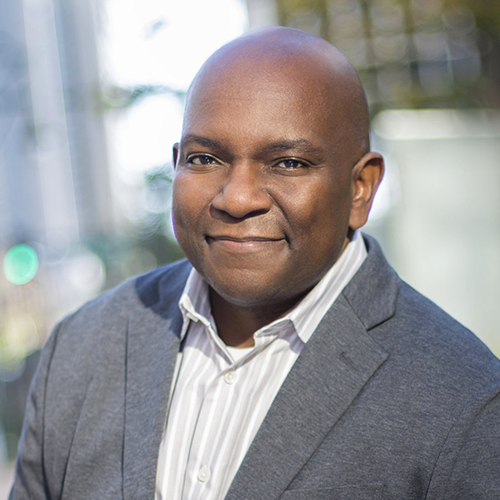
Image courtesy of Lyneir Richardson/The Chicago TREND
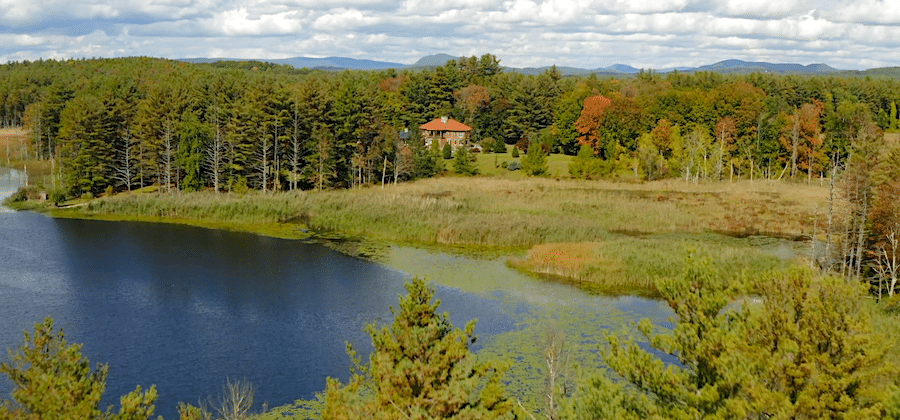
Sharing luxury.

January 11, 2021

Have you ever imagined spending the weekend in a grand luxury estate in the country?

America’s luxury estates were built in the late 1800s during ‘The Gilded Age’, a term made popular by Mark Twain. After the Civil War, with the onset of industrialization, the nation enjoyed unprecedented prosperity, Great fortunes were amassed with the expansion of tobacco, railroads, steel, fossil fuel industries and technical and scientific progress, not to mention no personal income tax.

Some of this wealth found its way to the Berkshires, only 150 miles from New York City. There some of the country’s wealthiest families, The Astors and Westinghouses among them, built their second homes, or ‘cottages.’ Carole Owens, author of The Berkshire Cottages — a survey of the palatial summer retreats constructed by millionaires in the post-Civil War Gilded Age — believes the influx of literary and artistic luminaries “gave the Berkshires a panache that attracted wealthy New Yorkers and Bostonians looking for more than just sylvan beauty.”

More than 75 grand estates were built in the Berkshires and they were built to last for generations. Designed by prominent architects to emulate the grand estates that were so admired on European travels, each one was more extravagant than the last. These mansions were constructed in a variety of architectural and decorative styles from different European countries and from different eras such as Queen Anne, Beaux Arts, and Renaissance Revival. Inside, they were overflowing with antiquities, furniture, collectibles and works of art, often imported from Europe.

Over time, as the gilded age ended, and manufacturing moved south, these mansions were reduced in number, demolished or some succumbing to fire. A few have been preserved as museums to paint a picture of the privileged Gilded Age summers. Some have become exclusive resorts and hotels. And one, previously owned by the Tappan family, is now Tanglewood, the summer home of the Boston Symphony Orchestra. And the rest, most likely due to the cost of maintenance, sadly have been abandoned.

In the Berkshires, you’re surrounded by natural beauty. With its proximity to New York and Boston, the region remains a popular vacation destination today. It’s recognized as a cultural hub with a thriving arts scene, is renowned for annual festivals, offers outdoor activities year round and has a farm to table food scene.

Daniel Dus grew up in the Berkshires and is familiar with those abandoned and underutilized luxury estates. He’s launched a new company, Shared Estates, and plans to reposition some of these estates for current times. For one, they’ll be renovated to carbon neutral standards, the ultimate in recycling projects. But perhaps more important Daniel and his team want to reposition these luxury estates for the sharing economy. No longer for the wealthy, they will be available for middle class families to enjoy. And he’s taking the democratization one step further by offering anyone over the age of 18 the opportunity to invest through a crowdfunding offering.

Listen in to Eve’s conversation with Daniel Dus.

Image courtesy of Shared Estates

Hello, Neighbor.

December 16, 2020

Max Levine’s organization, NICO (Neighborhood Investment Company), has a mission “to localize wealth creation and broaden access to neighborhood equity.” The Los Angeles neighborhood Max lives in, Echo Park, has an income average of $40,000, whereas the average home is valued at $900,000 – an enormous discrepancy. Max and his business partner, John Chaffetz, began exploring the gap between home ownership and renting, testing financial models of what might fall in between. They ended up with the innovative idea of a neighborhood REIT (real estate investment trust) that would allow members of a local community, property owners and tenants, to literally invest in the place that they live by buying shares of local properties owned by an investment trust. Their first effort is NICO Echo Park, with an initial portfolio of three rent-stabilized apartment buildings.

NICO, not surprisingly modeled as a B-Corp, aims instead to create both societal benefit as well as modest financial growth. By taking the REIT structure and applying it at the local level, stakeholders who want to have a financial stake in their neighborhood can buy shares, starting at only $100. They can make a one-time token investment or make monthly investments to build up a deeper, long-term commitment. In addition, NICO has given each of the tenants in their buildings $1,000 worth of shares. 

Though now in LA, Max spent his working career mostly in New York City, as a financial analyst and later as CFO at Storage Deluxe, a self-storage giant, with a stint working on their subsidiary, UOVO Fine Art Storage. He even took an entrepreneurial break to open a delicatessen in Brooklyn. He is also a member of Top Tier Impact, a small, global community of investors, entrepreneurs and experts whose goal is to “accelerate mainstream adoption of impact and sustainability as the way of investing and running companies.”

Insights and Inspirations

  • Home is neighborhood. It’s a unit of organization.
  • With NICO, Max wants to create a new housing typology, located between renting and home ownership.
  • There’s a lot of love in neighborhoods. And that’s super-exciting!
  • The relationship between residents and property owners, or landlords and tenants, needs to be radically reframed. 

Information and Links

  • Max has been listening to the amazing music and programming from their friends at Dublab, and which has helped keep their spirits high during the last year.
  • He and his team are super-proud of the work that Helen Leung and the team at LA Mas have done to help coordinate the Northeast LA Community Response to the Covid-19 emergency. Helen is a board member of NICO Echo Park, Benefit Corp.
  • Max also wanted to highlight the work of Women’s Center for Creative Work, which has also inspired them. 
Read the podcast transcript here

Eve Picker: [00:00:11] Hi there, thanks so much for joining me today for the latest episode of Impact Real Estate Investing. My guest today is Max Levine, founder of NICO. A few years ago, Max noticed a very big gap between traditional home ownership and renting, and he wondered what might fall in between. At the same time, he wanted to explore how to create localized wealth and neighborhood equity, and he found the solution to his quest at his own back door. In Echo Park, the neighborhood he lives in, a highly diverse neighborhood, incomes average forty thousand dollars, yet the average home sells for nine hundred thousand. Max took a huge leap in order to bridge that gap by creating NICO, a neighborhood investment company, or REIT through NICO locals can literally invest in the place that they live in by buying shares of local properties owned by NICO. But Max doesn’t want to stop there. Listen in to hear more. And be sure to go to EvePicker.com to read the show notes page for this episode. You can sign up for my newsletter so you can get access to information about impact real estate investing and get the latest news about the exciting projects on my crowdfunding platform, Small Change.

Eve: [00:01:50] Hello, Max, thanks so much for joining me today.

Max Levine: [00:01:53] Yeah, thank you so much for having me. It’s great to be here with you.

Eve: [00:01:57] So, I’m really fascinated to hear, because like me you’ve plunged into the fintech crowdfunding world to solve a problem. And I think your NICO is sort of a version of Small Change, although a little bit different as we’re going to discover. So, it’s really nice to interview someone in the same industry.

Max: [00:02:15] Absolutely. Great to connect with you.

Eve: [00:02:19] First, I wanted to ask you what problem you’re trying to solve.

Max: [00:02:21] NICO really started, NICO stands for the “neighborhood investment company” and we really started, really with an observation of just how broken housing in this country is. And initially, we sort of were focused on thinking about, you know on one hand, you have traditional home-ownership which is held up, you know, sort of the American dream and this example of what Americans should aspire to, sort of the responsible thing. But it’s so out of reach for so many people. And, you know, on the other hand, you have renting, which is more accessible, lower barrier to entry, certainly more flexible. And for us, you know, housing as being this sort of, I’ll use the word “choice,” but it’s not really a choice for so many people because homeownership is still out of reach.

Eve: [00:03:13] Yeh, that’s right.

Max: [00:03:13] But there’s these two options, right? And so initially we start to think about how could we play a role in creating the third option that sits in between traditional homeownership and renting, one that confers some of the benefits of traditional homeownership, you know, the opportunity for wealth creation and connection to place and sort of putting down roots. And on the other hand, you know, was sort of flexible and more accessible the way that renting is. And so, that was sort of the first observation is, you know, if you were going to design a housing system for today’s world to reflect the realities of the real economy today, our thesis is the system would probably not look too similar to the system we have in place. And our, you know, vision is to try and create, you know, really a new product that is more in line with the way the economy is working today and specifically around access to capital and opportunities for wealth creation for folks.

Eve: [00:04:10] Right, Yeh, I always think of rental as not providing comfortable stability.

Max: [00:04:16] Yeh.

Eve: [00:04:16] For example, when places gentrify you can’t be certain that your home won’t be taken away from you, which is troubling.

Max: [00:04:23] Yeah, correct. Right. And I would say it’s even deeper than that. You know, I think that’s a big element. Housing stability and security is a big element of it. I mean, even the word, right? Even the words “landlord” and “tenant”.

Eve: [00:04:36] Um hmm.

Max: [00:04:36] And those are words that are rooted in medieval servitude. Right? That whole paradigm and the whole way that that relationship is set out is one that is, you know, not rooted generally in equity or respect. Right? And so, I think there’s also sort of an element where that relationship between, you know, residents and property owners or landlords and tenants, needs to be radically reframed. And I think housing stability and security is a big part of the outcome of what that could look like. But I think there are other ones as well. For instance, I think there’s a real bias against renting as an option. I think it’s viewed as being ‘less than’ homeownership.

Eve: [00:05:22] Right.

Max: [00:05:22] And I think that narrative that exists really broadly needs to change because the reality is, you know, renting is. If it evolves a bit, I think has the potential to be a better option than homeownership for a lot of folks.

Eve: [00:05:37] Yes. yup.

Max: [00:05:38] And that’s part of the future that we’re trying to build through our product.

[00:05:42] And I would say the other, you know, sort of big thing that we’re trying to solve for is, you know, when you ask people where they live, where home is, you know, nine out of 10 times they’ll say, I live in Echo Park or I live in Inwood or I live in Greenpoint. They’ll sort of lead with the neighborhood, right? For us at NICO. The neighborhood as a unit of organization, to us, is sort of the most important of social organization that we have, right? Because it’s larger than your family unit, but it’s still close enough and personal enough that you develop really meaningful connections with folks in your community, whether they’re neighbors or small business owners or organizations that you support or volunteer with. And so, for us in thinking about how to create a new housing typology in between renting and homeownership, it was really important to think about how we could sort of give the appropriate place and the appropriate role to the neighborhood. And NICO, which is the neighborhood investment company, is really sort of come out of both of those lines of inquiry.

Eve: [00:06:54] That’s interesting. So, how does NICO work?

Max: [00:06:58] We have launched what we believe is the world’s first neighborhood “real estate investment trust” or neighborhood REIT. And what that means is that, you know, we’re a real estate investment company that owns a portfolio of income-producing properties and potentially other real estate-related investments, within a specific neighborhood. And so, the first neighborhood REIT is here in Echo Park, in Los Angeles. It’s called NICO Echo Park Benefit Corp. And it’s a company that has a share structure that owns portfolio property. Today, we own three rent-stabilized multifamily apartment buildings, one of which is a mixed-use building with some retail on Sunset Boulevard. And people can invest into the REIT through our website, mynico.com, and become shareholders in the company that owns this portfolio of property. And our vision with this and our, you know, what we’re trying to sort of build is we want to create an opportunity for thousands of people within a community, many of whom, in the case of Echo Park, most of whom are excluded from being homeowners, we want to create a way for them to be able to build wealth, build belonging and sort of participate as primary financial stakeholders in their neighborhood through a responsibly managed, impact-focused, neighborhood investment company. And that’s what it is.

Eve: [00:08:29] So, why Echo Park?

Max: [00:08:32] There’s a lot of reasons why Echo Park, but I don’t think that this concept is limited to Echo Park. I think some of the dynamics that are playing out in Echo Park and have played at in Echo Park are playing out in communities all over the country. Some of these reasons are sort of specific to Echo Park and some, I think, are speaking to the broader dynamic that we see in communities like Echo Park all over the country. So, the first thing I would say is that Echo Park is an incredible dynamic beloved neighborhood. Dodger Stadium is here. There’s an incredible music and creative community that’s been here for a long time. And, you know, people who live in Echo Park choose to live there because they love what this community is about, and it is speaking to them and it’s the place that they want to call home. So, there’s a lot of neighborhood love here. At the same time, you know, the median household income in Echo Park is approximately forty thousand dollars a year. The average home price is over nine hundred thousand dollars, and, you know, about seventy five percent of the households in the neighborhood are renter households, right? And so, that speaks to this huge gap where homeownership is really out of reach for a lot of folks, right?

Eve: [00:09:51] Yes.

Max: [00:09:52] And there’s a lot of love and there’s, you know, a desire to be more secure, qnd being a resident of this community and, you know, Echo Park has experienced significant amount of gentrification. It’s a neighborhood that has experienced a lot of change over the last 20 years, I would say, you know, maybe especially over the last 10 years. And that dynamic creates, which we primarily view through a lens of inclusion or exclusion, right? Who is benefiting, who is accruing benefit from this change, who is being harmed by the change? And so, this dynamic where people love their neighborhood, they’re excluded from being homeowners because it’s just too out of reach, and the neighborhood is changing in a way that feels kind of out of control. You know, we want to create a way that over time, and this isn’t something that can be sort of solved in six months or a year or even five years, but we think over 10 years or 15 years or 20 years, if you have a way for many more people, radically more people within the community to be able to build wealth in a fair, flexible, incremental way, we think that that could drive some very, very special outcomes relative to the current paradigm, if those people are able to build wealth through investing in their community.

Eve: [00:11:12] So, can anyone invest, or do you restrict investment to locals or people who live in Echo Park?

Max: [00:11:19] Yeah, so investment is open to local people and to non-local people. Within the REIT, we have two classes of shares. We have a class of local shares, Class L shares and a class of non-local shares. And so, it’s open to both groups, though the local shareholders have some benefits on some concrete terms of the offering, like the redemption plan, which is how people would request to get their money out. Or, and also, and you know I’d love to talk a little bit more about this, we’re a benefit corporation. You know, sort of at our, at a DNA level for our company, we have a legal responsibility to balance financial returns to our shareholders with social and environmental impact of our business on stakeholders, right? So, on a group of people beyond just our shareholders. And our local shareholders are one of the key stakeholder groups that we will count on to help inform specifically our non-financial objectives and our non-financial measurement and performance.

Eve: [00:12:19] Right. So, what percentage of your investors actually live in the neighborhood, to date? I know that might change, but I’d be interested to know that.

Max: [00:12:28] We launched the offering, and I should say the offering itself is a Reg A+ offering, which means that NICO Echo Park is a public, non-listed REIT. So, we’re regulated by the SEC, you know, there’s a lot of sort of robust reporting, audited financials, all sorts of stuff like that.

Eve: [00:12:49] Oh, I know it well.

Max: [00:12:50] Yeh. And what that allows us to do is, whereas many real estate investments, most real estate investments are only open to, you know, what the government calls accredited investors, which is another way of saying rich people, By being a public company, and using this type of offering, we’re open to both accredited investors and non-accredited investors or non-wealthy people. And so, we’ve set our investment minimum at one hundred dollars, which is very low for this type of offering. And our, you know, objective in that is to make sure that as many people as want to, within the community and nationally, have the opportunity to support this model and participate in this model. We haven’t publicly disclosed the breakdown between local and non-local investors, so far. I think that we’ll probably do that on our supplemental filing. That’ll be coming up pretty soon. So, I’m going to sort of hold on answering that question. It’s a significant portion of the investors who’ve come through the offering.

Eve: [00:13:52] Yeh, yeh. Well, that’s really good to hear. That’s what I hope will happen. So, when when someone invests 100 dollars, what do they get?

Max: [00:13:59] Anyone who invests into the offering becomes a shareholder in the company that ultimately owns the portfolio properties. And so, you know, people who become shareholders, they own shares in NICO Echo Park Benefit Corp. And what accrues to them are, you know, sort of the pro-rata profit and appreciation that we expect to generate as long-term owners of these properties. And I’ll also say that, you know, one question that comes up a lot is people want to know whether investing in this means they own a specific unit or a specific property. You know, the answer to that is, is no. They become a shareholder in the whole portfolio and the portfolio, you know, we expect to grow it pretty substantially over time. So, it’s not just investing into the properties that we own today. It’s also investing into the company that will own additional real estate assets within the neighborhood, as we grow it.

Eve: [00:14:56] So, they’re really in it with you. And that’s a pretty big responsibility for you, I imagine. That’s how it feels.

Max: [00:15:02] We view it as a big responsibility, you know. And I would say the big responsibility is sort of two-fold, I should say, at least two-fold. One is, when you take investor capital, you know, they’re trusting you to make decisions on their behalf, you know,  and be stewards of that capital. So, I’d say that’s one level of responsibility that we view. And I would say the other, you know, sort of major level is this approach to neighborhood investment through a benefit corporation structure, through a neighborhood REIT, this is really the first of its kind, right? In a lot of ways. And so, you know, we have a responsibility to be incredibly thoughtful and understand, you know, the context that we’re coming into and, you know, in the neighborhoods where we’ll be active in pursuing this model, and I think we’ve set a very high bar for ourselves, right? We’ve set …

Eve: [00:15:55] Yes.

Max: [00:15:55] … a bar where, you know, we are trying to balance financial returns to our shareholders. And we believe that the market-oriented solutions are an important part of, you know, what moving through this pain that so many people are in around housing in their community. We think more market-oriented solutions are a big part of that solve, and that balancing, you know, it’s going to take some time to get right, right? And I think that we have sort of designed our, our impact framework and our product in a way that is intended to evolve with stakeholder input over time, right? So, we aren’t making a claim that, hey, this is what it is and we’re going to get it exactly right. I think we built it in a way that gives it space to evolve into what it needs to be in response to, you know, stakeholder input and feedback and sort of our community over time. And balancing all those things will be a challenge, you know, but that’s the challenge that we’ve signed up for and that’s the future that we’re trying to create.

Eve: [00:16:57] Yeah, I mean, we have non-accredited investors as well on Small Change and I sometimes think that one needs to feel even more responsible for 100 dollars when it comes from someone who doesn’t have a lot more. It’s maybe more meaningful.

Max: [00:17:13] Yeah

Eve: [00:17:13] I don’t really know how to put it, but that 100 dollars is a stretch for a lot of people. And so, there’s this extra feeling of responsibility around it.

Max: [00:17:23] Yeah, we certainly feel that way.

Eve: [00:17:26] You know, under a Regulation A+ offering, you can, at the moment, raise up to 50 million dollars. Is that right or is it 50 million a year? I can’t remember.

Max: [00:17:34] It’s 50 million per year. Yeh, we can raise up to 50 million per year.

Eve: [00:17:38] And, is that what you hope to raise?

Max: [00:17:41] Yeah, so, you know, to date, we’ve raised, prior to launching the offering, raised about 30 million dollars of real estate, debt and equity capital. We used that to acquire the seed assets. Since launching the offering, we’ve added to that. And I wouldn’t say it’s my expectation that we’re going to raise 50 million dollars, you know, in the first year or two, because I think the nature of the problem that we’re trying to solve, or the problem that we’re trying to be part of solving is, you know, that folks who have been excluded from wealth creation, they don’t have 50 million bucks sitting around, right?

Eve: [00:18:17] Yeh. And it takes a lot of education. I think real estate investment is difficult and requires a lot of education as well. So, it is, it’s hard. Yeh.

Max: [00:18:29] Yes. I would say we hope to make really good use of the offering, but our priority is less about how much money we bring into the offering and more about how many people, specifically how many local investors, are participating in the model. That’s really our, you know, sort of North Star for the next couple of years.

Eve: [00:18:50] So, how long will this offering, or this REIT remain open?

Max: [00:18:55] So, again, I have to be a little careful about what I say with securities law. So, I don’t want to sound evasive. My understanding is that we can keep it open on a rolling, permanent or semi-permanent basis, subject to renewing some of the paperwork. So it’s out intention to basically keep it open.

Eve: [00:19:14] Ok, that’s pretty exciting. So, can you tell me a little bit more about the buildings in the IT and how you’re hoping to expand your portfolio? I heard you say that some or all of them are rent stabilized. Can you expand on that a little bit?

Max: [00:19:31] All of the buildings that we own today are rent stabilized. We’re not limited at the REIT to only investing in rent stabilized buildings, but we like that asset class. We like that type of building a lot. When I say rent stabilized, I’m talking about in the city of Los Angeles, there’s a rent stabilization ordinance, which is a very broad program. Any multifamily buildings, which I think is two or more units that were built prior to 1979, are part of this program, as a default. So, it covers, you  know, a significant portion of the multifamily housing stock in the city of Los Angeles. And, you know, what that program currently does is basically puts very strong protections in place for existing tenants, right? And so, the amount that property owners can raise rents on existing tenants is capped at a rate set by the city, for example, and it’s more regulated than market units. So, we really like, you know, those protections. And, you know, we are, as I mentioned earlier, we’re sort of trying to reframe this relationship between, you know, residents and property owners where landlords and tenants, in industry speak, and we love the fact that we can invest in assets where strong protections for tenants are built into the asset price. We sort of love that as an asset class. The buildings themselves, there are three buildings that are all in core Echo Park. We have one at 1650 Echo Park, I have one at 1416 Echo Park, which is a block off the intersection of Echo Park and Sunset. And then we have a property at 1461 Sunset, which is a few blocks down Sunset from Echo Park. So, they’re very proximately located, the portfolio totals 80 residential units and four retail stores, all of which are occupied by locally owned small businesses. And, you know, we are targeting future investments that are rent stabilized, some that are, you know, maybe retail investments, some non-rent stabilized properties, mixed-use properties. And, you know, our investment parameter is sort of, its geographic, like it’s not limited to Echo Park. So, the way the offering describes our investment parameters are, you know, Echo Park, Silver Lake and proximate communities. So, that gives us a bit of room to look …

Eve: [00:21:54] Ok.

Max: [00:21:54] … beyond core Echo Park, though our initial portfolio is very concentrated, you know, historically significant, you know. All of the assets were built in the 19 …. I want to say the 1920s, approximately, though if we’ve got any history buffs on here, there might be, you know, 10 years plus or minus on that. But they’re all sort of very recognizable buildings that have been part of the community for a long time. And, you know, part of what that, coupled with the protections under the RSO program does, it means that the buildings are occupied by a really socio-economically diverse set of residents. And that also is, you know, important to the type of product and community and inclusion that we’re trying to build through our product.

Eve: [00:22:38] So, we have a rent stabilized building. Is it hard to make enough money to cover the expenses? And how do you cope with that? You know, you have pretty lofty goals here in keeping costs reined in is … hard.

Max: [00:22:52] I would say that all of the assets, you know, like asset prices, just, this is more broadly than our building, but asset prices really reflect expected future returns, right. And so all of the properties are comfortably covering their expenses, comfortably covering their debt service. They’re all conservatively financed with long-term fixed-rate debt capital. And the portfolio has been highly occupied since we acquired it. So, you know, we continue to manage to a high level of occupancy. And the pricing of the assets and the way these types of assets are priced and valued is reflective of the protections that are in place. And so, they’re all doing great on a property level.

Eve: [00:23:36] So, I have to say, it’s a lot, and kudos to you. You actually, three companies in one. Real estate development, management company and a crowdfunding platform. And that’s a lot.

Max: [00:23:48] Well, I would say that we’re not really a real estate developer. So, you know, we won’t do, as we’re currently set up now and under the terms of the offering, you know, we’re really not set up to do ground up development or to do even substantial renovations.

Eve: [00:24:03] Well, real estate owner, then, which is different than property manager.

Max: [00:24:07] That’s true. Yes. So, we’re really an asset manager, a property manager. And then we have, you know, the offering and the sort of capabilities that go with managing that type of property.

Eve: [00:24:17] Yeh. So, how do you hope to scale?

Max: [00:24:22] Yeh, so we have ambitious goals for this company, and I would say that, you know, we hope to be doing sort of regular acquisitions into NICO Echo Park over the next number of years. I’m not sure exactly what that looks like from a number of units or a capital investment standpoint, but we believe that this neighborhood, you know, has the opportunity to grow pretty substantially and to grow our impact and grow, you know, the model. And then, you know, separate apart from that, we’re actually in a in sort of a fourth line of business, which is, we have a non-real estate owning sponsor company, which actually owns sort of the functions that you outlined before. And through our structure, you know, we seek and expect to be launching additional neighborhood REITS in other neighborhoods around the country, probably starting next year.

Eve: [00:25:15] Wow. Okay, big goals. So, what’s the biggest challenge you’ve had?

Max: [00:25:22] It’s a great question. I mean, running a company through a pandemic has certainly been challenging …

Eve: [00:25:28] Oh yeh.

Max: [00:25:28] ,,, Having a team that is, you know, very much in sort of the formation phase and, you know, team building phase have to go remote and get to know each other over Zoom, you know. We have team members who have not met in person. People who have joined our team since the pandemic started. And so, I think that’s a challenge. And I think the other, I would say the sort of more macro challenge is that what we’re doing is a bit counterintuitive, right? It’s on a populist level, it’s a bit counterintuitive. And so, what I mean by that is to say that the relationship that we are trying to realign, you know, at its core is really kind of the relationship between investment capital and what motivates it and how it defines success, with people in communities like Echo Park who’ve had a pretty negative relationship with investment capital, right? Because they’ve been excluded from it. And it’s come in and I think the perception, which I believe is largely, you know, accurate, is that when capital comes in it typically means that there is risk to me as a long-time resident. Risk to me and risk to my neighbors as long-term residents. And so, I think that trying to start to solve some of these issues through being an investment company, I think that’s a bit of a barrier for people to get over. And I think that’s pretty fair and pretty deserved. But, you know, our model is such that we’re really sort of taking that on, and, you know, I think the great sort of untold story of gentrification and neighborhood change is that real estate, you know, really was not an institutional mainstream institutional asset class 20, 25 years ago, right? And now it is.

Eve: [00:27:19] Yes.

Max: [00:27:19] It’s a big part of the allocation. And so, I don’t think that capital is the only sort of factor. I think the housing shortages is also one. And I think, you know, there’s a lot of other ones. But, you know, the pressure that that huge, organized flow of capital has put on, you know, neighborhoods like Echo Park is really hard to understate. And so, to our view, to NICO’s view and to our theory of change, until that powerful, large flow of investment capital can be realigned to actually be viewed as a tool and a resource for stabilizing communities, and including folks who are previously excluded in the wealth that’s created through that investment, we’re not going to be able to really solve, you know, these issues at a level, right? And so, I think it’s a bit of a counterintuitive move for people who are used to viewing investment capital or a company or an investment company in a specific way, which is this feels like a threat to me and my neighbors, into something where this offering and this way of being can actually help to stabilize this community and help to drive the types of outcomes that are important to me, you know, in my own community.

Eve: [00:28:41] Yeah.

Max: [00:28:41] I think that’s sort of a lot to get your head around. And we understand that that will take time. And where the rubber hits the road is sort of our actions and the way that we’re managing this portfolio and balancing our various priorities. You know, are we doing that in a way that is genuine and, you know, sort of worthy of people’s trust, right? And that’ll take some time to to earn that, and that’s part of our journey here.

Eve: [00:29:08] Yes, yeh. You know, just shifting gears a little bit, are there any other current trends or innovations in real estate that you think are really important to the future of cities or be a future of housing?

Max: [00:29:21] I think that the sort of renewed focus now on the equity or dis-equity that’s built into the public realm, and also into the sort of planning process …

Eve: [00:29:32] Yes, yeh. I’ve been watching that. It’s interesting.

Max: [00:29:35] I think that conversation is super-exciting and has the opportunity to really reframe how people and how communities are able to have agency in terms of what happens within their community. I think public projects, public space projects, development projects, you know, we’re certainly seeing and starting to feel within the sort of the real estate industry the pressure that comes with that, you know. And I think there’s a genuine attempt by, you know, more and more private sector actors to take that seriously, and to legitimately and earnestly try and figure out how to be engaged with the community and to, beyond just sort of the tokenism of, hey, we’ll throw in a garden, have a couple of feedback meetings or something like that, like I think there’s sort of the start of a groundswell of, you know, we need to build equity into how we think about …

Eve: [00:30:35] Right.

[00:30:35] … development in the public realm. I think that’s super-interesting and very important. And I hope we can play a role in that. And then I think things like technology that is helping to create more efficient, less expensive, quicker ways to actually generate, you know, new housing. You know, there’s no path out of this housing crisis that doesn’t come with building a lot more housing. That’s not the business that we’re in. But I think that construction is super-painful, and it’s sort of in the Stone Age, right? In terms of how that process actually works on a deal level. And so, I think anything that makes that process, you know, more transparent, more noble and less risky, more scalable, will help to create a lot more housing. So, I’m very excited about that.

Eve: [00:31:22] Yeh.

Max: [00:31:22] And I would also say that the sort of, you know, more broadly, shift in focus by institutions and family offices and, you know, other sort of sources of that mainstream real estate investment capital toward strategies that are legitimately ESG strategies or impact strategies, I think that is super-exciting and very important. And for us, we always come back to what is that relationship between capital and what capital is seeking to do, and how is that aligned with the financial and non-financial impact of communities and people in communities, right? And so, I think that shift in awareness and that shift in priority towards strategies that are legitimately focused on ESG and impact, I think that’s a great first step in starting to reframe that relationship at scale.

Eve: [00:32:18] Yeah, because in the end, without shifting capital, not much is going to happen.

Max: [00:32:25] Right. And if you think about affordable housing as a, as an example of this, like, we’re pro affordable housing, you know, but the structural limitation of subsidized affordable housing …

Eve: [00:32:38] It’s huge.

Max: [00:32:38] … is that it requires a subsidy, right? And so, like, the subsidy that it requires is limited. Right? And therefore, there’s only so many tax credits that go out every year.

Eve: [00:32:50] And it’s time consuming. It doesn’t let you produce affordable housing fast, which we need to do.

Max: [00:32:56] Yeah, exactly. And so, we come to this place and NICO is really built around this theory of change, that until market forces of capital, right? Until market rate capital, which is a huge, you know, effectively it’s an infinite pool when you think about how the capital gets recycled, until the priorities of that change, and until the structures around that change to be focused on delivering financial returns and acknowledging the non-financial impact that that capital has. Until that happens, the scale of any potential solutions that count on subsidy or philanthropy, which is a form of subsidy, it’s, the scale of that potential impact is just limited when you look at the scale of the market.

Eve: [00:33:44] Yup.

Max: [00:33:44] So, we’re excited to start to see that shift a little bit.

Eve: [00:33:49] Well, this is something that’s been really interesting, and I’ve really enjoyed learning about NICO, and I’m especially looking forward to see what comes next. So, thank you very much for joining me.

Max: [00:33:59] Great. Thank you so much, Eve. And thank you also for all the work you’ve done over the years with Small Change, with impact real estate. We’re huge fans of it and very appreciative for your leadership in our nascent industry.

Eve: [00:34:24] That was Max Levine. His life is focused on building equity through real estate. With NICO, he’s working to bridge the gap between those who own assets and those who don’t. If you live in Echo Park, you can invest in Echo Park, and what you invest in will ensure that the neighborhood remains available to everyone. For everyone. NICO’s first three buildings are rent stabilized. It’s a very big goal and Max is chipping away at it.

Eve: [00:35:05] You can find out more about impact real estate investing and access the show notes for today’s episode at my website, EvePicker.com. While you’re there, sign up for my newsletter to find out more about how to make money in real estate while building better cities. Thank you so much for spending your time with me today. And thank you, Max, for sharing your thoughts. We’ll talk again soon. But for now, this is Eve Picker signing off to go make some change.

Image courtesy of Max Levine/NICO Benefit Corp.

The world beyond banks.

November 18, 2020

Annie Donovan knows impact investing. She joined the Local Initiatives Support Corporation (LISC) last year, as COO, having built a truly remarkable career in community investment by embracing a pursuit of fairness in economics and finance. She found her way to this mission in part through her roots growing up in a working class family, where she was exposed to ideas of social justice early in life.

After a career working at the national level, she says what attracted her to LISC was its “deep, long-term connection to communities.” Previously, at the CDFI Fund, which provides capital to distressed communities, Annie worked on strategies to address local needs using programs like New Markets Tax Credits, CDFI Bond Guarantee Program, Capital Magnet Fund and the Healthy Food Financing Initiative.

A Pittsburgh native, Annie has described how community investment work ‘found her’ while she was serving in the Peace Corps after college. She says, “I learned powerful lessons about entrepreneurship and community finance – and about the capacity for community members to drive their own success if they have the right resources. I wanted to do more of that kind of work after I returned home.”

Annie has served as CEO of CoMetrics, a social enterprise that works with nonprofits to improve their financial management, and as a senior policy advisor in the Obama Administration. She has been a senior fellow at the Beeck Center for Social Impact and Innovation at Georgetown University, as well as at the Center for Community Investment at the Lincoln Institute of Land Policy. She also served as president of the New Markets Tax Credit Coalition.

Insights and Inspirations

  • Annie likes toiling close to the ground. She is committed to ‘local.’
  • She has a heart for social justice.
  • Community engagement is of utmost importance to building equity.
  • “You need to know the community where you build”, says Annie.
  • We can’t solve the issues of inequity without thinking comprehensively – housing, schools, education, the lot.
  • Disruptive capital is critical for solving these problems.
  • What if lots of corporations, like Netflix, contributed their PR funds to helping small businesses instead?

Information and Links

  • Annie has been deep diving into all the American history we never learned in school. She says Scene on Radio is a fantastic podcast, especially Season 2: Seeing White, and Season 4: The Land that Never has been Yet.
  • And she recommends two books she is immersed in: The Color of Money, by Mehrsa Baradaran, and for spiritual food during this crazy year, When Things Fall Apart, by Pema Chodron.
Read the podcast transcript here

Eve Picker: [00:00:11] Hi there. Thanks so much for joining me today for the latest episode of Impact Real Estate Investing. My guest today is Annie Donovan, COO at LISC, an organization deeply rooted in the community. Annie has built a truly remarkable career in community investment by embracing a pursuit of fairness in economics and finance. She found her way to this mission through her roots in Pittsburgh, growing up in a working-class family where she was exposed to ideas of social justice early in life. In no particular order, she has served as a senior policy adviser in the Obama administration’s Office of Social Innovation, as the CEO of the social enterprise, Core Metrics, heading the Community Development Financial Institutions Fund, and she spent two decades at Capital Impact Partners, all before taking over as COO at LISC. Be sure to go to EvePicker.com to find out more about Annie on the show notes page for this episode, and be sure to sign up for my newsletter so you can access information about impact real estate investing and get the latest news about the exciting projects on my crowdfunding platform, Small Change.

Eve: [00:01:39] Hello, Annie, I’m really honored to have you on my show and pretty excited to talk to a fellow Pittsburgher.

Annie Donovan: [00:01:46] Well, thank you, Eve. I’m very happy to be here and I’m always thrilled and delighted to talk to Pittsburghers.

Eve: [00:01:55] Good. So, the first question I have is actually about Pittsburgh. So, you grew up in Pittsburgh, and I’m wondering how that shaped the way you see the world.

Annie: [00:02:04] Thank you for that question. It very much did shape the way I see the world. Well, first of all, let me just tell you a little bit about my context. I grew up on the North Side of Pittsburgh. From an Irish Catholic family, I am the 10th of 11 children.

Eve: [00:02:19] Wow.

Annie: [00:02:19] My father’s family, so he was first generation American. His parents both came from Ireland. They actually bought a house on the North Side. So, the way that my, my parents were actually able to afford to raise a family that big was because my grandparents passed their home on to my parents. And so they never had to pay a mortgage. So, yeah. So, that’s how we sort of made ends meet economically, and, you know, were able to create some mobility in our family.

Eve: [00:02:58] What neighborhood was that?

Annie: [00:03:00] Brighton Heights.

Eve: [00:03:01] Brighton Heights. Ok.

Annie: [00:03:03] But the things about Pittsburgh, you know, when you’re from there or when you’ve lived a long time there, you know, Pittsburgh can take a hit for, you know, being provincial. And that’s certainly the case. I mean, in my parents’ generation, my parents had an ethnically mixed marriage because, you know, my father was Irish, and my mother was part German. But in their generation, people even went to church based on ethnicity. So, you know, so there’s a lot of that sort of ethnic pride and it can feel a little provincial. But Pittsburghers are also very unpretentious and very warm and open hearted, I think, and just possess a lot of resilience and, you know, grit. Those are qualities that I’m very proud to have had instilled in me growing up that I’ve relied on throughout my career.

Eve: [00:03:58] So, you know, I think also what I noticed in Pittsburgh and I heard stories about the steel mills actually purposefully separating neighborhoods into ethnicities.

Annie: [00:04:09] Yes.

Eve: [00:04:10] And that sort of prolonged that here.

Annie: [00:04:13] Yes.

Eve: [00:04:13] And it’s made the city architecturally interesting …

Annie: [00:04:15] Yes.

Eve: [00:04:15] … because the neighborhoods are really distinctive and unique …

Annie: [00:04:20] Yes, yeah, very much so.

Eve: [00:04:21] … and look very different. It’s fascinating. And then, of course, there’s the managers neighborhoods and the steelworker neighborhoods, so you know …

Annie: [00:04:28] Right. And you know, interestingly, what happened in my family, I grew up in a working-class neighborhood and it was very working class. My father actually went to school at night and earned a college degree from Duquesne, and he was the only person in the neighborhood who had a college degree. And he was an accountant. He worked for the Allegheny County. So, we had this interesting blend of, you know, when our country was experiencing sort of white flight. Right, so lots of white folks moving out to the suburbs.

Eve: [00:05:03] Yes.

Annie: [00:05:03] And those white folks moved out and then they went on toward more upward mobility. And we stayed in the working class neighborhood. But we were still, in my family, able to experience upward mobility because we owned our home. And my father had a college degree.

Eve: [00:05:21] A degree, yeah yesh, yeah. What led you into the world of community finance?

Annie: [00:05:25] I had always had, I think, a heart for social justice work. I thought a lot about poverty, and I thought a lot about the kind of injustices that were in my world growing up. Of course, I was born in 1964, Pittsburgh being, you know, not only ethnically divided, but lots of really hard lines around racial division, as well.

Eve: [00:05:54] Yeah.

Annie: [00:05:54] And I have to say, I have to hand it to my mother, because when we were growing up, this is probably the mid-70s and my brothers … well, so, in my family, there are six girls, and then three boys, me, and a boy. So, it’s almost like having two generations, you know. And I grew up with the boys. They wanted to start a street hockey league. And you know so, of course, I was out there playing street hockey with them. I’m a Title IX gal, and they were looking for a coach. And so they put an ad in the newspaper and a guy responded to it. And his name was Curtis. He was from the Hill District. And of course, the Hill District is the historically Black neighborhood. And so they signed him up and he came over to Brighton Heights, which was a very white place, and coached the street hockey team. For me, you know, they just got me thinking about, like, why why do we have these divisions? And I have these ideas of what people from from Black communities were supposed to be like. And he wasn’t like that. He wasn’t like my image. And my mother, you know, they’d play street hockey and it’d be time for dinner, and of course, whoever was around my mother invited in for dinner. So, often times Curtis would eat dinner with us. When we said Grace before dinner, the way he bowed his head and prayed, you know, it just struck me that everything I’d kind of learned about our Black neighbors I didn’t see in him. And so this is what got me thinking, like, what was all that education about? And so I’ve always been on a quest to understand what these racial lines are, too, and what the class lines are. And so, you know, I studied economics in college. Early on in my journey there was a 101 economics class and we were learning about rational thinking and optimization.

Annie: [00:07:53] And I remember thinking, well, this isn’t really a fair way to allocate resources across a society. And so I said that to my professor afterwards, who was, you know, a classically-trained economist who was like, Chicago School. And he said, well, this isn’t about fairness, it’s about efficiency. And that was like, OK, I’ve found my mission. And so, you know, and then I joined the Peace Corps, went to the Peace Corps after college. You know, lived in a very poor place. And then, you know, then it really sunk in because the people that I lived around were supremely resourceful and smart and really dirt poor. And so, what was that about? So, that’s when I became sort of even more fiercely committed to it. And, you know, that’s so, that’s been the pursuit of my career since then, is how do we use the tools of economics and finance, and how do we rewrite them in a way that produces a more inclusive prosperity, because we are leaving a lot of talent on the table.

Eve: [00:09:10] Ok, so you’ve had some really big roles from the White House to the head of the CDFI Fund. And now you’re at LISC. And I’m wondering, I’m familiar with LISC, I actually benefited from a loan from LISC years ago …

Annie: [00:09:23] Good.

Eve: [00:09:23] … for one of my projects. And I’m wondering what brought you there.

Annie: [00:09:28] Yeah. So, what brought me to LISC was, so after my experience at the CDFI Fund, I knew I wanted to go back into practice, because that’s kind of where my heart and soul lies. And so, one of the characteristics about LISC is that it is very committed to local – ‘local initiatives’ is part of our name. And I wanted to be in a place that was toiling more closely to the ground. You know, we have local offices, we have 35 and growing, local offices that really are programmatically focused and focused on capacity building alongside lending. And so, that’s where I saw the ability to more closely connect those pieces and not just be finance oriented. But to get deeper, closer to the community. And then the second thing was I saw in Maurice Jones, a leader in our industry who is boldly ambitious, is ambitious for the sake of impact, and I was attracted to that as well. So, yes, so that’s what drew me to LISC.

Eve: [00:10:41] Then like about community capital, what does community development capital look like today versus 20 years ago?

Annie: [00:10:49] Yeah, that’s a really good question. So, I think 20 years ago, if you think about, or even 25 years ago, you know, the sort of the history of community development or community capital, community investment … The community investment world, really, it braids together organizations and institutions that come from different origin stories. So, there’s the origin story of the black-owned banks and minority depository institutions that got underway right after emancipation, for Black Americans to build wealth. There is the credit union movement that was tending to people of modest means who wanted to come together and save together and, you know, have access to financial services that were owned and controlled by them. And then you had the nonprofit loan fund world that emerged because community development really took shape in the war on poverty and the commitment of the federal government to funding community development corporations. There was an era there where there’s a lot of federal funding, and we can talk about urban policy and how that, you know, CDCs kind of shifted urban policy. But then in the beginning of the Reagan era is when the feds really pulled back. And that’s when loan funds really started to emerge to say, well, we have to create new ways to finance the activity of community development. And that’s when the loan funds really started taking root. And then when Clinton came into office, he created the CDFI fund. And that has been a really important policy innovation, still as a policy innovation today, that has been investing the kind of equity capital that the industry needs to grow, that you can’t really get anywhere else.

Annie: [00:12:46] So, the industry has really blossomed, partly because we had good seed capital and partly because we just have been a bunch of people who have had a faith in the people and the communities that we’re investing in and have found a way to work with traditional and non-traditional sources of capital, to blend them in a way that allows investments to work in, you know, places where, you know, my old economics professor would have said you wouldn’t invest in because it wasn’t efficient, the rate of return wasn’t commensurate with risk, and all those sort of traditional measures, you know, that’s the reason capital doesn’t flow to some of the communities that we care about. And we are becoming more mainstream. And even though we’re still a tiny percentage of the financial services sector, I think through, even through the pandemic, you start to see CDFIs emerge, getting more attention in mainstream media. And certainly LISC has gotten a lot of, we’ve been able to raise a lot of resources through this pandemic because there’s a recognition, and we’ve not only done the investing and gotten the money there where people said it can’t go, but we’ve done it financially in a fiscally responsible way. So, we’ve proven that the places and the people we’re investing in are creditworthy. That has allowed this industry to grow. And I think it’s going to continue to grow. I’m optimistic about that.

Eve: [00:14:19] Years ago, I helped found a CDC in Pittsburgh. And what was really fascinating to me, because I was pretty new here and I didn’t really understand this lay of the land very well, you know, I sort of dropped in from another country. But, you know, all of the work we did was to get us to the same place as neighborhoods and places that were doing OK. And I’ve been in, I’ve been in this work for a long time and we never seem to get there. And so, I’m wondering, you know, because when you take a step forward with CDFIs, and maybe this is, you know, a really naive way to look at it, but you take a step forward with CDFIs, and you take a step back with banks who no longer really want to bank in or lend in communities, or want more equity or want, you know, more traditional products to lend in, and it’s just this never ending catch up, so, how does it all get better.

Annie: [00:15:30] Yeah. So, of course, I, I’ve been doing a lot of thinking about this and I think a lot of, a lot of folks have been soul searching around this, particularly because of the uprisings, demanding more, you know, racial, that we address racial equity. And so, it does often feel like, you know, some days it really just feels like we are just doing the work of bandaid, you know, putting bandaids on things. And that’s, that’s where I think this the work right now is really important because we can’t be satisfied with what we’ve done because it’s clearly not enough. And, but I think we are in a moment that we have to take, make the best use of, because we can’t do this on our own, as our, with our little bitty organizations. And even if we’re a billion dollars or two billion dollars or 10 billion dollars, we’re still to itty bitty to to create change on the scale that needs to be, that needs to happen. But that doesn’t mean this stuff shouldn’t happen. And it’s, and it does have to happen because even over my career, you know, 25 years ago if somebody had said that you’ll be working for a CDFI or you will help the, you know, build a CDFI, that will get to be a billion dollars. You know, wow, that would have been, because we, these loan funds were starting at, they just wanted to get to 10 million, you know.

Eve: [00:17:04] Right.

Annie: [00:17:05] And and we we wouldn’t be we wouldn’t have the opportunities that are in front of us now if we hadn’t taken all those baby steps to get to here. So, over the long haul, you know, I hope that we can get there. But, you know, there’s the bigger, we have to be able to impact the bigger picture. And, you know, for example, it was discouraging to me when I was at the CDFI Fund, and the second two years I was there under this administration that, you know, that a tax policy got, got enacted that just, you know, felt like it was going to undo everything that we were trying to do. So, there are these macro forces that, you know, that we have to try to turn the tide on.

Eve: [00:18:04] Yeah, that’s depressing. But I know (laughter) but I know it’s a really long patient game because I’ve been, I’ve seen that, you know, on things I’ve worked on that initially were like, what are you doing? You’re nuts to now being, OK, this is mainstream. Like co-working or lofts downtown or revitalizing downtowns …

Annie: [00:18:27] Exactly.

Eve: [00:18:27] … or all of that. And we’re actually …

Annie: [00:18:29] Exactly.

Eve: [00:18:29] … I think you’re right. We’re in a moment. All of the progress we were heading towards has been unbelievably compressed by everything that’s happened this year. So, maybe that’s a good thing, but …

Annie: [00:18:44] Yeah, and I think that it’s also very complex too, right? Because, even we see in some places tremendous progress running exactly alongside of things that feel like tremendous regression …

Eve: [00:18:56] Yes.

Annie: [00:18:56] … you know, so, and both of those things are happening at the same time.

Eve: [00:19:01] Well, what’s … I’m going to ask you, may not know the answer. But I really puzzle about what’s happening in traditional financial institutions. So, you know, I have this crowdfunding platform and what’s been startling to me and, you know, and our purpose is to help raise money for creative change-making projects and help developers get a little equity together, that seems to be a little more and more equity every year as banks change their position on what they lend for. Because we think that creative, those projects are important for making cities better. B

Annie: [00:19:41] Yeh, yes.

Eve: [00:19:41] But it seems to me that they’re retracting even further because we’re just being flooded at the moment, and equity requirements go up. It just seems to be harder and harder to borrow money, to do things, that are different than the things we have today. And we know we need to do things differently to fix some problems.

Annie: [00:20:09] Yeah, yeah. Well, the way I think about this and what I see from my perch is that I think that we have to, we have to start thinking about the world beyond banks, and, you know, think about and work hard on this, you know, the idea of having broader stakeholders. I mean, banks have been brought to the table on community finance because of the Community Reinvestment Act.

Eve: [00:20:45] Right.

Annie: [00:20:45] And so, so what are the ways in which, you know, there might be policy levers that need to be pulled to get more folks to the table. But also, you know, what the next generation of employees and employers, I mean, I think that we’re in for change and I’m really hoping that we’re in for change with the next generation of leaders. Because they have been raised with different expectations and they are already changing, corporate, the way … corporations are reacting. And you see now, you know, we’ve been the beneficiary of, you know, almost a 100 million dollars in corporate contributions that are going out to small businesses, as, you know, in this pandemic, in the form of relief grants.

Eve: [00:21:44] That’s pretty fabulous.

Annie: [00:21:45] And what we did was, the first one that came in, the first corporation that came in and said, can you do this for us? And we said, yes, we can do it for you, but we’re going to do it in our LISC way. And that means we are going to get to community-serving businesses that are majority-owned by people of color and women. And they said, OK, cool. Go ahead and do it. So, you know, and then the next company that came in said we want to buy that, we want to buy, especially as PPP, the paycheck protection program and SBA, major piece of the the CARES Act, you know, was clearly written in a way that was just going to follow the old rules for how you distribute capital. And then people started saying, wait, wait, wait, there has to be other ways to do this. And so the work that we were doing was tipping the scales. We put our thumb on the scale in favor of community-serving small businesses and gave preference, and we’re ending up with, you know, somewhere in the low 90 percent, of the businesses that we’re funding, are owned by people of color.

Eve: [00:23:04] That’s pretty great.

Annie: [00:23:05] And yeah, and in the paycheck protection program, we got to about 80 percent of our companies being minority women- and women-owned companies. And when you put together and in the, on the private sector side, our formula was where we’re going to advantage certain census tracts. We’re going to advantage minority ownership and women ownership, and we’re going to advantage certain size. So, when you line all those up, it’s not that hard to come up with lots of folks to invest in. And that’s where our money’s gone.

Eve: [00:23:43] So, another question I have is looking at the other side of it. If a real estate developer has access to community capital, what should her reciprocal responsibilities be to that community?

Annie: [00:23:59] I think that’s really, really very important because, and we have to all get better at this as well, in terms of how we doing community engagement, and how we’re bringing people into ownership of what happens at the community level. And so I think, you know, there are just these models and this seems to me to be what’s out there on the fringe right now, you know, and it’s always what’s happening on the fringe that’s eventually going to be where where we all go, hopefully. But what I see is, I’ve been been advising on a project that’s being done by a foundation of philanthropy. It’s not a traditional philanthropy. It’s one of the newer philanthropies. And they are, they’re going to do they’re investing in a real estate project in a very, one of the most distressed census tracts in Washington, D.C. And they are bringing together community stakeholders to say, how do we create a vehicle for people who live in that community right now before the development happens? How do we create a vehicle for them to invest in it and to get ownership in it? And those are, I think, the kind of strategies we need to be thinking about. You know, how do we, because otherwise if you just let this play out via market forces, you get gentrification a lot of times.

Eve: [00:25:40] Right, right, right.

Annie: [00:25:42] So, you know, we don’t want to go in that direction. And that that means giving people real ownership stakes.

Eve: [00:25:48] I mean, I agree. That’s what we at Small Change, I’m having similar conversations with some very large developers who are starting to think about that ownership piece, in really humongous projects in D.C. and New York. And it’s really exciting to see that people are thinking about it. It is hopeful.

Annie: [00:26:08] So, yeah. And if you think about like, so, another example, and this is not at the project level, this is at the fund level. But, you know, we’re managing we’re going to be managing money on behalf of Netflix. And Netflix went out, and this was somebody inside Netflix who said, you know, in their treasury department, why are we sitting on all this money and not thinking about where it’s invested? Why don’t we get this to black-owned institutions and, you know, and that, and that’s when, so, you know, like back to your question, when are we ever going to see this get better? I mean, that’s when it’s going to get better, right? When that person inside that corporation goes to the CEO, and the CEO says, yeah, absolutely, why aren’t we doing that?

Eve: [00:26:53] Yeh, yeh.

Annie: [00:26:53] And then you put it out there. And once, when Netflix put that out there and they made the investment in us, we had so many corporations respond to say, well, how do we do that, too? So, that’s what we have to do. We have to create the bandwagon. But the bandwagon that’s moving money in this direction.

Eve: [00:27:12] Yeh. Yeh, yeh. So, I mean, how would you define impact investing then?

Annie: [00:27:20] Ok, so impact investing to me, I always define it as it’s a spectrum, right, because I like I think it’s important for all of us to have a big umbrella and be inclusive. Right? And on one end of the impact investing spectrum are the folks that would say, you know, you can invest, and do good and do well at the same time. Right? And there’s not really a trade off. And then the other end of the spectrum is, you know, where my work has always been, which is on the whether you call it concessionary or catalytic capital, where you’re trying to, because on that that first end of the spectrum, you’re not disrupting any kind of the market forces. You’re sort of saying the market can do this, but there’s something missing in terms of information flow. So, if everybody had perfect information, then you know that that would solve the problem. So, I’ve never bought into that because I don’t think that it accounts for the systemic racism that exists in our society and in our economy. And so, I think you have to be more disruptive than that. And that requires capital that, that is, that can be designed in a, and stacked and engineered in a way that allows more people to get access to it, to do the kind of projects, to create the kind of businesses that are going to let them into, you know, more economic activity. So, yeah. And my dream is always in my work is always trying to think about, how do we get the people who are on one end of the spectrum down toward the catalytic end? Because if you want to disrupt poverty, you can’t do it on the market end, purely market end.

Eve: [00:29:28] No. Interesting. I mean, impact investing has been growing, I still think it’s small. Do you expect, I’m, I suppose I’m wondering if you expect this, the events of this year to rapidly increase interest in that, too. Well, certainly if you see it from Netflix.

Annie: [00:29:52] Yeah, I think I think it is. And I think the question is, you know, the question that’s on our mind at LISC is how do we, how do we convert the short-term interest into long-term relationships. Because, and how do we get people to see? Because actually, frankly, in the short run, it’s good for a corporation’s brand to step up and do this kind of work.

Eve: [00:30:17] Oh, yeh.

Annie: [00:30:17] I mean they’re … Yeah, and there’s not really much at stake there. And frankly, you know, they could direct, if they wanted to, they could purely direct this out of their PR budgets.

Eve: [00:30:28] Yes.

Annie: [00:30:29] You know, and so how do we, how do we, you know, convert people to the long-term play? That’s the work that’s in front of us right now.

Eve: [00:30:40] Right. So, Just shifting gears a little bit, how, you know, what do we need to think about to make our cities and neighborhoods just better places for everyone?

Annie: [00:30:55] Yeah. I think that we have to, we have to think comprehensively, first of all. So, I don’t think, that’s the other another reason that I wanted to join LISC is because I like the comprehensive approach. Because I don’t think there’s any one dimension to neighborhood life that is a silver bullet. Right? So we have to invest more in education and housing stability is fundamental to economic mobility. And so, we have to invest in all of these things. And, you know, back to, back to the big picture of tax policy and how we tax and spend. I do think we just, the thing is, we know exactly what we need to do.

Eve: [00:31:54] Yes.

Annie: [00:31:55] We just have to invest in it. Right? We know the payoff of early childhood education. We know the payoff of education in general. We know the payoff of preventive health care. So, you know, what more evidence do you need? We just need to have the will and the commitment as a society. And once that’s there, I think everything else follows.

Eve: [00:32:24] Yeh. And I see physically, too, we know the payoff of neighborhood parks and better streets and better lighting and all of those things that everyone wants in their own neighborhood. And some people don’t have.

Annie: [00:32:39] Right. And we have to develop we have to develop our collective will to say that that’s not OK. That’s not the world we want to live in.

Eve: [00:32:49] So, what community engagement tools have you seen that have worked that, you know, you mentioned that that’s a critical piece of it and that’s hard.

Annie: [00:32:59] It is hard. It’s hard for a lot of reasons, one of which is that when community developers who don’t know community, if they don’t know the community, if you’re coming in to this, you know, as a sort of professional, you may have certain assumptions about what people, and I think one of the things we make a mistake on this all the time, like what does the community want? Well, you know what? Not everybody in the community agrees on what they want, just like, and just like in your community, you know.

Eve: [00:33:35] Yes.

Annie: [00:33:35] So, I think starting with listening, and being open is really, really important. And so, I mentioned a, you know, the project where, you know, in Washington, D.C., where the funder was coming in and actually saying, OK, we want to do, we want the result of, to be that people have an ownership stake. But why don’t we find out from the community what that means to them, how they would do it? What, is that what you, is that what’s really wanted? You know, so I think, you know, good community engagement starts with listening, not making assumptions and and bringing people in and just providing the space for voices to be to be heard and listened to. And, you know, just having a faith in that. That that’s, you know, that that’s going to going to lead you down the right path is a good way to get people involved. And I think that also, you know, when I started my career, after I got back from the Peace Corps, I went to work for the Campaign for Human Development. And in that work, we funded a lot of community organizing. And the ability of communities to organize themselves is also an important piece of this. Like the, there’s very little investment that goes into community organizing. And I think that’s a really important component.

Eve: [00:35:24] You know, that’s what I was just going to say, because I think about, like when you’re a very large developer doing a large scale project, you can absorb that community organizing piece.

Annie: [00:35:35] Yes.

Eve: [00:35:35] But when you’re a small developer doing like interstitial projects that are, you know, fit into a neighborhood, that becomes a pretty heavy lift in terms of resources …

Annie: [00:35:46] Exactly.

Eve: [00:35:46] … and there to help, and how do you get that done properly. It’s really, it’s hard. It’s hard.

Annie: [00:35:53] Right. Right. And it’s also, you know, and we need more philanthropy dollars in that because that’s a really hard role for government to play. And we administer a lot of Section 4 money, and that’s out of the HUD budget, and that’s for capacity building of local organizations, and, tt’s really hard money to work with.

Eve: [00:36:16] Yes. Yeh, yeh.

Annie: [00:36:16] You know, it’s, so there’s a need for investment in, of flexible dollars into neighborhood organizing and leadership development.

Eve: [00:36:27] Yeah, no, I agree. So, what’s what’s next for you and LISC? I mean, what do you think the next five years will look like in this pretty fast-moving time that we’re having here?

Annie: [00:36:40] Yes. So. Well, I think that we are on a pathway, move, you know, moving to the next level of growth and scale. And for us, that’s about how do we, how do we use the assets that we’ve built so far to get to the next, to get to that next level? And I think for us, you know, putting impact first, you know, the racial equity piece of this is really important. And I think, I am very hopeful that we are going to be able to do the deeper work there, that we’re going to, you know, take, choose the pathway of doing the harder, deeper work. Because the long-term outcome is going to be better. And we’re going to, you know, try to bring our partners along for that ride. And I think that we are through this period, we have greatly increased our capacity to reach small businesses, and to think about inclusive economic development. How do we build the infrastructure for more inclusive economic development? And ecosystems that support community, small community-owned or locally owned small businesses? And, you know, and we have to be thinking about how are we disrupting systems? So, because we’re at the edges of them now, you know, in terms of their usefulness and we have to build something that’s built to suit, for the next level of scale. So.

Eve: [00:38:41] Thank you very much. I really enjoyed the conversation. And I can’t I really can’t wait to see what you build and where LISC goes and where you go with all this.

Annie: [00:38:52] Well, thank you and I love the work that you’re doing, every dimension, you know, that, every strategy that brings in more capital and the, you know, more of the kind of equity capital that you’re pulling in and democratizing that, I think is a really powerful strategy. And I also wish you the best.

Eve: [00:39:17] Yeh, all takes … Thank you, Annie.

Annie: [00:39:19] Yes. I can’t wait to. I can’t wait to see that happening.

Eve: [00:39:22] Bye.

Annie: [00:39:22] OK. Bye, bye.

Eve: [00:39:29] That was Annie Donovan. Annie thinks we need to start thinking about the world beyond banks. We need to find a way to let communities invest in order to change how we tackle development. To give them a real stake in their own future. Listening is key, as is providing the space for people to be heard. For Annie, impact investment needs to have a big umbrella and be deeply inclusive. She also understands playing the long game, saying that we know exactly what to do, but that we need to develop as a society, the collective will to invest in that knowledge. You can find out more about impact real estate investing and access the show notes for today’s episode at my website, EvePicker.com. While you’re there, sign up for my newsletter to find out more about how to make money in real estate while building better cities. Thank you so much for spending your time with me today and thank you any for sharing your thoughts. We’ll talk again soon. But for now, this is Eve Picker, signing off to go make some change.

Image courtesy of Annie Donovan / LISC

Everything old is new again.

November 4, 2020

Daniel Dus lives and breathes solar. After college, he moved into real estate, got an MBA and then leapt head first into the energy industry. Today, Daniel heads the North American Renewables division for Adani, an Indian multinational group that has one of the largest solar portfolios, globally.

But his heart is equally someplace else –  in the Berkshires. That’s where he grew up and that is where he is planning his next act. The Berkshires, in western Massachusetts, a vacation and cultural destination, has an amazing inventory of luxury estates dating from the 1800s up to the early 1900s. But many of them now stand dramatically underutilized. Daniel and his team at Shared Estates want to develop these estates for the shared economy, bringing them within reach of the middle class. Plus, they will make all the projects carbon-neutral, through sustainable practices and carbon offsets.

Previously, Daniel worked for Dynamic Energy (with a focus on greenfield development, community solar and shared renewables), Safari Energy, and Martifer Solar (where he was responsible for over 1,200 solar clients under leases, power purchase agreements, community solar projects). He also helped found Solairo Energy, working on turnkey solar and wind generation projects. He is a certified solar designer, and holds over 50 certificates in energy hedging, grid infrastructure and emerging energy technologies.

Insights and Inspirations

  • Luxury estates like this can really only be fully utilized in the shared economy. And they are by no means only in New England. Hint. Hint.
  • These unique projects can only be done affordably in rural areas, and these are communities in growing need of economic support.
  • Banks do not want to lend in rural areas.
  • Every one of their properties contributes a percent of income to a local nonprofit, further benefiting the community.
  • Why not make it (or any project) carbon-neutral?

Information and Links

  • Daniel and his team are crowdfunding equity for their next shared estate, The Freeman Berkshires, at Small Change. And anyone over the age of 18 can invest. Check it out!
  • Vote Solar is a national advocacy group working on solar energy issues at the local level.
  • Daniel renovated The Playhouse, originally built by George Westinghouse, and the first place in the world powered by AC electricity. Now it’s the number one estate to stay in on VBRO.
Read the podcast transcript here

Eve Picker: [00:00:11] Hi there. Thanks so much for joining me today for the latest episode of Impact Real Estate Investing. My guest today is Daniel Dus. While Daniel has forged a career taking him to the top of the solar industry class, his heart is someplace else, in the Berkshires. That’s where he grew up and that’s where he’s planning his next act. The Berkshires, Massachusetts, is rich with travel destinations and has an amazing inventory of luxury estates dating back to the 1800s. As industry collapsed, so did the use of these estates. Many of them stand dramatically underutilized today. And that’s where Daniel and his team come in. You’ll want to hear how Daniel is planning to reposition these estates for the sharing economy. Be sure to go to EvePicker.com, to find out more about Daniel on the show notes page for this episode. And be sure to sign up for my newsletter, so you can access information about impact real estate investing, and get the latest news about the exciting projects on my crowdfunding platform, Small Change.

Eve: [00:01:42] Hello, Daniel. Thanks so much for joining me today.

Daniel Dus: [00:01:44] Thank you, Eve. Great to be here.

Eve: [00:01:46] So, your career has been in the solar industry, and I would love to start by just hearing what you’ve accomplished in your career.

Daniel: [00:01:56] Yes. 15 years in solar now. I’ve had the pleasure of helping create and build some of the largest solar companies and projects in the solar space, in the United States, over the last 15 years. Currently, with a company, when I joined, had just completed its first solar project, and it’s recently ranked the largest solar company in the world with 15.4 Gigawatts of operating and contracted projects.

Eve: [00:02:25] Oh, wow.

Daniel: [00:02:26] So, seeing growth like that in the space, which is really focused on carbon, SOx and NOx, emissions reductions, is really, really been exciting – to see the industry go from almost nothing 15 years ago, to now solar is number one in energy in terms of new, installed capacity year over year. So, just that transition, rapid transition, has been exciting to be a part of.

Eve: [00:02:52] Yeah, I’ll say. So, what’s your background? How did you get into the solar industry?

Daniel: [00:02:58] Actually came into solar out of a focus on real estate. I spent a few years developing real estate along the East Coast U.S., and that’s where I was exposed to the trades, financially structuring projects, and ended up selling those assets, but it, this was right in the middle of the financial crisis. Nothing really made sense. Went back to get an MBA and launched my first solar company out of the Drexel business incubator, so … and the rest, as they say, is history.

Eve: [00:03:30] Oh, very good. So, that brings us back to where you are today. Because I’ve gotten to know you for an entirely different reason. And that’s your new company that you’re starting up, called Shared Estates. So, why the name Shared Estates? Tell me a little bit about that.

Daniel: [00:03:45] We fell upon it as an exemplification of our primary objective, or one of our primary objectives, which is to bring these beautiful, historic, storied estates that in the past have primarily been in the hands of the wealthiest U.S. families, and bring those into the reach of the middle class. In many cases, our properties will cost less per person than a standard hotel room would, but with significantly different benefits and amenities. So, we really want the community to enjoy these spaces, use these spaces. One of the really fun things about the business is seeing families and friends create memories in these spaces. So, it’s a major driver for us.

Eve: [00:04:30] Basically, buying and repurposing enormous luxury estates, and sharing them in the shared economy.

Daniel: [00:04:39] Yeah, that’s exactly right. And our geographic focus offers quite a few of these properties. The Berkshires of western Massachusetts, also known as inland Newport, often, was developed in the 1800-1900s. Many of the wealthiest families built these estates there. They called them ‘country cottages,’ but these are often multi-100 acre, often over 10,000 square foot properties. And there’s not as much of a market for these properties as single family, second or third homes today as there was then. And they often end up being very underutilized. I mean, talk about an underutilized asset. Often, they may be used a couple of weeks a year, a few weeks a year, by these families. And so, we’re taking those estates and we’re putting them into the shared economy where they can be much, much more accessible both to the local community, as well as to the tourist economy there.

Eve: [00:05:35] That’s really interesting. How did you come up, upon this idea? Like, it’s an unusual take on a real estate company.

Daniel: [00:05:41] It’s a good question. I wish that I could say that I analyzed the market, that I did a bunch of market data research and saw that large group, short-term rentals was a rapidly growing subset of the short-term vacation rental market, and the broader tourism market. But that’s not the case. I fell into it entirely. I was living in Manhattan and purchased a property in the Berkshires, which is where I was born and raised, and originally was going to use it for weekends, myself, and went through a deep rehabilitation process, and ended up taking a job in Philadelphia, so moved a little too far away to really use it for myself. And I put it on HomeAway VRBO, originally at, I think, $350 per night. And I figured if it rented 20, 25 percent of the time that it would cover its own mortgage and that would be a win. Well, it booked so much in the first 72 hours that I had to raise the price multiple times, and it now books for well over a $1000 dollars a night, and books 65, 70 percent occupancy. So, it’s just such a phenomenal project that it really opened my eyes through the process of developing and listing the property to this underserved market, right? There are very few, if any, large-format, short-term rentals in urban areas, because if they existed they’d be exceedingly expensive. But, in rural America, there are a lot of these properties that are beautiful and really underutilized today. So, it, really fell into it.

Eve: [00:07:18] Was that first property the Playhouse?

Daniel: [00:07:20] Yeah, that’s right. So, the Playhouse is a great example. It was originally built by George Westinghouse in the late 1800s. It was the first place in the world ever powered by AC electricity. He built an AC microgrid there to test what was really the theory of Tesla and the products being developed by Westinghouse and Stanley. So, we know that President McKinley, Tesla, Stanley, Lord Kelvin all visited the property. Westinghouse in the late 1800s had an electric boat; he had an electric car he drove around the property. It was really a leading point of innovation at the time. And this particular structure was called the Playhouse because he built it as a gymnasium, basically, for his children. 7000 square feet. He had a bowling alley in the building …

Eve: [00:08:13] Wow.

Daniel: [00:08:13] … and he later converted it into a theater space, for when his kids were getting older, and entertained there. So, it’s a beautiful open floor plan building …

Eve: [00:08:25] Yeh, I’ve seen photos of it. It’s stunning. It’s beautiful.

Daniel: [00:08:27] Yeah. And it was, when we took it, our architect told us that it was structurally failed. It was literally ready to fall over, and required a lot of structural work to maintain the open floor plan and to make it structurally sound. But in the process, we created a space that has really resonated with folks, where they can bring groups of families, family and friends, and enjoy each other and celebrate each other – weddings, anniversaries, birthday parties and other small gatherings like that.

Eve: [00:08:56] I think you told me that it was ranked number one, or is ranked number one place to stay.

Daniel: [00:09:03] That’s right. Yep. It, on YVRBO, it quickly shot up to the most-booked, most-reviewed property out of over 500 properties listed in the county on VRBO.

Eve: [00:09:13] That’s amazing. That’s a great story.

Daniel: [00:09:16] It was. It was. You know, I love the space. I love the property. It means a lot to me and I love that folks get to make memories there.

Eve: [00:09:26] So, how does this fit in with your solar background?

Daniel: [00:09:32] Yeah, it’s a, it’s a good question and one I get often. Solar development, financing and construction is very similar to real estate development, financing and structuring. You’re talking about zoning approvals, you’re talking about geotechnical studies. If you’re doing any ground work, you’re talking about structuring projects for financing, financial modeling. You’re talking about construction and ownership and operation and optimization of assets. It’s all exactly the same in both industries. It just is that the asset itself is slightly different, but a lot of overlap there. I’m a Stanford-certified project manager, Villanova-certified Six Sigma, and that’s because developing processes for execution of these projects is really at the core of these businesses. So, I think there’s just a ton of overlap.

Eve: [00:10:24] Yeah, but I suppose I’m also wondering, what of your love for the energy industry are you going to bring to these properties, because they weren’t built that way?

Daniel: [00:10:34] Yup. That’s exactly right. And Shared Estates is also, to a large extent, a conduit for investment in a carbon neutral and sustainable asset. That’s, all of our properties will be carbon neutral, offset by either on-site or off-site renewable energy projects, which we’re very excited about. And so, we will bring that attribute to all of our properties.

Eve: [00:11:02] And I think probably some other features that I’ve heard about, but we’ll go into that later. So, In the Berkshires, which you seem to be focusing on, how many underutilized estates are there?

Daniel: [00:11:14] There are a surprising number of them. Again, it was over the span of over 100 years of this economy developing and building, but also had an industrial heyday, itself. General Electric had a major presence there, thousands of jobs. So, there are dozens and dozens and dozens of these estates, in varying states. Some of them are really in rough shape, frankly. These historic properties really need dramatic investment to help bring them up into today’s standards, with IT infrastructure, you know, sometimes structural upgrades, definitely bringing back their former glory and beauty. So, everything from landscaping to paint, new fixtures, etc, is all really critical for these properties. And we try to do that and maintain historic elements of them, as well. So, at the Playhouse, for example, we retained the original Westinghouse lighting fixtures from the 1890s.

Eve: [00:12:14] Oh, lovely.

Daniel: [00:12:14] And so, we do our best to keep the historic elements of the properties. But there are a remarkable number of these in the Berkshires. And frankly, nationally, there are a lot of large, rural farmhouses that are not in their heyday today that could use deep renovations, and other properties that really are, I think, historic to America and deserve to be rehabilitated and brought into the shared economy, which in my opinion, is one of the best possible uses for them.

Eve: [00:12:45] If I want to rent one of your estates how will it compare to holding a gathering in a traditional local venue like a hotel, just price-wise.

Daniel: [00:12:55] In my opinion, this is the core to our ultimate success. The macroeconomics of our properties versus the alternative. There’s kind of no comparison in my mind. Our properties will often be less per person than a standard hotel room would be, but our properties will have … in the next project we’re doing, we’ll have 40 acres of private space, it’ll have a dedicated pond, docks. It’ll have a five-acre vineyard, greenhouses, multiple living spaces, multiple dining rooms, multiple quiet spaces, an office, library. All for your own private use with yourself, your friends and your family. You just have to get a group of family and friends to travel with you. But, in terms of the amenities, there’s just no comparison. These are the most luxurious possible properties. And with the right group of friends and family, on a per person basis, they could be less than a holiday.

Eve: [00:13:52] That’s amazing.

Daniel: [00:13:54] Yes.

Eve: [00:13:54] So, this is really the shared economy in a very different way.

Daniel: [00:13:58] That’s right.

Eve: [00:13:59] So, you have the Playhouse under your belt. You said, you mentioned the next property. You want to tell us a little bit about that one?

Daniel: [00:14:06] Sure. Yeah. We are calling it the Freeman Berkshires. So the Freeman is currently an 11,300 square foot brick mansion on about 40 acres, with a private pond, tennis court. We are going to deeply renovate, rehabilitate this property, new fixtures, new paint, add some square footage, hopefully.  We’re going to install a 500 square foot English-style greenhouse and extensive gardens, five acres of vineyard, and in-ground pool, and really bring this into 2020. Modern IT infrastructure. Games rooms and a virtual gaming room, so that there’s something for all generations. The name, the Freeman Berkshires comes from a local woman, Elizabeth Freeman. She was the first African-American slave to sue and win her freedom under the Massachusetts constitution. And she was abused at the hands of her, quote unquote, Master’s wife. And so, the property will be a tribute to her. We’ll be installing a sculpture garden by local artists in tribute to Elizabeth and her story. And we’ll be donating a percent of profits to the Elizabeth Freeman Center, a local nonprofit that’s been operating since the 1970s, serving battered and abused victims of assault and sexual assault. And so, we’re very excited, and that local nonprofit engagement is part of every property that we’ve done and will do. The Playhouse contributed to St. Jude’s, Sierra Club and the local Humane Society on a recurring basis. So, we’re very excited about the Freeman Center contract and we’ll be closing imminently here in the next weeks. And so, we can’t wait to get started on it.

Eve: [00:15:54] So, tell me a little bit about financing. I mean, I have been hearing over the last few months the difficulty that people are having financing anything unusual in the real estate market. And this is definitely unusual.

Daniel: [00:16:08] Yeah. And in fact, our biggest challenge, Eve, is that these are rural projects. They’re all in rural America. And what I didn’t realize before going to the market the first time, a couple of years ago, for commercial financing in rural America is that many banks will simply not finance projects in rural United States. They’re very focused on urban areas, suburban areas. Commercial lenders like to invest in New York, Manhattan, Philadelphia. They basically red-line rural America, and in places like the Berkshires that really need economic development, that’s a real problem.

Eve: [00:16:47] Did they just come out and say we don’t lend in rural America.

Daniel: [00:16:52] Yeah. I have had dozen of lenders simply say, you know, we do not invest in rural properties. Which …

Eve: [00:17:00] Wow.

Daniel: [00:17:00] It’s kind of like red-lining. Right? I mean, I can’t think of any other …

Eve: [00:17:06] Yes.

Daniel: [00:17:06] … comparison. So, it was pretty shocking, frankly. The local banks are fantastic and supportive, but they often have relatively modest caps on the amount of capital that they can contribute. And so, the value of Small Change really shines here in its ability to help bring capital into places like this, and frankly, to offer the ability of the local community to invest. As you know, traditionally, only accredited investors can invest in GP/LP-type structures like ours, and that’s highly limiting, you know. The local community is not, on average, worth a million or more dollars, but they’re the ones that, they deal with the tourist economy every day, they often work in the tourist economy, and so, they should be able to benefit from that economic activity.

Eve: [00:17:53] So how are you financing this project if you don’t have the bank? How do you do it?

Daniel: [00:17:57] Yeah, this project is particularly unique. We’ve obtained seller financing for a large portion of the acquisition cost, actually 95 percent of the acquisition cost, allowing us to focus our equity on the rehabilitation and upgrade of the property and aesthetic improvements. And we will be conducting a Small Change raise. So, we’re excited.

Eve: [00:18:20] Yes, we’re excited, too. So, but how long did it take you to negotiate the seller financing? That’s not an easy thing to accomplish.

Daniel: [00:18:28] It was almost a year, Eve.

Eve: [00:18:29] Wow.

Daniel: [00:18:29] Of what it was about 11 months of back and forth, and educating the seller on us, what we’ve done, what we plan to do …

Eve: [00:18:38] Wow.

Daniel: [00:18:38] … and ultimately reached a deal that we’re really happy with and I think they’re happy with, too.

Eve: [00:18:43] So, tenacious must be your middle name.

Daniel: [00:18:47] You have to keep that deals, right …

Eve: [00:18:49] Yeh, yeh, yeh.

Daniel: [00:18:49] … that’s the nature of development.

Eve: [00:18:51] So, final question for you. What’s your big, hairy, audacious goal? Where are you going with all of this?

Daniel: [00:18:58] For Shared Estates, specifically, I’m born and raised in the Berkshires. I love the Berkshires. I drove by these properties when I was a kid and fell in love with them. And the Berkshires is a really special place. The Boston Symphony Orchestra summers there at Tanglewood, has the oldest and longest performing dance center in the country, Jacob’s Pillow. It has one of the largest standing Shakespearean companies in the world, frankly. And these beautiful bucolic views. It’s just a phenomenal and special place. And I really want Shared Estates to contribute to the local economy, through taxes, through the nonprofit contributions we’ll be making, hopefully through investments by the local community in the business. I want the business to be ‘by and for’ the local community. And I want it to contribute, honestly, millions and millions of dollars of benefit, both direct and indirect, to local businesses. Every one of our properties supports local businesses. We champion and celebrate local businesses. We have local gift baskets and literature, and we really try to get folks who sometimes travel … they used to travel from Europe, now generally in New York and Boston, as those families are traveling more domestically. And we’ve seen a dramatic uptick, frankly, in our activity in rentals.

Eve: [00:20:19] Oh, that’s interesting, yeh.

Daniel: [00:20:19] But we really want this to be a massive engine of growth for the local economy, and to be a benefit to the local organizations there. I mean, that’s, that’s really our goal.

Eve: [00:20:30] That’s a pretty fabulous goal. And I hope you’re incredibly successful. So, thank you very much for joining me today.

Daniel: [00:20:37] Thank you, Eve. It’s been a pleasure.

Eve: [00:20:38] I hope I get to visit sometime.

Daniel: [00:20:40] Absolutely. Us, too.

Eve: [00:20:41] Ok, bye.

Daniel: [00:20:55] Bye.

Eve: [00:20:55] That was Daniel Dus. He’s planning a comeback for the many underutilized luxury estates in the Berkshires. Daniel and his team plan to reposition them for the sharing economy. Not only will they be available for middle class families to enjoy, they’ll be carbon neutral renovations, making them the ultimate recycling projects. And he’s taking the democratization of these estates one step further by offering the opportunity to invest to anyone over the age of 18. These estates won’t just be owned by the wealthy any longer.Eve: [00:21:42] You can find out more about impact real estate investing and access the show notes for today’s episode at my website, EvePicker.com. While you’re there, sign up for my newsletter to find out more about how to make money in real estate, while building better cities. Thank you so much for spending your time with me today. And thank you, Daniel, for sharing your thoughts. We’ll talk again soon. But for now, this is Eve Picker, signing off to go make some change

Image courtesy of Daniel Dus

« Previous Page
Next Page »

Primary Sidebar

sign up here

APPLY TO BE A PODCAST GUEST

More to See

(no title)

February 22, 2025

Bellevue Montgomery

February 11, 2025

West Lombard

January 28, 2025

FOLLOW

  • LinkedIn
  • RSS

Tag Cloud

Affordable housing Climate Community Creative economy Crowdfunding Design Development Environment Equity Finance FinTech Gentrification Impact Investing Mobility Offering Opportunity zones PropTech Technology Visionary Zoning

Footer

©rethinkrealestateforgood.co. The information contained on this website is for general information purposes only. Nothing on this website is intended as investment, legal, tax or accounting strategy or advice, or constitutes an offer to sell, solicit or buy securities.
 
Any projections discussed or made may not be accurate and do not guarantee a specific outcome. All projections or investments are subject to risk due to uncertainty and change, including the risk of loss, and past performance is not indicative of future results. You should make independent decisions and seek independent advice regarding investments or strategies mentioned on this website.

Recent

  • The Mulberry
  • Mount Vernon Plaza
  • The Seven
  • Real estate and women.
  • Oculis Domes.

Search

Categories

Climate Community Crowdfunding Development Equity Fintech Investing Mobility Proptech Visionary


Copyright © 2026 · Magazine Pro on Genesis Framework · WordPress · Log in