• Skip to main content
  • Skip to secondary menu
  • Skip to primary sidebar
  • Skip to footer
  • Home
  • About Us
  • Say hello
Rethink Real Estate. For Good.

Rethink Real Estate. For Good.

  • Podcast
  • Posts
  • In the news
  • Speaking and media
    • About Eve
    • Speaking requests
    • Speaking engagements
    • Press kit
  • Investment opportunities

Community

Caterpillars.

February 8, 2023

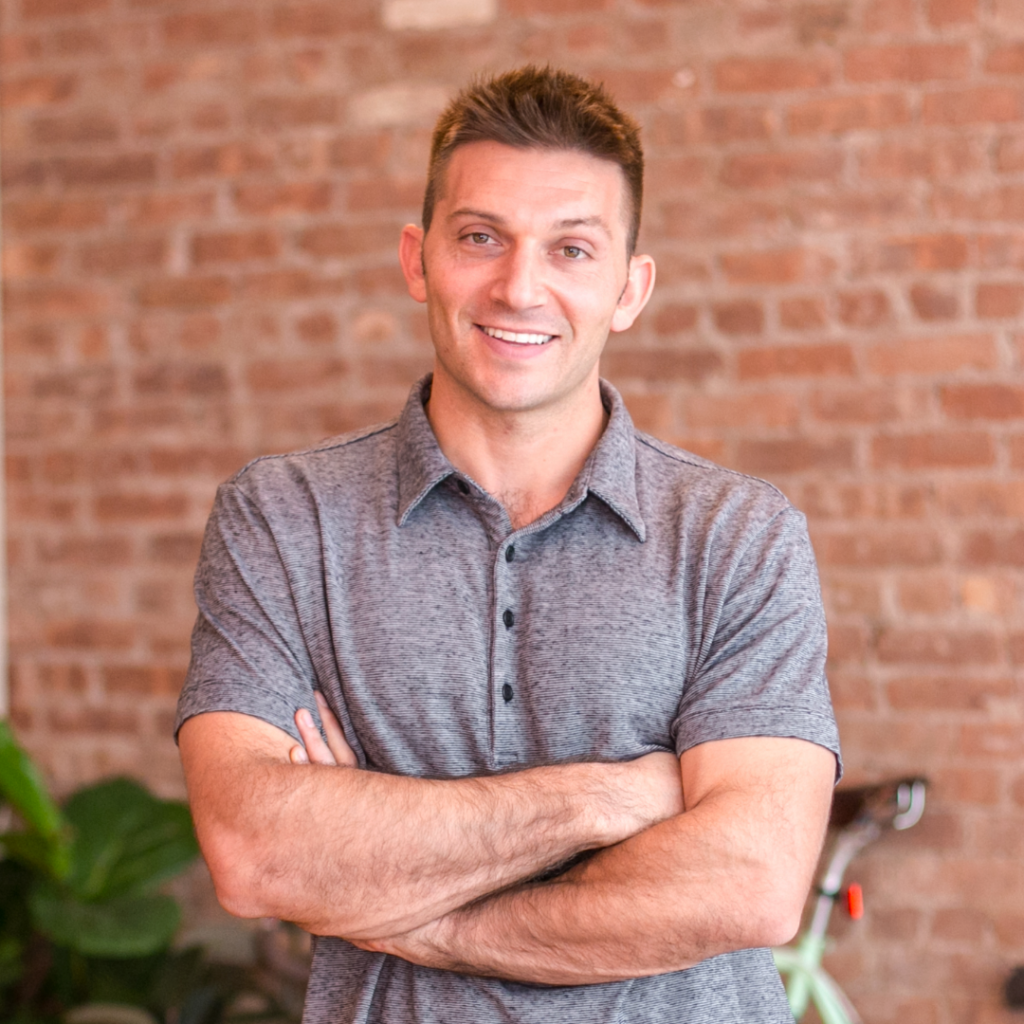
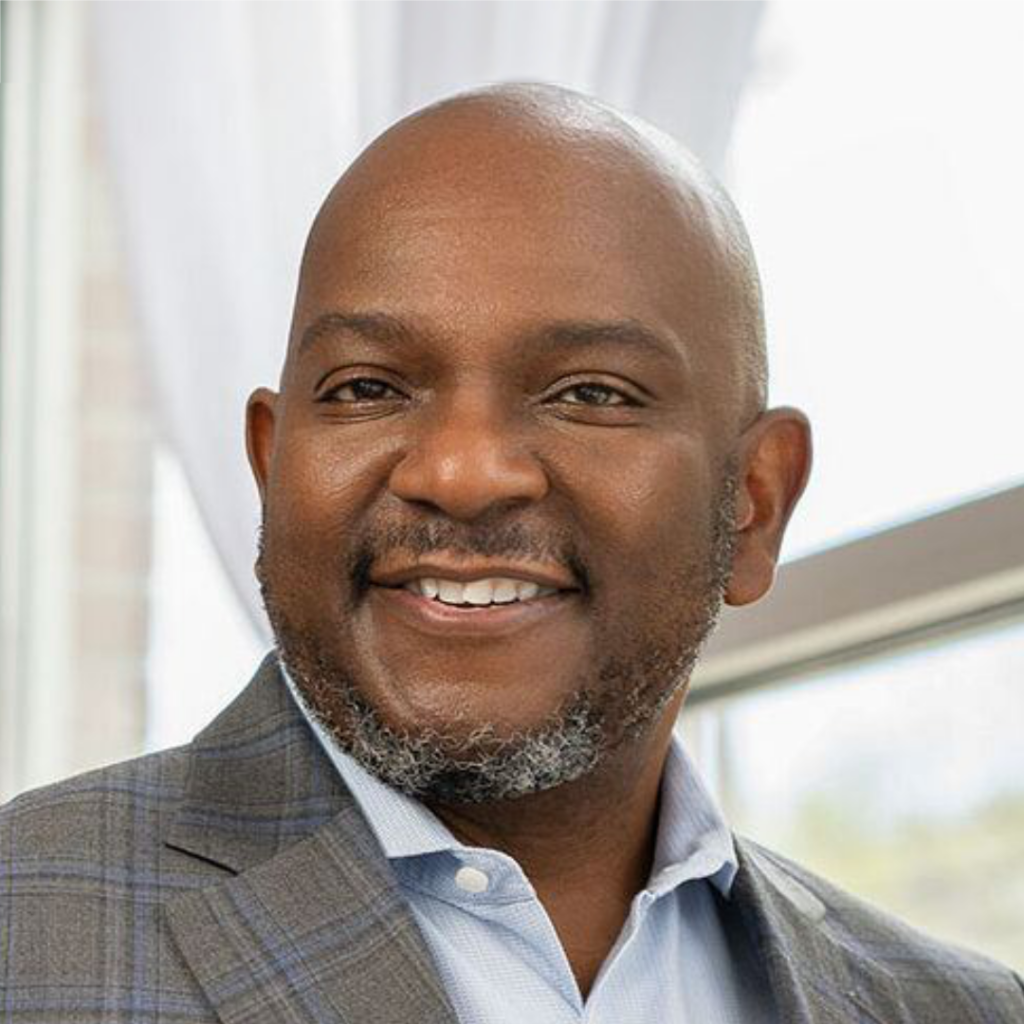
Philip Kafka is President of Prince Concepts, which he founded after selling his company, Prince Media. Philip spent six years building the New York based billboard business, developing and marketing sign locations across Manhattan, Brooklyn, San Francisco and Los Angeles before he sold it to LAMAR, the largest billboard company in the country.

Philip decided to focus on Detroit for his next gig as real estate developer. He started buying real estate in 2012, in neighborhoods that no-one else wanted to be in, buying abandoned lots and land. Prince Concepts has now acquired and owns seventeen acres of land, renovated 62,000 square feet of formerly blighted industrial property, imagined and built 20,000 SF of new housing, created 15,000 SF of thoughtful public space, planted over 300 trees, and won nine national and international awards for its completed projects.

The vast majority of this development has taken place, and will continue to be, in Core City.  Philip believes that consistent, dedicated, and focused work within a specific area is how the unique character and value within the Detroit neighborhoods comes to life.

Prince Concept’s first ground-up development project, True North, was named 2017’s Multi-Family development of the year by Architects Newspaper, was a winner of a Progressive Architecture award, and was one of six finalists for the prestigious Mies Crown Hall America’s prize; it was one of just two finalists from the USA, the other being the Smithsonian National Museum of African American History in Washington D.C.

Kafka also serves on the board of MoCAD in Detroit, and has frequently been a guest critic and lecturer in the architecture departments at the: Illinois Institute of Technology in Chicago, Fay Jones School at the University of Arkansas, Bezalel Academy of Arts and Design in Jerusalem, University of Michigan, and Wayne State University.

Read the podcast transcript here

Eve Picker: [00:00:09] Hi there. Thanks for joining me on Rethink Real Estate for Good. I’m Eve Picker and I’m on a mission to make real estate work for everyone. I love real estate. Real estate makes places good or bad, rich or poor, beautiful or not. In this show, I’m interviewing the disruptors, those creative thinkers and doers that are shrugging off the status quo in order to build better for everyone. And speaking of building better, I’m very excited to share that my company, Small Change, is now raising capital through a community round that is open to the public. Small Change is a leading equity crowdfunding platform for impact investment in real estate. For as little as $250, anyone 18 and over can invest in Small Change, helping to fuel our growth as we disrupt the old boys club of capital that routinely ignores so many qualified people and projects. Please visit Wefunder.com/smallchange to review the full details of our raise and to make an investment if you can. And remember, investing is risky. Don’t invest more than you can afford to lose.

Eve: [00:01:40] Being a developer without believing in architecture and its fundamental principles is like being religious without believing in God. This is Philip Kafka’s take on architecture and real estate. He’s my guest today, and I think you will be as wowed as I am. Philip has taken a position on rebuilding Detroit that is inspirational, innovative and rare. He’s working in forgotten places on land that no one else believes has much value. His projects weave together commercial buildings and community space to create sculptural places you just want to be in. And his unique approach has earned him accolades. I just want to visit every single one of his projects, listen in to be inspired. If you’d like to join me in my quest to rethink real estate, there are two simple things you can do. Share this podcast and go to rethinkrealestateforgood.co, where you can subscribe to be the first to hear about my podcasts, blog posts and other goodies.

Eve: [00:02:53] Hello Philip, I’m really excited to talk with you today.

Philip Kafka: [00:02:57] Hi Eve. It’s great to be here. I’m excited to speak with you as well.

Eve: [00:03:00] So I’m going to start with a quote I read. You’ve been heard to say, being a developer without believing in architecture and its fundamental principles is like being religious without believing in God. So, I’d like you to tell me about that.

Philip: [00:03:14] Well, yes, I have said that. And what I mean by it specifically is that I think about always what is the essence of what I’m doing. And I think that as a real estate developer, I’m in the business of making space. I’m not in the business of making assets. I’m not in the business of making returns or of creating density. I’m in the business of making space. And to me, architecture is the practice of crafting space. And so, if I first wanted to be a developer, I had to understand architecture so that I could then create good space and create a great product.

Eve: [00:03:51] It’s a pretty unusual way for a developer to think, unfortunately. I wish more of them thought like you. You know, I’m an architect by training.

Philip: [00:03:59] Okay, great.

Eve: [00:04:00] I’m definitely on that side. But your work is really stunning. And Quonset huts become amazing residences, abandoned land, gorgeous parks. What’s your philosophy about the spaces that you decide to create as a real estate developer?

Philip: [00:04:17] Well, my original training is in philosophy. That’s what I studied in university. And so inevitably, my interest in real estate, it’s a vehicle for me to express my beliefs. And I’ve been fortunate because I started as an entrepreneur in New York City, not doing real estate. I was in the advertising business. I started a billboard company, which in a way was real estate. I was developing walls for advertising space, always knowing that I wanted to get to what I’m doing now. I made my way to Detroit. And it was Detroit’s unique conditions, which helped craft my specific philosophy. And my specific philosophy is, develop a minimal amount of leasable space to subsidize a maximum amount of public space or quality space. And when I say quality space, that’s unique living residences, interesting experiences, places to work, places to eat. Again, I believe that my product is space, and so I’m always trying to figure out a way to create the most inspired spaces I possibly can, whether that’s outdoor public space or indoor private space. And I’m trying now to stretch my mind and figure out how I can create indoor public space as well in an interesting way, not just as a lobby or as a passage to other private spaces, but really try to wrap my head around it because I think it’s an interesting challenge. So, it’s Detroit that allowed me to develop that philosophy because land and real estate was so inexpensive relative to, I guess, I don’t like to get into things I don’t really understand, but relative to the macroeconomic factors of the city, land was so affordable relative to the opportunity there that, let’s just say, for example, I paid $20,000 for an acre that should have cost me $500,000. And if I was doing a $2 million project, I then had 480,000 extra dollars that I could then invest into the quality of spaces both indoor and outdoor, without offsetting that cost to the people who are living there, working there, or just enjoying the public space. Does that make sense?

Eve: [00:06:28] Oh, absolutely. Yeah, the numbers give you room to do something more, but is that what drew you to move to Detroit? Just the potential?

Philip: [00:06:36] Yes. Like I said, I was a student of philosophy in university and in my life, I’ve been a student of history. And when I looked around the world, I only saw two cities, really significant cities that shared the condition that Detroit has. One was Detroit and the other was Berlin. And that condition is that these were both cities whose infrastructure was built with grand ambition and whose population did not max out its infrastructure. So, Berlin was built for 8 million people. I believe it was intended to be the capital of Europe after Germany was going to conquer everybody, and it only has four and a half million people. So, there’s a lot of space, there’s infrastructure for all those people, but there’s space, there’s things to do, and that’s why it’s such a creative city. Detroit was built for 2 million people, and it only had 700,000. So, I visited a lot of cities when I was living in New York. I went to Pittsburgh, I went to Philadelphia, I went to Cleveland and Columbus, St Louis.

Philip: [00:07:33] And I just found that even though they were all part of this consortium, which is known as the Rust Belt in these old industrial cities, which I love the muscle of those cities, there weren’t any that really had the conditions of Detroit, which were a former heavyweight champ that now basically had big shoes to fill. But it had the shoes. It had the stature to be great again, already built, and it wasn’t there yet. So, I’d never seen anything like it. And through studying, I realized that there were really only two cities in the world like it, and I thought it was a once in a lifetime opportunity to be part of that amazing genesis. But that’s only the physical side of it. There’s also the historical and cultural side of it. Detroit’s a predominantly African American city. It has great, rich historical roots, great culture that has a history of innovation. From the Model T to reinforce concrete. Detroit is, it’s inspiring to me. So, I couldn’t help but want to be part of it.

Eve: [00:08:30] So your company, and by the way, I got to add here, my husband is a historian and philosopher of science. So, he’s in the same business, very creative, but he did not end up being a real estate developer. That was me. So, your company is called Prince Concepts, and you started it really not very long ago, maybe 12 years ago, ten years ago.

Philip: [00:08:53] I originally started as Prince Media Company because my first billboard, like I said, that I developed in New York City when I had my company was on Prince Street, Prince and Mulberry. And I just took the name of the street that was kind of the backbone of Soho, my first location was there. I was living off of Prince Street at the time in New York City. And so, I put the name Prince Media Company on my billboard company. And after I sold that company, I had it for six years. I sold it in the summer of 2015, and then I just named my real estate company, Prince Concepts. I’d been buying real estate in Detroit while I had my previous company. Once it was successful, I started buying real estate in Detroit about 2013, and then I just carried the name. It’s not significant. Other than that, it was where my business roots kind of began in Soho.

Eve: [00:09:36] Right. So, it’s significant to you. So, how large is your portfolio now?

Philip: [00:09:41] Now I’ve developed about 30,000, when I was finishing this project, I’m in Texas right now, finishing up a project. It’s an aberration from my typical development zone, but I’ve developed maybe 45,000 square feet of new construction and I’ve renovated about 100,000 square feet of previously kind of derelict industrial buildings. And then I’ve actualized about 30,000 square feet of just land into public spaces. And then in Detroit, my work, I started with one building that was a little bit off the beaten path. It wasn’t so adventurous. It wasn’t quite in the thick of things when I first bought it in 2013. But it also was kind of close to some action, and that was my first project. It was a restaurant that was architectural, and it was very successful.

Eve: [00:10:28] What restaurant was that?

Philip: [00:10:30] It was opened as KATOI, and now it’s called TAKOI.

Eve: [00:10:33] You know, I ate there when it was in its original form, and it was amazing. Yeah, I have to come back to its reincarnation as TAKOI.

Philip: [00:10:41] Yes.

Eve: [00:10:41] Because it burned down, right?

Philip: [00:10:44] Correct. It was open for 11 months and then somebody broke in to steal some alcohol and burn the place down to cover their tracks and we rebuilt it. It was a challenging six months because I was in the middle of my next project, which was True North, at the time as well. But we kept it going. We kept the team together and we were able to rebuild the restaurant. It’s been open ever since and doing well. My next phase of projects were in an area about 5 minutes from there and it was an area that was, there were three operational houses in like a 20-acre area. And I bought a lot of land, and I bought a lot of abandoned buildings. And it was an area that anybody in real estate, since we’re talking about real estate, told me to stay away from. And this is, that advice is one of the things that’s continued to inform my philosophy and help me make distinctions as to what I actually do. But I started to buy real estate there and then that was my first Quonset Hut project, is how I activated that area.

Philip: [00:11:36] I built a True North, and that was a live work community using Quonset huts, which was then very generously awarded throughout the architecture community. And it kind of opened up a whole new world to me as to how architecture can be such an electrifying. I believed in it prior, but it’s like it’s like you can have faith. If we go back to the religion quote, you can have faith, but it only gets stronger after it gets tested. And if it passed those tests, then you really start to believe in it. So, after True North is when I really began to believe in architecture and its power to inspire people, and to bring them places they otherwise maybe never would have gone.

Eve: [00:12:17] So, where did the inspiration for Quonset huts come from? It’s not what someone would think is going to have a beautiful end goal, but the projects that you’ve built are really pretty extraordinary.

Philip: [00:12:30] Thank you.

Eve: [00:12:31] I’d like to know how you thought that through, yeah.

Philip: [00:12:34] So, it was twofold. So, like I said, I had an interest in space. I knew that space was what I was trying to make. That was what was interesting to me. I wasn’t looking to build apartments or just to build density offices, just units that I was going to rent. I was interested in creating spaces that were going to inspire people to want to be somewhere where everyone else told them they shouldn’t go. So, I knew I needed quality space to make people say, well, you know what? I’m going to take a risk and live over there because the quality of space that I can get there is far superior to the quality of space that I can get over here. And so, I was seeking that. And then that collided with, like I told you, I was reading about Berlin and its history of housing after World War II and how the city was being rebuilt.

Philip: [00:13:23] And I saw an image of an American army base outside of Berlin built with Quonset Hut. And the two paths that I was that were in my mind kind of collided when I saw that image. And I said, wow, I’m going to investigate using the Quonset hut to create quality space. And then I started to think about hiring architects, and I knew that it was going to need an architect’s touch to make it very special. See, the thing is, the Quonset hut is interesting as a tool, but it’s not the essence of what it gives me. I don’t build Quonset huts. I build space, and the Quonset hut is just the tool that allows me to do it well and interestingly, and to make it accessible price wise for myself and for my tenants.

Eve: [00:14:05] You’ve also stretched yourself, and I think hired one of the most remarkable landscape architects to help you create that space, right? Dirt, who I also interviewed, Julie Bargmann. So, the spaces really are gorgeous, absolutely gorgeous. So, you’re turning really derelict and unwanted pieces of property into an asset for the city. And everyone, everyone who lives there. Right, they’re not private spaces. So, anyone can wander into the green spaces that you create. Is that correct?

Philip: [00:14:37] That’s absolutely correct. And, you know, this is a, again, like I said, Detroit’s unique conditions helped inform and cultivate my development style and my philosophy. Som I’ll give you an example. I have another beautiful restaurant and I have other bakeries and cafes that surround this beautiful public park. Now, some small minded people, I hate to say that there are small minded people, there are magnanimous people, there are big minded people, there are ideas and thinkers, and then there are people who want to focus on negatives. They can look at my work and they can say, wow, you’re building these restaurants where there were three operational houses in the neighborhood. Those three people, they might never be able to go. And that is true, but that’s okay because this is what a city does. It services so many interests. That’s okay because that restaurant is okay in that neighborhood if it subsidizes public spaces that beautify the neighborhood and are accessible to everyone. Now, that park, we put benches on the front of it. It’s where people who are on their way to the bus stop, if they’re 10 minutes early, 20 minutes early, stop and take some sun and enjoy themselves and have a little conversation.

Philip: [00:15:48] So, it’s so interesting for me to see how, when I build a project, it only has eight apartments let’s say. Eight apartments cannot change a neighborhood, but the public spaces that they subsidize certainly can. And so, it’s that marriage between being extremely generous with the people who pay me rent, let’s say. I’m talking about business. But then also being equally as generous, if not more generous with the people who don’t. And I’m in a very unique situation because I own so much land in one area. I have 20 acres in that area that I can be extremely generous with the area, and which means I can be extremely generous with the people who don’t pay me rent, which means that I can actually make something special. And so, it was very important to me to make the public spaces as notable, if not more notable than the private spaces. And that to me is what makes the work interesting, is when I can figure out how to subsidize those spaces and fulfill everybody’s interests. That’s the real challenge of the work, and that’s what most developers complain about, to be honest, is that they can’t service everyone’s interest. And it’s true. It’s very hard and it’s frustrating sometimes. Development is hard work, as you know. But when you’re able to kind of get into that territory that you never thought you could get into, it becomes very interesting.

Eve: [00:17:10] So, you know, you said one thing I’m going to disagree with, and that’s you know, you can’t really change a neighborhood with eight units. But I disagree. I think that you can change a neighborhood by showing people what’s possible. You know, because most people are scratching their head over what to do with all of this vacant land. I’ve driven through those neighborhoods and they’re decimated and they really have to be reimagined, right. So, you’re starting the reimagining process, which is very exciting, I think.

Philip: [00:17:39] I think that your critique of it is correct. But I will say this, too, is that what I found in development is that a lot of developers, I hate to be critical, but I’m just being realistic. They don’t push to get to the essence of what it is that I’m actually doing. So, I could build eight of the most inspired apartments. And honestly, I even see this from architecture students who come and visit from all over the country, all over the world, really. First questions they always ask me, no matter how inspired the spaces are, is, what is your return? What did this cost you to build, and how much are you getting in rent? And I’m like, you’re Architecture students. Like there’s an idea here. This was the middle of nowhere just three years ago, and all you want to know is how much it cost me? You can go ask the developer in downtown that, like, you know, there’s so much more here. And I finally started to realize, if I wanted to get people to pay attention to the real true elements of what it is that I was doing, I first had to talk about the things that they never think about, the trees and the public space, to get them to notice that the things that they do care about, which is the return, You know, like, I always say that Caterpillar with my second Quonset Hut project. When I describe the project, it’s this simple. It’s a project that planted 186 trees and eight apartments. That’s it, that’s the project. 186 trees and eight apartments. And at first developers are scratching their head, you know, that’s the project? And yes, that’s the project. It’s about the trees. The eight apartments are really a vehicle by which I can subsidize this beautiful woodland.

Eve: [00:19:12] The trees, right.

Philip: [00:19:13] But I have to do that to get them to start to expand their mind a little bit. Not that my way is the right way, but we all want people to kind of maybe see the world in the way that we do.

Eve: [00:19:25] I completely agree with you because I think, unfortunately, the built environment has succumbed to being a financial commodity for people to make money on.

Philip: [00:19:35] Yes.

Eve: [00:19:35] And it really shouldn’t be. It’s all about the space between the buildings, right? Streets we use are pleasant or unpleasant because of the way we place buildings on them, right. So, I totally get it. It’s pretty inspirational.

Philip: [00:19:51] Thank you.

Eve: [00:19:51] But when you start work on a project, where does your inspiration come from for each project and how much does history count and the neighborhood?

Philip: [00:20:01] Well, this was one of the things that was so interesting that you and Julie talked about in your podcast with Julie is, and Julie taught me this really, I kind of understood this intuitively when I began my work, but Julie was the person that I worked with that really helped me understand this explicitly. And this is Julie’s quote. A great project emerges, it doesn’t descend. And that captures like the way that I try to work in terms of respecting history and respecting place is that there’s so many elements that inform a project and then that is mixed, the existing conditions, I like to say. Existing conditions have to do with materials that I have access to, to the history of the place, to the economics of the place, to the demographics of the place, to the trades that I have on hand.

Philip: [00:20:46] Like, if I have a welder on site, a really good welder, I’m going to work with steel. And if I have a great mason, I’m going to work with BLOCK. And if Detroit is a city that’s rich because it has a steel history and it’s easy for me to get welders, I’m going to work with steel and there’s so many things that a city’s existing conditions inform about my projects, but it’s not my project until those existing conditions then marry my mistakes. And so, the things that I would say inform my projects the most are the marriage between existing conditions and the mistakes I previously made. So, it isn’t like an idea just comes out of nowhere. One of the reasons I started with a Quonset hut was I had no construction experience, and this was something that I could look at a YouTube video online and make. So, I figured this is something that I can do.

Eve: [00:21:34] That’s great.

Philip: [00:21:36] That at the time, my lack of experience at the time was an existing condition that I had to deal with. And the Quonset hut was a really nice consequence to that existing condition, in addition to Detroit’s industrial history. And then Edwin Chan, the architect that I worked with on True North, he was also so respectful of the scale of the neighborhood and the scale of the block. That project was built across five lots. It’s eight Quonset huts, ten units, in between an old industrial garage and a regular single-family house. It was an area where manufacturing zone met residential zone. So, the Quonset hut at the scale, which is an industrial tool, at the scale of a home, was kind of the consequence that we derived. And we implemented things like Detroit has a great porch culture, for example. We did a stoop on the project, so that people would live the same sort of lifestyle from this project that they do in the rest of the neighborhood, but in this futuristic looking place. And so, it was so important for us to take elements of what was around us, elements of the path of the neighborhood, and kind of mix it into this salad that becomes the project.

Philip: [00:22:48] And so, right now I’m the general contractor and I typically am usually, I’ve worked with, I’ve collaborated with other contractors, but usually I build my own projects and I’m down in Texas as the general contractor, finishing a project. It was Landscape Architecture by Julie Bargmann or Architecture by Marlon Blackwell. And it does use Quonset huts as well. And there’s a lot of mistakes that I made on the project. Being here every day, working with the trades and understanding how things get done or if things don’t get done well, is such a rich source of inspiration for my next project. And wherever it’ll be, it will be in Detroit. That project will be a consequence of all these mistakes and lessons that I’ve learned from being on the battlefield, so to speak, and the existing conditions of the neighborhood itself as I develop. That was a long answer, I apologize.

Eve: [00:23:41] No, no, it’s great. I’m just smiling because I’m enjoying it so much. So, does a Quonset hut save you money or not in the end?

Philip: [00:23:51] You know, in the end, what I would say is that it doesn’t. What it does, though, is that for the same price per square foot, let’s say, that you would build a regular method of construction. You get a more museum quality space. So, the Quonset hut is not less expensive if you really want to make it architecture, there are intelligent ways to use it. Every project I’ve done so far, I’ve done three Quonset Hut projects, each with a different architect, each kind of exploring different avenues. And I’m learning more and more about how to use the tool in the most effective and efficient way possible. I haven’t mastered it yet, at all. But what it consistently does, in spite of whether it cost me less or not, is that it continues to give me inspired spaces that are very novel for a comparable price that would already exist. And so, that’s a win.

Eve: [00:24:45] That’s really important where you’re working, because you have to have a special draw because I’m sure, you know, most real estate agents in Detroit are telling people to stay away from those neighborhoods, right. You have to find a way to really entice people to come and feel like they’re part of something special.

Philip: [00:25:04] Correct. I mean, at that point is one that I also belabour quite a bit, which is there’s this umbrella that’s real estate. And then underneath real estate there’s a lot of different trades within that field. I think that too often, real estate investment and real estate development are co-mingled is the same thing. And I want to make a distinction consistently in my work and in the way I speak about my work that there’s such a big difference between investing in real estate and developing real estate. Investing in real estate, what you’re really buying. You’re not buying space; you’re buying an audience. And oftentimes that means that you’re going into areas that already have demand and there’s no onus on you to create the demand. You’re relying on everything around you to make people want to rent space from you. So, it has nothing to do with the space, but more to do with the audience that you bought. To be a real developer, in my opinion, humbly, to be a real developer. And this is what I’m trying to be at all times. I want to go somewhere where people don’t necessarily want to be, and I want to create a product that makes them want to be there. And then you bring people to an area they otherwise wouldn’t have gone. That is development, you know, And I think that too often people mistake development with investment. And they’re two very different things. In development, you’re investing your capital in the product and the idea. In investments, you’re investing your capital in the audience that already wants that place. And so, I want to try to be a developer, continue to be, which will continue to challenge me and try to bring people to places that they otherwise wouldn’t have thought to go or live in ways they otherwise wouldn’t have thought to live or eat things that they otherwise wouldn’t have thought to eat, or even just to have the sensitivity. If I can inspire somebody that never would have picked the flower to pick a flower and one of my parks, that’s a win. That’s development, you know what I’m saying?

Eve: [00:26:53] Yeah. Oh, no, I know exactly what you’re saying. So, you know, I agree with you. And what you’re imagining is a way of life for a few people. And eight is not very many. Right. That might want to really stretch their own boundaries in a very special way. So, yeah, I totally get it. I have to ask, though, I think you’ve already answered this. Is this the reason why your projects are, tend to be small interstitial projects and not really big ones? Are you contemplating a 40 unit building or a 60 unit building or a little village?

Philip: [00:27:28] Yes, Well, it’s a good question. And I think that I want to work in a scale where I can continue to try new things. And the bigger the scale gets, the less margin for error you have. A 10% mistake on a $10 million project is $1,000,000. A 10% mistake on a 2 million project is 200,000. As a businessperson, I can probably find $200,000 somewhere to fill those gaps and eat the mistake myself. It’ll be a little bit more difficult to find $1,000,000 somewhere. And so, I’m experimenting all the time, trying to be a developer. Because as soon as I start to create things that I already know how to create and that there already is a demand for, I’ve become an investor and I’m still energetic enough to not go to that place yet. So, I’m able to keep the projects interesting and inspired because I want to keep experimenting. That’s one thing.

Philip: [00:28:24] The other thing is, like this project that I’m doing in Texas right now, it was a very interesting experiment because I’m taking a philosophy that was cultivated in very unique conditions, which is Detroit, and then bringing it to Fort Worth, Texas, which is a very different kind of place. And it was an opportunity that was brought to me, and it was a great chance for me to explore architecture. And my dad is the one who brought it to me. He owns some land in Fort Worth, he’s not a developer, and he was asking me to develop it with him. And I was hesitant at first because I didn’t know exactly how my philosophy that was very Detroit specific was going to translate. And the scale is bigger of the project. And if I’m honest, the scale got too big too fast. And that’s a consequence of the market that we were working in because there’s so much more demand in Fort Worth. And so, our experiments didn’t pan out as much as I’d like. And the project isn’t as vibrant of a manifestation of, let’s say, the philosophy that I cultivated in Detroit. Is it a phenomenal project? It’s phenomenal. It’s dramatic. It’s like Julie designed this amazing primordial landscape and these futuristic buildings that Marlon Blackwell designed just rise out of it. It’s a monument. Did it respect the existing conditions of where I am in development at the time? Probably not. It was too big of a scale for me, and I would maybe work my way up to it. But the bigger the projects get, the less I can experiment and kind of discover new answers. You know what I’m saying?

Eve: [00:29:49] Oh, I know exactly what you’re saying. So, I’m so jealous. It sounds like a blast. I have to ask, has anyone influenced your work or is this you experimenting and building ideas on your own?

Philip: [00:30:04] Yes, we have so many opportunities to have so many mentors. They are all around us. Their work is all around us all the time. In Detroit, I live in Lafayette Park, designed by Mies van der Rohe. It’s a very special place. The landscape architecture is phenomenal. They’re these little pristine glass box townhouses that exist in this amazing urban woodland that is such an amazing place to live.

Eve: [00:30:26] That’s a huge inspiration. Yeah.

Philip: [00:30:29] Huge. I wake up every single day and learn lessons from it, from the fact that there were no pure clean ceilings with no recessed lights or air ducts in them, the proportions of the eight-foot spaces and how you make that space. These really tight proportioned spaces feel so generous and grand with full glass walls and how every wall is either a full window looking outside or a perfectly proportioned art wall. It’s like, there’s so many lessons there that I learn all the time. And then every season is a new lesson to learn because the majority of what you’re looking at is the exterior. It’s just, it’s so inspirational to live there. But again, I’m trained differently. I find great inspiration. Joseph Campbell was a mythologist and a professor who was a great inspiration to me. When I need confidence in trying new things, I always pull out his work about mythology and understand where my roots are and what I’m trying to do. And the more difficult it becomes, maybe the more important the work actually is. And so, he’s a great inspiration.

Philip: [00:31:31] The people that I worked with I learned so much from. I mean, Julie has been a great inspiration to me, an amazing teacher. She’s so wise and she’s so renegade. And it’s like, you know what Julie’s like? She’s like a jazz musician that somehow worked her way into, like, a classical orchestra, and they love her. You know, like, she just plays jazz all the time. But like, the classical musicians, like, want to play with her and like, she’s elevated beyond, she really understands the music. And it’s amazing to work with her because of that. Then again, two of the other architects that I’ve done significant amount of work and exploration with are Edwin Chan in Los Angeles and a young architect named Ishtiaq Rafiiuddin, he started his own office with my projects. We’ve done a lot of work together. I’ve worked with him more than anyone else, and he used to work at OMA prior to having his own office. He designed KATOI and he’s done a lot of projects with me. He’s so wise and he’s so holy, and I feel very lucky. And along the way, I’ve worked with other very talented people who I learn a lot from. My projects have been awarded, and I’ve had the chance to meet some great thinkers. There’s little tidbits of wisdom all over the place. I named, I guess, my most significant inspirations for my work right now. And that will evolve, I’d say, probably.

Eve: [00:32:50] And will change at the time.

Philip: [00:32:51] Exactly.

Eve: [00:32:52] I want to ask, who gives you pushback? You know, most of the world is pretty traditional and your work is definitely not. So, who gives you pushback and why?

Philip: [00:33:03] It’s a very good question. Detroit is a city, like I said earlier, Detroit is a city that’s always been about innovation and new ideas. And that’s kind of written in its DNA. It’s I think it’s very different trying to do an experimental project in Detroit than it would be trying to do it in Richmond, Virginia, for example. Richmond, Virginia is a city that had industry and had an interesting rich history, but not a history of ideas. And the fact that Detroit is a city with a history of ideas is very important because it opens people’s minds to new things. And that’s the history of the place. The pushback that I often get in Detroit, let’s say, is a social pushback. I’m going to a neighborhood that I wouldn’t even call it a neighborhood that is low income. It’s a neighborhood that was totally abandoned. Like I said, there were three operational houses there across 20 acres when I arrived. The rest were kind of abandoned, burned out houses and just overgrown lots and land, abandoned industrial buildings which I’ve renovated. But I still get social pushback because there’s a theme in development that there’s gentrification. People throw that word around without even thinking about what they’re saying. And like I said, I’ve worked hard to address these qualms by doing really good work.

Philip: [00:34:18] And so, for example, there’s a great Argentinean restaurant that’s a world class restaurant, literally a James Beard finalist this past year. So, one of the best restaurants in America. It’s not accessible to every person. It really isn’t. I mean, that’s a place where you go and you have an excessive dinner for anybody, for even a working person. It’s a nice place. The criticism I get is, why would you build that restaurant? Well, it inspires people and it’s aspirational, sure. But more importantly, that restaurant, the way I fight back to that criticism is it subsidizes public space. It subsidized a 110-tree park right next to it and a 75 tree park across the street from it. It beautifies the neighborhood. So, I’m always trying to address that sort of pushback and criticism all the time. That’s the most significant criticism I’ve received that I actually listen to. But the thing is, I always say that my projects aren’t good enough if they only inspire the international architecture community but alienate the local community. And they’re not interesting enough if they only make the local community feel comfortable but don’t inspire anyone greater than that.

Eve: [00:35:26] Yes.

Philip: [00:35:26] So, it’s hard work to do both at once.

Eve: [00:35:29] Very hard.

Philip: [00:35:29] And like, I can tip one way or the other. If I tip too far in one direction, I’ll start to get criticism from, because now that the architecture community watches our work, I’ve got people who will critique, work that isn’t inspired enough or isn’t thoughtful enough in that realm. And then because I’ve been sensitive to the local community, if I go in a direction that isn’t sensitive enough, I’ll start to get criticism from them. Now, I love that because it really makes me think every time I start a project, like my brain has to be employed to figure out how to navigate that territory. And I love that. So, if I get criticism, I don’t blame people for giving it to me. That’s a new bit of information that I can use to inform my next project, you know?

Eve: [00:36:16] Wow. So, do you have anyone following in your footsteps?

Philip: [00:36:21] It’s hard to say because, see, here’s the thing about developers. There’s a project in Columbus, Ohio, that used True North as an inspiration, and they did a Quonset Hut project. I haven’t visited yet. I need to go see it. But I saw they didn’t plant any trees. There’s no public space. They extract the wrong essence. They thought the essence of the project, and this is what we were talking about earlier, they thought the project was about the Quonset hut. No, the Quonset hut was just a tool for me to be able to create exceptional indoor and outdoor spaces. And so, I see people who see what we’re doing, and they extract the wrong thing from it. You know, the thing that maybe is the most obvious, but I really can’t wait till the day, till somebody else copies me and says, we just built eight apartments and planted 186 trees. It’s like, that’s when I know that I’ve actually changed something. I haven’t seen that happen quite yet. What do you think? By the way? You have your eyes on it. Do you see other things brewing with this sort of attitude?

Eve: [00:37:28] Depressingly, no. I’ve taken a ten-year hiatus from real estate development myself to build this crowdfunding platform, and I’ve learned a lot about what other developers do in the process. And there is so much built that is just built to be the same. Now, to be fair to developers, they’re trying to make a living and banks are geared towards lending always to the same. Even in a market like Pittsburgh, it’s very hard to break out and do something different and find the financing for it. So, I think the world of real estate development is set up to make it very difficult to do what you’re doing. I think the fact that you’ve chosen a city so thoughtfully where you can experiment is the key, and most people don’t have that luxury. So, I don’t want to blame real estate developers. I actually think the world of finance is probably more to blame for the constant drumbeat of buildings that just don’t build better cities.

Philip: [00:38:32] Correct. But if we’re really exploring this intellectually, too, I think the world of finance in a way, is to blame. I also think that our education system is to blame because it used to be in the early 20th century, if you were a lawyer, you had a true inclination towards the law. If you were an architect, you had a true inclination towards architecture. And before there was an economy and education, people were really, really, really drawn to what was really interesting to them. And now you have people who aren’t even interested in space doing real estate because there’s an economy in it.

Eve: [00:39:05] I think that’s right.

Philip: [00:39:06] And I think that education is in part to blame. And you have people practicing architecture that don’t even have an inclination towards architecture. I don’t know. There’s a lot of things that lead to that. And at the end of the day, unfortunately, real estate has basically just been put into a category of, it’s an asset class, it’s something to hold in your portfolio.

Eve: [00:39:28] It’s an asset class. It’s not, it’s the place where we live, right? It’s where all of us live. And it should be much more than an asset class.

Philip: [00:39:37] Exactly.

Eve: [00:39:38] So, yeah, a little bit depressing. Did you expect all the attention and awards that your work has received?

Philip: [00:39:47] I did not, no. I didn’t at all. And sometimes it’s still kind of surprises me because like, what do they say when you know how the sausage is made, you don’t really want to eat it. And so, I know how the sausage is made in my office and I know where the ideas come from. And as much as I try to make them inspired, I still consider myself an amateur. And I really don’t think that I’m anywhere close to a level of mastery in what it is that I do. But I’m inspired because my ideas are what are getting the attention and I’m not running out of them. I’m getting more all the time because I’m in the field. When I’m in the field building and working, not even working with architects, but that helps a lot. But I go to architects with ideas because of my failures as an amateur developer, I go and I say, I made this huge mistake here, but I thought about how to fix it while I was there. So, let’s design this beautifully and figure out how we’re going to do this and how we’re going to use this. So, I’m very surprised by the attention that I get and the recognition because I consider myself an amateur with a lot to learn. But at the same time, I have a lot of confidence in my ideas and that’s why I spend my life and my capital and my time developing them. So, I’m optimistic that my work will only get better as long as I continue to wake up with will and ideas. It’s hard sometimes in development. It’s really difficult to work. There’s like this ethereal world where there’s ideas and then there’s.

Eve: [00:41:18] The reality.

Philip: [00:41:19] The actual world. There’s reality where, like, you have electricians that just don’t want to be bothered with being told like where you want the switches and how you need the lights to line up.

Eve: [00:41:30] I had a fight with one of those just two days ago.

Philip: [00:41:34] Yeah. So, you know all this and it’s hard to reconcile the two worlds, you know what I mean?

Eve: [00:41:40] Yes.

Philip: [00:41:41] But I have an amazing team in Detroit, and I work with great architects, and they keep me inspired with their ideas, too. I’m far from the only person that brings ideas. I collaborate with people that have amazing world class ideas that helped me take my vision to a whole other level that I couldn’t have even imagined. And so, it isn’t just that I’m winning the awards, it’s that part of the sense in being a developer is that I’m almost like a maestro more than an instrument player is that I’ve picked the right instruments to play at the right time, and I’m working with such talented people that I guess awards were kind of inevitable.

Eve: [00:42:19] That’s great. So, can you tell us what the next project is?

Philip: [00:42:23] Yes, the next project is, I have about 50 units of housing designed in this neighborhood in Detroit right now. 24 of them are designed by Edwin Chan, and then 26 are designed by Ishtiaq Rafiiuddin. And his office is named UNDECORATED, and Edwin’s is called EC3. I would say that 60% don’t use the Quonset hut, but another 40%, we’re kind of playing with the Quonset hut, still trying to continue to master it. That’s Ish and I are now interested. Ish sees architecture as a riddle. He’s more of a scientist with a laboratory than an artist with a studio. And so, we have a great time trying to solve the riddle of the Quonset hut and solve the riddle of, like I always tell people when I sit down to work with them, like this collaboration is a truth-seeking process. And what is this truth-seeking process? We’re trying to arrive at what the best and truest project we could build in this place at this time actually is. And I do believe that there is an objectively best project that you can build based on where you’re building, who you’re building it for, and where you are at in your life and in your skills at that time. And there’s kind of a real exploration that goes through the project’s design process of us trying to figure out what should we really do here? And I have some amazing collaborators in that. So, sorry I got off track.

Eve: [00:43:42] Yeah, that’s fun.

Philip: [00:43:43] We have 50 units of housing designed, that I’m going to begin to work on this spring. I renovated nine buildings now that were kind of derelict and I’ve got two more buildings in the area to renovate. One is going to be taking place right now, When I finish this project in Texas, which I’ll be done any day now. And then Julie’s designed another park, kind of a mirror park to Core City Park, which was the last big project we did together on the other side of Grand River, which is the main street there. So, we’re going to bring that public space to the other side of the street. We’re going to activate the building, the commercial buildings right on it. And so, kind of just continued iterations of what we’ve been doing with new explorations and materials and trying to give people better quality space for a better price all the time. And that’s the effort.

Eve: [00:44:28] I am completely inspired, and I imagine our listeners are as well. And my next question is, is when can I come and visit?

Philip: [00:44:34] I would love to have you come visit, maybe after, now that our work is so landscape centric, you have to come in the spring when the trees are blooming, and you’ll really feel the magic of what we’ve done. Although I will say that the winter in Detroit is, it tests your conviction to the place. Whenever I have people that are thinking of moving to Detroit, maybe to work for me or otherwise, I tell them to come in February and if they like it then, then they’ll really like it at other times of the year.

Eve: [00:45:02] I’m in Pittsburgh, so I get that, I get that.

Philip: [00:45:04] But we’ll enjoy ourselves more, Eve. Yes, I love Pittsburgh. Pittsburgh is such a dramatic, beautiful city. It’s amazing.

Eve: [00:45:11] Yes, it is amazing. It’s also got its difficulties. But look, thank you so much for your time today. I thoroughly enjoyed this.

Philip: [00:45:18] Yes, we need to continue this in person in Detroit or in Pittsburgh, Eve. I could come visit you, too, right?

Eve: [00:45:23] Yes, absolutely. Thank you.

Philip: [00:45:25] Okay, phenomenal. Thank you so much for your interest. And I’m going to be diving into what you do and continued success with everything. And we’ll speak soon.

Eve: [00:45:47] I hope you enjoyed today’s guest and our deep dive. You can find out more about this episode or others you might have missed on the show notes page at RethinkRealEstateforGood.co. There’s lots to listen to there. You can support this podcast by sharing it with others, posting about it on social media or leaving a rating and review. To catch all the latest from me you can follow me on LinkedIn. Even better, if you’re ready to dabble in some impact investing yourself head on over to wefunder.com/smallchange where you can invest directly in Small Change and our mission to democratize capital formation to create impact in commercial real estate development. A special thanks to David Allardice for his excellent editing of this podcast and original music, and a big thanks to you for spending your time with me today. We’ll talk again soon. But for now, this is Eve Picker signing off to go make some change.

Image courtesy of Philip Kafka

Our client is the planet.

January 18, 2023

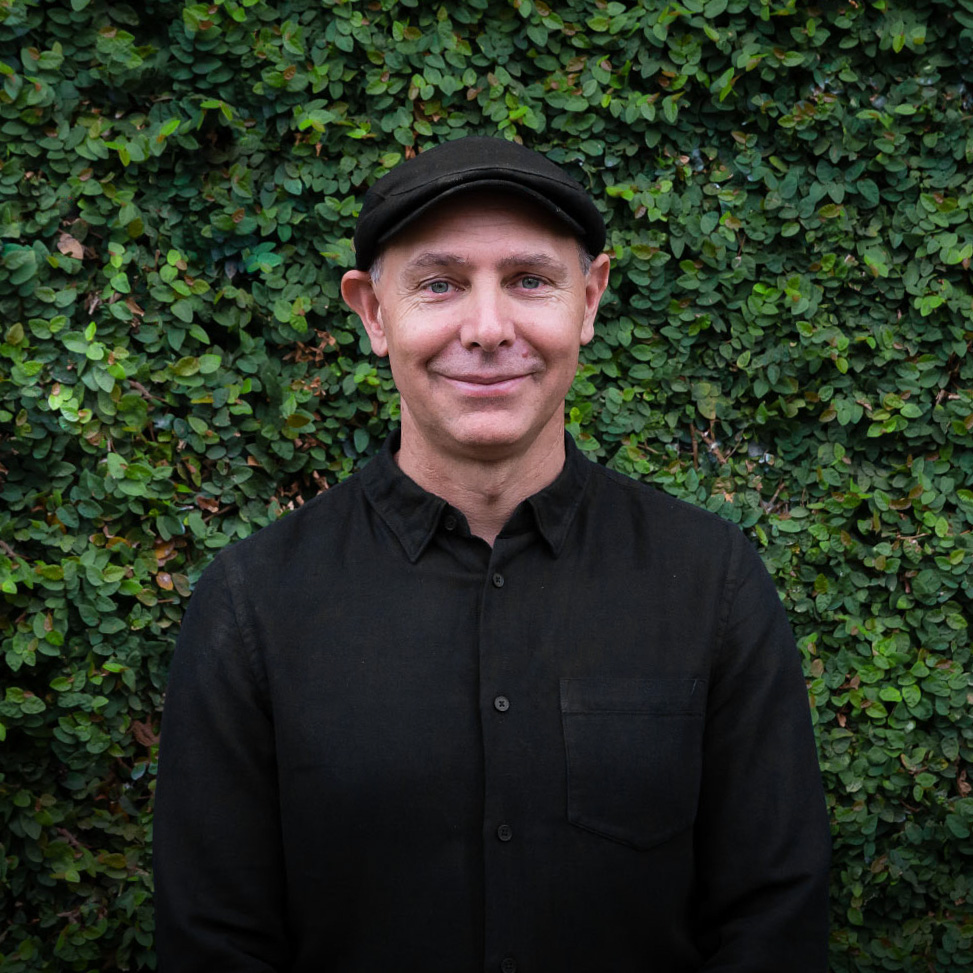
Jeremy, the founding Director of Breathe, has built a team of dedicated architects with a reputation for delivering high quality, sustainable design for all scale projects. In particular, Breathe has been focused on sustainable urbanization and exploring ways to deliver more affordable urban housing to Melburnians.

As the instigator of The Commons housing project in Brunswick, Jeremy was the driving force behind the prototype for what is now Nightingale Housing, a not-for-profit organization dedicated to providing sustainable and affordable housing. Jeremy believes that through collaboration, architects can make a real and positive impact in their community.

This belief is exemplified by Breathe’s work with other Melbourne architects to deliver the Nightingale Model, which is intended to be an open source housing model led by architects. According to Jeremy, “if you want to build something that is affordable and sustainable simultaneously, every project manager in Melbourne will tell you you can’t do that.” Instead, Breathe has defined sustainability through reductionism, identifying that what people really want in housing is good, meaningful spaces with light, outlook, and plants, rather than luxurious but unnecessary features.

As Melbourne experiences rapid growth and housing becomes an increasingly expensive commodity, Jeremy’s movement towards affordable and sustainable urban housing through stunning, thoughtfully executed projects is vital for the city’s future.

Read the podcast transcript here

Eve Picker: [00:00:08] Hi there. Thanks for joining me on Rethink Real Estate for Good. I’m Eve Picker and I’m on a mission to make real estate work for everyone. I love real estate. Real estate makes places good or bad, rich or poor, beautiful or not. In this show, I’m interviewing the disruptors, those creative thinkers and doers that are shrugging off the status quo in order to build better for everyone. And speaking of building better, I’m very excited to share that my company, Small Change, is now raising capital through a community round that is open to the public. Small Change is a leading equity crowdfunding platform for impact investment in real estate. For as little as $250, anyone 18 and over can invest in Small Change, helping to fuel our growth as we disrupt the old boys club of capital that routinely ignores so many qualified people and projects. Please visit Wefunder.com/smallchange to review the full details of our raise and to make an investment if you can. And remember, investing is risky. Don’t invest more than you can afford to lose.

Eve: [00:01:44] Three years ago, I interviewed the delightful Jeremy McCleod of Breathe Architecture, and today I’m lucky enough to interview him again. Jeremy founded Breathe, an architecture studio in Melbourne, Australia. There he delivers gorgeous and sustainable buildings to his clients. But Jeremy was unhappy with the ever-widening gap between those who have wealth and those who do not. So, he embarked on a second journey to deliver sustainable and affordable housing to everyone. Many told him that this was an impossible goal. But he completed his first project, The Commons, with accolades, three years ago. With a waiting list of over 8000 buyers, Jeremy and his team set about building lots more. This is what a great architect does. Listen in to learn more.

Eve: [00:02:43] If you’d like to join me in my quest to rethink real estate, there are two simple things you can do. Share this podcast and go to rethinkrealestateforgood.co where you can subscribe to be the first to hear about my podcasts, blog posts and other goodies.

Eve: [00:03:14] Hi, Jeremy. Thanks for joining me. And I just want to say, whoa, what a difference three years in a pandemic made for your business.

Jeremy McLeod: [00:03:23] Yeah, it’s been pretty wild times. Thanks for having me back on, Eve. It’s good to see you on the other side.

Eve: [00:03:31] It is. It’s the other side. So, since we last talked, your architecture studio Breathe and your brainchild Nightingale seem to have both exploded. And I wanted to give a little background to listeners who hadn’t heard the first podcast, or maybe tell them to go listen to it. But let’s talk about Nightingale first. So, for those listeners who missed our first chat, tell us about Nightingale. What is it and where did it all begin?

Jeremy: [00:04:03] Okay, so. Yeah, Melbourne, where our practice is, is a lot like any capitalist society. Unlike the beautiful Scandinavian countries where they decide to house their people through high taxes and good kind of support networks in a good neo liberal society, our government has been underspending in housing for decades. And so, as an architect, you know, we work, historically, our choice is to do private homes for wealthy Australians or do apartments for property developers where, you know, they’re really following a profit in a complex kind of environment. So, both of those things aren’t very rewarding. And Breathe architecture, our architecture firm, you know, we believe strongly in this idea that our first client is the planet, you know, our second client is the broader community that live on that planet. And then lastly, we have the client that pays us, and we felt like doing property development apartments wasn’t achieving the first two of those three criteria. So, we built a prototype project. We finished that in 2013 and it was called The Commons, and it was an idea to kind of prove to developers that you can make a profit by building sustainable homes and building community. And so, we built this building called the Commons. And the idea was that it would be car free, carbon free, that it would be affordable and that it would be incredible. And a lot of those things came true. I mean, we shot for the stars. We kind of landed on the moon.

Eve: [00:05:50] It is incredible. It’s a beautiful building.

Jeremy: [00:05:52] Yes, Eve you’ve been here. Right. So, you’ve been to it. You’ve been to Australia, you’ve been to Melbourne, you’ve seen it. We couldn’t get the carbon free piece right. So, there was still, we couldn’t afford the non-gas infrastructure back then. But apart from that it’s a very good building. And what was interesting about that was that we then opened it up for tours, brought every developer in the city through and said, look, this is what you can do. And they all saw it as a kind of an aberration rather than a trend and said, oh, well, that’s a nice idea, but thanks very much, we won’t worry about it. But, interestingly for us at Breathe is that people just, you know, every regular day Melburnians that are writing to us saying, if you’re going to do that again, can you please let us know? Because we would like to live in a building like that.

Eve: [00:06:36] But the really important thing is that these units were also affordable, right? They were affordable to civil servants who were really being pushed out into the far nether land.

Jeremy: [00:06:51] Yeah. I mean, the whole premise of building something that was sustainable and affordable simultaneously and still profitable for a developer was really about this idea of, you know, analyzing everything. And it was about a sustainability of reductionism. So, developers view historically has been that sustainability is expensive and it’s hard to get a return on your investment. And so, we just questioned everything. So, the big thing about taking out the cars was that we saved 10% of the build cost by taking out the basement. We reduced every apartment by $40,000. We took out every second bathroom. So, every two-bedroom apartment only has one bathroom. So, we saved $9,000 per apartment. We even took out all of the individual laundries, reduce the price of every apartment by about $6,000. And when you take a second bathroom and a laundry out of an apartment, the living room suddenly gets, you know, nine square meters bigger. You know, in your space, 90 square feet, about 90 square feet bigger, right. So, the living rooms start to be these really great, you know, spaces to be in. The cost comes down in all these apartments and then we start to build really great shared spaces, like a really incredible bike park, a really great rooftop laundry, you know. And rooftop laundry sounds weird, but it’s beautiful, right?

Eve: [00:08:12] It’s absolutely beautiful, yeah.

Jeremy: [00:08:13] Opens up onto the big garden and views to the city. And these become these, kind of, social hubs where people in the building meet each other doing something really ordinary, but it actually works in a kind of safe, nice space where people actually get to break down those barriers to talk to each other. So, anyway, when we finished the Commons, we won the national award for housing with this thing, and it was quite a small building. You know, it was 24 apartments, and we won the National Award for Sustainability, which was incredible because it wasn’t a $100 million university building that was funded by some philanthropic fund. It was, you know, it was actually. Yeah, it was just a market rate apartment. So, then we wanted to get other developers to employ us as architects to do that after two years of bringing them through the building. We couldn’t find anyone that would want us to do that. They wanted to do the same as business as usual. So, we decided that I took four days off work, and I wrote a manifesto and called it the Nightingale model, and we established Nightingale housing. So, the idea was that we would share all of our IP. That we would bring architects together, that architects would lead a housing revolution, that we would democratize capital.

Jeremy: [00:09:31] It’s interesting, Eve, that you and I met and, you know, when I saw Small Change, I was like, oh, this is what I really needed back in 2015. But basically, it was peer to peer funding. Small mom and dad investors putting in like about $100,000 each to kind of crowdfund these projects, equity fund these projects. And we built the first project, Nightingale One, which finished in 2017. And then, you know, by that stage our waiting list, people who had been writing to us had grown from 11 to 57. And so, we balloted those apartments. So, we didn’t sell them through a real estate agent. We took all of the agents out, all of the marketing, all of the display suites, which all reduced the cost of the building. We took out all the gas to make sure it was 100% electric. We shared a lot of the infrastructure inside the building, like the hot water for the hydroponic heating, like the hot water for the showers. So, we got one set of plant that does all of that. It makes it really cheap for everyone living in there. These are all built to sell like market owned apartments. And 57 people entered a ballot and we balloted. We sold all the apartments in one day. And people hadn’t seen that in Melbourne, you know.

Jeremy: [00:10:46] So anyway, you know. So, that was kind of the start of Nightingale. And what’s happened since then is that a couple of projects kind of took that Nightingale model and delivered it. So, we shared that IP with other architects. You know, I actively worked with those other architects to help them deliver those projects. So, Nightingale 2 is a great example of that. And then it kind of faltered, Eve. And the challenge, I think, was that to go and source equity, to go and buy a piece of land, you know, someone needs to sign the directors guarantee on the purchase of the land. To go and secure a debt, someone has to put a director’s guarantee down, you know, to secure whatever it is, $10 Million from the bank. And the bank wants to know that the person delivering the building has done it before and that they’re good at it and that they have a big balance sheet behind them. So, this revolutionary idea for Nightingale housing, like it kind of went bananas, right? So, after Nightingale 1, we balloted Nightingale 2. And you know, we started doing all of these projects, but, you know, our demand grew so that there’s 15,000 people, over 15,000 people on a database now to buy housing.

Eve: [00:12:02] Wow, my heavens.

Jeremy: [00:12:03] But we couldn’t keep up with supply because, you know, there’s fundamental issues around, in a good neoliberal society, around risk, who’s prepared to take the risk and put their home on the line. And, you know, again, I guess risk from a debt point of view and an equity point of view, who’s going to put money into these projects because you know, who’s going to take risk on that? And so, look, the good news is that, you know, we’ve just completed like our 500th apartment and we’ve got another 500 in the pipeline. Last year we balloted $80 million worth of housing where we’ve rolled in a social housing portion so that, you know, trying to really kind of nail the affordable housing piece now means we have 20%, that the first 20% gets balloted to an affordable housing provider. So, that’ll be a charitable organization like Women’s Property Initiatives. The next 20% goes in a priority ballot. So, to you know, key service workers, nurses, teachers or to First Nations Australians or to people with a disability or carers for people with a disability. And the last 60% is balloted to, you know, to the broader waiting list. Everything sold. Now we’ve got a, you know, the new model is kind of evolved into, you know, it’s a Nightingale not for profit, so, there’s no profit in there anymore.

Jeremy: [00:13:33] And we’re now getting institutional funding from what are our superannuation funds, which might be called pension funds in the US. And we’re getting senior debt now from our major banks really through their kind of social impact arm rather than just their commercial finance arm. So, we’re getting good rates and really good engagement like we’ve had the CEO of one of Australia’s biggest banks, you know, come and meet with us, walk through the buildings, ask us what he can do to help personally and like task you know team of six of his heavy hitters to help, you know, build a specific loan product for people who want to buy into Nightingale. So, I think the interesting thing about Nightingale is this idea that it’s got a very clear narrative around it, which is that it’s a triple bottom line housing model. So, it’s about being carbon neutral. It’s about building community, not only in the community within the building, but kind of engaging with the broader community through that whole process. And then lastly, it’s about affordability and how do we get a broader cross-section of the community living there. So, it sounds it sounds pretty easy, but, you know,

Eve: [00:14:43] Well, it’s not easy.

Jeremy: [00:14:46] As you know, Eve. So, you know, and when I started there, it was, you know. Yeah, it was just an idea, right? You know, in a manifesto. And I recently handed over the reins, so I was the founder for a while. I put together a not-for-profit board. Or actually, I got some help to put together a not-for-profit board, which was really great. We put someone on to kind of run the show for a couple of years and then it just didn’t take off. And then I step back in as managing director to try and say, If we’re going to go, let’s do it. I stayed in that acting managing director for over five years, you know, and we saw massive growth and I’ve just stepped down in that role as managing director. So, you know, I’m back on the board now. So, you know, I attend six weekly board meetings. But, you know, as I stepped away, there’s now 17 staff, you know, and 500 apartments in the pipeline. And yeah, so.

Eve: [00:15:44] Is it satisfying to have built that?

Jeremy: [00:15:46] Yeah it is and you know, I was sad to step away. But, you know, I’m also the design director at Breathe Architecture and you know, it’s time that I actually give some love back to Breathe. You know, the organization that founded Nightingale. Now, you know, I feel like I need to spend some time there to go and, you know, see what’s next on the horizon, right?

Eve: [00:16:07] Yes, yeah.

Jeremy: [00:16:08] Building up to do the next thing.

Eve: [00:16:10] So, are other architects involved now? You said you have built 500 units.

Jeremy: [00:16:16] Yes. So, I mean initially it was meant to be this architect led kind of revolution and we got lots of engagement from architects to do that. Lots of challenges around funding and equity raising. And just not.

Eve: [00:16:32] It’s all about money, isn’t it?

Jeremy: [00:16:34] It’s all about money. It’s all about money. Unfortunately. This idealist has become, I’ve become much less, I’m much more pragmatic over time, which is really interesting. I was also quite scathing at the development industry when I started Nightingale, thinking that they were all evil. And now I’m. Yeah, and now, you know, I’m really embarrassed about the things that I said early on, the disparaging things I said about developers, because I just realized how hard it is and how much risk is involved. And you know that the profit margins that developers put in, while they might seem horrifically high from the outside, you know, it only takes one project to go.

Eve: [00:17:17] It’s a huge amount of work.

Jeremy: [00:17:17] Well also, they need a balance sheet to be able to fund the projects and in the event that one project fails, they need to, they need a balance sheet behind them to be able to.

Eve: [00:17:26] Especially in Australia where I really don’t understand how the financing works at all, we’ll have to talk about that. But it seems even harder than here.

Jeremy: [00:17:35] It is.

Eve: [00:17:36] It’s very difficult.

Jeremy: [00:17:37] Yeah, it is very complex. And the banks here, you know, I guess like anywhere are not interested in taking, you know, risk so.

Eve: [00:17:44] Very conservative, yeah.

Jeremy: [00:17:46] Yeah, yeah, yeah. So, you need lots and lots and lots of debt coverage, but it’s really great to be able to get to the point now where I can step away from that. I do worry for the sanity of my replacement, given, you know, it’s probably the same thing that’s happened in the States. You know, we’ve got high inflation here. We’ve got, we have had supply chain issues through COVID. So, we’ve seen massive increases in construction costs in the last two years. In one of the states here, we’ve seen like a 23% increase in construction. So, in the last year, that’s put a lot of projects under pressure. And then we’ve seen, to try and control inflation. The banks have put the interest rates up, so lending is tightening. So, first tome buyers who are our cohort are struggling to get loans. So, you know, it’ll be interesting to see, you know, out of those 15,000 people, how many can actually secure a loan to buy a property. We will see how much demand there still is out of that 15,000 for the next project, when we take the ballot.

Eve: [00:18:48] So then, yeah, I think you’ve answered this question. My question was going to be what did you have to give up on? Like your idealism was thinking, this is going to be like this, but what did you have to give up on to really make this work? Was there anything or have you.

Jeremy: [00:19:02] Yeah, well, I mean, that’s a that’s a really good question. Look, I did think that, you know, that when we first established Nightingale that it was going to be this really light touch thing, right? That there would be a couple of people with a repository of all of the information and they would share it with a Nightingale license to another architect. And that other architect would read through everything diligently. They would understand the risks involved. They would establish a company, go and raise equity, go and secure a debt, and go and buy the site and build the projects. And that it would grow, and it would just go viral. I think that was the that was the dream, right? That the whole thing would kind of happen because it was such light and demand for it. So, the thing that I’ve had to give up on is actually, you know, from being a revolutionary organization, you know, to actually have the impact that we need, we’ve become, yeah, much more mainstream. So, you know, now Nightingale, you know, has a fund it raises, you know, seed fund and equity and debt. Nightingale goes and buys the sites; it engages the architects. So, you know, we still employ.

Eve: [00:20:05] So, you’re really, that nightingale is really making it all happen.

Jeremy: [00:20:11] Yeah. So, Nightingale does everything now takes all the risks. So, as a director on the board, I still take the risk. So, we’re basically taking the risk out of the hands of the architects and centralized it at Nightingale. But we’ve also centralized the expertise. So, you know, we’ve got a finance director at Nightingale, we’ve got, you know, delivery team of development managers and project managers and that obviously gives the banks and the superannuation funds lots of confidence that this team has done it before, and they can do it again and all that expertise is in-house.

Eve: [00:20:45] That’s a lot, that’s huge.

Jeremy: [00:20:49] Yeah. But you know, yeah. So, it’s much less grassroots and it’s much more boring. Yeah. Hey, I mean, still doing incredible things, right? It’s still setting the agenda like, you know, we build.

Eve: [00:21:05] You’re a starter. You don’t like the maintenance, the maintenance stages.

Jeremy: [00:21:08] 100%. I’m a starter, not a finisher. There are other people that are better at finishing than me. That’s absolutely right. Well, it’s got an incredible inertia.

Eve: [00:21:20] I think we have that in common. I like things, but maintenance can be really boring.

Jeremy: [00:21:25] Yeah, And look, it’s got its own inertia behind it now, so it doesn’t need me, you know, anymore.

Eve: [00:21:31] Pretty fabulous. So, what else about the model has shifted over time? This just.

Jeremy: [00:21:35] Well, look, under the interesting thing for us was that we were delivering housing that was carbon neutral and that was meant to be affordable. But I was actually frustrated by delivering not for profit housing that, you know, the first project was 19% under market. In one of the projects we balloted last year was only 13% under market and it’s not for profit. Right? And so, I think the challenge for us was that when we pushed the environmental credentials and the build quality and the design quality and all of those things, it still wasn’t as cost effective as what we were hoping. You know, we were hoping to kind of shave 25% out of the price of housing and we thought that we would get better at that over time and that as we built bigger projects, and we had an economy of scale that we could keep on reducing prices. Yeah, I guess for us it just, it didn’t get cheaper. Even with big projects like Nightingale Village where there’s six buildings all together and we’re sharing infrastructure, you know, the project got more complex and they got better, but they didn’t get cheaper.

Jeremy: [00:22:43] And so, for us, we had to kind of start to think about how do we have impact on affordability, which is when we kind of wrote our own affordable housing policy, you know, a little bit like, you know, the UK where we just allocate 20% of housing kind of salt and pepper through each of the developments now and then those 20% are held by the community housing provider and cross subsidized by everything else in the project, which actually makes everything else in the project slightly more expensive, right. So, we’ve actually made the other 80% slightly more expensive, but we now have 20% that is truly affordable, you know. And so, and it’s complex and it shouldn’t be up to a small not for profit to be delivering affordable housing. But in a city where there has been so much underspending on housing, then I think that everyone’s got to take some responsibility to try and solve for that.

Eve: [00:23:39] So, has any of this rubbed off on the Australian Government?

Jeremy: [00:23:43] Yeah, I mean it’s been incredible. The impact that Nightingale has had is unbelievable. So, you know, so Nightingale now has, there are a number of other companies doing things that look and smell like Nightingale, but they kind of got their own, you know, their own approach to it. You know, there’s a company here called Assemble, and if you talk to Assemble, you know, they say that they developed all of their all of their things, all of their ideas, all their policies at the same time as us, which may well be the case. And maybe everyone was kind of we just all arrived here at the same time. They kind of came a couple of years after us. But the great thing about assemble is their scale. So, they are funded, you know, they’re 25% owned by a superannuation company, all of their sustainability credentials, they match all of our sustainability credentials. So, we’ve got seven and a half stars, not five stars.

Jeremy: [00:24:44] That’s one of our, you know, energy rating requirements. They’re also 100% electric. They also buy 100% certified green power, so no black power. They also have a car share system in that they also have an embedded network that shares the benefit for the residents. And they also have a 20% affordable housing criteria. You know, the difference is that while we’ve got 500 apartments under development, they’ve got 3000. So, I mean, and also, yeah, it’s incredible. And also, they’ve got some really smart people working with them around tax structuring and finance. And they’ve been able to work really well with government on getting government backed finance, you know. So, yeah, I think that they’ve approached it in a kind of more intelligent and strategic way. But it’s really great, right? So, it’s not just Nightingale now. It’s also a company that has to generate returns for a pension fund which is doing this and showing that this model can be replicated at scale and profitably and still everyone wins on it and most of their model is build-to-rent, but they’re building buildings that are largely…

Eve: [00:25:55] Which is unusual in Australia.

Jeremy: [00:25:58] Yeah, I mean Australia is weird, right? So, most of the apartments here are kind of built to sell. Most of the rental apartments are owned by mum and dad investors, you know. And so, the build to rent market here, you know, the rental market is only just recently turning to kind of, you know, whole buildings being owned by a property companies. So, we’re seeing like Heinz coming out here, Greystar coming out here, so, internationals coming here to build, you know, buildings that will be rented out. So, it’s good to have Assemble here as an Australian, you know, version of that.

Jeremy: [00:26:35] But we’re also seeing boutique developers, Milieu here, who sell beautifully designed. Their whole schtick is beautifully designed buildings, relatively small buildings. There may be only 50 apartments in each building. But what we’ve seen from them is that they engage Breathe architecture to work on a project with them. And basically, they said we want to build all of the sustainability outcomes of Nightingale. We want to add some optionality. So, if our purchasers want to buy a car park or buy an individual laundry, they can. And so, we’ll just offer those as optional extras and then we’ll sell it at a different price point. And we’ll make sure that it’s designed really well and that it’s, you know, that the specification is slightly better. And so, we’ve seen Milieu now become a B Corp certified company delivering buildings that are carbon neutral in operations, meeting all of the Nightingale kind of design standards and then selling to the kind of the next tier up of second or third home buyers, you know, and it’s been really good to see them delivering great quality with those same sustainability and community outcomes.

Jeremy: [00:27:51] And in fact, around here, Eve, you’ve been to this suburb that we’re in, Brunswick, in the north of Melbourne here, it’s kind of a, you know, I guess, let’s call it a Williamsburg of, you know, of Melbourne, right? It can be gritty, and it can be great. And it’s pretty diverse. But what we’ve seen around here now is that no developer builds here now, who is serious. No one here plumbs gas into their building, no one here builds something that’s kind of under seven stars. You know, everyone who’s building here now knows that the purchasers in and around this area expect that their building is going to be energy efficient and there’s going to be 100% electrified. So, it’s been really interesting to watch the market shift. And I think that, you know, the epicenter is here around where we’ve built 14 nightingale buildings in this suburb. And I think that it’s kind of rippling out through the rest of Melbourne and then it’ll kind of ripple up the East coast here and get to Sydney and Brisbane.

Eve: [00:28:54] What about other countries?

Jeremy: [00:28:58] No, no, no, that’s a really good question. I mean, yeah, it’s interesting that lots of people around the world know about Nightingale, and we’ve spoken to people in London, you know, Sweden, Canada.

Eve: [00:29:12] And plenty of students who know about Nightingale and Breathe.

Jeremy: [00:29:16] Yeah, yeah. It’s really interesting. But New Zealand has paid a lot of attention. So, New Zealand is, you know, Australia only has 25 million people. New Zealand only has 5 million. It is the most beautiful place. It’s incredible.

Eve: [00:29:33] It is gorgeous, yeah.

Jeremy: [00:29:34] The New Zealand central government has a housing crisis on its hand that the cost of housing in New Zealand is like, you know, I think it’s like know third after, you know, Paris and Hong Kong or something like it’s crazy how expensive housing is in Auckland. The central government from New Zealand sent a delegation of about ten senior planners, planners, urban designers out to come through, and economists, to come and walk through the commons and look at Nightingale One. They’ve recently announced a new housing policy under their incredible Prime Minister, Jacinda Ardern.

Eve: [00:30:12] I know. She’s amazing.

Jeremy: [00:30:13] She’s amazing. Yeah, she’s like, Oh, there’s a problem with housing. Let’s write a housing policy and let’s actually change planning policy to solve that. And basically, when that delegation met with me, they said, what is the biggest barrier to building affordable housing? And I said, it is, in Melbourne, it’s actually third-party objection. Right? So, it’s.

Eve: [00:30:36] Yeah, I was going to say the same thing. Zoning. Well, it’s, yeah, objection rights are really strong there, but definitely zoning impacts what you can do.

Jeremy: [00:30:44] Yeah. So, one person living, you know, 500 meters away, you know, or half a mile away can put in an objection and delay the entire project and cost the project hundreds of thousands of dollars. Absolutely, and it’s alive and well here. And the thing that they complain about is lack of car parking, despite the fact that our road network is absolutely at capacity and that the City of Melbourne has 30,000 available car spaces in existing buildings. And all we need is an app called Parkhound or Spacer to link people up to those things. So, we don’t have a car parking problem, we’ve just got a management issue about where those people being able to find those car spaces, so car parking and height and so basically anything over two stories, everyone in Melbourne is up in arms. And so, basically what they did in New Zealand is that they heard that, and they’ve got a new policy which says that anything up to five story, there’s no third-party objection rights, even if it’s got zero car parking. So, they’re happy to waive the car parking to zero because construction of basement is, like labour costs are very high, really high in Australia and New Zealand. We’re literally saving like 15, sometimes 20% of the housing cost out by taking out basement car parking.

Jeremy: [00:32:08] So, so New Zealand has changed their planning rules and Breathe have been working with the with the kind of community-based developer, believe it or not, with an incredible constitution out of Hamilton and New Zealand and a local architect called Edwards White in New Zealand. And we’ve been working with them to build their version of Nightingale. You know, that’s specific to New Zealand. And so, we’re working on a project with them. But the first project isn’t like Nightingale One, like 20 apartments. It’s like Nightingale Village. So, it’s, you know, it’s eight buildings by eight different architects, all carbon neutral in a village. And we’re working really closely to make sure that we knocked that out of the park and we’re building the infrastructure around that. It’s called Project Korimako. Korimako is a New Zealand bird, you know, as opposed to, you know, the Nightingale. Anyway, I’m really looking forward to. So, the Breathe team kind are working with them and we’ve taken all the learnings from our time at Nightingale over there to kind of try and, you know, just leapfrog kind of five years of R&D. So yeah, it’s, it’s definitely it’s definitely spreading.

Eve: [00:33:16] Interesting. So, in the meantime, what’s happening with Breathe? I know a little bit because, full disclosure, Jeremy is my architect on a project in Australia which has suffered through the pandemic and objection rights. Right?

Jeremy: [00:33:33] Well, I mean you saw that there was one objector on your project, which was a really aspirational project, not an overdevelopment. And we had to spend a lot of time with that one objector, you know, to kind of work through that was painful. And now our big challenge is funding, right? Funding and finance.

Eve: [00:33:53] Well, also the contractor, it’s a very, very dense urban site. The contractor is really concerned about how he’s going to build there. And so, you’re not going to like this but he says, you know, they need the whole road. That objector went away because we gave them an accessible parking spot, which the contractor says he now needs. It is really, I mean, I’ve never seen, I mean, I’m in a small town. I know that entitlements and zoning moves very slowly in places like San Francisco, but I’ve really never been through anything quite like it. Especially with the pandemic. And everyone disappeared and there were no phones, and no one responded to email.

Jeremy: [00:34:40] Yeah, it was challenging, wasn’t it? Anyway, we’ll get there, Eve. So, what was the question again?

Eve: [00:34:47] So, like, what’s happening in your architecture studio?

Jeremy: [00:34:53] Yeah, okay. Okay. Right. So, you know, we’ve kind of specialized in sustainability for a long time. And when I say specialized, it’s just been something that we’ve always done. I think the big change for us in the last couple of years is that one of our great architects, Bonnie Herring, was the director of architecture here, we’ve now made her a director of sustainability. We’re now doing lifecycle assessment on all of our buildings. So, we’re one of three firms in the country that are kind of measuring carbon and trying to deal with whole of life carbon or embodied carbon, which has been interesting. And, you know, everyone says to us, you know, it’s funny that you guys tend to focus on narrow your focus down and doesn’t that cost you work? But interestingly, by narrowing our focus, we’ve got clients like ANZ Bank. So, you know, we’re a relatively small practice. You know, I think there’s 27 staff here and ANZ Bank are again one of the big four banks here, and they’ve been working with us in the last couple of years about changing their branch rollouts to being, you know, instead of constructing branches, basically working on a system where we build, you know, a carbon neutral, like kit of parts or furniture installation basically that can be installed and then removed at the end of each lease and taken to other branches and, and all the parts can be used. There’s a barcode on all of the parts so you know.

Eve: [00:36:23] It’s like knock down furniture for ANZ Bank.

Jeremy: [00:36:25] Exactly, exactly. So basically, kind of, and the incredible thing about that is, you know, just in the 21st century, being able to design everything in 3D, you know, prototype everything, build a prototype branch, test everything, and then start to roll out, you know, branches. And so, we basically built this kit of parts, a 3D model, a handbook, basically like an IKEA catalogue showing how it all goes together. A little YouTube tutorial to future architects working on these branches.

Eve: [00:37:02] A phone number.

Jeremy: [00:37:04] No phone number, but, you know, so we designed that. We rolled out the first three branches together with ANZ and then we worked with their three other architects to then take them through it and then we worked with another three. And so, we’ve kind of been spreading how to do that, you know? Yeah, like a tutorial, but you know, they’ve just finished their 60th branch and they’re rolling out across the country, so they’ll roll out hundreds of these things. So, these carbon neutral branches in operation with a massive reduction in embodied carbon, that’ll be totally circular. So, there’s no glue in these things, Everything’s screwed together or bolted together. So, at the end of a component’s life, it can all be, you know, broken down to its kit of parts and reused. I mean, that’s been pretty interesting.

Eve: [00:37:48] For people listening, they’re wondering, is this really what an architect does? So, you know, is this the role of an architect?

Jeremy: [00:37:58] Well, that’s a really good question, right? Because what is an architect in the 21st century? You know, I’m on the National Council of the Institute of Architects in Australia. And, you know, a lot of architects think their job is to draw buildings. You know, and I would say to any architects listening that that is absolutely not our job, that, you know, 39% of all carbon emissions on this planet come from the built environment. And that, you know, we’re in a time of massive climate crisis and that we as a profession need to be asking ourselves big questions like, eh, should we be drawing a building at all? Or should or should we be finding a different solution? So as architects, we’re trained as systems thinkers, you know, Eve, you’re trained as an architect, and you know.

Eve: [00:38:46] It’s a great training, it’s creative, and it’s systematic and it’s, you train to be a problem solver and make something from nothing. Yeah.

Jeremy: [00:38:55] Yeah. Correct. And so what I would say to architects is to use that thinking to say, what is the answer to this solution? Is it building more basement car parks or is it actually just introducing the council to apps that already exist, or is it building an app? You know, like what is the answer to the problem? And it’s not always drawing a building, you know? So, yeah, I think that where, you know, yeah, we probably approach architecture a little bit differently to traditional firms. I’m not a big fan of single, you know, residential family houses, you know, or the inequity in that that so many architects focus on this fetish-ization of you know I want to do this big luxurious house, you know, and I want to get it photographed and put in a magazine.

Jeremy: [00:39:48] But if you think about the impact that you can have, you know, spending all that time with a pedantic, wealthy client to build their one dream house as opposed to you could be working with Aboriginal Housing Victoria, you know, and building housing for First Nations Australians who have been, you know, pushed off their own land in this country, you know, or you could be working with ANZ to say, well you’re about to roll out 400 branches, how do we pull out thousands and thousands of tonnes of carbon out of that and how do you improve the working experience for all of your staff through that, by, you know, introducing Biophilic design and flooding the place with plants and pink UV grow lights so that at night time when the branch closes, it glows pink, you know. So, yeah, I think that we have to ask ourselves. You know, this is post, we are we exist post peak oil. We exist post, you know, the debate on climate change. There is no debate now. And we have to choose who we want to be in the profession and what we want to be doing, but it shouldn’t be adding to that 39% of carbon emissions. It shouldn’t be adding to social injustice. You know, we get to be change makers and we should, you know, focus our time and our energy on that.

Eve: [00:41:14] Yes, I totally agree. For me, it’s also that buildings make better cities for everyone. And I get.

Jeremy: [00:41:25] Absolutely.

Eve: [00:41:26] Really upset when all the focus is on that special Italian marble finish inside, when really, it’s the external walls of the building that are going to make a street or a place or a square, really a wonderful, really place to be, you know.

Jeremy: [00:41:43] I had an architect at Breathe the other day, quote, a famous quote to me, and he said, Jeremy, God is in the detail. And I banged my fist on the table and I said, absolutely not. Not in this place. You know, it’s in the big idea and it’s in the ethic of what you’re doing, you know?

Eve: [00:42:02] But on the other hand, your details are gorgeous. So…

Jeremy: [00:42:05] Yeah, absolutely. I mean, but those two things have to coexist, right? You know, you can’t just obsess about a detail without actually if you think about Bonnie in the way that she worked and designed the commons, you know, every detail is about a reduction. How do I take things out? And so, it’s so reductive that it’s really, really beautiful. But there was a reason for that, right? A sustainability reason, a cost reason. So yeah, but also Eve, interesting that you studied architecture, but you saw that what actually needed to happen in the built environment was funding for the right type of projects. So, Small Change is an example of I teach at Melbourne University, I teach Nightingale night school to thesis students, you know, every second semester at Melbourne University. And I become incredibly proud when I hear about one of my graduates going out and they might work for Lend Lease in and become the head of their sustainability, you know, or they might go and work for a property developer and become a development manager there, or they might go and work for the public housing team in Singapore, you know. But I get really inspired when I hear that architects understand that sometimes the most impact they can have is not drawing buildings but using their systems thinking to actually make massive change. So, I think the key is getting up upstream, right? Architects are always downstream. You’ve got to get up to the source to be able to kind of change be outcomes.

Eve: [00:43:45] I think that’s right. And I don’t know if it’s changing, but I taught in architecture school for a while and I found it incredibly myopic that students were taught to design just buildings and very little time was spent on everything else they could do with their education.

Jeremy: [00:44:05] I think it depends a lot on what university, you know, like I was at the Royal College of the Arts a couple of years ago, you know, with a woman, Tash, there seeing what she was doing. And she was there really trying to get, you know, these architects in London thinking really about systems, big things, you know, how do we, you know, how do we as a profession have, massive impact which leads to massive change.

Eve: [00:44:32] Yes. So, I’m going to ask you one more question. When are we going to build a Nightingale project together in the US? That’s what I really want to do.

Jeremy: [00:44:43] Well I mean, if you think of if you think about what the barriers are. So, can we get a great architect in the US? Absolutely. You know. Can we find a site with lots of opportunity in the US? Like, absolutely. You know, I mean, often, you know, we’ll try and align strategic planning support with community support. You know, and you can imagine that there would be states or cities within the US. I mean, it’s obviously quite divided at the moment, but we but we would need to go to the right place to do it. And then the biggest piece of the puzzle is funding, you know. So, and I think that…

Eve: [00:45:22] It always is. Yeah.

Jeremy: [00:45:23] And I think that, you know, that you could solve that. So, and well, actually the last piece of the puzzle is that the Nightingale Housing Board has said absolutely no to any, the reason that Breathe are working with the New Zealand crew is that the Nightingale Housing Board have said Jeremy No we’re, we’ve got a sole, let’s just solve Melbourne, you know, and I’ve kind of pushed them to, you know, Adelaide to the next state to the west of us and I’ll push them north into, into New South Wales. So, we’re kind of in a few states here. But yeah, I think that, you know, we could call it the Eagle.

Eve: [00:46:07] I love this idea of sustainability through reductionism. Like I worked in this Pittsburgh market, which is a really soft market when I was doing real estate development. And I had to reduce everything down to the bare minimum for different reasons, just because the market couldn’t support anything else. But there are now places here where it can support, it can support more. But I mean, you know, my own apartment has polished concrete floors because we really couldn’t afford to cover it. And I’ve got, you know, concrete, raw concrete block walls because painting it just wasn’t part of the budget. I think that’s beautiful. You know, I think that it’s exposing that, you know.

Jeremy: [00:46:50] But if you detail it well, I mean, the fascinating thing is if you think about the Commons, you know, Bonnie being so reductive that even the surfaces. So, all of the tap ware that we used to specify in Melbourne was cast in brass and it made it made in Melbourne, cast in brass sent off to the chrome platers so to be electro plated with chrome. And then it would come back to the manufacturers that would brush the chrome, that would repackage it, they would send it out. And chrome plating is a very toxic process, anyway. It’s very, very energy intensive and it requires all of this transport between the brass caster and the chrome platter and back again. So, Bonnie pulls all of the chrome plating off, you know, talks to the manufacturer, gets them to agree to give us basically the rough cast brass, you know, just buff off.

Eve: [00:47:40] Which are beautiful, right.

Jeremy: [00:47:42] Absolutely beautiful. And now in Melbourne, you know, find me a building you know, whatever, ten years on that doesn’t have bar store furniture and brass tap you know. So, it’s actually, it’s become an aesthetic and I’m not saying that again, maybe it was just the time, but you know, it’s become an aesthetic in its own right in this city. But it’s really come out of, you know, Bonnie Herring pushing this, just really pushing the reductionist agenda. So, yeah, I mean, it’s interesting. And then if you think that all of the apartments around here, we pull all the ceilings out to give us, you know, taller ceiling heights and to not put all of the, you know, embodied carbon in those ceilings and to expose all the thermal mass to give us really stable temperatures. You know, we’ve been pulling the ceilings out since 2014 and now no apartments around here, you know, like they’ve all got exposed concrete ceilings, you know.

Eve: [00:48:52] So, there was this language in construction and building homes that wasn’t really there for good purpose, right. And you’ve stripped it away and it’s really quite a beautiful aesthetic and people are adopting it, it’s a great thing.

Jeremy: [00:49:07] It’s interesting. Eve, I better run because I’ve got to go and talk to someone. So good to speak with you.

Eve: [00:49:15] And I want to, I’ll want to know in two or three years where you are then, because this was enormous progress, especially given that there was a pandemic during all of this.

Jeremy: [00:49:25] Yeah, but I think that I’m sure it was the same in the States. We were expecting the sky to fall, and everything was upside down. So, you know, housing prices went up, construction prices went up, yet demand went up like nothing made any sense. So, yeah, you know, I am still expecting the sky to fall, Eve.

Eve: [00:49:49] I’m hoping to come to Melbourne sooner and we’re going to catch up again then. Thank you very much.

Jeremy: [00:49:56] Thanks, Eve. Thank you.

Eve: [00:49:58] You too. Bye.

Eve: [00:50:16] I hope you enjoyed today’s guest and our deep dive. You can find out more about this episode or others you might have missed on the show notes page at RethinkRealEstateforGood.co. There’s lots to listen to there. You can support this podcast by sharing it with others, posting about it on social media or leaving a rating and review. To catch all the latest from me you can follow me on LinkedIn. Even better, if you’re ready to dabble in some impact investing yourself head on over to wefunder.com/smallchange, where you can invest directly in Small Change and our mission to democratize capital formation to create impact in commercial real estate development. A special thanks to David Allardice for his excellent editing of this podcast and original music, and a big thanks to you for spending your time with me today. We’ll talk again soon. But for now, this is Eve Picker signing off to go make some change.

Image courtesy of Jeremy McLeod

Women-led Cities.

December 14, 2022

Katrina Johnston-Zimmerman is an urban anthropologist working to create better cities for people through the lens of anthropology. Currently her work is focused on Philadelphia, where she is a SmartCityPHL Data Fellow, working on the implementation of the SmartCityPHL Roadmap.

As an anthropologist, Katrina is curious about us – homo sapiens – and why we behave the way we do in society and spaces. As an urbanist, she’s passionate about our cities – our unique manufactured habitats – and how we can make them better for us mentally and physically. As an urban anthropologist, she’s committed to applying anthropological principles, research methods, and the lessons learned from our collective history to the present day. To this end, she has built her career around the specialization of behavior in public space: observing interactions between people and the built environment in the spaces between buildings.

But as a human being and woman, Katrina has also made it her goal to advocate for this shift in thinking – toward a more humanist approach to the building and management of our cities. With so many ideas out there about tech-centered “smart” cities, Katrina believes that we need now more than ever to reevaluate our shared ideals for our urban future. It is her hope that through meaningful measurement, evidence-based design, and humanist intent, we can create better cities for all of our fellow human beings. She is especially proud to have been included in BBC’s 100 Women list for 2019 for her advocacy on women and girls in our urban environments.

Katrina previously worked as the communications manager at Project for Public Spaces, as an urban anthropologist for wayfinding company City ID, as the project manager at the Lindy Institute for Urban Innovation, and in various research and education roles in an academic and non-academic context. She has a Bachelor’s in Anthropology from Arizona State University and a Masters of Urban Studies from Portland State University with a focus in Public Space.

For more information on Katrina, you can visit Think Urban.

Read the podcast transcript here

Eve Picker: [00:00:05] Hi there. Thanks for joining me on Rethink Real Estate. For Good. I’m Eve Picker and I’m on a mission to make real estate work for everyone. I love real estate. Real estate makes places good or bad, rich or poor, beautiful or not. In this show, I’m interviewing the disruptors, those creative thinkers and doers that are shrugging off the status quo in order to build better for everyone. And speaking of building better, I’m very excited to share that my company, Small Change, is now raising capital through a community round that is open to the public. Small Change is a leading equity crowdfunding platform for impact investment in real estate. For as little as $250, anyone 18 and over can invest in Small Change, helping to fuel our growth as we disrupt the old boys club of capital that routinely ignores so many qualified people and projects. Please visit wefunder.com/smallchange to review the full details of our raise and to make an investment if you can. And remember, investing is risky. Don’t invest more than you can afford to lose.

Eve: [00:01:36] My guest today is Katrina Johnston-Zimmerman. She’s an urban anthropologist. What’s that you say? As an anthropologist, Katrina is curious about us and why we behave the way we do in society and in spaces. As an urbanist, she’s passionate about our cities and how we can make them better for us mentally and physically. Katrina is applying anthropological principles, research methods, and the lessons learned from our collective history to the present day. Observing interactions between people and the built environment in the spaces between buildings. This is what an urban anthropologist does. Listen in to learn more. If you’d like to join me in my quest to rethink real estate, there are two simple things you can do. Share this podcast and go to rethink real estate for Good Echo, where you can subscribe to be the first to hear about my podcasts, blog posts and other goodies.

Eve: [00:02:46] Hi Katrina. Thank you very much for joining me today.

Katrina Johnston-Zimmerman: [00:02:50] Thank you so much for having me.

Eve: [00:02:53] So, you’re an urban anthropologist and you’ve even been included in BBC’s 100 women list for your advocacy on women and girls in our urban environment. So, congratulations for that. I can’t wait. I can’t wait to hear more about that. But first, I’m really fascinated by the title Urban Anthropologist. What does that mean?

Katrina: [00:03:16] So, a fun story. I actually have this title because I like having people ask me that question. I kind of consider part of my role as an everyday advocate to that extent, but really it just means I’m an anthropologist that specializes in cities. Some people focus on linguistics, some people are archaeologists, but there’s no degree for this. So, I have an undergraduate degree in anthropology and a graduate degree in urban studies, and I focus on people and human behavior in public spaces.

Eve: [00:03:48] So, what came first? Which degree.

Katrina: [00:03:50] Anthropology.

Eve: [00:03:51] And what led you to urban studies?

Katrina: [00:03:55] Yeah, honestly, it’s a pretty funny track because I actually started as an artist. So, I was thinking I was going to be a fine artist. I did a year of fine arts degree in Massachusetts. And then I just sort of realized it wasn’t very lucrative sounding. And so, of course, I became an anthropologist, which is exactly the same problem. But really, I’ve always just been very interested in culture and, you know, I thought art history would do it for me, but not really. And so, I dabbled in sociology and archaeology, did a dig in Cyprus. And then my last semester of my anthropology undergraduate degree, I took a class on our earliest cities. So, I learned about how we got to be where we are now because we didn’t always live in cities like this. And, you know, it’s a very interesting story for us as humans collectively. And then I learned about Jane Jacobs and Holly White, who in the public space world were basically the pioneers of making good places for people. But they were basically anthropologists, they just didn’t know that they were.

Eve: [00:05:04] And they were women, right, those pioneers. We’re going to come to that later.

Katrina: [00:05:07] Yeah.

Eve: [00:05:08] So, that’s really, it’s really interesting. So, I’ve got to ask, are there are lots of urban anthropologists out there?

Katrina: [00:05:17] Not a lot. No, we are sort of few and far between. Most of them are professors. So, I left after my grad degree to go out into the world and try and apply anthropology to the world of urban planning and architecture.

Eve: [00:05:29] So, that’s really interesting. So, then where have you worked?

Katrina: [00:05:33] A lot of different kinds of places actually, which is really interesting. It’s been a good experience over the last ten years. So, I’ve worked in nonprofit placemaking sectors, wayfinding design companies, let’s see, academia, research labs, looking at sort of more the systems thinking, back end of things. And then right now I actually work for the city of Philadelphia, where I live as a data fellow, trying to create best practices for how to have data privacy and equity, especially in places like our public spaces.

Eve: [00:06:07] Okay, so you’re a data fellow. What does that work look like? Can you give us a little more detail?

Katrina: [00:06:13] So, when you’re in a public space, right. A park, a plaza, a street in any city, especially in some cities more than others, there might be sensors around you. So, there might be cameras. There might be some of them might be private, but some of them could be owned by the city. For instance, some of them are monitoring things like air quality. Maybe some of them are trying to do like traffic counts to get a better idea of that street. And so, there are a lot of public private partnerships that deal with the management of things in spaces in a city. So, the city itself as a government might be working with a tech company in order to buy and then manage these sensors. So, what does that mean for you? Right. Your data might be gathered to that extent, it might be anonymized, it might be kept safe. But, you know, if you’re a normal person in a city, you may not even know any of this information. So, having some kind of policy in place and an understanding with the public of what the city is doing and prioritizing their privacy is super important. So, I’m doing a lot of investigatory research on other cities best practices, policy language and specific projects, and some of them didn’t go very well in some cities. So, we can learn a lot from how that negotiation happened so that Philadelphia can do better for its people.

Eve: [00:07:34] But I imagine the data that you collect can also teach you a lot. What does that look like?

Katrina: [00:07:40] Well, the government’s a big beast, and this is my first time working for a city government. And there’s a lot of bureaucracy behind the scenes, and there’s a lot that the city can and cannot do. So, normally I’m dealing with the people side, doing surveys or observing people in public space. I’m kind of a professional people watcher, so going behind the scenes, looking into these details, it still gets back to the people. But it’s hard sometimes to draw that line. You know, like the city is so focused on trying to put out fires literally all day, you know? And so, it’s really important to think about, okay, how does this impact the person on the ground and what kind of perception do they have about the city if this is or is not happening? Because a city as I advocate, as I give talks, because I also give a lot of talks about things not just everyday advocacy, but, you know, talks at conferences and so forth. The issue with our separation right now, with our divide, especially in this country, is about trust. You know, it’s hard for a normal person walking down the street to feel a level of trust and confidence in a city if there’s garbage everywhere. Right. You know that kind of an idea, that impacts everybody all the day, like all the time, every day. And you just might not think of it that way. But if you know, if you have a better understanding that the city is thinking about you and caring for your needs, then maybe that also makes you a better citizen, quote unquote. Right.

Eve: [00:09:07] So, I’m gathering fellow is a limited stint, right? You have a company called ThinkUrban. What type of projects were you doing there?

Katrina: [00:09:18] So, under ThinkUrban, which actually started as a blog way back in the day, somehow, I was one of the first sort of female urbanists blogging and again, really kind of trying to speak up about the subject before Twitter was very big, which makes me feel really old, but I’m not that old. But yeah, you know, ThinkUrban was a blog and I wanted it to be this sort of think tank, but really, it’s just my umbrella LLC for anything that I do, so, if I give talks or consultations in that way. So, I’ve worked on a couple of projects, like a grant funded project by the Knight Foundation for South Street here in Philadelphia as well. In that project, we basically did a lot of engagement, me and two partners, around the neighborhood, business owners and residents to try and Pedestrianize South Street. So, it’s a very like core commercial corridor.

Katrina: [00:10:15] There are a lot of different kinds of businesses. It has a huge history. It’s very famous. You know, people used to come to Philly and come to South Street along with the rest of the tourist attractions like Independence Mall and so forth. So, during the pandemic, there were so many outdoor activities like Parklets in the parking spaces for people to eat outside streateries or whatever they called them in each city. So, we look to see, can we make South Street an actual sort of thriving pedestrianized, outdoor, you know, like Main Street. It was the right time to try it. It was really successful in a lot of different ways; it is not permanently pedestrianized right now. It’s a very difficult process just in general. Again, now I understand that better from the city side, but that’s an example of something that we were trying to do.

Eve: [00:11:07] Interesting. So, over the years, is there a theme that’s emerged that really most interests you?

Katrina: [00:11:16] Yeah, Yeah, there sure is. And it’s really funny because I took a while for this theme to come out. Definitely, Women in Cities. I learned that from my workplaces and my personal experiences, my friends, really just paying attention more to who was in the limelight, like who is being featured, who’s being hired, who’s speaking, who has books, etc. And that’s predominantly men in the urbanist world. Whatever you’re looking at, architecture, planning, economics, etc. That’s basically all white men of a certain age or background, and that’s it. So, that’s a big piece of what I have focused on. It’s why I’ve been featured in things and why people want me to give talks and so forth. But moving beyond just gender equity, the thing that I’ve noticed the most, I’ve been to a bunch of different cities, I always observe wherever I am, basically every day too, just on the street what people are doing and also what people leave behind. You know, what people are writing, posting up in places like objects. Kind of like an everyday living archaeology. And the thing that I find the most in all places, that I think is really telling, is I just see little hearts, you know, just everywhere.

Katrina: [00:12:31] People just draw hearts all the time. Not just kids, you know what I mean. Like, people just think it’s kids, like hearts and smiley faces and stars, you know? But honestly, I see it carved into pavements, made in snow, even in pitch, like, literally, tar on the ground in Stockholm once, I found I heart you. And I just see all these, like, positive messages. And I think that, I think we lose track sometimes. We fall into a pattern of cynicism, and I think we lose this sentiment like we lose the feeling of a city and a feeling of our fellow humans in that way. And I think it’s important for us to remember that the core condition of human beings is kindness, that it’s not some kind of competition like we see today. It’s not really like this consumerism that we see today, we really do come together when we need to. And I think that we can be doing that every day in our cities.

Eve: [00:13:27] So, where does that lead you? What’s the next gig going to look like?

Katrina: [00:13:33] I feel like you just called me out.

Eve: [00:13:36] No, I mean, I’m still trying to wrap my head around, you know, urban anthropology. And it’s got to be useful because you’ve made a career out of it. So really, what would be the next gig for you?

Katrina: [00:13:48] Well, it is still challenging because even just direct observation, even just looking to see what people are doing and asking them what they’re feeling and thinking in a place before and after making changes to that place. That’s not standard. That’s not, it’s not built into the urban planning process. Like engagement is, but engagement can be a lot of different things, you know, and there are a lot of issues with that, too, and so…

Eve: [00:14:17] Because some people, if you engage, you know, if you have engagement, people will tell you that they want a certain thing or certain behavior, but it’s not actually the way they behave and they may not be aware of it. Is that what you mean by that?

Katrina: [00:14:30] Yeah, correct. And that’s very astute because not a lot of people really understand that a lot of what they’re doing is just an instinct. I mean, this is just an instinctive reaction. So, you know, unless you’re really in tune, and I also teach people this in terms of workshops and things like that, try being more in tune and then try putting yourself in someone else’s shoes. It’s sort of a design thinking exercise, but like go into a plaza and just think, okay, where would I go in this place right now? Like, try not to think of it first, then try to think of it more overtly, then try to think of it in a different situation. And you’ll be really sort of, I think, pleasantly surprised by your reaction.

Katrina: [00:15:09] Because I’m a white female of a certain age, you know, and if I’m alone, etc., whatever, have you, there’s a lot of different things that come with me along with everybody else. We all have our biases and our experiences. So, my experience walking into that place, I’m like, oh, I don’t want to go over there. That looks like a creepy place, or I don’t even want to enter this place because there’s just literally just men in that space or something like that. Who knows? Or there’s nobody in that space like, okay, now I’m not going to go there either. But then you think about like, oh, what would I do if I was this kind of a person or whatever? What are the kids doing? Are there elderly individuals here? Like what are they doing and so on.

Eve: [00:15:46] So, I would think this would be enormously useful for all the public place planning that’s going on right now after the pandemic. There’s a wave of thinking about how to use public spaces. Are any architects or public space planners turning to urban anthropologists for help.

Katrina: [00:16:06] Thankfully, yes. And there are more larger architecture companies now and also real estate development companies. I mean, there’s also, depending on the world you’re in, obviously they blend together quite a bit in some cases. So, the larger companies, especially the international ones, do tend to have sort of research departments and research. It could be external research; it could be internal research onsite or for consulting projects. And those kinds of teams do have folks more in line with my experience, more of that multidisciplinary kind of approach to things. So, that’s definitely hopeful. And then there are a couple other companies that really do feature that very prominently in their work, like Gehl Architects is a great example, and they have from the beginning done that kind of observational work. They just call it behavior mapping. So, depending on where you’re at, that’s what it’s called.

Eve: [00:17:03] Yeah, I think it would really help because sometimes you walk into an urban space, and you wonder how it ever became that it’s really not a very pleasant space to be in.

Katrina: [00:17:13] Welcome to my life.

Eve: [00:17:15] Yeah.

Katrina: [00:17:17] It’s kind of a problem.

Eve: [00:17:19] So, okay, now I want to veer off on, I read one of your very provoking articles called “Urban Planning has a Sexism Problem,” where you write about the overwhelming Y-chromosome bias in the architecture and urban planning fields is that’s like been my life. I’ve certainly noticed that. How bad is that Y-chromosome bias?

Katrina: [00:17:43] Well, it’s pretty bad and it has been bad or the same for actually about 5,000 years, which is very interesting to think of it.

Eve: [00:17:53] That’s a long time.

Katrina: [00:17:53] It is. It’s not a long time in terms of like all of human evolution. So, technically speaking, there was a lot more time that it wasn’t like this. But, as I like to tell people, if you imagine that human evolution was like a clock, so like 24 hours of a day for literally the entirety of that day, from morning till night until about 11:30, actually it’s probably like 11:d59 and 30 seconds, like that, extremely small little click of the clock. Then we were in cities the entire rest of the time we were hunter gatherers, so we were constantly just like a normal sort of animal on this planet, moving around from place to place, a part of the ecosystems. And then suddenly we decided about 10,000 years ago to settle down. And there are various reasons people think that this happened.

Katrina: [00:18:45] But I mean, we basically, once we settled down, it just spread across the globe. And now we have settled down since then, and now we’re majority urban for the first time. But after the earliest cities, just the first ones where it was more like a commune, it seemed to be more gender equitable. It seemed to be less violent, or not violent. It had no major hierarchy. There was no commerce system. It was just literally like a commune. After that point, at some time, we then made larger cities. We had kings, we had wars, we created slavery, we created economies. And that’s the system that we’ve been living in for the last 5,000 years. So, no city now has ever been made or managed by primarily women. Every city on this planet has been just male dominated.

Eve: [00:19:37] So, any space I go into that’s a city space is likely to have been designed by a white man?

Katrina: [00:19:46] At the very least, it’s influenced by the status quo also. So, there are obviously more companies coming up that are women led or there are cities now that have women mayors and so forth. But really, the structure of the city as we see it today is based on sort of that ideal. It’s like the ideal family unit. This is the ideal city based on that male idea.

Eve: [00:20:12] But that’s long gone now, right? That family unit is not, no longer the majority family unit, right? So, things are changing rapidly.

Katrina: [00:20:20] Everything is now on the upswing from that other side, we’re about to crest a hill, as it were, and the majority of people are in this other new mindset, whatever it is, for the future of humanity. But we still have a long way to go because the built environment, as you know, with real estate, with buildings and so forth, that takes a long time to change.

Eve: [00:20:44] Well, even housing is out of the reach of most people. They want a starter home. So, I think we’re seeing more and more, you know, sort of fractional ownership of housing and people grouping together in ways that were just not seen 100 years ago, right?

Katrina: [00:21:02] Yeah. Yeah.

Eve: [00:21:04] So, you also said, you know, there’s this allergy to women led urbanism and further and outright resistance to urbanism led by women of color. I mean, how do we explain that? Like, surely, it’s not just because that’s the way it’s always been.

Katrina: [00:21:21] Yeah, but actually a lot of it does come down to change. I mean, we have a, we have a really excellent ability as humans to adapt. We are very adaptable and creative. I mean, like I like to say all the time, I like to remind myself and others, we created everything. We invented cities. We can reinvent them. It’s just a question of who is reinventing and making things and why, like what that purpose is, what their incentive is. And so, the fear of change, I think, is a fear that things will be worse than it is, because for a lot of people, for those folks in particular, those privileged individuals who have had that power up until now, it’s pretty good. You know, it works for them, and they’ve been able to make it to work for them. An excellent example is like, I love to use Robert Moses and Jane Jacobs as like this quintessential thing. I mean, most people know the story, but I see this story as really this like anti patriarchal battle.

Katrina: [00:22:19] I mean, she wasn’t just a little person against like a powerful individual. It was this woman, mother advocate, journalist against, you know, a non-elected, egotistical, power hungry, like, control freak and man. And he basically rewrote, like he literally redrew, lines in New York City to make it more convenient for him to live his life and for people like him to therefore live their lives. And so, the highway construction in the Bronx, the one that was not done away with by Jane Jacobs, that was not protested against in the same way, and it was lost. That cut through whole swaths of neighborhoods, of communities of color that were just destroyed for decades. And so, recovering from that is so difficult because you would have to tear down a highway again, you know, and rebuild.

Eve: [00:23:18] We have one of those in Pittsburgh.

Katrina: [00:23:22] Right. And we have them everywhere because of him. Like his influence was felt so far and wide because once people realize they could do that and get away with it and then have an easy commute, they did it.

Eve: [00:23:33] So, you and I believe that women can have a really positive influence in cities. And there’s been some women who have had that influence, like Jane Jacobs or Janette Sadik-Khan. I mean, her taking back of streets in New York City has certainly spread much wider than New York City, right. So, it’s possible and it’s happening. But still, we seem to be so resistant to women.

Katrina: [00:24:04] I know. And it’s, again, it’s easy to get cynical, it’s easy to feel, you know, sort of disparaged by it, I guess, which is why I think it’s really important to speak out about it. And I think it’s sort of like the elections. I think that’s probably the best example right now is like we need to be putting more people in these positions of power who are not what we have seen before. And that’s actually a whole diversity of individuals. It’s not just women as women identified, it’s also trans and non-binary individuals. It’s individuals with different abilities, you know, neurodivergent individuals and so forth. Like, there’s just so much diversity out there that can be infused into the process. And we know that a diversity of ideas and opinions and contributions is going to create a more positive output for everybody because all of that diversity will feed through and impact your life, even if you’re not on the same line as one of those individuals contributing. So, you know, I think they’re just afraid of not having the comfort. Yeah, and that change seems scary.

Eve: [00:25:16] So then, what can we do about this? How can we tackle these issues?

Katrina: [00:25:21] Well, the great thing about anthropology in particular, instead of just, you know, design or planning and so forth, is anthropology is actually really about culture. So, culture change is really about changing norms. And the word norms is now, it’s kind of an easier thing for us to understand, I think. But, you know, changing norms happens every day. Like we all literally impact each other every day in what we do. So, like if it’s just on the job, if it’s waiting for the bus, if it’s, you know, picking up your kid at school, whatever it is, you know, you are having an impact on the people around you. And it doesn’t have to be huge. It doesn’t have to be a stump speech every time. But it’s just that kind of like raising the bar on the expectations, right. So, if you have a position in your job where you actually can hire people or something like that, or you’re on a board and you have decision making abilities, that recruitment can be different, you can do a better job at that, right? So, that’s something that actually makes a huge difference because then that person is changing the culture of the place that you’re working in, which then impacts the product, whatever that might be. That’s like one example, right?

Eve: [00:26:39] That’s low hanging fruit, right?

Katrina: [00:26:40] Low hanging fruit. But at the same time, like a lot of that really does add up, you know, over time. And again, it’s like also stepping up into that position, like, you know, stepping up into that position of leadership or something like that. It’s just like run for something. You know, like if you have somebody in charge, then that is, you know, different and progressive and so forth, then they will be able to make things happen.

Eve: [00:27:06] So, who else, I mean, you’re tackling this, but do you have some examples of women or people of color who are tackling this particular issue?

Katrina: [00:27:16] Yes, I do reference this in the article, too, which was pre-pandemic, by the way. So, not to say that things have changed too much, but it’s all related. And I think streets are a really excellent way of thinking about this. Like you mentioned, Janette Sadik-Khan. The other one is Ada Colau, who is the first female mayor of Barcelona. And Barcelona is a wonderful city. It has a…

Eve: [00:27:40] It is, it’s fabulous.

Katrina: [00:27:41] It has this great old core but then it has this like modernist exterior, which was master planned, and very big blocks. And, you know, just, it’s very rectilinear, you know, or orthogonal. So, that whole system created a car centric situation because of the ease of getting around and so forth with those expectations. Ada Colau said, okay, no, we have too much pollution, air pollution, we have noise pollution. You know, cars are killing children. I mean, this is not, it’s not a joke, right? They’re very dangerous things on our city streets and they’re really not supposed to be there. And they’re very stressful for us as human beings in this environment. So, she made the bold choice as a woman speaking on behalf of a lot of these types of people in her city, to say this is better for everyone. I’m going to close down some of these streets. And so, they closed some of them down. They turn them into playgrounds, they put out benches. Of course, they have accessibility for local deliveries or individuals who need to use a car for mobility, that kind of a thing, but completely changed those streets, obviously. Superblock, they’re called super blocks. So, now air pollution…

Eve: [00:28:58] What’s her approval rating, you know?

Katrina: [00:29:00] Right? No, I know, right? But that’s the thing is, again, we’re so afraid of change until we experience it.

Eve: [00:29:05] Right.

Katrina: [00:29:06] I mean, once you actually realize, oh, like eating outside in this, that’s really nice, right? Not hearing car traffic all the time is actually really pleasant for my mental health. You know, once we experience it, then we like calm down a little bit. And that’s what we really need, is those kinds of people to take that bold step, just push it over the edge, just get people out of their comfort zone for a minute. And then after a little bit, they settle down and it’s okay. And it’s really no fault of anybody. This is just who we are as people. But Ada Colau will overtly say that this is an anti-patriarchal move that she’s making, that her motivations are that second class citizens, i.e. women, have not had the ability to do this until now.

Eve: [00:29:51] And they have an equal voice right.

Katrina: [00:29:53] Now she can, and now we can. And now we see what the repercussions of that are, which are, I mean, it’s just, it’s beautiful.

Eve: [00:30:00] That’s a great story. I haven’t been to Barcelona for a while. I’m going to have to go back there and check it out.

Katrina: [00:30:06] Yes.

Eve: [00:30:06] You also co-founded something called the Women-led Cities initiative, which sounds really fascinating. What is that?

Katrina: [00:30:15] Yeah. So, the article led to, and sort of my personal awareness of my own experiences, literally my bookshelf. I mean, it’s as simple as just, like, I just turned to look at my books, but like looking at your bookshelf and going, hang on a second, all of these were written by men. I have like five books written about cities by women, and most of them are about women and cities, because that’s what we have to talk about right now, right? So, which is great, but we have a long way to go. I get that. But in any case, the article led to starting this organization, also in Philadelphia, through a small grant to basically bring together women of different areas within the city, not just within city making, because I think that’s one of the other issues of the sort of, like, male-dominated city idea is just, it’s very linear, it’s very siloed and it’s very hierarchical. And its structure, which we can get to in a minute too. But this organization was meant to bring together women who were artists, who are advocates, who are also architects, of course, policy makers, you know, nonprofit leaders, people like that from a whole host of backgrounds, ages and experiences and so forth, just really talk about what a city is.

Katrina: [00:31:38] And so, this project had a couple of workshops in Philadelphia and then also did some workshops in other places like South by Southwest, again, all pre-pandemic. And I mean, basically the conclusion was that all of these women talking about a lovely city, it really is mostly the human centered, very tangible, not low tech, but just very hands-on normal experience that everybody wants. We want it to be calmer and quieter. Also bustling, of course, like a city is exciting, but we want to be less stressed. We don’t want to be like unsafe. We want to be safe, obviously. We want to have places to play, we want to have places to eat, we want to be able to ride a bike, we want to be able to walk places and have a diversity of options. I mean, it’s just, it’s literally what we all know that we need. It’s just that it’s not necessarily being done.

Eve: [00:32:34] So, can I join? Sounds great.

Katrina: [00:32:41] Thank you. No, I know. So, the project was ended also, like because of the, in part because of pandemic problems. And because, again, grant funding, you know, this kind of thing is very, it’s not a commercial enterprise. But the fun thing is, is that these kinds of groups had started to exist around the same time that I was doing mine and especially now. So, really, honestly, anybody could start something in their city that is sort of a women led X, Y, Z. I was even in Torino, in Turin, in northern Italy for a conference in October, just recently for Utopian Hours. I give a talk on all of these things we’re talking about, it was a wonderful experience and I had a lunch and got to meet the women in charge of basically, within focus, Turin, you know, as a city. And the woman in charge of that, Anna Pratt, basically the Janette Sadik-Khan of Milan and northern Italy, right? I mean she’s just done so much good work for that region and has now brought together women in the same way that I was doing, but completely independently. I mean, this is just, it’s clearly a need and it’s something that I really highly encourage.

Eve: [00:33:59] It’s just bubbling up.

Katrina: [00:34:00] Exactly. And I encourage everybody to start something like that if you can.

Eve: [00:34:04] So, what excites you most about the work you’re doing?

Katrina: [00:34:08] Oh, wow. That’s actually a hard question.

Eve: [00:34:11] It is a hard question. Sorry.

Katrina: [00:34:13] No, it’s okay. I’m just surprised it’s a hard question because I normally have an answer for everything. That’s just me personally. I think that any work that I’m doing, what really excites me is being able to potentially solve a problem. And, you know, I think it kind of, it sort of, honestly, it kind of is maddening to me personally when there is a solution to a problem that has happened already. You know something we’ve already figured out that we’ve done before or that somebody else has figured out that is just not being implemented. That’s my personal hell. Like if there is, if there’s a level of hell for me, it’s just everybody knowing the solution and nobody doing anything about it. So, which is really nerdy. That’s my… Anyway, I’m going to think about that later.

Katrina: [00:35:03] But the point being, you know, it just takes a little bit of time and thought. And then, of course, you need the leadership and willpower to push it forward. But, you know, it’s just like our ancient cities. I mean, if we have archaeological records and we’ve done this work, we can see that we once lived in whatever you want to call it, harmony. You know, we came together in this way, so why aren’t we doing it now? And I think asking those questions and just being really curious and thoughtful about coming up with some kind of, co-creating some kind of answer to that and some future that is better. Really, that’s my jam.

Eve: [00:35:48] Well, it’s really fascinating, and I can’t wait to see where you land next, because it sounds like the government gig is going to end and then you’ll be on to the next stage. So, I really appreciate the work you’re doing. I think it’s great. And it’s got me writing notes about women-led initiatives. There’s such a huge need.

Katrina: [00:36:08] I’m so glad.

Eve: [00:36:09] Really, women and minorities have been left so far behind, it makes me want to gasp. So, it’s pretty awful. So, thank you very much. And yeah, keep in touch. Let us know what else you’re doing.

Katrina: [00:36:24] Thank you so much. Take care.

Eve: [00:36:34] I hope you enjoyed today’s guest and our deep dive. You can find out more about this episode or others you might have missed on the show notes page at RethinkRealEstateforGood.co. There’s lots to listen to there. You can support this podcast by sharing it with others, posting about it on social media or leaving a rating and review. To catch all the latest from me you can follow me on LinkedIn. Even better, if you’re ready to dabble in some impact investing yourself head on over to wefunder.com/smallchange, where you can invest directly in Small Change and our mission to democratize capital formation to create impact in commercial real estate development. A special thanks to David Allardice for his excellent editing of this podcast and original music, and a big thanks to you for spending your time with me today. We’ll talk again soon. But for now, this is Eve Picker signing off to go make some change.

Image courtesy of Katrina Johnston-Zimmerman

100% Community.

November 16, 2022

Tosha Wilson was born in the community she serves and is a proud graduate of Evanston Township High School in Evanston, Illinois. She received her bachelor’s degree from Illinois State University in Communications and her master’s degree in Children’s Law and Police from Loyola University School of Law.

In 2018, Tosha Wilson and Jacqui White had the idea of opening The Laundry Cafe (TLC), a laundromat that incorporates comfortable seating, fresh brewed coffee, a book room and a yoga and meditation space. While trying to turn their business idea into a reality, they ran into an issue with acquiring capital. They were turned down for the small business loans they applied for. In an interview with the Chicago Tribune, Tosha said: “Two professionals with decent jobs (and) good credit scores, and the bank basically told us, ‘You don’t have enough experience. I just thought, `How in the world do you beat the red tape to get a dream to unfold?’”

In frustration Tosha founded Boosting Black Business, an internet-based community group that helped raise over $100,000 for Black owned start-up companies throughout Chicagoland in 2020. Heidi Stevens of The Chicago Tribune, named her as one of the “10 People that Gave Me Hope in 2020.”

This grew into her current role, as a co-developer of an $8 million project in Evanston called The Aux, which is dedicated to healing, wellness, racial equity and entrepreneurship. The Laundry Café will open as one of the businesses inside The Aux. 

Tosha is deeply involved in the Evanston community and has been a part of many outreach programs for youth, coaches middle school girls’ basketball, and is currently a board member with two great Evanston organizations. She is also a police Sergeant with the Evanston Police Department and has been with the department for over 20 years.  She became the first Evanston born African American woman to be a Sergeant with the Evanston Police Department following her great-Uncle William Logan Jr. who was the first African American from Evanston to do so. In her spare time, sleeping, playing with her puppy, catching up with friends and watching TV is what she does to relax. She is also the mother of her two sisters, who she adopted 21 years ago, and they have challenged her along the way to be a better person, sister, mom, community member and police officer.

Read the podcast transcript here

Eve Picker: [00:00:15] Hi there. Thanks for joining me on Rethink Real Estate. For Good. I’m Eve Picker and I’m on a mission to make real estate work for everyone. I love real estate. Real estate makes places good or bad, rich or poor, beautiful or not. In this show, I’m interviewing the disruptors, those creative thinkers and doers that are shrugging off the status quo in order to build better for everyone. And speaking of building better, I’m very excited to share that my company, Small Change, is now raising capital through a community round that is open to the public. Small Change is a leading equity crowdfunding platform for impact investment in real estate. For as little as $250, anyone 18 and over can invest in Small Change, helping to fuel our growth as we disrupt the old boys club of capital that routinely ignores so many qualified people and projects. Please visit wefunder.com/smallchange to review the full details of our raise and to make an investment if you can. And remember, investing is risky. Don’t invest more than you can afford to lose.

Eve: [00:01:50] Today, I’m talking with Tosha Wilson. Born in the city of Evanston, Illinois, and now a police officer there. In 2018, Tosha and her cousin, Jackie White, had the idea of opening the Laundry Café, a laundromat that incorporates comfortable seating, fresh brewed coffee, a book room and a yoga and meditation space. But finding a loan defeated them. They were turned down for every small business loan they applied to. In an interview with the Chicago Tribune, Tosha said, “two professionals with decent jobs and good credit scores and the bank basically told us, you don’t have enough experience. I just thought, how in the world do you beat the red tape to get a dream to unfold?” In frustration, Tosha founded Boosting Black Business, an Internet based community group that helped raise over $100,000 for Black-owned startup companies throughout Chicagoland in 2020. Heidi Stephens of the Chicago Tribune named her as one of the ten people that gave me hope in 2020. This grew into her current role as a co-developer of an $8 million project in Evanston called The Aux, planned as a 100% community owned Black business hub. You’ll want to hear more.

Eve: [00:03:26] If you’d like to join me in my quest to rethink real estate, there are two simple things you can do. Share this podcast or head over to rethinkrealestateforgood.co and subscribe. You’ll be the first to hear about my podcasts, blog posts and other goodies.

Eve: [00:03:49] Hi, Tosha. Thanks so much for joining me today.

Tosha Wilson: [00:03:52] Thank you. Thanks for having me.

Eve: [00:03:55] I know you’re a police officer in the city of Evanston, Illinois, and that you’ve been plotting your next act. I also read that you’ve been heard to say, beyond being a police officer, I’m a Black woman and I understand social injustice. I wanted to ask you what social injustice means to you, just as a starting point.

Tosha: [00:04:16] I mean, from a starting point, I have been a police officer for about 20 years. I’m a sergeant now. But watching my parents both suffer addictions in the crack cocaine epidemic through the nineties, starting in the late eighties. So, I could just see how my parents were kind of criminalized versus just say, people who have meth addictions now and it’s considered medical and not criminal. So, there are just different aspects of how I see the world from these different bubbles and how those things try to, they actually pushed me to be a better police officer, understanding social ills, whether it’s how we got involved in a Laundry Cafe and how it turned into the Aux due to trying to get loans and being denied and. You know, schooling.

Eve: [00:05:10] There’s many, many aspects to this.

Tosha: [00:05:12] Many aspects, yeah.

Eve: [00:05:13] That touch your lives. I’m going to ask you about this, as well. So, what does community mean to you then?

Tosha: [00:05:20] Community means everything to me. Like I feel like we are in this age of social media. There’s nothing communal about it. Like we’re not touching each other, we’re not hanging with each other, we’re not laughing together. We’re sending laughing emojis, but we don’t feel like that connection. And then I feel like we have lost that. And community used to be, if Eve was my neighbor and I was outside doing something I wasn’t supposed to be doing, Eve had permission to say, Tosha, get in here and let me talk to you, and everyone would support you.

Eve: [00:05:55] And more than that, we actually had front porches, right, back then?

Tosha: [00:05:58] Yes. Yes. And we’d wave at people driving by. And I don’t even know my neighbors that way. It’s terrible.

Eve: [00:06:04] Oh, that’s awful. Yeah. Well, I don’t either. So, yeah. So, you have been plotting your next act. And the first part of that was the Laundry Cafe. What is the Laundry Cafe?

Tosha: [00:06:19] Well, the Laundry Cafe was something I saw, like, just kind of surfing the internet, not looking for any business ideas. Let me, mind you, I was not looking for business ideas. But I saw some laundromats in Europe that were just super cool. They were like the spot, not like these nasty, bug infested, no one’s maintaining them sort of laundry where you go in there to clean your clothes in a dirty place. And I’m like, Can you imagine if you could just do like this mundane, silly chore, but you could kind of hang out with people, drink coffee, sit on your computer, do homework? And I’m like, Ooh, what if we did, like both? And so, I had been thinking about it, and then my poor cousin, I just dragged her right on into this. And thankfully she was supportive. She became my partner. But we decided, like, our community needed this place, like we had so many places to go to as a kid to just hang out. And we thought, why not Evanston? Why not now?

Eve: [00:07:18] So, in building this business, which isn’t open yet, we’re going to get to that later, what are the challenges you’ve been faced with?

Tosha: [00:07:26] Well, when we thought, Let’s make it an LLC, let’s get started. Let’s make this a real thing, we’ll need some laundry equipment, obviously. So, we were willing to go to the bank. Throw our Social Security numbers on paper and go for this loan for equipment. And the bank said no. And we’re thinking, well, why not? We have the collateral, we have the credit scores, we have jobs. You know, we’re secure in so many things. And they said, well, you don’t have laundry experience. We’re like, Oh, is that is that the end? I’m like, we’re not washing the clothes. The machines are. But, you know, I think we have pretty good customer service, you know, being a police officer.

Eve: [00:08:10] It’s all about customer service, right.

Tosha: [00:08:12] It’s a customer service business. And I’m thinking, we do this all day in the worst situation, and I don’t think laundry would top what we deal with. So, we didn’t understand and it kind of got out that we were denied and the community swarmed and they were disappointed, and they brought the story to other people. And that’s kind of how we started surfing our way towards The Aux and the connections to different people.

Eve: [00:08:40] So, just to finish up that story, did you ever find a bank or is that still out there?

Tosha: [00:08:46] No, we never found a bank. We never went back. We were kind of…

Eve: [00:08:51] Very disheartening.

Tosha: [00:08:52] Yeah, we were just discouraged and we’re like, okay, let’s take a step back. Maybe this is not what we’re supposed to be doing. Maybe this is not the time. And that’s kind of where we just left it. But I did create, you know, a little community group on Facebook Boosting Black Business. Because I felt that during the pandemic, if we’re being told no, other people are being told no. So, I was able to raise like $110,000 for nine other businesses just sitting in this room saying, I want to help someone else, and the community, that’s why I believe in community. When you have the credibility and community, they show up for you. And they showed up for me and they helped boost a lot of businesses and it was really cool.

Eve: [00:09:40] That’s really fabulous. So, but then there’s a really bigger story here, and that’s what we’re getting into. And that’s the Laundry Cafe’s planned home, because along the way, you met someone planning something much bigger for Black businesses. So, where is the Laundry Cafe going to be located and what’s it called? Tell me about it.

Tosha: [00:10:02] So, the Laundry Cafe will be inside a bigger facility called The Aux. And we met Laurie Lazar and Julie Kaufman. And when I say we, it was myself and a couple of friends. We were sitting in a restaurant, and I promise you, I don’t know these women from anyone else in the world. We’re just sitting there. I’m eating, I’m about to put a sandwich in my mouth and someone says, oh, that’s Tosha Wilson and that’s Tiffini Holmes, who’s another co-developer with the Aux, and we’d like to introduce you and then go, Wait, did someone tell you about us this morning? And sure enough, someone had called me earlier that day to say, I want to introduce you to Laurie and Julie. And I said, okay, you know, whatever, whenever. 11 hours later, we just kind of literally physically bumped into each other. And we have not been apart in the last two years. And along the way we came up with the Aux, which is short for the Auxiliary Chord. And that’s why you have this little thing here.

Eve: [00:11:06] She’s got a, we’re not going to do a video. But Tasha is wearing a t-shirt with a nice logo.

Tosha: [00:11:14] The logo with the Aux cord.

Eve: [00:11:16] Yes.

Tosha: [00:11:17] Because we, as people, have to plug in, you have to plug back into each other, plug back into just connecting. And that’s kind of like the symbolism of the Aux cord and what it always has done for us before Bluetooth and all we always had to plug in.

Eve: [00:11:32] Yes, it’s true. So, the Aux cord. So, what are you planning? This group of people who are now, who now got together two years ago?

Tosha: [00:11:41] Well, what we’re planning is a business hub for healing, wellness and racial equity. So, we’re using real estate. We have purchased a building that will be located in Evanston, Illinois, and that building will help us empower our community. So, through equity sharing, they will now, soon to be owners in what we’re building. We don’t want to just build this and kind of disappear, but we want people to know that if you have shares in this, if you have equity in this now, you want it to succeed. You want to come there, you want to wash clothes there, there’s a workout facility and Wellbeing Chicago. You can get culinary classes from Chef Q’s kitchen, get your hair done and embrace your crown, wash your clothes at the Laundry Cafe, do yoga with the Growing Season, go to a business class with Sunshine Enterprises. So, we have created a circle of things that people can come enjoy and we will have pop up shop. So hey, if you’re that person who just cannot afford the brick and mortar right now, you know, we’re going to provide a safe space for the community to come and buy your products and build your confidence and show you how great you are. And that’s our plan.

Eve: [00:12:58] That’s the big audacious plan. And the building is a warehouse, right? A vacant warehouse that you’ll be converting.

Tosha: [00:13:05] Yes. It was a stinky vegetable cleaning factory. So, when you go in there, you’ll still get hit with that smell. Thank God they’re starting some moves in there. But they used to clean potatoes. And, you know, anything you can think of that went out to the local restaurants, but they needed more space. So, they outgrew this 16,500 square foot building. And it was sitting there for a few years. People tried to buy it. It’s really oddly designed in a very odd space. We’re going to call it the Hidden Gem, because you have to look for it. But we walked in, and I want you to know, we ignored this building for quite some time. We had a previous building, but we don’t know what really happened. But we were going to make a deal. And then we went into the building and shortly thereafter the owner says, I don’t want to sell it to you.

Eve: [00:13:58] Oh.

Tosha: [00:13:59] And real estate in this capacity is very hard to find. So, we were really shook by that and we had to kind of get back on board and find somewhere else. And that’s how we landed in this facility.

Eve: [00:14:11] So, this stinky warehouse. Walk me through the spaces that you’re going to create, because you’re going to have to really rip the guts out of it and start over, right?

Tosha: [00:14:21] Yeah. So, we’re going to rip some guts for sure. We’re going to take some things and rearrange it. But overall, we have a laundromat, which will be us. You can get your hair done at Embrace Your Crown. There’s the Small Business Academy, Sunshine Enterprises, which I am a graduate of, my partner, Jackie, is a graduate of. The other co-developer, Tiffini Holmes, is a graduate and instructor at Sunshine Enterprises. We just created a great deal between Sunshine Enterprises, Northwestern University and the City of Evanston to make sure we have that incubation space that is supported by strong entities. Chef Q is a CNN hero. She fed so many people during the pandemic and CNN recognized her. And she’ll be in her kitchen, in her commercial kitchen in the back of the building. And she also has the hidden dinner.

Eve: [00:15:22] Oh, yeah. The private, little private dinner pop up.

Tosha: [00:15:25] I went in, and it was fantastic. The Growing Season, which is our fiscal agent for the Aux right now, and that is with Laurie Lazar. And she is about meditation and mindfulness and all the great things that just bring you back to a space of relaxation. And then there’s Wellbeing Chicago, where they will have clinicians for mental illness, therapy for self-esteem, working out, anything you can think of that completes the whole being, Wellbeing Chicago is focused on that. And so, and then we have pop up spaces for.

Eve: [00:16:08] For other businesses.

Tosha: [00:16:10] Yeah absolutely.

Eve: [00:16:11] And what about office space? Do you have co-working spaces as well?

Tosha: [00:16:15] Absolutely.

Eve: [00:16:15] So it’s really a complete business center and are all the businesses are going to be Black owned? Is that the goal?

Tosha: [00:16:23] That is the goal. But we’re also understanding of demographics, how demographics change. Being aware of what’s changing in Evanston, we’re totally aware of that. I think our upbringing in Evanston showed us that type of realization 70 years ago. So, our focus is intentional. I’m learning in this process that sometimes it feels odd to say that your focus is Black intended, and I never thought that that would be like a subject matter that I was kind of stuck on because I’ve gone to Hispanic communities where there’s a strong community presence and you love it. You want to be there; you want to eat their food and buy their products. You know, in Chicago, you can go to any neighborhood and it’s a strong base. And then as we’re trying to create this base, people say, well, are you going to have other cultures in there? And then you want to say, Yes, of course. But our intention is, you know, Black-owned businesses. Yeah, absolutely.

Eve: [00:17:30] Yeah, I understand that. It sounds like you love diversity, but really the point of this is to support Black-owned businesses that don’t get it, that don’t get a chance in other ways. Right.

Tosha: [00:17:42] I mean, when do you stop and are you able to say, you know, I’m going to go over to this neighborhood where I know there’s a strong Black presence where I can get the food and the culture, and I don’t know a place.

Eve: [00:17:53] Or even just support a Black owned business, right?

Tosha: [00:17:56] Yeah, I don’t know a place. Yeah. So, it’s important.

Eve: [00:17:59] That’s great. So, what’s the team? Who’s the team doing this?

Tosha: [00:18:04] Oh, the team. Oh, our lovely team. So, The Aux team is myself, Tiffini Holmes, Jacqueline White, Gabori Partee, Lori Laser, we’re the co developers and we have a great support system and Juli Kaufmann from Fix Development out of Milwaukee and her partner Jessie Tobin, who’s also with Fix Development and she’s actually from Evanston. So, the weird thing is, we didn’t know Jessie and then once we met, we’re like, hey, did you go to school with us? You know, sort of thing. So, it was great. So, that’s our team.

Eve: [00:18:40] They really are pretty amazing, Fix Development. I’ve worked with a lot of developers and they’re pretty extraordinary.

Tosha: [00:18:47] Yes.

Eve: [00:18:47] So, the really interesting thing to me is the financing structure, which I’d love to talk to you about, because, as you know, we have a crowdfunding platform. And what I’ve been seeing over the last year is more and more developers coming to us playing with this idea of community ownership. And I would say the Aux is the first one that really, really gets at it in a wholehearted way. So, tell us about how this $8 Million project is going to be financed.

Tosha: [00:19:19] Well, due to inflation, it went from 6 to 8.

Eve: [00:19:22] Yeah, that’s…

Tosha: [00:19:23] Same structure. So, we used community-based funds, meaning like state, federal, city backing. So, we got $1,000,000 from the city of Evanston, $1.5 million from the state of Illinois.

Eve: [00:19:38] These are grants, right? They’re not loans they’re grants.

Tosha: [00:19:40] Absolutely. We are not interested in loans.

Eve: [00:19:43] These must be around job creation, these grants, right?

Tosha: [00:19:46] Yes. Yes, absolutely. So, there were ARPA funds. There were things to get the base of business back going. So, that was pretty much our angle and saying that a lot of Black businesses lost during COVID and we need to rebuild and be strong. We’re raising money by using state, federal and city funding. So, we have received funds from that. Then we’ve also had strong backing with philanthropic donors who support this project and move forward. And then we also have a section where we’re going to use crowdfunding for equity ownership in the building, and all three of those had to be strong. So far, we’ve raised a nice chunk of change from our overall 8 million and we’re very proud of our endeavor because in last year around this time we were like, what are we doing? And in that 365 days we worked pretty hard and we’re doing very well, and we think we can pull it together in this last stretch of equity ownership and additional philanthropic funds and the state and city, they’re still supporting us.

Eve: [00:21:01] That’s fantastic. So, my understanding is that anyone who invests is going to have a vote in the management of the building, and those investors will eventually own the building 100% so the philanthropy and those donors and the state and the feds won’t have any ownership say. So, you’re going to be a self-managed self-owned really community owned project which is astounding.

Tosha: [00:21:32] That is correct. That is correct. Thank you.

Eve: [00:21:35] It’s really pretty fabulous. And where are you in, like, building. And I mean, what’s the plan? The timeline.

Tosha: [00:21:43] Well, actually, later today, of all things, we’re meeting with the architects for our final final. We always get that email that says final, drawings and moving on to the construction. So, once we get the permits going with the city. and that’s always a challenge…

Eve: [00:22:03] Always difficult, yeah.

Tosha: [00:22:04] Yeah, anyone who knows, and the city of Evanston is very diligent in how they make sure whether it’s curb cuts to where this tree is going to be planted. They are very diligent, which makes the city beautiful. But that is our next phase in just getting the process going. They’ve been testing the roof and the sewers and everything and we are done with that and we’re so happy.

Eve: [00:22:28] That’s pretty fabulous. So, what’s the goal for groundbreaking and what’s the goal for opening the doors and moving in and for quitting your job?

Tosha: [00:22:40] That’s an even longer story. We’re quitting the job, like groundbreaking we’re looking for the end of this year. So, end of this month into November, we plan on having the groundbreaking. Our goal is to open a year from now around Thanksgiving-ish time. We know it’s kind of probably hard to open during cold winters in Chicago and the Chicagoland area, but that is our goal right now, hoping that permits go through smoothly and we can get the process going.

Tosha: [00:23:13] It would be great to have a Christmas like opening festival. Wouldn’t it be fabulous?

Tosha: [00:23:18] That kind of would be cool. That would be nice.

Eve: [00:23:20] What’s your ultimate goal with this building and is it the last one this group will build or are you already thinking ahead?

Tosha: [00:23:29] We thank the process for making us co-developers, we’ve learned a lot. And do I think I could do this again to my partners? When you’re in the middle of it, you’re like, absolutely not. But I think when we see these doors open, the people happy, businesses thriving, community, they’re laughing, engaged, supportive. I feel like, yes, we could do it again and Fix Development has given us a great blueprint for that. Things that we can fix, things that we can make better, things that we’ll do just the same. So, I do think our overall goal is to win, you know, just win, and let kids see that. I know a place, you know what I mean? I know a place. We went to Sherman, Phoenix, which is one of Fix Development’s projects in Milwaukee, and that’s the old BMO Bank that was burned down and, after a police officer shot a young black man and there was a lot of protesting and civil unrest. And after this building burns down, they recreate this building.

Tosha: [00:24:33] And I walked in, Eve, and I could not believe what I saw. And I’m from, you know, a city that claims to be the most progressive city in America. And when I walked into this place, I had never seen anything like it. Where Black businesses were everywhere. And it was love. It was, I don’t, every face imaginable was sitting down and just being one. The police officers are sitting down eating. You know, there are police stations across the street. So, they came over to get coffee. You know, they are doing it right in Milwaukee at the Sherman Phoenix. And why can’t we do that the same way? Why does it have to be something I’ve never seen before? Why does it have to be something you’ve never seen before? So, we want to make it normal. Our goal is to say places like the Aux and the Sherman Phoenix are, you know, it’s like the other businesses in the world. We’re just business and good business.

Eve: [00:25:32] I love the idea of making it normal. I think that’s…

Tosha: [00:25:35] Yeah, I want to make it normal.

Eve: [00:25:36] …really, what we’re aiming for.

Tosha: [00:25:37] That’s our goal.

Eve: [00:25:38] I can’t wait to see it. I hope I get invited to the opening.

Tosha: [00:25:41] Oh, God, yes, you will be there.

Eve: [00:25:45] And good luck with your fundraising. It’s a really fabulous project and I’m excited we’re hosting it.

Tosha: [00:25:52] Thank you.

Eve: [00:25:53] Thanks so much.

Tosha: [00:25:53] We’re thankful. So thankful.

Eve: [00:26:02] I hope you enjoyed today’s guest and our deep dive. You can find out more about this episode or others you might have missed on the show notes page at RethinkRealEstateforGood.co. There’s lots to listen to there. You can support this podcast by sharing it with others, posting about it on social media or leaving a rating and review. To catch all the latest from me you can follow me on LinkedIn. Even better, if you’re ready to dabble in some impact investing yourself head on over to wefunder.com/smallchange, where you can invest directly in Small Change and our mission to democratize capital formation to create impact in commercial real estate development. A special thanks to David Allardice for his excellent editing of this podcast and original music, and a big thanks to you for spending your time with me today. We’ll talk again soon. But for now, this is Eve Picker signing off to go make some change.

Image courtesy of Tosha Wilson

Project Destined.

November 9, 2022

Cedric Bobo is the CEO and Co-founder of Project Destined, a social impact vehicle that trains urban youth and military veterans to be owners and stakeholders in the communities in which they live, work and play. Prior to founding Project Destined, Cedric spent over 20 years as an investor and investment banker including over 10 years at The Carlyle Group where he committed over $2 Billion of equity capital.

In 2015, Cedric was named to the “10 Top Powerful Black People on Wall Street You Should Know.”

The name Project Destined was inspired by the 2016 film Destined. It tells the story of a young boy who in one reality is a drug dealer and in the other is a successful architect. The outcome of a single event determines the path the boy pursues. Cedric plans to change the life outcome to a good one for many teenagers without opportunity.

Prior to Carlyle, Cedric worked at D.L.J. Merchant Banking (London) and McCown De Leeuw. He is the co-founder of Charter Board Partners, a non-profit focused on governance in the charter school sector. He also serves on the District of Columbia’s Office of Public Charter School Financing and Support Credit Committee and Beauvoir, The National Cathedral Elementary School.

Cedric received his MBA from Harvard Business School and a BSME, summa cum laude from the University of Tennessee.

Read the podcast transcript here

Eve Picker: [00:00:04] Hi there. Thanks for joining me on Rethink Real Estate. For Good. I’m Eve Picker and I’m on a mission to make real estate work for everyone. I love real estate. Real estate makes places good or bad, rich or poor, beautiful or not. In this show, I’m interviewing the disruptors, those creative thinkers and doers that are shrugging off the status quo in order to build better for everyone. And speaking of building better, I’m very excited to share that my company, Small Change, is now raising capital through a community round that is open to the public. Small Change is a leading equity crowdfunding platform for impact investment in real estate. For as little as $250, anyone 18 and over can invest in Small Change, helping to fuel our growth as we disrupt the old boys club of capital that routinely ignores so many qualified people and projects. Please visit wefunder.com/smallchange to review the full details of our raise and to make an investment if you can. And remember, investing is risky. Don’t invest more than you can afford to lose.

Eve: [00:01:35] Today, I’m talking with Cedric Bobo, the co-founder of Project Destined, a non-profit that teaches minority teenagers the ins and outs of real estate investment. The name Project Destined was inspired by the 2016 film Destined. It tells the story of a young boy that in one reality is a drug dealer and in the other, a successful architect. The outcome of a single event determines the path the man pursues. Cedric, who has roughly two decades of investor and investment banking experience, plans to change the outcome to a successful one for many minority teenagers. In 2015, Cedric was named to the ten top powerful Black people on Wall Street you should know, so he has a lot to share. Listen in to hear the inspiring story that took Cedric from Mississippi to Wall Street and the incredible rise of Project Destined. If you’d like to join me in my quest to rethink real estate, there are two simple things you can do. Share this podcast or head over to rethinkrealestateforgood.co and subscribe. You’ll be the first to hear about my podcasts, blog posts and other goodies.

Eve: [00:03:08] Hello, Cedric. It’s really nice to finally meet you.

Cedric Bobo: [00:03:10] It’s great to meet you Eve and thank you for taking time to hear from me and hear our stories. It’ll be fun.

Eve: [00:03:15] Oh, no, It’s a pleasure. I can’t wait. So, you’ve been named one of the ten top powerful Black people on Wall Street you should know. And I’d like to hear a little bit about your background on what took you from Harvard, I suppose all of this started, to Wall Street and then to Project Destined.

Cedric Bobo: [00:03:34] Yeah. I mean, look, I’m a from northern Mississippi and I start every story with that’s where I’m really from. And that’s frankly what frames my story. You know, my great grandfather, you know, bought a hundred-acre farm in the 1890s. I was born there. My mom was born there, and most of my history starts there. And so, I grew up, I wanted to just build something, and I wanted to have a path to a great life. And I didn’t know how to do it. So, I studied engineering in school because I thought it would give me a job. And then I did a summer program at Harvard Business School where you go there for a weekend. That was the beginning of change in my life. I just didn’t know there were all these things you could do with your time, right?

Eve: [00:04:21] And how old were you then?

Cedric: [00:04:23] Yeah, I was 20 years old when I first got there. So, I had been in school for a couple of years studying engineering, loved engineering, but I knew I wanted to be a businessperson. So, I got to Harvard Business School and there were people going to work at McKinsey and Company and all kinds of things I’d never heard about. And I was fortunate enough that after that summer I was going to spend a year at Oxford where I was going to study politics and economics for a year just to do all my electives, frankly. And when I was there, I played rugby with folks that were doing investment banking. It was now the second time I’d ever heard that term before, after Harvard. And I was like, they’re doing some of the same math that I do, but their earning potential seems demonstrably higher. And I was like, well, at least I should go and try that. And I have an indulgent mom who was willing and I’m an only child and my mom is willing to support me to try anything except go to New York. So, after some after some convincing, she supported me to go to New York and I went to Solomon Brothers for the summer. And I’ve told people this many times. They put me in the private equity group and it was the first time I had heard that there were people who used other folks money to buy stuff and get a piece of the profit. I think my mom still thinks that that’s a scam because when I told her that she was in shock, I still think it’s an amazing job.

Cedric: [00:05:58] And so, I thought it was just pretty incredible. I loved investment banking, wanted to go into private equity, got a chance to do that. Not in New York, but in San Francisco. So, I followed the job to San Francisco. And that was really a transformational period for me because in New York it’s somewhat like London, where people just pride themselves on all the success they’d had. They never talk about the failures in New York because there’s like a penalty for a setback. But I got to San Francisco, and I was like, people fail forward here. People are always talking about some startups that they started and then it fails, and they learn these lessons and now they’re going to go and start something new. And for me, it tapped into my early desire to build something and be an entrepreneur because I was like, wow, these people are incredibly bright. They try stuff, it doesn’t always work out, and then they go and try it again. And there are these venture capitalists that will support them if everything lines up. And that really kind of blew my mind in terms of financial engineering in a different way, starting businesses. And so, I then went to Harvard Business School, and I was determined to come back to private equity, but I happened to do my summer between business school years in London at a firm dealer to merchant banking. So, I was in their London group.

Eve: [00:07:20] One of the most entrepreneurial places in the world, right? London.

Cedric: [00:07:24] Yeah. London is super entrepreneurial. And I was an American in London, which just gives you, I think, great license to try different things. I think that you start with some credit because they see everyone is like as American, as slightly aggressive. So, they kind of give you a little bit of, I think, special street credit when you have this accent, which I think is nice. And so, I spent a couple of years there and I had a father-in-law who was a surgeon who bought real estate on the side. And I would look at like his capital structure for his deals. And I was like, you buy real estate the way I buy companies. I was like, I didn’t know you could do that. And I was just completely blown away that, like, there were people who were buying buildings using private equity principles. And that was my initial hook into real estate. I was like, wow, like I could be using some of these same skills but be involved in creating places. That was transformational for me.

Eve: [00:08:23] So then what led you to launch Project Destined after that career?

Cedric: [00:08:28] Yeah. So, I left London and spent ten years at Carlyle, still buying companies for a living. But from day I found out that my father-in-law was buying buildings in this way, I started buying apartments and apartment buildings on the side. And I really like, I loved it. I could go all the time. That when you buy a widget manufacturer in South Korea, like, I think I know what happens in that factory, but like, I’m really taking their word for it. But these revenues come from producing these widgets. When you’re in apartment building and people pay you rent every month, it is just very clear the value you add and the contract that you’re entering into with your tenants. And so, for me, real estate just felt incredibly transparent. I felt like I knew how I was adding value every single day and I wanted to find my way back into real estate as a profession. So, I loved Carlyle. Carlyle went public and my wife and I were fortunate enough to where financially we were at a place where I could try something entrepreneurially and it wasn’t going to detract from my family’s quality of living. And I’ve seen this movie about Detroit called Destin, about how much investing was happening in Detroit, and the participation among diverse people wasn’t as broad as certainly any of us would like or probably anyone in politics in Detroit would like.

Cedric: [00:09:48] And so, I flew to Detroit, and I was just blown away what was happening there in terms of investing downtown. And I told my wife, like, I think I could do something and contribute here with my sort of financial engineering background, but also entrepreneurially. And so, that was the beginning of Project Destined. I had this idea that, why couldn’t I create an apprenticeship program starting with high school students, then that train students how to look at real estate. But I was actually going to buy the real estate and teach them while doing that was the beginning of Project Destined. It was 15 students, high school students, in Detroit, and from the first class I was like, this is going to be a large platform. I didn’t know how I was going to get there, but I think most entrepreneurs probably have this experience. Like, I just saw the future in those 15 students, and I knew we were going to train thousands of students one day.

Eve: [00:10:38] But what’s the problem you’re trying to solve with those students? Let’s talk about that. And who are they? You know, why them? You know, that’s really the question, right?

Cedric: [00:10:48] Yeah. Well, I think it always starts with who you are, right? I mean, so like, this is I tell people that, like, starting Project Destined is a completely selfish act for me. I’m solving my problem is that, like I was a small-town kid in Mississippi, I had incredibly big aspirations. I didn’t know how to get there. There was no path. No one could say to me, first to the engineering, then go to Wall Street, then go to Harvard. I didn’t have that. So, my access problem started with a visibility problem. Like, what if I wanted to play pro football? It was completely clear what you do, do good in high school, go to SEC school, get drafted, but wanted to do business. In my small town there was no transparency. And so, the problem I’m trying to solve is an access problem, but really, it’s a visibility and pathway problem. I think the access can be created if you have the vision for yourself and you have someone who will help you create the network. So, the problem solving is really an access problem that I had as the kid in Mississippi. And now the people that I have a chance to impact, it started with these 15 kids in Detroit, primarily African American. Right? But today it’s young women in London, right? It’s, you know, young women and men in India. Right. We all have these access problems when it comes to being an owner and business leader. So, for me, like, our market is pretty large, but it started with me and then it transfered to, transitioned to 15 kids in Detroit, who I viewed as seeing their city change and they felt more victim than participants. I wanted to teach them how to become a participant. And in doing it with those 15 students, I was like, There’s so many people that face the same roadblock, whether they’re rural, Caucasian kids in West Virginia or they’re black kids like me in Mississippi, like I saw an access problem. That to me is a huge opportunity for the real estate sector. That’s the problem I’m trying to solve.

Eve: [00:12:45] Yes. So, the other day I read this really alarming statistic, which I’ve known, but it just, sort of, reinforced what I think is going on in real estate, and that is that last year, venture capitalists invested 2% of all the funds they invested in women and 1.4% in minorities. And every time I see that number, I think, what makes people think real estate is any different? You know, as a female real estate developer, I can’t say for sure how I’ve been hampered, but I certainly feel my trajectory would have been different if I’d been a white male. So, how do you, like I think you have a very unusual story. Probably a somewhat rare one. How do you tell these kids really what they’re up against?

Cedric: [00:13:35] My story is rare in terms of some of the places I’ve had a chance to work and learn from. Right. But my story is quite common when it comes from, I thought I was smart enough but didn’t know what the hell to do with it. I think all of us suffer from some degree of imposter syndrome. And so, what I tell students from day one is the first part of being successful is knowing you deserve to be successful. Once you know that, then what you need is clarity of path and a network. And I tell every kid, I’m going to give you both of those. All you got to do is stick with me for nine weeks. So, we have a nine-week program where today, the thing that we’ll do for today. We’ll train, from those 15 students of Detroit. We’ll train close to 2500 students this year.

Eve: [00:14:24] Wow.

Cedric: [00:14:25] We’ll turn 1000 this semester alone. But we had 3000 applications from 290 students for our program this semester. And our program is every semester fall, spring, summer. Right. And so, we’ll have a thousand students who will join our community. We kick off on September 26, and on the first day of class, I tell them the same thing, which is that you’re already going to be successful. I get a chance to be a part of it but let me describe to you how it’s going to work.

Cedric: [00:14:52] First, I’m going to teach you a ton of stuff about real estate, but then I’m going to mobilize the real estate community to be a part of your journey. So, you’re going to learn in multiple ways. First, you’re going to learn from me lecturing you. I’ve got to give you some language. I’ve got to help you build confidence and using that language, that’s sort of step one. The second thing is that I’m going to put you on a corporate backed team, right, where it’s going to be ten of you all on a team. You’re going to be backed by some fancy company like Brookfield or JLL or Goldman Sachs, and you’re going to have mentors from those companies that are going to be part of your journey. And every three weeks you’re going to meet with them to prepare for a competition. Here’s what’s going to happen, in the beginning, they’re going to be kind of passive and like, it’s nice to meet you, you’re a nice person, and then you’re going to go and compete and represent their brand. And if you don’t finish first, they’re going to be pissed off. And the next time they get together, they’re going to say, I know Cedric cheated you. I know the judges didn’t get it right. Now, how do we make sure team Goldman-Sachs wins next time? And now what we have built is a bond to where they’re not feeling sorry for you.

Cedric: [00:15:59] They’re saying, you’re team Goldman Sachs, and we didn’t finish first. So, how are we now going to work together, so you finish first. And what’s happening there is we’re transitioning from them feeling sorry for you to feel like they get a chance to enhance your life’s journey. And what I feel all the time is that I don’t know how to scale pity, but I know how to scale self-interest. And if I can get Goldman Sachs people to care about you winning at life, not why you’re losing, then now you have a friend for life, right. Now, all you got to do is really focus on two things. Curiosity, when you have those Goldman Sachs people in the room, ask them tons of questions, and then after they answer them, send them a thank you note. Curiosity and gratitude will win you friends for life. I’m going to put you in the room, but then you take it from there. Like that’s sort of our philosophy. And we’ve gone from 15 students to 1000 this semester. And it’s really those principles, I’m going to teach you. You’ve got to be confident and then you’ve got to be able to connect with people, so they’re part of your journey. That’s what we do.

Eve: [00:17:05] So, tell me about the kids, the students you’ve trained. Where do they come from? How are they finding you?

Cedric: [00:17:11] If I get a chance to do life over again, I’m going to be like a sports agent because, like, I love like, I love that idea that there’s some small-town kid in Arkansas who looks like me, who’s smart as a whip, but doesn’t know how to get to work on Wall Street. Like, I want to go and find those kids and help train them, train them up. So, I find them however, we have to, right. So, we do everything from, we register at 300 plus universities that our program is available to every single semester for nine weeks. Every kid earns at least a $500 scholarship stipend for doing this. They get paid to learn. Then secondly, we’re on LinkedIn all the time. We’re always posting about students winning and we get to be a part of it. So, I’m not telling Cedric stories. I’m telling a thousand different student’s story who’ve come into our program and hopefully had a better life. So, I’m celebrating talent and other people watching say, oh, I could be like that. That kid is me.

Cedric: [00:18:11] And then the other thing is that we must be in like a thousand different Facebook groups. I’m confident the CIA must track us for like, why the hell are we in so many different student real estate groups? And the reason why we do that is because I need kids to know that I don’t feel sorry for them, but that I need their talent. And every call I tell every kid, you got to be self-interested. If I don’t do something that adds value to your life, do not waste your time with me. And I think by saying that by being transparent, kids like, well, maybe there’s something there for me. So, we’re on social media, we’re at college universities we’re wherever it takes. But I think the composition of the learning plus the scholarship plus the mentoring gives them three things that they can sort of bank on as being maybe helpful in their lives.

Eve: [00:18:56] So, I’m guessing that the criteria for being accepted into the program is curiosity and desire, right?

Cedric: [00:19:04] Yes, all of that. We have an application. It takes less than 10 minutes to complete it. And the most difficult question is how can our program improve your life? Because if you can answer that, I can improve it. But if you don’t have any visibility on how I improve your life, you’re just taking it for like whatever reason. So, it’s not about your GPA, it’s not about what year you are in school. We have first semester freshmen all the way through graduating seniors. It’s about, do some research on our program and tell us how we can help you. If you can answer that, then we will probably 90% of the time be able to improve it.

Eve: [00:19:43] So, I’m also gathering that the program is virtual. Is there any in-person program these days?

Cedric: [00:19:49] We launched it in virtual in 2019, not because of COVID, obviously, but because of transportation in New York. Amazing public transportation. Kids can get anywhere. Go to Atlanta. It’s much more challenging. And so, we just saw we were losing students because they couldn’t get to a class on Saturday. So, we started doing virtual in a partnership with Brookfield and Westfield and Los Angeles Lakers and Walker Dunlap in 2019, where we did 90% of the course virtual on Zoom. So kids could do all the training. And then we would have these in-person experiences, tours, meeting with mentors, competitions, and we saw that students could always get to a tour, they could always get to a competition. But they found it more challenging to get to weekly training. And so, that was the beginning of us doing it virtual. And so today, when students do the program, all of my training is virtual. Their mentor office hours is virtual because when mentors travel, it allows them to still be able to fulfill their responsibilities. But every kid is invited to a site visit an office visit in person on their team so they can get the magic of kind of being together. And you meet with mentors every three weeks, and you are fully welcome for those to be in-person or virtual. So, many of our mentors do virtual because they travel, but like Goldman Sachs in New York, they did every meeting in person at Goldman Sachs headquarters. And so, we try and have that blend because that flexibility means that people can consistently meet their responsibilities.

Eve: [00:21:25] So how many mentors do you have right now?

Cedric: [00:21:27] So, we’ve probably had over a thousand mentors since we started. We’ve had a ton. And so, every sponsor provides somewhere between three and five mentors. So, this semester we’ll have over 250 mentors that are with us. But we’ve had years where we had like 4 to 500. It varies every semester in terms of the number of mentors and sponsors that we have.

Eve: [00:21:56] So, then I have to ask, what does your team look like? It’s a lot to manage.

Cedric: [00:22:02] Yeah, well it’s fun. I mean, part of the benefit for me, this is where I think Carlyle comes from my experience, it that for the first three years, I didn’t have a single corporate sponsor. My wife and I funded everything personally. And it makes you really learn how to operate in a lean fashion when you write a check. And even today, I don’t tend to invoice my sponsors until after the program is over, because I do believe in like operating really, really lean. And I think sometimes surplus can lead to you not being as efficient. So, our team today is about 160 folks, U.S., Canada, Europe, because we’re now, so now we’re U.S., Canada, Europe, and we’re going to launch Asia in the spring. But all of my staff as requirement, are all alumni of Project Destined. I only hire my alums. If I don’t hire them, why the hell should anybody else? And so, our team is truly built out of diverse perspective. And I think part of the reason why we can be extraordinarily innovative is that I have all of these students who’ve taken our program and now work on our staff. And if there is something they want, they’re very clear on it.

Cedric: [00:23:15] So for example, where we’re launching a new affordable housing bridge program this fall, that came because lots of my students said, Cedric, why aren’t you teaching me how to explore affordable housing? And I was like, well, we should do that. And so, we had an event with Standard Communities, and 200 kids showed up. So, I was like, you know what? We should probably launch an affordable housing course. So now we’re launching an affordable housing program. So, our staff is the true source of our innovation because every day they are telling me what they want. Today, we’re going to announce a new program with Greystar, where we’re teaching students investment management and real estate development. That came because our students were like, Cedric, we want to go and get these jobs. If you give us more exposure, we got a better shot. We launched a financial modeling course with NYU and Columbia’s graduate schools over the summer. It’s because more of my students were like, Cedric, we have to pay $500 for these modeling courses. We can’t afford that, and it keeps us from getting jobs. So, we built the course. And so, by having staff who are the beneficiaries of this work, they drive our innovation.

Eve: [00:24:22] So, when they start asking you how to do a community capital raise, you’re going to come and talk to me?

Cedric: [00:24:28] Exactly. We’ll have a new course.

Eve: [00:24:31] Because that’ll be the next thing you know, how can I spread the wealth to my community? Right?

Cedric: [00:24:35] I think lots of students want to understand it. They’re still building the language, right? Because right now they’re still in school and they’re thinking about all these things that they want to do. And these things require capital. First, they want to get a job right because they want to get some reps. But ultimately, all of our students, I think, fall in love with real estate because of the chance to both shape a skyline but also influence their community and participate in it.

Eve: [00:25:01] Yeah, absolutely.

Cedric: [00:25:02] They’re going to start learning to raise capital. They’re going to be like, you know what? How do I raise capital to actually do what we have been professing?

Eve: [00:25:09] Yes, well, that’s what I do.

Cedric: [00:25:11] Yeah.

Eve: [00:25:12] Yeah. And I love it because, you know, one of the things I love about the SEC regulation we use is that we’re required to explain everything in plain English to investors. So, you can’t use words like capital stack unless you bring in your glossary, like really plain English for people who have never done it before. So, I think that is an important feature. Anyway. So, I’d like to really hear about some of your favorite success stories. Can you give me a few, buildings built?

Cedric: [00:25:44] Yeah. So, I’ll give you a few of them. The first is after we did Detroit, I went to my hometown, Memphis, and we launched a program there and there was a tall, lanky kid that reminded me of myself who was just finishing high school, who joined our program. He was just turning 18 years old. He was a star in our program. It turns out he’s going to school at GW in D.C. and I have a presentation at Freddie Mac in a few weeks, and I’ve never built the presentation. We didn’t have any successes. So, I was like, Myles, they don’t give a crap about me. They want to hear from students. And so, I said, Myles, why don’t you come present? And so, his parents drove him up a day early to start school so he could present at Freddie Mac at a town hall. And he was so incredible that David Brickman, who was then CEO, said, you know what? We don’t have a summer internship program for freshmen, but I think you’d be great. So, Freddie Mac hires him for the summer, he crushes it. He then goes to Cortland, the large owner operator, and is a sophomore intern there, their top sophomore, and their top intern overall.

Cedric: [00:26:52] And then he’s like, I really wanna work at Brookfield. So next summer, he interns at Brookfield. Then he’s like, Cedric, well I want to go and do something with Hinds. Then he interns at Hinds. So, this is the kid I met when he was 18 from my hometown, Memphis, and he’s worked at Freddie Mac, Cortland, Brookfield, Hinds, and now he’s working full time at Cortland. And that’s that sort really taught me something. Going back to why I created it is that I don’t know what his life’s journey would be without tragic death, and I think he’d still be very successful. But even for a rich white male, that’s an incredible set of college experience.

Eve: [00:27:26] It’s just incredible.

Cedric: [00:27:28] That we’re creative because not me. Because his vision for himself changed once he got in the game. And the whole point is that lots of kids have big dreams. They just don’t know how to ask those questions and ask the world for that. And so, that’s one of my favorite stories. The second one is, we have a program in New York with the Real Estate Board of New York, where we’ve trained now 500 students for them. They’re our largest partner in the world. And all we do is train CUNY students for them. And CUNY is an incredible place because there’s a young woman who joined us, Christina Ceccarelli, as a freshman after her freshman year at Baruch.

Cedric: [00:28:07] I don’t think she cared much about real estate, she wanted to be entrepreneur and thought real estate could be interesting. Did our program for the summer. She crushed it. She joined our staff. She then spent the summer at Greystar doing property management this past summer, and then next summer she’ll be at Blackstone. So, to go from like your first stint at Baruch and you don’t know what you want to do and really think it’d be interesting to then you’ve been at Greystar and then soon at Blackstone, like, that’s just a surreal experience and it highlights our program is going 60% women since the beginning and we only had our first women’s program this summer with the WNBA and US Bank. So, her story just highlights that there’s so many young women who want to explore real estate, but they don’t see an opening for them. But when you bring in the idea of community and ownership that speaks to things that are important to them, then they realize the world of opportunity. So, those are two that really stand out as powerful in my mind.

Eve: [00:29:05] That’s pretty, pretty fabulous. So, clearly, it’s more about the people than the real estate for you because you haven’t talked about real estate success stories. But like, is there someone who’s built a portfolio that they would never have dreamed of because of your program? Or is it just too early days?

Cedric: [00:29:21] Well, look, we start very young. When we started in 2016, we started with 15-year-olds. We only started doing college in 2018. You know, we start with freshman. So, our first college graduate group is just coming out. But one of our students, Ishmael Almanzar, who was in our first college class that was backed by Judy and Jamie Diamond and John Gray from Blackstone, he started, he was a freshman at Bronx Community College as a freshman. Did our program for eight different semesters, interned Tishman Speyer, JLL, then went full time of JLL and bought his first investment property this year. And the kid is 22.

Eve: [00:30:03] Oh, wow.

Cedric: [00:30:03] And we have a lot more students like that are coming because once you realize the process of becoming an owner and the fact that there is nonrecourse debt and everything is tied to your name, it’s like the world really opens up to you. So, I think we’ll have lots of additional or new entrepreneurs, but they’re still early in the game. And Eve, what I preach to all of them is that, look, I didn’t start out buying companies. I went to work for Carlyle to learn how to buy companies, so I could learn from them and then build scale. So, I tell all of my students, I support entrepreneurship, but go and get some reps at the best firms in the world and learn how they do it so you can scale your efforts once you build expertise. I think many of our students will practice entrepreneurship, but they’ll also work at Greystar and Brookfield and Blackstone and others because that’s how they build the network and the kind of confidence to do it on their own at scale.

Eve: [00:31:07] So, I hesitate to ask this question because I’m not sure you’ve had any, but what are some of the challenges that you’ve had building Project Destined.

Cedric: [00:31:16] Yeah. I think the biggest one is that. I think there is this view that sometimes if you are training young women and young brown men, that it’s a charitable act. It’s about pity, not about talent. And so, that’s been the biggest sort of early challenge. I think people just thought, well, let me go in and do the right thing. It’ll be nice and I can put it in my report. But now that’s completely transitioned to where you’ve got 4000 alumni. I’m trying to hire summer interns or full-time people. All of your kids are doing 50 hours of real estate training on top of school. That’s an amazing talent pool. So, I had to shift the mindset from pity to opportunity. And that’s been the biggest challenge, is just that mindset of like the talent is already there. Now we can be your scale partner and you can see 290 universities through us, through your own efforts, just by limitations on human capital, you probably recruit from ten schools. That shift was really challenging, and we still fight every single day.

Eve: [00:32:30] You know, I think you’ve just described what the whole country is like in every industry. Like, you know, we’re still in the pity stage, right? We really need to see an opportunity. So, final question for you. What does success look like for you and Project Destined?

Cedric: [00:32:50] Look, I mean, I want global domination. I want to have a globally dominant talent platform. Even if a recession hits, whether you like it or not, you know, we’re going to double and triple in size every year. I don’t care what happens in the economy, because I know that there is a need for a vehicle that provides scaled access to diverse talent. So, I won’t be satisfied until we’re training tens of thousands of students every year across the globe US, Canada, Europe, Asia, Africa. So, we’ve done all of those markets before, but we haven’t scaled it in Asia, we haven’t scaled it in Europe, we haven’t skilled it in Africa. So, we’ve got to have a scale platform. So if you’re JLL and you need someone in New York, in London, in Munich, in Dakar, in Hong Kong, you should be able to come to us and know that those folks have all received best of class training. That’s what success is for me.

Eve: [00:33:50] Maybe you can help shift that horrible 2%, 1.4% number.

Cedric: [00:33:56] Well, one thing I’ve learned about capital, I learned about capital, is that capital certainly has a bias.

Eve: [00:34:04] Very big bias.

Cedric: [00:34:06] But it is driven by a certain level of greed. And just like in football or basketball, if you see a bunch of players come out of Africa and Poland, you know what happens? You start going to Africa and Poland to get talent. So, what I’ve got to do is make sure we produce the wins, and we tell the story so that capital feels like it’s missing out if it doesn’t include scale. And that’s the shift we have to make, is that capital has to be competitive for our talent and our time, and they don’t feel like they have to compete for it. And we’ve got to transition that mindset. So, the storytelling, what you do today through this podcast is vital. The quality of the storytelling has to match the actions and the outcomes.

Eve: [00:34:51] Well, I can’t wait to see the outcomes. I’ll be watching your progress, and I really appreciate what you’re doing. Thank you very much for joining me.

Cedric: [00:35:00] Eve, my pleasure. Great to see you. And it’s always good to spend time with you.

Eve: [00:35:20] I hope you enjoyed today’s guest and our deep dive. You can find out more about this episode or others you might have missed on the show notes page at RethinkRealEstateforGood.co. There’s lots to listen to there. You can support this podcast by sharing it with others, posting about it on social media or leaving a rating and review. To catch all the latest from me you can follow me on LinkedIn. Even better, if you’re ready to dabble in some impact investing yourself head on over to wefunder.com/smallchange, where you can invest directly in Small Change and our mission to democratize capital formation to create impact in commercial real estate development. A special thanks to David Allardice for his excellent editing of this podcast and original music, and a big thanks to you for spending your time with me today. We’ll talk again soon. But for now, this is Eve Picker signing off to go make some change.

Image courtesy of Cedric Bobo

« Previous Page
Next Page »

Primary Sidebar

sign up here

APPLY TO BE A PODCAST GUEST

More to See

(no title)

February 22, 2025

Bellevue Montgomery

February 11, 2025

West Lombard

January 28, 2025

FOLLOW

  • LinkedIn
  • RSS

Tag Cloud

Affordable housing Climate Community Creative economy Crowdfunding Design Development Environment Equity Finance FinTech Gentrification Impact Investing Mobility Offering Opportunity zones PropTech Technology Visionary Zoning

Footer

©rethinkrealestateforgood.co. The information contained on this website is for general information purposes only. Nothing on this website is intended as investment, legal, tax or accounting strategy or advice, or constitutes an offer to sell, solicit or buy securities.
 
Any projections discussed or made may not be accurate and do not guarantee a specific outcome. All projections or investments are subject to risk due to uncertainty and change, including the risk of loss, and past performance is not indicative of future results. You should make independent decisions and seek independent advice regarding investments or strategies mentioned on this website.

Recent

  • The Mulberry
  • Mount Vernon Plaza
  • The Seven
  • Real estate and women.
  • Oculis Domes.

Search

Categories

Climate Community Crowdfunding Development Equity Fintech Investing Mobility Proptech Visionary


Copyright © 2026 · Magazine Pro on Genesis Framework · WordPress · Log in