• Skip to main content
  • Skip to secondary menu
  • Skip to primary sidebar
  • Skip to footer
  • Home
  • About Us
  • Say hello
Rethink Real Estate. For Good.

Rethink Real Estate. For Good.

  • Podcast
  • Posts
  • In the news
  • Speaking and media
    • About Eve
    • Speaking requests
    • Speaking engagements
    • Press kit
  • Investment opportunities

Affordable housing

Millennials and micro homes.

July 9, 2019

The real estate world is abuzz with chatter about alternative development strategies. Current challenges in affordability, sustainability, and community well-being require innovative solutions. Developers can redefine and reinvigorate communities by embracing fresh attitudes and techniques.

Socially sustainable development

As millennials enter the housing market for the first time, they are increasingly looking for alternate methods of buying and financing homes. They also place a premium on neighborhoods that are ecologically and socially sustainable. These desires present a growing opportunity for developers, lenders, and other real estate professionals to fill a niche in a somewhat underserved market.

Home size and environmental strategy

Over the past 80 years the average size of an American home has fluctuated wildly. In the 1950s, the average home was two beds one bath and under 1,000 square feet. That increased by 50% to 1,500 square feet in the 70s, and by 2019 that number reached a staggering 2,500 square feet- all while average family size has declined.

Larger homes have several negative impacts on the environment, and many eco-conscious younger buyers are well aware of this fact. The more space in a home, the more energy it takes to cool and heat. Land use has also become a hot topic in cities- sizable single-family developments require more city resources for fewer people. At the municipal level, cities across the country are moving away from detached single family homes and toward higher-density housing solutions. It is easier to provide city services like water, power, and public transportation in denser environments.

These problems often feed on each other- when schools are bad, employers can’t find skilled employees and move elsewhere. The tax base dries up, schools get worse, and the cycle continues. It is easy to lay blame at the feet of elected officials, but in reality, it is a combined failure of government officials, the local business community, and yes, fly-by-night developers.

Is government solving the problem?

On the federal level, the government is reasonably proactive about solving housing challenges. First time and low-income homebuyer programs have existed for decades, alongside tax breaks and other benefits the government dangles like a carrot to encourage home ownership. New legislation enacted with Congress’s 2017 Tax Cuts and Jobs Act created “Opportunity Zones,” which reward investors with tax incentives for real estate investments in historically underserved areas. There is hope that this will translate into more affordable housing solutions.

Locally, however, there are still many challenges that government has been unable to meet. Local density considerations, zoning laws, and worries about property values are all an impediment to the creation of housing that many in the market are clamoring for. Aside from a few pro-development locales, many local governments are hurting as much as they are helping.

A changing market requires new housing solutions

Upward pressures on home prices have led to a growing market niche for micro homes, those that are typically 500 square feet or less. These homes take up less space on a lot, usually do not have a great deal of personal outdoor space like a backyard and have a significantly lower carbon and environmental footprint compared to a larger home.

Just as crucial for cash-starved millennials are the economies of micro-home construction. A smaller average lot, low land-use, and density-focused developments allow developers and builders to sell homes at significantly lower prices. With the right size choices, developers can turn a previously unprofitable project into a home run. One of the best ways to ensure long-term growth and profitability in community development is to encourage growth in the number of new homeowners. Low-cost micro homes are a fantastic way to get them into the home buying ecosystem.

Micro-homes offer investors a way to reach an underserved niche that has yet to be fully tapped for value. Instead of fighting over the same lots, land, and rehab projects – not to mention end-users – consider the value you may find by taking advantage of an entirely new type of buyer, in a brand-new market.

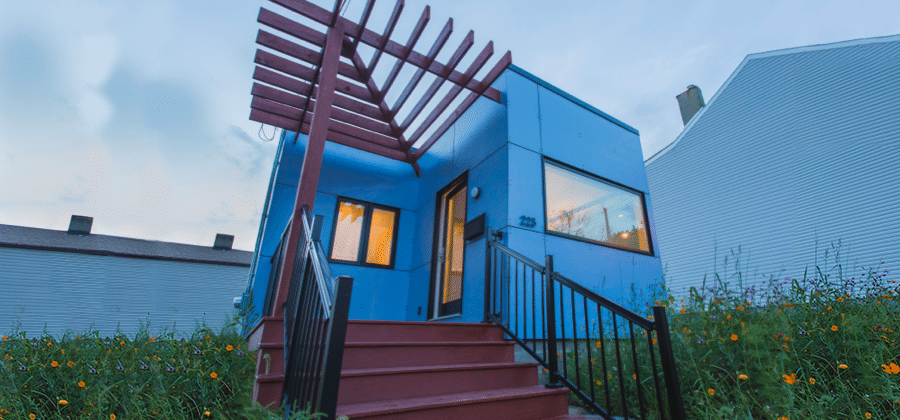
Tiny Garfield House, image courtesy of Eric Davis

Peeling the onion.

July 8, 2019

Why communities succeed or fail

It’s impossible to solve a problem as complicated as community development without a full understanding of what makes communities succeed or fail. When most investors look at a neighborhood, they check standard metrics like employment rates, crime prevalence, school district numbers, etc. These numbers provide a picture- but not the full picture.

Underutilized metrics like childcare affordability, access to community services, presence of full grocery stores, community leadership and others can help investors gauge the health of an area in a more precise manner. Instead of taking a neighborhood at face value, make sure you are “peeling the onion” and looking at the layers beneath the layers.

Why they fail

Let’s get the bad stuff out of the way.  Communities fail for many reasons, sometimes due to macroeconomic factors out of their control. Think of the coal industry dying, or the hollowing out of the manufacturing base in the rust belt. Other times they are mismanaged into oblivion. Underserved areas typically share several similarities, including low employment, high crime, poor school performance, and flat or negative population growth. 

These problems often feed on each other- when schools are bad, employers can’t find skilled employees and move elsewhere. The tax base dries up, schools get worse, and the cycle continues. It is easy to lay blame at the feet of elected officials, but in reality, it is a combined failure of government officials, the local business community, and yes, fly-by-night developers.

Why they succeed

Communities succeed when the stakeholders- developers, residents, and local government- embrace innovation and new ways of thinking to solve the challenges they’ve always had, and challenges down the line. This often takes the form of changing how cities build housing and commercial space. With housing, it comes down to building for the needs of a community. Different regions require a different touch. Before entering any new market, a developer should “peel the onion” to understand how their future tenants or buyers will use their property.

In parts of Arizona and the Southwest, apartment complexes often have three, or even four bedrooms, which is a deviation from the national norm. The areas contain a large Latino population, and they tend to have larger, intergenerational families. This has led developers to respond to that particular need in their market. And this is prime evidence that developers and investors need to consider what the market wants- not what it can bear.

The ability of people to work, live, and play in their immediate surroundings is what differentiates good communities from great communities. For a long time, we have expected people to fit their lives to the way we build cities. While it might make economic sense to developers on the front end, it results in stagnant areas that act as warehouses for workers, who then commute to more vibrant areas.

The role of small business

Local businesses play a tremendous role in fostering a healthy community. They give locals a place to congregate and circulate money through the neighborhood. Thriving commercial centers increase an area’s walkability score and can help increase the value of nearby property. Developers can encourage the growth of small business by including mixed-use commercial spaces in or near housing plots. It is possible to further incentivize local business ownership by granting special commercial lease terms to residents or even reserving commercial spaces for residents only.

In cities across the country, from Portland to Phoenix, developments are popping up where the focus is on blending entrepreneurship and community. If developers, communities, and residents are all stakeholders in the success or failure of a community, it stands a much better shot of sustainable growth over the long haul.

Image from pxhere licensed CC0

Investing capital in building community.

July 7, 2019

Urban areas face unique development challenges

Property development in urban areas faces a wealth of challenges. City permitting, construction and noise ordinances, and outrageous land acquisition costs all come to mind when considering urban development and renewal. One hurdle you face more often in older cities is that older areas were primarily developed in the 1930s through to the 1950s.

At the time, developers tended towards very small-footprint buildings, constructed very close together with individual ownership of each property on the parcel. It is not uncommon to see a single parcel of land with multiple homes and homeowners.

This situation is challenging for large-scale developers because they are unable to buy up all the parcels and homes they need to scale. On the flip side, smaller, more agile projects are possible. With that possibility comes the potential of neighborhood preservation. Instead of a monoculture mega-development with new construction, there might be room for the redevelopment of older buildings, and the local and independent businesses that call them home.

Why circumstances necessitate a change

The reason we see so many cookie-cutter megaprojects is that developers tend to develop where they are going to make money, not where it makes sense for residents. This has led to islands of homes out in the middle of nowhere, with terrible walkability scores, and few commercial businesses to pierce the monotony. This problem is particularly glaring in the suburbs. How have young and community-minded residents responded? By moving into cities, where walkability and mixed-use neighborhoods are the norm.

A new model?

It should be clear by now that we will not find a “silver bullet” when it comes to effective land-use, especially within high-density urban areas. A patchwork approach is far likelier to succeed, and there are a few programs across the country that have had some successes in this regard.

This calls to mind a new real-estate development in East Portland, Oregon, which might provide a model worth following.

Essentially, a nonprofit organization went into an underserved neighborhood, purchased several properties, renovated them, and put them back on the market as affordable rental housing. The goal was to eventually allow the properties to be purchased by the residents, who would then gain a stake in ownership of both the building and their community.

Another creative, and effective, step they took was to set aside the first floor of each building as a commercial space, reserved for resident-run businesses. This move provided an income stream for residents and added to the overall vibrancy and economic health of the neighborhood and the community at large.

The goal of this entire endeavor is to foster a form of self-reliance and ownership in that community, and ideally provide residents and homeowners a springboard to more economically prosperous lives.

A solution in rural areas

Alternative modes of development have the potential to improve the lives of rural residents as well. Despite media portrayals of urban areas as poverty and crime-ridden, some of the worst poverty in the United States lies within rural areas. There are many reasons for this, but one major contributor is the fact that the delivery of services is magnitudes harder in rural areas, due to the lack of infrastructure.

Instead of livable, mixed-use areas where density rules, rural areas have far fewer people per mile. This means that rural businesses do not benefit from economies of scale, and their transportation costs eat into their ability to generate revenue.

Setting up similar, self-sustaining mixed-use developments in rural communities could alleviate some of those issues, and maybe lure back much of the talent that leaves those areas for bigger cities. Instead of constantly rushing to meet heightened demand in cities, perhaps we can solve affordability by focussing development close to rural communities.

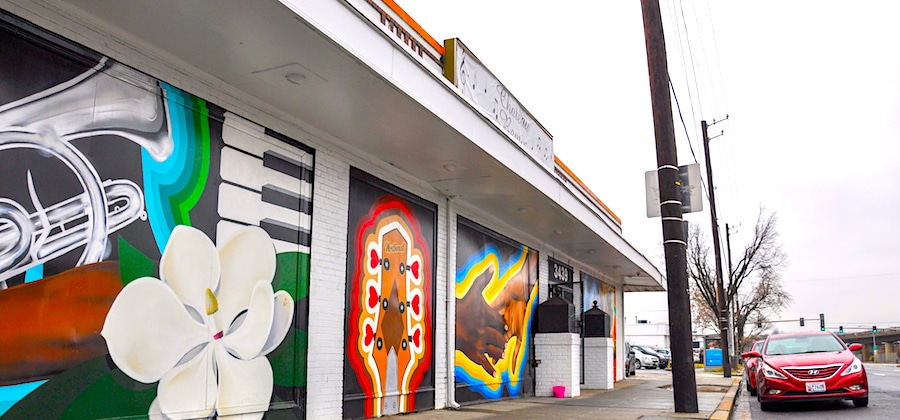
River Terrace in DC. Image courtesy of Small Change.

The beginning.

June 27, 2019

I’m Eve Picker and my life is rich with urban (ad)ventures, I’ve developed a dozen buildings in blighted neighborhoods, founded a non-profit called cityLAB and built Pittsburgh’s first tiny house, organized a speaker series, launched a Pittsburgh e-zine called Pop City, and established downtown Pittsburgh’s first co-working space. I also co-founded Pittsburgh’s wildly successful Open Streets program. All of these experiences have helped me become one of the foremost thinkers on urban change.

And of course, I’m the founder of Small Change, a real estate equity crowdfunding platform. We raise funds for meaningful real estate projects building better cities everywhere. 

I believe that real estate projects should be carefully crafted to make places better as a priority, or at least as important as their profit motive. This show focusses on just this issue. Here you’ll learn how world experts in Impact Real Estate tackle this challenge in many different ways. We’re going to talk to all sorts of experts, including developers, investors, professors and funders. They’re all going to have a different opinion and I’m sure you will too.

And now, let’s get on with it and make some change.

Insights and Inspirations

  • Buildings should make people’s lives better.
  • Socially responsible real estate is a thing. We call it Impact.
  • Crowdfunding lets everyone invest in the places they live in.

Information and Links

  • Small Change
  • The Small Change Index
  • More about Eve
Read the podcast transcript here

Hey everyone this is Eve picker. And if you listen to this podcast series you’re going to learn how to make some change.

Welcome. Thanks so much for joining me today. I’m Eve Picker. And this is my podcast and it’s all about impact investing in real estate. I am the founder of SmallChange which is a crowdfunding platform that connects investors with real estate developers who are working on socially responsible projects.

There seem to be a lot of definitions for impact, and there are many different metrics out there that people are developing but in its simplest terms for me impact in real estate is real estate projects that make people’s lives better.

And that could mean that it is a project on a vacant site in a neighborhood that hasn’t had development for many years or it could mean a net zero passive building that is environmentally extremely friendly. Or it could mean a building that is located very close to transportation hubs so that someone could live there and bike to work or walk walk to work and not own a vehicle.

I think there are lots of ways to describe impact.

The change index is an index we use on SmallChange to determine whether a project that we’d like to help raise money for actually meets some of these impact criteria. And we developed it because many of the indices that are out there today are quite complicated and not easy for everyday people to understand. You have to be in the industry and understand the lingo to understand them. So for example I think LEED is a good example of a pretty complicated system that is a good one but really architects and engineers might use it and no one else would really understand it. So we tried to develop an index that was pretty obvious to everyone and it includes a lot of impact criteria that range from jobs created to diversity in the business, developing the building to environmental impact to impact on a neighborhood to whether that neighborhood is underserved. So there are many many ways that a project can make an impact. And we try to be neutral in deciding what an impact project is and really rely heavily on these criteria and the scoring that we’ve created to make that decision for us.

My passion is really that I believe you can spend the same money and energy on a building whether it’s good or bad for a community. So I really believe that building should be carefully crafted to make places better. I think it is a waste of a project not to do that. And I’d like to show people how people tackle this problem how they treat the physical buildings architecture and projects.

How they use them to make better places for everyone.

In this podcast series I’m going to be talking to experts in the impact world. And I’m going to be asking them how they define impact in the physical environment. That’s really what we’re going to be looking to discover because my definition is only one of very many. You know I have an extremely opinionated view about impact. And I’ve I’m an architect by training. I’m an urban designer. I’m a real estate developer and so my view of the world is really through the built environment. And that’s that’s the view I’ve interpreted into SmallChange. But there are many other ways to look at impact and socially responsible real estate and making better places. And I’m going to be interviewing a lot of experts in this area and asking them their opinion.

As a real estate developer. I really focused my work on projects that I thought were meaningful, vacant buildings in underserved neighborhoods, historic buildings so I thought deserved a second life. Tiny Houses in neighborhoods with lots of vacant properties.

Projects that I really thought would kick start something more than just the building that I built. And I’ve been I’ve been successful and pretty happy with what I’ve done.

It’s been quite a journey the most difficult part of that journey has always been financing those projects because when you do a first of its kind project in a neighborhood that is not really something that most banks are interested in financing.

So financing came to the foreground in the work that I did because it was always difficult to find the funds to do these creative and innovative projects.

And so I have launched a platform, SmallChange, which uses securities laws to help developers raise funds for projects like this. And that’s really why we have this SmallChange index as a way to sort through the many different types of projects and make sure that we stay honest and we stay focused on projects that are making some sort of impact. What makes us really unique is that we use the security law called Regulation Crowdfunding that no one else is using in real estate and Regulation Crowdfunding permits everyday people neighbors in a neighborhood to invest small amounts of money in projects that they really care about and that that we think is an important part of building better communities.

When I talk to my guests I’m going to ask them about what they think about crowdfunding and whether they believe they can have an impact in communities and building wealth in underserved neighborhoods.

And I honestly don’t know if they’ll have an opinion.

I think most people haven’t really thought about this. We’re at the beginning of a very nascent industry, and we’ll see what they have to say.

So you’ve taken the first step because you’ve tuned into this first podcast. I’m very grateful that you’re joining me and I hope you’ll give me a chance because I’m sure there’ll be some along the way that you don’t like but there’s going to be plenty that you’re going to learn. You can also check out my website EvePicker.com. We’re going to be posting the podcasts there and there are lots of other goodies there that you might enjoy as well. Thanks very much.

And for now this is Eve Picker signing off to go make some change.


« Previous Page

Primary Sidebar

sign up here

APPLY TO BE A PODCAST GUEST

More to See

(no title)

February 22, 2025

Bellevue Montgomery

February 11, 2025

West Lombard

January 28, 2025

FOLLOW

  • LinkedIn
  • RSS

Tag Cloud

Affordable housing Climate Community Creative economy Crowdfunding Design Development Environment Equity Finance FinTech Gentrification Impact Investing Mobility Offering Opportunity zones PropTech Technology Visionary Zoning

Footer

©rethinkrealestateforgood.co. The information contained on this website is for general information purposes only. Nothing on this website is intended as investment, legal, tax or accounting strategy or advice, or constitutes an offer to sell, solicit or buy securities.
 
Any projections discussed or made may not be accurate and do not guarantee a specific outcome. All projections or investments are subject to risk due to uncertainty and change, including the risk of loss, and past performance is not indicative of future results. You should make independent decisions and seek independent advice regarding investments or strategies mentioned on this website.

Recent

  • The Mulberry
  • Mount Vernon Plaza
  • The Seven
  • Real estate and women.
  • Oculis Domes.

Search

Categories

Climate Community Crowdfunding Development Equity Fintech Investing Mobility Proptech Visionary


Copyright © 2026 · Magazine Pro on Genesis Framework · WordPress · Log in