• Skip to main content
  • Skip to secondary menu
  • Skip to primary sidebar
  • Skip to footer
  • Home
  • About Us
  • Say hello
Rethink Real Estate. For Good.

Rethink Real Estate. For Good.

  • Podcast
  • Posts
  • In the news
  • Speaking and media
    • About Eve
    • Speaking requests
    • Speaking engagements
    • Press kit
  • Investment opportunities

Affordable housing

When public outcry drives change.

January 27, 2020

We’re facing significant challenges in the housing and real estate market these days. And still it seems hard to convince people that change is necessary to respond to the enormous challenges of climate change and the affordable housing crisis. This is especially true in the real estate industry, where trends and practices have developed over many years and are a little set in stone.

So how does one trigger change? Sometimes unwittingly when an unusual or noteworthy event captures people’s attention. One great example is a planning battle that was fought by an architect in Melbourne, Australia.

Stripped unfairly

Jeremy McLeod, director of the architecture studio, Breathe, is committed to providing affordable and sustainable housing to the Melbourne community. When Jeremy tested these objectives with his first project, The Commons, a mid-sized condominium project in the heart of Melbourne, the project was an unequivocal success, as it quickly sold out, won various awards for sustainability, and was completed on budget.

Sustainable, affordable and pretty gorgeous, people wanted more just like it. And so, with a waiting list of over a hundred people, Jeremy decided to pursue a second project right across the street and went about getting a planning permit to begin the project. The planning permit was approved. And then a neighboring developer challenged it in court. Breathe was building apartments that were 20% bigger, 20% cheaper, and substantially better than traditional apartments in the area, and better than the developer was planning to build. As you can imagine, other developers were concerned that this was going to create issues in the market.

Well-funded and with a powerful legal team, the challenging developer was successful and Breathe was stripped of its planning permit for the building, Nightingale. This put them back to square one, with the task of starting the long planning application process from scratch again. For Jeremy it was a devastating moment and one that nearly broke him and his team.

The public response

While the loss of the permit was beyond disheartening, it unexpectedly became a turning point for the project, bringing waves of public support. The press heard of the permit challenges and became very fired up over the loss of the permit. The idea of shutting down a project that had high community aspirations – affordable, carbon-neutral housing for first-time home buyers in a very expensive housing market – did not sit well with many and got lots of attention. It seemed objectively contrary to the goals of the community. As a result, it worked to spark a powerful public response.

This outcry was only strengthened when the reasons for the permit loss were highlighted. In the Appeals Court, the issue turned over the car parking, namely the fact that there wasn’t a parking lot in the basement. However, the project is on a train line, with a bikeway leading to the CBD right next to it, and 30% of future residents didn’t even have a driver’s license. At least 40% of future residents had already committed to either getting rid of their car or parking it in one of the many lots in the area. All in all, it was a decision that didn’t seem to make much sense.

The result was that support for this type of carbon-neutral, affordable housing literally grew overnight. The waiting list for Nightingale went from 125 to 400 people in one day. Now, there are 8,500 people on the waiting list.

It was a difficult and unusual way to gain support, but the seemingly unfounded stripping of Nightingale’s planning permit was ultimately an incredibly effective way to raise support for a new type of housing. This battle brought some central issues to light, helped frame important topics for the community, and drew attention to what types of changes were possible. In Melbourne, the community responded with resounding support for innovative designs and a new housing model. Hopefully, this is momentum that will carry over to other communities and areas. 

If you want to learn more, listen in to to Eve’s interview with Jeremy about this project and the work that Breathe is doing.

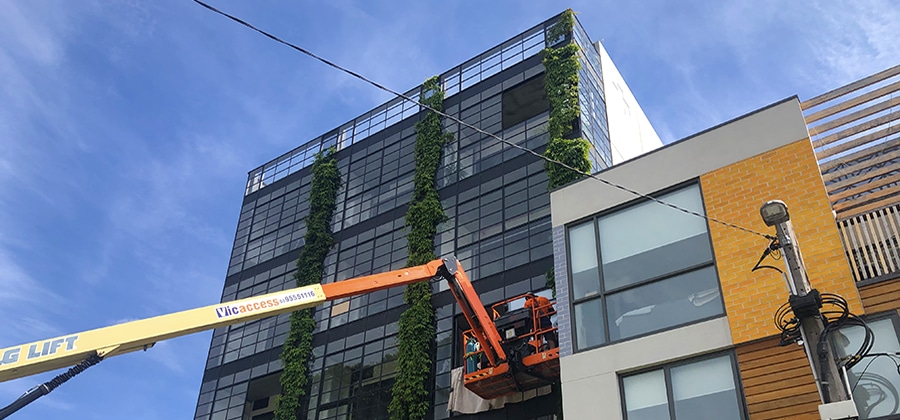
Image of Nightingale I, Melbourne, by Eve Picker

Unpacking the housing crisis.

January 6, 2020

We’re all hearing about the affordable housing crisis constantly these days, but for many homeowners, investors and renters alike, it’s a confusing and overwhelming topic. Understanding more about the causes and trends in the affordable housing crisis might help accelerate solutions to this problem as well as opportunities for real estate investors.

For housing to be affordable you shouldn’t have to spend more than 30% or less of your annual income on rent and utilities, or on a mortgage, property taxes and insurance. Recent data shows that almost half of renters across the country currently spend more than 30% on rent. Even worse, more than 11 million Americans spend more than 50% of their income on rent. Another two-thirds of renters say they can’t afford to buy a home and won’t be able to save for the down payment on one anytime in the near future.

Cities across the country are facing escalating housing insecurity. In the last few years, housing prices have increased at twice the rate of wages. Stagnant wage growth combined with increasing housing costs have led to increased inequality and a housing climate that makes it difficult for millions of Americans to be able to afford a basic need – housing.

How did this happen?

A number of factors have led to the disparity between housing costs and income. In recent years, demographic shifts have been a large part of the problem. Baby boomers living longer and more often living independently have significantly impacted housing inventory. And when baby boomers decide to downsize, which is frequently, this means that there is increased competition for entry-level homes.

In addition, housing policy continues to be a factor in this crisis, as our affordable housing policy increasingly favors homeowners. According to  the Harvard University Joint Center for Housing Studies, under current policies, the federal government provides more subsidies and support to middle and upper-middle class homeowners than to low-income renters.

Adding to these foundational issues is a growing NIMBY (not in my backyard) sentiment which stifles many denser projects. Neighbors often oppose new development of affordable housing, making it harder than it should be to build the necessary inventory. In many cities, transportation problems compound this problem, as people have less flexibility to move outside of urban areas. But move outside urban areas they must, as city-living becomes increasingly expensive.

And last but not least are the endless ground up, urban developments targeted at millennials, consisting primarily of studio and one-bedroom units. These too have skewed the marketplace.

Emerging trends

A few additional factors are escalating this problem right now. First, since housing supply continues to be limited, demand is driving up sales prices and rent. At the same time, new construction has stalled, in part due to increased cost of materials and labor. Plus, the cost of land in urban areas has increased, further reducing the number of new builds, and forcing smaller more efficient apartments to be built. As a result, the scarcity of new and diverse inventory and the scarcity of resale inventory is working to drive up both home prices and rent, and so the cycle continues.

What does this mean for real estate investors?

The encouraging news for the real estate developer or investor is that while new policies are being created, there is a role that they can play in helping to alleviate this problem.

When considering building a housing project, or investing in one, look to invest in areas that are committed to providing affordable housing and that have plans in place to do so. These markets  are probably going to grow.

Finding equity for these projects may not be as hard as it was ten or fifteen years ago. Today there are a growing number of businesses focused on providing affordable housing in a number of ways. Social impact investment firms, opportunity funds and others might provide socially conscious investment for a project that tackles this challenge head on at the same time providing a reasonable rate of return for investors. Crowdfunding equity might also be an opportunity.  Recently, Small Change raised $100,000 for a small homeless housing project in Los Angeles from 57 investors who cared enough to invest, some with as little as $500. The offering filled to capacity very quickly. 

Finally, keep in mind that new builds alone do not provide the answer to this problem. There are over a million vacant properties across the country. Investing in affordable housing often provides an opportunity to buy inexpensively or through a distressed sale. This can lead to an affordable rental or purchase price while also providing reasonable returns.

The affordable housing crisis is perhaps the most important trend impacting today’s real estate markets. Paying attention to this crisis and deploying a little ingenuity and creativity can lead to both socially conscious and solid investments.

San Francisco, USA, copyright 2004 Mai-Linh Doan, formatted to fit 900×420, CC BY-SA 3.0

10,000 homes saved and counting.

December 11, 2019

Jorge Newbery is founder and CEO of American Homeowner Preservation (AHP) and AHP Servicing and he’s also CEO of the Debt Cleanse Group Legal Services. AHP crowdfunds the purchase of non-performing mortgages from banks at big discounts, then share the discounts with struggling homeowners. The Debt Cleanse Group empowers a cross-country network of attorneys with a step-by-step system to help consumers and small businesses resolve unaffordable debts.

Jorge is on a mission to help Americans crushed by unaffordable debts.

A 2004 natural disaster triggered the financial collapse of Jorge’s former business, leaving him with $26 million in debts he could not pay. Jorge rebuilt himself through AHP, sharing what he learned from his own challenges to help families at risk of foreclosure stay in their homes.

Jorge has also found the time to write a few books which include Burn Zones: Playing Life’s Bad Hands; Debt Cleanse, How To Settle Your Unaffordable Debts For Pennies On The Dollar (And Not Pay Some At All); and Stories of the Indebted.

To date, 10,000 homeowners have benefited from his life lessons and his good heart and that’s just the beginning for Jorge. 

Listen in to this extraordinary man with a mission.

Insights and Inspirations

  • Take your financial catastrophe and turn it into something powerful and good.
  • Buy what other people don’t want.
  • To date, AHP has purchased over 10,000 mortgages and kept thousands of families in their homes.
  • Housing is unaffordable. This has to be remedied.
  • No-one wants to fall behind.
Read the podcast transcript here

Eve Picker: Hey, everyone, this is Eve Picker, and if you listen to this podcast series, you’re going to learn how to make some change.

Eve Picker: Hi, there. Thanks so much for joining me today for the latest episode of Impact Real Estate Investing.

Eve Picker: My guest today is Jorge Newbery, founder and CEO of American Home Owner Preservation and AHP Servicing. Jorge is also CEO of Debt Cleanse Group Legal Services. AHP crowdfunds the purchase of non-performing mortgages from banks at big discounts, then shares the discounts with struggling homeowners. Jorge is on a mission to help Americans crushed by unaffordable debts.

Eve Picker: A 2004 natural disaster triggered the financial collapse of Jorge’s former business, leaving him with $26 million in debts he could not pay. Jorge rebuilt himself through AHP, sharing what he learned from his own challenges to help families at risk of foreclosure stay in their homes. Jorge has also found the time to write a few books, Burn Zones, Playing Life’s Bad Hands, Debt Cleanse, How to Settle Your Unaffordable Debts for Pennies on the Dollar, and Stories of the Indebted.

Eve Picker: Be sure to go to EvePicker.com to find out more about Jorge on the Shownotes page for this episode and be sure to sign up for my newsletter so you can access information about impact real estate investing and get the latest news about the exciting projects on my crowdfunding platform, Small Change.

Eve Picker: Welcome, Jorge. Thanks very much for joining me. It’s really nice to reconnect.

Jorge Newbery: Likewise, Eve. Always a pleasure.

Eve Picker: Yeah, we haven’t talked for a while, but still, I know that you’re a man with a mission, and the mission that I know about is to help keep Americans in their homes. I think a more recent one is to help Americans crushed by unaffordable debt. I’d love to talk to you about how you’re tackling these two missions.

Jorge Newbery: Sure. They’re very interrelated. I’ll go back a little bit in history, about 15 years ago; 15 years ago, next month, was a day that kind of changed my life. At the time, I owned about 4,000 apartments across the country, had a very significant net worth. A ice storm hit my largest holding on Christmas Eve 2004. That holding was 1,100 units in Columbus, Ohio. It was just devastated by this natural disaster, and it triggered this extraordinary sequence of events in which I lost everything and ended up $26 million in debt.

Eve Picker: Whoa! That’s a really big number.

Jorge Newbery: Yeah. It created some extraordinary challenges, as you can imagine. As I regained- came back to life, I realized that I’d become good at one thing through that experience. I never filed bankruptcy, but instead, I was able to work with my creditors, or somehow, sometimes, go on the offensive against my creditors, in order to settle those debts at significant discounts and, in some cases, not pay them at all.

Jorge Newbery: By 2008, I realized millions of families across our country are suffering the same experience. They’re at risk of losing everything. They’re ending up losing their homes, losing whatever property they had, and in significant debt, and maybe my experience could be put to good use to help them. So, I started American Homeowner Preservation in 2008, and the goal was- the mission was, and still is, to keep families at risk of foreclosure in their homes.

Jorge Newbery: Originally, we were a nonprofit. We were able to get our 501(c)(3) designation from the IRS. But over time, we realized that we could be a lot more effective as a for-profit, and we started buying defaulted mortgages from banks at big discounts. Then, once we owned the mortgage, we could do whatever we wanted with it, which could include cutting principal, forgiving delinquency, and reducing payments in order to keep these families in their homes.

Eve Picker: So, the second mission … I think you started a second company recently, right?

Jorge Newbery: I did. What would happen is, over the years, we would help a family, and they would say, “Wow, this is …” Oftentimes, people say this is too good to be true. They owe $100,000, and the home is only worth $50,000. They hadn’t paid in three years. They owed $20,000 to the bank. Here we come along, and buy the mortgage, and say, “Hey, give us $2,000. We’ll forgive the delinquency, so you’re up to date. Your payment was $800; now it’s $500.” They say, “Great!” They’d tell their friends and family, and the friends and family will call us and say, “Hey, you helped my cousin with his mortgage, my co-workers on their mortgage. Can you buy my mortgage?”

Jorge Newbery: The reality is, I can’t go to Chase, or Wells, or any of the big banks, or other lenders, and say, “Hey, sell me this one mortgage.” They basically decide what loans they want to sell, and I can’t make special requests. Neither can anybody. So, what do we tell these people? We started giving them some tips as to what they could do to maximize the likelihood that they could stay in their home an extended period, and somebody would buy their loan at a discount and give them a more favorable deal. That eventually became a book, which is called Debt Cleanse – How to Settle Your Unaffordable Debts for Pennies on the Dollar.

Jorge Newbery: Through life, you find that, as you solve one problem, you create another. So, now, people would read the book, and they’d say, “Hey, I’m following the steps in the book …” They’d reach out on social media, and by email, and they’d say, “I’m following the steps in the book, but I need an attorney. Do you know any attorneys who can help me?” I knew from my experience when I was in a lot of debt that a lot of attorneys … Some attorneys can be very helpful, but a lot of attorneys aren’t that helpful; don’t have that much experience in being … Outside of law school, there’s a lot of things you can do if you can’t afford your debts that can be used to your advantage. Most attorneys aren’t familiar with the tactics. So, what do I do? What do I tell these people to do? I can’t tell them just to google ‘attorneys in my area.’.

Jorge Newbery: Over time, we realized that what could work here is a legal plan, where consumers struggling with their debts paid a $99 enrollment fee and $29 a month, and we’d give them access to attorneys in their area. Those attorneys, as part of the plan, agree that, “For that $29 dollars a month, I’m going to give this member half an hour of my time at no extra cost.” They’re going to get half an hour with their attorney every month.

Jorge Newbery: Not only that, when they first enroll, these attorneys will send letters to their creditors saying that, “This member is represented by our law firm. Please cease communication with a member and direct all future correspondence to us.” That has been very effective for members at stopping the phone calls, stopping the letters, which oftentimes create a lot of anxiety, so it’s a big relief when that happens.

Jorge Newbery: That’s what we’ve done, and these attorneys … The goal is they look for violations. It happens all the time, millions and millions of times a year, where there’d be live violations of the Fair Debt Collections Practices Act, the Fair Credit Reporting Act, TCPA, RESPA. When they can find these violations, they use those as leverage to get the debts settled at big discounts, not get paid at all and sometimes, in some cases, they’ll sometimes even get the creditor to pay the member a statutory penalty, plus pay the attorney’s legal fees. Most of the attorneys work on contingency, so they’re not looking to get paid by the member; they’re looking to get paid by the creditors.

Eve Picker: I want to go back to AHP Servicing and what you’ve done there. I haven’t talked to you in a few years, but I know you were buying large blocks of foreclosed homes and trying to keep people in them. That was really your first goal. I’m wondering how many people you’ve impacted by now. How big has this become? Where does everything stand?

Jorge Newbery: I think we’ve bought, over the years, about 10,000 mortgages, so it’s … We bought a lot of mortgages. We’ve helped thousands of families stay in their homes with long-term sustainable modifications. Others, they don’t want their homes. We’ve been able to give them cash; in exchange for the deed to the property, we forgive the debt and then, we sell the property. So, we get these vacant homes, which are oftentimes pock-marking low-, and moderate-income neighborhoods, and we get those back into service and occupied. Someone’s taking care of them, paying taxes on them, and whatnot. So, between the two, one is keep the family in the home if they want to stay. Number one, that’s the goal; but if not, the second thing is to help those communities by getting these vacant homes back into service.

Eve Picker: Let’s talk also about how you fund this, because that’s how you and I [crosstalk] together, right? That’s probably the most interesting part of the story, or very interesting.

Jorge Newbery: Yeah, that’s how our paths intersected. So, in 2013, September, we were one of the first crowdfunding offerings under 506(c). Before that, we raised money initially from friends and family; then from private investors who we knew; then accredited investors only, into a hedge fund. But then we heard about crowdfunding. So, September 2013, we offered, under 506(c) … It was still accredited investors only, but we made it more accessible. It was a $10,000 minimum, which, at the time, was pretty low. I think our first offering raised about $4.5 million or so, and we bought a considerable number of loans. I forget how many, but it was quite a few; probably close to 1,000.

Jorge Newbery: It worked. It made it more accessible. It was still accredited investors only, but it made it more accessible to a wider audience. I remember being really shocked, early on, when people would go online, go through the process, make an investment, and we had never talked to them. I was really astounded by that, because previously, as a hedge fund, we had to talk to people, and explain things, and send out these private placement memorandums that were numbered. So, it really was- seemed to be a lot … It was just a lot more streamlined.

Jorge Newbery: What was exciting is we did two more 506(c) offerings. All went well, but then, when we heard about Regulation A+, because now it was crowdfunding, but we could accept investments from both accredited investors and non-accredited investors. For me, that was exciting because it really … We had homeowners, at times, who we helped them out of their predicament, and they’d say, “Hey, I have some extra money I’d like to invest, or my friend, or family member would.” I can’t tell you how many times we had to tell people, “We’d love to have you participate, but you can’t. You’re not worth enough, or you don’t earn enough, so we can’t accept your investment.” It seemed [crosstalk]

Eve Picker: -you’re part of the 97 percent of the population that’s not permitted to invest, right?

Jorge Newbery: Exactly! It didn’t feel right. So, when I heard about Regulation A+ [inaudible] accredited investors- I mean, non-accredited investors can invest, that was exciting. We were one of the first Regulation A+ offerings in 2016, and to make it as accessible as possible to anyone, we made our minimum investment $100, which I think is still amongst the lowest, if not the lowest of the major ones.

Eve Picker: Be sure to go to EvePicker.com and sign up for my free educational newsletter about impact real estate investing. You’ll be among the first to hear about new projects you can invest in. That’s EvePicker.com. Thanks so much.

Eve Picker: I think it’s probably the lowest, although there’s some pretty low ones in Reg CF, but it’s pretty low.

Jorge Newbery: Yeah, it’s pretty low. People will say, “Why are you doing that? You don’t need to be that low!” The reality is, we don’t need to be that low, but it did make it … People would- it caught people … It was almost a marketing strategy, but we’ve kept it because many people have started out with $100, just saying, “Well, what is this? It looks curious. Oh, it’s only $100. I’ll try it.”

Eve Picker: Yes.

Jorge Newbery: Now, though, now they’re an investor with us; they get our emails; they see that they get the returns; and they keep up with our news. Then, over time, they increase- the vast majority increase their investments and then, they tell their friends and family. So, definitely, the $100, I think, is a winner. I think we’ll do it forever. It’s a great way to start a relationship, and that’s grown.

Jorge Newbery: Now, our first Reg A fund, we raised $40 million and now, we’re working on our second. Our goal probably would be to get to around $65 million. Then, our third fund, which’ll come out sometime in 2020, we expect- our goal is to do the full $100 million. Regulation A+, we actually now realize that vision of having homeowners who we helped out of their predicament and now, they’ve turned around and been investors, and I think that’s just- it just feels right-

Eve Picker: That’s pretty fabulous.

Jorge Newbery: It is. Socially, it seems right, and it feels good. That’s along with a lot of other … We have a lot of accredited investors that participate, but alongside the non-accredited. We’ve had people invest very substantial sums, several hundred thousand dollars at a time, and they’ve asked, “Hey, can I get a better deal, or can I get a little bit extra, or something like that?” We always say no. Again, it plays to kind of the-

Eve Picker: Because everyone’s money is the same, right?

Jorge Newbery: It is. Exactly-

Eve Picker: It’s a great democratization of investment.

Jorge Newbery: It truly is. The person who puts in $100 and the person who puts in $600, they’re getting the exact same terms, and I’m talking $600,000 … It’s fair, it’s transparent, and that’s the way things should be. I know, in Wall Street, it often isn’t the case, so it feels good.

Eve Picker: Yeah. While you’ve been helping people save their homes and taking people’s money to make that happen, how much have you been returning to investors?

Jorge Newbery: I’ll tell you what we did in our first fund, because it’s kind of a … You’ll see the progression. In our very first 506(c) offering, we said, “Hey, if you invest your money for five years, you earn 12 percent. If you invest your money for two years, you earn roughly 10 percent. If you invest your money for one year, you earn nine percent.” That was our first offering, and that’s what we did. Then, in our first Regulation A+ offering, we said, “Let’s make this simpler. Let’s just pay everybody 12 percent, but if they need the money early on, they can ask us for it, and we’ll undertake our best efforts to return the money. If they need it back …” I think we did … Currently, if they needed it back early, then they’d get a slightly reduced return.

Jorge Newbery: That’s evolved into today’s fund, where we pay- the first 10 percent of what we earn, that’s what we pay to investors. Anything over that is what we keep, and-.

Eve Picker: So, that’s pretty motivating for you.

Jorge Newbery: Yeah, it’s very motivating to hit big targets. Again, there’s a tension between you want to make money, but you also want to deliver a very favorable resolution to the homeowners. We make everything formulaic, so I think our returns don’t come from … They come from creating efficiencies in resolving these, and speed/urgency in resolving these, and trying to minimize legal fees, and other expenses in getting these resolved. When we do that, that’s when we generate the big returns.

Eve Picker: Wow! That’s quite a story. So, by the time you’ve raised all three funds, how many mortgages will you have purchased?

Jorge Newbery: That’s a good question. Right now, I think we’re right around 10,000. I think we will certainly … If we do all three funds, it should hit 30,000-plus. Of the current funds- I mean, in future funds, and our current fund, our AHP Servicing Fund, we can buy mortgage-servicing rights. We haven’t done that yet, partially because we’re still waiting on getting our government approval for our service. We did get, recently, approval from the Veteran’s Administration to service VA loans. We’re working on getting our FHA, Fannie Mae, and Freddie Mac approvals.

Jorge Newbery: Once we have those, we can buy mortgage-servicing rights, which actually, we’d spend a lot less money per loan, for the ability to service that loan. But then, we can service it with our homeowner-friendly strategies, which will, I think, touch a lot more homeowners, so we will … Actually, the amount of loans that we will own, or service will expand- it could be much, much more than that. I don’t have a number yet, but I think, as we start seeing- buying those rights, and then, also, we’re servicing now for third parties, so other people that own mortgages that-

Eve Picker: Oh, really?

Jorge Newbery: Yeah. We see that as another way we can impact a lot of homeowners and do what we’ve been doing, but for other people who own mortgages and are also kind of … See, it’s funny, and I think you may have experienced this in your undertakings, as well. Oftentimes, people interpret socially responsible, or social impact as meaning, “Okay, I get the benefit of doing something good for society, but I have to take a lower financial return.” I think, at least in our business, we’ve demonstrated that you can actually achieve both a solid, oftentimes above-market financial return, and you’re also doing the right thing. They’re not mutually exclusive. I think other investors now see that, that own these loans, and we can help them in their interactions with the homeowners if they service with us.

Eve Picker: So, then, do you believe that most of your investors are investing because they’re making an impact or because of your solid returns?

Jorge Newbery: That’s a really good question. I think it’s a mix. There’s definitely people who are attracted by the financial returns, but there’s others who are investing … The draw is the social impact. Since we’ve been able to marry the two, I think it’s been a … They don’t have to compromise their … I think, so many times, social impact investors feel the need, upon occasion, to compromise their financial returns because it has a good result. That’s certainly understandable, but when you can deliver both, I think that makes it very compelling.

Eve Picker: That’s pretty fabulous. Going back to the beginning of this story, I’m just wondering if you could have built this business with bank loans instead of crowdfunding investment?

Jorge Newbery: I don’t think so. We’re still doing it. I think we qualified for some … We financed. We’ve done some financing here and there. Usually it’s only for a short term, like we committed to a deal that’s bigger than we have- that we’re raising capital, and we need to close it by year end, or month end, or something like that-

Eve Picker: A bridge loan, right?

Jorge Newbery: Yeah. We’ll borrow, but it hasn’t been for long periods yet. Over time … We’ve talked to Wall Street investors, or I should say not … Wall Street institutional potential partners and, for this space, for non-performing loans, they’re most interested when the scale is bigger, and we’re talking $100 million. We’re just not there yet. Over time, I think we will have more institutional capital in here, and we blend that with the equity that we’ve-

Eve Picker: But Jorge, by then, maybe you’ll have such a big crowd of investors, you still won’t need them.

Jorge Newbery: Ha. Maybe. We’ll see. I guess the attraction is we can get institutional money. Sometimes, you can get it at even lower returns than what we’re paying our investors. So, maybe … It’ll make us more competitive on some of the larger transactions, but you’re right.

Eve Picker: Yeah, yeah. That’s what I hope for. Going back even further, you had this portfolio that was hit by an ice storm, but what’s your background? What got you into all of this?

Jorge Newbery: I started as a loan officer almost … In 1990, so, a long time ago, my first job was answering phones for a loan originator, and I had- that was my first exposure to real estate. Before that, I raced bicycles, and I had a GED, so my options were limited … I was 25, and my main source of revenue was bike racing, so I needed to get a real job. One of my teammate’s girlfriends helped me get the job at the loan company, and that was kind of the start.

Jorge Newbery: A couple years later, I started my own mortgage company, and then I started buying properties. It kind of evolved into buying and doing … I’ll share a strategy, though, that’s been a consistent, as I’ve learned, and it’s still what we do today. I always buy what other people don’t want. When I first started in real estate, we would do loans that other people wouldn’t make. Then, I started buying properties that others didn’t want. These would be mostly because they were in less desirable areas, neighborhoods; maybe challenged properties that were maybe the target of- had been vandalized or were a blight on the community.

Jorge Newbery: I found that you could achieve a good social impact, when you remedied whatever the problems were, and you could also make money doing it, and that was rewarding to me. I always like a challenge … The bigger the challenge, some people say, “Oh, this can’t be done,” and it’s kind of like, “Okay, well, I’ve got to prove them wrong.” Even today, Wall Street does not like to buy the loans that we like to buy, which is those secure- in low-, to moderate-income neighborhoods. Our average home value that we buy is $40-some-000, and that’s just Wall Street … They’ll say, “Hey, congratulations, Jorge, you just made $6,000 on that deal.” It doesn’t mean anything to them, but for us, we make $6,000 on 100 loans or 1,000 loans, and it’s like, wait, now we have a business. We buy what others don’t want, and that’s, I think, where there’s some success.

Jorge Newbery: Today, we’re working on a deal right now to buy the debt on three churches. These are three churches in kind of low- serving low-, to moderate-income neighborhoods. It’s another opportunity for us to buy the debt. No one wants to foreclose on a church, including us, so our goal will be to make those loans affordable for the churches so they can continue operating. 90-percent-plus of what we buy is loans secured by homes, but when we see these opportunities … No one wants to buy that stuff, so we’ll buy it. We’ll buy it at a substantial discount, and we can add value by working directly with the church to get the loans back on track.

Eve Picker: I think, as I’m listening to you, I’m realizing this is like … I’ve been talking to a lot of different people about different ploys around how to fix the affordable housing crisis. This is such an effective one because it’s keeping affordable housing; actually making it more affordable for people who really need it without actually building anything. Pretty dramatic impact, I would say.

Jorge Newbery: Yeah, the housing is there; it’s just making it affordable and keeping people in it. So many people in the last housing boom, you know, in the early 2000s, took out big loans. Then, when the values crashed … Unfortunately, these neighborhoods have not recovered. To a large extent, whereas the rest of the country has recovered, the only segment of the market where values have continued to deteriorate is those secured- those mortgages, or those homes whose values are $50,000 and less.

Jorge Newbery: There’s a number of reasons for it. A primary one is Dodd-Frank. Dodd-Frank was a well-intentioned bill, but it really strangled new-mortgage capital from going into these neighborhoods, which basically, they made they made some very tight constraints on what could be charged to originate a loan in these neighborhoods, or everywhere. But, when you get a loan of $50,000 and you can only charge five percent, and that includes a lot of the fixed costs, it’s just no loan agent, no mortgage company [crosstalk] No one wants to do it. You’re working for very little, so why not spend your time on a higher-value mortgage?

Jorge Newbery: That’s made it so that most of the properties that are sold in these lower-value neighborhoods get sold for cash. Most owner-occupants don’t have cash, so then, you end up being sold to investors who rent them out and then, it’s majority rentals. Then, the banks … A lot of mortgage holders say, “Hey, it’s not even worth it to foreclose,” and then you have all these homes that are sitting there with $100,000 mortgages that are vacant, getting vandalized, and deteriorated, and are now only worth $10,000 or $20,000, which eventually, they get foreclosed on; they get sold to investors. It’s really left behind a whole segment of our population, at least real estate-wise, and, I think, a driver in the widening wealth and income gaps in our country.

Eve Picker: So, in the work that you do, you’re working in neighborhoods where people must be pretty angry. I’m wondering what sort of community engagement tools work for you?

Jorge Newbery: You know, we have a very simple one, which we started in  … Eight years ago. Especially at this point, so many of these … To your point, so many families who are struggling in these neighborhoods have already had overtures from Bank of America, Chase; whoever has owned their mortgage before us. They’ve said, “Oh, we could do a modification. We can do this. We can do that.” Then, when they go through the process, they’re oftentimes left disappointed. Bank of America will want the last year’s tax returns, bank statements, paycheck stubs [crosstalk] all this stuff. Sometimes, people are working, you know, doing babysitting, or helping … Their income is untraditional, in some cases. That goes for all segments of society, but for some of these families, where, “Hey, I run daycare,” but, “Oh, we need your daycare license.” “Well, I take care of friends’ and family’s kids …” There’s things- they just don’t qualify, and there’s no real …

Jorge Newbery: With these families, now they come to us, and they explain what the situation is. It makes sense to us, and we do it. It’s not like- we’re not bound by some criteria that a lot of the big banks are, and I think that’s given us a big advantage. But to reach them … Now, we own their mortgage, so, of course, they’re thinking we’re the bad guy. But we send a letter – one-page letter – that says, “We just bought your mortgage. Great news. Here are three options. If you want to stay in your home, we will accept $2,000 to satisfy your delinquency,” which oftentimes is $20,000 or $30,000. “You pay us $2,000, you’re completely up to date. Your existing mortgage payment is, for instance, $800. We will drop it to $500.” That’s option number one. That’s a modification.

Jorge Newbery: Number two, “If you don’t want to stay in your home, or you’ve already moved out, we will pay you $1,000, and you sign a deed in lieu to us, and we’ll forgive the rest of the mortgage.” The third option is, “If you want to settle your loan for a lump sum, then we will accept this amount,” and we give them the actual amount. So, let’s say they owe $100,000; the property’s worth $50,000, and we bought the loan for $20,000 or $25,000. We’ll probably say we’ll settle it for $45,000.

Jorge Newbery: Those are the three options. It’s very simple. If you call, and you say, “I want to do any of these options,” we’re bound to it. We’re going to take it. We have people … It’s so simple. We’re not asking for tax returns, bank statements, any of that kind of stuff. People literally call in and say, “Yeah, I got your letter. I want to do option number two.” They’ve already decided that this is [crosstalk]

Eve Picker: I would’ve thought you’d need someone answering the phone to questions, like, “Is this for real?”

Jorge Newbery: Yeah, well, that … After, we get over that … Sometimes, then, we do get those questions, definitely. “Is this for real? Is this a scam?” We get all those questions. [inaudible] we have to give them the assignment that we got from their lender, but oftentimes, we would direct them online. They can Google us and see that we’re really who we say we are. Yeah, it works … I mean, it’s so simple, and it’s funny, we’ve been doing this for years, and no one else is still … I thought, “Oh, this is our secret sauce. Someone else is going to steal it,” but no one’s stolen it … They’re all so rigid, the other lenders, and they’re set in their ways. It’s amazing that this is such a … You can simplify things. I imagine it’ll work for all stratas. We primarily do loans in low-, to moderate-income neighborhoods. That’s what we buy in those neighborhoods, but in higher-income neighborhoods, I imagine they would also appreciate the simplicity, but still, everybody else still does it … “We want tax returns, bank statements, all that stuff.” That’s just- it’s a hassle. It’s like a big block [crosstalk]

Eve Picker: It’s a lot of work-

Jorge Newbery: It is.

Eve Picker: I mean, if someone’s got two or three jobs to make ends meet, they’re just not going to get it together-.

Jorge Newbery: Exactly.

Eve Picker: Yeah. I can barely get it together.

Jorge Newbery: I know! Whenever somebody asks for my tax … It’s not that tough to get it, but it’s like, “Aww, okay, let me dig them out.” Then you send them, and then, “Oh, I want a paycheck stub,” and then you want this and that … It’s crazy. The banks will actually ask these families who’ve been struggling, they’ll say, “Oh, we need a hardship letter to say why you fell behind on your mortgage.” Then, it’s like you’re getting graded on this thing. Just, just … They’re behind. I mean, they lost their job; there was a divorce; a death in the family; an unexpected medical expense; any of these reasons. But does it really matter? They’re behind … People don’t fall behind. No one wants that. Everyone wants to pay their bills, and be on time, and not have- to go on and focus on other parts of their lives. They don’t want to fall behind, so you don’t have to shame them. I feel like some of the banks almost … The process they go through, it’s almost like they shame them for falling behind. It wasn’t something people wanted to do.

Eve Picker: Yeah. Wow! So, you found this little corner here; actually, a really big corner. What’s next? I’m sure you’re … I’ve gotta believe you’re thinking about other things.

Jorge Newbery: Two years ago, we started our AHP Servicing, and it actually went operational just over a year ago. Now, we service our own loans. That’s new. We always used to have to rely on a servicer. We’re doing a couple of things now that … That’s, I think, our big step forward. What we want to do is to get government approval to service government-backed loans. That’s a market that we haven’t had too much exposure to, but we think we could do a lot of good. A lot of people, the VA and FHA loans, for instance, are oftentimes in our target neighborhoods, and they’re struggling, so we think we can help a lot of these families once we have those designations.

Eve Picker: Is that hard to get that approval?

Jorge Newbery: It’s a little bit of work. It feels like applying for a modification at a bank. No offense to FHA and VA, but it does. They’re asking for all these documents; these explanations … We’re getting through it. We got VA done, and now, we’re working on FHA. But, yeah, it is a lot of work. I guess it’s, they want to know who you are. They want to make sure you have all your licenses, and all your credentials, and all your bonds, and everything like that – everything lined up. So, totally understandable, but it does … It’s not the funnest process.

Eve Picker: Okay, well, I’m going to go back to big picture a little bit and just to ask you, where do you think the future of real estate impact investing lies?

Jorge Newbery: Well, I know where the need is, so I guess the future will lie in solving the need. But, as you and I have talked before, housing is as unaffordable for a huge chunk of America, and that has to … We have to remedy that. I don’t know if … There’s all kinds of remedies for that, but that needs to be fixed, and we can’t … In these low-, to moderate-income neighborhoods, and I can think of locally- I’m in Chicago, so South Side Chicago, West Side Chicago, there’s definitely some of those communities in those areas need help; and East Cleveland needs help.

Jorge Newbery: There’s homes out there selling for $20,000, which seems … Well, that could be affordable. If someone had a mortgage on a $20,000 home, that payment’s going to be a couple hundred dollars or something like that; very, very affordable. But no one’s providing financing for those loans. Then, investors come in. They buy them, they do a little fix up, and they rent them out. That’s not rebuilding the community. It’s helpful that somebody is at least occupying the home, but it would be nice if you’d get more homeowners into, through financing, to stay, and move into, and own homes in these lower-income neighborhoods. That has to happen. It can’t stay as is. It’s just going to get worse.

Jorge Newbery: This is what happens right now is somebody who decides, “I want to buy a home,” and they go to a loan officer; “Hey, I want to buy this $40,000 home.” The loan officers say, “I just can’t finance it. Why don’t you buy a home that’s maybe $80,000 in this slightly more expensive neighborhood, and we can finance that?” Then, the people that can buy homes, now they’re buying homes in the slightly more expensive neighborhoods, and these really affordable neighborhoods are just getting more and more abandoned. That has to stop.

Jorge Newbery: We’re doing what we can because we’re buying a lot … A lot of our loans are secured by homes in those areas. But there needs to be a solution to that – the inability, or unwillingness, or really the legislation that created the inability for, or the undesirability for lenders to loan in low-, to moderate-income neighborhoods. It’s almost redlining, except, it isn’t redlining. It’s just, “Hey, we don’t make any money doing it, so we’re not going to do it.” I guess it’s hard to argue with that, but that has to change.

Eve Picker: Interesting. Yeah, it does have to change. That’s really interesting. I wonder if you could do a huge Reg A raise and simply provide mortgages-

Jorge Newbery: Believe me, it’s crossed my mind. I mean, the thing is, we have to … We’d  have to do a Reg A that would be … Then, you want to provide the rate; you want to provide really affordable rates, or at least market rates – five percent or something like that. So, you’d have to pay the investors-

Eve Picker: Less. I’ve thought about this-

Jorge Newbery: Yes, and that becomes less desirable.

Eve Picker: I’ve thought about this a lot too, because we see on Small Change, a lot of people coming to us with new, larger affordable housing projects. Of course, to keep them affordable means that they’re subsidized and that they really can’t provide much in the way of return. I’ve thought a lot about who’s out there who would invest in that? There would have to be people who invest in that. The interesting thing to me was the little project L.A. Bungalow Gardens that was on our site, which is only eight- actually eight units for formerly homeless people, raised money faster than anything else on our site did. I’m pretty sure it wasn’t because of the return. So, someone has to have the guts to test it.

Jorge Newbery: Yeah. Out of curiosity, what was the return?

Eve Picker: They actually offered nine percent, which was very nice [crosstalk]

Jorge Newbery: Yeah, that is-

Eve Picker: -because they’re keeping it … The asset value is not going to increase. It is going to be set as affordable housing for the next 15 years. So, it’s really- its preferred return is almost like an interest on debt. You and I should talk about this offline.

Jorge Newbery: Yeah, agreed. It’s a problem that needs to be solved … I guess that would test the willingness for …  You’re going to pull out the … The investors who are investing in some of these crowdfunding opportunities that both of us are involved in, purely for the financial returns, would probably fall to the wayside. So, it’s going to really test the ones that are really socially driven and are willing to take a reduced financial return. Can that be done on that scale? I don’t know.

Eve Picker: Yeah, and that’s going … Someone has to test that, and … Let’s talk.

Jorge Newbery: Yeah … Think about that. Just [inaudible] gives us an interesting challenge. If you did a Regulation A+, it’s going to $75,000 in legal fees, and accounting to get there. Then, you go to market, and oops … I go into market at three percent and it just wasn’t- the market wasn’t there. That would be challenging. So, I don’t know. It would be nice to do it on- test on a small scale and see [crosstalk]

Eve Picker: Isn’t there an attorney out there who’s listening who would do this pro bono for us? [crosstalk]

Jorge Newbery: Maybe. Let’s hope so.

Eve Picker: -there’s enough who would help us do this offering pro bono, and then we could all take a deferred payment later, when we’re successful.

Jorge Newbery: That may be the case, or maybe that’s necessary.

Eve Picker: I’ve got a platform.

Jorge Newbery: Yeah, exactly.

Eve Picker: Let’s talk about it.

Jorge Newbery: Yeah, absolutely. It’s an interesting … Certainly, any of your listenership if you have ideas, contact Eve!

Eve Picker: Yeah. So, now, I’m completely derailed … I do have a couple of wrap-up questions for you and then, and then we’ll all wrap up. What do you think is the key factor that makes a real estate project impactful just to you?

Jorge Newbery: Has to solve a real problem and a real need. I think that’s the key factor. In any business, in any undertaking, it needs to be a real problem that you’re solving, and there’s plenty of problems in this country to solve.

Eve Picker: Okay, and the second question, because I ask everyone these three questions, is how can involving investors through crowdfunding benefit a real estate developer beyond just raising money for them?

Jorge Newbery: You get a lot of people rooting for you that now have a financial interest. So, now, they want to see you perform. They want to see you succeed. It’s not just you, or you, and your bank, or you, and your one big investor. Now, there’s a whole crowd saying, “I want Small Change to win. I want this project to win. I want this project that I invested $500 hours in that’s helping the homeless in L.A. that you mentioned, I want that project to win.” You have a lot of community members and just people that are out there cheering for you … They’ve done it with their money, but they’re out there on the sidelines rooting for you. I think that’s helpful. Certainly, if you were to ask investors … Our investors will sometimes volunteer, “Hey, what about this? What about that? Have you thought about this?” They’re doing that … Some of them would probably do it just because they want to be helpful, but because they have a vested interest in your success, I think you get more of that.

Eve Picker: Yes. Finally, if there was one thing that you would improve about real estate in the U.S., what would that be?

Jorge Newbery: We touched on it – the affordability for the every man, and especially those that are of modest means. That has to change. I drive through … I was in Austin a few weeks ago; a massive number of homeless. I think it has the third largest homeless population in the country.

Eve Picker: Oh, really?

Jorge Newbery: Austin, L.A., San Francisco. Chicago, for that matter. It’s really cold right now, so, if I were homeless, I’d have probably migrated out of Chicago because it’s just so cold sometimes, but …. Some of those, Texas, California … I’m sure it’s everywhere, but that … To be as powerful and wealthy of a nation as we are and have so many people on the fringes who are not surviving, that’s not … I don’t look at it as their fault. I think that’s our fault. That’s society’s fault. We need to  build a better society so that doesn’t happen.

Eve Picker: Yes, I agree. So, on that note, we’re going to say goodbye and thank you very much for joining me.

Jorge Newbery: Thanks, Eve.

Eve Picker: That was Jorge Newbery. If anyone else is trying to recover from a $26 million loss, they’ll likely get a few pointers from Jorge. He did not file for bankruptcy when financial disaster struck. Instead, he painstakingly worked his way through resolving his debt. Then, he rebuilt his life on what he learned. To date, 10,000 homeowners have benefited from Jorge’s life lessons and his good heart.

You can find out more about impact real estate investing and access the show notes for today’s episode at my website, EvePicker.com. While you’re there, sign up for my newsletter to find out more about how to make money in real estate while building better cities. Thank you so much for spending your time with me today, and thank you, Jorge, for sharing your thoughts with us. We’ll talk again soon, but for now, this is Eve Picker signing off to go make some change.

Image courtesy of Jorge Newbery

Elected officials and place-making.

December 6, 2019

Most elected officials have no background in real estate development, architecture, design or place-making. Their knowledge extends no further than the home mortgage process. It should come as no surprise then that elected officials have little if no civic skills. Politicians are elected based on their charm and popularity – not on their ability to understand every issue affecting their constituents. And certainly not on their place-making skills.

This lack of knowledge has had some unfortunate consequences. But if we were to educate local leaders and focus on helping them to develop civic skill sets, perhaps we’d remedy many place-based issues. New development opportunities for investors and developers alike may even emerge.

The following are some mission-critical study items which would turn politicians into place-making ninjas.

Placemaking

Place-making is to study and deploy strategies that relate to designing, planning, and managing our shared public spaces. Place-making draws upon social, cultural and financial capital to better the health, life satisfaction and general well-being of a city’s residents. A basic understanding of place-making can help local authorities to plan long-term improvements for their citizens. Many wildly successful redevelopments have embraced this holistic approach, including edge cities like the Rosslyn–Ballston Corridor in Arlington or Walnut Creek, both of which transformed from sleepy suburbs to among the region’s premier shopping, retail, and residential areas.

Zoning

Zoning refers to rules and regulations enacted to ensure the general welfare of residents through control of the built environment. Zoning should also ensure the most efficient and equitable use of the land resources in a city or town. It can have tremendous impact on the quality, type and accessibility of housing, commercial and industrial businesses, and of course, the character of a place. For instance, a 2016 Presidential Report found that a major contributing factor to the urban affordability crisis is onerous and overzealous zoning laws. Zoning changes have the potential to dramatically reshape and improve an area, and vice versa.

Architecture

The physical structure of the built environment can have a profound effect on the physical and mental well-being of residents. Architectural design elements can alter air quality, physical activity, sunlight and even opportunities available to residents. An embrace of participatory design practices can help create more inclusive communities and bridge the substantial gaps between the quality of housing for lower-income and disadvantaged groups and those with better economic circumstances.

Financing

An in-depth understanding of public and private financial housing resources is an essential piece of the puzzle when it comes to solving housing affordability and sustainability. Alternative methods of generating revenue for new projects, or new ways to incentivize development using bonds, taxes, or federal funds can give municipalities and other governing entities a significant advantage when planning and promoting new development.


It isn’t easy to create fantastic places, inclusive communities and the next generation of comfortable and affordable housing. But there are plenty of educated professionals with the knowledge to make it happen. Let’s make sure we equip elected officials as well, giving them the very best resources and knowledge to tackle today’s challenging urban issues.

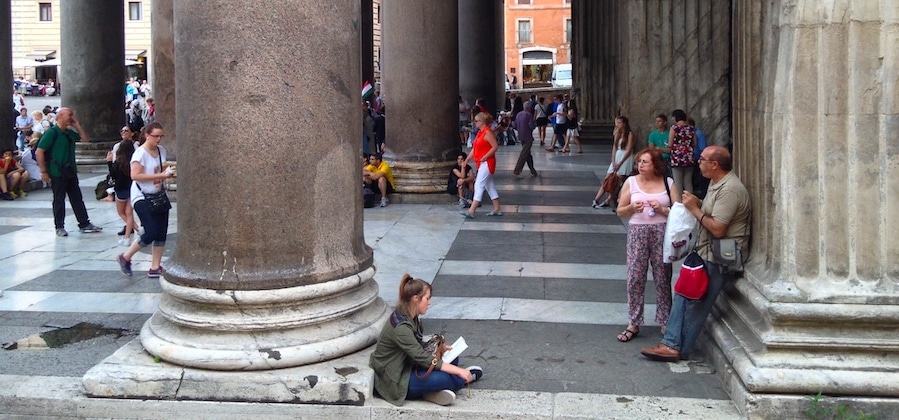
Image of Rome, by Eve Picker

Political will and community development.

December 4, 2019

Sadie McKeown is Executive Vice President and Chief Operating Officer of CPC – Community Preservation Corporation. CPC believes that housing is central to transforming underserved neighborhoods into thriving and vibrant communities.

CPC was formed in 1974 by an association of com­mercial banks led by David Rockefeller. They stepped up in direct response to the is­sues of property abandonment and blight that New York City was facing at the time. Each year, between 20,000 and 30,000 rental units were being lost to abandonment, fire, or demolition, and the City was taking ownership of hundreds of buildings through foreclosure and forfeiture.

Sadie has worked her way to the top at CPC. After starting her career at CPC as a Mortgage Originator in 1992, Sadie later served as Senior Vice President and Director of Lending in CPC’s Hudson Valley Region, where she led the company’s Downtown Main Street initiatives. Today, she oversees the company’s construction lending and sustainability initiatives, as well as the operation of its regional field offices located throughout New York State. And she also leads CPC’s Agency lending subsidiary, CPC Mortgage Company LLC, a full-service operation focusing on Freddie Mac, Fannie Mae, and FHA lending products.

Sadie is responsible for spearheading the company’s innovative “underwriting efficiency” practice that incorporates energy and water efficiency features into the financing of first mortgages for multifamily building owners. CPC has used this new underwriting method to leverage nearly $6.4 million in additional mortgage financing to fund more than 3,600 units of energy-efficient multifamily housing across New York State.

Sadie earned her Master’s Degree in Human Services Administration with a concentration in Housing from Cornell University, and she received her Bachelor’s Degree in Communications from Fordham University.

Sadie has been involved in community development for over 25 years and she still loves every moment of it. Her enthusiasm is just contagious.

Insights and Inspirations

  • In the Hudson River Valley, Beacon and Newburgh are a tale of two cities. In the same period of time Beacon had one mayor while Newburgh had six. Beacon has thrived while Newburgh has floundered.
  • CPC uses five criteria to decide whether they will work in a community. What are the buildings like? Is there a there there? Are there jobs? Is there development infrastructure? And is there political will?

Information and Links

  • Sadie is proud of the The CPC Way blog which highlights impact stories and perspectives built on CPC’s 45 years of experience financing multifamily housing in communities across New York and beyond.
  • She also recommends following The NYU Furman Center’s blog for research and policy updates and invites fellow New York area residents to join her in engaging with her alma mater Fordham University’s Real Estate Institute.
Read the podcast transcript here

Eve Picker: Hey, everyone, this is Eve Picker, and if you listen to this podcast series, you’re going to learn how to make some change.

Eve Picker: Hi there. Thanks so much for joining me today for the latest episode of Impact Real Estate Investing. My guest today is Sadie McKeown, executive VP, and chief operating officer of CPC, the Community Preservation Organization. There, she oversees the company’s construction, lending, and sustainability initiatives, and she also oversees the operation of its regional field offices located throughout New York State. Finally, she leads CPC’s Agency Lending subsidiary, a full-service operation focusing on Freddie Mac, Fannie Mae, and FHA lending products.

Eve Picker: Sadie has been involved in community development for over 25 years. It’s rare to meet someone who still loves their job and the company they work for after all that time, but Sadie does. No one understands the dynamics of community and the role that leadership and politics plays in whether a community thrives or dies better than Sadie.

Eve Picker: Be sure to go to EvePicker.com to find out more about Sadie on the Show Notes page for this episode and be sure to sign up for my newsletter so you can access information about impact real estate investing and get the latest news about the exciting projects on my crowdfunding platform, Small Change.

Eve Picker: Sadie, thanks for joining me today. You and I had started a conversation a few weeks back that was really pretty fascinating – the politics of community development. I’d love to explore that with you today. How much impact does politics have on whether a community thrives or not? First, just a little bit of background. How are you today?

Sadie McKeown: I’m doing well, thank you. Thanks very much for having me on your podcast. It’s my first.

Eve Picker: It’s a pleasure. I read that you’ve worked for Community Preservation Corporation, CPC, for quite a while now, so you must love it there. I’m wondering if you could tell me a little bit about the nonprofit and what you work on there?

Sadie McKeown: Sure. Yeah, it’s been a long time. I started at CPC back in 1991, as an intern, and I really did-

Eve Picker: Wow!

Sadie McKeown: -I really did fall in love with the company and the mission. CPC occupies a very unique space. We are a not-for-profit, but we are fully self-sustaining, so we don’t take grants or government assistance. We’re a construction and permanent lender for affordable multifamily housing, primarily, but we also do a lot of economic development and downtown revitalization.

Sadie McKeown: We are mostly a New York State- and City-based company, although we have a mortgage company that does lending for Freddie Mac and Fannie Mae on a national basis, as well as FHA. But today, I’ll focus on our community development and the construction lending that we do. We started in New York City in 1974, at a time when the Bronx was burning and there was a tremendous amount of disinvestment in neighborhoods in New York City. Manufacturing jobs were leaving, there was white flight to the suburbs, and a lot of neighborhoods in New York fell on hard times.

Sadie McKeown: CPC was created by David Rockefeller, when he was the chair of Chase Manhattan Bank at the time [crosstalk]

Eve Picker: Really? I didn’t know that. That’s really interesting, yeah.

Sadie McKeown: Yeah, he got together with some of the other commercial bankers in the city and said, “We have to do something about this crisis and really stem the tide of disinvestment and abandonment in New York City.” So, CPC was created. We started pretty small. Within a couple of stable neighborhoods, we were successful. Then, Mayor Koch came in and started the Ten Year Housing Plan, and CPC was pulled up to the next level to do a lot of vacant building construction, renovation, and permanent financing.

Sadie McKeown: The way it worked was that the banks would come together and make the construction loans on a pari-passu risk-sharing basis, and they would also forward-commit a 30-year permanent loan to take out those construction loans when the projects were completed and fully leased. It was great, and we started in Harlem, and the South Bronx, and Bedford-Stuy, and neighborhoods that really needed a tremendous amount of investment.

Sadie McKeown: It was decided that more was required to get at the scale of the need, so we worked in partnership with New York City, utilizing their tax-subsidy programs, their vacant building stock, and their subsidies, in conjunction with our first mortgages, to do the construction piece. Then, we went to the New York City and, eventually, state pension funds, and they agreed to buy our 30-year fixed-rate permanent loans because they were insured by the State of New York Mortgage Agency.

Sadie McKeown: So, we created this very special product back in the late ’70s that has served the State of New York and the City of New York very well, because it’s provided certainty in the financing world with a 30-year fixed-rate non-recourse loan with a forward-committed interest rate. We took a lot of the risk out of real estate, which was necessary – I should say the risk of real estate construction financing – which was necessary because we were in what banks would consider to be the riskiest neighborhoods; lots of vacant buildings, low rents, uncertain demand. We did that in partnership with subsidy programs in New York City, primarily, but then, we expanded to Upstate New York with all of the different municipalities across the state.

Sadie McKeown: We know community development on a large scale. We also know it on a really small scale because some of the municipalities we work in, outside of New York City, are pretty small. So, we have a pretty special lens, where we really go in, and meet with municipalities, and we talk to them about what their housing priorities are. We look at what they have in their housing stock and what they might need. You can imagine, it’s Upstate New York, and New York City; there’s a lot of historic buildings. There’s a lot of old manufacturing buildings.

Sadie McKeown: We get to do a lot of really cool deals that preserve what was there a hundred years ago and bring it back as something new. We preserve the cosmetics of it, and the place of it, but we get to interject financing to make it something new – housing, offices, retail; the whole concept of live, work, and play in downtown, and transit-oriented developments. We’ve gotten to invest in a lot of communities that are focused on that. Like I said, it’s a very unique company, CPC, because we’re not a bank; we’re not regulated the way banks are, so we have more flexibility; we’re more nimble. We partner with government, but we’re not burdened in the same way the government is burdened, and I don’t mean-

Eve Picker: Sounds fabulous [crosstalk]

Sadie McKeown: Yeah, it’s really cool.

Eve Picker: What’s the most fascinating part of your job for you?

Sadie McKeown: I guess the most fascinating part of the job is when you go to a place, or you go to a project that a developer wants to do and it’s a vacant building, or it’s a distressed neighborhood, most people would only see the negative, and they wouldn’t want to be in that place. I remember, early on, with my clipboard, as a loan officer at CPC, I would be on some of the worst blocks in the neighborhoods that we were making loans in, thinking every other person I know in my life would get in their car and drive away as fast as they possibly can.

Eve Picker: That’s true. I love those places.

Sadie McKeown: Yeah, me, too, and yet, there I was waiting for an opportunity to make a difference, to create change. Lots of times, what CPC does is we’re first in with our capital, and we create excitement with the first two, or three, or four projects. Then, all of a sudden, there’s projects going up that we’re not financing because other investment is coming in, so I think-

Eve Picker: So, your investments are really much more than an investment into a project. They’re an investment into a community so that other developers feel more comfortable following, right?

Sadie McKeown: Absolutely. That’s one of our big priorities is to create an investment environment, which will attract other capital, both equity capital, as well as other debt capital [crosstalk]

Eve Picker: That’s really, really tough to do.

Sadie McKeown: It is tough to do, but that- I think that’s my favorite part of the job is when you get to that point, and you start to see other investment coming in, you know you’ve been successful [crosstalk]

Eve Picker: What’s your biggest success story?

Sadie McKeown: So, I mean, New York City is a huge success story for CPC, but it’s too big for us to claim, so I’m going to go-

Eve Picker: I would just claim it!

Sadie McKeown: -I’m going to go further north along the Hudson River and talk about a small city called Beacon. Beacon, New York is a population of probably about 20,000. It’s a former industrial city right on the Hudson River, which thrived before the Newburgh-Beacon Bridge, before cars. It had a lot of manufacturing, and there was a lot of boat traffic up and down the river. Beautiful, historic buildings; a really interesting, long Main Street and interesting downtown; just a really neat place.

Sadie McKeown: When CPC started making loans there at the end of- in the beginning of the 1990s – ’89, ’90, ’91 – it was all vacant buildings, prostitution, drugs. It was not a place that you wanted to be, and-

Eve Picker: Isn’t this where Pete Seeger lived?

Sadie McKeown: Yes, in the Hudson Valley. Pete Seeger lived up that way, absolutely. So, the mayor at the time – and this goes to your point about politics and community development – was really focused … Her name was Clara Lou Gould. She was really focused on trying to transform the downtown, and the Main Street, and bring it back because what often happens to Main Streets that don’t come back – this is going back to urban renewal – sometimes, you can lose the history because you just get rid of the- you erase the problem by demolishing buildings, and you start over because you think that might be the best way forward. It’s certainly one way forward, and you can do lots of interesting, and new, and exciting things, but in cities like Beacon, you want to be able to preserve that history because the buildings, themselves, are beautiful.

Sadie McKeown: We literally would go door to door, knocking on the doors, and these were all small multifamily buildings, two or three apartments above a store; figure out who owned the buildings, in partnership with the City of Beacon, because they knew who owned these buildings, as well, and we would sit the people down and say, “Okay, you can borrow money from CPC. We’ll get money from Duchess County. We’ll get money from the Federal Home Loan Bank, from the local utility company, and City of Beacon will give us a grant.” We married together all of these subsidies, and we were able to do about 25 different projects in the concentrated Main Street area.

Eve Picker: Oh, that’s a lot!

Eve Picker: Be sure to go to EvePicker.com and sign up for my free educational newsletter about impact real estate investing. You’ll be among the first to hear about new projects you can invest in. That’s EvePicker.com. Thanks so much.

Eve Picker: Well, it’s actually a pretty long Main Street, but it’s a small town.

Sadie McKeown: Yes, and all of the buildings, themselves, were really small. What we would do, uniquely there, that other banks wouldn’t do is actually finance four units above a store that would take three, or four years to complete. We didn’t make any money, as an organization, but because we’re mission-driven, it didn’t matter. CPC always does a blend of different types of deals, and we service all the loans that we underwrite and close, so that we’re making money in other places, which allows us to go in and concentrate investment in places like Beacon.

Sadie McKeown: Over 10 years, we provided about $5 million of private financing from CPC in these different projects; very small average loan size, like $200,000 or $300,000. Then, another $3 million was leveraged in all different sources of public subsidy. We did about 32 storefronts with that $5 million, and about 120 apartments [crosstalk]

Eve Picker: -that’s incredibly efficient, Sadie.

Sadie McKeown: Well, it didn’t feel efficient at the time, but what happened was we created … There were some pioneers. I want to give credit to Ron, and Ronnie Beth Sauers, who were a couple that lived up there and were the pioneers that did the first couple of deals. We started to create a buzz, and people started to come to Beacon because it’s a beautiful place, and the Metro-North train from New York City stops there.

All of a sudden, people were coming in and buying up the other vacant buildings. Then, there were a lot of artists there. Then Dia:Beacon opened. Dia:Beacon is a large modern art museum that was put into a vacant warehouse down by the river. It’s just fabulous. It’s a fabulous, fabulous art museum. It attracted a lot of attention, and more, and more people came.

Sadie McKeown: We started in the early ’90s; by 2004, or ’05, say, we stopped making loans there because other banks were there. We were successful. We kind of worked ourselves out of a job. We still do some financing [crosstalk]

Eve Picker: That’s pretty fabulous.

Sadie McKeown: -but we brought back a lot of other capital. Now, I hadn’t been to Beacon, in Beacon, for eight years. My husband and I went for a hike across the river, and we were on our way back. I said, “Let’s drive through Beacon. I hear great things, and I want to see it.” When we parked the car and walked from one end of Main Street to the other, I was absolutely stunned at the activity, and the stores, and the restaurants, and the people. I literally had the chills because but for that initial capital that we took the risk investing there, it may not have happened, or it may have taken a lot longer to happen. So, that was a wonderful story for us.

Eve Picker: That is a wonderful story. You know I’m very fond of Newburgh; fond, and sad about Newburgh, which is across the river, which has enormous potential and is full of very beautiful, beautiful buildings; architecturally significant buildings. But that, in the same period of time, hasn’t had the same story, has it?

Sadie McKeown: No, it hasn’t. When CPC opened its Hudson Valley office in 1989 or ’90, we decided to target cities because it’s easier to target than to just spray small loans all over the place. We targeted Beacon, Newburgh, and Poughkeepsie, in the Mid-Hudson Valley, as our three cities where we would concentrate investment. You heard my story about Beacon. Well, I spent as much time in Newburgh as I did in Beacon, but without the same results.

Sadie McKeown: There’s a couple of reasons for that, that I’ll talk about, but before I talk specifically about Newburgh, because I, too, love Newburgh the same way you do, and I am very much a believer in Newburgh; it’s just going to take a little bit longer. But, when CPC evaluates whether or not there’s investment potential in a place, we look at five criteria.

Sadie McKeown: We look at the physical infrastructure, and we say, “What are the buildings like? Are there opportunities for us to be here and invest here?” Clearly, that’s the case in Newburgh. Beautiful physical infrastructure – the streets, the river. There is definitely beautiful physical infrastructure. Then we look at the social infrastructure. Is there a ‘there’ there? Is there a reason why people would want to go there, and live there, and eat, and dine, and play there? A little bit less so in Newburgh, but certainly the potential was there [crosstalk]

Eve Picker: Yeah, the potential’s huge. I mean, Broadway is an amazing street.

Sadie McKeown: Exactly. We checked that box – social. That’s great. That’s awesome. Then we said, “What does the economic infrastructure look like?” In that, it started to get a little bit more challenging in Newburgh because the economics were tough. Rents are low, and taxes are high, so it’s very hard to leverage a lot of private debt to make deals work. But Orange County was committed to Newburgh. They had their home funds. This was 25-30 years ago, so there was a source from the federal government to use. So, we thought we could put deals together. The tax credit program was just coming online. We had some resources to help the economics, so that was good.

Sadie McKeown: Then, you look at the development infrastructure. Are there people there that are doing development, that care about the place, and that want to see things happen? This has always been true about Newburgh. Just like you, and me, Eve, people love Newburgh [crosstalk]

Eve Picker: Yeah, no, I think that’s right.

Sadie McKeown: -there’s always a core of people that are trying to make things happen. So, that gave us confidence, too. Now, that core has changed over time. There was a group called the Newburgh Development Association that used to host monthly lunches. We’d all get together in a little restaurant on Broadway, and we’d talk about the challenges, whether it was facades, or parking, or infrastructure; whatever it was. I mean, we’d talk about how to resolve the [soil]. Always felt good about the development infrastructure.

Sadie McKeown: But then you always have to look at the political infrastructure of a place, because if there isn’t political will to do what needs to be done, it’s a really- it’s very challenging. I’ll go back over to Beacon for a second, and say that Clara Lou Gould was the mayor, when CPC got started in 1990, and she remained the mayor for the next 20-23 years.

Eve Picker: Wow.

Sadie McKeown: So, her agenda for revitalizing her Main Street remained her agenda for that long. The more you do something, the better you get at it, and the more you can attract attention to what you’re doing, the more resources come to you. So, politically, she was a stalwart, and she wanted this, and that very thing happened. More and more people came to Beacon; more and more people wanted to invest. They had a welcoming presence in the government of the city of Beacon, led by Clara Lou Gould. It’s not easy to develop in these small cities. There’s a lot of things to consider [crosstalk]

Eve Picker: Right, and I would say, as an architect and urban designer, if I look at those two cities, Newburgh is by far the more interesting, in terms of its building stock, and streetscapes. Beacon is not as interesting as Newburgh. So, that political piece has been extremely important for Beacon.

Sadie McKeown: I completely agree-

Eve Picker: Well, except for the fact that there’s a direct train linked to New York, and that probably is really important, too.

Sadie McKeown: I was just going to say the exact same thing. The other thing that Beacon has going for it is that the Metro-North train does stop there. As crazy as that may seem to some people, people really do get on the train in Beacon and go to New York City for work every day, even though that train ride is more than … It’s probably an hour and 10 or an hour and 20-

Eve Picker: I’ve done it. It’s an hour and fifteen minutes, but it’s lovely. You can sit, and read, and work. It’s really lovely. The crazy thing is … This is where segregation comes into play a little bit, as well. I always wonder about the bridge between those two cities and why it doesn’t land in the middle of Newburgh and over to one side, instead, because it’s really very close. It’s just across the river.

Sadie McKeown: It’s interesting. So, back to the politics of Newburgh, I think in the time that the CPC was working there, maybe there were six different mayors. So, what you have is a lack of focus on what your agenda is and a concentrated focus on staying in office or running for office. Because you don’t … Without the continuity, there’s uncertainty. People that would come in with all of the greatest ideas in the world never had the same kind of certainty because there was never one strategy led by a strong leader around how to redevelop the city.

Sadie McKeown: A couple of other things, similar to the train, that I wanted to say, because it’s not just politics; didn’t help, the Newburgh politics, but Newburgh also is much larger, geographically, than Beacon – the downtown.

Eve Picker: Yes. It’s huge.

Sadie McKeown: So, you need more to have an impact, right? So, that was a challenge. And it’s where there is the largest concentration of poverty in Orange County. Beacon didn’t have the largest concentration of poverty, even though it had a concentration. Poughkeepsie did. This is going to sound wrong, but there was less competition for poor people in Beacon than there is in Newburgh, where poor people tend to migrate. So, you have to address that, also. In addressing that, you can’t just address that with good housing, or with storefronts, and restaurants. You have to address that with jobs, and transportation-

Eve Picker: Yes.

Sadie McKeown: -and true economic revitalization. I think that that’s even harder to do than housing. Physical infrastructure; making improvements to the multifamily building; the historic, beautiful multifamily building site that’s there is really important, and that’s one piece. But you need to be able to provide income for the residents that are going to live there, and opportunity.

Sadie McKeown: That’s so much harder to get that. It’s easy to change the physical infrastructure of your place, but to change the economic environment is that much harder; and if you don’t even have political leadership that can get to the low-hanging fruit of the physical change, it’s really going to be hard to get to the economic change. I think Newburgh has struggled a little bit more …

Sadie McKeown: In Beacon, you had Duchess County, which had lost IBM and lost a ton of jobs. The county was very focused on diversifying their labor force and making broad change so that they weren’t relying on one entity to support them, which was IBM, before IBM left Duchess County. So, you had a county-wide effort to change, and Beacon got to participate in that.

Sadie McKeown: That wasn’t the case in Orange County because Orange County didn’t suffer the same economic devastation when one employer left. Newburgh didn’t have anything to grab on to, or to get help with. They were sort of on their own. So, over the last 30 years, you haven’t seen that much change in Newburgh, but … There’s always a ‘but’ when you’re talking about Newburgh.

Eve Picker: Yes.

Sadie McKeown: It does feel like things are really starting to happen-

Eve Picker: Well, when you talk about employers, that has really shifted in the last five- even in the last five years. More and more people are working remotely. I run a virtual company. I have people, really, all over the world for my company. It’s really quite manageable and quite enjoyable because we have the technology to be able to talk, like we’re talking on Zoom, now; in many other ways … It’s very simple. So, as people move towards the remote employment, the likelihood of a more remote place being occupied goes up a little bit, right?

Sadie McKeown: I couldn’t agree more. I think Newburgh is well-positioned for that kind of opportunity, because if you need to get to the city, you can go over the bridge for a meeting, once a week, or something, but you can be extraordinarily productive, remotely. There could be small hubs of WeWork spaces or Regus offices that employ people so that they can come together in collaborative spaces. You don’t have to be in New York City anymore to work for a company that’s located in New York City, and I think Newburgh is well-positioned for that, but [crosstalk]

Eve Picker: -that actually may be one of the things that helps the affordable housing crisis – the fact that people can work from a more affordable place is a really good thing [crosstalk]

Sadie McKeown: Absolutely, and the fact that they don’t have to spend money commuting helps their affordability.

Eve Picker: That’s right.

Sadie McKeown: Remote working is one part of the solution.

Eve Picker: Years ago, there was a foundation here in Pittsburgh, where I live, that tried to start a … They actually did a survey on the civic skills of elected officials, and what they understood about placemaking, and housing, and all of these things. The scores were extremely poor. So, one wonders whether elected officials shouldn’t go to some sort of school that might help them a little bit. They’re elected based on personality, and charm and really may not have the right skill set to help the community.

Sadie McKeown: Yeah, I agree with that. I live in a small village, just north of New York City, on the Hudson River, south of Beacon. I feel very blessed to live in the village that I live in. We’ve had the same mayor for 20 years, but we have a very forward-thinking agenda in- I live in Tarrytown, New York.

Sadie McKeown: We did a comprehensive plan, where we brought in the people from the village, and we got feedback on what our priorities are. Then, instead of having that sit on the shelf, we created a comprehensive-plan-management committee to look at what came out of that plan and make sure that we followed up on it. A village like Tarrytown has a part-time mayor, and one village administrator, who has an assistant, and that’s kind of it. You have your village engineer, and your administrative people, but you don’t- there’s not a lot of people that can really move that agenda forward.

Sadie McKeown: So, you really need volunteers. I’m a volunteer in the village, on the housing committee, and on the comp-planning committee. You really need volunteers that care about a place to come forward and participate in its development and in what it becomes. I think that politicians need to do more of that. There’s also a program in Hudson Valley called the Land Use Leadership Alliance, which is run through Pace University’s law school, where they bring in all of the planning and zoning people from the various towns in the Hudson Valley, once a year, for a six-, or eight-part educational series-

Eve Picker: Oh, that’s great.

Sadie McKeown: -yeah, teaching them about placemaking, about zoning, about architecture, about financing, so that when they’re sitting behind a table evaluating whether or not a project should be approved, or a library should be extended, or whatever it is, they have a perspective and a sense of how that impacts the whole community and what it takes to get a development done, or to raise funds for a library, or a park, or whatever it is.

Sadie McKeown: I completely agree with you, the education … There are mayors that go through the LULA program, and there are trustees, and all of the people that make decisions at the local level participate, and they participate with each other, so there’s different people from different towns. It’s actually a really cool thing [crosstalk]

Eve Picker: It is very cool-

Sadie McKeown: Yeah, I’ve been a speaker at it, and I’ve sat in on a number of their sessions. It’s actually a very enlightened way to bring people together in a non-threatening environment that’s not political at all, where they don’t care about anything other than learning how to do best for the place that they live.

Eve Picker: You’re working all over New York State like this. Is this the only example like this? You said you look at five things, when you evaluate- five criteria, when you evaluate whether to work somewhere, in order to invest in a project. Of those five criteria, what most frequently lets you down?

Sadie McKeown: Well-

Eve Picker: Or is it all over the place?

Sadie McKeown: It’s all over the place. It really depends. If we are in a city just outside of New York City – in the suburban ring – Lower Westchester County, you have great economics, typically great physical infrastructure, social; there’s population density. What you really need there is good politics and also good development infrastructure.

Sadie McKeown: In New Rochelle, New York, which is just north of the Bronx, in Westchester County, we had the good fortune of being brought in. New Rochelle was developed- one of the first cities developed outside of New York, a hundred-plus years ago, and it was like a summer community for people that lived in Manhattan. So, it was the first Bloomingdale’s outside of New York City, and the Main Street was thriving with merchants and everything else. It was really quite a wonderful city. Then, fell on hard times. The offices went to office parks in Westchester County; stores, and large stores, in particular, went to malls. Downtowns, like New Rochelle – which made no sense that they fell on hard times because of their proximity to New York City – fell on hard times.

Sadie McKeown: When we were called in to look at the financing for this Bloomingdale’s building, which had been vacant for 25 years … We were pulled in by the director of their Business Improvement District, a guy named Ralph Dibart, who we knew; he had been involved when Soho became Soho, and he had been involved in some other cities, so we knew him well.

Sadie McKeown: We came in, and we looked at the Bloomingdale’s building. They couldn’t get financing. We said, “Well, why can’t you get financing?” They said, “Well, the banks won’t do it because there are no comps.” I laughed and said, “That’s the best thing about this project. There are no comps in the immediate area, but there are lots of comps …” because the woman that bought it wanted to develop loft housing. She stole a design from Chelsea, New York, and was going to do the exact same thing on Main Street, in New Rochelle. Instead of it costing, at the time – this was the early 2000s – instead of it costing $850,000, she was going to charge $225,000. From my perspective, we had great comps because everybody wants to live in Chelsea, they just can’t afford to.

Eve Picker: Right.

Sadie McKeown: If you wanted to be in that style of housing, it didn’t exist in New Rochelle. That was a place where our lens of turning risk on its head really made sense. She built that project. She bought the building, and built out, and sold that project in 22 months. Incredible.

Eve Picker: I did a similar thing in downtown Pittsburgh, at a time … I built eight lofts in downtown, in a vacant building, at a time when the bank actually said to me, “Aww, honey, no one’s going to live down here.” I sold them all before I finished construction.

Sadie McKeown: Exactly.

Eve Picker: People really- they want something more than cookie-cutter options for how to live. They deserve more. So, yeah, it’s frustrating when banks, or lending institutions don’t really see those innovative opportunities.

Sadie McKeown: Agreed. What was really, really cool about New Rochelle is that was our watershed deal. That was the first one that we did that put us on the map, if you will. Then, because Ralph Dibart was there, the president of CPC, at the time, said to me, “You can do this big deal, Sadie, but look around …” and when we looked up and down Main Street, it was really small buildings. He said, “These guys have been hanging in here, in New Rochelle, owning their buildings, keeping their businesses alive, and they’re the ones that are really struggling. We have to create a program that meets everybody’s needs, not just the bigger deals.”

Sadie McKeown: So, working alongside of Ralph, we created a facade-improvement program. We created a technical-assistance grant program, where we could … Because, when they zoned for Bloomingdale’s, they did blanket zoning for the entire Business Improvement District; as-of-right residential above the stores. But the store owner said, “That’s great, and I have my store here, and I own the building, and I have vacant office space upstairs, but I don’t know what I can do with it, and I don’t want to spend money to find out.” So, CPC did technical-assistance grants to bring in an engineer to say, “Okay, you have X number of square feet; you can do three loft-style apartments; they’ll be this big, and …”

Sadie McKeown: Then, as the loan officer, I could say, “Okay, so the rent for those three apartments will be X, and the rent from your store is Y, so we can leverage this much money in private financing; give you a construction loan to go ahead and renovate that empty office space and turn it into beautiful lofts.” That happened, and that was really cool, but it was really Ralph, and I, together, over pizza, or coffee, or Indian food, talking about what would it take to get the facades to improve, the lofts to be developed? How could we work with the smaller owners?

Sadie McKeown: What was great about Ralph was he knew who was serious and had capacity to do it, and he knew who was a little too nutty, so he kept- he protected me from the nuts, because you can get … You can get into a deal with a nut, and it could take … Three years later, you’d come out, and your head is spinning. Not that they’re not wonderful and creative people. They’re just … Even I can’t bank them. So, it was great to have … That’s that development infrastructure piece.

Sadie McKeown: That, alongside of really good politics, you end up with real good boots on the ground, which is a thing that we talk about at CPC. In order to know your neighborhoods, you’ve got to have boots on the ground. I spent 20 years as a loan officer at CPC. I was boots on the ground, and I walked every block in the neighborhoods that I was in, and I knew them really well. I knew who owned what, and I knew where the opportunities were and where the problems were. Having that development partner, that infrastructure, I think, was really important.

Sadie McKeown: So, New Rochelle’s another success story. We’ve done great things in Syracuse, and Rochester, and Buffalo. Those are the larger cities, and now, we’re starting to see activity in some of the smaller-tier cities, like Utica, and Binghamton, and that’s really cool, too. We have a great governor that has dedicated a lot of resources to housing; has a real interest in developing Upstate New York, and economic development.

Sadie McKeown: What we do is we look at where the resources are and how we can follow the money, if you will, to make things happen in conjunction with whatever resources are available in a place. A deal came to our mortgage committee the other day in Buffalo, and it was yet another vacant former industrial building, and it was a brownfield site. I laughed, and I said to the loan officer in Buffalo, “It’s follow the contamination,” because it’s such a great resource, and there aren’t that many resources, so you have to go where there are resources-

Eve Picker: Yeah, no, that’s right. That’s right … Well, anyway, it’s wonderful to hear you’re so excited about this job after being there for such a long time.

Sadie McKeown: Yeah. Oh, I love my job [crosstalk] very, very lucky.

Eve Picker: Very lucky, yeah. So, just talking a little bit more broadly, I’m just wondering if you think socially responsible real estate is necessary today, in today’s development landscape?

Sadie McKeown: Absolutely. I think it’s necessary in every day, in every year, and, to the extent that we haven’t done it, we should have been doing it. We certainly should do it going forward. I’m a little curious if your definition of socially responsible real estate is similar to mine, so why don’t you tell me what yours is?

Eve Picker: Well, we have a definition on Small Change, which is kind of pretty broad and a little agnostic. I think socially responsible could mean an ugly building that’s converted into a business incubator for startups in an under-served building. It could equally well, also, be a net-zero passive modular house that is built on a long-vacant site in a good neighborhood that is expensive.

Eve Picker: It’s not always … I mean, I know everyone talks about affordable housing, affordable housing, but I think, for me, impact in real estate can mean a variety of things. I think it’s a level of thoughtfulness, so that you just don’t spend money doing a deal for the deal’s sake, but you add some value to the community you’re in. Does that make sense?

Sadie McKeown: Absolutely makes sense, and it is definitely very consistent with my definition. I would say, at CPC, we really do do that. As it relates to sustainability, and passive house, and net-zero, we’ve been pushing to try to get the first mortgage market to incorporate energy performance of a building into their underwriting, so that they’re recognizing how much less expensive it is to operate those properties, so that we can leverage additional net operating income, and-

Eve Picker: That’s fantastic because that’s really been missing.

Sadie McKeown: Yeah, it has been missing. It’s been a real battle; a labor of love. We really believe in passive-house principles, and net-zero, and decarbonization, electrification because it makes housing more affordable, it makes it more resilient in the era of climate change, and it makes it a better living environment – better tenant outcomes, more tenant comfort. It’s a much healthier environment for a tenant to live in, so for all of those people-

Eve Picker: -by the same token, housing that is close to transit is also pretty meaningful in the affordability game, right?

Sadie McKeown: Definitely.

Eve Picker: If someone lives somewhere, where they’re close to some sort of transit hub, and they don’t have to buy a car, and they don’t have to drive their car to work, that’s pretty meaningful, and that should also count in that [crosstalk]

Sadie McKeown: It absolutely does, and it totally counts … Transit-oriented development, downtown revitalization, those are all things that we also focus on. Then, we do a lot of what we call ‘Big A’ subsidized affordable, like bread-and-butter government-subsidized, affordable housing for very, very poor people. We do homeless housing, supportive housing. We do all of that really good, deep, deep mission-based stuff.

Sadie McKeown: That’s all really wonderful, but we also do … When we’re talking about downtowns, we try to do integrated housing so that it’s not just mixed with retail and office, if that’s appropriate, but that the incomes are mixed. We look very broadly at housing, and how it gets built, and constructed. We’re very concerned about the rising costs of constructing housing, because there’s not a rising subsidy pooled [crosstalk] alongside of it to offset those rising costs.

Sadie McKeown: So, to your point about modular, we are very interested in modular approaches that drive down the cost – the hard cost of construction, shorten the amount of time it takes to build, so that you’re shortening your overall development time frame, and the ability to try to build some of that passive, or net-zero, so that you’re delivering boxes to the site that are really the highest quality relative to their sustainability.

Sadie McKeown: If you can do that, and you can work with a municipality to get your approvals and to create a routine program, there are ways to integrate affordability into a building with maybe just a tax abatement, and maybe if you’re buying land from a municipality for a dollar. Those two things, you can integrate 30-, 40-percent affordability into a market-rate project without capital subsidy. That’s something else that we’re very, very focused on because there’s just not a lot of capital subsidy available.

Sadie McKeown: We will work alongside of any program. I mentioned brownfield tax credits before; historic tax credits. We’re doing a deal in South Carolina that has textile credits. My idea has been, [crosstalk] with the Low-Income Housing Tax Credit, we should add a boost for anybody that’s going to make their building net-zero, or passive, or electrified and give them a little bit of extra credit to try to raise additional capital to make that building- to maximize its energy efficiency, its resiliency, and sustainability. We’re always thinking about how to do things differently; not just doing the same thing over, and over again. I think that’s consistent with your-

Eve Picker: It’d be wonderful. Are there any current trends in real estate that you think are the most important for the future of our cities?

Sadie McKeown: Well, when you look at the nexus of climate change, and the affordable housing crisis, I think that that will be a trend, depending on politics, of course. We were headed in that direction under the last administration, with President Obama, where we were in the Paris agreement. I’ve been to The Netherlands, where they take this very seriously. There are lots of creative ways for capitalism to go to work, making housing more affordable, and addressing climate crisis.

Sadie McKeown: I often want very much for the different departments of governments to collaborate on how to solve problems together, so the housing affordability, and sustainability, and the climate crisis really cross over. I really feel like the resources available to make housing more resilient … Also, healthcare is another one. There’s some really cool stuff happening in places like Connecticut around hospitals and healthcare providers participating in affordable housing.

Sadie McKeown: I think we’re starting to see a trend, where it’s not just a silo of, “We all do nine-percent tax credits, and let’s just keep doing them.” I think people, because of the looming affordable housing crisis, are starting to get out of the box, which I think is very exciting-

Eve Picker: Yeah, no, I agree. I think it’s very exciting. Very exciting.

Sadie McKeown: One of the things that I think about all the time, people talk about infrastructure in this country, and they think roads and bridges. When I think about infrastructure, I think about money, and financing, and I think about financing being the infrastructure that underpins everything. If you can influence how things are financed, you can touch everything. You can touch every physical building in the country, because, not everyone, but the majority have financing. So, that’s sort of [crosstalk]

Eve Picker: -that plays into a question I have to ask – do you think that crowdfunding has a role in that?

Sadie McKeown: I just love crowdfunding, and I love your approach, and I love your concept. I had the great privilege of listening to speak those few weeks ago [crosstalk]

Eve Picker: Oh, thank you.

Sadie McKeown: -and what I love most about the crowdfunding is that it opens the door for many, many, many more investors and people that live in places to invest in the place that they live. Right now, most people just have an opportunity to invest in their 401(k). They’re not thinking about investing, so they just participate in their 401(k) at their job or whatever.

Sadie McKeown: I think people are starting to realize there’s more to investing, and I think crowdfunding gives people an opportunity to participate in investing in a different way. Your platform really reaches deep into the community. When people are making a $100, or a $200, or a $2,000, or a $5,000 investment, they’re not really that interested in how much money they’re getting back, as if they were investing $50,000, or $100,000, or $1 million. It would be all about the economic return.

Sadie McKeown: When you drive down size of the investment, the returns are much more focused on the change that you’re making with that investment in that community. That’s one of the things I love about even the name of your company, Small Change, because you’re putting in small change, and you’re making small change, but small change, over, and over again, ends up with a huge impact-

Eve Picker: One can only hope!

Sadie McKeown: I think there’s absolutely a place for crowdfunding far more broadly in this country and in real estate.

Eve Picker: Great. I’m going to ask you three sign-off questions that I ask everyone. I’m just always interested to hear what people have to say. What do you think is the key factor that makes a real estate project impactful to you?

Sadie McKeown: I think that the thing that makes a real estate project most impactful is that it made someone’s life better, and there are so many people that can be impacted by one small real estate development. So, if you appropriately and responsibly renovate a building in a place, and you restore it to its historic integrity, and you put really nice apartments that have a beautiful place to live, the people that live there, particularly in neighborhoods that CPC is in, have a better place to live. They didn’t have an option to live that well before, and you made their lives better.

Sadie McKeown: So many times, when we go to our ribbon-cuttings, the tenants will come to the ribbon and cry about how happy they are-

Eve Picker: Oh, that’s wonderful.

Sadie McKeown: -to have such a lovely place to live affordably. So, I think their lives are impacted. But then, just the everyday lives of the people that drive by that building – they feel better. It’s not vacant anymore. It’s vibrant. Something’s going on there. Then it happens that the next building gets invested in, and the next building. So, you really make change, and you impact- you improve people’s lives. People, meaning the individuals that live there, but also people, meaning the communities that surround the real estate deals that you do.

Eve Picker: Yeah. Okay. This is a hard one, but if you were to pick one thing in real estate development in the U.S. that you’d like to see improved, what would that be?

Sadie McKeown: It is a hard one because I have so many thoughts on this. I’m going to go somewhere, which kind of sounds a little bit weird, but I’m going to go to the building code-

Eve Picker: Oh, I’ve heard lots of these, so it’s not weird [crosstalk] thinking about building codes.

Sadie McKeown: I think that if you could change the code and make the code require the right elements of place, and housing, and resiliency, and sustainability, and address … You can address so many things through the building code. I was in in Pennsylvania – Pennsylvania Housing Finance Authority – a couple weeks ago, talking to them about their passive-house initiatives and all the cool things that they’re doing. One of the people said that Pennsylvania didn’t have a building code 20-25 years ago, and that was really shocking to me [crosstalk]

Eve Picker: No, they did. They [crosstalk]

Sadie McKeown: -not a state code that impacted [crosstalk]

Eve Picker: -maybe not a state. They were local; they were locally managed, that’s correct, yeah.

Sadie McKeown: Yes, and so-

Eve Picker: But they were all slightly different. Yeah.

Sadie McKeown: But to have … See, if you can start with a code that keeps everyone consistent, then all of the programs that grow up around real estate have to obey the code, and they can all be more uniform and more efficient. So, it’s almost like the roots of the tree and then, the tree grows stronger because the roots are the same. It’s a unique one for me. I could have gone to all kinds of things, but I, particularly with my sustainability and my climate-change hat on … Change the code, and you can change the way people fundamentally address those issues in real estate.

Eve Picker: Well, thank you very much for your time. I’ve really enjoyed talking to you, and then, I plan to keep talking to you, Sadie. So, thanks for your time this afternoon.

Sadie McKeown: Oh, my pleasure, and I look forward to the ongoing conversation. Thank you, Eve.

Eve Picker: That was Sadie McKeown. That was a fascinating conversation about the impact that personality, will, and politics can have on place. Political infrastructure is just one of the five criteria that CPC uses before they decide to invest in a place. In addition, they review physical infrastructure – what are the buildings like? Social infrastructure – is there a ‘there’ there? Economic infrastructure, and development infrastructure.

Eve Picker: You can find out more about impact real estate investing and access the show notes for today’s episode at my website, EvePicker.com. While you’re there, sign up for my newsletter to find out more about how to make money in real estate while building better cities. Thank you so much for spending your time with me today, and thank you, Sadie, for sharing your thoughts with me. We’ll talk again soon, but for now, this is Eve Picker signing off to go make some change.

Image courtesy of Sadie McKeown

« Previous Page
Next Page »

Primary Sidebar

sign up here

APPLY TO BE A PODCAST GUEST

More to See

(no title)

February 22, 2025

Bellevue Montgomery

February 11, 2025

West Lombard

January 28, 2025

FOLLOW

  • LinkedIn
  • RSS

Tag Cloud

Affordable housing Climate Community Creative economy Crowdfunding Design Development Environment Equity Finance FinTech Gentrification Impact Investing Mobility Offering Opportunity zones PropTech Technology Visionary Zoning

Footer

©rethinkrealestateforgood.co. The information contained on this website is for general information purposes only. Nothing on this website is intended as investment, legal, tax or accounting strategy or advice, or constitutes an offer to sell, solicit or buy securities.
 
Any projections discussed or made may not be accurate and do not guarantee a specific outcome. All projections or investments are subject to risk due to uncertainty and change, including the risk of loss, and past performance is not indicative of future results. You should make independent decisions and seek independent advice regarding investments or strategies mentioned on this website.

Recent

  • The Mulberry
  • Mount Vernon Plaza
  • The Seven
  • Real estate and women.
  • Oculis Domes.

Search

Categories

Climate Community Crowdfunding Development Equity Fintech Investing Mobility Proptech Visionary


Copyright © 2026 · Magazine Pro on Genesis Framework · WordPress · Log in